Friday, March 19, 2021

Adjustments (And a Thank You)

 Margaret and I just got our second Covid vaccine shot (Pfzer.)  Our thanks go out to Humboldt County Public Health and to the volunteers who organized and administered the jabs.  Compared to what we're hearing from other parts of the country, it was a painless process, even if it seemed slow at times.  All we did was fill out one form--an "interest" form, as in interested in getting the vaccine--with just basic information, especially age.  The county methodically followed the state guidance, so there was a 75 and over beginning, followed by a 70 and over, etc.  Medicare cleared the need for insurance information.  After we completed the form online, we simply waited.  As soon as enough vaccine was available, we got emails inviting us to a clinic on a specific day.  We then made an appointment on that day.  That was it. We got another invitation for our second shot, which we got three weeks and one day after the first.  No running after rumors of who had the vaccine, constantly refreshing sites for an appointment, etc.  So we are very grateful for the County's efforts.  Public Health here has been great throughout this Covid crisis. 

Now we have a couple of weeks to adjust to the end of what has effectively been a year-long quarantine.  The mental adjustment for me will begin with activity.  My car doesn't start, my phone is obsolete, I've needed a new prescription for glasses this entire year, and a haircut would be nice.  Those items are where the list begins.

I also find myself adjusting slowly to the fact that we have an actual President of the United States.  I've felt resistance to fully accepting it, having been thoroughly traumatized by the past four years.  Washington politics is as fucked up as ever, etc. but Joe Biden is more than I could have expected.  He's putting together a potentially effective government in new ways--new especially since the 1930s.  His first address to the nation on Covid was just about perfect.  The covid Rescue law is a wonder.  So if any reader has noted an absence of commentary here that might suggest a lack of enthusiasm, that's not the case.  I've just having a hard time trusting this is really happening, and may not be reversed in a minute from now.

At the moment our weather is reflecting this transitional feeling.  The winter rains have not quite ended, but the flowers are blooming.

Sunday, March 14, 2021

Poetry Monday: Pennies From Heaven


A long time ago, a million years B.C. 
The best things in life were absolutely free
 But no one appreciated a sky that was always blue 
And no one congratulated a moon that was always new...
 So it was planned that they would vanish now and then
 And you must pay before you get them back again 
That’s what storms were made for
 And you shouldn’t be afraid for

 Every time it rains it rains pennies from heaven
 Don’t you know each cloud contains pennies from heaven
 You’ll find your fortune falling all over town
 Be sure that your umbrella is upside down 

 Trade them for a package of sunshine and flowers
 If you want the things you love you must have showers
 So when you hear it thunder don’t run under a tree 
There’ll be pennies from heaven for you and me.

 --lyrics by Johnny Burke to music by Arthur Johnston
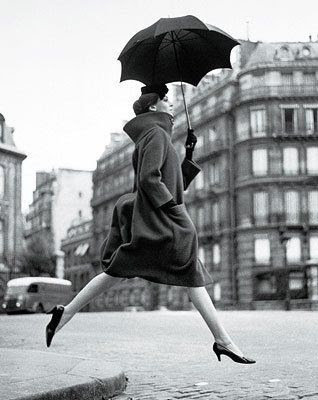
top photo by Cartier-Bresson

 Popular songs have a lot in common with formal poetry, apart from their shared origins in chant and song. The best song lyrics have qualities found in poems. This lyric by Johnny Burke for instance has an initial argument or premise, and the rest of the song follows from it, until, like a Shakespearian sonnet, it is recapitulated in the final couplets.

There isn't a wasted syllable in this lyric.  The echo of the "und" sound in "thunder" and "under" is a skillful and effective internal rhyme, but more subtle is the corresponding echo of the "a" sound in "planned" and "vanish."  There are literary poems that are less adept. 

 Though this song has been recorded and performed a vast number of times, it seldom has included more than the chorus: the last eight lines. So the song really doesn’t make sense until you get to those late lines, and “If you want the things you love you must have showers...” But with the initial verse, the point is very clear, and much more powerful.

 I could find only three recordings of the entire song, beginning with the first, by Bing Crosby in 1936 and ending (for now) with James Taylor’s version in his 2020 American Standard album. Arthur Johnston and Johnny Burke wrote the song and several others for Crosby’s movie titled Pennies From Heaven. His version was a hit record in 1936. These lyrics as a whole are both sobering and hopeful.

 And that’s perhaps why the version using the entire song released in 1937 by singer Arthur Tracy is the one selected for the Dennis Potter BBC 1978 miniseries and the subsequent 1981 movie, starring Steve Martin and Bernadette Peters. Both productions used vintage recordings while contemporary actors lip-synched to them. New Yorker film reviewer Pauline Kael put her finger on why Tracy’s version is so memorable and appropriate—he sings an upbeat song while sounding like he’s on the verge of crying.

 Potter’s teleplay and screenplay were set in the Great Depression of the 1930s, and the song itself was written then. It’s subject is the Depression, as its first audience would have understood. The line “you’ll find your fortune falling all over town” is a succinct description of how the Depression’s effects quickly accumulated, as people lost their savings, a major part of their income or their jobs, perhaps even their homes. Middle class people—teachers, nurses, mid-level executives—found themselves on the street. Desperation looking for solace was a natural condition. 

Within the song however, those lines function in the opposite way.  Future fortune is literally falling all over town from the sky, collected by that upturned umbrella.  This is a conceit Shakespeare might have written, if he'd been a 1930s songwriter.

  Whether Dennis Potter’s series or movie caught the more characteristic and complex moods of the Depression beyond desperation and denial is debatable. However, this lyric and its premise as metaphor stand on their own, transcending their original time. Today, as the slow end of the Covid crisis looks to be in sight, the idea of better times as a payoff for enduring hard times resonates again.

 Johnny Burke wrote lyrics for other popular songs such as “Imagination” (a hit for the Glenn Miller band), “Moonlight Becomes You,” “Misty” and a staple of my childhood, “Swinging on a Star.” (“Would you like to swing on a star/carry moonbeams home in a jar...”) 

 Thanks to the Dennis Potter films, 1930s singer Arthur Tracy came out of retirement in the 1980s for one last series of engagements at New York’s The Cookery, which also revived the careers of cherished musical elders Eubie Blake and Alberta Hunter.  Here's a link to the 1981 movie scene with his rendition of “Pennies From Heaven.” (For some reason I'm unable to embed it here.)  Although the British miniseries used the entire original recording, the MGM movie substituted a new instrumental bridge by Marvin Hamlisch. The dance sequence featuring Vernal Bagneris is itself worth seeing.

Wednesday, March 10, 2021

History of My Reading: To Boulder Go 1969 Part 2


 Nineteen Sixty-Nine was a prime year for the counterculture (in fact, the year it got its name when Theodore Roszak’s The Making of The Counter-Culture was published), and Colorado was one of its capitals.  It would be my first prolonged exposure beyond midwestern college campuses.

 As music was the counterculture’s living, pulsing heart, it was also the year of the music festival.  More or less invented on the model of the Newport Folk and Jazz Festivals by John Phillips of the Mamas and the Papas when he organized the Monterey Pop Festival in 1967, music festivals of current and cutting edge rock, blues and hybrid forms happened here and there throughout 1969, culminating at Woodstock in August. 

 For three evenings and nights over a weekend in late June, there was one in Colorado: The Denver Pop Festival.   I was participating in the writers conference in Boulder until Friday evening, so on Saturday I took a bus to Denver to hear some music.

 I’m not sure why I decided on Saturday, since the Jimi Hendrix Experience headlined the Sunday lineup. And it turned out to be mildly historic: the last concert the original Experience ever played. But 1969 was a big year for Creedence Clearwater Revival, and they would close the Saturday show. 

 However I did meet a girl on the bus who claimed to be a cousin of Jimi Hendrix.  She said the last time she’d visited him backstage she’d seen the drug paraphernalia, and showed her concern.  He agreed he needed to slow it down. He was really just a sweet guy, she said.  


 It was a hot day—95 degrees in Denver, and still around 90 when I arrived at Denver’s Mile High Stadium after 5 p.m.  I either bought my ticket or already had it ($6 a night, $15 for three nights) and I was early enough to get a seat in a center section, as people were still arriving. Still, the stage was set up on the field so I was separated from it by a considerable distance.

 I have specific memories of that event, which I am able to corroborate and expand on, thanks to a Masters thesis posted online by Justin Kite of Rutgers University.  He fills in some of the history and the facts of the evening.


 As the time came closer to the scheduled 6:30 start, those in my section of the stands became aware of a crowd growing outside one particular locked gate.  It looked to be wood and wire, and thanks to our position and height, we could see at least part of it. On the inside of the stadium were contingents of uniformed police, most of them opposite the increasingly raucous crowd outside, demanding to be let in, because the music was meant to be free.

 Though I was unaware of it, there was already a history to this festival.  A similar but smaller crowd the night before had tried to force their way in, and they clashed with police, egged on by some of the performers, especially Frank Zappa.  Tonight there were more of them, and they were concentrating on that one gate. 

There was also a longer history involving the Denver police, and their successful efforts to close down the Family Dog, a club in the city that featured rock acts.  And of course, there was the ongoing tension between the straight world and the freaks, the culture and the counterculture, parents and the young. Perhaps we forget how strong the hostility and suspicion could be.

 The confrontation got louder when the first act began, a Chicago band called Aorta.  I could see the gate bulging as bodies raged against it.  Then the next act took the stage: a new Boulder band called Zephyr, which eventually made a couple of albums and is noted as the first band of electric guitar virtuoso Tommy Bolin.  Lead singer Candy Givens was the constant in various versions of the band into the 1980s.

 Zephyr had hardly begun its blues-rock set when the police unleashed their first volley of tear gas canisters at the 500 or so on the other side of the gate.  Some of them lobbed the canisters back. Tear gas came streaming down towards us. 

 The music was halted as the announcer instructed those of us in our section to come down on the field and lie on the ground, face down, until the tear gas cloud passed.  So there I was: reenacting a duck and cover drill with my nose on the grass of Mile High Stadium. In a few minutes we returned to our seats and Zephyr finished their set—but this time the band members were reportedly wearing gas masks. 

Winter at Woodstock

 The next band was Poco, the new country rock band featuring Richie Furay and Jim Messina, two members of the recently disbanded and already legendary Buffalo Springfield.  (Kite’s thesis asserts that the new band of Springfield’s main members, Crosby, Stills, Nash and Young was originally supposed to play at this festival, but the promoter backed out of the deal when the new lineup failed to get their first album out before the festival.)  Things quieted down enough during their set for me to hear and enjoy it.

But the blazing blues guitarist Johnny Winter got the crowd outside revved up again, and probably the police, too.  They shot off tear gas again, in greater quantity, and this time successfully dispersed the crowd at the gate.  But there was a cost, as during Tim Buckley’s set the wind caught the gas and blew it back into the stadium.  Now people from all over the stadium rushed down to the field to escape the fumes.  In the confusion, the crowd outside attacked the gate again and some got through.  There was a pitched battle between them and the police, until the festival producers opened all the gates to let everybody in.  And suddenly there was nothing to fight about.

 It wasn’t the first time I’d smelled tear gas, and it wouldn’t be the last. As singular as it seems now, it didn’t impress me at the time as all that unusual, that a rock festival would be disrupted in this way.  I was more affected by the distance from the stage.  Without my perceptions artificially enhanced (though there were probably joints making their way across the rows) I felt too detached from the performers.

 By then night had fallen and just as if none of this had happened, Creedence Clearwater Revival played a normal set.  According to Kite, even some of the police stopped to listen.  As Creedence played “Bad Moon Rising,” the full moon rose behind them.  When they noticed this, they played it again.  That’s the story.  I don’t actually remember it.  Kite reports that the young Denver Post reporter called Saturday’s the best music of the festival.


 Much of the Jimi Hendrix Experience set on Sunday night is preserved on YouTube.  Besides being the last Experience show, its other claim to fame is the pre-Woodstock debut of Hendrix’s version of the Star Spangled Banner, which flowed into “Purple Haze.”  But apparently the prior hours were dominated by noisy and constant warfare between police and gatecrashers.  Kite reports that the now iconic singer Joe Cocker, on his first U.S. tour, was found hiding in his dressing room.  “So this is America?” he asked.

 For me, there was one further outcome to the Boulder writers conference. After the open reading at the end of it, a tall man with dark curly hair sought me out to compliment my poems.  Not the Litany so much as the sound poem.  He was Arnold Weinstein from Yale, and he was accompanied by four or five acting students from the Yale Drama School. 

A few days later I ran into him again.  I was having eggs and toast at the Charcoal Chef, one of those chain restaurants that serves breakfast all day, near where I was staying in Boulder.  I was at the counter when he came in for coffee.  The jars of jelly for toast in restaurants had recently been replaced with little plastic tubs which were then, as they are even more so now, nearly impossible to open. So I simply stabbed at mine with a fork, which for some reason he really liked.

 It might have been after the reading or there at the counter, but at some point he invited me to hang out with his group, which was sticking around for awhile to work on improvisations.  Actually it was never clear to me what they were doing, or what he did, but in fact Weinstein taught playwriting at Yale, was a poet and playwright, and at that point in a long and successful theatrical as well as academic career, he had been working with Paul Sills’ Story Theater.  

 It also was never clear to me what he expected me to do. At first he asked me to fool around on piano, and then on guitar, as his students did whatever they were doing onstage.  This resulted in only one moment I remember.  I heard someone on stage say “hello” and I began riffing on it on guitar.  The actors picked it up and built it until the cast was clustered at center stage shouting a rhythmic and frantic “hello” to the (non-existent) audience. 

 It was an interesting, confusing and somewhat uncomfortable few days.  It’s too bad I wasn’t up to it, because Weinstein did several theatrical pieces that integrated music, and took them to Broadway.  I’ve also wondered who those Yale students—and one in particular--turned out to be.


My immersion in the counterculture began in Fort Collins, where (thanks to Mary) I had my palm read and my astrology chart done by stoned hippies around a fire. And there was a lot of talk, from the cosmic to the very personal. People just trying to figure things out.  Especially themselves.

  It continued in Boulder.  I hung out quite a bit at a bookstore called brillig (“Twas brillig and the slivy toves”—Jaberwocky in Alice in Wonderland, in which brillig means four in the afternoon, which is probably when I usually showed up at the bookstore) with their books on astrology (Dane Rudhyar), numerology, natural health remedies, cosmic philosophies, as well as books on underground filmmakers, artists, writers.  Scorned or overlooked past writers were being rediscovered, too—including Lewis Carroll. Brillig was also a great place to overhear conversations or engage in them.  (Somewhere I have a note about befriending a clerk there, who admitted she was afraid of the customers.) 


There were books reflecting the evolving sexual revolution and the boundaries of censorship: everything from Everything You Ever Wanted To Know About Sex But Were Afraid To Ask to newly available novels by Henry Miller and the illustrated book version of the scandalous stage pastiche Oh! Calcutta! 

 There was R.D. Laing’s The Politics of Experience, Norman O. Brown’s Love’s Body, Fritz Perls’ Gestalt Therapy Verbatim.  George Leonard’s Education and Ecstasy, Postman and Weingartner’s Teaching As A Subversive Activity.  Zen Flesh, Zen Bones; The Book of the Hopi. All breaking accustomed boundaries around mind and body, searching for new answers and new questions.  Mind-expanding chemicals suggested untapped powers of mind, human potentials censored by a narrow, rigid society.  Cosmic feelings and new intimacies required a stubborn and sometimes misguided search for conscious and nurturing communities that honored individual freedom while withdrawing from a culture of self-righteous conflict that unfeelingly trashed the planet and mechanized non-human life. 

 The apocalyptic tenor of the 1960s had deepened towards decade’ end.  The unrelenting Vietnam war, the oceans dying, DDT and other chemicals poisoning food and the environment, were all in the summer’s news.  So there was interest in arcane takes on the patterns, on the future. Edgar Cayce’s books and prophesies, and similar approaches were part of the mood. 

I browsed the bookstore but unfortunately the only book I can remember reading specifically in Boulder—and I didn’t read all of that—was Bill Stage’s paperback copy of The Teachings of Don Juan by Carlos Castaneda.  I didn’t think much of it.  It wasn’t until his later book, Tales of Power, that I got deeply into his work, and went back to read what I’d missed.

 Besides the bookstore, I often gravitated to the campus.  I recall attending a public lecture by Nobel Prize winning physiologist George Wald, who’d begun speaking out against the warfare state.  He concluded his talk, accompanied by slides, by referring to the ultimate biological cause of the Vietnam War.  It wasn’t clear to me what he meant, so I stayed afterwards and asked him.  “You’re young now,” he said smiling, almost teasing.  “But soon you’ll have to make a living and then you’ll understand—Protein!” Very apropos as it turned out, though just what the direct relevance to Vietnam could be, however, still eludes me.


 A somewhat cryptic surviving note tells me that it was in Boulder that I saw the 1968 film version of Chekhov’s play, The Seagull, with David Warner and Vanessa Redgrave—the couple that had debuted together and had such a strong effect on me in Morgan! a couple of years earlier.  (I’ve now seen at least four versions of The Seagull, none I can think of on a live stage.)

 All of my experiences that summer adhere to the music that was playing in the background.  Everywhere, from Galesburg to Boulder, if a stereo was blasting, it was the Crosby, Stills and Nash debut album.  Or it was Tommy, the Who’s double album.  Or if not those, then Neil Young’s Everybody Knows This Is Nowhere.

 It was one of the ironies of Boulder that it was legally dry—nothing alcoholic but 3.2 beer could be served.  (Despite my attempts at a bar called The Sink, I never quite got the taste for it.)  On the other hand, pot and psychedelics were everywhere.

 My surviving notes record that on July 30—the day I heard President Nixon on the radio declaring that Vietnam was “America’s finest hour,” I dropped mescaline for the first (and so far only) time.  Or what we were told was mescaline.  Unless you know the chemist, you could never be sure.  (I seriously doubt that I ever ingested a full strength pure psychedelic. On the other hand, I’m pretty sure some of the marijuana had an extra ingredient.)

 This event was at a cabin in the mountains about 20 miles outside Boulder.  The cabin was rented for the summer by John, a friend of Bill Stage’s who had shared the living room shag rug with me when he first got to town.  Since then he’d bought a truck and a couple of dogs—both blond Samoan huskies, more or less puppies.  One he named Kachina.  And he’d rented this cabin. 

John was the host for this event, and there were five others besides me.  I’d met four of them, including (let’s call them) Don and Susan, a couple.  We dropped in a meadow about noon, and everyone immediately left—singly and in pairs.  I eventually walked around, came upon one of the group—the only unattached woman—but she had such an evident force field around her that my smile faded and I got as far away as possible.

 So I walked, sprawled in another meadow in the sun, and heard voices of some of the others but I couldn’t see them. Then when it started raining lightly but threatening a storm, I returned to the original meadow and gathered up everybody’s gear—radio, cameras, etc. that they’d left—and took them into the cabin.

 I remember the sense of distance and perhaps alienation from the others.  I recorded a certain self-consciousness that rippled through my experiences, as if I was watching a film or a series of films, but I was also the lead actor.  My perceptions and emotional reactions were heightened, so when I saw Don and Susan in an intense couples thing, I felt both sides of that.  I had a lot of thoughts, about past and present and ongoing relationships, among other subjects. 

And eventually, through the six hours or so, I had one lasting observation.  I had enough visual hallucination to see the whirls and striations in rocks or the rings in wood as if they were in motion.  I saw them as process: for example, the rocks forming from volcanic flow.  Everything seemed to be half growing and half decaying, simultaneously on the way to life and death.

 I was also sick much of the time.  I had the sick stomach associated with mescaline but not intense enough to throw up.  Instead I had it longer.  But I wouldn’t call it a full-blown psychedelic experience.  Afterwards, John felt there had been some speed in it.

 Feeling sick wasn’t an entirely new experience in Colorado.  The altitude and the dry air played havoc with my sinuses, and often I felt lightheaded or suddenly fatigued.  Eventually I heard fluid sloshing around in my good ear, which was alarming enough that I saw a doctor.  He was a young ear specialist, and said it was the altitude.  He asked about my hearing, and I told him of my deafness in one ear.  He tested it, and thought the problem was in the middle ear.  He got very excited, because, though there was nothing that could be done for it when I first was diagnosed as a child, there was treatment now.  He was so happy that I might get my hearing back.  But he did another test and his face fell.  No, it was the inner ear after all, and still permanent hearing loss.  I had been on this roller coaster before so I wasn’t much fazed, but he took it hard.

 Throughout all this I kept writing.  Either falling asleep or just waking up on that shaggy floor in Boulder one day, I had the germ of an idea that would obsess me for decades, and lead to a novel and a screenplay in several versions. It was a good story and pieces of it have appeared in other people’s movies and in digital life since then.  But what I wrote then was a story about something happening in Colorado that summer.

 Somehow I missed the controversy that summer over a scheduled atomic bomb explosion in Colorado, the incredible purpose of which was to test the feasibility of extracting natural gas by exploding 100 to 200 underground nuclear bombs across the gas field.  There were protests organized by activists from Boulder and Denver, but apparently there weren’t very many of them.  And in early September, the bomb was actually exploded underground, with demonstrators bouncing in the air above it.  (I was gone by then.)  But eventually voters got it banned, and the idea failed anyway—too much radiation in the gas, duh.

 However, there was another controversy that did get my attention. Just about a month before I got there, a fire at the huge Rocky Flats plant that manufactured plutonium components, and was highly radioactive, got people wondering what other hazards were around them.  While I was in Boulder it was revealed that at the Rocky Mountain Arsenal there was some 21,000 clusters of nerve gas in explosive bombs—enough to kill two trillion people, if there were that many.  They’d been manufacturing it there for years.  The canisters were basically stored out in the open and decaying.  A stray bullet or a lightning strike that set off a chain reaction, a scientist said, could wipe out a lot of Colorado in a matter of minutes.

 It was insanity on such a huge scale that it called for a kind of Doctor Strangelove approach in the less that successful short story I wrote towards the end of my stay in Colorado.  Bill Stage read it and liked it, and showed it to a friend he especially respected when he stopped by.  He read quickly through it and made a face, directing his dour judgment to Stage, although I was in the room.

 I was crushed enough to remember this.  It wasn’t just that it was hard to be objective about new work, especially at a time of fluid standards, but that so much depended on the last thing I wrote.  It could be the key to my future, which would go a long way to directing my present.

 That said, reading it now, the guy wasn’t wrong.The main plot was funny, though perhaps not as ironic as I meant it, and I can see what I was trying to do with the subplot in contrast, but it was especially awful.  It was at best a shaky first draft.

 Besides which, the reality was more absurd than my story, and became even stranger.  Nerve gas production stopped in 1969, and Rocky Mountain Arsenal eventually became, first, a Superfund cleanup site, and now, a National Wildlife Refuge.

 All through my Colorado stay, I saw Joni whenever we could manage it. She visited me in Boulder at least once, when Stage was away for a few days.  She also invited me down to Denver to meet her sister and her sister’s husband when he came to town.  He was a law student at Yale.

 What she didn’t say was that her mother would also be there, for our first encounter ever. We met at some kind of public swimming pool, so I was basically on nearly naked view for judgment by the family.  Everybody got along fine, it seemed.  The only memorable moment was at poolside when I turned around to look down at the level below.  It was lined with people in lounge chairs sunbathing.  One was a teenage girl in her skimpy swimsuit who looked up at me and extravagantly licked her lips.  I turned away so she wouldn’t see me laughing.  I was living the theatre of the absurd.


 Another time I remember specifically we were together was on July 24, the day the Apollo 11 astronauts were scheduled to land on the moon.  Joni arrived with her friend Kathy, for a drive along mountain roads.  My  Boulder days were marked by the huge flat rock faces visible from Cascade Avenue and the university campus.  Now we were twisting through what were literally rocky mountains, with little vegetation.  Maybe it was my mood as much as the scenery, but sitting in the back seat while Kathy and Joni chatted in the front, I felt like I was getting a preview of the moon. 


 Kathy drove us to her house, and we watched the moon landing, and saw Neil Armstrong become the first human to touch another world, in the basement rec room.

 When we had sold and given away the elements of our Galesburg household and headed west, the ultimate goal was California.  This was a pause on our way to the Bay Area, specifically Berkeley, where we both had friends.  The last patch of the Colorado interlude was waiting for a “driveaway:” some unknown car a stranger paid an agency to arrange to be driven to California.  High and dry Colorado was not wearing well with me.  I yearned for an ocean.


At last we scored a car, and we prepared to leave.  I took the bus down to Denver to pick it up.  Joni met me there.  We were going to leave the next day.  She packed an elaborate picnic lunch, complete with a bottle of wine.  We went to Washington Park in Denver, near the sculpture of Eugene Fields’ most famous characters: Wynken, Blynken and Nod.  In my perennially ongoing college novel, three of my main characters being swept along by the tides of the times were Lincoln, Blakely and Nod.  Eugene Fields also figured in the mythology of the Illinois college I’d invented, since he’d been a Knox student for a year and later  a columnist in Chicago. But as it happened, he’d previously worked on a newspaper in Denver.  Of course, Joni knew all of this. The sculpture was her surprise.

 We spread the picnic out under a tree near the sculpture.  After I’d had a glass or two, Joni told me that she had decided not to go with me to California.  She was instead going to Connecticut, where her sister had secured a teaching job for her.  However, she though it was important for me to go on to California myself. She did not use the phrase “to sow your wild oats” but I thought that was the basic idea.  I could rejoin her later in Connecticut. 

 Who could blame her?  California wasn’t a plan.  It’s hard to say what it was. I won't go into the various ways I was a jerk.  Still, I drove the car to Boulder in shock.  The next day I felt worse—lightheaded, queasy, weak.  This didn't seem to be the way to start a solo drive for a thousand miles across challenging country I'd never seen.  Instead I drove the car back to the driveaway agency in Denver.  Eventually, Joni’s cousin Mary and her boyfriend decided to take his vacation in California, and they kindly ferried me along with them. Their camper wasn’t exactly a wooden shoe, but I had definitely sailed off.  They dropped me in Berkeley. 

Monday, March 08, 2021

Poetry Monday: The Latest Thing


The Latest Thing

 In the cities the birds are forgotten
 among other things but then one could say
 that the cities are made of absences
 of what disappeared so they could be there
 the flycatchers after the Algonquins
 the slaves and the buildings they had made
 the woods and the wood thrushes taking their
 songs with them when they went and the leaves
 taking the tongues they spoke until one could say
 that in the continuous sound of the city
 one white note plays on to prevent memory
 even of the city itself as it was
 yesterday in that very place or just
 before the light changed at the street corner
 it may be that the sound of the city
 is the current music of vanishing
 naturally forgetting its own song

 --W.S. Merwin

Top photo: San Francisco in the 1950s by Cartier-Bresson

Saturday, March 06, 2021

Blacklists Backfire


Walter Bernstein was a movie-mad writer who contributed to the New Yorker, before being drafted into the US Army at the start of World War II. He became a correspondent for the Army newspaper Yank, reporting from North Africa, Eastern Europe and the Middle East.  This led to a book, and a stint as a New Yorker staff writer. Then Hollywood called.

 Bernstein worked on a few movies before receiving his first screenwriting credit in 1948, for the timeless epic Kiss The Blood Off My Hands.  But his career was soon stopped when his name was named in the notorious Red Channels and he was blacklisted. 

 He was blacklisted—that is, prevented from earning a living by writing for the movies and then for television—so that his unAmerican views, such as his support for racial and economic equality, would not get slipped into his screenplays and thence into movie theatres and on television where they would poison the minds of impressionable Americans. 

 That basically was also why a lot of other writers, actors and directors were blacklisted.  And it worked, sort of.  Movies and TV shows became bland and fearful, and many of those who were blacklisted never worked in their professions again.  Some never recovered.  Some killed themselves.  But others survived. 

Walter Bernstein survived.  I met him and interviewed him in the mid-1970s, on a location shoot in Massachusetts for a movie he wrote about the blacklist, called The Front.  When he died a couple of months ago, this was the movie that was mentioned most prominently in the few obituaries or stories about him.

 The movie was a serious comedy, which matched Bernstein’s view of the blacklist itself: a comedy of the absurd, with tragic consequences, but also with redemption.

 In the 1950s, with so many writers blacklisted, the film and television industries had a big problem.  Not many people—or many they knew of—could write a good script that could be filmed.  So it wasn’t long before the industry itself began to subvert the blacklist meant to stop subversion.  They found ways to hire blacklisted writers and look the other way.

 Sometimes the writers were able to just use pseudonyms.  Some of those pseudonyms won Emmys and Academy Awards.  But especially at first, some writers worked through a “front.”  That was someone who agreed to pose as the writer, attend story meetings and otherwise represent the script, to pretend that they wrote what they didn’t write.  While producers pretended they didn’t know who was actually writing it.

 Some fronts took their new careers a little too seriously, and began making demands on the writer and the producers, apparently convincing themselves they actually wrote the script.  This is a source of the comedy in The Front.

 But other things happened to those who were blacklisted.  For example, the blacklisted actor Zero Mostel, who was in this movie.  He told us that the forced inactivity of the blacklist gave him time to reflect, to figure out what he stood for, and to broaden his artistic interests. For example, he did serious theatre, and he began to paint.

 Other things happened to writers as well.  Some got more serious in their work as well as their lives.  Bernstein would keep writing, using pseudonyms and fronts, but he was not going to be limited to Kiss the Blood Off My Hands.

 One of his first regular blacklisted writer jobs in the 50s was writing for the CBS series, You Are There.  He wrote it with two other blacklisted writers.

 You Are There had a unique format.  It was hosted by serious news reporter Walter Cronkite, who pretended to be reporting on moments in history that would then be dramatized.  Cronkite and other reporters would pretend to interview participants.

 I remember this series vividly.  It was an almost perfect format for school age children.  And so I learned about the Salem witch trials, the trial of Joan of Arc, the Dreyfus case of an unfairly accused Jew, the blacklisting—I mean, the trial—of Galileo—from this television series written by blacklisted writers.

 My impressionable mind was poisoned, it turns out, not only by Walter Bernstein, but by blacklisted writers who fled to England and wrote several shows syndicated in the US in the 1950s that I watched avidly, such as the Richard Greene series Robin Hood (which not only robbed the rich to feed the poor, but took on anti-Semitism and anti-immigration) and Sir Lancelot.  

 Bernstein eventually began writing under his own name again.  He and blacklisted director Martin Ritt collaborated on Paris Blues in 1961, starring Paul Newman, Sidney Poitier, Joanne Woodward and Diahann Carroll, with Louis Armstrong, about American jazz artists in Paris, with the Poitier character reveling in the lack of racial discrimination that haunted him in the US, and refusing to return.  Bernstein and Ritt collaborated again on The Front in 1976.

 Bernstein wrote the script for Fail-Safe in 1964, about the dangers of the nuclear balance of terror, and The Molly Maguires (1970) about unionization in 19th century Pennsylvania coal mines.  In 1997 he wrote Miss Evers’ Boys, exposing the now-notorious Tuskegee Syphilis Experiment, which gave the disease to black men but not the cure, starring Alfre Woodard, Ossie Davis and Laurence Fishburne.  As well as, of course, Heller in Pink Tights, The Couch Trip, and Semi-Tough.

 He even got to direct a Hollywood movie from his own script, though it was an affectionate remake of a Damon Runyon comic story: Little Miss Marker.  Then in 2000, he wrote a new live television version of Fail-Safe.  He was co-executive producer, along with George Clooney.  In 2013, he wrote and co-created the political thriller mini-series, Hidden.

 All in all, Walter Bernstein got people to laugh, to thrill, to think and to feel, as he went on poisoning American minds, for well over 60 years.  He was still working when he died in January, at the age of 101.

Sunday, February 28, 2021

Poetry Monday: River and Sea


The Mississippi River empties into the gulf

and the gulf enters the sea and so forth,
 none of them emptying anything,
 all of them carrying yesterday
 forever on their white tipped backs,
 all of them dragging forward tomorrow.
 it is the great circulation
 of the earth's body, like the blood
 of the gods, this river in which the past
 is always flowing. every water
 is the same water coming round.
 everyday someone is standing on the edge
 of this river, staring into time, 
 whispering mistakenly:
 only here. only now.

 Lucille Clifton 


 I saw this poem in an anthology about the wonders of geology called Bedrock. I thought: what a find. Then I checked the Internet, and it turns out to be one of Lucille Clifton’s more popular poems. It was originally published in her 1996 collection The Terrible Stories. 

 This poem makes a profound point, but in fact the statement whispered “mistakenly” at the end is both false and true, another level of paradox in the human relationship to the natural world, both captive participant and conscious observer of time and the river. 

 Lucille Clifton was born in Buffalo and lived for many years in Maryland, where she was the state Poet Laureate. She also taught at the University of California in Santa Cruz. Her New and Collected Poems won the National Book Award for the year 2000. She also wrote a popular series of children’s books about the experiences of a contemporary black boy. Her poetry was often about black women. Born in 1936, she died in 2010.

Tuesday, February 23, 2021

History of My Reading/ To Boulder Go 1969 part 1

Fort Collins, Colorado 1969

In June 1969 Joni and I left Galesburg and headed west.  She had her Knox College degree, though I believe we left before graduation ceremonies. Our immediate destination was Colorado, where Joni would visit with her parents and her older sister, who was also visiting from Connecticut.  I had a bed in the basement of a house in Fort Collins, and then a space on the floor in a Boulder apartment. 

 Partly this was because I was not a popular person with her parents, or at least, they did not approve of their daughter being involved with this feckless hippie with impractical dreams and dubious prospects.  And long hair.

 But I also had a reason to be in Boulder: I had applied and been accepted at a summer writing workshop, officially the annual Writers Conference at the University of Colorado.  For even with the beginning of my disillusion at the Iowa Writers Workshop, I had no other direction or vocation. 

 Even after Iowa, I kept writing and sending things out to magazines, literary and otherwise.  I still have appointment calendars from 1968 and 1969 that record nothing but notes of poems or stories sent out on that date and to which publication, and notes on the dates when they came back with a rejection slip, and notes on the date I sent them somewhere else.

 In those days there was varied advice on how to manage manuscripts.  The accepted rule then was you could submit a poem or story to only one publication at a time.  Some counseled sending a story to “top markets” first, and work down to the little magazines.  Or (with poems in particular) start with publications that favor the style or subject of your work.

 I tried them both.  I wasn’t very skilled at either, and wound up trusting to luck and serendipity, especially when desperate, which was frequently. I was also easily discouraged, so after a few rejections the stories never made it far down the supposed literary food chain. 

 This was when you actually received rejection slips and letters, instead of an unwholesome silence, a judgmental void.  There was a kind of code to rejections as well.  A form rejection slip, usual polite but impersonal, was the bottom rung.  A note or a few handwritten words indicating your work had some merit was better.  A request for more, signed by an actual editor, was near the top.

 The best rejection slips came from a small literary magazine in the Bay Area called Kayak, edited by George Hitchcock.  Hitchcock, Kayak and especially the rejection slips have become legendary. 


The slips themselves used an arcane clip art.  Apparently the art itself made pretty clear when the submission was horrible. (Fortunately I never got one of those, but I’ve seen them now online.)  The others were funny—or as funny as rejection slips could be.  The one I prized did include a handwritten request for more poems, signed by Hitchcock.  (I came across it recently and put it in a safe place.  As soon as I figure out where that is, I'll scan and post it.  This example is off the Internet.)

Kayak published mostly poetry by the likes of Robert Bly and James Wright.  Hitchcock liked the slightly surreal—right up my alley. Though I gave up before getting a poem published there, in the fullness of years I was grateful to be among the near misses. And I was able to return the compliment by favorably reviewing Hitchcock’s collection of his own work in the San Francisco Chronicle, where I mentioned the rejection slips.  His editor let me know that Hitchcock, then in his 90s, had gotten a kick out of it. 

 But during that 1968-69 year I only got a couple of poems published in a really obscure magazine called the Riverside Quarterly, besides a fiction in the first issue of Knox’s new literary magazine Catch.  My first noted literary magazine acceptance was forwarded to Colorado from the Carleton Miscellany, for, prophetically, a kind of book review or appreciation of Vonnegut’s Slaughterhouse Five.  Check included.

 So a writing workshop in Colorado was another opportunity for what’s now called networking, and maybe learning something useful, if not about writing, then about the writing biz.  Besides, going to school was about all I knew how to do.


  There were several name writers who taught separate workshops over two weeks in June.  I was in the class run by Harlan Ellison.  He came from a different tradition than the writers in Iowa City, or the ones we read in literature classes.  He wrote for pulp magazines and now glossy and prestige magazines, primarily science fiction but also horror and erotica, sometimes under pseudonyms, as well as nonfiction of various kinds.  He went to Hollywood and wrote all kinds of movies and television.  He won lots of awards, mostly for genre fiction.  He wrote a lot.  He’d published hundreds of stories by this time, when he was in the early prime of a long career.  His formal education consisted of 18 months of college.

 Ellison was known as a rebel, a gadfly, and an aggressive adherent and promoter of New Wave science fiction, the latest revolution in the field.  He backed up his Civil Rights and anti-war credentials with a hip look and attitude.  He came into the classroom in bright colorful shirts of a unique style—maybe Carnaby Street meets Sunset Strip.  I remember especially the huge floppy collars with a kind of exaggerated Peter Pan collar shape. Or maybe the memory is metaphorical, for that was a major impression I had—that with his boyish face, his enthusiasm and combative energy, and his small stature, he was a kind of a countercultural Peter Pan.  Although at the time I met him he was 38.

 Ellison’s brash energy and entertaining patter in the classroom perhaps obscured as much as expressed his actual intelligence. You can see something of what he was like in his interviews with Tom Snyder on the Tomorrow Show a few years later, some still on YouTube.  (He was one of Snyder’s favorite guests.) 

 At the end of our first class he gave us an assignment to write a few hundred words on the old Reader’s Digest canard: the most unforgettable character we’d ever met.  I wrote about a fictitious person based on someone I’d just met in Fort Collins, although it ended with a surreal fantasy.

  I was still sleeping in the basement of a house in Fort Collins rented by, among others, the boyfriend of Joni’s cousin Mary.  One night Mary took me to a mountain encampment of some freaky friends, and I set my story there.  It was centered on another young woman who was there, and who Mary had talked about, but only vaguely based on her. The 1968 Roman Polanski film of “Rosemary’s Baby” must have been a hot topic (though I’m not sure I’d seen it) because the piece was also a kind of parody of the idea of an unusual birth.  It was called “Geraldine’s Baby.”


 I obviously had been to the University of Colorado Norlin Library by then, or at least walked up to it, because I used the motto engraved in stone above its entrance as a quote before the story: “Who Knows Only His Own Generation Remains Always A Child.”  But I took from it something other than the intended message. In just about everything I wrote, I was trying to express the realities and the points of view of my generation, and why we rejected the past; why we fought so hard to protect our innocence.

 Still, I wanted to live a life as a writer, and so I was of at least two minds—and about three hearts—about the writing biz.  I was repelled by the pretensions and fake preciousness I’d seen in the academy (and feared I saw in the mirror) but I had not given up the large ambitions. Still, I’d grown up on science fiction, and now Vonnegut and the New Wave writers were bringing contemporary ideas and approaches to it.  Besides, what fun it would be to be published in a pulp magazine!  So I was more than willing to listen to Harlan Ellison.

 These workshops were also useful as a way to evaluate where you were in relation to your peers, and to professionals.  I was pleasantly surprised that Ellison singled out my story for praise at the next class. But it also made me greedy.  Ellison had edited the New Wave anthology Dangerous Visions, and he was editing its sequel.  The next day he also praised the story of another participant in our workshop, and word went around that he bought that story for the new anthology.  I was determined to make that sale with my next story.

 At some point I moved to a more convenient distance, to a small but fairly swanky apartment on Cascade Avenue in Boulder, and a sleeping bag spot on a shag carpet in the living room.  My host was a tall man with a big beard and long hair named Bill Stage.  He had known Joni’s Knox friend Kathy, also from Denver, and he grudgingly agreed to let me stay one night.  But when he saw me he had the opposite reaction that Joni’s parents had—which was typical of those days.  Once he saw that I wasn’t a frat boy but another long-hair, he relaxed and told me I could crash there as long as I wanted.

 My longer story for the workshop was titled “Escape From Cloud Village.”  It was about a young woman fresh from college who tries to leave her planned suburb but it won’t let her—lawn sprinklers and hoses, faux antique lampposts, even her own car, conspire against her.  Looking at it now I see wisps of Vonnegut and Rod Serling’s Twilight Zone.  But it does anticipate in a way some of the suburban creepiness of my contemporary, Steven Speilberg.  As well as perhaps one way of looking at future events in my own life.

 The story earned me a one-on-one conference with Harlan Ellison.  I got a typed note from him on the same kind of yellow second sheet paper I used: “Bring this in to talk to me.  It is extraordinarily good.  And in some silly ways you can avoid, very bad.  We should rap about this one.  You might be able to sell it.”

 I don’t think my conference was his first of the day, for when I arrived Ellison was restless and a bit distracted.  As I entered the room he put a record on a tiny record player and began dancing with a young woman companion in her flower power mini-dress.  I didn’t know how to react to that, except that I recall I had the feeling that maybe he was trying too hard.

 I remember a sentence he complimented (“do you know how good this is?”), the word he said didn’t mean what I thought it meant (not entirely true, but he was right that it was the wrong word.)  He may have told me that the mother’s speech was too much like a speech—anyway, he should have.  And I waited for more but...that was pretty much it.  I don’t remember a clear direction or advice on publishing it, and above all, no offer to buy it for the second Dangerous Visions anthology. He was ready for another dance.

 So I left, dissatisfied. I didn’t know what to do next. I was pretty much where I’d been before the workshop.  More generally, lost in the big world, I was feeling the pressures of reality, though I fought them off.  Even as I knew my work wasn’t quite there, I didn’t yet have the experience nor the temperament to know how to make it better.  I rejected the uncomprehending, doubting or dismissive voices from outside, but their echoes were inside, and deep.  I mostly had the wild delight of creating, as I fought off the fear of a budding self or soul being obliterated. 


 As for my haughty hopes about the anthology, it would be several years before Again, Dangerous Visions was published. Scanning the contents, I don’t think that story from someone in my workshop is in it—at least I didn’t recognize the name.  I did, however, recognize many names, like Vonnegut, Ray Bradbury, Gene Wolfe and other established science fiction writers.  And a novella called “The Word For The World Is Forest” by Ursula K. LeGuin, which won that year’s Hugo Award and is now one of the immortals, as well as one of my personal classics.  It makes my greed especially laughable. 

 The workshops concluded with an outdoor evening of readings by participants.  It was an open reading, so I signed up to read two poems.  I didn’t get on for awhile, which turned out to be to my benefit. 

 The poems I selected were fairly long, and they were meant to be read aloud—in a way the culmination of my experiments at Knox and Iowa.  One was a sound poem titled “Notable American Fascists.”  Each section ended with a name that was well-known then, though mostly forgotten now, except possibly for J.Edgar Hoover.  The audience loved it, and excited the performer in me.  So I took the microphone off the stand and held it close to make the sounds into it.

 The other was called “Litany”: a form I knew well.  I especially remember the mornings in 6th and 7th grade we spent in the dark, cavernous Cathedral, drowsily listening on aching knees to one or another of the Catholic litanies intoned on appropriate days of the liturgical calendar.  I recall writing the first draft of it in Galesburg, possibly alone one night in Robin Metz’s house the previous summer, on folded gray-white paper that had been the wrapping of a book.

 My litany was full of word play and extravagant language, occasionally undercut by a joke (a series of tremulous long lines beginning with the vocative “O,” then undercut by “O Christmas tree.”)  The point of view also resonated with the 1969 audience: “Alkaseltzer of the middle class, you O most mascara-ed of mistreated infants, of wandering and wounded species, instincts gone weird beyond recall”/ O blossom of the tentative, frightened flower!”

 It doesn’t hold up now, anywhere near the way (for instance) Ginsberg’s “Howl” still does, but it worked for that moment.  It benefited by being preceded by the hushed lines of short poems grounded in small, personal experiences.  My lines released that quiet audience tension in recognition and laughter. 

 But that was turnabout—for these poems on a page would likely have been met with embarrassed silence in a workshop classroom.  They were meant for this, for performance.  So it surprises me now to realize that this was the first time I read my verses in public away from Knox College.  And it would turn out to also be the last time.

 Towards the end of the evening, Harlan Ellison swept in with his entourage, and read a poem he’d evidently just written about ungrateful students who only wanted a piece of him.  And then he swept out.


Another memory of this writers conference is distinct and separate from these other memories. It involves a party.

 There were always parties connected with these events involving writers, and in those days they were drunken parties. This one was at a private residence. I remember two older writers.  One was the novelist Vance Bourjaily, a writer I’d read and respected (and still respect.)

  The other was a man I’d not heard of, and whose name I can no longer remember.  (I should say at this point that in searching for a photo for yet another writer at this conference, I came upon a newspaper story about the conference itself that provided his name, which led me to more information about him. But I’m going to stick to my original plan of keeping him anonymous. However, I thought I remembered his first name—and I did.)

 He was in his late 40s but seemed older to me. I remember him in a dark suit.  He was slightly built, though perhaps a bit paunchy, with a bristly beard. When I first met him, he was an easy, nervy raconteur with a wealth of stories and gossip about other writers, artists and actors—his acquaintances ranged from Robert Frost and Joseph Heller to Frank Sinatra and Jerry Lewis-- and especially about editors, publishers and Hollywood producers.  He’d lived mostly in New York in the 1950s and early 60s.  I was among a small group listening to him. The theme mostly was how corrupt the whole writing game was.  Good writing wasn’t valued, it wasn’t even wanted. 

He had done a lot of writing for print—mostly magazines but also books, and some work for film and television, often using pseudonyms. He claimed he had ghost-written popular novels, including a giant best-seller by a woman novelist, perhaps Jacqueline Susann. The manuscript was so bad when he got it, he said, it nearly drove him crazy.  It cost him more than he was paid to do it. He was funny, acerbic, and seemed to know a lot.  He was smoking and drinking all the while.  We probably all were.


 After the party I caught a ride back to campus.  I was in the front seat and he was in the back with his current girlfriend. I gathered that he’d been divorced several times. He was still talking.  Now the undercurrent of bitterness in his stories became prominent. He was drunk. We probably all were.

 There was a funny conversation in the front seat, so I wasn’t paying direct attention to him.  But I could hear him getting angrier, less coherent.  His girlfriend was trying to calm him, but then he turned on her. He was nasty to her. That’s what got my attention.  That’s what made me resolve I wasn’t going to end up like him, even if it meant giving up this whole idea of being a writer.  I’m not sure all of this was entirely conscious at the time, but looking back, that’s the substance of that moment.

 It was only after I came upon his name while looking for a photo of someone else at the conference that I learned that he died just a few years after that night.  I don’t condemn his life.  He left children and now grandchildren, he had interesting and accomplished friends, he wrote for high profile publications and was by most measures successful.  But he remained for me a cautionary tale. 

Bourjaily

When we got back to campus, he was not among those of us who joined a few others in the dorm where some of the guest writers were staying. We were in some sort of lounge, and I wound up at the piano, thumping out the blues progressions that were very close to the sum total of my repertoire.  At that point Vance Bourjaily got excited, disappeared for a moment and suddenly returned with a trombone in hand. 

 I’ll never forget the expectant look in his eyes as he anticipated a mellow jazz jam.  He assumed I was an actual pianist. I wish to this day that I had come up with at least a chord progression to carry him.  I think I tried, but others intervened with their musical demands, the scene dissolved into chaos again, and in short order I left.  I was a few days shy of my 23rd birthday. My sojourn in Boulder and Colorado was just beginning. 

Monday, February 22, 2021

Poetry Monday: Mad Old Men


Why Should Not Old Men Be Mad

Why should not old men be mad?
 Some have known a likely lad
 That had a sound fly-fisher's wrist 
 Turn to a drunken journalist; 
 A girl that knew all Dante once
 Live to bear children to a dunce;
 A Helen of social welfare dream,
 Climb on a wagonette to scream.
 Some think it a matter of course that chance
 Should starve good men and bad advance,
 That if their neighbours figured plain,
 As though upon a lighted screen,
 No single story would they find
 Of an unbroken happy mind,
 A finish worthy of the start. 
 Young men know nothing of this sort,
 Observant old men know it well;
 And when they know what old books tell
 And that no better can be had,
 Know why an old man should be mad. 

-- William Butler Yeats

Top photo by Henri Cartier-Bresson

Apart from a line or two, Yeats' 1939 poem remains apt.  In other words, still crazy after all these years.