Showing posts with label New York Review of Books. Show all posts

Thursday, April 23, 2020

History of My Reading: Vietnam

I’ve long delayed my next installment of this series mostly because I knew this would be its subject. I have books and other materials on the Vietnam War from that period that I had no desire to look at again. Why revive all that pain when there are plenty of new sources of distress to contend with?

I guess that’s not just me. Benjamin B. Barber begins his essay, which begins the 1990 compilation The Legacy: The Vietnam War in the American Imagination (Beacon Press): “There is no event in America’s recent history more painful—more memorable yet less remembered—than our long and futile military engagement in Southeast Asia...Vietnam is an invitation only to amnesia—a hard and numb scar we prefer not to notice.”

On a track of Randy Newman’s great 1970 album 12 Songs, the singer describes the promising start of a love affair, except that she wants to talk about the war. “I don’t want to talk about the war” the singer asserts.

 By the time I heard this song I was heartily sick of talking about the war. I had been talking about it, thinking about, bewildered and angry, bitter and immensely sad about it, for what seemed like forever, even if, all told, it took up a wearisome decade. In particular I was aware of how it was poisoning my college life and beyond, my early to mid 20s, with all of its immutable experiences and all of its urgency in determining the course of my life.

For we were shadowed by Vietnam war events until, for a few years we ate, drank, slept, read and talked the Vietnam war, and what it was doing to our personal lives, our generation, our country and humanity, as well as the people living and dying in that faraway land.

Meanwhile it took friends and acquaintances and distant contemporaries, wounding their bodies, minds and lives, and killing them dead, whether they fought in the war, fought against it, or otherwise witnessed it close up. It deformed the country, turning family members, friends and generations against each other.

Knox History prof John Stipp
In college, Vietnam also became an education in itself, and eventually central to my education there. The first event I recall was a “teach-in” on American policy in Vietnam given by a group of Knox College faculty in my first year, probably in the spring of 1965. With lots of competition for attention, it drew only about 100 students (according to history professor John Stipp, the one speaker I definitely remember.) But I was one of the students in the audience, and I’ve never forgotten at least the feeling of that event.

Our professors placed the American military presence in the context of the geography and history of southeast Asia and Vietnam specifically, from even before the French Indochina war. They described political and moral implications. They provided facts and sources that already contradicted US official statements.

Their scholarship and analyses (some familiar, some not) were daring to contradict official policy, lambasting the mistaken reasons for a war and its conduct while it was happening. This was academic discourse with a contemporary purpose. It meant something to our lives at that moment. And it was at least a little dangerous for them, as it would be very dangerous particularly for the male students listening, and not listening.

The amount of scholarship and writing on Vietnam already by 1965 is suggested in The Viet-Nam Reader published that year, edited by Marcus Raskin and Bernard Fall. Reporter and scholar Bernard Fall in particular was a respected voice on Vietnam, since he started out a supporter but became a critic. He had been reporting on the region since the early 1950s and warned the US was making the same mistakes as the French. He continued to report on the war, and was accompanying US Marines in Vietnam in 1967 when they were ambushed, and he was among those killed.

That spring of 1965 was when the US became fully involved in a war in Vietnam, with the first ground troops, the first search-and-destroy missions and in particular, the first bombing of North Vietnam. Escalation (a word we were learning) continued through the summer, and so student interest also escalated the following fall. I’m hazy on whether it was my first or second year that I took a public position against the war in a debate sponsored by the Speech department, but I remember it as a defining moment for me.

Then by 1966 and 1967, Vietnam was on everybody’s mind. We saw our time, thought and emotions absorbed by meetings, debates, petitions, marches, demonstrations with four or five people or thousands—in hot rooms, in the cold and snow, in the rain, and a broken-hearted poetry reading in the spring sun. Draft calls began to ramp up, which added to the urgency for those of us facing the draft in our near future.

Much of the reading I remember was in pamphlets, booklets and periodicals. We relied on periodicals partly because these events were happening rapidly, and books take a long time. But a lot of the press seemed to be simply repeating government and think tank misinformation and lies. We relied on different periodicals, such as Ramparts and the New York Review of Books, which published, among others, Mary McCarthy’s journalism (collected in Vietnam, 1967) and Noam Chomsky’s analyses.

In The Nation magazine I was particularly reading William Eastlake’s columns from Vietnam, probably before and certainly after he taught a semester at Knox. Esquire under editor Harold Hayes published provocative pieces, as did Harper’s Magazine. I didn’t regularly see the better New York Times reporting while I was at Knox, mostly because the paper didn’t get to the Knox Library for several days by mail. I might read the Sunday Times on Wednesday, if I remembered.

I.F. Stone
Another invaluable resource (when we could find it) was I.F. Stone’s Weekly. It was unique—the product of one man, a veteran Washington journalist who was blacklisted in the 1950s, but refused to be silenced. He became virtually the only journalist to question the official account of the 1964 Gulf of Tonkin incident that LBJ used as a pretext for war. He was later proven correct. His lacerating critiques of US Vietnam policy and the lies the government told were often based on careful reading of public sources including newspaper stories. A wonderful 1970s documentary on Stone showed him literally tearing the New York Times apart, page by page.

There are now several collections of I.F. Stone’s work. The two I have are The I.F. Stone’s Weekly Reader (1974) and Polemics and Prophecies 1967-1970 (1972.) Also in the early 70s, when the poet Celia Gilbert, my colleague and friend at the Boston Phoenix, turned out to be I.F. Stone’s daughter, I got the opportunity to meet him several times.

“It is time to stand back and look where we are going,” Stone wrote in early 1968. “And to take a good look at ourselves.” The students I knew felt this was something we were more or less forced to do just about every day.

Eventually the periodical reporting got into book form. I read Jonathan Schell’s long article in the New Yorker in the summer of 1967 that became the book, The Village of Ben Suc, a detailed account of the destruction of a Vietnamese village by American troops.

But the book that had the most direct and profound effect on me in my college years was an unheralded paperback by an unknown author. It was Air War: Vietnam by Frank Harvey, a factual account of exactly what the title said. I read about it in Robert Crichton’s review in the New York Review of Books, and the excerpts he quoted were so horrifying that, when I read them aloud as part of Bill Thompson’s teach-in in the Gizmo, I had to choke back the tears.

The Bantam paperback was troubling and exhausting, mundane and horrifying—I often had to stop reading, fearful I would fall into a melancholy without end. The incredible damage that this bombing did was almost beyond understanding—I still remember one fact: B-52 bombers—with conventional bombs-- could kill every living thing within a fifty mile radius.

This book led me many years later to Gerald J. DeGroot’s 2005 The Bomb: A Life (about the atomic bomb) and in particular Sven Lindqvist’s A History of Bombing (The New Press, 2002.) I wrote about the latter book in a piece for the San Francisco Chronicle, on the eve of the bombing of Baghdad that began the Iraq war. Lindqvist’s book further deepened my conviction that arose from Frank Harvey’s book in 1967, that all bombing of civilian settlements is fundamentally immoral.

When the internal government documents purloined by Daniel Ellsberg—which later became known as the Pentagon Papers-- began appearing in 1971, they confirmed what some of us already knew or at least strongly suspected. The pattern of official lies was there for all to see. In his 1972 book Papers on the War, Ellsberg used them as a basis for his recollections about Pentagon analysis and how it was used, and misused.

Two of the classic nonfiction books on the Vietnam war appeared near its end. Fire on the Lake: The Vietnamese and the Americans in Vietnam was a nearly 600 page history by scholar and freelance journalist Frances FitzGerald, published in 1972. Some of it had appeared in The New Yorker. It won a Pulitzer.

A year later, former New York Times reporter David Halberstam devoted more than 800 pages to a history of hubris-directed policy on Vietnam in The Best and The Brightest. By then I was the books editor at the Boston Phoenix, and interviewed Halberstam on this book (his first) in the Boston Ritz hotel—his energetic eloquence and intimate buzzsaw voice that made him a talk show favorite for decades were already in evidence.

I also met Frances FitzGerald, when we were both at a futurist convention in Washington on assignment to different magazines, and again in New York. She also had abundant wit and charm, but she was not as much of a media personality as Halberstam throughout a writing career that also resulted in a number of distinguished books on a variety of subjects.

The memoirs and fiction from the Vietnam war mostly came later, towards the end of the war or afterwards, such as Ron Kovic’s Born on the Fourth of July (which exposed the horrors of the medical care wounded veterans received, years before this became a public issue), Michael Herr’s Dispatches (expanding on his work as a Vietnam correspondent for Esquire) and Tim O’Brien’s Vietnam books. In the 1992 book Vietnam, We’ve All Been There: Interviews with American Writers, Herr and O’Brien both had trouble describing the nature of their books—memoir, New Journalism or fiction? It seems these war experiences required hybrid forms.

But in the late 1960s, three of the contemporary novels we were reading that had some bearing on Vietnam were actually about World War II. All three employed black humor to expose the deadly folly. Castle Keep by William Eastlake was about the war in France and later Kurt Vonnegut’s Slaughter-House 5 was about the firebombing of Dresden. But the novel everyone I knew was reading in my later college years was Joseph Heller’s Catch-22.

Here was a war novel unlike any other, especially for young men like me who had grown up on war movies and war comics and playing at war with our friends using World War II surplus and souvenirs.

The main protagonist is an American bomber pilot named Yossarian, who is convinced that the American military is trying to kill him. The novel is a model of the painful humor of the absurd. But that insight wasn’t absurd to me. By its actions, I was convinced that my country was trying to kill me, or at least cynically devaluing my life by using me as an instrument for unjustified ends. And though one could argue whether this was chiefly impersonal or semi-personal, even today I can’t see much evidence that I was wrong.

It was a point of view buttressed by a few other things we were reading and hearing about in the late 60s. One was The Report From Iron Mountain, about a supposed secret government commission that concluded that war was necessary to the US economy and way of life, including the need for combat deaths. Eventually it was claimed to be a satire, that no such commission existed, but its arguments remained.

The other was a Selective Service memo on “channeling”: the use of the draft and draft deferments to channel young men into desired occupations useful to the military, or—in the parlance of the time—to the military-industrial-university complex.  (This language in Selective Service documentation for years has since been confirmed.)

This spoke to the larger context as well as to a specific subject of great moment: namely the draft and what to do about being drafted.

I remember talking with draft counselors in Chicago several times. Some were sponsored by American Friends and other pacifist organizations with religious affiliations. Others were more specifically against the Vietnam War, and offered technical knowledge and advice on laws governing the draft, including our rights as potential and actual draftees.

So I read a lot of associated pamphlets and booklets and books, a few of which survive in my collection, if not specifically in my recollections. One is We Won’t Go: Personal accounts of war objectors, collected by Alice Lynd in 1968 and published, as many of these books were, by Beacon Press.  Another is In Place of War: An Inquiry into Nonviolent National Defense, prepared by a working group of the American Friends Service Committee, and published in 1967 by Grossman. It's a thought-provoking thought experiment in a different kind of civil defense.

1967 poetry reading at Knox College. Leonard Borden photo.
We were also reading—and listening to—poems about the Vietnam War, which were important in both deepening and sorting out my thoughts and feelings. Robert Bly brought his collection,  A Poetry Reading Against the Vietnam War, on one of his Knox visits. We had our own such event on the Old Main lawn, as I described in an earlier post.

Bly’s collection, published by his own Sixties Press, contained some nonfiction excerpts by I.F. Stone and others, appropriate lines from Walt Whitman and Abraham Lincoln, and poems by contemporary poets who participated in group readings. They included Lawrence Ferlinghetti, Robert Lowell, George Hitchcock, James Wright, Donald Hall, John Logan, Louis Simpson, William Stafford, Robert Creeley and Bly.

Denise Levertov visited in the spring of my senior year, and handed out antiwar factsheets as well as her antiwar poems. I was one of the students granted a few private minutes with her, up in Sam Moon’s office. I remember I brought her a cup of tea from the Gizmo, which pleased her. I recall mentioning to her how the barrage of news and necessary decisions relating to the war was becoming overwhelming to “us.” Some wondered, I said, if we could even justify doing anything else. She was startled by this, and quickly affirmed that of course we should still take time to do life-giving things every day, like read, write and “think about your dreams.” It was that think about your dreams everyday that stuck with me.

(Levertov also edited the 1968 Peace Calendar and Appointment Book for the War Resisters League, which interspersed poems among the calendar pages by scores of American poets, including William Stafford, Robert Duncan, Jonathan Williams, Nancy Willard, Galway Kinnell, Sam Hazo, Gilbert Sorrentino and Jim Harrison, as well as these poets who visited Knox while I was there: Robert Creeley, Robert Bly, Gary Snyder, David Ignatow, Mitchell Goodman and Levertov.)

I left Knox in 1968 without a degree, vulnerable to the draft. I kept changing my official address all summer—a tactic recommended by one of those draft counseling handouts or articles—so a draft notice couldn’t find me. In the fall I became a student in fiction and poetry writing at the Iowa Writers Workshop, but I never really settled in Iowa City. I was often in restless transit, to Galesburg, to Chicago where Joni was living in the Del Prado Hotel near the lake on the South Side along with other student teachers for a semester in the Chicago school system. And back again to my narrow winter room, my pork tenderloin sandwich at the lunch counter before class on Tuesday afternoons, with the Moody Blues on the jukebox.

But my every step seemed dogged by the draft. I was sunk into myself and my conundrum. I learned one thing from responses in every place, from family, lovers, friends and other strangers. That no one knew what I felt as I faced what was before me. Only other young men with a draft physical looming at that moment could begin to fathom it.

From Alice's Restaurant (1969)
A draft physical order finally caught up with me.  On one of my preliminary visits to moving to Iowa City, I was warned by Workshop students not to register with the Iowa City draft board, so I remained registered in Galesburg.  That turned out not to be so wise either.

I was called for a pre-induction physical in Chicago. I caught the train from Galesburg, and had my draft physical straight out of a nightmare Alice’s Restaurant movie. I had hearing test results with me that clearly showed I was functionally deaf in one ear, which I’d been assured by a joyful draft counselor would get me out. But it didn’t.

Among the multiple ironies--none of which I was in the mood to savor at the time--was that my fondest ambition at age 11 or 12 was to become a Naval Academy midshipman.  Because Members of Congress could appoint a qualified candidate to Annapolis, I figured I had a chance, since I was known to ours.  But I think I can remember the moment--trotting down the steps made of piled rocks from my house to the street-- when it came to me: I could not meet the Annapolis physical standards because of my deafness, and there was nothing I could do about it.  And so I had to give up that dream.  All that I knew about Army standards now told me my deafness should be disqualifying again.

But standards seemed to be functionally relative. There were quotas to meet, and it was a high draft call that month.  Still, the times were such in the late 60s, and the war so controversial, that substantial disagreement if not dissidence had begun to appear within the military. This was clear at the draft physical. Comparing notes later with others from Knox and Galesburg who had their physical that day, it seemed that its outcome depended more on the luck of the draw than any factual basis. If your line led to a sympathetic doctor, and you wanted out (some even asked), he got you out. If it led to a functionary or an angry true believer, you were in, no matter what. I was unlucky.

There was a written part to the exam. We started out at school desks in rooms set up like school rooms, filling out forms and taking psychological tests, directed by a no-nonsense young lieutenant.

After our humiliating physicals we returned to the same room for further forms. When we finished, the lieutenant closed both doors, and told us what it was really like in Vietnam. It was the most powerful anti-war message I had yet received. He told us that in effect our lives were being thrown away.

Dazed and disoriented, I managed to also get my wallet stolen so I left penniless as well as hopeless. I borrowed a dime for a pay phone to call Joni at the Del Prado.

But I soon went back to the pamphlets and books, wrote letters and got an appeal physical. Unfortunately it was also going to be my induction physical. If I passed, I would be inducted into the army.

I also started the process of obtaining conscientious objector status. I’d been corresponding with William Eastlake, and he cautioned me not to let my perfectly reasonable objections to the Vietnam war become opposition to all wars—a justifiable one might come along any day, he wrote.

At the time, CO status was granted almost always only on religious grounds if you were a member of a recognized church, and only if you were conscientiously opposed to all wars and killing, and not only to killing in this war.

But this was the only war they were going to send me to fight or support. And potentially killing me wasn’t as infuriating as forcing me to kill others I had no reason to harm. The first might kill my body, but the second would definitely kill my soul. To me this was personally and morally clear. It was defining.

Still, I was torn about CO status, but I filled out the forms, and I was prepared to use them if necessary.

And if all else failed, I knew my last step. There would come a moment in which inductees would be asked to take one step forward, indicating they accepted induction.  That was a step I would not take. That would set off another process which could send me to prison, if I didn’t figure out how to survive in Canada first.

My appeal/induction physical was at Fort Des Moines in Iowa. The Obamas stayed at the Fort Des Moines Hotel, but it’s a little different from the place where I stayed back then, in the barracks for three nights. My physical lasted three days.

I took a bus alone from Iowa City. As the only person in my “group”, the Army designated me as its leader, and assigned me the responsibility of filling out the forms and keeping the expense accounts.  On the forms I had to keep an accurate count of myself each time I got off and on the bus.

 I got to Des Moines early, and spent a giddy afternoon with a girl I met, whose name was Trish. She worked at the phone company. We walked around in the sunny air and may have gone to a movie. I do remember that we eventually were talking to each other in slight English accents.  It was a time when the practice of youth, freedom, sunshine and innocence was summarized by the Beatles.

I arrived on time at Fort Des Moines, though my actual physical was to be the next day. I was billeted in a barracks for the night with at least a hundred others from all over Iowa, most of them younger and very excited and eager to be leaving Iowa in uniform.

Robert Bly in the 60s
But there were a few, identifiable by age and hair length, who quickly found each other, and found me. One of them knew even more about our rights than I did, the first of which was we were still civilians and the Army had no legal right to hold us there. So we went somewhere for a beer, and I got more valuable advice about the physical itself.

My physical at Fort Des Moines replicated the conflict among the personnel conducting it that I saw in Chicago, but this time more dramatically. My appeal physical was managed by a desk sergeant on the first floor, who was mutely if clearly sympathetic. If I wanted out, that seemed pretty ok to him.

But that decision was to be made upstairs (literally—I think it was the third floor) by a doctor, a young lieutenant who eventually told me that no matter what I brought to him, he was going to pass me. He’d been drafted out of medical school, and if he had to go, I would have to go.

This back and forth, this circuit from downstairs to upstairs with occasional trips to off-base doctors, went on for three days. I caught on to the drill early: maybe because this was an appeal, or maybe because of the desk sergeant, they were duly if not actually examining every claim I made. And so I kept making them, and they kept sending me for more tests and evaluations.

There were a couple of highlights. They sent me to a doctor elsewhere in Des Moines for another hearing test. He was elderly, and had the most primitive equipment I’d seen since my first grade hearing exam. I’d been tested several times since with the latest machinery at the University of Pittsburgh, but this guy’s idea of a hearing test was to stand behind me and ask me to repeat what he said. “One,” he said, and then moved a few feet. “Two...”

Denise Levertov in 1968
So by the time they sent me to see the psychiatrist I was either hallucinating or seeing some odd things, like a film crew following me, and a nurse smiling brightly as she emerged from a broom closet door I’d been staring at as I waited.

Eventually, after three nights in the barracks and three days on the first, second and third floors, the desk sergeant was briskly amused and rather pleased to tell me that I’d essentially worn them out, and that I would be reclassified as unfit. The papers I got in the mail merely stated that my appeal—based on my hearing—had been successful.

My journey back from Fort Des Moines began with hash browns at the bus station eatery, and in the adjoining arcade I bought an old red marching band coat, Sergeant Pepper style.

It sounds like a Joseph Heller story now, but it was hell at the time. I was so traumatized and conflicted by the years and months leading up to the hours and days at Fort Des Moines that I dropped out of the Workshop, left Iowa, and wound up back in Galesburg, fulfilling my own prophecy in a poem published in the Siwasher my senior spring: “I will hide.”

Next time: Related political books, Kent State, and the Students Are Revolting takes over a dean’s office at Knox College, fifty years ago this May.

Friday, December 29, 2017

R.I.P. 2017: Writers

J.P. Donleavy died this year, in September at the age of 91.  His first novel is his best remembered, The Ginger Man.  It was perhaps the last of the books that rose from a scandal to a classic.  I wonder if that will happen again.

Donleavy was born in the U.S. but moved back to his ancestral Ireland.  The adventures of a classmate at Trinity College in Dubin--no doubt mixed with his own--became the basis for The Ginger Man.  It was first published in 1955, though barely.  It didn't really get wide distribution until the 60s, which is when I first read it.  A charismatic classmate of mine (also an American of Irish extraction) at Knox College was its enthusiast.  He took to scribbling his favorite line as bathroom graffiti: "Bang on, wizard."

I loved its verbal invention and Joycean updates.  I read and owned his 9 novels throughout the 1970s plus his collection of plays, but the only volume that seems to have survived in my current collection is his still hilarious The Unexpurgated Code: A Complete Manual of Survival & Manners.

Since then he not only wrote more novels and other books but saw his work transferred to the stage and a song or two written.  In the 1970s I was working with a fledgling film director who contacted him for movie rights to one of his novels.  Donleavy did his own agent work so David talked to him, but he wasn't interested in having his fiction filmed, and I believe he stuck to that position for the rest of his life.  If he'd given us the rights in this case though, I would have had first crack at the screenplay.

He also lived to reap awards, including the Irish version of a lifetime achievement award in 2015.  He accepted by reading an excerpt from his The Unexpurgated Code on the proper way to accept an award, which includes how to hint that perhaps it could have be awarded earlier.  It's both a funny and a surreal wish-fulfillment moment, as seen on this video, which also includes biographical information and a few excellent tributes.

Robert Pirsig also died in 2017 at the age of 81.  He developed his personal philosophy in two books, the first of which became very popular in the mid-1970s: Zen and the Art of Motorcycle Maintenance.  In that book (if I recall correctly) he wrote that there are basically two kinds of people: the person who notices a dripping faucet and thinks it should be fixed but let's it drip, and the person who immediately fixes it.  There was no question which one I was, but I enjoyed the book anyway.  The style grabbed me and I learned from his point of view, even if motorcycle maintenance would never interest me.  (I'm also reminded that the paperback came in different colors--the first time that gimmick was used, to my recollection.) (Or maybe the second--Future Shock may have been the first.)

In 1968, Russian poet Yevgeny Yevthushenko--already the most famous Russian poet in the West--was a guest at the home of Senator Robert F. Kennedy, then running for President.  The two quoted poetry at each other and attempted to toast in the Russian manner by drinking off a glass of champagne and throwing the glasses to break in the fireplace.  But the glasses didn't break--they were plastic.  Both took this as a bad omen.  Within months, Robert Kennedy was dead.  Yevthushenko lived another 49 years, until he died in 2017.

I've shared thoughts on several other writers who died in 2017: poet John Ashbery, playwright Sam Shepard, columnist Jimmy Breslin, poet Derek Walcott as well as New York Review of Books founding editor Robert Silvers.

Other writers who died in 2017 include Nancy Willard, Lillian Ross, Joanne Kyger, John Berger, playwrights Albert Innaurato and David Storey, Dore Ashton, William Gass, Richard Wilbur, Yu Guangzhong, Bette Howland, Nancy Friday, Eric Newman, Nat Hentoff, Anne Wiazemsky, Nora Johnson, Susan Vreeland, Kenneth Silverman, Thomas Fleming, Michael Bond, Sue Grafton, Hugh Thomas, Jean Fritz, Denis Johnson, Jean Stein, Robert James Walker, Paula Fox, Tzetan Todorov and Bharti Mukherjee.

May they all rest in peace.  Their work lives on.

Tuesday, May 02, 2017

The Gift

Robert Silvers receiving the National Humanities Medal from President Barack Obama at 
the White House, July 2013. Without naming Obama, Zadie Smith's 
tribute suggests that Silver admired him greatly  as  a "kind of genius." 
 So this moment must have been a wonderful one,
 and you can see that in his eyes.
The latest New York Review of Books, while functioning as usual as its spring art issue, also contains a number of tributes to its last founding editor, Robert B. Silvers, as well as salutes in this issue's advertisements.

I noted Silvers recent death in a previous post, and several years ago I wrote about this periodical's brilliant articles on political and geopolitical matters from the very beginning, when it was one of the most important sources on the Vietnam war in the late 60s.  That function continues.  For example in this issue, Jonathan Freedland's piece ("Dover and Out") is the best single narrative on the UK's suicidal Brexit process that I've read anywhere.

  But several of the just published tributes prompt me to focus less on content than on Silver's and the NYRB's effects on writing.

My afore-linked piece on a single issue of the NYRB prompted my only contact with Robert Silvers, which was an out of the blue email from him: "I was touched by what you said about the paper. During 46 years, I’ve never read a piece in which a writer said what was actually in an issue."

These tributes make me only more envious of those that had written for him.  All the writers agree that his genius was in editing to clarify but to maintain the writer's own voice, which is a rare editorial quality. But it was not necessarily an easy process. Mark Lilla for instance:

"Bob at work on a manuscript resembled nothing so much as a Jesuit spiritual adviser, minus the collar, helping the novice refine his raw inner awareness. It was a vocation, in the strict sense, an expression of magnanimity. He was determined to see that a book got the appreciation and criticism it deserved. But even more, it seemed to me, he wanted the writer to understand himself better than he already did. You say this, and you’re on to something, but what does it really mean? What are you trying to say? Bob had a profound abhorrence of vagueness. It was the cardinal sin because it was cowardly, a self-evasion. More than once I wanted to tear the hairshirt off. Icarus, c’est moi. He never permitted it because he was more loyal to me than I was to myself."

What were the enduring values that Silvers' editorial mission championed?  Former NYRB editorial assistant Nathaniel Rich summarizes:

"Good writing is capable of bringing to life even the most arcane subjects. Big ideas demand vivid prose. Academic jargon is fatal, as are stock expressions, terms of art, empty metaphors. Dead language not only obscures the ideas it means to describe. It blocks original thinking. Many writers will say that Bob brought out their best prose. He did more than that. He brought out their highest thoughts.

Clarity of prose leads to clarity of mind. And without clarity of mind, moral clarity is impossible."


As Lilla also points out: "In reading the Review, you always learn something."
Even if I didn't experience Silvers' editing, I absorbed some of this ethic simply by reading what Silvers' referred to as "the paper."  I'm sure it shaped my writing to some degree, and my reading.

But Lilla goes on to offer the ultimate tribute to an editor:

" In reading the Review, you always learn something. In writing for Bob, you became something. It was a gift none of us really deserved. But what gift ever is? That’s what makes it a gift."

Sunday, April 16, 2017

From Big Data to Big Lies: The New Hidden Persuaders

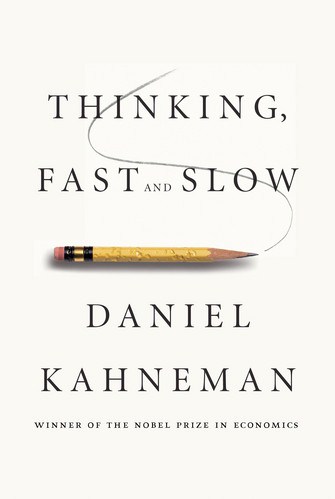
My intuition and intelligence both told me that Daniel Kahneman and his Thinking Fast, Thinking Slow are largely bullshit.  I based this view on its oversimplifying and overreaching (all of which are habitual in behavioral psychology) as well as methodological lapses that even I could see, confirmed and elaborated on by the eminent psychologist Jerome Kagan.

But what I didn't realize was the immense influence of Kahneman and his analysis on major institutions, especially on the Internet, that ultimately may have decided the 2016 elections.

These revelations (to me anyway) came in a penetrating review  by Tasmin Shaw of a new highly laudatory and uncritical book on Kahneman and friend,  published in the New York Review of Books.  It leads quickly into the Orwellian world of yet another ultra conservative billionaire and apparently the only thing that unites Bannon and Kushner, the Cambridge Analytica firm that claims to have essentially elected our Homemade Hitler.

Kahneman became famous among economists for his insight that, contrary to classical market economic dogma, people do not rationally choose to spend their money in ways most advantageous to themselves, but let emotional factors override their calculations.  Incredible insight!  Even though this is the very foundation of advertising, and that the heart or appetites winning out over the head with tragic and comic consequences is the theme of countless novels, plays, folk tales and myths over centuries. Amazing!  Give that man a Nobel Prize!  (They did.)

But his current fame is based on his binary worldview of human decisionmaking, between the fast (irrational, cf. emotion and intuition) and the slow (rational, meaning in his terms, doing the math.)  His theory exemplifies its conclusions, in that it is easier to manipulate communication if you know what your audience wants to hear and you present it to them in an appealing way, such as a very simple theory that gratifyingly explains everything with just two cute and easy- to- remember choices.

But he did produce some math, and together with massive data collection, it did help create algorithms and some less than savory techniques to manipulate choices by going directly to emotions, used with alacrity by Amazon and Facebook, among others.

Though the Obama administration made some use of some offshoots of this behaviorial psychology model, Shaw writes, actual political manipulation is claimed for the far right consulting group Cambridge Analytica that cut its teeth proudly manipulating elections in the third world, then may well have worked for the most reactionary Brexit advocates, then definitely did work for our apprentice dictator, and may still be doing so.

Some of the techniques and the Cambridge A. connections to billionaire Robert Mercer and the White House are chillingly described in this Guardian article.  Here again there are Russian connections--like the zombie websites waiting for the trigger word--and there may be more, if indeed Russian agents stole voter registration data and passed it on through the R campaign to political micro-message manipulators like Cambridge A.

Some dispute its effectiveness, Shaw writes. "But this doesn’t mean that there is no threat to democracy once we start relying less on information that can be critically scrutinized in favor of unconscious manipulation."  That manipulation may include actually subconscious phenomena, Shaw suggests, through the use of what used to be called subliminal advertising--for example, emojs flashing on web sites too fast to be consciously seen.

All this is at least as old as Vance Packard and The Hidden Persuaders in the 1950s, but its now on computational and electronic steroids.  There is perhaps an irony in that Kahneman began by advocating for the rational side.  But, as Shaw writes: "The two-systems view has managed to lend the appearance of legitimacy to techniques that might otherwise appear coercive."

Shaw states his own rejection of the Kahneman model:

"Psychologists have not yet uncovered the fundamental mechanisms governing human thought or finally found the secret key to mind control. Since the human mind is not straightforwardly a mechanism (or we are at least far from proving that it is) and its workings are unfathomably complex so far, they may never succeed in that venture. Some of the biases they have identified can easily be redescribed in ways that don’t make them seem like irrational biases at all; some are not transferable across different environments. The fundamental assumption of two discreet systems cannot be sustained."

But--Shaw warns:"this does not mean we can disregard the propaganda initiatives derived from Kahneman and Tversky’s work," especially when wedded with the global influence of the Internet and the power of Big Data.  Big Data magnifies Big Lies.

Shaw's conclusion is glum: "It is still possible to envisage behavioral science playing a part in the great social experiment of providing the kind of public education that nurtures the critical faculties of everyone in our society. But the pressures to exploit irrationalities rather than eliminate them are great and the chaos caused by competition to exploit them is perhaps already too intractable for us to rein in."

The only hope in that regard lies in Kahneman's basic mistake: his fast and slow division, which distorts the nature of both intuition and intelligence.  Actual intuition and intelligence enable us to see patterns (so for example that Homemade Hitler's moronic soundbite speeches finally make sense as crude recitations of the keywords identified in this research as triggers for a selected audience.)  And they also enable us to take charge of changing our own minds--a topic I hope to go into here soon.

Monday, March 27, 2017

The Point

The cultural divide (if that's what it is) was never clearer to me than in these paragraphs from Edward Ball's article, "The Mind of Dylann Roof" in the New York Review of Books, March 23, 2017.  (Though NYRB offers free access to a lot of articles, this one beyond the first few paragraphs requires subscription.)  Who is Dylann Roof?  See paragraph 3.

"Guns are embedded in South Carolina culture, with every attempt at firearm regulation trampled by the state legislature. Fathers give their sons, and some daughters, guns in rites of passage... 
This is cheaper than...

Dylann Roof got his gun. His father gave him money for it on his twenty-first birthday. “Happy Birthday! Here is $400 for the gun and the concealed carry permit,” the card read.

I went to the gun warehouse that advertised AR-15s to see the pistol Roof used for the massacre of nine African-Americans at Emanuel African Methodist Episcopal Church in June 2015. Palmetto State Armory, in the Charleston suburb of Mt. Pleasant, is the size of a big box store. It was previously a supermarket. (The company’s motto, on its logo, is Desperta Ferro—“Awake the Iron.”) The idea that a young man shops for guns in a 40,000-square-foot store with Van Halen playing on the ceiling speakers is, in this part of the US, unremarkable.

In the middle aisles are ammunition, gun sights, accessories, gun cases, and targets—bull’s-eyes, plus targets in the shape of men, like a guy in a hoodie. On the left side of the store are racks and racks of rifles, shotguns, and assault weapons, propped like rakes, by the hundreds. And in dozens of locked glass cases, like jewelry, the handguns.

I walk along one hundred yards of glass cabinets, past the Smith & Wesson case, the Browning case, past Springfield, Sig Sauer, Kemper Pistol, Uberti, Baer, Beretta, and arrive at the Glocks: engineered in Austria, manufactured in Marietta, Georgia. Roof used a Glock 41, a .45 caliber gun that feels like artillery in the hand—black, nine inches long, thirty-six ounces loaded.

“That’s the big daddy,” says the salesman, “for target and home defense. Holds thirteen rounds, strong recoil.” The salesman is a small man with a tenor voice, which he throws an octave lower to assist in male bonding. “I have a Glock 36”—he pulls back his jacket to show the holstered gun—“smaller, better for concealed carry.”
...this.

Roof added a laser sighting to his Glock, which throws a red dot where the shot will land, and he used hollow point bullets. Hollow points are more lethal. When one hits a person, body fluids enter the tip and cause the metal slug to spread and deform into a spiked wheel, which continues to progress, shredding internal organs. They cost about seventy-five cents each, twice the cost of a standard bullet."

We'd like to believe that the gun culture is primarily about "sport," either target-shooting or some traditional practice of hunting, within the law and with respect.  But this excerpt makes clear that "concealed carry," targets shaped as men and especially the hollow point bullets, have nothing to do with either image of sport.

Hollow point bullets, which have no function other than to shred the internal organs of human beings, sell for seventy-five cents.  You can't get a Milky Way for that.

Thursday, March 23, 2017

The Editor


What a hard week: the death of three irreplaceable voices and icons of the age, all in their late 80s.  And joined by a fourth: Robert Silver, who died on March 20 at age 88.

Silver was the surviving founding editor of the New York Review of Books, itself an irreplaceable element in global intellectual life as well as in domestic politics since it began in the 1960s, which is also when I started reading it.  I can add little to all the praise by those who knew him and were edited by him, except that I was and remain envious of the experience and the relationship.

He did email me once out of the blue--or had his assistant email me, since he didn't do it himself. He wrote about piece I did on NYRB, specifically on the articles in the then most recent issue. So my one and only communication from Robert Silver was this: "I was touched by what you said about the paper. During 46 years, I’ve never read a piece in which a writer said what was actually in an issue." 

I notice now that in several of the remembrances, writers note that Silvers always referred to the NYRB as "the paper." But at the time, I was astonished that no one had ever written about a specific issue before, as well as that he would write me about it.  Or even that he saw it--this was not even an article in the San Francisco Chronicle or other publication, but on Daily Kos (and here at the Daily of course.)  I assume the same assistants who handled his email found the online piece, and printed it out for him.

There are remembrances online at the NYRB site, and several others at the New Yorker site: here, here and here.  Read just a few and you'll see why Bob Silver was the paradigm of Editor.

I can only echo one of those quoted, famed editor and NYRB writer Robert Gottlieb: “The loss to all his writers is profound, and the loss to our poor imperiled world, incalculable.”

May he rest in peace.  The good he did lives on, and let's hope the example he set does, too.

Wednesday, March 30, 2011

Defend Yourself, Then Ask for Help

National Public Radio is one of the Rabider- than- ever- Right's targets. The House GOPers are trying to x them out of the budget, even though they don't get much federal money anymore anyway. There's the usual liberal bias wasting taxpayer's money arguments but fueled this time by a gotcha video earlier this month that got a lot of publicity, and led to NPR firing some of its execs. You may remember reading or hearing about this. What you didn't read or hear--especially not on NPR--is that the gotcha tape was the usual Lying Right distortion-by-editing bullshit.

Which prompted Bill McKibben to write in a NYRB blogpost: "What’s almost as disturbing as the persistent right-wing attacks on an institution respected and relied upon by the broad public is NPR’s seeming unwillingness to stand up for itself."

McKibben notes that NPR is not the radical liberal counterpart to FOX that even the rest of the media calls it. But he nails its true sin: "NPR...is (along with a few non-NPR programs that also run on public radio stations) pretty much the only radio operation actually drawing large numbers of listeners that’s not controlled by the right wing." Which the Rabid Right can't tolerate. So they made this lying video--and they got away with it.

This wasn't supposed to happen anymore--and McKibben correctly brings up the example of Shirley Sherrod, who was libeled for racism by a video like this, until the whole video was seen and the lie was exposed. But guess what? Nobody bothered to look at the entire video this time, not even when the liar himself boldly posted it on his website. Nobody except...a producer for Glenn Beck. And the video was exposed for taking the damaging quotes out of context, etc.

NPR didn't do this. NPR didn't fight back, except to use this as a fundraising tool. Well, that's not good enough. McKibben is right--it calls NPR's commitment to reporting into question more than anything the Rabid Right has done. Of course I still support NPR. But I'd be a lot more enthusiastic if NPR defended itself with the truth.

Thursday, September 30, 2010

Tony Judt


The last two quotes posted here, from Emerson and William James, both apply to Tony Judt. There's a fine memorial piece on him by Timothy Garton Ash in the New York Review of Books. Here are some excerpts:

"Critical though he was of French intellectuals, he shared with them a conviction that ideas matter. Being English, he thought facts matter too.

There are, broadly speaking, two kinds of polemical intellectuals. There are those for whom the taking of controversial positions is primarily a matter of personal peacock display, factional or clique positioning, hidden agendas, score-settling, or serial, knee-jerk revisionism. Then there are those who, while not without personal motivations and biases, are fundamentally concerned with seeking the truth. Tony Judt was of the latter kind.

Sharp and cutting his pen could be, but his work was always about seeking the truth as best we can, with all the search tools at our disposal—from the toothpick of Anglo-American empiricism to the searchlight of Gallic overstatement. Unlike the other kind of polemical intellectual, he was always in good faith. And he was always serious. Not drearily earnest—he enjoyed the acrobatics of intellectualism as others enjoy baseball—but morally serious. This was as true in private chat as in public discourse. In what he said and wrote, there was always that moral edge. He felt what he himself called, in a study of three French political intellectuals, the burden of responsibility.

Tony Judt was a very public intellectual but a very private man. He had a rich, close family life. In the last months of his illness, his wife, Jennifer Homans, and their sons, Daniel and Nicholas, set up for him a screensaver slide show on his desktop monitor. Besides happy moments from family holidays, it showed a lot of mountains (particularly the Alps) and railway stations—trains and mountains being two of his private passions.

Tony was a fighter, and he fought this illness with all his strength and will. Not for him the consolations of imagined eternity or Kübler-Rossish “acceptance.” We laughed at the great line that the English playwright John Mortimer reported coming from the mouth of his dying father: “I’m always angry when I’m dying.” He was a clear-sighted realist about what was happening to him, and what would or would not come after. Less than three weeks before he died, I said something to the effect that I knew he was going through hell. “Yes,” he said, with the eye equivalent of that no longer possible shake of the head, “but hell is a nontransferable experience.” So better to talk of other things: friends, bêtes noires, politics, books.

With the dedicated support of his family, devoted students, and professional carers, he found a way to go on doing what he did best—thinking, talking, and writing. In fact, the two years of his fatal illness were the occasion for a creative outpouring, with the Remarque Lecture on social democracy expanded into a short book (Ill Fares the Land, 2010); a set of memoir essays, composed in his head in those long periods of immobilized solitude, and then dictated (some have been published in these pages; the complete set will appear in book form as The Memory Chalet); and a book in which Tony talked through his planned intellectual history of the twentieth century, in conversation with Timothy Snyder. On e-mail—for once, an unmixed blessing—he could continue to “speak” in his old voice.

It is probably inevitable that his life and work will now be viewed, at least for some time, through the prism of his cruel illness—and the quite public way in which he described and fought it. But death should not be allowed to define life. These were, after all, only two years out of sixty-two. As a hardheaded, nonreligious, unsentimental realist, Tony would have greeted any formulaic sentimentalities about what “lives on” with that dismissive shake of the hand. But in some important sense, his intellectual Czernowitz is still alive; and his books will long be walking and talking among us."

Wednesday, July 21, 2010

Consequences: China

China is big. Really big. You just won't believe how vastly hugely mind-bogglingly big it is. Not to mention chock full of people. Many many people in incomprehensible number. The world's largest economy, the world's largest polluter, it just became the world's top energy consumer, surpassing the U.S. Despite its reported plan to consider spending a hugely vast amount of money on clean energy, China's contribution to heat-trapping gases building up in the atmosphere and causing global heating will continue to grow.

But also as a consequence of its size and density--and particularly its geography--China may experience some brutal consequences from forced climate change above and beyond what other countries may suffer in common. Which has huge, vast implications not only for the billions of people there, but for the U.S. and its national security--even if dumbbell CA Senate candidate Carly Fiorina can't see it.

One reason can be found in a precisely written piece by Orville Schell in the New York Review of Books (May 27, 2010.) The reason is in the title: "The Message from the Glaciers." The result of shrinking glaciers, particularly in the Himalayas, is likely to curtail water flow in major rivers and cause all kinds of havoc in much of Asia, including China and India.

India is also really really big. (This is going to be a theme here, so adjust your thought processes.) It is also teeming with people, with a rapidly expanding economy and consequent growth in energy use--and demand for resources. Also (lest we forget ) like China it has nuclear weapons.

Melting glaciers in the polar regions may get the most media attention, but the nearly 50,000 glaciers in the Himalayas, writes Schell, feed Asia's ten major rivers and contribute hugely to water supplies as well as seasonally based agriculture. While an error in estimating the melt in the last IPCC report got a lot of attention, the fact that this melting is occurring rapidly--partly because these higher elevations are heating up faster and hotter--is conveniently ignored.

One consequence: "As Zheng Guoguang, head of the China Meteorological Bureau, recently put it, “If the warming continues, millions of people in western China will face floods in the short term and drought in the long run.”"

As if the heating as a general consequence of fossil fuel-induced global heating wasn't enough, the very melting of the glaciers accelerates the process. Buried beneath top layers of snow and ice is the black carbon that accumulated underneath, as a result of fossil fuel burning (especially coal, the primary fuel in China .) That it is black negates the reflective ability of the white glaciers and leads to more melting. That it is carbon means that more global heating-causing gases are released into the atmosphere:

On the accumulation zone of one glacier in the Qilian Mountains in western China, Hansen and Yao found that “fresh snow melted within two days, exposing dirtier underlying snow with black carbon concentration seven times greater than the fresh snow.” They concluded that the soot burden, which had markedly increased since 1990, had now become “sufficient to affect the surface reflectivity of the glaciers,” by increasing their “effectiveness in absorbing sunlight.” With their natural reflective and self-protective ability, or “albedo,” impaired by soot, and with temperatures continuing to rise, scientists like Hansen and Yao now fear that “most glaciers, worldwide, will be lost this century, with severe consequences for fresh water supplies.”

And below all that is the permafrost, which releases even more of these gases when it melts:
But the most profound global impact of this thawing, which has already begun, will be the enormous amounts of methane gas—roughly twenty times more potent in heat-trapping capacity than CO2—that will be released by the decomposition of once-frozen carbon rich organic matter in the area’s soil. Indeed, continued thawing threatens to turn what has been a major carbon-sink—sequestering about 2.5 percent of the world’s soil carbon—into a huge new source of emissions."

These consequences of melting aren't unique to the Himalayas--the attention paid to the Arctic region (including Alaska and northern Canada) and the Antarctic is more than justified. And these aren't the only consequences. But they do suggest several things: How really big changes--particularly for human civilizations as well as other lifeforms--can come from what may seem like small temperature changes. How consequences on the other side of the world can affect everyone on this side (especially considering how China seems to be making nearly everything we use, and the country holds our national debt and financial future in its hands, as well as the geopolitical, military and therefore national security issues.) And how consequences "snowball" in an odd reversal of that metaphor's reference. The snowball becomes much larger simply by rolling down the mountain because of the snow and other material it can accumulate. In this case, the consequences "snowball" as glaciers melt.

Schell doesn't discuss appropriate actions since they are by now obvious. He notes that the temperature rise expected by mid-century (more than 2C) is more than enough to continue and accelerate glacier melting which is already affecting, for example, 95% of the glaciers in Tibet. So consequences are coming, and should be prepared for. But he also notes that unless heat-trapping gases emissions aren't severely cut, the rise could more than double, with faster and worse consequences.

But he does end his article with the conundrum--or by now familiar lament-- of why urgent action isn't being taken in view of these well-known realities. His final statement: "And many more studies should be undertaken to scientifically clarify all these links. But there is already enough information for the world to know that we confront a very dangerous prospect, with no adequate effort underway to find the missing link between the knowledge we already have and action".

It is the question of why this emergency is not being appropriately confronted which I, in my unbelievably small way, hope to address hereabouts in future posts. Please stay tuned.

Thursday, May 21, 2009

Follow-Up: The New York Review

A few weeks ago, I posted here about why I value the New York Review of Books, and on an impulse, posted it at Daily Kos. It got only about a dozen comments and fewer than 20 recommendations, but eventually it appeared on the Rescued Diary list.

Then a few days later I got an email from an editorial assistant at the New York Review, which contained a PDF version of a brief note from Robert Silvers, who has edited the Review from its first issue in 1963.

It said: I was touched by what you said about the paper. During 46 years, I’ve never read a piece in which a writer said what was actually in an issue.

Awesome, and yet, I was aghast: nobody, in 46 years, had written about what was actually in an issue? Yet for 46 years, this man kept it going, and kept its quality and voice. That's truly awesome.

Although there were only 14 comments at kos, two of them stand out for what they say about the particular effects of this periodical.

From Dana Houle:

I grew up in a place where nobody went to college. My family also got three newspapers a day, and they bought me books because I was expected to go to college, but you can't say I "grew up around books." Nobody in my family had graduated high school. When I graduated high school, I couldn't write a complete sentence. I went to community college, got caught up on my basics, and then transfered to a pretty good state university. The first term I was there, a historian, a Viennese-Jewish emigre who came to the US as a teen, worked as a skilled craftsman while in grad school, and a man of the working class left, took an interest in me. He could tell I was trying to become educated, that I had many interests, but numerous holes in my knowledge. His suggestion was that I should start reading the New York Review of Books, every article, every edition. It's one of the best things that anyone has ever done for me. And the NYRB is one of the most enjoyable and invigorating things in my life.

and from someone else:

I used to think I was really intelligent until I picked up a friend's copy of the New York Review of Books and tried to read it. I could feel a whooshing gust as the contents went right over my head. Maybe if Jon Stewart did a Comedy Central version, I would catch on?

If you don't know what we're all talking about, the online version is here. But it's the full paper version that means the most. Here's the wikipedia history.

Sunday, April 26, 2009

Rahm was Right: Read the New York Review of Books!

Update: A version of this made the Rescued list at Daily Kos.

When the release of the torture memos was criticized, White House Chief of Staff Rahm Emanuel responded, "Go get the New York Review of Books!"
He's right--and for more reasons than he meant specifically in that interview.

He was talking about the Mark Danner articles about the secret Red Cross report on U.S. torture, that ran in the April 9 and April 30 issues. But this kind of reporting, which may seem odd to those who don't know the tradition of the New York Review of Books, is only one reason to read this periodical.

As it happens, my subscription is up for renewal. So I'm about to tell you why I'm ponying up to renew it. The first reason is that tradition of reporting represented by Danner, with the kind of courage and in the kind of detail that got me reading this periodical a long time ago.

In the mid and late 60s, when the very young New York Review was among the few publications to expose the lies supporting the Vietnam War. It did so with essays and reporting, and with--perhaps most surprising to readers today--reviews of books.

I recall one vividly. It was a review of Air War: Vietnam by Frank Harvey, which simply reported on the reality of U.S. bombing and the devastation it caused. The review by author Robert Crichton (which is excerpted on the back of the paperback edition of the book)reproduced sections of the book and summarized others. The book had been published some time before and was unnoticed until this review.

For those of us not in New York or even on a large politically active campus, sources of information were few. We got pamphlets etc. from various antiwar organizations, but we relied on just a few sources, like the magazine Ramparts in San Francisco, a scattering of articles in Esquire and other magazines, but most of all, the New York Review of Books.

This was important, because opposition to the war was fed by facts, despite the movies you may have seen. Teach-ins were important and substantive. We were steeped in the history of southeast Asia, in the experiences of colonial regimes, in geopolitical theory and realities,as well as the suppressed facts about what was actually happening in Vietnam. So the recent Mark Danner pieces are squarely within that tradition. (They are online here and here.)

But just as important as the reporting and political discussion is the context of books and the culture of intelligence. We exist in an interrelated world where it is impossible to understand politics--and such complex and emotional issues as torture as an interrogation technique--without knowing as much as we can about what humans are thinking and feeling in a given time, and where historically those thoughts and feelings come from, as well as what light current science can shed on what seems inexplicable. Plus it's a big world.

There are lots of books published about all kinds of important and fascinating subjects, as well as novels and volumes of poetry that provide their own kinds of information on our world. The New York Review's writers--among the best writers and scholars around---write in depth and enough length to give us the gist of the books under discussion (and let's face it, it's unlikely we'll read all of them, so this is about as much as we'll learn from them) as well as trenchant commentary and informed context.

The April 9 issue, containing the first Danner piece, is a great example. It has Pico Iyer reporting on the current situation in Tibet and the Dalai Lama. It's relatively brief yet covers a lot of ground incisively, informed by personal experience, so it's probably the best you could read anywhere.

How about connecting the economic crisis to the foundation ideas of major religions, as well as the planet, the past and the future? Novelist Margaret Atwood does in a new nonfiction book, and John Gray's review describes and summarizes it in a tantalizing way.

There's also an interesting review of Robert Kaiser's book on lobbying in Washington, Anthony Lewis on a book about lawyers, pieces on the South African president who followed Mandella and the courts in Cambodia.

But in this same issue is a review of a new novel by Zoe Heller, Freeman Dyson writing about a new book on a unified physics theory, Jeremy Bernstein on Big Science. Books on Lincoln, what makes the French French, and Flannery O'Connor.

There is also the best article I've read on the poetry of John Ashbery, by Dan Chiasson. It's trenchant and comprehensive, and without jargon, cant or any obscurity. It is a great example of what the New York Review publishes at its best. I believe in the liberal arts ideal as well as liberal ideals--and this publication brings both to life, in the moment.

This is the Spring Books issue, so not every issue is this big or good, but it gives an accurate idea of the range. Politically as in the arts and sciences, the Review gives space to well articulated arguments of various persuasions--in fact, the new May 14 issue has an article calling for the limitation of presidential power by Senator Arlen Specter.

The New York Review places some but not all of its articles on the Internet, so the paper edition is essential. My biggest problem with the Review is the same now as it always was: getting to read all that I want to before the next issue arrives. This year I did pretty well through the fall and winter until March. Now I'm behind. But the publication schedule slows in the summer (it's normally every two weeks), so I'm looking forward to some hours in the sun catching up. Right now though I have to make sure the issues keep coming, by renewing my subscription.