Showing posts with label 2022 elections. Show all posts

Friday, November 11, 2022

This Week is Not Last Week

 John Kenneth Galbraith coined the phrase "the conventional wisdom" back in the 1950s, and for awhile it became a conventional description, until it mostly faded away.  Too bad.  It's even more necessary now. The conventional wisdom is always powerful, and is made more powerful by the echo chamber of news media and social media.  The problem is that while it becomes conventional, it does not always reflect wisdom.  Hence the 2022 elections.

In the early 1970s, journalist Timothy Crouse came up with the phrase "pack journalism." (This in turn was a play on the earlier phrase, "hack journalism," popular in his father's day.)  Tim observed its manifestation aboard press buses during the 1972 election campaign.  In those days, the wire services were very powerful--their news stories were published in hundreds of newspapers around the world.  Reporters who didn't file the basic story that the wire services did on a given campaign day had to justify their different story to their editors.  Most simply found out what the wire service reporters were saying the story of the day was, and they more or less parroted it.  

That was the most obvious form of pack journalism.  But just a busload of reporters, together all day and every day, talking about the campaign, tended to form the news into a conventional wisdom.  They wrote the stories, and politicians etc. had to react to it; editorial writers and other reporters picked up on it, and so on.  Pack Journalism.

Today there's no leader of the pack--nobody has that authority--but there is pack journalism nonetheless.  The busload of journalists is now called the Internet plus cable news.  The conventional wisdom can form fast and is sped around the world mostly by social media. In this sense, the conventional wisdom becomes an algorithm.  It is self-enforced, and self-reinforced. Everybody is their own editor--they are afraid to be wrong, so they amplify the echo.  

Several columnists analyzed why the media was so wrong; Dana Milbank in the Washington Post was especially specific.  But those who blame only the punditry have it half right: the same conventional wisdom that the pundits push markedly influenced news headlines and coverage.  That's one reason I stopped reading the news a week or more before the election.  They clearly had a story and they were sticking to it.  There would be nothing new to learn.

Last week's conventional wisdom was the coming Red Tide of Republican victories.  This week's conventional wisdom is that Democrats did amazingly better than expected.  In between, voters voted, with quite possibly no reference to either story.

The overall outcomes of this election are still unknown, since many elections--including key ones--are not yet tallied.  The initial fallout suggests however that things have calmed down.  The elections worked well, candidates who lost mostly conceded, there was no appreciable violence during or after Election Day.  Most of the offices that handle elections will still be run by people who respect the results.  

A parallel story this week involves the chaos at Twitter.  Facebook seems to be a primary conduit for right wing craziness at the grassroots, but Twitter has been the chief social media enabler of pack journalism and the moment-to-moment conventional wisdom.  (At least that's how it seems to me. All I know about social media is what I read in the paper.)  A wounded (and hence less fashionable) Twitter might help calm the info waters at that level as well.  It may be that particular fever has broken, too.  Who knows?

It may not be more than a momentary lull, time enough for a deep breath, and maybe a subtle reset or two. Meanwhile, the fate of the Earth is being addressed at the COP27 Climate Conference.  Serious people have made a serious proposal for nations that enriched themselves with carbon-producing industries to start taking responsibility to help the poorer nations that are already victims of catastrophic climate disruptions.  It's good to know that American democracy can still basically function (a low bar in other years.)  It's even better if there really are serious people at work on the world's critical problems. 

Friday, November 04, 2022

Winter is Coming

  In the 2022 elections, some voters—no one yet knows how many—will cast their votes for a government that might best be described as authoritarian anarchy.

 This description may seem paradoxical, but unfortunately it fits.  Authoritarian dictators are at least supposed to make the trains run on time (which contrary to cliche, I'm told Mussolini didn't.)  In our 21st century American version, the trains may run only in the metaverse and on social media.  In the shared world of complex functions and dangers come breakdowns and chaos.

But on second glance, anarchy is the eventual state of authoritarian government, even (eventually) a police state.  These authoritarians at least are detached from reality twice: first because of their fealty to fanaticism, and more directly, because they are thoroughly corrupt.

For the Republican party is led by authoritarian demagogues, whose disdain for basic American democracy is loud and ever more audacious. But they have no actual policies that bear any kind of scrutiny, only slogans.  Most of them have no interest in governing nor skills to do so, and don’t much care. They are not serious people.  If they get the reigns of power in their hands, self-perpetuation will be their only goal, with other problems left unsolved, addressed only by hate and lies. Even previously routine functions are endangered by their ideological screen.  The end result is anarchy, and because of prior damage to previously resilient institutions, that end could come quickly.

 While these and other voters may have legitimate grievances, especially against the wealthy corporations and individuals that have stolen their incomes and redistributed it upwards, those grievances will once again not be addressed, and since they were enabled by several previous Republican administrations, likely made worse.

 Some of these votes, probably many of them, are in protest, and those who have thought this through may assume that, as in the past, this protest will result in the governing party (the Democrats) mending its ways and becoming more responsive.  But this time, with the very institutions that could make that possible under attack, it may become almost impossible.  Because this kind of anarchy is a kind of domestic war. 

 Most of these voters cannot imagine that the anarchy they loose will actually affect them.  But it will.  It reminds me of the notorious election of 2000, when well-meaning people on the left bought into the “Gush v. Bore” notion that there would be little difference between the presidencies of Al Gore and George W. Bush, and so it was safe to vote in protest for a hopeless third party candidate.  The next few years were shocking for all of us, but most of all for them.

 Imagination is an under-appreciated survival tool.

  Although a history through the past several decades can be traced that lead in this direction, it is supercharged to a frenzy by social media, and the resulting tendencies of news media that emphasize their worst impulses.  Still, in the still of the night, it is hard for me to imagine why anyone would vote Republican in this election.  It’s hard for me to imagine what people are thinking, as they spout venomous slogans against “the elite” that looks down on them, and then support candidates whose few discernible policies further empower the actual elites, who are already so powerful that in nearly every situation—prosperity, recession, inflation, peace, war and pandemic—they make even more money.  However, even for them, eventually the wolf will surely come.  That’s the future of authoritarian anarchy. 

Friday, October 14, 2022

The Armageddon Watch


The question of whether Putin's Russia will deploy a nuclear weapon in Ukraine is a live one.  If it happens, it is likely to happen soon. The tenor in the so-called liberal media is that Putin is losing and weak, without options. But last week I believe it was the NYTimes conservative columnist Brett Stephens who predicted Putin will deploy nukes, and he suggested Kherson as a possible location. Kherson is the first city and region that Russian troops controlled at the beginning of their invasion, but Ukraine troops are closing in on it.  The Ukraine forces have already retaken a number of villages in the region.

 Since that prediction, it looks to me that the chances of a nuclear weapon being used there has increased.  So far I've only seen the Guardian reporting on the evacuation of Russians and Russian sympathizers from the region, announced by the Russian puppet governor who requested and received official Russian help in evacuating.  To me, this is an ominous sign.  If a nuclear explosion is planned there, this would be a first step. 

Putin's apparent weakness is a reason it could happen. Russia's missile attacks on Ukraine this past week were seen as a vicious but futile response to recent humiliating defeats, without military advantage.  Russia used a number of expensive weapons in the attack, and western analysts say they are likely to be depleting their available missiles, since they cannot get high tech parts from western sources anymore.  If this is so, then Putin has pretty much only his sizable arsenal of tactical nuclear weapons left as "options."  Several weeks ago Putin repeated that all types of weapons can be used--and more than hinted this includes nukes--in Russia's self-defense.  He then began the elaborate charade of essentially annexing parts of Ukraine into Russia, and one of those places is Kherson.  All of this looks like step by step preparation, though so far no one in the west is saying so publicly.

Putin's groundwork has also allowed the US and western Europe to figure out exactly what they will do if Russia uses nukes.  The element of surprise is gone.  The world will be shocked, but it is unlikely that Putin will gain military advantage because of it.  Quite the opposite.  But exactly what will happen can't be known, except that it could happen very fast.  This is another case of letting slip the dogs of war, of self-renewing and escalating violence--with uncontrollable consequences.  It all has a tragic inevitability about it.

Here in the US, the slow motion Armageddon of democracy seems about to move faster, one way or another.  Several things are coming to a head.  Donald Trump is likely to face indictment for crimes on the federal level (either directly related to Jan.6 or to crimes associated with his theft of classified documents, or both), and on the state level (in Georgia, for election tampering; and New York, for financial crimes, not to mention a rape trial.) No one knows when any of these will happen, but one or more of them could be relatively soon.

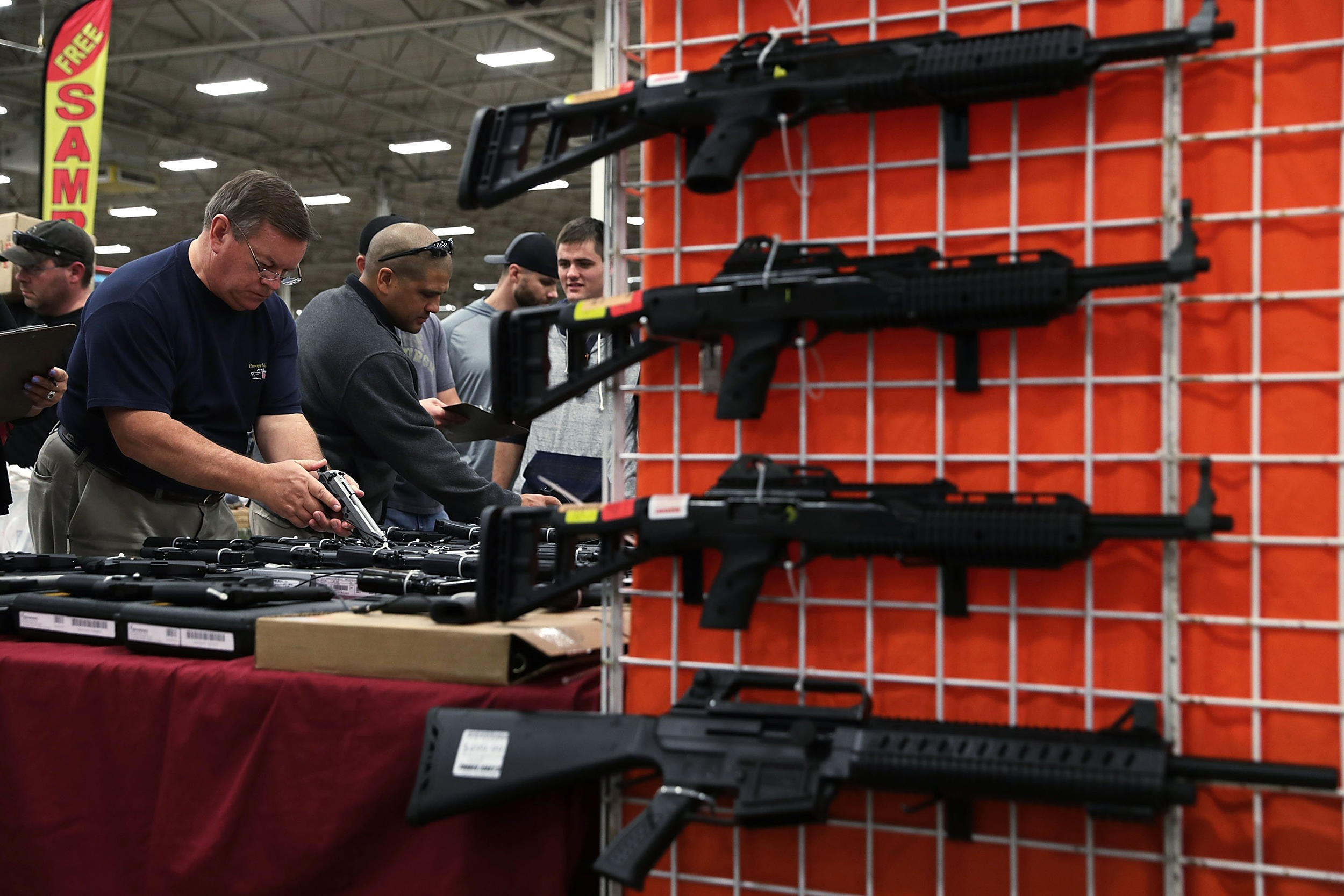
Why is that a threat to the Republic?  There was a debate in the pages of the NYTimes this past week on whether the US faces a second civil war.  As usual, the semantics of it cloud the issue (exactly what is a civil war?)  But one journalist who has been interviewing far right/Christian right zealots for decades, wrote in the Atlantic that if and when Trump is indicted for just about anything,  large scale political violence is likely to break out.  He cited in particular how heavily armed these people are, and what they are expecting to do with those weapons.  He said that at gun shows during the Obama presidency, the reason people gave for stocking up on military weapons was the fear that because of school shootings, the feds were going to come after their guns.  Now (he said) what he hears more often is that they are convinced they are fighting a war against the Great Replacement etc., and the government is their enemy.  They are preparing to fight the federal government in particular.

Another participant in the discussion, a NY Times columnist with a deep knowledge of American history and the Constitution, agreed that political violence is likely, but the US has often suffered some small scale political violence.  And he wondered if these people have the stomach for large scale, sustained warfare against trained troops.  I agree that this is uncertain. So far political violence has been perpetrated by individuals or small groups, almost always against the defenseless: congregations in a church or synagogue, old people in a supermarket, children in school.  In other words, the act of heavily armed, camo-clad cowards.

Even the attack on the Capitol last January showed division.  Some people came to commit violence against the Capitol police and anyone who stood in their way.  Most others seemed more interested in taking video with their phones and posting it, breaking things and taking souvenirs.  No one can really predict what might happen (the dogs of war again) but we are quite possibly going to find out.

Then there is the upcoming election--another grave threat on many levels.  The election polls appear useless and other surveys of attitudes etc. are contradictory, but the punditry suspects the momentum in favor of the Democrats because of the abortion decision is waning, and continuing inflation and rising gasoline prices are favoring Republicans. Because they are so much more likely to fix that, and their candidates have detailed policies and plans to do so.  Just kidding.

 The old 33% of the electorate who were Always Trumpers now seems to have become 40%, and Republican power brokers are looking only at the R, not the candidate.  Will voters follow, and support the certifiably insane, the holy warriors, the authoritarians and white supremacists, the thoroughly corrupt, the dangerously stupid?  Will this be a wave election one way or another, or a state by state, district by district decision?

We probably won't know for days and possibly weeks after election day.  And unless our news media has gotten better and better equipped to cover this story, we may not know how corrupted the election processes are in individual districts and states.  We can be sure that Rabid Right Republicans will extol every one of their victorious candidates as elected righteously, and every election they lose as illegitimate.

Again, all this domestic potential for Armageddon has historical preparation, and an air of tragic inevitability.  But it may not happen on a very large scale, at least not this year.  However, a Republican controlled House and/or Senate next year may well usher in mayhem, as they hold the country and world economy hostage to go after old people (by slashing Social Security and Medicare) as well as young women, immigrants and the planet. Meanwhile as officeholders these brainless and heartless fanatics will have no capacity to govern, especially in times of complex crisis.  

Well, enjoy your day.  Every day you can enjoy.

Saturday, January 08, 2022

Pivot


On the first anniversary of the attack on Congress by Trump-inflamed insurrectionists, President Biden's speech in the Capitol Statuary Hall--one of the places where the mob fought and injured its defenders--was widely hailed for its forthright condemnation of those responsible, and those who continue to defend what happened (mostly by denying it happened.)  

It was not a distinguished speech rhetorically.  It was repetitious, overusing the clash of direct opposites (democracy not autocracy etc.),  and missing opportunities for more memorable language ("dagger at the throat of America" is less direct and familiar, and therefore less powerful that "knife at the throat of America.")  "Inflection point" is a fashionable expression that even President Obama couldn't resist.  But I doubt it communicates forcefully to the general public. I'm also not sure if it's what he really meant.  An inflection point, outside of math, is a turning point or a pivot point.  But that means a change in a certain direction. Did he mean that, or a point in which things could go either way--a decisive point, or point of decision?  Politically, "we're at the point of decision" between (yes) democracy and autocracy (dictatorship is better) seems more appropriate and powerful.

And while I'm in the communication weeds, my own response is that Biden behind a podium, shot straight on from a distance, is not to his best advantage.  He seems better to me when the camera is closer, or when he is standing without a podium, talking person to person.  I miss the intimacy of those White House talks all Presidents used to give, seated at their desk in the Oval Office. 

But in this speech Biden covered the ground he needed to cover.  He was especially good in placing the attack in the context of American history.  He also made the point that I recall making here just after the election that Trump's minions disputed that Trump lost, but not that Republicans elected on the same ballot won.  He was forthright in condemning Trump, and identifying the Republicans party as dangerous to American democracy, now and for the future.

There was speculation about why Biden hadn't talked like this sooner.  I expect it was part of the plan to work for Republican votes on the infrastructure part of the Build Back bill, ultimately separated from it and passed--with Republican votes.  The pivot to voting rights was always going to be made--although the process of getting that early huge legislation took longer (and a large part of it still hasn't been passed, thanks to Senator Joe Mansion.)  

Meanwhile, Republicans regressed to abject fealty to Homegrown Hitler in a way that nobody predicted.  The only strategy left to get Republican votes for voting rights is shaming them, and confronting them.  Shaming hasn't worked so far, but confronting them could shake things up, since so many of them are cowards.  Congress may even get serious about clarifying rules to prevent the kind of direct reversing of election results either by Congress or in the states that Trump wanted.

Otherwise, we should expect to see some hardball--some momentum behind efforts to call the perpetrators to account, including criminal charges, and confrontation over filibuster rules in the US Senate. We'll see if all of this is more than words in the coming days and weeks.  

But President Biden's speech alone puts pressure on the courts, especially the Supreme Court, to defend the Constitution.  None of it may work.  But by the time it's over, everyone involved will have to own up.  Politicians, like other rich and privileged, always have somewhere to hide.  But their options will shrink.  Come November, the choices should be pretty clear.  

In fact, they should be clear now on the state and local level, where traditional Republicans could join in resisting the Trumpian candidates who want to manipulate elections for El Duce.  It was Republican officeholders that guarded election integrity in several key states in 2020, though most of them will be gone by 2022.  How quickly voters become aware of the dangers of letting election subversives take over voting rules and vote counting may be decisive.

 So far, at least some of the fears broadcast last year have not been fully realized.  Indications are that partisan gerrymandering in the states hasn't changed things much, at least for the next few elections.  And the scary poll numbers being widely publicized, of the high proportion of Republicans who say that the election was stolen, and that violence may be necessary, etc. are basically a majority or near majority of a small minority, little more than a third of the potential electorate.  Getting the majority to vote, and making sure they can vote, and that their votes will count, is the task ahead.  President Biden's speech, and presumably the continued repetition of its main points, should aid in motivating those voters.  

That leaves the battle for voting rights at the federal and state level, and again President Biden's speech begins to make the case for why this is so crucial.  Because there is a knife at the throat of American democracy.