Hope in a Darkening Age...
news, comment, arts, ecology, wisdom, obsessions, the past, the future...
"THE END OF ALL INTELLIGENT ANALYSIS IS TO CLEAR THE WAY FOR SYNTHESIS."--H.G. Wells. "It's always a leap into the unknown future to write anything."--Margaret Atwood "Be kind, be useful, be fearless."--President Barack Obama.
I must have been around 9 or 10 years old when I was allowed
to play my parents records, including 45s on the black RCA 45 rpm player with
the fat spindle. Among my favorites was
an extended play 45 on the Columbia label (which included an ad for Coca Cola)
with six songs by Tony Bennett that included several of his first hits in the
1950s: “Because of You,” “Cold Cold Heart” and “From Rags to Riches,” along
with other releases and B sides (“In the Middle of An Island,” “Come Next Spring”
and “Can You Find It In Your Heart.”)Judging from the wear on the record I played it a lot, and I certainly
remember those first three hits.
If I knew Tony Bennett was Italian it would have seemed
perfectly natural: many of the singers I heard on the radio or saw on TV in the
1950s were Italian-American, including some whose records had Italian titles
and included lyrics in Italian. We had
some of those records, too, like Lou Monte’s comic songs mixing Italian and
what he called “British,” and the 1953 hit “Eh, Cumpari,” in which Julius La
Rosa introduces instruments of the orchestra in Italian (which was fitting,
since the orchestra as we know it was invented in Italy.)
Another 1953 hit was Dean Martin’s “That’s Amore.” The trend
reached its culmination in 1958 with a song entirely in Italian sung by an
Italian artist (and composer) Domenico Modugno, that became an international
number 1 hit with the title “Nel blu, dipinto di blu,” but has forevermore
become known as “Volare” (and a hit under that title for Dean Martin and Robert
Ridarelli, otherwise known as Bobby Rydell.)
The Italian accented song was so popular in the 1950s that
non-Italians like the Andrew Sisters, Eddie Fisher, Tony Martin and Vaughn
Monroe (a local favorite as well as a big star who graduated from Jeannette
High School) recorded them. My Italian grandmother had no problem accepting
“Mambo Italiano” and “Come on a My House” sung by the blondish Irish beauty
Rosemary Clooney. She wasn’t Anna Marie Alberghetti, but…
Tony Bennett, often paired with Rosemary Clooney
I remember Saturdays when we visited my grandparents, ending
in the darkened living watching the Perry Como TV show. It may have helped that Como was a local boy
from Canonsburg, PA, the son of an Italian barber who had plied that trade
before becoming a full-time singer. He
was part of the culture I’d been born into, when my grandparents conversed with
their friends in Italian, and my mother, my uncle and my aunt spoke Italian
with them especially when they didn’t want the grandchildren to know what they
were saying. I went to school with lots
of Italian kids, a number of which I was somehow distantly related to.
The 1950s were the Italian decade in music and American
culture, especially if you include singers at the end of the decade and
slightly beyond not usually associated with their Italian heritage, like
Rydell, Dion DiMucci (Dion and the Belmonts), Connie Francis (who did record Italian favorites later in
her career), Frankie Valli (of the Four Seasons) and Lou Christie (also a Pittsburgh area singer.)
According to Mark Rotella in his book Amore: Italian
American Song, more than 25 Italian singers made the hit parade between
1947 and 1954. Even competing with
early rock and roll, singers like Vic Damone and especially Perry Como had hits
in later years. I was very aware of Como's “Don’t Let The Stars Get In Your Eyes,” “Hot Diggity Dog Diggity” and “Round
and Round” (a big hit in 1956), for example.
But it wasn’t just
Italian voices or Italian language lyrics—many of their hits were based on
Italian folk songs and opera. And they brought an Italian style to what became
known as crooning. That style was a
combination of opera and “bel Canto,” or beautiful singing—a style that Frank
Sinatra pioneered and others adopted, including Tony Bennett.
In his 2012 book Life is a Gift, Bennett attributes some
of his longevity to training in this style.
“The style emphasizes phrasing, pure, even tones, and a disciplined form
of breath control. It never fails to
improve my voice.”
“Bel canto teaches you to love every note that you sing,” he
wrote. “It’s the art of intimate
singing; you’re singing into someone’s ear.”
I remember hearing Tony Bennett’s 1962 hits “I Left My Heart
in San Francisco” and “I Want to Be Around” played often on the radio,
competing with “Mash Potato Time” (the year’s Number 1) and “The Twist.” After that I lost track of him, like a lot
in my generation. But he outlasted them
all—well beyond the Italian crooner years into the second decade of the 21st
century.
Apart from sheer longevity, he had other things going for
him. Bennett was drafted into the
infantry in World War II, and after a scarring experience relieving soldiers
who had fought in the traumatic Battle of the Bulge that turned him
into a pacifist, he began singing with a U.S. Army orchestra put together to
replace the one begun by Glenn Miller that ended with Miller’s disappearance
in a light plane over the English Channel.
He then used his G.I. Bill higher education benefits in an unusual way—he
attended the American Theatre Wing, as did Harry Belafonte (the two became
friends later.) Bennett didn’t try to
act professionally but applied what he’d learned about the Stanislavsky system
to express the story within a song.
That subtle dramatic expressiveness was a key to his style.
Another fascinating aspect of his life and career was his
close relationships with black music and black performers, partly due to his
love for jazz, and partly because he was just that kind of guy, with a
multiethnic upbringing in the working class Bronx. So while Bob Hope was instrumental in giving him an early break,
so was Pearl Bailey. Bennett was the
first non-black singer to perform with Count Basie. He toured with Lena Horne and was so close to Ella Fitzgerald
that they and their families had Christmas together in Los Angeles every year
that it was possible. Nat King Cole, Harry Belafonte, Louis Armstrong and Duke
Ellington were also close friends. Through Belafonte he got involved in
supporting Martin Luther King and marched, not just in Washington but where it
was really dangerous: in Selma, Alabama.
with Lena Horne
His mentors (principally Frank Sinatra), seniors (Bing
Crosby) and contemporaries all lauded the quality of his voice and his
singing. He was known as well as an
all-around good guy.
He had his career struggles: starting out as a singing
waiter, then after success in the 1950s he ran up against the dominance of rock
music that panicked record labels in the late 60s and 70s and ended the careers
of most crooners.
He also faced at least one occasion of the prejudice against
Italians that was also present throughout the 20th century, even in
the Italian decade and beyond it. In
the late 60s Bennett was in a meeting at Black Rock, the Columbia Records
headquarters which was on the exact spot where his father had worked in his
family’s grocery store, when he overheard an executive of his record company
talking about him and saying, “We have got to get rid of that wop.” (That prejudice still exists, when all
Italians are equated with the Mafia, and a collection of the Italian decade songs
is marketed as “Mob Hits.”)
Bennett seemingly
sidetracked himself at times, insisting on recording jazz albums as well as
pop. But in particular his two albums
with pianist Bill Evans gave him credibility beyond the hit parade, helping him
to outlast musical fashion. His return
to popularity came especially in the 1990s, including a hit performance on the
MTV series Unplugged.
with Judy Garland
Throughout his long career Bennett continued to perform in
clubs and other venues, and continued his creative approach to recording. So he was prepared for the happy accidents
that so often define a career. In the late 1950s a pair of New York songwriters
gave sheet music of some of their songs to Bennett’s accompanist, who stuck
them in a dresser drawer and only found them two years later when he was
gathering clothes for a tour. Upcoming
gigs included San Francisco and one of those songs named that city in its
title, so he brought it along.
Bennett sang “I Left My Heart in San Francisco” for the
first time in San Francisco. The
response encouraged Columbia to ask him to record it for his next single. It was supposed to just be the B side, so
Bennett did it in one take. Once
released it slowly built to a major hit, winning a Gold Record, and becoming
his signature song.
When Tony Bennett died this summer at age 96, stories often
lauded him as a champion of the Great American Songbook, a recent
categorization of classic pre-rock songs.
That’s true but a bit antiseptic. Bennett favored songs that connected
with his audience. Apart from their musical pleasure, you can imagine how such
songs as “This Is All I Ask,” “The Good
Life” and “Who Can I Turn To” spoke directly to people out there in the dark,
maybe nursing their last drink late at night. I imagine “This Is All I Ask”
became particularly powerful as Bennett and his audience aged.
But the wonder of his late career is his new audience,
partly due to his jazz cred, and partly because he recorded duets with younger
artists. Like Sinatra in the 90s,
Bennett in 2006 and 2011 made two albums of duets, and did so with the same
producer (Phil Ramone, who’d produced Billy Joel.) But there the resemblance ends.
with Lady Gaga
Sinatra’s voice had faded, and his duet partners recorded
their parts at different times and places to Sinatra’s pre-recorded
vocals. Tony Bennett recorded live only
with his duet partners singing with him in the room (they included Barbara Streisand, James
Taylor, Celine Dion, Diana Krall, Paul McCartney, Sting, the Chicks, Elvis
Costello, Juanes, Aretha Franklin, Amy Winehouse, Natalie Cole, Queen
Latifah, Willie Nelson and Lady Gaga, with whom he did subsequent albums.) Not only did he and those songs inspire excellent performances by his partners, but his vocals on these reinterpretations of his own hits were thrilling and
new. “Because of You” was the first of
his songs I knew, and his version with k.d. lang on Duets is singularly
moving.
In the early 1950s Bennett was often paired with his young
contemporary, Rosemary Clooney; he sang with Judy Garland in the early 60s, and
ended his career on stage with Lady Gaga in 2021.
Cary Grant evidently introducing Bennett to Robert F. Kennedy
His friends included painter David Hockney, cellist Pablo
Casals and poet Allen Ginsberg. For just about anyone else, the typical stories
Tony Bennett told would be called name-dropping and humble-bragging. But his sincerity was unquestioned. And now we have irresistible tales of Cary
Grant horsing around with Fred Astaire, or Astaire dancing alone to a song on
the radio when he thought no one could see him.
Tony
Bennett’s voice was strong and supple to the end. It could and did express a
lifetime. There has been no one like him, not for this long. May he rest in peace. His work certainly lives on.
What strikes me now about the Fleetwood Mac records of the
mid 1970s is how clean the sound was.
The instruments had distinct separation and pop, the lead voices and
backup harmonies balanced and flowed, there was no excess or noise. There was
no rush or frenzy. Yet somehow this produced an irresistible momentum over a tasty beat, and unleashed
the emotional force of the music and lyrics.
This music rang like a bell. It
was cleansing, but at the same time, it startled you and grabbed your attention
and emotion. In the context of the
mid-1970s, it was also hopeful.
I noticed this at the time—after all, I had been paid to
make that kind of observation for years leading up to this moment—but the
emotion and physical energy generated by the songs were primary. I just felt it.
It was a magic lineup musically: Mick Fleetwood’s drums,
John McVie’s bass, Lindsay Buckingham’s unique guitar and Christine McVie’s
keyboards. Buckingham was a vocalist
and songwriter, but the voices unique in pop music at that time belonged to
Stevie Nicks and Christine McVie—very different from each other but both
distinctive.
As is well known now, their lives were messy in many ways (I
once stayed in a Santa Monica apartment where a few weeks before, Stevie Nicks
conducted a secret tryst with—I believe it was—a Beach Boy) but their music was
precise. You could listen to it with
admiration and awe, if you could keep yourself from moving. Their uplifting brilliance was all the
greater for being so widely shared.
These records sold millions and there was always at least one of their
songs on the radio.
At the center of it all was Christine McVie. Her keyboards anchored the music, and her
songwriting defined the group. Nicks
and Buckingham were flashier, but she wrote and sang more of the hits. She had an elegant blues-based sense of
playing and writing (as Christine Perfect—her real unmarried name—she’d been
the mainstay of the 1960s blues band Chicken Shack—and of course Fleetwood Mac
had started as a blues band) and a genius for musical hooks. Her singing style was simple and subtle,
never strained, yet it carried these songs to the heights.
The band predictably imploded by the 80s, though it made
several near-perfect albums in the 70s.
It reformed when unexpectedly, the Bill Clinton/Al Gore campaign chose
McVie’s song “Don’t Stop Thinking About Tomorrow” as their theme/fight song for
the 1992 election, and the band came back together for an Inaugural concert.
They were again a great band in the late 90s. Eventually McVie left the band
again and stopped making music, but then she rejoined and the songs kept
coming. They were and are irresistible.
It’s probably clear from the first entries in this series,
but I’m primarily honoring artists and others who touched my life. The time limits to that are most obvious
with music. The music that moved me and
may well still move me was first generated in the 20th century and
before. I stopped listening to much
that was new as the hip hop and rap era took hold, and I still hear almost no
contemporary pop music (the best of which tends to suggest to me a watered-down
variation on artists that came before. I’m probably wrong, but there you
are.)
Musicians associated with the 1950s:
Jerry Lee Lewis, one of the original rock and
rollers, a weird guy and crazed performer it was impossible not to watch. Ronnie
Spector (the Ronettes), Fred Parris (the Five Satins), Bobby
Hendricks (the Drifters), bandleader and novelty musician Gloria Parker.
Songwriters Paul Vance (Perry Como’s hit “Catch A
Falling Star”), Sonny West (Buddy Holly’s “Oh Boy!”) and country
songwriter Dallas Frazier.
Bobby Rydell
was the best singer among the Philadelphia Italians crooners promoted by Dick
Clark in the late 50s/pre-Beatles 60s. He had a string of hits, and a big
screen role in Bye, Bye Birdie.
I bought his 45s and saw him live at the Allegheny County Fair, partly
because some girls in school thought I looked like him, an impression I
encouraged with my pompadour, until I went full JFK.
Musicians who broke through in the 1960s:
Loretta Lynn
Country great Loretta Lynn, singer (Ian and Sylvia)
and songwriter (Four Strong Winds) Ian Tyson, rocker Ronnie Hawkins,
Dino Danelli (The Rascals), Kim Simmonds (Savoy Brown), Don
Wilson (the Ventures), Rosa Hawkins (the Dixie Cups), Gary
Brooker (Procol Harum), folksinger Judy Henske and Broadway singer Robert
Morris.
Jazz pianist Ramsey Lewis had a 60s hit with “The In
Crowd.”
Bob Neuwirth hung out with Dylan (in the film Don’t
Look Back he tells him that Donovan is a better guitarist) and co-wrote Janis
Joplin’s Mercedes Benz song with Janis and poet Michael McClure.
Judith Durham
Composer Tom Springfield (“Another You” and “Georgy
Girl”) and the lead singer of the Seekers that turned these songs into hits, Judith
Durham.
Composers Montey Norman (the Bond Theme), Lamont
Dozier (“You Can’t Hurry Love”), Lenny Lipton (“Puff the Magic
Dragon”), and Ivy Jo Hunter (“Dancin in the Street.”)
Impressarios of two major 60s events: James Rado
(co-creator of Hair!) and Michael Lang (co-creator of the
Woodstock festival.)
From the 1970s:
Pop singer Olivia Newton-John, Meat Loaf,
folksingers Paul Siebel and Mary McCaslin, country and western
singer Mickey Gilley.
Klaus Schulze (Tangerine Dream), Warren Bernhardt
(Steely Dan), Calvin Simon (Parliament-Funkadelic), Dick Halligan
(Blood, Sweat and Tears), Nathaniel Ian Wynters (the Wailers.) Songwriter Jon Lind.
From the 1980s and 90s:
Irene Cara (“Fame”), Naomi Judd (the Judds),
and Andy Fletcher (Depeche Mode).
Also passing in 2022 were jazz and R&B artists Pharoah
Sanders, Taylor Hawkins, James Mtume, Bobbie Long ‘Beegie’ Adair, Michael
Henderson, Jessica Williams, Barbara Morrison, Jessie Powell, Janet Thurlow,
Joyce Sims, Geraldine Hunt, Barbara Thompson, salsa singer and songwriter
Hector Tricoche, samba singer Elza Soares, calypso singer Kenny J. May they all rest in peace. The music lingers on.
Before this 4th of July weekend is done, something on the lighter side. Margaret asked this question: does every state have a song? Not an official state song but a memorable popular tune.
It turns out there are a number of websites and articles on the subject. They tend to stretch the definition to include the names of cities within the state, or just a reference to the state in the song.
There are also some great songs that reference a number of cities and states, from the classic Woody Guthrie "This Land is Your Land" and Simon & Garfunkel's "America" to Chuck Berry's "Sweet Little Sixteen" and "Back in the USA," Martha and the Vandellas "Dancin in the Street"and a fairly obscure but wonderful Jimmy Durante tune "Any State in the 48 is Great."
It turns out that a lot of songs with state and city names express longings by people no longer there. Others seem to be more about the sound of the names than the places. But then, it's music!
Actually the surprise is that there aren't more songs and better songs about a lot of these places. I imagine there are plenty about local places--blues songs in the South, bluegrass in the mountains, cowboy songs out West--that were never much heard outside their area of origin.
I've got my own list of favorites that includes some titles that other list makers seem to have forgotten, and here it is:
Alabama
Everybody's choice is Lynrd Skynrd's "Sweet Home Alabama," but there's also the song this was an answer to: Neil Young's lacerating tale of the Old South titled simply "Alabama." These days that doesn't seem so relegated to the past, so that's my choice.
Alaska
In 1960 Johnny Horton had a tuneful hit in "North To Alaska." Alaska had been a state for only about a year.
Arizona
Arizona gets mentioned here and there, as in Jackson Browne's "Take It Easy,"or Little Feat's "Willin'" or Randy Newman's "Rider in the Rain," (here's a treat--Newman with Ry Cooder and Linda Ronstadt.) But there doesn't seem to be a well-known song about the state. Probably Glen Campbell's "By the Time I Get To Phoenix" is the most famous. Arkansas "The Arkansas Traveler" is not only the official state song but a well known fiddle tune that inspired many versions, including Pete Seeger's in 1954. The song title has provided the name for an annual state award and a minor league baseball team. California
It's a big state that has inspired many songs, but apart from city-specific classics like "I Left My Heart in San Francisco," there are several that reference state myths of two eras: "California Here I Come," first made famousby Al Jolson in 1924, the Beach Boys 1960s classic, "California Girls." and the Mamas and Papas "California Dreamin." Then there's Neil Young's apocalyptic "After the Goldrush." Colorado
Lots of songs reference Colorado, especially as a symbol of lost or longed-for paradise, like "Someday Soon," "Chilly Winds" or even John Denver's "Rocky Mountain High." There are a few just plain "Colorado" songs, including this one by Stephen Stills. Willie Nelson had a song titled "Denver" and that city appears in others. But none stands out to me. Maybe "Chilly Winds" because I thought of it as I crossed Colorado for the first time on a train.
Connecticut
There's David Steven's more contemporary "Connecticut Snow." but my choice is Bing Crosby and Judy Garland's 1945"Connecticut" ( "No matter where I chance to be/Connecticut is the place for me.")
Delaware
A popular song of my childhood but otherwise long forgotten, Perry Como's "Delaware" ("What did Della ware boys...") also names several other otherwise overlooked states. A betters song if more obscure is Fats Waller'sunkind "You're a Square From Delaware."
Florida
"Moon Over Miami" dates from 1935, sung in a compelling fashion in our time by Ray Charles. Jimmy Buffet wrote a bunch of good songs about Key West. The best that name checks a number of cities is the Dixie Chicks "Don't Let Me Die in Florida." But given the long relationship of New York and its vacation/retirement colony of Florida, the best Florida song I know is Billy Joel's "Miami 2017" which isn't about Florida at all, but an apocalyptic New York.
Georgia
Though the song is probably more about a girl than a state, nothing beats "Georgia On My Mind" as recorded by Willie Nelson or Ray Charles--or both.
Hawaii Hawaiian War Chant" was a popular song of the late 1930s and 1940s as performed by Tommy Dorsey and others. Its original melody and lyrics were written in the 1860s by Prince Leleiohoku. Perhaps not the most culturally sensitive presentation but there you are.
Idaho
Don't know what it says about a state when the most prominent song written out it is the B52's "Private Idaho." But it's a fun song. Illinois Dan Fogelberg isn't much remembered anymore, but in 1974 his most successful album included this great song about nostalgia during that generation gap time, "Illinois." Better known tunes tend to be aboutChicago. Indiana
The Music Man furnishes another midwestern state's city song, in "Gary Indiana." But "Back Home in Indiana" in this 1965 rendition by Louis Armstrong is one of many great jazz versions, not only others by Armstrong but also by pianist Erroll Garner,Sidney Bechet, Dave Brubeck, Oscar Peterson, Jimmy Bryant and many more. There are instrumental versions in many styles (especially bluegrass), but this official state song does have lyrics, as evidenced in this jazz version by Carline Ray.
Iowa
Among the famous movies set in Iowa are Field of Dreams, State Fair and The Music Man. It is from the latter that emerges the song "The Iowa Stubborn."
Kansas Kansas has the Kansas City that is not the subject of the classic "Kansas City"--that one is likely in Missouri. George Hamilton IV had a hit with a very nice tune, "Abilene" which is probably the one in Texas, not Kansas. Jimmy Webb's "Wichita Lineman" was made famous by Glen Campbell's 1968 recording, and it was subsequently recorded by the likes of James Taylor, Johnny Cash and REM. And that definitely is in Kansas. Above is a late version by Glen with a terrific guitar solo. Easy to forget what a great guitarist he was.
Kentucky
Since songs about states are usually about nostalgia by those who've left them, Kentucky is best represented by "My Old Kentucky Home" and "Man of Constant Sorrow" about a man who must leave Kentucky where he was born and raised. Anyway, good excuse for listening again to the "O Brother Where Art Thou" version.
Louisiana
"How about Louisiana?/Part of Americana?"Lots of songs about New Orleans down to individual streets. There's "Bourbon Street Beat" and Sting's "Moon Over Bourbon Street," about a vampire. I suppose state residents might prefer "Louisiana Saturday Night," a good timer that was a hit for Mel McDaniel in 1981. However, its tune and cadence bear some resemblance to a big hit song in 1959 about an event in this state's premier city, Johnny Horton's "Battle of New Orleans."
Maine
Who says country music isn't a New England thing? "Tombstone Every Mile"is not only a trucker tune about Maine, it was written by a Maine singer, Dick Curless.
Maryland
Vondra Shepard's "Maryland" is a catchy tune, another lost home song. Nina Simone's reggae beat version of Randy Newman's "Baltimore" is hard to beat, though it's not exactly complimentary to the city.
Massachusetts The Bee Gees hit"Massachusetts" is the obvious choice, though the second verse of "Sweet Baby James" gives a better sense of the state.
Michigan
Simon & Garfunkel's "America" references several cities and states but has no more haunting line than "Michigan seems like a dream to me now." The Red Hot Chili Peppers have the surreal "Especially in Michigan."Wikipedia has an entire page of songs about Detroit, Motor City and Motown, but none of them memorable--weird for a city with such a huge musical heritage. But if we're going for a city, my favorite is the Glenn Miller Orchestra classic, "I've Got a Gal in Kalamazoo." Minnesota
Really the theme for this state should be the theme song for "The Mary Tyler Moore" show, set in Minneapolis, but it probably doesn't qualify. There's some reference to Minneapolis in Dylan's "Tangled Up in Blue" though I don't think by name. Lucinda Williams has a dirgy but evocative song called "Minneapolis." A lot more upbeat is Prince's "Rock & Roll is Alive and It Lives in Minneapolis." Let's go with that one.
Mississippi
Lots of great songs about the river but hard to find an old one about the state not tainted by endemic racism. A pretty sympathetic tune however is Bob Dylan's "Mississippi," not one of his better known songs but nevertheless recorded by Sheryl Crow and in a rousing version by the Dixie Chicks.
Missouri
"The Missouri Waltz" exemplifies problems with a lot of state-referencing songs from the minstrel era, including Stephen Foster songs: the lyrics are more likely to make you squirm than swoon, even though this is still the official state song. Merle Haggard has a country song titled "Missouri." Fortunately there are a lot of great songs about St. Louis, including the "St. Louis Blues" (Bessie Smith & Louis Armstrong,) or "St. Louis Woman" medley by Billie Holiday, and a little tune I'm fond of tucked into a Steeley Dan album--their rendition of a Duke Ellington song, "St. Louis Toodle-oo." Montana
Not particularly well known but a song that exemplifies the state's history is "Montana Cowgirl"by Emmylou Harris. Nebraska
Although it's about a serial killer, Bruce Springsteen did title it "Nebraska." Waylon Jennings did "Omaha."Moby Grapehad a psychedelic "Omaha" in 1968. Jim Harrison wrote a lot about Nebraska. You'd think somebody could come up with a better song. So I'll go with a novelty tune full of skewed geography from 1951 by Groucho Marx, "Omaha, Nebraska." Nevada
There are songs about Reno and Elko but mostly about Las Vegas. Boosters love Elvis' "Viva Las Vegas" but I'm partial to Sheryl Crow's "Leaving Las Vegas." New Hampshire
Next door to Vermont and Massachusetts, New Hampshire remains largely unsung. Perhaps defensively, it has about a half dozen official state songs.
Eddie Mottau's "Old New Hampshire"is a contemporary take. New Jersey
The state that gets no respect got at least a little in "Jersey Girl," written by Tom Waits and most famously recorded by Bruce Springsteen.
New Mexico
New Mexico's problem is that there are so many songs about Old Mexico.
Waylon Jennings "Taos, New Mexico" has the virtue of more or less being about Taos. But the whole state gets a plug plus some white people's dour history in Johnny Cash's "New Mexico." New York
Most of the New York songs are about the City of--although Frank's tune "New York, New York" at least includes the state. Sinatra also participated in another "New York New York"--a better song, from the musical film On the Town. I like Sting's "Englishman in New York."But my top choice is Billy Joel's "New York State of Mind." North Carolina
There are Carolina songs that don't specify North or South, but it's pretty clear that James Taylor meant North in his classic "Carolina On My Mind."
Ohio
There are some nice instrumental tunes with Ohio in the title but the state is always going to be remembered for Neil Young's song about Kent State titled "Ohio", recorded by Crosby, Stills, Nash & Young shortly afterwards.
Oklahoma
There are a number of songs about Tulsa (including Neil Young's haunting "The Last Trip to Tulsa") and the Dust Bowl, including "My Oklahoma Home (Blowed Away)," recorded by Pete Seeger and most recently Bruce Springsteen.
But of course, the one that sticks is the title song of the musical "Oklahoma." Oregon
The Oregon Trail is deep in the American legend. Woody Guthrie wrote a song with that title, and there was a song called "Westward Ho, the Wagons" with the words "Westward roll the wagons, always westward roll...for Oregon's our goal." Vaughan Monroe's 1957 recording was popular in my childhood. It was also the title of a 1956 movie starring Fess Parker, Davy Crockett himself. Pennsylvania
Most of the songs about Pennsylvania aren't about the state; they're about the railroad, the Pennsylvania railroad station in New York, and the Hotel Pennsylvania, also in New York, with its own phone exchange, which was the subject of a Glenn Miller song "Pennsylvania 6-500." There are some songs about Philadelphia (like Bruce Springsteen's "The Streets of Philadelphia") and Pittsburgh, plus Billy Joel's "Allentown." Apart from some really awful official state songs, there's only "The Pennsylvania Polka," done with some harmony and humor by the Andrew Sisters. But I'll stretch a point to choose Patti Page singing "Allegheny Moon,"since the river runs through Pittsburgh.
Rhode Island
A song from 1960 names a lot of other states and cities famous for something, but it turns out that "Rhode Island is Famous For You." Here's the original Blossom Dearie recording. Do pencils really come from Pennsylvania? South Carolina
This time we'll give the unspecified Carolina to the South for "Carolina Moon," in many different versions--here's a nice upbeat one by Dean Martin.
South Dakota
Though the Bee Gees recorded a nice tune called "South Dakota Morning," it's pretty obscure. But then, so is South Dakota.
Tennessee
With music centered in Nashville and Memphis, there are a lot of songs about both. (I'm partial to the feeling in Paul Simon's "Graceland.") I'm tempted as well by that other Glenn Miller favorite, "Chatanooga Choo Choo," with all those other place names. But for the whole state, it's got to be the "The Tennessee Waltz." Sam Cooke has an upbeat version, though I remember it sung by Patti Page. Texas
Lots of western songs about Texas and various cities. "The Streets of Laredo" for example. But "Deep in the Heart of Texas" is deeply entrenched. As is "The Yellow Rose of Texas" which seems to be the same song. But I'll use the former to link to the Gene Autryversion, who made the best cowboy record, "Back in the Saddle Again." Utah Marty Robbins has a country/cowboy song about his friend named Utah, which is stretching things. But there are a bunch about Salt Lake City, the strangest of which might be the bluesy "I Lost My Sugar in Salt Lake City"--performed here by Johnny Mercer, who helpfully includes some geography book statistics about the city in 1929. Vermont
Thank your lucky stars for the moon, or a lot of states would be songless. "Moonlight in Vermont" is a classic, given (for example) the full Ella and Louis Armstrong treatment. Virginia "Carry Me Home To Old Virginny," in its early form goes back to the early 19th century, and was a Confederate favorite. But there's another version, dating from the late 19th or early 20th century, written by an African American popular songwriter, James A. Bland. That's the version that Ray Charles does here. Washington
The most famous song to come out of Washington was, of course, "Louie, Louie." Given its indie music tradition, there are lots of songs about Seattle, but in most cases, what's sung in Seattle tends to stay in Seattle. Brit Mark Knopfler's "Seattle" is nicely evocative, and in this video is paired with shots of the city.
West Virginia John Denver has the definitive West Virginia song with "Country Roads (Take Me Home)", probably his best song. Wisconsin
The first song that probably comes to mind is "On Wisconsin," and it may be the only one. It's one of the oldest college fight songs, and a version was recordedby the Glenn Miller Orchestra There is also a hidden classic: "My Cousin in Milwaukee" was written by George and Ira Gershwin. Here's the Ella Fitzgerald version.
Wyoming
"And what about Wyoming, with the cattle freely roaming?" Sticking to the "W"s, John Denver did the ballad "Song of Wyoming." Not as good as his West Virginia song, but there's not much competition for Wyoming.
I'm cleaning up my bookmarks for the month, so in no particular order:
A Stanford professor promoting his book speculates on why 2017 is the Year of the Jerk, and other Peak Asshole observations. At the very least, an entertaining read and another pressure release from overboiling outrage.
The recent fuss over the current CIA director claiming erroneously that the "intelligence community" believes the Russian interference in 2016 had no impact on the outcome, can be viewed in the context of an earlier observation made in late September by the former director of National Intelligence James Clapper about the current White House incumbent: "Our intelligence community assessment did, I think, serve to cast doubt on the legitimacy of his victory in the election."
Dan Rather reflects on the practice of journalism and his journalistic career, particularly in covering segregation and the Civil Rights movement, in thisinterview.
Department of Ignorance: An eye-opening expose of scams against seniors; a description of the role of social media bots in the 2016 Russian cyberspace invasion, and bots as an ongoing problem. Not sure I still understand it all.
Other tech: another of several recent apocalyptic pieces on smartphones. That was the Guardian, here again is the Atlantic's, which has been on its top five most popular pieces for weeks.
The Atlantic also has been following the Russian invasion through social media angle--in this story and more recently in this one. Meanwhile, while denying Russian influence, Homemade Hitler himself bragged that social media won him the 2016 election.
But it wasn't just social media. A more recent and largely overlooked study that more than suggests the state of Wisconsin swung R in 2016 directly due to that state's successful voter suppression.
While the first attempt to force enforcement of the constitutional emoluments clause moves towards court consideration, more evidence surfaces of corruption in the current administration, in the cabinet, and once again, the White House incumbent.
Meanwhile, On Planet Earth:
Everybody has their sensitive spots, their areas most prone to denial. One of mine is the fragility of the ocean. The news there (such as this latest study) is so ominous that it undercuts any long term hope for the human future. The impacts of the climate crisis in heating the oceans as well as effects of unbelievable pollution (including garbage) are stuff I really don't want to think much about, it's so impossibly sad.
Add to that mix speculation on the effects on the ocean of an H-Bomb explosion, as North Korea is threatening to do.
While the media and public officials struggle to come to terms with future sea level rise etc. that so far are happening slowly, there's the ongoing evidence of changes promising an ominous future. Earlier this month there was this reporton the effects of carbon pollution in reducing nutrients in food plants--an invisible but ultimately scary effect. I suspect there are other factors involved as well, such as the heavy use of pesticides in industrial agriculture.
More recently, there's a study on flying insects. Declines of bees and butterflies have alarmed people, but it's apparently worse: a studyconducted across Germany shows a nearly 80% decline in flying insects from 25 years ago. You can't lose more than three quarters of flying insects and maintain ecological balance--not to mention the food supply--for very long. Here's one take on that, here's another. Here's the study itself--it seems quite extensive. And here's an evaluation on the study's dire significance in context of other studies that tend to confirm it.
Cultural notes:
Nice to see an update on the activities and whereabouts of David Kippen, who was my first editor at the San Francisco Chronicle Book Review, and a much missed book columnist in the city.
Article about this year's winner of the Nobel Prize in Literature, Kazuo Ishiguro, who--more than incidentally--is the first winner of that prize to have ever taken a creative writing class.
A surprise Nobel Prize in psychology for researchers studying biorhythms--the human "body clock." I did a piece for New Times magazine in the 1970s on biorhythms, specifically the Lark and Owl (morning v. night people), which the accompanying image by Dick Palulian illustrated.
Amazing that 30 years later, this research is still obscure and underfunded, as this story suggests. It seemed to me then and still does that this research is far more robust and relevant than much of the more publicized of what passes for psychological or brain research these days.
Among the deaths of the once well-known registered recently, one went by very fast. Connie Hawkins was both a virtuoso and pioneer of how basketball has been played for the past forty years or so, especially from the 70s through the 90s. Though he finally made it to the NBA, his is also another story of some of the best years taken away by racial discrimination.
He also played a year for the Pittsburgh Rens in the ill-fated ABL in the early 60s, and won the league MVP, then for the Pittsburgh Pipers in the ABA in the late 60s, leading them to a championship. These were the only two pro basketball teams ever in Pittsburgh, and neither was well supported, especially the Rens.
I saw Hawkins play once in person, in what turns out to be the only pro basketball game I've ever seen live. And it was only because our high school played the warm-up game before the Rens at the Civic Arena. There were more people there for the high school games than stayed or came to see the pros, including one of the all-time greats of the game of basketball, Connie Hawkins.
An intelligent exploration of the music and career of one of the best songwriters and best voices of our generation, too often overlooked: Joni Mitchell.
I was much amused by this article about listening to one of the rare performances of Eric Satie's "Vexations"--rare because the same short piano passage is repeated for 19 hours. I was present for such a performance in 1970 at a summer artists colony in Cummington, Mass. I attended.
A tag team of pianists played in the main hall, as I recall. The stage was just the piano and some candles, which added to the strange solemnity, the holiness, of the event. Listeners came and went, and though we sat in chairs, I retain a feeling they were church pews. I wasn't present for the entire 19 hours though I was for the beginning, some of the middle, and the end. It was an experience I am grateful I had. Not quite on an LSD level, but of that order, like prolonged meditation. Also one of the few community moments in a fractious summer.
Finally...
On those old news broadcasts I used to watch, they tended to at least try to end on an upbeat note. So as counter-evidence to suggest we're not all jerks (at least not all the time) and that social media might be good for something, there's this New Yorker story about a cover image--a painting of three female faces peering down at a patient undergoing surgery-- that inspired a Twitter hashtag to collect photos reproducing the image but with real medical people--women and minorities.
There are photos in the hundreds on there now. I suppose there might be some dubious people among them, but just looking at most of them inspires confidence in their kindness and competence. That their faces can be seen around the world now is a decent counterbalance to what is commonly shoved in our faces.
It must have been 1987 or so when I was in Cleveland visiting with friends at that year's national convention of the International Downtown Association that a few years previously had started me on my brief run as a popular speaker. Local movers and shakers were usually at such events and I met one from Cleveland, who was all enthusiastic about a project to create the international Rock and Roll Hall of Fame right there in Cleveland, a city--among other incongruities--that had no obvious association with rock and roll. I almost laughed at him. Good luck with that, I said, but more politely.
Joke was on me for sure. The Rock and Roll Hall of Fame in Cleveland has succeeded wildly, bringing in its biggest stars for induction ceremonies and tribute concerts that often feature other major rock stars.
Inducted this year was the Electric Light Orchestra. They were introduced by an emotional, nervous Dhani Harrison--George's son--indicating the relationship that grew between ELO's Jeff Lynne, who produced the last Beatles singles as well as George Harrison's last album together with Dhani.
That kind of relationship is not unique anymore, nor has it been for awhile. There are many videos on YouTube with ad hoc groups of superstars playing each other's songs. Sting and Paul Simon have toured together. And so on. Together with more sophisticated electronics and concert sound, it's the reason that, while new pop music has moved in other directions, some of the best rock and roll ever is being played now.
Though George got most of the credit for forming the great but brief run of the Traveling Wilburys, Jeff Lynne was at its center. He'd already produced (or was at the time producing) records by members Roy Orbison and Tom Petty as well as Harrison. Now they're all gone, and only Lynne and Bob Dylan remain from that group. That's the other inevitable aspect of these superstar get-togethers. Mortality.
But it's great to see so many of these performers and groups still at at, some of them still playing concerts and touring. Sometimes their children--like Dhani and James Taylor's son--are likely to keep their music alive for yet another generation.
This ELO performance of their version of Chuck Berry's "Roll Over Beethoven" that starts with a bit of Ludwig van done with authority by a string trio of three beautiful players (cause they really are an Orchestra), is kind of a perfect tribute to rock and roll itself. What's rock and roll? Take the blues and add rhythm and joy. All hail!
John Ashbery received a National Humanities Medal in 2012
The coincidences in the work of John Ashbery and Steely Dan (words, sounds, lines) are always fortunate, and therefore more than coincidence. They become convergence, even when they jangle. Sometimes they confuse, often they delight. Come back in a few years and try them again.
That poet John Ashbery and Walter Becker, the songwriter/musician who was half of Steely Dan, died within a day or two of each other is coincidence, but they cohere in an odd way, and not just because they coincided in my life, a modest thing but mine own.
When I arrived at Knox College in the mid-60s, the bookstore was in the basement of Alumni Hall. You walked down a couple of steps into a foyer, with student mailboxes opposite the bookstore entrance. I seem to remember a display case on the outside of the building, but perhaps it was just outside the bookstore--anyway, that's where I first saw a book of poems called The Tennis Court Oath by John Ashbery.
I secretly liked the poems in it, their cadences and seeming chaos, the possibilities they permitted, but I wouldn't dare say so at the time. I'd just left Catholic school and I knew the dangers of heresy.
I didn't understand them of course, but some had a sustained power for me, while almost all of them had some insightful surprise, juxtaposed images and phrases that lit up and therefore lit up the world for a moment. They had a peculiar rhythm that resonated with me. For one reason or another or more, they made me laugh.
I followed Ashbery's work through the 60s and 70s (through The Double Dream of Spring, Self-Portrait in a Convex Mirror, Houseboat Days, As We Know.) I especially liked Three Poems ( prose poems) and I quoted from them in The Malling of America. (When I was writing it, I also had read the comic novel he wrote with James Schuyler about suburbia, A Nest of Ninnies.) In a way I was returning the favor, for his poems often quoted from pop culture and the latest zeitgeist. That the poems' voice seemed to be trying to make sense of it and not quite succeeding (but in an amusing way) was a rueful and reassuring reflection of my own earnest and scattered efforts. Ashbery also knew and expressed with flourish and sudden, memorable exactness (like a rock song hook) how these are new keys to both our exterior and interior realities.
Ashbery also suggested to me intuitions about worlds of which I have little or no experience. We had at least a somewhat similar childhood in small town, slightly pastoral America, and his parents were only a little above mine on the socioeconomic scale. But he went to Harvard (in a class with an astonishing array of well-known American poets) and after a stint as a copywriter, he lived in Paris and New York and wrote about art for art magazines, eventually becoming an editor. He was also homosexual, which provided yet another network within the art and literary world. I've read those poets from Harvard, read about Paris and for awhile read about and observed contemporary art enough to write a few published pieces for outsiders like me. I also shared with him an omnivorous interest in old movies, though he apparently was even more obsessive.
In more recent years, I've guiltily purchased a few of his many subsequent books when I came upon them at embarrassingly low prices. Most recently Planisphere which I've had near my bedside. Among its gems is "Partial Clearing" which ends: Looking out the window reveals that the weather is or isn't about to change. Forelocks will be tugged in a fortnight and other appraisers add to the already vehement heap of misunderstood and eagerly approved evaluations: a coming out into spring after a winter of carefully worded captions. A love like self-love upgraded to "pastoral." Yes, easy does it, always. What you see will be held against you.
Even though Ashbery is considered one of the most important poets of his lifetime--which was 90 years--he didn't take himself too seriously, as the editors of London Review of Books note. (Still, he accepted all his many awards.) For an informed view on his later work, try Dan Chiasson at the New Yorker. Among many other appreciations out there, there's Katy Waldmanat Slate.
I reviewed Steely Dan's first album for Boston After Dark/Boston Phoenix in 1972: Can't Buy A Thrill. I liked it, but then I reviewed and liked groups like the Hoodoo Rhythm Devils and Audience. When I reviewed Bonnie Raitt's first album for Creem--her first national review--I knew she was a keeper. Steely Dan however could have been a one album wonder.
They weren't though. The sound they created on their first album, the energy and above all the unique songwriting--sharply witty, allusive lyrics and great hooks--developed even more in subsequent albums, and they became an essential element of the soundtrack of surviving the 70s.
Steely Dan was Walter Becker and Donald Fagen, and they soon became known as such studio perfectionists that they never played live, didn't give interviews...I don't recall even seeing a photo of them. So when they reemerged in the 90s as a live band, it just did not compute. I never heard them live, never tried.
Jon Pareles, who goes back almost as far as me in rock alt. journalism but stuck with it in the big time, has the NY Times obit of Walter Becker. Becker dropped out of sight in the early 80s, a victim of heroin addiction, at about the time that Fagen released his Steely Dan-like album The Nightfly, which has a couple of songs I cherish with childhood references, the hit "I.G.Y." and "The New Frontier." Fagen's voice was out front on Steely Dan, so Becker's contribution has to be explained by Pareles and others.
Pareles describes the music as using "richly ambiguous harmonies rooted in Debussy, Duke Ellington, Charlie Parker and Sonny Rollins, giving the songs a sophisticated core that would be widely influential across jazz and pop." The lyrics are narrative and impressionistic at the same time--many seem to be about an underworld or a street world that may be more of the imagination, though perhaps the references to drugs and dealers are informed. The William Burroughs meets Bob Dylan references in that first album help suggest that world. (The group's name comes from Burroughs, the album title from Dylan.)
They are also music of a generation. Later on "Hey Nineteen" would drive a stake into our 40s, but on that first album there was "Reelin' in the Years," one of those classic songs about aging which was written by someone feeling old in their 20s (cf. "Yesterday," "Bookends," etc.) but that resonate when age is actually attained.
I remember that my music editor Ben Gerson was particularly fond of the lines: "You been tellin' me you're a genius/Since you were seventeen/ In all the time I've known you/ I still don't know what you mean." Because, come on, this was Boston and we were all geniuses, and time was running out.
But now it's the chorus that sings to us: Are you reelin' in the years/ Stowin' away the time/Are you gatherin' up the tears/ Have you had enough of mine?
On Having Turned 80
-
It seemed odd, even to me, that after posts (or, let's face it, essays) on
major and not so major birthdays for the past 20 years, I let turning 80 go ...
Semis
-
The Indiana Fever and the Golden State Valkyries took their first round
WNBA playoff series to three games. The Fever lost but the Valkyries won,
and g...
Star Trek 60: The 90 Year Journey
-
I haven't been very motivated to celebrate or respond to Star Trek's 60th
anniversary. I fear for its future, and am dissatisfied with its present.
...
What Really Happened to the Class of '65?
-
*What Really Happened to the Class of '65* by Michael Medved and David
Wallechinsky was a best seller in 1976 or so. I got a paperback copy soon
after ...
Jonathan Miller
-
Of all the people I didn't know who died in 2019, I was most saddened by
the death of Jonathan Miller. He was an important presence at various
times in ...
6 years ago
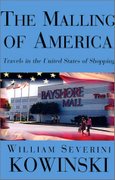
The Malling of America
available at your online bookseller
Manifesto
..."The answer that led those who have been told for so long by so many to be cynical, and fearful, and doubtful of what we can achieve, to put their hands on the arc of history and bend it once more toward the hope of a better day."--Barack Obama Nov. 4, 2008
"Now, there are some who question the scale of our ambitions - who suggest that our system cannot tolerate too many big plans. Their memories are short. For they have forgotten what this country has already done; what free men and women can achieve when imagination is joined to common purpose, and necessity to courage." Barack Obama January 20, 2009
"If you turn away now – if you buy into the cynicism that the change we fought for isn’t possible…well, change will not happen. If you give up on the idea that your voice can make a difference, then other voices will fill the void: lobbyists and special interests; the people with the $10 million checks who are trying to buy this election and those who are making it harder for you to vote; Washington politicians who want to decide who you can marry, or control health care choices that women should make for themselves. Only you can make sure that doesn't happen. Only you have the power to move us forward.--President Obama on Sept. 6, 2012