Showing posts with label Gary Snyder. Show all posts

Wednesday, February 07, 2024

Snyder For The Day #2


"Now [past] the end of the twentieth century, most societies are not even halfway functioning.  What does poetry do then?  For at least a century and a half, the socially engaged writers of the developed world have taken their role to be one of resistance and subversion.  Poetry can disclose the misuse of language by holders of power, it can attack dangerous archetypes employed to oppress, and it can expose the flimsiness of shabby made-up mythologies."

Gary Snyder

A Place in Space 

Friday, January 26, 2024

Snyder for the Day


 "Civilization is part of nature--our egos play in the fields of the unconscious--history takes place in the Holocene--human culture is rooted in the primitive and the paleolithic--our body is a vertebrate mammal being--and our souls are out in the wilderness."

--Gary Snyder

The Practice of the Wild

Thursday, December 28, 2023

Dreaming Up Daily Quote

"One of the first things I noticed when I came back was that everybody talked a little too fast, and they took too much for granted."

Gary Snyder, recalling his return to the US in the 1960s from living in a Buddhist monastery in Japan. 

Monday, December 18, 2023

Three Guides

 Among the concepts I regard as guides are three with non-English names, from three different cultures.

 Ahimsa is a Sanskrit word which literally means non-harming, the most basic Buddhist precept.  Poet Gary Snyder, who studied Buddhism for many years, defines the concept as “do the least possible harm.”  So it is less restrictive than total non-violence, but it is broader in application.  It means do the least possible harm to everything—not just humans but animals, plants and even rocks.  It turns out to be an ecological as well as a moral principle. In life it means a change in assumptions—that is, think first before making a harmful change, not exactly second nature to western civilization.  Personally it means being mindful, respecting the other, and sincerely evaluating whether causing harm is necessary.  This is a key to the sacred attitude towards eating and other aspects of ordinary life that nevertheless have profound meaning.

 Hozho is a concept from Navajo culture, part of the Beauty Way.  A Navajo character in a Tony Hillerman novel explains it with an example: In times of drought the Hopi and some other cultures will pray for rain.   “The Navajo has the proper ceremony done to restore himself to harmony with the drought…. The system is designed to recognize what’s beyond human power to change, then to change the human’s attitude to be content with the inevitable.” This does not eliminate trying to right wrongs, address problems, or change what needs to be changed.  But where it applies, this concept is not only a profound act of humility, but a necessary human response of adjustment to reality.  It’s something that other animals do instinctively—they find ways to cope with drought, for example. They adapt to the environment.  Instead of being angry or frightened, or obsessing on things as unjust and taking them personally, people accept the conditions and work within them to make life better—by conserving water, for instance.  Being in harmony is not easy.  The Navajo ceremonies take days.  But as a general principle, it only makes sense.

The third concept is Italian, and so part of my own Italian American culture.  Sprezzatura can be defined in various ways, but it can come down to making a personal style part of life, an elegance that is natural and appears effortless.  Tony Bennett applied it to music, but outwardly it can most often be seen in modes of dress.  There are places where such expression is noticed and valued, but more places where it isn’t.  But that doesn’t matter so much, because sprezzatura is an attitude, and expression (playfulness, authenticity) for its own sake.  Or to quote another Italian saying: Niente senza gioia.  Nothing without joy. 

Monday, October 16, 2023

from "Little Songs for Gaia"


across salt marshes north of
 San Francisco Bay
 cloud soft grays
 blues little fuzzies
 illusion structures—pale blue of the edge,
          sky behind, 

hawk dipping and circling
 over salt marsh

 ah, this slow-paced
 system of systems, whirling and turning

 a five-thousand-year span
       about all that a human can figure, 

grasshopper man in his car driving through.

---Gary Snyder

Tuesday, November 08, 2022

The Real Work


“The real work is becoming native in your heart, coming to understand we really live here, that this is really the continent we’re on and that our loyalties are here, to these mountains and rivers, to these plant zones, to these creatures.  The real work involves developing a loyalty that goes back before the formation of any nation state, back billions of years, and thousands of years into the future.”

 Gary Snyder

(Interview with Bill Moyers, 1995)

Monday, June 06, 2022

Steady, They Say


Clambering up the rocks of a dry wash gully,
 warped sandstone, by the San Juan River, 

 look northward to stony mountains
 shifting clouds and sun

 ---despair at how the human world goes down

 Consult my old advisers


 “steady” they say

 “today” 


 --Gary Snyder


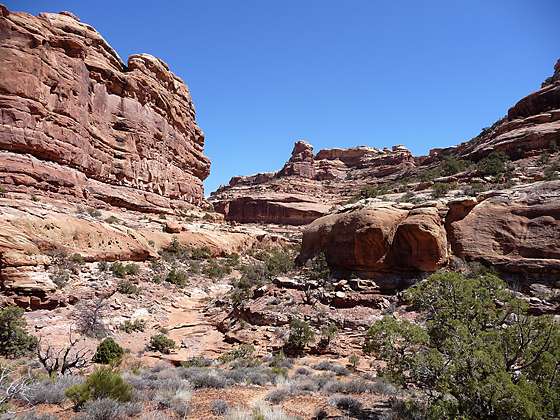
Published with this note:(At Slickhorn Gulch on the San Juan River, 1999)
 This is in Utah, near the Grand Canyon.

Monday, May 16, 2022

More Danger on Peaks

holding up a photo of Mt St. Helens before the eruption, looking at it as it is now

Last week’s poem by Gary Snyder was occasioned by his return to Mt. St. Helens, some 20 years after the volcanic eruption in 1980 that blew off the snowy top of the mountain and devastated miles of forest around it. As noted, he first climbed to the now vaporized summit in 1945. He wrote about these and other visits in his 2004 book Danger on Peaks. 

 Together with the coincidence of his first climb occurring just after atomic bombs devastated the landscapes of two Japanese cities, and the power of the eruption being many times that of either of these blasts, this section is a meditation also on unpredictable renewal. 
 
Mt. St. Helens from Spirit Lake 1923, similar to photo taken by Gary Snyder in 1945

This week I add a paragraph from a prose section, and another poem about Mt. St. Helens. The paragraph describes the peak as it was in 1945:

 “St. Helens’ summit is smooth and broad, a place to nod, to sit and write, to watch what’s higher in the sky and do a little dance. Whatever the numbers say, snowpeaks are always far higher than the highest airplanes ever get. I made my petition to the shapely mountain, “Please help this life.” When I tried to look over and down to the world below—there was nothing there.”

 The poem follows three more climbs in the 1940s: 

 This wide Pacific land   blue haze edges
 mists and far gleams    broad Columbia River
 eastern Pacific somewhere west
 us at a still place    in the wheel of the day
 right at home at     the gateway to nothing
 can only keep going. 

 Sit on a rock and gaze out into space
 leave name in the summit book,
 prepare to descend

 on down to some fate in the world

--Gary Snyder

Monday, May 09, 2022

Enjoy the Day


One morning on a ridgetop east of Loowit
 after campstove coffee

 looking at the youthful old volcano
 breathing steam and sulfur
 sunrise lava
 bowls of snow

 went up behind a mountain hemlock
 asked my old advisors where they lay
 what’s going on? 

they say

 “New friends and dear sweet old tree ghosts
           here we are again. Enjoy the day.”

--Gary Snyder

Some poetry resonates with our daily lives, some poetry takes us to different worlds--worlds of different experiences, places, perspectives--or just worlds of words.  Poems can inspire.  But there's something to be said for poems that refresh.  What this poem does for you can be both, especially when you know the story.

Loowit is in Washington state, near Mt. St. Helens. It is said to also be the "Indian" (Sahaptin) name for the volcano. This poem is from Snyder's 2004 book, Danger on Peaks. Its first section is about this mountain and this area of Washington.  He notes that he first climbed Mt. St. Helens on August 13, 1945, one day before he saw the first photographs of the bombings of Hiroshima and Nagasaki on Aug. 6 and 9.  That day he vowed on the "purity and beauty and permanence of Mt. St. Helens" that he would fight against cruel destructive power for the rest of his life.  He was 15. He is now 92.

Monday, January 03, 2022

Poetry Is The Eagle of Experience


All the little mice of writing letters,
 Sorting papers,
 And the rabbits of getting in the wood,
 The big Buck of a lecture in town.

 Then, walk back into the brush 
To keep clearing a trail.
 High over that,
 A whistle of wings!
 Breath of a song.

--Gary Snyder

Monday, April 26, 2021

For All Threatened Beings


Gatha for All Threatened Beings

 Ah Power that swirls us together
 Grant us bliss
 Grant us the great release
 And to all beings
 Vanishing, wounded,
 In trouble on earth, 
We pass on this love
 May their numbers increase 

 Gary Snyder 

 Gāthā is a Sanskrit term for "song" or "verse." I’m posting this in honor of the Humboldt Interfaith Fellowship event I witnessed online Sunday night, a Zoomed evening on the theme of hope and healing. It was a lovely experience. Although it was presented live on Zoom, you can see the recording of it through the HIF Facebook page.

Monday, October 26, 2020

Poetry Monday: A Little Song for Gaia


As the cricket's soft autumn hum
              is to us,
     so are we to the trees


            as are they

    to the rocks and the hills.

 --Gary Snyder


As a special feature on the DVD of The Practice of the Wild, the short biographical film about Gary Snyder, the poet reads and talks about some poems, including this one, which is part of the Little Songs for Gaia sequence.  He reads it here as a stand-alone.  (It's also used in the film itself, as a voiceover.)  He says that it was inspired by a conversation with his close friend and fellow poet Lew Welch, when they were both quietly looking at the landscape, probably in northern California. Welch wondered what the mountains thought about the trees.  What do you mean? Snyder asked.  To the mountains, Welch guessed, the trees are just passing through.

Snyder's poem focuses on the perspective of time in natural relations, and its effect on perceptions.  But implicit is Welch's sense of everything being alive.  "It is possible to speak of a mountain knowing," Paul Shepard writes in Man in the Landscape, "or, with Jacquetta Hawkes in A Land, of the quiet sentience of rocks."  There is a scientific sense, a good deal more accepted now than when Shepard wrote this in the 1960s, that the web of relationships and behavior of ecosystems like forests and ponds include communication and response to what's going on in the near environment.  Ancient cultures of course accept that rocks and trees have spirits, that they are aware of humans, and humans must treat them with respect and honor.

This DVD also includes an additional interview with Snyder that begins with him talking about the virtue of ahimsa, which is the first precept of Buddhism, and is also central to Hindus and Janism in India.  Snyder translates it as meaning "do as little harm as possible, according to the situation."  So strictly speaking it is not always non-violence.  But what is most important to Snyder is that it applies to everything-- not just to certain humans or even humans in general, but to all beings, including the rocks.

As a boy growing up in the country, young Gary Snyder had a feeling for animals as fellow beings.  But he never lost it, and his conviction that non-human life is just as important led him to study Chinese paintings and then the language, the Japanese language and then Buddhist practice in a monastery in Japan for years.  Even earlier it led him to the last American Indian cultures in his native Northwest.  

We don't know the minds of other beings.  We just don't.  But we know that the degree of consciousness that humans have allows moral thinking and moral decisions.  So this is our duty to the common landscape, the common universe.  This is our part.  In the end we are what we are committed to, even as we fall short. 

Monday, July 20, 2020

Poetry Monday: Hay for the Horses

Hay for the Horses

He had driven half the night
From far down San Joaquin
Through Mariposa, up the
Dangerous mountain roads,
And pulled in at eight a.m.
With his big truckload of hay
         behind the barn.
With winch and ropes and hooks
We stacked the bales up clean
To splintery redwood rafters.
High in the dark, flecks of alfalfa
Whirling through shingle-cracks of light,
Itch of haydust in the
                  sweaty shirt and shoes.
At lunchtime under Black oak
Out in the hot corral,
--The old mare nosing lunchpails,
Grasshoppers crackling in the weeds--
"I'm sixty-eight" he said,
"I first bucked hay when I was seventeen.
I thought, the day I started,
I sure would hate to do this all my life.
And dammit, that's just what
I've gone and done."

--Gary Snyder

  I first heard Gary Snyder read this poem as part of a sequence in the 1960s.  You can see and hear him read it in the documentary film, "The Practice of the Wild," which is included as a DVD with the book The Etiquette of Freedom. Gary Snyder turned 90 in May. 

Wednesday, May 08, 2019

Happy Birthday, Gary Snyder

Gary Snyder, American poet, essayist and teacher, is 89 today.  I wrote about him in the previous post here.  In celebration of his birthday, I'm posting the poem that comes last in his 1991 collection, No Nature: New and Selected Poems.  It's become one of my favorites.

RIPPLES ON THE SURFACE

"Ripples on the surface of the water--
were silver salmon passing under--different
from the ripples caused by breezes"

A scudding plume on the wave--
a humpback whale is
breaking out in air up
gulping herring
           ---Nature not a book, but a performance, a
high old culture

Ever-fresh events
scraped out, rubbed out, and used, used, again--
the braided channels of the rivers
hidden under fields of grass---

The vast wild
     the house, alone.
The little house in the wild,
           the wild in the house.
Both forgotten.

                              No nature

          Both together, one big empty house.