Showing posts with label homeland insecurity. Show all posts

Friday, March 04, 2016

Deep in the Shit in Texas

Something is happening in Texas that the rest of the country needs to heed.  It's not getting a lot of attention, but it should.

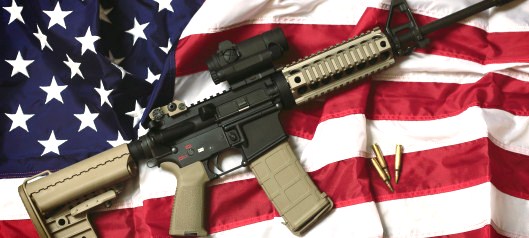
It's bad enough that maniacs can get lots of guns, but it's a lot daunting that guns turn people into maniacs.  That's the charitable view of what's been happening in predominately GOPer state legislatures and state houses, as they compete to see who can come up with the most dangerously insane gun legislation.

Not to be outdone, Texas pushed the boundaries with a law that states that its universities MUST allow concealed firearms on campus.

But now that this law is actually going to take effect, the ground is moving beneath Texas, and its deep heart is in deep shit.

First, the law could only cover state-sponsored universities.  Private universities were given the option of allowing open carry and concealed guns.  Since the law goes into effect in August, they're making their choices. So far exactly none of the Texas private universities is allowing guns.  Zero.  This includes Christian colleges, though some are still praying on the matter.

But public universities and colleges have no choice, and it's freaking them out.  At least one University of Texas dean has quit and found a job in another state, announcing his opposition to the law and stating that it was a factor in his decision to get out of  Tombstone.

And that, it is feared, may be just the beginning: a brain drain that includes faculty leaving or not replenishing the ranks, and smarter students not coming at all,  Gee, who could have seen that coming?

As Texas public universities study the law, they find their options are few.  They can apparently keep guns out of dorms but not classrooms.  (How does that work?) But that's apparently still being debated by some universities.

 Meanwhile, the University of Houston has come up with suggestions for managing this new classroom situation, and it boils down to: don't say anything that might make somebody mad.

Don't teach controversial topics.  Unfortunately, as almost everything these days is controversial to someone, that's going to be difficult.  Not to mention an obvious deterrent to learning.  Academic freedom is on its way to becoming the latest victim of guns.  As well as education.

Some professors are pushing back.  Some at the University of Texas have signed a public petition vowing they won't permit guns in their classrooms, citing free speech concerns.  Ya think?

Other states are watching.  Georgia and Tennessee are among states with similar bills in process.  But it's not just southern states.  There are laws on the books in states like Pennsylvania that prevent city and other local governments from regulating guns in their jurisdictions.

 Guns in bars and restaurants, at Little League games, city council meetings, rock concerts, PTA meetings etc. are legal in lots of places now.  And of course,the stories of gun violence in these places, and in homes brimming with firearms, are ever more numerous.

 So why not guns on campus? Where late adolescents are exploring sex, drugs, drinking and new ideas, experiencing group pressures and learning about themselves as individuals, feeling the assumptions they've grown up with challenged in multiple ways (often simply by the presence of students from different backgrounds),  questioning anything and sometimes everything, while worrying about careers, grades, job prospects, teachers, family, each other and how the hell to pay back those loans.  What could possibly go wrong?

The absolutist interpretation of the second amendment trumps all other rights in America. This despite the fact that the words "well-regulated" appear in the amendment text.

So Americans have no right to peaceably assemble, to speak freely, eat lunch or apparently to learn anything, without the high threat level of an armed person going off and maiming and killing friends, family members and total strangers--lots of them, who may never even see who shot them.

We're so focused on the terrorist threat that we spend billions to counter it, and have given up most of our privacy.  But most Americans are less likely to be harmed by a foreign terrorist than by another American with a gun.

Thursday, December 17, 2015

Cleaning Up December Bookmarks: Broken Secret Service, New Russian Nuke and Disappearing American Middle Class

Here are some stories I bookmarked/followed this month that I haven't written about yet...

Land of Guns: The Supreme Court made headlines with something it didn't do--it did not take up a case sent to it that concerned local regulations of firearms, leaving in place such a regulation.

That opened a door and Connecticut quickly walked through it.  Near the third year anniversary of the Sandy Hook gun massacre in one of its towns, the state banned gun sales to individuals on terrorist watch lists.  This is after Congress again refused to ban such sales federally to individuals on the no-fly list.  Other states were considering their own bans.

Danger to the President: A story that should have made more headlines was a scathing report on a broken Secret Service.  It notes several examples in which unscreened individuals were permitted near President Obama, including an armed man with an arrest record who shared an elevator ride.

With high attrition and very low morale, the Secret Service is a scandal and a danger, as noted by a Republican Congressman: Rep. Jason Chaffetz (R-Utah), chairman of the Oversight Committee, said the report should spur further action by the Obama administration. “The situation is getting worse not better,” he said. “The president is in jeopardy, and he better personally get involved in fixing this.”

 Republicans share the blame since their Congress cut Secret Service funding in 2011 more severely than ever before.  But it's more than the GOPers wet dream self-fulfilling prophesy of a federal agency doing badly after they decimated it with budget cuts.  It's a cultural problem that goes back at least to hungover agents guarding President Kennedy in Dallas on November 22, 1963.  And by the way, terrorists read the news.

Native Lives Matter: One of the numerically smaller "minorities" seldom makes headlines, but problems among the First Americans remain.  In Canada, the new Trudeau government has launched an investigation into murders of aboriginal women, revealing horrifying statistics.  In the US, the ability of tribes to police their own lands is under threat, along with their sovereignty.

As for the related issue of sports teams names that insult Native Americans, the relentless move away from them gained a powerful corporate supporter in Addidas, that pledged financial support to schools that dump their offensive names and mascots.

Two Nations: The so-called "income inequality" divide deepened this year, and for the first time in generations, there is no middle class majority in America.  The rich are getting richer, and thanks in part to rising prices that inevitably follow (despite the nonsensical official inflation rate) everyone else is getting poorer.

There is not a one-to-one correspondence with the two nations of rich and the rest to our deep bipolar political divide, but there is clearly a political effect in one group: less educated white working class/ low middle class men, particularly older, particularly in the South and the rustbelt, but also scattered nearly everywhere in the US they can still afford to live.

 As a category (though with exceptions--since in many respects I fit this bill) they form the solid base for Trumpism and the general rabid right fanaticism that is the official GOP stance.

Exploiting insecurity and shrinking opportunities and income by blaming "foreigners" especially of other races is a time-tested tactic of Republican elites, though it appears to have gotten beyond their control.

The plight of this group however was emphasized by new statistics that show it is the only category of Americans to show a decline in life expectancy.  Suicide and drug abuse appear to be chief causes.  One analyst (quoted in this analysis by Paul Krugman) theorized it's because they have lost the narrative of their lives.

Well, that's a simplistic way to put it, but it hints at the situation.  The nature of American divisions in class and geography inspired yet another map with cute names for the divisions--income, racial and therefore cultural and political--that befuddle attempts to figure out just what is happening to this dangerously disunited United States.

The federal government is not blameless in this disenchantment, especially among the white working class, according to this thoughtful article.  Though the situation is also rife with paradox and double binds.

As for the income inequality issue itself, Bernie Sanders continues to talk about it, but thanks to terrorist attacks (even though most terrorist incidents in the US since 2004 have been by right wing zealots) and the general xenophobic tenor fueled by GOPer candidates, it hasn't emerged yet as a big campaign issue.

But when it was a hotter topic, there was this guy who decides to raise the minimum wage in his company to $70 grand a year.  It made a nice Twitter-type splash.  Then somebody did a follow-up.  How's that company doing now, after that rash deed?  Well, pretty damn good actually.

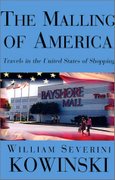
Obesity in America: A stroll through a shopping mall this season should provide graphic support to the reality that, compared to a generation or two ago, there are not only more Americans, they each take up more space.     One new study suggests that increasing obesity in children may be related not only to Big Gulps but too many antibiotics.   There are, at least statistically, other factors besides high calorie food.

Another public health issue continues to be GMO crops.  While often cited as an anti-science stance, the concern is not so much over the crops themselves as the herbicides used to make them viable--a demonstrable health problem.

No Education Left Behind:  Few things have been as damaging to American public schools than the so-called No Child Left Behind mandates.  Here in CA they decimated arts programs among others, so that high school graduates are unprepared for entire areas of college.  They decimated social studies and civics education, which one writer links to the rise in domestic terrorism.  Well, finally it's on the decline with the new federal Education law, easing test mandates and increasing state control.

It's Not Your Grandad's Nuclear War:  New threats like the latest permutations of terrorism get the attention and focus fears, but bad old fashioned nuclear war is still a much bigger threat.

Russia's bombing campaign of Syria is pretty blatantly a low-risk but live testing ground of their latest weapon systems, developed under Putin to replace the Soviet-era arsensal.  Putin has not been shy about both developing new nuclear weapons and threatening to use them.  Under the news radar this month, Russia inadvertently revealed their very powerful new nuclear torpedo, which is remarkably dangerous not only for its yield but its ability to operate independently. They can also detonate offshore and create huge tsunami tidal waves that themselves can destroy coastal cities.

This at the same time as GOPer candidates bluster includes advocating actions which would lead directly to war with Russia.

Wednesday, August 21, 2013

Snowden, Greenwald, the NSA: a Perspective


In the department of who cares what I think but I'm going to tell you anyway, here's my take on the squabble so far.

Glenn Greenwald is a an asshole.  I don't trust him as a journalist.  But the actions of British police in subjecting his partner to nine hours of interrogation at the London airport that was a transfer point was sheer thuggery, and exactly what people are justifiably afraid of when "security" gets too much power.

That the Brits overstepped their bounds is also the opinion of the U.S. White House and in fact of the Brit who helped write the terrorism law they supposedly were employing:   Lord Falconer of Thoroton, the former Labour lord chancellor who was involved in introducing the anti-terror legislation used to detain Miranda, said the police had no right to detain him under the Terrorism Act 2000... Falconer, who helped introduce the act in the Lords before he became lord chancellor in 2003, told the Guardian: "I am very clear that this does not apply, either on its terms or in its spirit, to Mr Miranda."   (Yeah, ironic for USers that the guy's name is Miranda and his rights were violated.)

As for the NSA etc. there's been more heat than light.  The heat ranges from the media simply suggesting untoward intrusions to the rhetoric of Greenwald and Snowden likening it to Nazi atrocities.  While even President Obama acknowledges that Snowden's revelations got America to pay attention to the problems of ensuring privacy at the same time as the law and the country apparently wants every possible effort to track and stop terrorists, there's so far only fragmented and inconclusive information about what's really going on.

While some folks like Andrew Sullivan and John Cassidy at the New Yorker are alarmed, Jeffrey Toobin at the New Yorker is less concerned about the revelations than what the costs of Snowden's security breach are and will be.  Only on the basis of the arguments each has made so far, I'm more persuaded by Toobin.

It goes without saying that thuggery and similar excesses are always a danger with any kind of police, and the more power and secrecy they have, the more potential for big bad abuses.  But we're not so far talking about anything being done with any information gathered, or for that matter, any information other than the fact of someone calling someone, which like it or not (as Toobin notes) is not protected by law.  Maybe it should be but it ain't.  Also, it could be that the only people in America who are surprised by this are those who haven't seen a cop show in the past five years.

We're also not talking about censorship, about tracking what people take out from the library, or about torture, or sending people to secret prisons never to be heard from again--we're not even talking about the abuse of that stupid concoction called the no-fly list.  All of which the American public was apparently willing to allow by reelecting President Bush in 2004, who instituted them all.

And again I'll only mention that the most active intrusions and use of collected information that I know of are by corporations for their own profit and that of their clients.  Beyond that, I'd like to see more light on the subject and less self-serving heat.   Yeah, idealist.

Sunday, June 23, 2013

Three Rings of Fire

Things are hot and crazy in the DC circus.

The so-called IRS scandal quickly devolved into partisan madness, despite the emerging facts: that the scrutiny of Tea Party groups was initiated by Republicans in the IRS under the authority of a GW Bush appointed director, and that however clumsily it was done, it had validity in that prominent Tea Party groups may well have been funding political activity while trying to get tax exempt status, which forbids such activities.

But it was such a vivid political wet dream for the rabid right that it took on a life of its own. It  led to the tawdry McCarthyism of Rep. Issa and his "edited" hearing transcripts, and the rabid right's latest conspiracy theory, which is that slowing the approval of tax exempt status for Tea Party groups is how the Dems won the 2012 election.  A paper that makes this contention first of all assumes that the Tea Party is so powerful and popular that it could sway an election, which no actual polls or scholarship support, as Jonathan Bernstein points out.  He also adds this analysis of the second point:

   Got it? The complaint is that the IRS was slow in granting all these groups a tax status that depending on them not being primarily devoting to electioneering, thus preventing them from..."volunteering, organizing, donating, and rallying" for the "midterm elections."

I mean, as far as I can see (and I only read co-author Stan Veuger's summary post, not the whole paper) the entire thing is premised on a "constitutional right" for these groups to get tax-exempt status so that they can do things they aren't supposed to do with that tax-exempt status. And there's not even a pause to explain why some might see something amiss in that.


So there's not much more to be said about that.  The other ongoing controversy, over NSA data mining and the government's response to David Snowden, the person who blew the whistle on it is more substantive, complex and troubling.  There's humor to be found in it of course--as in Andrew Borowitz's Friday piece headlined U.S. Seemingly Unaware of Irony in Accusing Snowden of Spying.  But it's also serious and dangerous.

The dangers are multiple, and Sunday provides examples, as when David Gregory as host of NBC's Meet the Press--as establishment as journalism gets these days--asked leftist journalist Green Greenwald if he should be charged for "aiding and abetting" Snowden, who is under federal indictment.  

Now in my opinion, Greenwald is a demonstrable asshole who is even more often dangerously slipshod in his accusations.  So this could have been provocative payback.   But it demonstrates just how dangerous all this can become. And it's no excuse for Gregory using his wattage to suggest someone might have committed a federal crime that nobody in the federal government has charged him with. 

Wednesday, June 12, 2013

Big Commerce Is Watching You

The revelations about national security telephone and internet data mining bring up a lot of issues, as well as a lot of misinformation, opportunism and hysterical bloviating.  Here's an explanation and defense of the program, here's what such a program could lead to, and here's Josh Marshall's careful parsing of the whistleblowing part of it.

While all of this bears monitoring, I have perhaps different points of view.  Apart from its secondary importance when ranked with global heating as something to concentrate on and get all upset about in the media, it further illustrates to me how effectively we've been propagandized into getting hysterical about abuses real and imagined in government that we let slide or ignore in the corporate complexes.

While agencies of the federal government may be gathering vast amounts of data on who is calling who,  I don't see the same outrage about tech corporations with playful names following my every keystroke on the internet or reading my address book and sending me emails about what they find.  There is no privacy on the internet, and very little over any phone system that gets outside of a wire connection.  The feds monitor emails for key words--haven't we known that for awhile now?--to lead them to terrorists and child pornographers.  The private sector basically is using every available means, skirting the law or simply staying ahead of it, to learn as much as possible about each one of us, down to the most private details.  Technological means are constantly developed and refined to interpret information in order to predict behavior and profile every one of us.

So while the private sector can gather all the information it wants in order to sell us stuff, and set prices individually according to what they think they can get us to pay, anything the government does is an abuse of privacy.

I'm not necessarily defending these NSA programs, and certainly not the Patriot Act, nor do I believe it's wrong to question possible overreach by the national security state.  Abuses that are more than theoretical, like censorship or monitoring what information I access (something that those internet companies do routinely), or torture or even the force-feeding of inmates at Guantanamo (which got very little media coverage and no big outrage), merit coverage and outrage.  But it's curious to me that people go nuts over government getting involved in health care but don't seem to mind when corporations engage in price fixing and multiple abuses that have driven the cost of US healthcare through the roof and cost people their lives.  They rail about Medicare abuse, when its private individuals and businesses who are cheating Medicare.  So the government is always big and bad, while it it doesn't seem to be big and bad enough to control the banks, the oil companies or corporations in general.

Moreover, corporations are unaccountable to anybody except their bottom lines, and if they are too big and powerful to fail, not even to the courts.  But government is still at least theoretically accountable to the courts and more to the point, run by elected officials, who can be replaced by voters.

Which of course is part of the answer: because government is accountable, these controversies are political--people get voted out or in because of them.  Whereas we all feel powerless to change the behavior of the most powerful corporations, and elected officials are wary of touching them, since their wealth finances their campaigns.

Friday, April 26, 2013

Revelations

The Boston Marathon bombing and aftermath brought out the best and the worst in American life.  You could see them both for example on the same Rachel Maddow program (Wednesday's): the millions in contributions to help the victims, the Rabid Right conspiracy theories and xenophobia.

There are also many kinds of attempts to figure out how to prevent such destructive actions in the future.  Because of the as-yet unknowns and the complexities of the Boston bomber situation--the dynamics of personality, age, family, unique experience as well as political and religious beliefs and information--that add up to never-to-be-completely-knowns.

But surely the point is that whatever those beliefs, motivations, etc. might be in this case or any other, what matters most are the actions taken.  And dealing with those require what much of the Rabid Right won't deal with.

In previous posts I noted various intersections of the bombing and gun debates.  Now there are clear relationships.  It's the NRA and its successful efforts to prevent background checks for people who buy the gunpowder (the "black powder") of the kind used to make the Boston bombs.  And the NRA's very successful efforts to prevent the powder from containing "taggants" or very small markers that could trace the powder back to the person who bought it.  It's been technically possible since the 70s, and advocated by law enforcement etc. but the NRA and its congressional minions have prevented it.

Rachel detailed the absurdity of the current situation regarding background checks.  A person can be put on the terrorist watch list, and therefore be prevented from getting on a commercial airliner.  But they can leave the airport and buy as many guns and as much gunpowder as they want, legally.

In a sane society it might be noticed that  while you can't tell how potentially dangerous someone is from what they say about their beliefs or what they read, you have a better chance by knowing how many weapons and how much bomb-making material they've acquired.

That doesn't make sense to the Rabid Right, because government is the enemy, and they need those guns and bombs to defend themselves, or kill abortion doctors and other evil people.  They are so close to being the GOPer mainstream now partly because of gun manufacturer money, on top of all that oil money etc.

In terms of the electorate, we're probably seeing a time lag phenomenon: their time is demographically gone, but demography hasn't quite caught up to political structures.  However, this reactionary phase is lengthened and made more powerful and dangerous by the uber-wealthy who use this dwindling group for their own interests.  Money has a multiplier effect.  Together these elements are paralyzing the federal legislature, weakening government's ability to respond to needs at every level.  We're in the deep water of insanity, with no clear idea how close to shore we might be.

Wednesday, April 17, 2013

Martin's Dream Deferred


Martin Richards died at the age of 8.  His little sister, who loved to dance, has lost a leg, and may lose the other.  His mother has a severe brain injury.  All of this the result of one of the homemade bombs exploded at the Boston Marathon--bombs that did little damage to property, but were made to inflict pain and horrible damage to human beings.  Made to hurt people.

When will Martin Richards' dream come true?  Not today, when it is likely now that the cowards of the U.S. Senate will not even allow votes on gun regulation measures.  They're using the Boston tragedy as cover for their cowardice.

Does it matter that one eight year old was killed by a crude bomb, while 20 six year olds were killed by the bullets of a high tech rifle?  It does not matter to those children.  As a society we do a great deal to protect against such a bomb.  But our Congress is about to decide to do nothing to protect children against guns, especially those that are at least as efficient at hurting people as one homemade bomb, though the guns at Sandy Hook were more lethal.

The U.S. at all levels of government spends immense sums in trying to prevent terrorist bombs from exploding.  Thousands of people are trained and deployed around the world.  Those bombs and components that can be outlawed, are outlawed.  People have to make their own bombs.  Unfortunately, the ingredients are not uncommon--they mostly all have other legitimate functions.  Guns are lethal weapons to begin with.

Nobody gets to openly bring a bomb to a public place, to a political rally.  But last week a group of mothers demonstrating in support of gun regulations were surrounded by men with guns.  Legally.  

All guns and bullets are dangerous to begin with.  They go off by accident or by stupidity or innocence.  They   are lethal weapons that are too easy to use in anger, or to intimidate. It used to be common sense to regulate how they are used and where they can be carried.

Some guns and bullets have only one function: to kill as many people in as short a time as possible, which they did at Sandy Hook when they killed 20 six year olds and several adults in five minutes of nearly continuous firing, by a coward who brought unthinkable firepower provided legally by his mother to face defenseless children at an elementary school.

No more hurting people.  Too much to ask, Martin.  Our leaders can't even agree on doing something just so that fewer people will be hurt and maimed and killed.  Anywhere, anytime.  Tens of thousands of people, many hundreds of children killed and maimed by guns, every year.

We don't need terrorists.  We've got the GOPer Congress.

Rest in Peace, Martin.  Those of us still alive have to keep working towards your dream.  In our own lives, and as citizens.  

Wednesday, December 01, 2010

Airport Security Follies

The inestimable, irrepressible Jon Carroll weighs in on the airport security follies in the San Francisco Chronicle.

Tuesday, November 23, 2010


From This Modern World, where there's information on Tom Tomorrow's gift collection for adults and a book for children. Tell him Captain Future sent you. (Though I'm not suggesting you ignore the new Doonesbury book. Just sayin.)

Monday, November 22, 2010

To Grandmother's House We Scan

Having just flown back and forth across the U.S., I'm marvelling at the ongoing flyers revolt, which is attracting a lot of attention as a record number of people take to the airways for Thanksgiving weekend.

Up until now it's seemed that people were so intimidated by the spectre of terrorism that they were willing to undergo the absurd humiliations that pass for security checks at airports. On this trip I noticed how normal it has become to be sorting through buckets of your possessions while holding up your pants and walking in your socks, then finding somewhere to reassemble it all, get your belt back on and your shoes back on your feet. In both directions on my trip, it went very smoothly.

There was less hoohaw about the disposition of your mouthwash and nail clippers than last time--partly because we're all used to the rules, whether they make sense or not. We know now that we're expected to pay a premium for bottled water past the check point, because we're not allowed to bring any in. On this trip, both flyers and security people dealt with everything pretty calmly and efficiently.

But it seems that the new full body scanners being installed in airports everywhere are a bridge too far for the flying public. (They weren't operational in Arcata or Pittsburgh, the two airports where I went through security.) There are fears about radiation, not mollified at all by official pronouncements of their safety (which is what government authorities always say. Once upon a time, they said nuclear fallout is good for you.) There seems to be a special aversion to how much the scanners are reputed to show.

The only alternative that the Transportation Safety Administration offers is the full body pat down, which is just as repulsive to the people who are in revolt on the scanners. The buzz has been intense--protests have succeeded in getting pat downs forbidden for children, but there's controversy about gender and sex--security men aren't supposed to be patting down women, but what if they're gay? Once the match is lit in the age of texting and Twitter, these matters become a raging fire.

The first protests I saw covered were from pilots, who were angry about the rigid, incompetent and idiotic application of meaningless rules--which is hardly new to the situation (witness the notorious problems with the No Fly lists.) Later they expressed concerned at being repeatedly scanned and exposed to cumulative levels of radiation.

Then protests from both frequent and infrequent flyers quickly became organized, and got the attention of the travel industry, which quickly met with government officials. Some changes were made, some comforting noises issued from Homeland Security and the White House, but the scanners are going forward, and the Thanksgiving flyers are about to take to the air like turkeys. Stay tuned.

Sunday, October 28, 2007

The Holloween Story: Hollow Military

Update: A version of this is Rescued at Daily Kos, Recommended at European Tribune , front-paged at E Pluribus Media and a top-rated article at Political Cortex.


As children don the costumes of ghouls and monsters for Halloween, it may be our uncomfortable duty (especially as we gingerly begin our Christmas shopping) to face some monstrous changes that now shape our reality.

We are the hollow men
We are the stuffed men
Leaning together
Headpieces filled with straw*


The Hollow Military

The
response of the Iraqi government to armed members of Blackwater USA, a for-profit corporation, killing 17 Iraqi civilians in one incident in September has led to an avalanche of attention on the role of private contractors, armed and not, in Iraq. This led to a number of revelations, including the recent U.S. government study that could not account for about a billion dollars paid to another for-profit security company, DynCorp International, ostensibly to train police in Iraq.

Yet these firms have operated in Iraq from the beginning of the war through the occupation. There are an estimated 180,000 civilian contractors in Iraq, at least 45,000 in armed roles (according to Joan Walsh of Salon in a TV interview), while there are 160,000 U.S. troops. Over the past four years, monies paid to such firms by the U.S. State Department have gone from $1 billion to $4 billion a year,
officially. But even that doesn't measure the extent of the money paid to for-profit contractors and their power in Iraq.

Moreover, this use of contractors is not, as some media reports would have it, an accidental byproduct of a tiff between the Defense and State departments, forcing State to hire private security when the Pentagon refused to protect their diplomats in Iraq. It is the result of deliberate policy, articulated by Defense Secretary Donald Rumsfeld. It is part of his philosophy of the "hollow military."

Here's what Naomi Klein writes in her book, The Shock Doctrine:

"...Rumsfeld saw the army shedding large numbers of full-time troops in favor of a small core of staffers propped up by cheap temporary soldiers from the Reserve and National Guard. Meanwhile, contractors from companies such as Blackwater and Halliburton would perform duties ranging from high-risk chauffeuring to prisoner interrogation to catering to health care." [p.285]

But the reality in Iraq has turned out to be even more extensive than Rumsfeld's dream. In his detailed
report in Salon, P.W. Singer wrote:

"The use of contractors in Iraq is unprecedented in both its size and scope...What matters is not merely the numbers, but the roles that private military contractors play. In addition to war gaming and field training U.S. troops before the invasion, private military personnel handled logistics and support during the war's buildup. The massive U.S. complex at Camp Doha in Kuwait, which served as the launch pad for the invasion, was not only built by a private military firm but also operated and guarded by one. During the invasion, contractors maintained and loaded many of the most sophisticated U.S. weapons systems, such as B-2 stealth bombers and Apache helicopters. They even helped operate combat systems such as the Army's Patriot missile batteries and the Navy's Aegis missile-defense system.

Private military firms -- ranging from well-established companies, such as Vinnell and MPRI, to start-ups, such as the British Aegis -- have played an even greater role in the post-invasion occupation. Halliburton's Kellogg, Brown and Root division, recently spun off into its own firm, currently runs the logistics backbone of the force, doing everything from running military mess halls to moving fuel and ammunition. Other firms are helping to train local forces, including the new Iraqi army and national police."


It's worth noting also, that according to A Pretext for War by James Baxter, these same corporations--whose infamous work in Iraq first came to light in the Abu Ghraib scandals--were influential in Pentagon circles before the war started.

As for Blackwater and other security firms, their roles as armed forces is extensive, unregulated and often unknown. But Singer asserts, "As it has been planned and conducted to date, the war in Iraq would not be possible without private military contractors." He quotes an estimate that over 1,000 contractors have been killed and 13,000 wounded, but they aren't counted in official casualties. The mercenaries are extremely well paid--the difference between Privates and Privatized is great. So it should not be surprising that, as Singer writes, "Halliburton's contract has garnered the firm $20.1 billion in Iraq-related revenue and helped the firm report a $2.7 billion profit last year. To put this into context, the amount paid to Halliburton-KBR is roughly three times what the U.S. government paid to fight the entire 1991 Persian Gulf War."

But this is only the beginning. Read on.

* verses from "The Hollow Men" by T.S. Eliot.

Holloween Story: Hollow Corporation in Iraq

Between the idea
And the reality
Between the motion
And the act
Falls the Shadow


The money from the Hollow Goverment to supplement the Hollow Military goes to the Hollow Corporation. Just as the Hollow Government doesn't actually do the public business, and the Hollow Military doesn't conduct the war, the Hollow Corporation doesn't do the work. They all hire somebody else to do it. And often enough, the people they hire, hire somebody else. And so on.

Sometimes this results in luxurious overspending and immense waste, as in the Green Zone and military installations in Iraq. As writes, "The operation is one of the most lavishly supported ever, and most of that has been due to contractors to whom we have outsourced almost all the logistics, and the protection of that enormous supply chain. But it has proven to be remarkably inefficient, all the while undermining our counterinsurgency efforts. According to testimony before the House Committee on Oversight and Government Reform, the Defense Contract Audit Agency has identified more than a staggering $10 billion in unsupported or questionable costs from battlefield contractors -- and investigators have barely scratched the surface."

In other situations, such as the billions wasted on the supposed "reconstruction" efforts in Iraq, it's a chain of subcontracts leading to no results at all, except waste and fraud, and to such situations as Bechtel being contracted to fix the electricity system, and after years, leaving Iraq with the electricity system in worse shape than when it arrived. Much of this travesty is a matter of public record through congressional investigations. As Klein writes:

"Freed of all regulations, largely protected from criminal prosecution and on contracts that guaranteed their costs would be covered, plus a profit, many foreign [non-Iraqi] corporations did something entirely predictable: they scammed wildly. Known in Iraq as 'the primes,' the big contractors engaged in elaborate subcontracting schemes."

Money would pass through one subcontractor after another, each taking their cut, until there was little left for the actual work, so it isn't too surprising that the materials were cheap, the work shoddy, and nothing was accomplished--while conditions got worse, and insurgency grew.

In the end the cheapest workers were hired, and often imported. Thus the mystery of why a country in which electrical and water systems, bridges, schools, etc. had been constructed before American bombs destroyed them could not be re-constructed is solved. I recall reading riverbend's blog early in the occupation in which she wrote about Iraqi firms eager to reconstruct their own country, and with the skills, knowledge and creativity to do it quickly and cheaply--but they were being ignored. These were the same people who constructed all this infrastructure in the first place--but U.S. based multinationals saw Iraq as a major opportunity to get richer quickest, and so Iraqis were rarely hired to rebuild their own country, especially not professionals. Which of course added immensely to the frustration and emnity of the Iraqi people.

But the story of the Hollow Corporation does not begin in Iraq--nor does it end there. Which will bring us, very soon, to Christmas.

Holloween Story: Hollow Corporation Christmas

Between the conception
And the creation
Between the emotion
And the response

Falls the Shadow

Donald Rumsfeld did not invent the concept of the Hollow Military out of thin air. It came, as Naomi Klein claims, from the Hollow Corporation of 1990s America. Companies that had previously manufactured their own products and "maintained large, stable workforces" in America went beyond moving factories to the South (the 1970s) or to Mexico and Asia (1980s). They stopped owning and maintaining factories at all. This became known as the "Nike model: "produce your products through an intricate web of contractors and subcontractors, and pour your resources into design and marketing." The other Hollow model was based on Microsoft: a small, tight workforce concentrating on "core competencies," while everything else ("from running the mailroom to writing code") is outsourced to temp workers. [Klein, 284-5.)

Rumsfeld came from this business background, and came to the Pentagon (Klein quoting Fortune magazine) "to oversee the same sort of restructuring that he orchestrated so well in the corporate world." [Klein, 285.]

By now--by 2007--the Hollow Corporation is a global fact. Another large factor in spreading it in the consumer goods area has been the spectacular rise of Wal-Mart, which as several books show (for instance, The Wal-Mart Effect by Charles Fishman ) has transformed the companies that supply the products it sells. Because Wal-Mart insists on huge quantities at low cost, companies have been forced to find the very cheapest materials and labor. In the vast majority of cases, they can't find labor cheap enough anywhere in America. They must subcontract to China.

As Wal-Mart grew to become "both the largest company in the world, and the largest company in the history of the world" (Fishman), so did the number of products supplied from China, so that as one scholar told Frontline, "China and Wal-Mart are a joint venture." And most big U.S. corporations that sell products must sell a lot of them through Wal-Mart, so they restructure to please Wal-Mart, and so they become part of that joint venture.

But just as a scandal involving Blackwater alerted many to the Hollow Military, the current scandal over the safety of products manufactured in China is alerting the public to just how much of what we buy is made (in whole or in part) in China, and how little is made by the American company whose name is on the label--including traditional and trusted names such as Fisher-Price, Mattel and General Foods.

The news came fast and furious, in a bewildering array of products, from deadly pet food and tainted toothpaste to leaded toys. Close to 20% of China's products, it turned out, did not meet its own health and safety standards. At first, Americans became extremely wary of Chinese products, especially food products. But then it became clearer that avoiding processed foods, vitamins and health products that don't have some ingredients made in China (including ascorbic acid in Vitamin C) is virtually impossible.

Then such trusted American companies as General Mills announced they would be doing more testing (while quietly admitting they hadn't been doing much before, or testing additives at all.) Whether the public was reassured, or simply in despair and denial, this storm passed. But it was a teachable moment in the extent of the Hollow Corporation.

For there are no Colgate Toothpaste factories in Anytown USA, not Anymore. (When U.S. Customs seized a supply of toxic Colgate, it was marked "Made in China" and "Made in India.) There are no Mattel or Fisher-Price toy factories with happy American elves. There is just a board of directors and a flotilla of managers coordinating subcontractors, including the well-paid ones (advertising and marketing agencies) and the very poorly paid ones (the workers who actually make the products.) That's American Know-How in 2007. Welcome to Hollow-een.


Long-term, doesn't it concern anyone that the skills and infrastructure to actually make things are disappearing from America, and that if anything happens to short-circuit the supply line from Asia, this nation may become a pitiful helpless giant?

But in the short-term, Christmas approaches, and problems with toys made in China continue. Just last week, Mattel recalled another 38,000 toys imported from China by Fisher-Price, as part of a larger recall of 665,000 toys.

China has rightly pointed out that checking for the health and safety of products is the responsibility of the importing country. But our Hollow Government doesn't have the expert personnel to do it anymore. Our Hollow Corporations would rather not spend the money on it, preferring to concentrate on marketing and advertising. They import from China because the products are made there as cheaply as possible--and they are shocked, shocked that corners are cut affecting health and safety.

And even if the U.S. government had the capability to protect the consumer, just how far they could afford to push China is a real question, since China owns so much U.S. government debt--in effect, owns so much of the Hollow United States and its future.

This leaves a real conundrum for many Americans this Christmas, especially for the millions whose hold on the middle class is tenuous: without the good wages for actually making things that these corporations used to pay, they work several lower-paying jobs to make ends meet. Paying for more expensive toys and gifts for Christmas from smaller exclusive U.S. firms is not a good option, assuming such toys and gifts can be found.

For those with sufficient discretionary income, there are continuing ethical problems of buying from companies dependent on sweatshop labor. Recently another trusted brand--The Gap-- has been tarnished by evidence of child labor sweatshop abuse exposed by journalists, forcing them to drop a subcontractor in India: they are shocked, shocked that 10 year olds were virtually enslaved by a lowest-bid contractor. The Gap reassures American consumers that the clothes they sell for Christmas will not include any tainted by this company. There are many roads from the Hollow Corporation and the Hollow Government to a hollow Christmas.

So as Americans cross their fingers and shop for Christmas, they may know that in the companies they once trusted for quality, and in the government they depend on to protect them, there is no there there. They are all hollow.

The eyes are not here
There are no eyes here
In this valley of dying stars
In this hollow valley
This broken jaw of our lost kingdoms

This is the way the world ends
Not with a bang but a whimper.

Tuesday, October 02, 2007

Paint Them Black

The fallout from the Blackwater incident continues. The warm-up to congressional hearings today (Tuesday) is a congressional report citing the "security" (read: mercenary) company for some 195 shooting incidents in Iraq since 2005. That's nearly two hundred in less than two years, more than one a week -- "in a vast majority of cases firing their weapons from moving vehicles without stopping to count the dead or assist the wounded," according to the New York Times report. In 163 of those cases, Blackwater gunmen fired first.

The recent incident that grabbed the attention of the Iraqi government--Blackwater allegedly killing civilians on September 16-- is being investigated by the FBI.

The Times also wrote: But the report is also harshly critical of the State Department for exercising virtually no restraint or supervision of the private security company’s 861 employees in Iraq. “There is no evidence in the documents that the committee has reviewed that the State Department sought to restrain Blackwater’s actions, raised concerns about the number of shooting episodes involving Blackwater or the company’s high rate of shooting first, or detained Blackwater contractors for investigation,” the report states.

This is entirely consistent with Bushite policy and practice: no-bid, no-oversight, no-accountability contracts to enrich corporate cronies and bankrupt the U.S. government. Blackwater's "security" mandate is to protect the private property of Halliburton--that is, the Green Zone--and Halliburton's in-country customers, the U.S. "officials" and the Army. And they do so outside and above the law, another Bushite favorite.

Blackwater and other mercenaries have already been seen on the streets of New Orleans, and if any other disasters happen while the Bushites are in charge, you can be sure the future is black.

Monday, September 24, 2007

The Dreaming Up Daily Image


illustration with my review in
Sunday's SF Chronicle, by Rico
Mendez.
Posted by Picasa

The Shocks That We Are Heir To

I've mentioned The Shock Doctrine: The Rise of Disaster Capitalism, Naomi Klein's new book before, but now it's out in the U.S. I reviewed it in Sunday's San Francisco Chronicle, and this is how I began:

The connections are daring in journalist Naomi Klein's new book, "The Shock Doctrine," but the result is convincing. With a bold and brilliantly conceived thesis, skillfully and cogently threaded through more than 500 pages of trenchant writing, Klein may well have revealed the master narrative of our time. And because the pattern she exposes could govern our future as well, "The Shock Doctrine" could turn out to be among the most important books of the decade.

The rest of the review is here.

There's also a good review in the Guardian.

Wednesday, September 05, 2007

The Shock Doctrine

The Must-Read Book of the Year

--maybe even the decade. THE SHOCK DOCTRINE : The Rise of Disaster Capitalism" by Naomi Klein has just been published in Canada, which means I can finally talk about it. I've been reading the galleys for weeks--which brings up a second ethical problem, because I've just turned in my review to the SF Chronicle, and I shouldn't scoop that. But my review won't be out for a few weeks, and I know I'm going to be blogging from the content of this book well before then.

Though THE SHOCK DOCTRINE will be officially published in the U.S. and Europe later in September, it may be in some bookstores soon. Naomi Klein is traveling and talking about it, starting today. And there's a short film about it, by Klein and "Children of Men" director Alfonso Cuaron, at the Toronto Film Festival this Friday, and she's showing it at some of her appearances.

Before I say a little more about the book, my disclaimers: I have no personal or business relationship with the author (I've never met her) or the publisher. I just think this is a very important book, and one that people should be aware of--and consider getting behind, in case corporte media ignores it (a good bet.)

Some of you (especially in Canada and Europe) probably know Naomi Klein as an activist, journalist and filmmaker, who writes for The Nation and The Guardian, often about globalization issues, and who wrote the book, No Logo as well as a collection of columns, Fences and Windows. Her writing career started in Canada, and here in the U.S. especially, she's not generally well known, and that's one reason I'm blogging on this book right now. Her interview in Publisher's Weekly said she didn't at that point have any firm media bookings in the U.S. I'd like to see that change. She deserves a hearing more than a whole lot of people we hear too much from.


As for the book, it puts together a lot of what you might know and suspect (and a lot most people missed or don't know) into a powerful framework based on a central idea that she believes has governed American foreign policy for decades, but particularly now: THE SHOCK DOCTRINE.

She relates neocon (also known as "neoliberal" outside the U.S.) economic theories of "free market fundamentalism" and the resulting economic "shock therapy" many nations endured, to the actual (and horrific) theories and practice of early actual electroshock therapy, and shows how they relate to torture, and the "shock and awe" bombing of Iraq, and an overall pattern of taking advantage of disaster or creating it, for corporate profit.

She shows for example that Iraq and New Orleans were not the result of incompetence, but examples of disaster capitalism, which requires the destruction and privatization of the public and non-profit sectors, replaced by crony capitalism. She shows that torture is not an accident, but a tool of economic and political shock therapy.


The book's web site has more information, including access to many of her sources. But the book is the thing--it's very well written, and very important. It begins with Milton Friedman and Pinochet in Chile in the 70s, and brings together most of what has happened since (in South America, Russia, Asia,etc.), culminating in Iraq and, in the U.S., the homeland security state and post-Katrina New Orleans.

This book has the potential to be Very Big. The Guardian has named it one of the ten must-reads of the fall. But it could also be overlooked--intentionally, because of its content.

Every book arrives with blurbs, but not necessarily like the ones for this book from
Arundhati Roy, John Le Carre, Howard Zinn and Sy Hersh. I join them in urging you to read and support this book. It could be one of those rare books that everyone reads and talks about, and that focuses the debate, and promotes needed change.

Now that I've said all that, I'll feel much more comfortable about blogging on topics within the book, and I hope to do that--several times--soon.

UPDATE: The Shock Doctrine short film is now viewable online. On its first day of publication, the book hit #1 on Amazon Canada.


Monday, March 19, 2007

Remember When...The Invasion and Before

Nostalgia from four years ago and a little more, the runup to the war and its beginning: excerpts from my posts over at Scorched Mirth, then called American Samizat (and then American Dash when I realized I'd been spelling Samizdat wrong, and somebody else was using the title.) Today, when the war is unpopular and the media is covering the invasion anniversary with righteous indignation, it may be particularly interesting to note the media's inflammatory role in 2002 and 2003.

October 6, 2002

There is little international support, and some important international opposition to this invasion. While the Bushies are using television pretty skillfully to create the drumbeat for war (not that this is too difficult), it's hard for anyone who's paying attention to avoid realizing that nobody has made a good case for why this "regime change" must occur right this very minute. There's been no clear and present danger demonstrated, and as the stock market reflects and many forecasters agree, a war is not likely to be good for a precarious economy.

The only reason to be talking about this right now is to increase Republican chances in the congressional elections. It's all part of a coordinated strategy. Republicans throughout the country are draping their TV ads in the red, white and blue, trumpeting their patriotism and calling into question the patriotism of Democrats. It wasn't a slip or a mere sentence, when President Bush castigated Democrats in Congress for concentrating on petty special interests ( you know-- like prescription drugs, the economy), and said they weren't concerned with national security. It is a political strategy. ..

Of course, politics may not be the main reason. It may also be that the representatives of Big Oil in the White House (which includes nearly everybody of any importance) are using the political argument to advance their own interests with a takeover of Iraq and possibly other areas of the Gulf. I'm still waiting for someone to tell me why this isn't delusional. The idea that the U.S. can run the Gulf region like an oil corporation is insane. They can't even run Afghanistan.

An invasion of Iraq is at least equivalent to Vietnam in quagmire potential, but then this war isn't being led by the best and the brightest. They're looking more like the worst and the dumbest.

But it's the insanity of the situation that may offer the greatest hope, because Colin Powell, even though a Republican, does not appear to be crazy. He is going to look at what it takes in personnel and technology, in logistics and costs, to first of all successfully invade Iraq and take down Saddam. That might be relatively easy, but costly (not that we'll know the cost for years to come), or it may take a long time and be very obviously costly in every possible way. But then he's going to look at what comes next. "Regime change" sounds so simple. But the last time America with a huge coalition behind it invaded Iraq---led by Colin Powell--- the march to Baghdad was stopped short. Why? Could it be that Powell knew that the cost of regime change was beyond what the coalition would commit to doing, in resources, attention and time?

This time is different. It's worse. There isn't even a coalition. Last time in the Gulf the American military did most of the warfare, and the coalition mostly paid for it. Guess who pays for the whole thing this time? Odd how the tax cuts for the wealthy will be kicking in right about then.

It's possible Powell would publicly support an invasion he privately opposes, just . But can he then turn his back on the chaos that would ensue in the region, or the fate of the occupying force over time, when the slow accumulation of death is no longer fodder for the 24/7 media frenzy of the month? ... America suffered a great trauma last September 11. Only a sober assessment of both threats and actions to neutralize the threats will make anyone safer from terrorism. The most terrifying aspect of the current leadership is its appearance of being both cynically manipulative and seriously out of control.

But just because this invasion is crazy in so many ways doesn't mean it won't happen. World War I was insane, and lots of people at the time knew it. This is how some wars start. So I expect that Colin Powell is going to be at the center of one of the more fateful backstage dramas of the next few months in Washington, DC.

January 3, 2003

Caesar's spirit, ranging for revenge,
With Ate by his side come hot from hell,
Shall in these confines with a monarch's voice
Cry 'Havoc', and let slip the dogs of war.

Julius Caesar III, 1 - William Shakespeare

In yet another example of accidental intelligence, the Bushies managed to make the war they haven't launched yet into boring old news. The American attention span having already been exhausted by the heavy fever in the fall, it's as if it all happened already and we're on to the next thing. But it hasn't happened; this is the last lull before what could be the perfect storm. And it's coming.

Come the Ides of March, the dogs of war will be frothing at the mouth all over the Gulf region and the Middle East, and who knows where else. There are too many weapons, too much anger and ambition, and warfare feeds on itself, the frenzy trumps judgment and overrides other considerations. When the biggest bully on the planet is talking the talk and bombing the bombs, everybody gets permission to cry havoc---which in Shakespeare's time meant to fight until you've destroyed everyone and everything. There will be valiant headlines, and there will be excitedly portentous news voices and endless speedfreak telexpert chatter, and once it's over, if it ever is, we'll find out what really happened in a few months or a decade or pretty much never.

At first we'll get the pretty stuff---the war is hell if hell is a good slasher movie stuff---but some collateral damage will seep in... We're already hearing the fears of veterans of the first Bushie Gulf War that this time, like that time, all the nice smart bombs acting just like video games on TV will distract from the massive equipment failures and shoddiness, like gas masks that don't work, that harmed the unknown soldiers of that desert storm. ..


Soldiers have been killed, maimed and sickened in all modern wars because of shoddiness by suppliers and by the screwups of the military machine, the ambitions of politicians and generals and other careerists. Maybe you won't read that in the latest gauzy nostalgia about the Greatest Generation, but look at some closer to contemporary and closer to the ground accounts of World War II and it's there in abundance. Soldiers come home cynical not only because of all the carnage they've witnessed. ..

This war is particularly inflammatory because the bar has been set so low on why it's going to be fought. The official reasons, that is. Now anybody who thinks somebody else is evil, or is afraid somebody else will get bigger and better weapons, or is preparing weapons that might someday threaten them, even if they are preparing them with such intense secrecy that foreigners trained to detect them can't find much of a trace so far, well--that's good enough to start a war that will costs millions of dollars and many lives, though a lot of those will belong to people who won't be counted in death any better than they counted in life.

But of course everybody in the world knows the real reason, and so twenty-first century enlightened America endorses one of the chief motives for war of the 10 thousand years of so-called civilization: greed. Great to see we've come so far.

Once it gets going, war is a disease epidemic. People who think of themselves as normal do incredibly awful things for what seems like rational reasons. They put themselves, or are put into situations where they will kill anyone and destroy anything that seems to threaten their lives or the lives of their buddies, and pretty soon anything that threatens their military careers or their honorable discharge. Meanwhile, people who find themselves surrounded by war will fight back, and some will attack anybody they have a grudge against-or have had a grudge against in the last five thousand years---regardless. Permission has been granted by the dogs of war, and the international arms industry---including the good old USA's---have supplied them with the teeth and the jaws and the claws. Why is it that every generation has to learn all this for themselves?

Some things on the Homefront are apt to be predictable---the increase in latitude for government intrusions and the increase in intolerance for dissent, the viciousness with which dissenters are attacked and peace advocates are insulted for being wusses or (worse) liberal-humanists---but other aspects could be different. Modern industrialized war used to stimulate the domestic economy, but it's not clear that will happen this time, even if the fighting spreads and is prolonged. Postmodern war might have the same effect as other prosperous postmodern economic engines: it might make an obscene amount of money for very few, and subtract from most everybody else... But in terms of people's lives, the local economies and the economy in general, the effects will be 100% bad.

February 8, 2003

Remember when...? Watching the purple city through infrared night cameras, as the scuds fell, the scud-busters rose and supposedly destroyed them? (It turns out they didn't but it was a good show anyway.) And the interview in a bunker in Israel or somewhere, when word comes that a scud attack is imminent, and both female interviewer and male interviewee don gas masks, and when nothing much happens and there's only dead air, they continue the interview without taking off the masks? And sound just as cheesy as before, except slightly muffled? Yeah, well you can bet they remember every thrilling moment at CNN. It was the height of their glory, when Sadamm and George Bush the First both watched them to see what the hell was going on. So did everybody else. The Gulf War made CNN into the global news network.

So it's little wonder that the prospect of Gulf War II has them salivating. CNN has fallen on hard times...

What could be better? Only one answer: a war. Boom, boom, cry, cry, hooray hooray. So big surprise that CNN has been camped on an aircraft carrier for the last three months, panting for a war it can cover with minicams: the rockets red glare, the bombs bursting in air, now the Gulf War II logo and the flag is still there!... And even less of a surprise that CNN (along with NBC and Fox) refused to run anti-war ads---slickly made, with celebs and legitimate product spokespersons like major clergy, and with cash in hand to pay the same price for the time as Budwiser or the Republican National Committee would. CNN made up a policy on the spot: "we do not accept international advocacy ads on regions in conflict." Region? Conflict? Either that leaves out exactly no region I know of (not even northwest Antarctica) or CNN is breaking the story---It's war! It's war! CNN is going to war! Oh the nostalgia, oh the ambition, to recapture lost glory and save the collapsing Time-Warner-AOL empire! Yes, it's the empire strikes back, in more ways than one! Tune in, America, it's all war, all the time! Peace is way too boring, not even our perky anchors can distract you from the foaming at the mouth over at Fox. And the beauty of it is, CNN has more footage of Gulf War I than anybody else. Show it again, Sam! Who'll know the difference! Un-mothball the Scud Stud! Bring back the good old days!

Thursday, March 20, 2003.

The circus has started, the media whipped war fever is underway. It’s almost inescapable—wafting through the drug store, the frenzied voice of radio DJs hyping the prospect of bombing which will be described the moment it happens so don’t touch that dial, the flow of idiocy on TV that pops up when the VCR is not yet on to play something sensible (Aaron Brown of CNN describing in detail the meaning of an Oval Office photograph as if he were describing a Polaroid of the Last Supper, only to be contradicted by his White House correspondent who says it was taken at an entirely different time with a completely other purpose, and then goes on to describe “riveting details” of the bombing’s beginning, how Our Lord Bush sayeth unto them the historic eloquent holy words, “Let’s go.” Jeez, whatever happened to Let’s roll? So 2001!

and another post from October 2002

So far no one is saying it out loud, in the newspapers I read or the TV I've seen. But I imagine it's on the minds of many people, especially Americans, in this suspended moment before the war promoted by the President of the United States takes center stage: namely, we didn't really elect this guy...

Though no one now is connecting those dots, I'm sure future historians (if any) will do so in a matter of a few paragraphs. The first paragraph on George W. Bush will refer to his dubious claim to the presidency---that it came down to how to count or not count votes in a single state, where as result of error and designed suppression of votes, he carried the state and hence the election by a handful of actual votes---but only as validated by a split Supreme Court decision, defying both logic and law. The second paragraph of this history will note that the G.W. Bush administration was dominated by the political cronies of the president's father, who spent their time out of government using their contacts to enrich themselves and large corporations, and blatantly represented those same interests when in government.

It will note that the Bush administration was floundering until terrorist attacks on September 11, 2001. Then Bush made an off-the-cuff remark while standing in the rubble of the World Trade Center and saw immediately the makings of a political identity in the cheers of rescue workers that obviously surprised him. He could be the symbol of fighting back, even though he wasn't going to be doing any of the fighting, just as he could cry "Let's roll!" into Iraq, and then go take a nap. He could parlay that figurehead/talking head leadership into time-tested political manipulation based on patriotism and the fear of seeming not patriotic. The third paragraph, I imagine, will be about the invasion of Iraq, and its tragic consequences.

This history will perhaps note the puzzling lack of emotion and debate opposing this war until it was too late to stop it. It will note however that most of what then happened was foreseen at least in outline (columnists like Molly Ivins, Robert Scheer, and locally in San Francisco, Jon Carroll and Rob Morse, have been remarkably clear.) These historians will fill in the details of the ensuing chaos and violent death in the Gulf region and the Middle East, the chaos and strife spreading to various political and economic alliances. This history will note the damage to the world economy, weakening it at a time when it needed to be strong to cope with the changes slowly but surely taking hold as consequences of the climate crisis. It will note the costs on life in the United States of more economic hardship and a greater siege mentality against real and imagined threats-with one of the real threats being an increasingly intrusive, powerful and arrogant police state government.

We owe all of this partly to the blindness of Americans who fell for the simplistic idea that it did not matter if Bush or Gore won the 2000 election. That Bush and Gore are part of the same corrupt political system is true, and has consequences. But that doesn't deny their differences, and one or the other was going to be president. We reap the whirlwind of this failure to understand the differences between these two men, and the people they bring into power.

Millions of Americans voted on small differences. If you can believe the media conventional wisdom, many voted for Bush because he seemed like a nice guy, not as stiff as Gore. This extraordinarily stupid test for presidential fitness was granted legitimacy by media's failure to even question it-but then how could many TV "news" personalities challenge the wisdom of judging on nice guy appearances when they owe their jobs to the same standards.

The Bush presidency is leading America and the world to a disastrous twenty-first century in three interlocking ways: internationally, by arrogance and war; domestically, by bankrupting the federal government on tax breaks for the wealthy; and globally, by ignoring global heating and other environmental threats. The agenda behind all of this is pretty clear: favor entrenched corporate interests, keep the oppressed people of the world in control through force, and keep the American people scared: scared for their safety and their country, so they will support Bush and the Republican establishment from now until doomsday, and scared for their own livelihoods so they won't rock the boat, so they will keep fighting each other for crumbs, with their nose to the grindstone and nothing in their heads but dreams of sudden wealth and celebrity.

We can see the consequences of those apparently small differences between Bush and Gore and between these two parties pretty clearly now. Though most Democrats are too scared of appearing unpatriotic to do more than stutter, at least Al Gore has spoken forthrightly about the folly and arrogance of the Bush administration's march towards war, and its foreign policy pretensions that would make the Roman Empire jealous, especially as it was falling. We can hear echoes of Gore's campaign call to fight for middle class Americans who are being lacerated now, and who will have their futures mortgaged by Bush war and tax policies...

Other differences may seem smaller, but loom as large. Clearly, Gore would talk differently on global heating and other environmental matters, though even if he had become president, environmentalists would have had to keep the pressure on to get real change. But at least they wouldn't have to spend such an immense amount and proportion of energy and resources to even get the climate crisis on the table...

So we would not be seeing the folly now being perpetrated in Washington of replacing scientists with political and corporate hacks at EPA and on the federal scientific advisory boards to the CDC, the FDA and other agencies charged with health and safety. It's a virtual certainty that at some point people will get sick and die because of these decisions.

With the challenges inevitably ahead-the health impact of global heating alone is going to be monstrous---this small act may turn out to be among the most consequential, just as important as that handful of votes in Florida...

The premise that humanity and perhaps all life on earth is in real peril in this century is also a kind of starting point for discussions among respectable scientists and knowledgeable observers. A feature of collapse in its early stages, and perhaps even when it is well underway, is likely to be that not many people notice. They continue to judge problems in the same narrow frameworks; they fail to "connect the dots" in today's favorite cliché. There was an article in The New Yorker a few years back that caught my eye, called "The Tipping Point." ...The tipping point of the twenty-first century may very well turn out to be the moment American forces invade Iraq....