Showing posts with label technology. Show all posts

Monday, February 13, 2017

Readings

“I sustain myself on the puppet drug of personal technology. Every touch of a button brings the neural rush of finding something I never knew and never needed to know until it appears at my anxious fingertips, where it remains for a shaky second before disappearing forever.”

a character in Zero K
by Don DeLillo

Do our machines (and our abstractions) measure what we become,
or do we become what our machines measure?

"An English speaker who describes a friend as aggressive will be reluctant to describe the same person as kind for that would imply that the friend possessed inconsistent traits.  Mandarin speakers do not detect an inconsistency when they say that a person teases her friends but lends them money because they do not use the abstract terms aggressive and kind."

Jerome Kagan
On Being Human: Why Mind Matters

Wednesday, April 15, 2015

This Is Not The Technological Age


This is not the technological age.  We may be seduced into believing this by the tiny devices that increasingly rule our lives, and the rooms of books, records, photo albums and letters that have vanished into electronically accessed clouds in the ephemeral realms of cyberspace.

Even the names that dominate our days--Google, Yahoo, Apple, Twitter, Facebook, Amazon--suggest the whimsical worlds of make believe.  But this insubstantial pageant masks the hard and increasingly terrible truth: we still live in the Industrial Age.

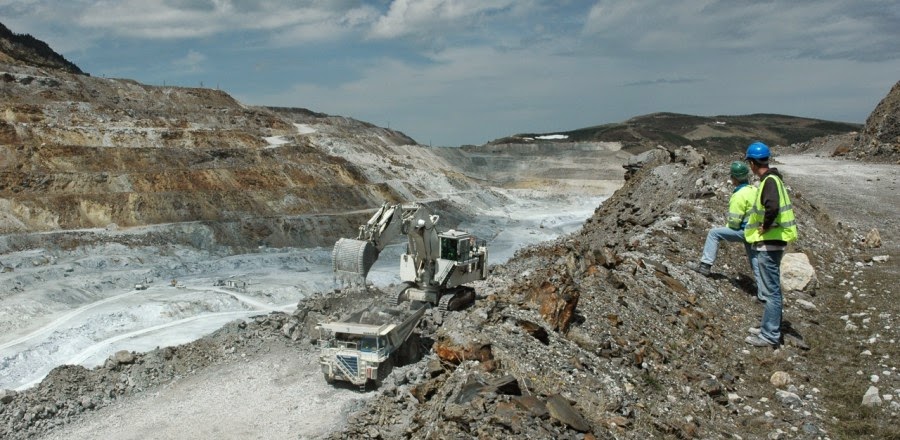
Technology may have revolutionized our lives, and may well change our circumstances even more in the near future.  But we are too easily deceived by the bright screens and images at the speed of a fingertip, and by all the giddy power that fits in the palm of your hand.  For despite its seemingly inconsequential size and weight, this device is manufactured out of materials mined and constructed in huge industrial operations, and gathered together from many distant places.

There is no "cloud."  There are only miles of  servers, requiring gross and exotic materials, vast quantities of electrical power which in turn requires vast quantities of fuels.  And that's true of all other new technologies, in medicine, communication, and industry itself.

 Technology is a subset of the industrial age, because without the systems of that industrial age, there would be no technological marvels in your hand.

For a generation or more we in the US have been told that we live in a service economy, dominated by communications--that manufacturing and mining are occupations of the past.  The manufacturing and mining, the industrial byproducts of deadly chemicals, poisoned land, water and air as well as cheap labor and pitiless human health risks, may mostly exist now in distant and hidden places, but their scale is ever more immense and growing.

Industrialization in those parts of the world where it did not exist means that industrialization is spreading and accelerating to far larger sizes and impact than the "Machine Age" of textbooks and museum shows.  3-D printing and the Internet of Things do little if anything to change this fact.

In fact the Industrial Age has spread beyond the processes of manufacturing things to the industrialization of the food supply--crop farming (with heavy use of GMOs and pesticides), livestock (with heavy use of antibiotics, engineered feeds and chemicals) and fishing (with the collateral damage of other species and habitats.)


Though attention has turned away from it, clearcutting and other industrial timber cutting continues.

The Industrial Age is vast and insatiable.  Capitalism's addiction to relentless growth insists on this.  It is also increasingly fragile.  Fossil fuels are harder to find and extract, requiring more complex machinery and greater damage to the natural world, both in remote and biological sensitive locations, and dangerously near human communities.  The metals and minerals that computers need are especially vulnerable, as some vital ones come from few countries, which may be in strife or controlled by criminals.

Industrial farming is depleting soil that only thousands of years could nourish.  Industrial logging continues to destroy all that supports the life of forests, streams, wildlife and ultimately people.

Garbage and waste is itself a huge industry, poisoning land and now immense areas of the oceans, which among other things, regulate global weather.

Transportation is perhaps the defining industry of our age, so comparatively cheap that much of our material goods come from afar, including our food.  Transport that uses fuels, power and packing materials in massive quantities.

Disruption of  transportation is now easily the most consequential of industrial processes. Disruption of computerized communication may overall be worse in the short term, but its effect on transport could be deadly.  With our lives so dependent on multiple industrial processes far away, they are stunningly fragile.  How many of us can depend on even locally produced food, once the supermarket shelves and the cupboards are bare?

It may be comforting to think it's the technology age--it sounds smarter, cleaner, smaller.  The reality is larger, dirtier, more violent and ultimately horrifying in its abuse and insanity. It is important to recognize that our shiny technologies and the culture's obsessions with them may blind us to realities that need to be addressed.  Both to our fragile dependence and to the effects of industrialization on our planet and its ability to sustain life.      

Sunday, February 15, 2015

Beyond the Hashtag

Rather than a series of tweet-like posts on separate subjects--which I know is the proper way to do it these days--I'm going to catch up on non-climate crisis topics from the past week or so, all right here.

Brian Williams:  Evidence is starting to mount up, however dubious, in the same direction.  One thing seems pretty clear: he doesn't have a lot of defenders.  But my point about the wired lynch mob (by which of course I mean the spirit and function of it, not equating the outcome) remains valid.  So I don't know what the now-former governor of Oregon is guilty of, but these sentences from his resignation statement (as quoted by Reuters) seem apt:

"It is deeply troubling to me to realize that we have come to a place in the history of this great state of ours where a person can be charged, tried, convicted and sentenced by the media with no due process and no independent verification of the allegations involved," Kitzhaber said.

"But even more troubling – and on a very personal level as someone who has given 35 years of public service to Oregon – is that so many of my former allies in common cause have been willing to simply accept this judgment at its face value," he said.


Digital domination: In line with my accidental series on digital domination earlier this year, concern has been expressed that an entire generation or even century of data may be lost because it's all been digital or digitized and the paper thrown away (or never existed), but the programs to read this material are gone or certainly going.

 He was talking most specifically about emails and photos, but I've heard this about company records and even books, and probably have said it before myself. But what's remarkable about the warning is that it comes from the head honcho of Google, himself kind of implicated in the digital domain (Google was sued for digitizing copyrighted text but recently won the case.)  So maybe that gives it the extra weight it may take to wake up some people from their digital swoon.

I might also mention my tantrum on the subject of keyless car ignitions, which got some detailed rebuttals on another blog from someone who sounds like he's in the car business.  He talked about security but didn't mention what I didn't know about then, which is the vulnerability to car theft etc. by electronics via the keyless system.  Apparently a growing problem.

The President of Projection:  I wasn't going to dignify the rabid right freakout over President Obama's comments at a prayer breakfast by even mentioning it, but I've now got two reasons.  First, the two pieces (here and here) by Ta-Nehisi Coates on the subject.  In addition to providing actual history that rabid rightists ignore (big surprise) he led off the second piece with this great ascerbic comment: "People who wonder why the president does not talk more about race would do well to examine the recent blow-up over his speech at the National Prayer Breakfast."

Second is something that immediately occurred to me but I haven't seen mentioned.  Here's what President Obama said that offended these folks: "Lest we get on our high horse and think this is unique to some other place, remember that during the Crusades and the Inquisition, people committed terrible deeds in the name of Christ. In our home country, slavery and Jim Crow all too often was justified in the name of Christ."

Coates provides the history to back this up, my interest is in the "high horse" part of it.  It is precisely the high horse perspective that allows and fuels the kind of hysterical "patriotism" that the Bushites inflamed after 9/11 that resulted in inanities like "freedom fries" but also the emotional push behind the self-righteous invading of Iraq, which even then was obviously irrelevant to 9/11.

So while we revile the extreme inhumanity of ISIL, only riders on the "high horse" (which likely include the rabid right critics of this comment) can justify mirror-image atrocities like torture, or expand the targets to Muslims in general, or anybody different in any way--different that is from right wing Christian fundamentalists.   And this precisely is the effective reason for President Obama's remark.  He wants action against ISIL, but for us to keep our heads, and perspective.

Sunday, January 18, 2015

Is Print the New Vinyl?

Before we move on beyond this accidental series on digital domination, one interesting and perhaps delightful (if true) countertrend.  However, first let's restate the trend, with the eloquent opening to the previously quoted (in the last post) Leon Wieseltier New York Times Book Review essay (with my emphases), in your Sunday Times today and here online:

 "Amid the bacchanal of disruption, let us pause to honor the disrupted. The streets of American cities are haunted by the ghosts of bookstores and record stores, which have been destroyed by the greatest thugs in the history of the culture industry. Writers hover between a decent poverty and an indecent one; they are expected to render the fruits of their labors for little and even for nothing, and all the miracles of electronic dissemination somehow do not suffice for compensation, either of the fiscal or the spiritual kind. Everybody talks frantically about media, a second-order subject if ever there was one, as content disappears into “content.” 

What does the understanding of media contribute to the understanding of life? Journalistic institutions slowly transform themselves into silent sweatshops in which words cannot wait for thoughts, and first responses are promoted into best responses, and patience is a professional liability. As the frequency of expression grows, the force of expression diminishes: Digital expectations of alacrity and terseness confer the highest prestige upon the twittering cacophony of one-liners and promotional announcements. It was always the case that all things must pass, but this is ridiculous."

The death knell for non-digital reading and writing is often sounded, sometimes with lived alarm, sometimes with complacent (I've made my money and reputation thanks) acceptance.

But leave it to my favorite newspaper columnist, Jon Carroll at the San Francisco Chronicle, to find (or maybe make up, just a little) a somewhat countervailing trend: "Print is the new vinyl."

These words were uttered, he writes, by a tech savvy entrepreneur, suggesting a trend that combines retro with realization (that analogue records offer better sound than digital.)  Together they fantasized a sweet (if likely brief, or if ever) future:

"So perhaps the latest bunch of tech billionaires want quality too. They want long-form journalism, say, that can be reproduced in a portable and well-designed format. They want editing and fact-checking. Perhaps they want fiction, poetry, excerpts from the classics.

Nothing like old media to add that sheen of prestige. The guy I was with suggested that writers might once again make actual money, that the sight of someone carrying a book would be like seeing someone toting around a dulcimer — it indicates that they have hidden depths. We’re talking about a covert desire to follow the dream of the Enlightenment."

A last ditch dream?  Probably.  But I do recall that on several visits to a fashionable cafe in Menlo Park not far from Stanford--close enough to ground zero for the tech world--I saw more people reading books, newspapers and magazines than were starring at laptops and tablets, or even conspicuously glued to their smartphones etc.  A definite counter-trend to, for instance, the HSU campus.

Thursday, January 15, 2015

Keyless for the Brainless

Phones and other electronic devices may be smarter, but people are heading the other way into a brainless stupor.

It's not just the kids who literally cannot be separated from their phones without psychological and even physical trauma.  There's an even more serious form of dependency, and it is becoming less and less avoidable, even for those who reject it.

For instance the keyless car.  An item in Consumer Reports recently affirmed that new cars in all price ranges are coming equipped with this technology.

What is this electronic marvel?  It allows you to start your car without sticking a physical key into a physical slot.  You just push a button on your device, known as the key fob (even though there is no key attached to it.)

What a miracle!  You can start your car with your hands full of something else--your smartphone probably.  Although you've had to push a button on the fob to get into the car, and then you still have to push another button in the car.  But you don't need that damn inconvenient key.

So let's start with the basic rule of electronic wonders in and on your car, which is that, for all their benefits, they are each something else that can go wrong.  Usually more than one something else.  And almost always nothing you can fix yourself.

So there are things that can go wrong with your fob, such as the batteries, and if you don't have a backup system (electronic or key), you're screwed.  You ain't moving.  It may mean a tow, and it definitely means time and money.

But that's minor compared to the much more likely possibility--you misplace or lose the fob.  Then without a mechanical key system, you are really really screwed.  And CR says replacing the fob could cost hundreds of dollars, and who knows how much time and trouble.

Think about it.  When somebody swiped my jacket with my car keys in the pocket, I got someone to drive me home, wait a minute while I got my duplicate key, then he drove me back to my car.  Duplicate keys cost a few bucks, and you can make as many as you want and stow them in as many convenient places as you wish, so losing your car keys is not a catastrophe.

But for the dubious benefits of a "keyless" ignition, you still have to have that fob (although eventually there will be an ap on your phone device, which will make losing that even more catastrophic), and the cost of losing it is much much greater than losing that terrible old fashioned key.

Behind this is the survival principle of redundancy, along with hedging your bets with alternatives (a gas stove that operates even when the electricity is off, etc.)  Everybody loses stuff, so you cut down the consequences with redundancy (i.e. duplicate keys.)  That is, while you can still buy a car that allows you to start it with a key.

And that's the most brainless part of it.  An entire society so dazzled with new toys that they never bother to think ahead to what could go wrong, and what the comparative consequences might be. It's great for the car companies etc. who sucker you into this, and then charge you hundreds of dollars for a fob, and thousands for extra electronic toys that may or may not improve the operation of your vehicle, but certainly make it harder and more expensive to repair.  When something goes wrong.  And something always does.

  But you have no alternative.  How smart is that?

Saturday, December 20, 2014

The Dreaming Up Daily Quote

"It is a paradox of the work of Artificial Intelligence that in order to grant consciousness to machines, the engineers first labor to subtract it from humans, as they work to foist upon philosophers a caricature of consciousness in the digital switches of weights and gates in neural nets.  As the caricature goes into public circulations with the help of the media, it becomes an acceptable counterfeit currency, and the humanistic philosopher of mind soon finds himself replaced by the robotics scientist."

William Irwin Thompson
"The Borg or Borges? Reflections on Machine Consciousness"
in honor of the news that bots now outnumber humans on the Internet.

Sunday, December 07, 2014

Tech Deception, Digital Slavery

In a New York Times oped, George Mason University economics professor, Tyler Cowen claims that the answer to income inequality in America might well be more and better computer technology.

Applying technology in smarter ways could bring down the costs of education and medical care. "We can easily imagine medical diagnosis by online artificial intelligence, greater use of online competitive procurement for health care services, more transparency in pricing and thus more competition, and much cheaper online education for many students, to cite just a few possibilities. In such a world, many wage gains would come from new and cheaper services, rather than from being able to cut a better deal with the boss at work."

Income gains, he suggests, are limited now by lack of computer skills. "Not everyone can work fruitfully with computers now. There is a generation gap when it comes to manipulating electronic devices, and many relevant tasks require knowledge of programming or, more ambitiously, the entrepreneurial skill of creating a start-up. That, in a nutshell, is how our dynamic sector has concentrated its gains among a relatively small number of employees, thus leading to more income inequality."

But simpler "human-computer interfaces" such as computers that respond to spoken commands will open up new job opportunities, such as supervising smart robots on the factory floor.  Income inequality could also lessen as emerging nations like China and India begin to innovate products that are now expensive and make them cheaper.

Cowen's argument in general is that income inequality is not structural, as Thomas Piketty famously wrote, but a product of an application lag in technology and the ability of many people to use this technology.  His conclusion: "growing inequality is highly contingent on particular technologies and the global conditions of the moment. Movements toward greater inequality often set countervailing forces in motion, even if those forces take a long time to come to fruition. From this perspective, rather than seeking to beat down capital, our attention should be directed to leaving open the future possibilities for innovation, change and dynamism. Even if income inequality continues to increase in the short run, as I believe is likely, there exists a plausible and more distant future in which we are mostly much better off and more equal. The history of technology suggests that new opportunities for better living and higher wages are being created, just not as quickly as we might like."

This analysis, hardly reassuring to begin with, and clotted with all its meaningless buzzwords, is wrong on so many levels it's hard to know where to begin, as should be obvious to anyone who lives in the actual world rather than the economics world.  But for a cogent blast of cold water, there's Jacob Silverman in The Baffler which exposes the actual dark side of the computerization of everyday life, including the rise of digital slavery.

I don't mean digital addiction, I mean working for nothing, or next to nothing, which Silverman describes in detail.  We know about the digital sweatshops but most of those are abroad.  He writes about digital slavery in America:

"Increasing numbers of people receive their instructions from, and report back to, software and smartphones. Whether operating a bin selector in an Amazon warehouse or freelancing from a coffee shop, many Americans work long days without having contact with other human beings—neither coworkers nor supervisors. (There are no subordinates for this class of workers.) Everything they do is tracked, because efficiency is the sine qua non. Some of them work for online labor markets like Elance, oDesk, and Amazon’s Mechanical Turk, which offer micro-jobs that can be done remotely, with little to no training. They complete surveys, tag photos, and transcribe interviews, for pay of a few dollars per hour or at a piecework rate of little more than a few cents per task...These labor markets depend on a kind of internalized offshoring."

Contrary to Cowen, computer literacy isn't confined to well-paid professionals.  It is the structure of the market, as well as the devious propaganda of the tech giants, that enslaves people and keeps their incomes down.  And it's all done automatically, without apparent human intervention, as so much in the world as wired now is:

"The software facilitating this transaction acts as the ultimate mediator; the employee and the employer never have to deal with one another directly. Payment can be unreliable and is wholly contingent on the employer accepting the laborer’s product. If the former doesn’t like what he receives, he can simply reject it and not pay the worker for his time. Contract employees have no chance, in this setup, to appeal or to revise their work."

According to Silverman, this is the real meaning of "crowdsourcing." Moreover, it is building into the market an increase in income disparity, by paying a lot of people a little, and forcing them to compete with each other, forever:

Companies begin to think in terms of short-term spending rather than long-term investment, as borrowing and hiring both atrophy. More and more of us are forced to be contingent laborers, freelancers, crowdsourced volunteers, or “permalancers” always on the lookout for more opportunities, always advertising ourselves through social media and public networks, knowing—with a sense of generalized suspicion—that our public utterances on social media may influence our future job prospects. Risk assessment algorithms may already be parsing our social media profiles, pooling information to be used in a future background check."

A lot of this, Silverman writes, is being sold to people as a libertarian ideal, when it is pretty much the opposite: "Workers, in turn, have more mobility and a semblance of greater control over their working lives. But is any of it worth it when we can’t afford health insurance or don’t know how much the next gig might pay, or when it might come? When an app’s terms of service agreement is the closest thing we have to an employment contract? When work orders come through a smartphone and we know that if we don’t respond immediately, we might not get such an opportunity again? When we can’t even talk to another human being about the task at hand and we must work nonstop just to make minimum wage?"

So far in history, capitalism has been unable to survive without slavery somewhere.  With the slaves of the South and elsewhere, slave labor in South American mines, industrial wage slavery, outsourced and piecework slavery in the digital age. Update: Slavery exists in prison labor; the state of California has officially argued it needs prisoners for their slave labor. That's a problem capitalism doesn't even recognize, so of course it has no solution.

Meanwhile, it consumes the planet like the mindless mechanism it is, when people with minds refuse to see the problem.

Friday, July 12, 2013

On the Other Hand, Maybe Trendy? ZERO TV

I cut the cord.  I mean the cable.

I didn't literally cut it.  It's still attached, as a matter of fact.  It's just turned off.  I called the cable TV company and said I wanted to "discontinue service."  This pleasant female voice asked me why.  I paused, wondering if I should go into my diatribe or opt for quick and simple.  Go on about all those channels of trash--just zapping through them felt like trying to find my way out of a psychopath's mind?  Or the fact that my bill has tripled in just the past several years, rising faster than even the healthcare index?  Or that I hate their insipid ads, and grind my teeth every time they send me oversized junkmail, which I was obviously paying for with my tripled fee?

She saved me by saying, "Not Using?  I have to check off something."  I went for that.  She was surprisingly nice. (I'm told you usually get a sales pitch.)  She said that on the date service was cancelled, "you won't have to be home, you have no equipment to return, and you will receive no more bills."  "That last bit," I said, "those are the magic words."

That was about a month ago.  Except for my college years when I didn't have a set where I lived, I have been connected to television since I was four years old.  We were early adopters, near Pittsburgh, which pioneered a lot of broadcasting history.  I remember seeing a tiny round TV screen built into a radio.  I remember waiting all day for the fifteen minutes of broadcast, which would be a program about ice trays in refrigerators.  One of my earliest memories is a Saturday morning watching Flash Gordon and Dick Tracy.  The bad guys took Dick Tracy's gun.  But he outsmarted them.  He had another gun.  I was impressed.

I could go on--snow and test patterns through the early days of cable, when ours played Stormy Weather four times a day. But it's all gone now.

And now I see that I've accidentally joined a trend!  It's called Zero TV, and it's growing.  I'm not that tech savvy though.  I can watch YouTube on my computer screen but I still want to look at the old TV from a TV  chair or couch, and hooking that up requires...well, it's complicated.

For now I'm happy with DVD rentals (we lost one prime rental store but there are still two more at walking distance) and Netflix, and especially my DVDs (and I can buy more with all the money I'm saving!), and something I suspect not many of the trendy Zero TV folks have: VHS tapes and a VCR to play them on.

For years I not only bought VHS (often used from video stores etc.) but taped off the TV madly: from PBS stuff to my favorite network shows, to sports events, Bill Moyers interviews, all kinds of docus and above all, movies. I even rigged up a way to bypass most blocks and tape from rental store tapes and DVDs. Now I might even watch them.

Sure, the movies don't look that great--but I have some that are hard or even impossible to find in other forms.  It's surprising how much of Book TV is archived online, but PBS is less reliable.  And I have the complete Ronald Harwood theatre series (All the World's A Stage) ---libraries don't even have that.

So since my TV became zero I started off by watching some $1 DVDs I bought years ago but never got around to watching, like three early episodes of the real Lone Ranger (one with DeForest Kelley as guest star) and the Danny Thomas sitcom Make Room for Daddy, the best part of which are the commercials--for Philip Morris cigarettes ("Outstanding--and they are mild") and the new 1955 Dodge. Which reminds me--NO MORE COMMERCIALS!!!

I started through a stash of Doctor Whos of the Tom Baker era, with maybe too many promos for WQEX (Sweet little 16) in Pittsburgh in the late 80s.  Wish I'd taped more from the other Doctors!  Unfortunately even these are incomplete--I recorded them with a timer that was apparently off.  So I was quite happy to get some Tom Baker Doctor Who DVDs for my birthday--the Key to Time series, with the beautiful Mary Tamm as the female Time Lord Romana.  And lots of extras, including commentaries by Tom and Mary---they have little to say about the shows but Tom Baker is such a strange man, and Mary Tamm has since passed on, so these are little privileged moments of just hearing them chat.

And I really don't miss the political shows.  In fact, I don't miss anything.  I suppose if the Giants were playing better I'd miss baseball, but I have become reacquainted with the way I first experienced major league baseball: the radio.

I expect that someday I'll want to watch Hulu or whatever on a big screen.  I suppose Blu-Ray isn't out of the question someday.  But for now, I'm trendy, even if I'm coming at it from the wrong end.

Not Trendy

I learned something just from the catalogue write-up for a forthcoming book from MIT Press, called The Ringtone Dialectic: Economy and Cultural Form by Sumanth Gopinath.  I learned just how out of it I really am.

The book description in the fall 2013 MIT Press catalogue begins: "A decade ago. the customizable ringtone was ubiquitous...Ringtones quickly became a multi-billion-dollar global industry, and almost as quickly, faded away."

A multi-billion-dollar industry?  What else did I miss by being kind of a late cell phone adopter (okay, very late)?

Apparently, enough for a whole book.  "Gopinath describes the technical and economic structure of the ringtone industry, considering the transformation of ringtones from monophonic, single-line synthesizer files to  ...etc.  But that's just the start.  He discusses sociological practices that seemed to wane as a result of these shifts...Gopinath examines 'declines,' 'reversals' and 'revivals' of cultural forms associated with the ringtone and its changes, including the Crazy Frog fad, the use of ringtones in political movements (as in the Phillipine 'Gloriagate' scandal..."  Also "the ringtone's relation to pop music (including possible race and class aspects of ringtone consumption).  Finally, Gopinath considers the attempt to rebrand ringtones as 'mobile music' and the emergence of cloud computing."

The Crazy Frog fad?  Gloriagate?

So there are two prominent possibilities here: (1) This is a work of subtle satire that will have geeky snorting laughter echoing through Silicon Valley (if they still call it that), or (2) All this happened during my long diplomatic mission to planet Vulcan.

On the bright side, the whole thing has "faded away."  So did I miss anything?

Tuesday, December 11, 2012

Sunday, September 25, 2011

Briefly

Cowboy Rick's poor showing in the Florida straw poll may be the first signal that he's going back to Texas.  But like everything else GOPer, that little event is bogus.  It shows the control of the Rabid Right big mouths, on line and on air.  But what could cost Cowboy Rick with the so-called what's-left-of- GOPer establishment (meaning big money not necessarily from the Kochheads) is the Justice Department stepping up and accusing Texas of deliberately designing their redistricting to disenfranchise minorities.  As Josh Marshall was right to emphasize, the key charge is "with the intention of."  Very serious legally, and toxic for the electioneers among the GOPer elite, who insist that their racism be all effect and dog whistle, with the occasional out there racist remark that gets an immediate "apology" (wink wink).  Overt and illegal racism doesn't sit well with independents apparently.  

And now for something completely different: if smart phones are so smart, why don't they come when you call them? 

Friday, May 20, 2011

The Dreaming Up Daily Quote

"To high speed change no adjustment is possible.  We become spectators only and must escape into understanding."

Marshall McLuhan
1960

Wednesday, February 23, 2011

Information Revolution: Not All That Great, Not All That Permanent

The information revolution--a quantum leap in the amount of information generated, communicated and stored, and in the speed at which this information can be spread, and in the accessibility of this information to more people.

Let's stipulate that apart from allowing and seemingly compelling people to obsess over a celebrity's every hiccup, this information flood does some good. But there are several reasons why by itself it doesn't transform things for the better--and why (here's the true heresy) it may not last.

Why isn't all this information doing us more good? Because the technology of lying has kept pace with the information flow, and lying in public is acceptable, depending on what you want to hear. Right now FOX News is asserting that the results of a Gallup poll are precisely opposite of what they in fact are. This is not a matter of interpretation. It is a matter of percentages of people who answered a question: a fact. They are doing so repeatedly, and discussing the meaning of these poll results as they've reported them (at least according to this source.) This is hardly an isolated instance, although it is an unusually clear one.

Another reason is the refusal to accept information that doesn't come from a favored source, which could be a matter of judgment about which sources to trust, but also there is the refusal to accept information that runs counter to what one wants to hear. That's a psychological factor. Information that is abstract, that is about phenomena distant from the receiver, is all easier to ignore or refuse to believe. But people are fully capable of ignoring or refusing information about phenomena that stares them in the face, and there is a great deal of institutional support for doing so.

A major problem with the quantity of information now available is that it overwhelms the ability to figure out what it means, or even to track it. It will soon be possible to generate information on the moment to moment activities of millions of people, if it isn't already. But there is no way, not even with advanced computer programs, to pay attention to all of it. Then there is meaning. It used to be believed that mapping the human genome--collecting that information--would revolutionize medicine and life on Earth. It hasn't. It turned out to be only a starting point, with ultimate results still unknown.

But here's the biggest vulnerability of the information revolution. All of these sophisticated systems and devices depend on such clunky infrastructure as the electrical grid, which in turn depends on energy, which in turn depends on a smoothly functioning global economy. All of that amazing software is useless without the materials necessary to make the devices, which also depend on a smoothly functioning global economy. These also depend on an alert, functioning and non-deluded government to maintain infrastructure, and on political stability in this utterly interdependent world.

Right now that global economy is feeling the first tugs of what will all but inevitably be a difficult if not disastrous strain on its fragile web of prices, availability, transportation capabilities etc. The two major factors causing this strain are what's called "peak oil," or the increasing expense and diminishing stores of fossil fuel, and the Climate Crisis which is affecting food and water resources especially in the southern hemisphere, and which are factors right now in the unrest in the Middle East. These factors are not going to diminish for the foreseeable future.

Most of this information is stored in vulnerable systems that can't be accessed without the right technology. As storage mechanisms, books are far more permanent and accessible than anything coded and stored in computer systems and devices. Transmission of information is highly interdependent and insufficiently redundant. Disruptions can come from technological failures and disasters, and from the economic and social chaos that knocks the supports from under these systems.

The Internet is not invulnerable nor immortal. If that be heresy, make the best of it.

Friday, August 06, 2010

WTWT

I don't text or tweet, but if I did, I'd be way too frequently using this acronym I've just invented: WTWT: Wasting Time With Technology.

Lately I've been wasting time playing with blog site designs. Which is at least elective--product of my own whims and obsessions. But also: trying to figure out why the DVD recorder doesn't actually record. Or why it won't play a particular set of DVDs, won't even bring up the menus. Though they play happily on other machines.

But the biggest time wasters are in the normal course of navigating the net these days. We may have escaped the commercials on TV that seem to be entirely overtaking any other content, but recently they've become more ubiquitous and insistent online. Commercials that dance, that float and follow you, that send you to other sites if you brush your cursor over them to get somewhere else, that demand you close them or you can't see what you came to the site to see, except that they keep moving the place where you can click to close it.

Wasted time, as well as broken attention and frayed nerves from sites that load slowly or freeze up because of some new video or animation capability, which is only there for the commercials. And just the ads, cluttering up the pages, ads of the type that used to appear in tabloids and cheap magazines. Now they're everywhere.

Now I have a new printer I have to figure out how to hook up. It came with a power cord and a connector to the computer that are both absurdly too short to use. I can't even turn on my laptop without getting seven messages out of the ether about updates to this or that, so I am WTWT just fending off unwanted intrusions. Just to get to the spam, and the constant attacks for various nefarious purposes by invisible intruders from outer space, or at least Taiwan, Russia or for all I know, South Dakota.

WTF? WTWT.

Thursday, June 03, 2010

Technology and the Politics of Hope

Can technology save the future? There are a lot of answers to that question, such as "Maybe, if we use it right," "If it doesn't, what will?" or "Sure, if we can afford to buy it from China."

Technology can't prevent a lot of what may happen, not anymore. But it can help us deal with it. And it can make everyone's future better than it might otherwise be, while it may still be able to save the farther future. The future is an adventure, and technology should be part of it.

In an eloquent address at Carnegie Mellon University in Pittsburgh, President Obama described his efforts dealing with the economy in the political context, and as an expression of his philosophy of government. He also talked about the future, the contributions of new technologies, and specifically, the crucial role of renewable energy technologies.

"But there’s no natural lobby for the clean energy company that may start a few years from now," he said. "There’s no natural lobby for the research that may lead to a lifesaving medical breakthrough. There’s no natural lobby for the student who may not be able to afford a college education, but if they got one could end up making discoveries that would transform America and the world.

It’s our job as a nation to advocate on behalf of the America that we hope for -- to make decisions that will benefit the next generation -- even if it’s not always popular; even if we can’t always see those benefits in the short-term."

He praised Pittsburgh as an example of a community working for the future, transforming itself from the rust belt to green technologies, health care and education. "All of this came to be because as a community, you prepared and adapted and invested in a better future -- even if you weren’t always sure what that future would look like."

President Obama also said that putting a price on carbon pollution is essential to creating a new energy economy, and he pledged to support climate and energy legislation. "And, Pittsburgh, I want you to know, the votes may not be there right now, but I intend to find them in the coming months. (Applause.) I will continue to make the case for a clean energy future wherever and whenever I can. (Applause.) I will work with anyone to get this done -- and we will get it done."

The Pittsburgh speech was Obama's clearest statement yet as President of what Arthur Schlesinger Jr. defined as the politics of hope--the politics that looks forward to the future.

Elements within the U.S., but also efforts elsewhere in the world with stronger government backing, are advancing clean energy technology and capabilities. But as this report shows (among others) is that clean energy is a key to the future of the U.S. economy, not just domestically but in international trade. These opportunities are forging new economic models.

But we are in danger of being left behind. China is advancing more aggressively. Apart from the Climate Crisis itself, this is the greatest challenge to our ability as a nation to safeguard our country's future, and to participate in the world's future.

In a general sense, there are lots of ideas out there for technologies that cooperate with nature rather than fight it. Some combination of them could be revolutionary beyond our imagination, in providing clean energy, in helping us deal with the effects of the Climate Crisis, and even to address its causes directly.

Though we're tempted to see massive projects as evidence of success, the technologies that will give the future the best possibilities will be small-scale, extremely efficient, easy to replicate and use locally by individual families and communities, very hardy, flexible and adaptable.

There are dangerous technologies, too, battling for attention and development money, that appeal to our arrogance. The roles and powers of technology have been themes of thought and art since the dawn of the industrial revolution, and those issues are even more pressing today. We are in many ways dominated now by powerful technologies gone wrong: our extractive energy technologies, our wasteful, destructive and cruel technologies for feeding ourselves, and the other wasteful, destructive and suicidal technologies of our society, such as our technologies of violence and war.

And there is also the apparently strong current--stronger that we might have imagined in this day and age--of opposition to science and the most settled scientific questions. A resurgence of impulses we associate with the Dark Ages. This, too, as much as powerful technologies gone wrong, threatens the future.

In this regard, I am haunted by a scene in the 1953 movie version of H.G. Wells' The War of the Worlds, which relocated the action from England to southern California. At one point, the scientists at Cal Tech trying to study how to defeat the Martian invaders, must evacuate to a lab in the mountains. But before they can get there, a panicked mob waylays their truck, destroys their equipment and injures several of the scientists. I wonder if metaphorically this isn't what's happening now, and I fear it suggests what may happen.

Fortunately at the moment we have a President who has a vision of the future and a commitment to science and knowledge. (Also on Wednesday, while at the White House receiving a Library of Congress award for songwriting, Paul McCartney quipped that "it’s great to have a president who knows what a library is.") He is supported by enough Democratic members of Congress to at least get a bill increasing funding for science and science education passed, despite a pathetically cynical GOPer maneuver.

Technology by itself won't save us. But together with the politics of hope, maybe it can help give the future a chance.

The President says he has no doubt that we will create a better future. I have doubts. But doubts don't matter. What you believe will happen doesn't matter. What matters is believing that working towards a better future in whatever ways you can is how you want to live your life.

Saturday, May 16, 2009

Dumb and Dumber

Two stories in the news Friday suggest two different ways in which we're endangering ourselves in our thoughtless rush to become the global Borg. In the rush of events and the rush we get from new technologies that dazzle us--as we are hotly encouraged to be dazzled by marketing and advertising, but also mostly by peer pressure. As well as the mindless acceptance of warped economics while ignoring the immediate dangers, let alone the longterm ones.

Let's start with what seems to be the smaller problem but isn't--it's just more intimate to those reading this on the Net. It has to do with the wisdom of one of our many agricultural-age bits of nevertheless universal wisdom: Don't put all your eggs in one basket. The tech version of this is called redundancy.

The first story comes from the SF Chronicle, and it's about two hours on Thursday when Google was apparently inaccessible. "Frustration, distress over Google outage," the headline reads. Panic set in with some users, who discovered they couldn't get access to their e-mails, fearful that urgent messages were being missed. Companies that store their documents online with Google suddenly found they couldn't access them, raising fears their work was lost."

Google's troubles got a big airing online as users vented. The topic was among the most popular on Twitter, the micro-blogging service, where people posted things like "Google's down and the world stops ... Scary" and "Uh oh, Google is having issues. Let Internet calamity ensue."

Scary is right. The conclusion? In recent years, Google has marketed to companies the use of its online products, such as e-mail and documents, as an alternative to desktop software. But these outages could persuade potential customers to keep the technology in-house rather than paying Google to take care of it.
Andrew Kovacs, a Google spokesman, acknowledged outages like Thursday's attract a lot of attention. However, "cloud computing," as the online software is generically known, is more reliable than companies operating their own data centers.


It's the thinking--or lack of it--behind such dependency that bothers me. And business practices that make it uncompetitive to use common sense, like storing vital data both online and on site.

When people fail to take common sense precautions for possible if not inevitable technical problems, it's bad for them. But when redundancy and thinking ahead to possible calamity is normal thinking, then we may really be in trouble. Are people thinking about earthquakes and storms? Are they so tied in--so hooked to GPS that a solar flare or some microwave hoohaw can endanger people, perhaps a city, a nation? Etc.

It's time to put some paranoids--or at least some farmers--on the payroll. Meanwhile, I'm going to do my best to keep a landline even if I have to get a cell phone.

The second story is more directly frightening, and in a sense larger. It was on the front page of the New York Times: it turns out that nobody can find out what may cause salmonella in prepared food. Here's the money graph: Increasingly, the corporations that supply Americans with processed foods are unable to guarantee the safety of their ingredients. In this case, ConAgra could not pinpoint which of the more than 25 ingredients in its pies was carrying salmonella. Other companies do not even know who is supplying their ingredients, let alone if those suppliers are screening the items for microbes and other potential dangers, interviews and documents show."

Let that sink in. Companies we depend on for food don't know who is supplying their ingredients. THEY DON'T KNOW WHO IS SUPPLYING THEIR INGREDIENTS? How in a sane society is that even possible? Yeah, I know, that's an unwarranted assumption about this society. But the insane economics of gathering ingredients from great distances in order to make food cheaper--cheaper? Maybe that's the essence of the craziness. Only lunatic bookkeeping would suggest that transporting huge amounts of foodstuffs halfway around the world is cheaper. It eco-illogical.

Where I live we have much better than average knowledge and choice of local food, and much more choice of fresh food than much of the country. But I may not always have the choice of living here, so it's yet another nail in the coffin: if lack of good medical care doesn't kill me, maybe my food will.

Could we think ahead a little please? Could we think a little?

Tuesday, February 17, 2009

Paying Attention

It's daunting to look at the little video below--to see those changes happening so quickly and on so large a scale--and to see them in the light of the ongoing global economic crisis, which some are seeing as causing major shifts in the U.S. (as well as being potentially dangerous to the U.S.). There are even some who feel that this--especially as it may dovetail with accelerating effects from the Climate Crisis--signals the end of our civilization's forward momentum (if that's what it is), with decades of serious retrenchment to come.

I don't know what to make of this, especially since I pretty much got out of the parade as the digital age (computers, Internet, blogs) became the network age (Iphones, MySpace), and I'm up here in an isolation zone on the North Coast. But I do know a few things about the future, and I do have some specific worries.

One of those worries is that things are moving too fast and are getting too big for our ability to respond thoughtfully as a polity and a global society. Think of all the changes that got us into this economic mess, and they were mostly the result of decisions by a relatively few people in a few isolated networks, with no rules applied for the larger good, and no sense of responsibility to the larger society. The more we're learning about it, the more it seems it was built on networked delusions and individual's lies.

We're also seeing that even with this lightning-fast passage of the recovery package, we're seriously hampered by fossilized thinking and stubborn and selfish political and economic interests. This is even clearer in California, where the state is seriously imperiled by delusional but stubborn politicans whose power is multiplied because of the complexity and interconnections of things. Even people who think destroying government is the solution may contribute to redressing balances, but things are happening too fast on too big a scale for that now. We may not be able to afford those people holding power, just as we really can't afford Climate Crisis Deniers with influence, yet there goes George Will, repeating falsehoods that have been proven false over and over again. There really isn't a solution, except for the media and the public to wise up faster, so it's a worry.

As for the ship of state, we're finding that it takes awhile to turn it around. Meanwhile, things are changing fast, and big.

The other worry is related. Things are happening faster and bigger, and the network age is selecting for massive social contact, with the danger of intense groupthink and conformity, as well as much less stepping back and evaluating what's going on. My specific worry is too much dependence and not enough redundancy. We're unbelievably dependent on cell phones and microwave technology, on satellites and the Internet. Those are all vulnerable systems, and nobody seems to be thinking about that.

People--as well as entire economies--are becoming dependent on new technologies much faster than ever before. For some, there are no replacements or redundancies if something goes wrong. For others, the new technologies are destroying the old much faster than ever before. Sometimes that's got aesthetic consequences mostly--like imperfect digital photography destroying film, a better quality medium for still photography. But the consequences could be greater and worse--look at all the people who don't have a landline phone, or who are ready to give up the infrastructure of newspapers etc. for the still pretty hinky Internet.

The economy and other changes are also likely to demonstrate vulnerabilities we aren't ready for. Some folks online are positively gloating that newspapers and magazines are endangered. But it has to be something like 80 or 90% of the news and political information on the Internet that originates from newspapers and magazines. The Internet just isn't paying very many people to gather and report news, or to do much else. That isn't a system that's ready to replace newspapers. It couldn't even replace television news, which is really frightening.

If this meltdown gets bad enough, everything we depend on is endangered--everything from Google searches and Wikipedia to fresh fruit and fish in the grocery. In some ways, we are more protected that folks in the 1930s, but in other ways we're probably even more vulnerable, because we're so dependent on stuff from a distance.

That said, there's also strength in size and speed, so there's a decent chance we'll get out of this if we don't lose our heads, and don't withdraw too much from participating in the economy, especially the local one. But the dependence and lack of redundancy bothers me, especially because I don't see anyone else worrying about it.

Tuesday, July 31, 2007