Showing posts with label Christmas. Show all posts

Sunday, December 19, 2021

Dreaming


White Christmas

The sun is shining, the grass is green,
 The orange and palm trees sway. 
There's never been such a day in Beverly Hills, L.A.
 But it's December the twenty-fourth,— 
And I am longing to be up North— 

 I'm dreaming of a White Christmas
 Just like the ones I used to know
 Where the treetops glisten and children listen
 To hear sleigh bells in the snow.

 I'm dreaming of a white Christmas
 With every Christmas card I write
 May your days be merry and bright
 And may all your Christmases be white.

--words and music by Irving Berlin

 “White Christmas” by Irving Berlin is probably the first modern Christmas song. He wrote it for a stage musical which instead became the movie, Holiday Inn, released in 1942. Reputedly he said it was not only the best song he’d ever written, but the best song anybody had ever written. It is sometimes noted that Berlin’s son died on Christmas day in 1928.

 It took awhile for the song to catch on, but it was a hit by the time the Academy Awards presented it the Oscar for best original song. Bing Crosby, who first sang it on the radio, shortly after Pearl Harbor in December 1941, had the initial hit record, which by some reckoning is the biggest selling single of all time. But many others have recorded it—some years back I created a pretty good collage of versions by Crosby, Frank Sinatra, Perry Como, Ella Fitzgerald and a choral version, which fortunately were all in the same key. There have been many more recent versions, and the song has been a hit as recently as 2020.

 Crosby starred in Holiday Inn and sang the song as a duet with Marjorie Reynolds, and then sang it solo in another movie, White Christmas, in 1954. That movie—in VistaVision color-- also starred Danny Kaye and Rosemary Clooney. If I didn’t have a crush on her before, I did after that movie. I must have seen Holiday Inn shortly before that as well. 

 I was in the third grade in 1954. I saw the sheet music for “White Christmas” on my uncle Carl’s piano at my grandparents, and I read the lyrics, which begin with the set-up that is almost never sung (even less often than the opening to “Pennies From Heaven.”) The idea of being somewhere that it doesn’t snow for Christmas fascinated me. It was the subject of my first play, started as a class assignment and finished out of sheer exuberance. It was called “A Summer Christmas,” about a family (a very 1950s situation comedy family) coping with a Christmas without snow (until, of course, at the last minute, it does snow.) My fellow third graders performed it, and were its audience.

 A Christmas without snow was barely imaginable to me in western Pennsylvania in 1954. Now I live in California, but it is becoming normal for many other places now to see Christmas and winter without snow. Much of the world I knew is gone, and much of the rest of it is going.

 This lyric (just nine lines repeated) is really about nostalgia for an image of Christmas—one that just about guarantees disappointment in its reality. (The word “white” has complicated connotations these days as well.) But some of the images evoke moments in memory, and for this—as well as the history this song represents—it’s become an inevitable part of the season, at least if you’ve lived through some of this history. And you remember snow.

Monday, December 23, 2019

Poetry Monday/Merry Christmas


There was a time when meadow, grove, and stream,
The earth, and every common sight,
To me did seem
Apparelled in celestial light,
The glory and the freshness of a dream.

William Wordsworth
"Ode: Intimations of Immortality
 from Recollections of Early Childhood"

Friday, December 22, 2017

A Christmas Carol


Update: The Scrooges at YouTube have erased this video and all versions of the Sims' movie you don't have to pay for one way or another.  Bah, humbug!

The modern Christmas story has to be Charles Dickens' A Christmas Carol.  First of all he wrote it just as the kind of Christmas traditions we observe today were becoming standard.  That includes Christmas carols themselves.  The first collection of now familiar carols was published less than a decade before he wrote this, and it would still be another 30 years or so before they were widely sung--by the Salvation Army on the streets first, and then in churches.

It's a classic story, even apart from Christmas.  Some writers and critics have tried to reduce the number of story plots to a basic minimum.  Author Robert Heinlein chose three plots to which all stories adhere, and the exemplar of one is A Christmas Carol--by being confronted with harsh or inspiring facts, the protagonist changes.

Dickens wrote it in 1843, the first of his annual Christmas stories, although he wrote about Christmas--and ghosts--throughout his career.  He depicted a Christmas celebration in his first serialized novel, The Pickwick Papers, which made him famous.

Ghost stories were an even older tradition of the season, probably a remnant of the winter storytelling of the ancestors that was part of Indigenous cultures.  Dickens combined them with a particular social conscience about the gap between rich and poor, and the huge difference in their lives in London.  It was a feature of the industrial age that we have inherited, adding new elements of it to what's being called income inequality in our time--as well as poverty and homelessness.

The shared responsibility to deal with this systematic suffering was becoming a Dickens passion in the 1840s.  He was working on his novel on the theme of selfishness, Martin Chuzzlewit, at the time he wrote A Christmas Carol.  But in Scrooge's memories of his childhood, Dickens worked with memories from his own childhood that he would write about more specifically in a later novel, the celebrated David Copperfield.

There have been many dramatizations of the story, which often turn the empathetic elements into sentimentality. Still, some movie versions do better than others, or have some overriding feature that sets them apart.

Probably the most famous adaptation is the 1951 Scrooge with the most famous performance of the title character by Alastair Sims.  It's the YouTube film at the top of this column, in a very good black and white print.

The most recent retelling I know of is the Disney animation of a few years ago, which I have not seen.  I'm partial to Patrick Stewart's 1999 movie, which I've got on tape but can't find in a decent version on the net for free.  The 1984 George C. Scott version is pretty good.  Scott starts out as a familiar modern Scrooge, with the awful charm of the ruthless businessman--it's not coincidence it was made in the 1980s.

David Warner brings some credibility to Bob Cratchit in this version, and though much of the storytelling is pedestrian, it's all worth Scott jumping on the bed when he realizes he has been given a second chance.  It's not really up to the Sims version but it has its moments.

This video below is the best I could find on YouTube.  You have to deal with periods of commentary (by two western Pennsylvania dudes with the accents I know so well) and there's some distortion in the picture but overall it's a pretty good print with excellent sound. Merry Christmas everyone.


Monday, December 23, 2013

The Dreaming Up Daily Quote

  "Raccoons read alone and baboons read in bunches.
   And llamas read dramas while eating their llunches."

from Wild About Books by Judy Sierra, illustrated by Marc Brown, which one little girl on my list will be opening soon.  Merry Christmas!

Saturday, December 24, 2011

Tales of Christmas Past

Elsewhere I've posted two tales of Christmas past that coincidentally are exactly 60 and 30 years ago respectively, this Christmas.

"Christmas 1951" is a fictionalized account of Christmas with my family in that year.  That's been posted for a few years, right here.

The other is an account of the decorating of Greengate Mall in Greensburg, PA, in 1981, with photos I took of the results in the days after.  I did that for my book, The Malling of America (which still makes a fine last minute Christmas gift, which you can order from your favorite online bookseller.)  An account of that all-night decorating appears in that book.  But I've just reposted excerpts from that chapter, along with photos (some posted on another blog, others never posted before) and more about Greengate and Christmas there (apparently a subject of ongoing nostalgia back home.)  It's all on Kowincidence, my repository for articles and reviews published long ago (though not always in this form.)    The direct link to Greengate Christmas is here.

So happy holidays, Merry Christmas, and see you back here after.

Saturday, December 26, 2009

A Christmas Carol

By way of Charles Dickens and the Marx Brothers, Paul Krugman offers a near-future version of A Christmas Carol, set in the U.S. after current health care legislation takes effect--Tiny Tim's bleak 2009 fate with a pre-existing condition and expensive health insurance (not through Scrooge, of course) is changed by the Senate of Health Care Past: "But reform legislation enacted in 2010 banned insurance discrimination on the basis of medical history and also created a system of subsidies to help families pay for coverage. Even so, insurance doesn’t come cheap — but the Cratchits do have it, and they’re grateful. God bless us, everyone."

While Krugman sees merit in progressives who grieve for the bill's insufficiencies (but says this was the best that could get enacted), he scorns opposition from the "Bah, Humbug" fiscal conservatives who ignored the CBO's evidence that the bill is fiscally conservative, and especially "the crazy right, the tea party and death panel people — a lunatic fringe that is no longer a fringe but has moved into the heart of the Republican Party. In the past, there was a general understanding, a sort of implicit clause in the rules of American politics, that major parties would at least pretend to distance themselves from irrational extremists. But those rules are no longer operative. No, Virginia, at this point there is no sanity clause."

Friday, December 25, 2009

The Invention of Holidays


“Holidays were invented in 1203 by Sir Ethelbert Holiday, a sadistic Englishman. It was Sir Ethelbert’s hope that by setting aside specific days on which to celebrate things...that the population at large would fall into a collective deep depression. Holidays would regulate joy so that anyone who didn’t feel joyful on those days would feel bad. Single people would be sad they were single. Married people would be sad they were married. Everyone would feel disappointment that their lives had fallen so far short of their expectations.”--Christopher Durang.
Merry Christmas and happy holidays anyway.

Sunday, December 21, 2008

Happy Solstice


The winter solstice is the shortest day and the longest night of the year, marking the beginning of winter. One of the ancient traditions responding to this long cold night is a fire using the oak Yule log. Ancient and indigenous cultures also celebrate the day as the beginning of the earth's rebirth, for the days now begin to get longer. I attended a Native American ceremony once in which it was explained as the earth's period of pregnancy. Many of the ancient rituals of this day became part of Christmas and other winter holiday celebrations.

Monday, December 25, 2006

Christmas Thoughts

Happy Christmas, but unfortunately the war is not over, no matter how many Americans say they want it to be. And there's even a new one starting, while the death toll of Americans in Iraq passes that of 9-11.

But we were told in 2001 to fight terrorism by Christmas shopping and we haven't slackened. When I was out and about covering seasonal shows for my Stage Matters column in the past few week, I looked in on the real theatre of the season, the Retail Drama at the mall. While the decorations and events at our local mall this year was nowhere near the splendor and intensity of the Greengate Mall Christmases that remain legendary in western PA, there were appropriate touches of glitz and glitter. And while nobody was into the Cybernation Ride (which looks to be like riding in a tin can while it's being violently shaken) I did notice that Hometown Buffet was rockin.

As much as some of us try to keep the gift thing under control, financially and psychologically, it's always there. Our feelings as well as our values, and especially our childhoods even more than our adult selves, get engaged. My adult self has long made a practice of Christmas gift acquisition that goes like this, in rough order of priority: 1. Make stuff (in my case, little books, CDs and mixes, etc.) 2. Buy from Good Causes and authentic sources, like Native American stuff from Native American artisans. 3. Buy recycled (thrift store treasures, etc.). 4. Buy local. And in all cases, as ecologically sound as possible.

This year I did fairly well--gifts from Save Darfur and the Dharma Shop (crafted by Tibetan Buddhist exiles in India). A few homemades, a few used books, the rest locally made, except for what I just couldn't find anywhere but one of our local Big Boxes. I would have preferred to buy from Costco but Target had the items I needed. In terms of what we received, however, it was impossible not to notice that nearly everything was marked Made in China (including a ceramic Buddha, ironic indeed since the Chinese killed thousands of Buddhists in Tibet.) I also didn't drive myself crazy or broke trying to buy for everybody. I bought for my nieces, grand-niece and grand-nephew, and my partner. When I happen on something I suddenly feel is right for someone else, I've given it, even if I didn't gift that person the year before, or the year after. There's just so much sweating it I'm up to these years.

But as for the child in me--well, I've stopped pretending he doesn't exist, for inevitably the gifts not received or the wrong gift received revive emotions of disappointment and bewilderment, among others, from childhood experiences. This year I did consciously what I've done reflexively sometimes in the past: I bought myself Christmas gifts I wanted that no one else would get me, and had them well in advance of the Day. Then I could just relax. Ironically, of course, for having done that this year, I actually got great gifts.

We had a quiet Christmas at home, visiting with family by phone. My family back in PA had the usual blizzard of activities and meals, though nothing like the Old Days. This year my one tenuous connection with Christmas pasts was making my grandmother's recipe for jumbalone.

As for the Big Picture, there were the usual heartwarming pre-Christmas stories in the news--like the Santa who collapsed and died while giving out toys to kids, or the Santas that got their jollies from armed robbery. And the repeatedly phony and pernicious, inane and insane foaming at the mouth over the delusional war on Christmas. It's such an amazing shame that the message of compassion associated with this day has been subsumed especially in most of what we see and hear from Christianity. While the person who has given the most vitality and meaning to the message of compassion in a public way is the Dalai Lama. As a Tibetan Buddhist but also beyond any religious faith, he argues for the practicality and the necessity of compassion. Buddhists with different practices, such as Pema Chodron, or the Zen teacher, John Daido Loori, really make compassion the center of their concerns.

They aren't talking Christmas soporifics, but profound and complex commitments. They aren't passing off Christmas sentimentality and wan wishes for a supposedly perfect world where peace and compassion are automatic and easy, nor the once a year yearning for what is clearly impossible or just impractical, but the process of accepting paradoxes and ironies and contradictions, yet making compassion a practice, not a wish, within a context that accepts the relative world. Yet even in a time and place when Christianists as well as Islamicists insist on choosing up sides, this wisdom should not seem so alien to Christians. "When giver and receiver merge, there is no giving and no receiving," John Daido Loori says. "That's the essence and function of compassion." It may also be the daring meaning of "Love your neighbor as yourself."

Sunday, December 25, 2005

What I Got For Christmas...

(not this year, of course...)

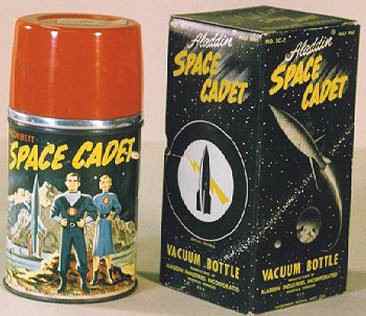
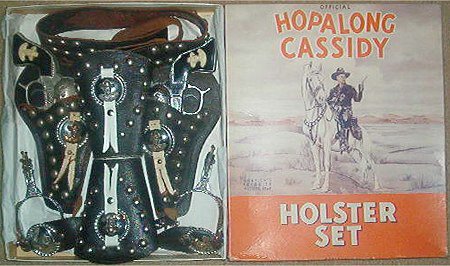
Davy Crockett socks. Bonus was the
cardboard backing to a set of them,
which had the words to ALL the
verses of The Ballad of Davy Crockett. Posted by Picasa

 Posted by Picasa

Captain Midnight Secret Squadron patch  Posted by Picasa

There's a photo somewhere of me wearing these, in front
of a Christmas tree. I was maybe five. Posted by Picasa

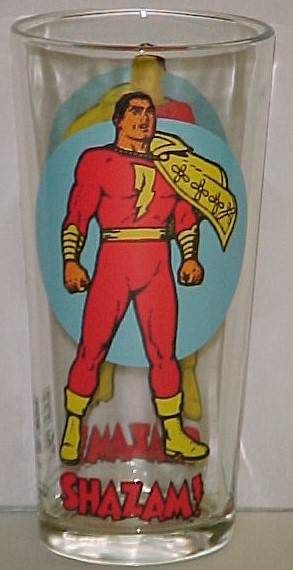
Once when I was sick, my father
brought me comic books he got
half price. Several were Captain
Marvel. I was marvelized.
And sad to discover that the comics
were so old, they'd been
discontinued years before. Posted by Picasa

I had this Roy Roger's bedspread on my bed for years, but in a light brown. Posted by Picasa

Rocky Jones' spaceship, the Orbit Jet Posted by Picasa

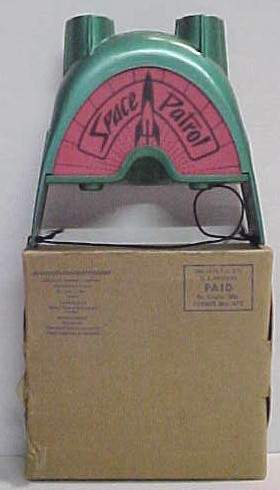
Space Patrol binoculars Posted by Picasa

I rescued my American Flyer engine and cars from the trash,
but didn't get the track and transformer. Still have what I rescued. Posted by Picasa

 Posted by Picasa