Wednesday, January 19, 2022

TV and Me: Say Kids--What Time Is It?


Television and I grew up together.  This is our story.  Third in a series.


 Early TV couldn’t depend entirely on old motion picture footage.  There was just too much time tumbling down those television channels.  Another source of time-filling material was its other mass media ancestor: radio.

 Radio’s most popular programs would soon be the templates for early television shows.  But even as that was beginning to happen, an even simpler transfer took place: there were certain kinds of radio shows that needed only a few cameras and some lights and they became television shows.

 They weren’t the scripted dramas or comedies—which were normally done by actors standing in front of microphones, with somebody off to the side doing sound effects to simulate the action.  But there were also radio shows that were essentially live stage shows, performed before audiences (soon to be known as "the studio audience.")  These were the easiest to adapt to TV. So two of the biggest stars in early TV were two popular hosts of radio shows, doing basically the same shows on television.

 Arthur Godfrey was a former local radio announcer who hosted the first successful quiz show on radio in 1937, Professor Quiz.  He became famous for his live coverage on CBS radio of President Franklin D. Roosevelt’s state funeral in 1945, a very emotional moment for the country that had depended on FDR for more than 12 years, through the Great Depression and World War II.

 In 1945 Godfrey began his own program on CBS Radio called Arthur Godfrey Time.  It ran for an hour and a half every weekday morning. It was part talk, part monologue, part entertainment with skits, singers and a live band.  Godfrey often improvised, suddenly breaking into song he accompanied on his ukelele, with the band trained to follow.

 In 1946 Godfrey also began hosting the weekly Arthur Godfrey’s Talent Scouts on CBS radio.  It became one of the first programs to be simultaneously broadcast on television in 1948, every Monday evening.  Professional entertainers vied for their big break, including Tony Bennett, Marilyn Horne, Patsy Cline and Lenny Bruce.  It was the country’s most popular TV show in 1951-2, and remained in the top ten for most of its decade on TV. 

Julius LaRosa with Godfrey
Some of the talent scout winners began showing up as regulars on his Wednesday night television variety show, Arthur Godfrey and Friends in 1949, including singer Julius La Rosa (who had several hits including the Italian language novelty number, “Eh Cumpari”) and the Chordettes (who had big 1950s hits with “Lollipop” and “Mr. Sandman.”)  They also frequently appeared on his radio morning show, especially when an hour of it was added to the CBS television lineup in 1952.  Not bad for a guy who mostly sat at a desk and talked into the camera (and the microphone.) 

 I remember him from all of his television shows in the early and mid-1950s, including the daily morning show.  He was so omnipresent that some weeks I saw more of him than my own father.

 Godfrey became controversial, both for his liberal (against racism, for the environment) and conservative politics, and his off-camera tyranny. He was famous for firing singer Julius La Rosa on the air for no apparent reason, though it wasn’t on television as often claimed—it was during the radio-only portion of his morning show.  The contrast between his folksy friendliness on air and his backstage behavior allegedly inspired A Face in the Crowd, the classic film starring Andy Griffith. 

Another famous early TV figure who moved his operations from radio was Art Linkletter. He was a radio success in the 1940s with his shows People Are Funny and Art Linkletter’s House Party. He got his television feet wet in 1950 with the fledgling ABC network’s Life With Linkletter, and a fifteen minute program interviewing children that was mostly a local New York show. These interviews were also a regular segment of his House Party radio show, which itself was added to CBS network television in 1952, when the ABC series ended. It incorporated the kids segment, which became the basis for Linkletter’s best-selling books, Kids Say the Darndest Things.)

People Are Funny was an audience participation show that moved to television in 1954.  One show I recall featured a man who would win a large cash prize if he could go a week without breaking any laws.  He was so careful that week, Linkletter noted, that when he opened a pack of cigarettes he didn’t tear the official stamp on the top of the pack.  That’s when we all learned that not tearing the stamp was illegal.   For some reason. 

Godfrey and Linkletter were comfortable performing live—another reason they were successful on television. That was also the advantage of stage performers—nightclub singers, vaudeville comics, jugglers and puppet shows.  Even radio actors and announcers, unlike movie actors, were used to performing at the same time the audience experienced their performance.

 Live performers were often needed even when early TV did run those old movies, movie serials and cartoons. A live host or act that attracted an audience would introduce them, and more importantly, plug the sponsor.  This was especially true when the audience was primarily composed of children.

 (There is one notable exception to the “live” part.  Captain Midnight was a well-known radio hero, but his first appearance on TV was a short piece of film that introduced every Saturday’s half hour of Zorro and other old movie serials—claiming they were adventures of Secret Squadron members-- as well as shilling for Ovaltine. Eventually Captain Midnight made the full transition to a dramatic TV show.)

 Most of the programs built around showing truncated old movies, serials, old cartoons and repackaged shorts like the Old Gang comedies that became the Little (or L'll) Rascals on TV, were created at local stations. 

Knish, Stohl, Rodney
 For example, on Pittsburgh’s WDTV (the city's first and for years only TV station), a program of Popeye cartoons was introduced by puppets created and operated by local announcer Hank Stohl.  But his creation of Rodney J. Hackenflash and Knish, as well as other puppets, themselves became so popular that they took more and more screen time, until the cartoons became an afterthought.

 (A subsequent Pittsburgh show in the late 50s, “Adventure Time” with host Paul Shannon interacting with a studio audience of schoolkids, began showing old Three Stooges comedies to such acclaim that their careers were revived.) 

 But the Pittsburgh puppets were going along a road already established in Chicago by puppeteer Bert Tillstrom and what eventually became known as Kukla, Fran and Ollie.  Tillstrom started developing his repertory company of puppet characters during the Depression through the Federal Theatre Project, and became so successful that his troupe (the Kuklapolitans) appeared at the New York Worlds Fair in 1940. 

 In 1947, he got a weekday TV show on a local Chicago station.  To his puppet characters like Kukla and Ollie (the one-toothed dragon), he added a human interlocutor, singer Fran Allison.  To fill the hour, they introduced cartoons and movies, but their improvised conversations and situations became the program’s chief draw. 

 It would be awhile before TV networks became truly national, but Kukla, Fran and Ollie became the first TV show originating in Chicago to be hooked up to the East coast and cities in between, via NBC’s new coaxial cable in 1949.  Its format and broadcast time changed over the years, so I remember watching it when I could.  Its gentle wit also made it a hit with discerning adults.


Also in the late 1940s, the New York-based Howdy Doody Show developed from a circus premise, a few characters and old comedy shorts to a more elaborate world of Doodyville and numerous characters. In its heyday of the early to mid 1950s, the show’s originator and host Buffalo Bob Smith interacted with marionette characters ranging from the old fussbudget Mayor and Howdy nemesis, Phineas T. (Mr.) Bluster, to Dilly Dally and Flub-a-Dub, as well as human characters Clarabell the clown, Chief Thunderthud and the Indian maiden, Princess Summerfall Winterspring.

Flub-a-Dub and Dilly Dally

 Howdy Doody was another major hit of early television. I was a faithful viewer at 5:30 pm every weekday.  In the early fifties, it was the first show of the day on NBC, and might be preceded by a test pattern, then another with Howdy’s face in the middle.

 By 1954, I was watching it after the Pittsburgh brand new community owned “Educational TV” station WQED's 5 p.m. show The Children’s Corner, hosted by Josie Cary, and featuring puppets by an as yet unseen Fred Rogers.  (I already felt I was a bit too old for this show, but I had younger sisters. Still, I watched Howdy Doody until it moved to Saturdays in 1957 when I was 11, and perhaps a little longer.)  

The impact of the Howdy Doody show may still be measured by how firmly aspects of it remain in the memories of those who saw it as children.  Everyone likely recalls Buffalo Bob’s opening shout: Hey kids—what time is it?  And the thunderous response of the Peanut Gallery of kids in the studio: It’s Howdy Doody time!  Then at least the first line of the song, and the tune (coincidentally the same as “Ta-ra-ra Boom-de-a”): “It’s Howdy Doody time/it’s Howdy Doody time/ Bob Smith and Howdy, too/ say howdy do to you/ Let’s give a rousing cheer/ cause Howdy Doody’s here/ It’s time to start the show/So kids let’s go! 


But the true test is whether this song jogs the memory, to the tune of “Madamoiselle From Armentieres”) “Who’s the funniest clown you know?/ Clarabell!/  And who’s the clown on Howdy’s show?/ Clarabell! / His feet are big, his tummy’s stout, but we could never do without/Clara-Clara-Clarabell! 

Howdy Doody was as real to me as anything in life. I remember Chief Thunderthud (and his exclamation, Kowabonga!) being challenged by another Indian he called Chief Thunderchicken. I’d never heard of a seltzer bottle until Clarabell began wielding one. I loathed the oppressions of Mr. Bluster. (Jeff Greenfield once wrote an article claiming that Howdy Doody’s rebelliousness towards his elders paved the way for the 1960s.)  I even believed the commercials, when Happy Tooth triumphed over evil Mr. Tooth Decay, thanks to Colgate Dental Cream. (Even though, if I recall correctly, they were unanimated drawings.) I especially was smitten with Princess Summerfallwinterspring, and when she disappeared from the show (the actress playing her was killed in an auto accident, though of course we weren’t told that), I felt an early touch of wistful grief. 


The ancient form of the puppet show was only one Howdy Doody source.  True to its origins, the circus was another, especially clowning.  Yet another was vaudeville, with its song and dance, sketches, slapstick and other comic bits.  The mixture was even more evident in contemporary imitators like the Pinky Lee show. Howdy Doody was also another wellspring of products, and I’m pretty sure my first phonograph was a Phono-Doodle. 


Another variation on the live performer as host for old films was Captain Video, another early TV hit, possibly the Dumont network’s most successful program. 

It debuted in 1949 as a 30 minute show several times a week.  A pretty close knockoff of Captain Midnight crossed with Edmund Hamilton’s print-only Captain Future, Captain Video was originally designed to fulfill the same function as the first TV Captain Midnight did later: basically introduce film footage.  At different points in this show’s history, that did become part of it—in the guise of adventures of distant Video Rangers, excerpts from old westerns would fill the screen. 

 But even as the show was being conceived, the idea grew that actors could enact dramatic adventures as most or all of the show.  By the time I recall regularly watching it, Captain Video and His Video Rangers was a fifteen minute show with nothing else added, broadcast every weekday at 7 p.m.  Like just about everything else in 1953, it was done live. 

To the stirring strains of Wagner's Overture to "The Flying Dutchman," the announcer intoned: "POST--the cereals you like the most...take you to the secret mountain retreat of Captain Video! Master of Space! Hero of Science! Captain of the Video Rangers! Operating from his secret mountain headquarters on the planet Earth, Captain Video rallies men of good will and leads them against the forces of evil everywhere! As he rockets from planet to planet, let us follow the champion of justice, truth and freedom throughout the universe! Stand by for...Captain Video...and his Video Rangers!
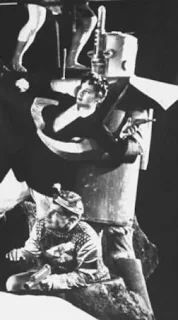
 By then, Captain Video had evolved from an earthbound scientist and inventor to an interplanetary adventurer in the year 2254. His spaceship, the Galaxy, was the first ever on a television show. 

 It was in this period that the program introduced another first, and its most memorable character: Tobor, the first TV robot.  For several agonizing episodes, his huge, all-powerful form stood inert behind Captain Video and other humans, who couldn’t figure out how to activate him.  His name was “robot” spelled backwards (even though it was also adopted for the name of a human villain in the 1951 Captain Video movie serial—the first time a TV show had generated a movie.)  He was a mechanical marvel, but his nameplate had been tacked on backwards.  That sounds like the future we're living in.

 I stared at that robot, alert to any tiny signs of movement while characters chattered on, for what seemed like an infinite series of episodes. (The show sometimes moved at the pace of a soap opera.)  Then of course I missed the episode when Tobor actually came alive.  When I caught up with the story, he was already in space, menacing the Galaxy.  Tobor figured in subsequent story lines, eventually as a good guy hero.  

As a Dumont show, Captain Video’s budget was tiny, mostly poured into its few and often repeated spaceship special effects. There were cardboard sets and lots of flubbed lines. We didn’t notice. The show generated premiums and other merchandise for its young audience, but adults also watched it.  The writers who contributed to Captain Video reads like pages from a Who’s Who of 1950s science fiction.  They included Issac Asimov, Arthur C. Clark, James Blish, Damon Knight, Milton Lesser, Walter Miller, Jr. (author of the classic A Canticle for Leibowitz) and Cyril M. Kornbluth.  They seeded the stories with some actual science, as well as messages of fairness, tolerance, equality and democracy.  Captain Video was even seen negotiating an interplanetary peace.

For most of its run Captain Video was played by radio actor Al Hodge, who took his role as role model seriously. Hodge also taught Sunday School, so he took to heart his moments on the program talking directly with the "Rangers at home." As the Museum of Broadcasting site comments: "While messages on other children's programs would focus on children's issues such as safely crossing the street, Ranger Messages dealt with more global issues such as freedom, the Golden Rule, and nondiscrimination." Showing the scientist and his shadow side (in the villain) also emphasized the potential for good and evil within everyone, and the importance of asserting and living up to these ideals. Hodge even told a congressional committee that Captain Video never used the word "kill."

 Captain Video had a family audience, but its popularity with kids is suggested by this recollection: one day in grade school we had a young substitute teacher who brought in a phonograph, and said she would play something, and we should all draw what we thought of as we listened.  There was a titter in the class when we heard the first strains of the Flying Dutchman theme, which the teacher obviously didn’t relate to Captain Video—until she got back a lot of drawings featuring robots and space ships.

 The success of Captain Video suggested another area of storytelling beyond the western with both kid and family appeal.  Soon there were other captains and commanders and other heroes rocketing across our screens, in particular joining the TV menagerie defining a new kid TV zone...  So stay tuned for our next exciting episode: Saturday Mornings in Outer Space!

The series so far:

1. Million Year Journey to Johnny Jupiter

2. Serials to Cereals

Sunday, January 16, 2022

A Face


It's just by chance, who
 you are, but given myself
 I take care of this being.
 Nobody else will remember
 its hunger, cold, loneliness:
 I will be reminded, and care.

 This face, like an old watch,
 I carry wherever I go.
 Grandmothers, grandfathers, you pictures,
 you should forgive my regret:
 my wanting another. I carry it
 as you did. It belongs
 somewhere, and I am taking it there.

 On corners I let the wind
 have all the world, and I turn
 as a ship accepts the waves
 but is itself and has a voyage
 built into it, stubbornly. 

 The choice of being who you are
 is offered us, or being nothing. 
The mask of myself is an old gift
 nobody else took. So I brought it here.

--William Stafford

Friday, January 14, 2022

Dreaming Up Daily Quote

"History never really says goodbye.  History says, see you later."

Eduardo Galeano

2013 interview in the Guardian

Sunday, January 09, 2022

Don't Look Around


By sheer number of viewing hours, the new feature film Don’t Look Up is an enormous hit—the biggest Netflik has had since it began.  Adam McKay’s movie about responses to the warning of a comet about to obliterate life on Earth has also been met with deeply divided critical and popular opinion.  Presumably a large proportion of that opinion is guided by the movie’s metaphorical target: America’s response to the climate crisis.

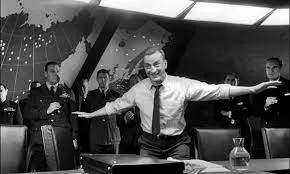
 Apart from comparisons to the satirical standard of Doctor Strangelove (1964), few written reactions to the movie reach back much farther than 1998’s Armageddon, in which Bruce Willis saves the world from an oncoming asteroid (the other such movie of that year—and the better one—Deep Impact, is seldom mentioned.)  But the basic movement of Don’t Look Up follows a template that goes back at least to the 1951 George Pal classic, When Worlds Collide:  Astronomers accidentally find the planet-killing object, they sound the alarm to “the authorities,” they are ridiculed and disbelieved. 

 It is the specifics of how the plot plays out in contemporary America that McKay portrays with mesmerizing precision.  He also manages to get laughs, but it is really the laughter of recognition, the release of seeing the absurdity of our reality playing out. 

 When Worlds Collide emerged at the beginning of another age of absurdity, the nuclear age.  The history of the period makes clear that almost immediately after Hiroshima, a lot of people realized how craziness had come to rule the world.  But official denial in the decade of conformity and McCarthyism forced an eerie and sometimes frantic quietism.  Besides which, the spectre of sudden nuclear apocalypse at any moment was too overwhelming to contemplate.  Official denial became deliberate and then unconscious national denial.

 But then there were all those atomic monsters, alien invasions and cosmic catastrophes in mostly B movies all through the decade. On the Beach (1959) was a drama about nuclear war without showing it. There never was a feature film that depicted nuclear holocaust—and it wasn’t until the 1980s that television took it on, notably with The Day After (1983), watched by 100 million Americans—and President Ronald Reagan, who was powerfully affected by it. 

But by 1964 it could be the subject of satire.  Though Doctor Strangelove is now a widely recognized classic, it was controversial in its day.  Its plot was absurd and yet could happen.  Several of its key characters seemed like caricatures, yet they resembled known types and even real people.  The difference between real life General Curtis Le May and movie character General Buck Turgidson may have chiefly been that George C. Scott was a more expressive actor.

 The characters in Don’t Look Up are notably not so exaggerated.  In the age of Trump, not even Meryl Streep’s President is as over the top.  (Jonah Hill as her son and chief of staff—presumably a stand-in for Don Jr.—may be the movie’ s only overt comic character.)  The absurdity of nearly everyone else is in the main plot is real—in some cases, speeded up, but true to contemporary life. Without blatant stereotypes and simplistic caricatures, some viewers don’t recognize this as satire.  But the history of satire is richer than recent movie history. 

The satire is partly in the metaphor.  The filmmakers are apparently not being shy about saying their intent was to make this movie metaphorically about America’s treatment of the climate crisis.  As some writers have recognized, the metaphor can also extend to the Covid Crisis, and the ongoing political crisis symbolized by January 6. 

 The climate metaphor works in some ways and not in others, but that’s par for the course—otherwise it wouldn’t be a metaphor.  Unlike an annihilating comet collision, the effects of climate distortion destroy over a long time.  Its causes are different, and different measures are required to address it.  Those measures are not as simple as shooting a rocket at it.  In terms of awareness and acceptance, the expensive and long term campaign by giant fossil fuel interests to deny its existence may well have been decisive, and that factor is absent from this film. 

But like a comet on the edge of the solar system, climate catastrophe was a future threat not discernable to the naked eye. And political self-interest as well as media trivializing have been factors in supporting the natural reluctance, the manufactured resistance and the toxic denial that prevented society from facing the consequences before they become inevitable.

 There’s a difference between oversimplifying (always a tendency in movies about a complex subject, as well as  in traditional conventions of satire) and simplifying in order to concentrate on similarities.  In this the movie mostly succeeds.  For its subject, after all, is not climate or comets.  The subject is how America reacts to a credible if unfamiliar threat to its existence--for example, the climate crisis.

 In an otherwise cogent article in Vox, Kelsey Piper rejects the climate metaphor by glibly and without explanation dismissing the idea that the climate crisis is a threat to human survival.  Clearly such destruction would not necessarily happen all at once, like a comet colliding or thermonuclear war.  But there is plenty of evidence that the threat to the survival of human civilization as we know it is real and profound.  The UN has more or less officially linked the climate crisis with the threat of a mass extinction event, meaning that life as we know it on this planet will be over.  If the climate crisis gets predictably worse and mass extinction occurs, some remnants of the human species may survive, but life as we know it almost certainly will not. 

Which brings us to the final scene of Don’t Look Up.  The political conflict in the latter part of the movie is between those who plead for people to “look up” and see the comet, which is the analogue of seeing the evidence, both scientific and in the fires, floods, sea rise and extreme weather in the obvious world.  But the metaphorical MAGA crowd follow their leaders’ chants of “don’t look up.” Which is: don’t look at the fires, don’t notice the Covid death toll, and don’t look at the footage of the attack on the Capitol. Again, as blatant and absurd as the real American moment.

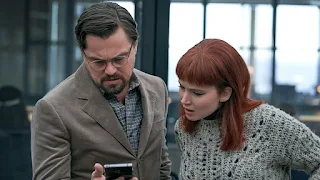
 Throughout the film, the astronomers played by Leonardo DiCaprio (Dr. Mindy) and Jennifer Lawrence (Kate Dibiasky) have tried to get leaders and the public to face the reality and do something about it before it is too late, while their personal lives spiral out of control.  By the end, as the comet is about to arrive, they come together in the DiCaprio character’s Midwestern suburban home, forming a last family, for a final dinner.  They pointedly ignore talking about what’s about to happen, though they do each say what they are grateful for, a ritual that some now observe at Thanksgiving. 

After the meal is over, and they are chatting about apple pie and coffee, Dr. Mindy leans back and says, “We really did have everything, didn't we?”  And then the walls explode.

 To me those are the most devastating lines in the film. As defined by its ending, this is an apocalyptic movie.  Like When Worlds Collide, there are a few human survivors, both on Earth and in the far future and far reaches of space—though it is more than hinted that in neither place are they likely to survive for very long.  The implication of Doctor Strangelove’s ending is that human civilization is totally destroyed, but to the absurdly inappropriate tune of “We’ll Meet Again,” a sentimental song of weary courage from World War II.  The satirical point of it in Doctor Strangelove is that once the bombs start to fall, we won’t meet again. 

 There is some irony in Dr. Mindy’s statement when applied to the climate crisis metaphor, since that “everything” came at a cost of deforming the climate and everything that results.  Still, given the circumstances of that scene, a couple of other interpretations are possible.

 In his Vox article, Piper sees this scene and this statement as motivating action before it is too late. He sees it as urging us to “look up,” to become aware of survival threats, to “acknowledge, and then to actually act.”

 That’s the traditional role of an apocalyptic story: as a cautionary tale.  I might add that “look up” is applicable to more than the sky—especially when there are so many people walking through the unseen world with their eyes constantly cast down to the devices in their hands, and their heads and hearts in virtual communities where agreement is more important than observing the real world.

 This is a perfectly appropriate interpretation, especially for viewers who will likely live into the decades when the dangers increase substantially, particularly the effects of the climate crisis as it jars the world order, and the mass extinctions that tear at the support systems of the planet.

 But I could not help but think of the experience of the person saying those lines in that last scene.  Jennifer Lawrence has her own connections to dystopian stories (The Hunger Games films) but Leonardo DiCaprio is extensively connected to the possibilities of apocalypse in the real world. 

For there is no prominent actor on the planet more deeply and obviously involved in environmental action, and particularly in warning of the threats to survival of the climate crisis than Leonardo DiCaprio.  Those efforts go back to at least 1998 when he formed his foundation to address these issues.  I count at least three documentaries on climate that he narrated, hosted produced or co-wrote, or a combination of these roles: The 11th Hour in 2008, Before the Flood in 2016 and Ice on Fire in 2019.  He used his best actor Oscar speech in 2016 to talk about the climate crisis. He was an official UN representative on climate, and spoke at UN climate summits in 2014 and 2016.

 During that time (from the 90s to now), addressing the climate crisis went from being a bipartisan promise to a wedge issue dividing political parties as well as families.  Actions taken so far, or even pledged, are widely known to be insufficient.  Meanwhile, effects have gotten worse faster than even worst-case scenarios predicted. For the past several years, activists have concentrated on efforts to limit the damage, because some devastation is all but inevitable now.

 But this past year particularly shows that American society is not up to the challenge in significant ways. The ongoing response to the Covid crisis and the crisis of American democracy as well as the ongoing effects of climate suggest this society can’t deal coherently with much of anything.  That’s the awful truth we like to avoid confronting: don’t look around.  But if there is any chance to limit climate related devastation, this must be faced and fixed.  Releasing us to first laugh about it and then deal with it is this movie’s chief contribution.  

When Midwestern American academic scientist Dr. Mindy utters those last words, he knows what’s going to happen, and why.  I suspect that with his own set of experiences in learning the dimensions of the climate crisis, trying to communicate and then observing how things are at this moment, the actor Leonardo DiCaprio might, at least in part, be joining in the same sentiment.  For this remarkable scene in particular makes Don’t Look Up not only a cautionary tale, but an elegy. 

  Footnote (or maybe the after the credits bonus)

In When Worlds Collide film, there’s also intervention at a key moment by a very rich man.  The difference is that in the Pal movie, the millionaire wants to save his own life, so he finances the building of a spaceship. In the McKay movie, the tech billionaire prevents the effort to break up the comet for the prospect of profit—and then when that doesn’t work, he escapes in his own spaceship.  The alarming new roles of tech billionaires, as well as the more familiar corruption and cynicism of politicians (who don’t have to be Trumpians) and the conscious and apparently endemic failures of news media, together move this movie way too close to being a documentary. 

Saturday, January 08, 2022

Pivot


On the first anniversary of the attack on Congress by Trump-inflamed insurrectionists, President Biden's speech in the Capitol Statuary Hall--one of the places where the mob fought and injured its defenders--was widely hailed for its forthright condemnation of those responsible, and those who continue to defend what happened (mostly by denying it happened.)  

It was not a distinguished speech rhetorically.  It was repetitious, overusing the clash of direct opposites (democracy not autocracy etc.),  and missing opportunities for more memorable language ("dagger at the throat of America" is less direct and familiar, and therefore less powerful that "knife at the throat of America.")  "Inflection point" is a fashionable expression that even President Obama couldn't resist.  But I doubt it communicates forcefully to the general public. I'm also not sure if it's what he really meant.  An inflection point, outside of math, is a turning point or a pivot point.  But that means a change in a certain direction. Did he mean that, or a point in which things could go either way--a decisive point, or point of decision?  Politically, "we're at the point of decision" between (yes) democracy and autocracy (dictatorship is better) seems more appropriate and powerful.

And while I'm in the communication weeds, my own response is that Biden behind a podium, shot straight on from a distance, is not to his best advantage.  He seems better to me when the camera is closer, or when he is standing without a podium, talking person to person.  I miss the intimacy of those White House talks all Presidents used to give, seated at their desk in the Oval Office. 

But in this speech Biden covered the ground he needed to cover.  He was especially good in placing the attack in the context of American history.  He also made the point that I recall making here just after the election that Trump's minions disputed that Trump lost, but not that Republicans elected on the same ballot won.  He was forthright in condemning Trump, and identifying the Republicans party as dangerous to American democracy, now and for the future.

There was speculation about why Biden hadn't talked like this sooner.  I expect it was part of the plan to work for Republican votes on the infrastructure part of the Build Back bill, ultimately separated from it and passed--with Republican votes.  The pivot to voting rights was always going to be made--although the process of getting that early huge legislation took longer (and a large part of it still hasn't been passed, thanks to Senator Joe Mansion.)  

Meanwhile, Republicans regressed to abject fealty to Homegrown Hitler in a way that nobody predicted.  The only strategy left to get Republican votes for voting rights is shaming them, and confronting them.  Shaming hasn't worked so far, but confronting them could shake things up, since so many of them are cowards.  Congress may even get serious about clarifying rules to prevent the kind of direct reversing of election results either by Congress or in the states that Trump wanted.

Otherwise, we should expect to see some hardball--some momentum behind efforts to call the perpetrators to account, including criminal charges, and confrontation over filibuster rules in the US Senate. We'll see if all of this is more than words in the coming days and weeks.  

But President Biden's speech alone puts pressure on the courts, especially the Supreme Court, to defend the Constitution.  None of it may work.  But by the time it's over, everyone involved will have to own up.  Politicians, like other rich and privileged, always have somewhere to hide.  But their options will shrink.  Come November, the choices should be pretty clear.  

In fact, they should be clear now on the state and local level, where traditional Republicans could join in resisting the Trumpian candidates who want to manipulate elections for El Duce.  It was Republican officeholders that guarded election integrity in several key states in 2020, though most of them will be gone by 2022.  How quickly voters become aware of the dangers of letting election subversives take over voting rules and vote counting may be decisive.

 So far, at least some of the fears broadcast last year have not been fully realized.  Indications are that partisan gerrymandering in the states hasn't changed things much, at least for the next few elections.  And the scary poll numbers being widely publicized, of the high proportion of Republicans who say that the election was stolen, and that violence may be necessary, etc. are basically a majority or near majority of a small minority, little more than a third of the potential electorate.  Getting the majority to vote, and making sure they can vote, and that their votes will count, is the task ahead.  President Biden's speech, and presumably the continued repetition of its main points, should aid in motivating those voters.  

That leaves the battle for voting rights at the federal and state level, and again President Biden's speech begins to make the case for why this is so crucial.  Because there is a knife at the throat of American democracy. 

Thursday, January 06, 2022

American Tune


Many's the time I've been mistaken
 And many times confused
 Yes, and I've often felt forsaken 
And certainly misused 
Oh, but I'm alright, I'm alright
 I'm just weary to my bones
 Still, you don't expect to be bright and bon vivant
 So far away from home, so far away from home

 And I don't know a soul who's not been battered
 I don't have a friend who feels at ease
 I don't know a dream that's not been shattered
 Or driven to its knees
 But it's alright, it's alright
 For we lived so well so long
 Still, when I think of the road we're traveling on
 I wonder what's gone wrong
 I can't help it, I wonder what's gone wrong

 And I dreamed I was dying 
I dreamed that my soul rose unexpectedly
 And looking back down at me
 Smiled reassuringly
 And I dreamed I was flying

 And high up above my eyes could clearly see
 The Statue of Liberty
 Sailing away to sea
 And I dreamed I was flying 

We come on the ship they call The Mayflower
 We come on the ship that sailed the moon
 We come in the age's most uncertain hours
 And sing an American tune 
Oh, and it's alright, it's alright, it's alright
 You can't be forever blessed 
Still, tomorrow's going to be another working day
 And I'm trying to get some rest
 That's all I'm trying to get some rest

--Paul Simon

Paul Simon used part of a Bach Chorale for a section of "Bridge Over Troubled Water," and a few years later he used more of it for "American Tune." The melody had also been adapted for both Protestant and Catholic hymns.  These lyrics have been relevant pretty much all the time since he wrote them in the age of assassination and Watergate.  But it seems especially appropriate to remember them now on the first anniversary of the insurrection and attack on the US Capitol, and as the latest and perhaps fiercest Covid challenge begins.  Consider it as well an early Poetry Monday. 

Monday, January 03, 2022

Poetry Is The Eagle of Experience


All the little mice of writing letters,
 Sorting papers,
 And the rabbits of getting in the wood,
 The big Buck of a lecture in town.

 Then, walk back into the brush 
To keep clearing a trail.
 High over that,
 A whistle of wings!
 Breath of a song.

--Gary Snyder

Thursday, December 30, 2021

R.I.P. in 2021


In the political world, the December death of Desmond Tutu was one of the latest to be widely noted.  Tutu was instrumental in forcing the world to confront the moral outrage of apartheid in South Africa, and after that white government fell, he worked to further inform the world, heal societal wounds and reconcile with the oppressors through the Truth and Reconciliation Commission, a visionary and still unique national response in the world of nation-states.

 Other noted deaths in the political realm include President Obama’s Senate Majority Leader Harry Reid, and two Senators who ran unsuccessfully for President, Democrat Walter Mondale and Republican Robert Dole. Also Colin Powell, Vernon Jordan and Chicago 7 defendant Rennie Davis, as well as two important labor leaders, John Sweeney and Richard Trumpka.

Leonard Crow Dog
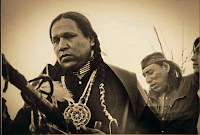
 Not widely noted in the mainstream media were the deaths of Native American leaders, among them: Albert Hale, former president of Navajo Nation; Earl Old Person, chief and chairman of the Blackfeet Tribe and the longest serving tribal official in the US; Lakota medicine man and spiritual leader of the Wounded Knee protests Chief Leonard Crow Dog; activist Edgar Bear Runner, as well as Lee Marmon, whose photographs honored elders and others, mostly in his Laguna Pueblo, for some 60 years.


 In the arts and entertainment, memorable figures from  50s and 60s music include Don Everly, Lloyd Price, Charlie Watt (the Rolling Stones), Michael Nesmith (the Monkees), Mary Wilson (the Supremes), Gerry Marsden (Gerry and the Pacemakers), Jimmie Rodgers (his records were among the first I bought), as well as innovative pianist Chick Corea, and celebrated theatrical songwriter Stephen Sondheim.


In literature, poets Robert Bly and Lawrence Ferlinghetti each had defining roles in American poetry since 1950.  Novelists Larry McMurtry and Joan Didion, and best-selling authors in other areas such as E.O. Wilson, John Naisbitt and childrens’ authors Beverly Cleary and Norman Juster were among our losses in 2021.  (For more details and more authors, see Books in Heat.)

 Noted actors who died in 2021 included: Christopher Plummer, who quietly had an international career playing leading classic and popular parts on stage and screen that may never be equaled again.  I saw him on stage twice: in Boston, as the title character in the excellent Anthony Burgess adapation of Cyrano, and in Pittsburgh in a (then) less than inspiring production of Macbeth with Glenda Jackson in what turned out to be her last stage role.  Both productions went on to Broadway to great acclaim, if not long runs.  His memoir is exhaustive and informative with a light touch.


 Had he been American, Jean-Paul Belmondo’s matinee idol looks would have likely consigned him to big studio commercial movies, but in France he could carry both swashbucklers and films of lasting merit by Godard and Truffaut.  The French New Wave is inconceivable without him. 
Cecily Tyson, whose long career began on a short-lived TV series I loved, East Side/West Side starring George C. Scott. Ed Asner --I still sneak an episode of Lou Grant once in awhile; I also saw him perform live once in a play about the Scopes trial on evolution. Known mostly for his supporting role in Who's Afraid of Virginia Woolf?, for awhile in the 1970s, George Segal was a primary Hollywood leading man.  I liked him especially in Blume in Love.

  And Olympia Dukakis, Hal Holbrook, Cloris Leachman, Charles Grodin, Gavin MacLeod, Ned Beatty, Jane Withers, Jane Powell, Jessica Walter, Arlene Dahl, Anthony Sher, Yaphet Kotto, Norman Lloyd, Johnny Crawford…thanks for the memories.

 Directors we lost include Bernard Tavenier, Richard Donner (the first Christopher Reeve Superman remains a definitive American classic), Melvin van Peebles, and the—shall we say controversial—Lina Wertmuller. 

A film and television director who didn’t get his due was Michael Apted, who made fiction and documentary films about serious subjects, with taste and economy.  Best known for the “7 Up” series that followed a group of English children from 7 into adulthood every seven years, he directed such diverse features as Coal Miner’s Daughter, Gorky Park, Continental Divide, Gorillas in the Mist, Thunderheart, Blink, Enigma and Amazing Grace.  He also directed Bring on the Night, a documentary that followed the genesis of Sting’s first band and songs after he left the Police.  It’s a movie I can see again just about anytime.  It may be overall the best music documentary ever made. 

Walter Bernstein with director Martin Ritt on
the set of The Front
I also especially mark the passing of screenwriter Walter Bernstein.  Blacklisted in the 50s, he got to write a revelatory comedy about that phenomenon in the 70s, called The Front. I met him on the set of that film, and he was an engaging, funny and charming man as well as a witty writer, and an example of how social conscience and perseverance can be aided by a superior sense of humor.

 I also once had a conversation with brilliant and prickly humorist Mort Sahl that was less successful, but I did have the honor of watching him read a joke line I’d written on the Dick Cavett show. 

Never mind Lina Wertmuller—I had no idea Hans Kung was still alive until this year.  He was the daring young voice of reform in the Catholic Church at the time of the Vatican II Council when I was in Catholic high school in the early 60s. A priest even lent me his book on reform and reunion. Since then, it seems, he got into so much trouble for his views with Church hierarchy (after the death of John XXIII) that he described his experience as his own Inquisition. He lost various official posts but kept writing popular and influential books (although not so much in the U.S.), finding common ground among religions and championing the ecumenical spirit, while continuing to oppose church authoritarianism. 

 Star sports figures justly noted included Hank Aaron, Elgin Baylor and John Madden.  I remember Bill Virdon not only as a winning major league manager but as the dependably swift center fielder for the Pittsburgh Pirates who was kind to me.  As a kid I joined others on the Forbes Field diamond to meet our Pirates heroes.  I first shook hands with Roberto Clemente but he seemed distracted and bored, and didn’t look at me.  So I was a little embarrassed when I shook hands with Billy Virdon—until he looked me in the eye and said, “hello, son.”  


Among those we lost here on the North Coast was Clint Rebik, co-creator and artistic director of the Redwood Curtain theatre.  I knew Clint since that theatre began more than 20 years ago.  Besides being a talented actor and director, and in recent years a valued administrator at HSU, Clint was a model of integrity and kindness, generosity, good humor and judicious good sense.  I wrote about his theatre and their productions for a decade, though I was also there for their first night.  When I was unceremoniously dumped from my column, Clint reached out and assured me I would have a free seat there anyway. We did not know each other well, but for awhile we occasionally had coffee when I stopped by his Admissions office. He was widely admired in this community.  Clint was only 55.  He left behind two sons he loved, a partner and many friends.


Sam Oliner and his wife Pearl Oliner created the Altruistic Personality and Pro-Social Behavior Institute at Humboldt State University.  Each authored or co-authored many books on altruism, particularly in the context of Jews sheltered from the Nazis in World War II, as Sam had been as a child.  Their work pretty much created a whole new field of research, and offered an alternative to the dominant every-man-for-himself school of human social evolution.

 I met them when I did an article on their work, which includes many biographical details.  They were lovely people.  I had lunch with Sam a time or two, and I would see them walking in Arcata, hand in hand.  A few years ago, after their retirements, they moved down to the Bay Area to be closer to family.  They both died in 2021, a few months apart.

 May they all rest in peace.  Their work and their legacy lives on.

Monday, December 27, 2021

The Planet on the Table


The Planet on the Table

 Ariel was glad he had written his poems.
 They were of a remembered time
 Or of something seen that he liked.

 Other makings of the sun
 Were waste and welter
 And the ripe shrub writhed. 

 His self and the sun were one 
And his poems, although makings of his self,
 Were no less makings of the sun.

 It was not important that they survive.
 What mattered was that they should bear
 Some lineament or character, 

Some affluence, if only half perceived,
 In the poverty of their words,
 Of the planet of which they were part. 

 --Wallace Stevens

Tuesday, December 21, 2021

TV and Me: Serials to Cereals


Television and I grew up together.  This is our story.  Second of a series.

They were called television channels.  Programs flowed down them from broadcast stations into our eager eyes.  But for the producers of those programs they were river channels of time—of hours to be filled, from early morning to increasingly late at night.

 As it geared up to produce original programs, early television often relied on the ready-made: the stories already on film.  But the motion picture studios were not going to feed the competition if they could help it.  Major studies kept the movies that they owned under lock and key, until at least the middle years of the 1950s. 

 That left the old stock of lesser studios and independent productions, plus the expendable properties that nobody was going to pay to see in theatres: old short subjects and one-reelers, silent era comedy shorts, cartoons from the 1930s and 40s, old serials and some B movies—notably, westerns. 

 They all appeared on early TV. Even the most popular serial of all—the Buster Crabbe Flash Gordon—was reedited for 1950s TV.  But western serials and B features were particularly adaptable.  There were no old cars or obsolete technology or fashions of an earlier era, to tell viewers this was yesterday’s news.  

Westerns existed in their own time—a time created by Hollywood, beginning in the silent era of the 1920s.  By the 30s and 40s, mostly smaller studios specialized in them, turning them out by the hundreds.  They were rarely more than an hour in length, and were often shown at Saturday matinees. And they were popular. So they were perfect for filling those channels of TV time.

 We watched them all, after school and especially on Saturday morning: Johnny Mack Brown, Hoot Gibson, Tex Ritter, Gene Autry (and other “singing cowboys”), Whip Wilson and Lash LaRue, Tim McCoy and Tom Mix, an occasional Roy Rogers or an early John Wayne.  My mother marveled that through breakneck gallops and barroom brawls, the cowboys’ hats never fell off. That was by design: all the main characters wore hats so their stunt doubles could pass for them—their hats were essentially glued to their heads so you couldn’t see their faces.

 How these serials and movies were shown—sliced into half-hours or fifteen minute segments, surrounded by commercials, etc.—was mostly up to local stations that ran them.  So it happened that a silver-haired gentleman named William Boyd approached a local station in Los Angeles, offering them some western movies he owned.  He also happened to be the star of these movies.  He played Hopalong Cassidy.

 Bill Boyd was a lead actor in silent films in the 1920s, but as he approached 40 years old—and with his hair turning prematurely white—he wasn’t getting prime roles.  He heard about an independent producer planning a series of westerns, and lobbied hard for the lead role. In 1935, he became Hopalong Cassidy—in more ways that one.

 The character by that name in series of pulp novels by Clarence E. Mulford was a hard-drinking troublemaker, but Boyd pitched a new concept for him in the movies: he was clean-living, noble and heroic, and won the day with his intelligence as much as his fists and his six-gun.  This transformation of the character was the first of Boyd’s amazingly good decisions. Another was realizing that he needed to support the character’s image by toning down the wilder side of his own nature.  He made himself into a role model, on and off screen. 

The classic Hoppy is pretty much there—maybe a little meaner-- from the beginning of what turned into a series of 66 films. No attempt is made to hide his silver hair.
  In fact, it was accentuated by his black outfit and hat.  This was against the Hollywood western cliche—the bad guy wore the black hat.  But Hoppy didn’t go too far: his horse (Topper) was white.

 The Hoppy films were a cut above the usual serial or B movie western.  Movie theatre owners noticed and began playing some as features.  Boyd cajoled studios into spending more, and took pay cuts to finance better quality stories and production.  These movies excelled in cinematography and the scenery where they were typically shot, at Lone Pine, California, in the foothills of Mt. Whitney.  It all seemed to pay off: in surveys of the most popular western stars in the late 30s and early 40s, Hopalong was in the top three, along with Gene Autry and Roy Rogers.

 But in 1943 the film series producer decided the Hoppy series was played out. Then Bill Boyd made his next brilliant decision.  He spent everything he had and could raise to buy both the rights to the character and the old films.  He made twelve more Hoppy features for theatres between 1946 and 1948, with smaller budgets.  That’s when he offered his old films to an NBC affiliate in Los Angeles, to run on TV.

 The Hopalong films quickly became popular, but Bill Boyd and NBC had another idea: Hopalong Cassidy would be the first western hero to make the transition to a television series.  It began airing on June 24, 1949, just days before my third birthday. 

 By the time I was four, Hopalong Cassidy was a national sensation, and I was hooked. William Boyd became the first national television star. Hopalong was on the cover of Life Magazine, Look and Time. 

That following Christmas, when I was four and a half, my most prized gifts were an authentic Hopalong gun and holster set, plus a less than authentic Hopalong suit and hat. (That's me in the top photo, defending my almost one year old sister Kathy.) Eventually I would have a Hopalong toy chest, a Hopalong record, and probably other items. In total there would be some 2600 different Hopalong-themed or endorsed products. (Hoppy lunch boxes started a lasting trend.)  Radio and film heroes and perhaps one or two other TV heroes at that time generated products and “premiums,” but nothing like this.  This started it all. 

So I wasn’t the only one with a Hopalong Christmas.  It was so common that the classic song, “It’s Beginning to Look A Lot Like Christmas,” written by Meredith Wilson in 1951 and originally recorded by Perry Como and Bing Crosby, includes the lyrics: “A pair of Hopalong boots and a pistol that shoots/ is the wish of Barney and Ben...” 

 Hoppy was so ubiquitous that he was the subject of my grandfather’s Italian/English pun.  A common greeting among my grandfather and his friends was, “Che si dice?” pronounced K-sa-deech. It’s the equivalent of, “what do you say?”   When I was in my Hoppy phase as a child, my grandfather would greet me: “Hey, Hopalong Che si dice!” 

Contradictory sources make the actual broadcast history of Hopalong Cassidy a little hazy.  But there seem to have been only 52 half hour episodes made, though they likely ran repeatedly until at least the mid-1950s.  Twelve of these were edited down from the  last dozen theatrical films Boyd made.  Then he added 40 new half hour television episodes.

 By the time the first 12 shows had aired, Boyd knew exactly who his audience was: me, and children more or less my age. So to the new episodes he appended a brief coda.  Arrayed in his Hoppy outfit, appearing to be reading a book or writing at his desk, he offered brief homilies to his “little partners.”  Judging from the subjects—wash your ears, go to bed when you’re told to, and above all listen to your mummy and daddy—he judged the majority to be at the lower end of the four to twelve years age group.  (Hoppy also promised parents that he only endorsed quality, safe products, and this has been reported to be true—Bill Boyd personally reviewed all offers.  He also refused to make very popular personal appearances if children were charged admission.)   

Hoppy appearance in Denver 1954
Watching these episodes now, digitally cleaned up for DVD, it isn’t entirely clear why we loved them at such a young age.  Their stories were often fairly complex.  Hoppy was mostly more of a detective using his brain than a gunslinger. He might casually deck a bad guy with his fists, and he sometimes shot one, though that became increasingly rare as the series progressed. 

 There were always action sequences—but action in the 1950s sense: horseback chases, runaway buckboards and stage coaches, frequent gunfights with cowboys shooting at each other from a distance—and Hoppy arriving in the nick of time.  I’m sure we found these exciting.

 Mostly I think it was Hoppy himself.  There was something magical about the tall lanky man in black, and the way he carried himself.  Seeing these again, I recalled the neckerchief he wore with the steer head clasp (I probably had one.)  But above all I remembered his voice and his laugh.  I remember trying to imitate the Hoppy chuckle.

 His age never registered (Boyd was in fact almost as old as my grandfather.)  But something paternal probably did.  He could look mean (Boyd’s sneer was more prominent in the movies) and he could be sarcastic with his sidekicks, but he could also be gentle and generous.  He smiled a lot.  From the start of the new episodes, Hoppy was often coming to the rescue of an adolescent or child.

 How much of these stories could I understand at four or five?  In cutting down movies from more than 60 minutes to under 30, Boyd used extensive voice-overs to summarize missing elements of the story.  He refined this technique for the television episodes, so that Hoppy was often shown merely looking, or thinking, while that silvery voice talked only to us. This allowed for more complex stories in the allotted time, so they hold up pretty well.  But I wonder how much we understood.

 The stories often involved Hoppy coming to the aid of victims of the unscrupulous.  As often as not, the bad guys were bankers and men of position.  Hoppy championed the unprotected, and even if I couldn’t follow financial details and so on, I probably got that much.

Duncan Rinaldo and Bill Boyd
 Hopalong Cassidy was the first film to television western series, and also the first made for television western.  Seeing its success, other networks got interested.  Very quickly, ABC aired The Lone Ranger (1949), starring Clayton Moore, and The Cisco Kid, starring Duncan Renaldo, went into syndication (1950.) They were the epics of our early childhood. (Moore, Renaldo and Boyd were all friends. Moore even dropped the mask to appear in several Hoppy episodes, once as a villain.)

 The Cisco Kid was based on an O. Henry character, and called the Robin Hood of the West.  Pancho (played by Leo Carrillo, who unlike Boyd and others was actually an accomplished rider) was Cisco’s comical sidekick (“Let’s went!”) and they eventually had a conversation at the end of their brief adventure which they ritually ended by saying, “O Pancho!”  “O Cisco!” and laughing. 

The Lone Ranger was very popular on radio, and Clayton Moore as the masked rider of the plains deepened his voice accordingly.  Jay Silverheels as his Indian companion Tonto played the part with unfailing dignity—he was just about the only sidekick who wasn’t comical.  They also championed the weak and oppressed.  

(What everyone of a certain age remembers is the opening narration to The Lone Ranger.  Oddly, none of the available episodes use the whole thing. It didn't appear until after the first season or two, and apparently later syndicated episodes cut it back.)

 While it’s true that among the Western movies that made it to TV were enough “cowboys and Indians” scenes to make that a cliche of the form, but it seems less recognized that Hopalong Cassidy and other early television westerns mostly did not take the same attitude.  In every Hoppy episode featuring American Indians, they are the victims of unscrupulous whites.  The same is true of The Long Ranger.  In fact, that’s the theme of both of the original Lone Ranger feature films. 

Guy Madison as Wild Bill
Other western movie stars also got themselves television shows, notably Gene Autry (1950) and Roy Rogers (1951.).  And the floodgates opened for new TV westerns, such as two of my favorites, The Range Rider and The Adventures of Wild Bill Hickok (I especially liked their fringe jackets) both in 1951.  Most of them wound up being sponsored by breakfast cereal companies, and so memories of Guy Madison’s Wild Bill Hickok arrive flavored with Sugar Pops.

 Non-Western movie serials also made the transition to TV cereal (Buck Rogers, for example, and a weird postwar German-made Flash Gordon with an American actor as Flash and Germans as the villains.) One that featured the same lead actor in both film and TV was Dick Tracy, starring Ralph Byrd in 1950-51. 

Watching a specific episode of this series is actually one of my early memories, at five years old or so. In the story, the bad guys got the drop on Tracy and took away his gun.  But he outsmarted them because he had a second gun they didn’t find.  I remember leaving the room, thinking about this clever ploy.

 But stories that already existed on film alone could not completely fill up those channels of time. Most of that time in early television was taken up by something that made it unique, and yet also related to past forms.  It is an element that television rarely relied on again, and today’s viewers almost never see.  Because most of early television was live.

 What time is it, kids?  Next time.