Saturday, February 06, 2021

The Q Question


Why so many people fall so hard for the outlandish blandishments of the QAnon Conspiracy is a hot topic these days. I find some explanations at least partially convincing. But not others—especially coming from social scientists.

 In our age of Covid and climate crisis denial, “trust the science” has become our mantra. But not all purported science is good science, or meaningfully applied. That includes a whole lot of so-called social science that is done primarily by thinking up questions, asking them of a relatively small group of people and then making conclusions based on their answers, which usually involves statistics.  The statistics make it look like science.

 But the problems are often multiple: bad questions, asked of the wrong people (or not a diverse group of people), and making universal conclusions, not even justified by the “data.” The usual culprits are psychologists and political scientists.

 So when Thomas Edsall in his piece published in the New York Times dutifully went to social scientists, he got science that was inadequate or just plain bad. 

 The study conducted by the psychologists he consulted concluded that “the type of extremity that undergirds such support has less to do with traditional, left/right political concerns and more to do with extreme, antisocial psychological orientations and behavioral patterns.” This conclusion falls between the obvious (not traditional politics duh) and the unenlightening. Extreme beliefs are believed by extreme people is not much of a contribution, but then it neatly puts the question in the realm of psychology rather than politics. More work for them!

 Beyond that, the conclusions give more comfort to the self-satisfied than information on the phenomenon. It also sounds like what such types used to say about civil rights and antiwar activists.

 Then there are the political scientists who reportedly asked these questions: “Events like wars, the recession, and the outcomes of elections are controlled by small groups of people who are working in secret against the rest of us”; “Much of our lives are being controlled by plots hatched in secret places”; “Even though we live in a democracy, a few people will always run things anyway”; “The people who really ‘run’ the country, are not known to the voters.”

 If you agreed, presumably that made you an antisocial believer in conspiracy theories. The problem is that many people with a quite sophisticated knowledge of the world would also answer yes, at least partially, to these questions. I mean, “The people who really ‘run’ the country, are not known to the voters.” Did these political scientists never hear of lobbyists? The highly paid professionals, whose effectiveness depends on their invisibility to voters, with regular access to legislators and others in power, and who have been known to actually write the laws?  And that's just one example of many: bureaucrats, contractors, etc. even before getting to various power brokers.


“Much of our lives are being controlled by plots hatched in secret places.” Maybe these polysci folks knew about it, but I doubt many of us were aware of the initial plans to start Facebook, etc. Or were privvy to the meeting in 2017 in which Mitch McConnell and Republicans plotted to thwart the Obama administration’s every move. And so on.

 Sophisticated conspiracy theories probably start with a grain of truth. “Events like wars, the recession, and the outcomes of elections are controlled by small groups of people who are working in secret against the rest of us,” is not only the premise of fiction from Thomas Pynchon to your average streaming thriller, it is a widely held description of the role of the small if undefined group of the rich and powerful known as “the Establishment” in the 20th century. And there’s your Military Industrial Complex, and other “conspiracies” of huge faceless corporations.  

 These “scientists” do make some interesting observations, though without much in the way of explanation: the QAnon types will believe mutually contradictory conspiracy theories (Osama bin Laden was already dead when the Navy Seals found him, and he is also still alive, etc.) One of the psychologists wrote: “people are attracted to conspiracy theories when important psychological needs are not being met.” She identified three such needs: “the need for knowledge and certainty”; the “existential need” to “to feel safe and secure” when “powerless and scared”; and, among those high in narcissism, the “need to feel unique compared to others.” 

 None of these seem particularly abnormal needs, so maybe it’s worth figuring out why they are not met. And why the “need for knowledge and certainty” is not met by factual information and informed sources, and the usual checks on this information of consistency and real world evidence, etc.

 I return to the newness of the Internet and social media, which I flagged in a previous piece, and which is getting its attention (for instance, in a thoughtful interview in the Times with, of all people, Hillary Clinton, one of the major targets and perhaps inspirers of the QAnon conspiracy, and another Times interview with Michael Goldhaber, whose analysis of Internet potential that led to the boomlet for “the Attention Economy” some years ago is gaining new, well, attention.) 

I think it possible that, because they are new media, and because of their nature in providing instant access and communication to anyone and everyone, Internet media are exposing people to information without experience and skills in evaluating that information. Add to that what Clinton called the addictive quality of algorhythms, which I think even those of us who have gone no further than clicking on one YouTube music video after another can sense is probably very powerful.
 

I want to add one more factor here, that I’m surprised I have not seen elsewhere. To me, the most incomprehensible feature of the QAnon conspiracy tales is their extreme outlandishness. Thousands if not millions of people believe that certain high profile people are secretly engaged in organized child kidnappings and abuse, to the point of eating kidnapped children. Or that well-known and powerful people are really lizard beings from outer space in disguise. 

 Where does this imagery come from but the horror movies, science fiction and violent fantasies that drench the entertainment media as never before in anyone's lifetime?  Not only would these conspiracies be incomprehensible to most Americans in the 1950s, for instance, but these stories were way outside the mainstream, if they existed at all. 

 Today a 1940s and 50s superhero like Superman, or the Marvel heroes developed since the 60s, don’t bother fighting human criminals, or rescuing babies from burning buildings. They battle incredibly powerful beings from space or other dimensions or whatever, whose powers and evil natures are extreme.  Super-villains may use mind control and other invisible powers.

 More directly, the zombie mythologies of the past decade, now firmly part of American childhood in games as well as television and movie sagas, have boosted the degree and prevalence of creepy violence that makes cannibalizing children imaginable.  (The top photo is from such a movie.)

 And the lizard people reflect several generations of Star Trek and other science fiction prosthetic beings. This conspiracy in fact enacts a 2006 episode of Doctor Who, in which the Prime Minister of the UK and his cabinet are big green space beings uncomfortably encased in human skin suits. 

 Belief in such creatures has roots in history, just as the journey to QAnon in terms of culture and media has been documented over the past decades.  Belief in conspiracies is fed as well by actual exposure of real secrets, from the Pentagon Papers to more recent and notorious document dumps.  The search for hidden meanings and ciphers is familiar from popular fiction like The Da Vinci Code. And that also is where this kind of social science fails—it is basically ahistoric. And that doesn’t explain much.

Thursday, February 04, 2021

The Dreaming Up Daily Quote


"Writing becomes its own reward.  What do you need from others--except a little money--if you have satisfied the stern critic of yourself?"

Malcolm Cowley 

Monday, February 01, 2021

Poetry Monday: Winter


Skeleton of Winter

 These winter days
 I’ve remained silent
 as a whiteman’s watch
 keeping time
                    an old bone
 empty as a fish skeleton
 at low tide.
 It is almost too dark
                    for vision
 these ebony mornings
 but there is still memory,
 the other-sight
 and still I see.

 Rabbits get torn under
 cars that travel at night
 but come out the other
 side, not bruised 
breathing soft
 like no fear.

 And sound is light, is
 movement. The sun revolves
 and sings. 

 There are still ancient
 symbols
             alive
 I did dance with the prehistoric horses
 years and births later
 near a cave wall
 late winter.

 A tooth-hard rocking
 in my belly comes back,
 something echoes
 all forgotten dreams
                   in winter. 

 I am memory alive
                    not just a name
 but an intricate part
 of this web of motion,
 meaning: earth, sky, stars circling
 my heart

                   centrifugal.

-- Joy Harjo

Saturday, January 30, 2021

Unity

It’s become the Republican canard of the day: because President Biden won’t give into their demands, he’s not really for unity. But unity was never unanimity. Unity is about uniting around a core set of common values that previously defined American democracy, including some that simply define civilization. 

 Republicans had the chance to do this, and then to move on to uniting to solve problems with factual argument and good faith political negotiation. And for a couple of weeks—from the attack on the Capitol through the Inauguration—it seemed possible. But Republicans have again reverted to their anti-democratic obeisance to the apprentice dictator, now in exile.

 Those core values and American institutions that once changed the world include the Bill of Rights, impartial courts and the rule of law, public education and the community institutions that support all of it, like public libraries. But the most basic value, which many of the others serve, is the right to vote, and the system by which votes determine who is in charge of governing. 

 Reaffirming these core values and defending and strengthening these institutions is the only basis for unity. Much of the country fervently desires this to happen. But it appears not to be happening. To one degree or another, most of today’s Republicans in Congress, and the official Republican party in most states, undermine each and every one of these values, none more than the right to vote, and the right to be governed by the voters’ choices. 

 There are plenty of stories now about the Republican party in crisis. Members of Congress turn their considerable ire and well-practiced invective on each other. Despite the rabid state party leaderships, hundreds of thousands of Republicans are changing their registration or otherwise leaving the party. But the parts of the system these shameless, rabid Republicans like are those that allow them to take the presidency and Congress by minority rule. Right now it is still more than possible that Republicans will regain control of one or both houses of Congress in less than two years.

 So the Republican party may be on the road to perdition, but right now it is clearly the party of sedition. That is likely to become even clearer during the upcoming impeachment trial of Trump. By signaling that Senate Republicans will not provide the votes to convict, they perhaps hoped that discouraged Democrats would put on a pro forma case, impatient just to get it all over with. That does not appear to be the plan. The House managers are going to make what happened at the Capitol, and who was responsible, dramatically clear. 

 A truly unified political leadership would gravely but firmly hold even the highest leader in their own party responsible for seditious acts, thus affirming the rule of law, and their oath of office to preserve and protect. Instead they will carp about the divisiveness of this trial, as if it were ordinary partisan politics. They will carp about the urgency Democrats feel to address the Covid crisis and its attendant economic crisis. 

 It is not a stimulus bill, by the way. It is a support bill. It is not designed to stimulate the economy—it is designed to support it. It is designed not to give people extra spending money, but money to buy food, to keep their beds, to pay their bills, until the covid crisis that has disrupted their ability to earn is effectively over. It is designed to keep the states solvent with compensation for the financial burden they’ve borne alone during the crisis. And it is designed to buy what’s needed to end the crisis: more vaccine and better distribution, more needed medical supplies, including the damn right masks.

 And Democrats hope to do the responsible thing by passing this, because it will benefit the country as a whole and everyone in it. That’s unity. That’s the United States.

 But in terms of saving democracy from this unprecedented situation in which one of the two major parties is seditious, I am persuaded by Ed Kilgore’s argument that the most important legislation ahead is a new and stronger Voting Rights bill. Right now, Republicans in charge of state governments are busily instituting new ways to prevent the wrong people from voting. If they succeed, even the crazy one-third of the American electorate might be enough to end democracy at the time we will need it most, the looming future when we will have no choice but to confront the effects and causes of the climate crisis.

Wednesday, January 27, 2021

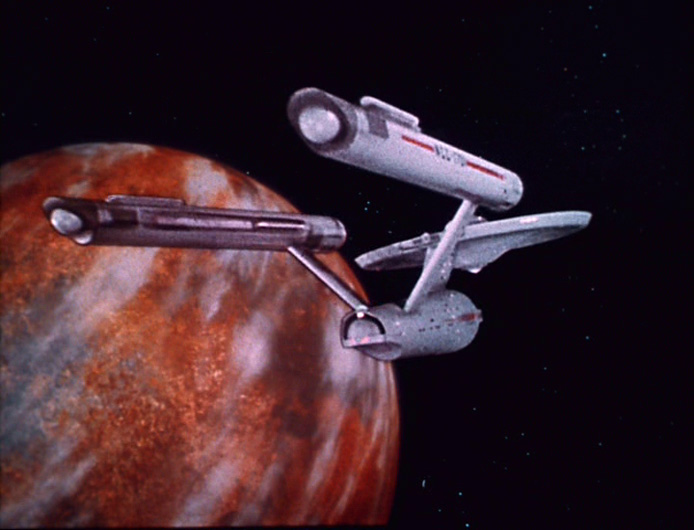
Soul of the Future: The Utopian Star Trek


"The fundamental job of the imagination in ordinary life, then,is to produce out of the society we have to live in, a vision of the society we want to live in."
Northrup Frye: The Educated Imagination

 There are stories of utopias that reject the apparent present courses of civilization, particularly its developing technologies. One way or another, they suggest the future should be based on an era of humanity’s past, including its Indigenous past (though at least in some ways and in some places, still its present.) 

 There are fewer utopias now that suggest the future should be based on “the future” as we’ve understood it—that is, on the further development of civilization in its current characteristics, including more developed and new technologies.  In recent years, these have been related to the potentials of computers and AI, though apart from their prominent promoters, they seem to inform more dystopias.  These tech utopias used to be more common, though in the pre and post-World War II period, mostly sponsored by industries (including scientific institutions) that looked forward to creating the products of those technologies and that utopia. The most prominent examples were the three- dimensional utopias of the industrial age Expositions and World’s Fairs, especially the 1939 New York World’s Fair. 

But the deadly byproducts of technologies, and how some were and are used—from atomic bombs and other incredibly destructive weapons to chemical pollutions and greenhouse gases—drained the credibility and moral authority of technological utopias. So did the social and psychological damage stemming from the overcrowding, excessive noise and demands of an inhuman speed of life, and the consequences of the money economy interdependent with those technologies, especially the drastic differences between the lives of the rich few and the many surviving on much less. The pernicious relationships of class to race, and the cultural suspicion of difference in general were also part of this context. 

 How can these problems be solved in a better global society that continues its social and technological evolution along this 10,000- year path of what we know as civilization? To some extent, novels by Kim Stanley Robinson are the exemplars of this kind of utopia, especially as they attempt to be highly practical as well as visionary about the process of creating utopia (which KSR seems to define these days as civilization surviving more or less intact while avoiding a mass extinction event among the planet’s lifeforms.)

 But there is one prominent aspirational utopia that enacts “the future” on this evolutionary line, and includes –and to a great extent depends on—higher technology. And it is the utopia that more people on planet Earth know that any other in history. It is the story saga known as Star Trek. 


 In the spring of 1964, Gene Roddenberry completed a 16-page outline for a television series he called Star Trek. As a successful television writer who had just produced a TV drama series, he was equipped and positioned to try to make it happen. 

 There are many curious connections and parallels between the lives, works and ideas of Gene Roddenberry in the mid-20th century, and H.G. Wells in the late 19th. Both were born in relative poverty on the margins of the dominant and most advanced nation of their time. Both had disabling health problems as children that turned them towards avid reading, and changed their lives. 

 This reading inspired a voracious hunger for knowledge, but they both could manage only a spotty mixture of scientific and literary education. Both became self-taught professional writers who gravitated towards the most popular storytelling medium of their time. 

 They used pretty much the same method and philosophy of science fiction storytelling. They both used story as a method of exploring the future, partly by critiquing aspects of their present. They each became the best-known storytellers about the future of their era.
 

Their common concern for the future is their most obvious bond. They even shared a kind of starting point in their judgment of humanity in the present. Roddenberry many times refers to humanity as being in its adolescence. “If there is a single question to which all of Well's books are addressed,” Wells critic Frank McConnell concludes, “it might be phrased as this one: How shall Man live through his own coming of age?" So the chief concern they shared may be stated as exploring the soul of the future.

 Both Wells and Roddenberry absorbed and synthesized ideas and stories of their times as well as the past. As an author (Wells) and as a producer (Roddenberry) they had primary responsibility for shaping their stories. Both had significant help from others but to a greater degree, Roddenberry depended on collaboration, partly because of the nature of his chosen storytelling medium. The television drama series is a unique storytelling form that requires the creative participation over time of many hands. Writers build on previous stories and character developments, directors absorb the innovations of their predecessors, actors become the creative caretakers of their characters. 

 Even if confined to the two Star Trek series that Roddenberry produced (the 1960s original Star Trek and the late 1980s to early 1990s Star Trek: The Next Generation), the Star Trek saga developed over hundreds of storytelling hours. Moreover, due to the feedback mechanisms it pioneered (including the science fiction community and fans), additional layers of participation developed. So Star Trek may be the first collaborative utopian tale. 

 While Roddenberry had the additional menu of science fiction pulp magazines and Saturday afternoon movie matinees in his story diet, he and Wells shared some forms and authors. They both read the cartoons and comics of their times (more advanced in Roddenberry’s childhood, as the adventure comic books developed out of the daily comic strips), the boy’s periodicals and books, adventures such as Robinson Crusoe and Huck Finn, as well as non-fiction accounts of faraway places, exotic creatures and voyages of exploration. In particular, they both developed an affinity for Jonathan Swift in particular, and took Gulliver’s Travels as a guide when each turned to science fiction.


 "My early, profound and lifelong admiration for Swift, appears again and again in this collection,” Wells wrote in a preface to a collection of his science fiction novels, “and it is particularly evident in a predisposition to make the stories reflect upon contemporary political and social discussions."

 “I thought with science fiction I might do what Jonathan Swift did when he wrote Gulliver’s Travels,” Roddenberry told an interviewer. “He lived in a time when you could lose your head for making religious and political comments. I was working in a medium, television, which was heavily censored, and in contemporary shows I found I couldn’t talk about sex, politics, religion and the other things I wanted to talk about. It seemed to me that if I had things happen to little polka-dotted people on a far-off planet, I might get past the network censors, as Swift did in his day.”

 In Swift, each also found a connection to more ancient folk and mythological stories; Swift’s Lilliputians, for example, were preceded by the “little people” in various mythologies of Europe, Asia and the Americas, as well as Tom Thumb, the first fairy tale to be published in English. 

 This was a key observation by Russian writer Yevgeny Zamyatin in his perceptive essay on Wells. ( Zamyatin was the author of the pioneer dystopian novel We, as well as a book editor who published Wells in Russia). “The motifs of the Wellsian urban fairy tales are essentially the same as those encountered in all other fairy tales: the invisible cap, the flying carpet, the bursting grass, the self-setting tablecloth, dragons, giants, gnomes, mermaids, and man-eating monsters,” he observed.

 To these can be added the aliens with an array of unexplainable powers from strange new worlds in Star Trek (plus an actual Greek god.) Such figures reach deep into the cultural unconscious, applied in new ways appropriate to new generations.

 Moreover, they provide a perspective—a way to view humanity and its societies as if from the outside, or in contrast to very different beings and societies. This ability to stand outside the contemporary world, even a little, is essential to the utopian tale.


 But there were also important contemporary influences that Roddenberry shared with his close collaborators. Many were veterans of World War II, some of them (like Roddenberry) combat veterans. Their careers coincided with the presidency of the former Allied Supreme Commander (General Dwight D. Eisenhower) and particularly that of a former Navy lieutenant who commanded a PT boat in the Pacific, John F. Kennedy.

 It probably is not a complete coincidence that Roddenbery wrote his Star Trek series proposal just four months after President Kennedy’s assassination. “Tragedy is amputation,” wrote Norman Mailer in his essay “After Kennedy’s Death”. “So many of the nerves of one’s memory run back to the limb which is no longer there.” Many of the prominent themes of Star Trek can be traced back to the Kennedy campaign and presidency.

 At this remove perhaps, the memory of JFK’s presidency has been reduced to a two-word soundbite (“Ask not...”) and the cliche of a womanizing “cold warrior.” At the time however many heard him as the eloquent voice of a new vision for the future, aspects of which could be classified as utopian. He urged a fresh perspective and necessary change for a better future.

 In the summer of 1960, Kennedy came to the Democratic convention that nominated him in Los Angeles, which was guarded by members of the Los Angeles police that had been Roddenberry’s colleagues when he was in the department, moving up from patrolman to a writer for the Chief. His father and brother were still on patrol.  

Roddenberry would have recognized the Kennedy name: when Navy Lt. John F. Kennedy’s PT boat was destroyed and he and his crew were lost at sea in the Pacific, bomber pilot Roddenberry, based nearby, was slated to search for them, though damage to his plane prevented it.

 Roddenberry was a hereditary Democrat, and Kennedy was the first of his generation to aspire to the presidency. For all these reasons he likely paid attention to Kennedy’s nomination acceptance speech envisioning a New Frontier:


 "I stand tonight facing west on what was once the last frontier. From the lands that stretch 3000 miles behind me, the pioneers of old gave up their safety, their comfort and sometimes their lives to build a new world here in the West….Their motto was not 'Every man for himself,' but 'All for the common cause.'"

 "…we stand today on the edge of a new frontier—the frontier of the 1960s, a frontier of unknown opportunities and paths, a frontier of unfulfilled hopes and threats…" 

 This New Frontier, he said, is “not a set of promises. It is a set of challenges."

” …Beyond that frontier are uncharted areas of science and space, unsolved problems of peace and war, unconquered pockets of ignorance and prejudice, unanswered questions of poverty and surplus."

 “My call is to the young at heart, regardless of age, to the stout in spirit, regardless of party.”

 "…I believe the times demand invention, innovation, imagination, decision. I am asking each of you to be new pioneers on that new frontier."

 Kennedy not only described one crucial characteristic of a utopian future in that speech; he argued its necessity.  “The world is very different now. For man holds in his mortal hands the power to abolish all forms of human poverty and all forms of human life.”  This was but one step short of the Buckminster Fuller choice of Utopia or Oblivion. The future was necessarily one or the other.

 So in that speech launching his campaign, Kennedy asked his fellow citizens to join him in “a struggle against the common enemies of man: tyranny, poverty, disease, and war itself.” 

 He repeated his utopian call in his Inaugural Address, and repeated the choice: “For man holds in his mortal hands the power to abolish all forms of human poverty and all forms of human life.”

 Hardly more than two tumultuous years later, on successive days, Kennedy proposed the first nuclear test ban treaty that broke the ice of the Cold War and led to a series of such international treaties, and the Civil Rights and voting rights proposals that would become law after his death.

 Kennedy began two programs with a particular impact on Star Trek: the Peace Corps, and the first forays into what would soon be called the Final Frontier, with the space program and the Apollo mission to the moon.


 And then, just after inspecting the latest rocketry in Texas, he was shot and killed, and that particular vision disappeared.  But it was not forgotten.  It had already changed many Americans, particularly the young.

 A couple of years later, the idea that Roddenberry and his first collaborators, Robert Justman, Herb Solow and others, worked to develop was not just a new TV series, but a new kind of series. There was nothing like it on network television, at least not anymore.

 Along with westerns, space adventures had been a staple of early television in the 1950s, until they drifted from what was becoming prime time to Saturday mornings, and then disappeared.

 By the late 1950s and early 60s, television evenings were dominated by what at the time were called “adult westerns,” which attempted to develop western-based stories with more realistic plots, and characters with adult problems and relationships, within the strictures of network prime time. Gene Roddenberry had written particularly for one: “Have Gun, Will Travel.”


 But westerns began to fade in the ratings and networks were looking for the next big thing. So the Star Trek pitch became: if the popular western genre could go “adult,” why not adult space adventures? After the success of science fiction anthologies like The Twilight Zone, how about an hour-long prime time science fiction drama series with continuing characters, which they tagged as a “Wagon Train to the Stars.”

 Eventually, for whatever sensible, ridiculous and mysterious reasons these things happened, Star Trek got a deal to go into production. 

 Gene Roddenberry’s greatest skill (according to writer David Gerrold) was his ability to select brilliant collaborators, inspire them with his Star Trek vision and his faith in them, and then to maintain a team with a belief in that vision and a creative stake in their common project. Others (including Roddenberry himself) basically agreed.

 But Roddenberry made the final judgments, and he set the rules. They included basic rules of science fiction storytelling that H.G. Wells had enumerated decades before, in a preface to his collected science fiction novels in 1934. Such stories typically introduce fantastic elements, like a time machine or space aliens, which Wells called “the magic trick.” According to Wells, the trick has to at least sound as if it has a scientific basis, through “an ingenuous use of scientific patter,” but it must also be “explained in commonplace terms.”

 But for readers (or the audience) to suspend disbelief, the trick should be surrounded by familiar reality. You must “domesticate the impossible hypothesis,” as Wells wrote. It’s also best to introduce these elements one at a time, and once its function is demonstrated, it should not change arbitrarily. “Nothing remains interesting when anything may happen.”

 Above all, the trick must be surrounded by believable people. “Then it becomes human,” Wells wrote. “’How would you feel and what might not happen to you’ is the typical question if for instance...you became invisible?” The intent is “to keep everything human and real...the whole interest becomes the interest of looking at human feelings and human ways, from the new angle that has been acquired.”

 Wells could conjure worlds with words, which had its limitations but also its advantages. Roddenberry and his collaborators in televison had the opportunity but also the overriding problem of actually physicalizing the future, and making it at least temporarily believable. They had to build the 22nd century aboard a starship. 

 This was especially crucial because such a future was a very hard sell in the mid-1960s. Anything to do with rocket ships, futuristic gadgets or the future itself was considered fantasy, and kids’ stuff. It didn’t matter that the Old West as portrayed in westerns was itself fantasy—it was at least recognizable.


 In this physical design and beyond it, Roddenberry employed the principles of plausibility and consistency. Even if Star Trek technology was beyond present scientific capability or even known science, it had to seem like it was possible, and the technology had to appear plausible. Once established, that technology—as well as other continuing elements—had to remain consistent over time. The phasers and the transporter (developed as a device to get characters down to planets without expensive shots of the ship landing) had to work the same way on every show. 

 This was one of Roddenberry’s most effective insights. Star Trek technologies themselves came from everywhere—everything from Captain Future novels and Buck Rogers serials in the 1940s to 1950s’ Forbidden Planet and Rocky Jones, Space Ranger. But they also came from technologies actually in early stages of development (like the bio-beds) or therorized by the experts Roddenberry consulted, as well as science fiction writers like Arthur C. Clarke. Other non-tech elements of that future also had earlier science fiction precedent—for instance, the code of the Space Patrol in Robert Heinlein’s story of that title for adolescent readers.

 What Roddenberry did was orchestrate these technologies and elements, embed them in an evolving culture, and adhere to the principles of plausibility and consistency. They created a comprehensible world as the basis for storytelling. 

As a prime time television series in the mid-1960s, Star Trek also had to present believable characters with explicable motivations and others, however exotic (or alien) they might otherwise be. That became the job of the writing and the continuing cast of actors, who—partly because writers and directors were responsible only for individual episodes—became the caretakers of their characters.

 Additionally, most of the main Star Trek cast had training and experience in theatre, and were active in ensuring that stories made dramatic sense. As producer, Roddenberry supervised the writing (and re-wrote scripts), urging series writers to adhere to the principles of drama (he particularly reccommended Lajos Egri’s classic text, The Art of Dramatic Writing.) 

 These stated and implied rules that guided an evolving story universe as episodes followed one another—the whole idea of a story universe or mythology unique to that saga—may now seem too common to be worthy of comment. Indeed, today’s cornucopia of science fiction, fantasy and superhero universes that dominate theatrical film and television—with their related books, games, etc.—are all based on these principles. There certainly were earlier examples, but not in a dramatic science fiction prime time television series. Roddenberry and his co-creators had to reinvent that particular wheel, fight for it and insist upon it.

 One result of these two elements—a plausible and consistent physical reality plus believable human behavior—was the grounding of a utopian vision. Though that vision was only outlined or partially dramatized (and it grew through individual stories), it transcended the abstractions of theories, ideologies and static pictures or statements. And even more than a three-dimensional utopia, it was a utopia in action—a utopia being created and dramatically tested, story after story. 


What began in September 1966 was a vision elaborated over time—the three seasons of the original series plus seven seasons of The Next Generation, and the 10 movies and other series’ episodes created with Roddenberry’s participation, or overseen by collaborators he’d hired and tutored, who adhered to his essential vision. Together they created a utopian saga for our time, and millions of viewers around the world saw it. Many became devoted to it.

 For what Star Trek did, in the eyes of many of its creators as well as its fans, was not simply create a story universe. First of all, it enacted hope. The spectre of the Bomb, the Vietnam war and all the civil disturbances of the 1960s, plus growing concern over pollution and other environment destruction, made it an apocalyptic time. Star Trek proposed that, after all, humanity could survive, and get better.

 Then over time, Star Trek did more--it modeled a future, including the kind of people who could exist in that future. That’s what made it utopian. It suggested and dramatized elements of a better future.

 The evolving mythological future of Star Trek involved humankind after a global war and subsequent societal breakdowns and reversions, all taking place—quite pointedly now-- in the mid 21st century. The discovery of warp drive and contact with alien civilizations unified the planet Earth and led to a transformation that ended poverty, disease and injustice. Humanity sent out stellar explorers, but this time with a code of ethics that respected all civilizations and all forms of life. Starfleet was a hybrid of the Navy, the scientific vessels of Jacques Cousteau and others, and the Peace Corps.


 This utopia modeled a future based not only on technology or systems of governance, but on institutional and personal behavior. This above all made it different.

 It may well be argued that this Star Trek future depends on technologies that are probably impossible, in a universe that is very unlikely. But the elements of this future need not be limited to the one portrayed in this technological fairy tale. They can be characteristics of the soul of another better future.

 What are those characteristics? What is this vision? Next time: The Final Frontier.

Monday, January 25, 2021

Poetry Monday: The Hill We Climb


The Hill We Climb

 When day comes we ask ourselves, 
where can we find light in this never-ending shade?
 The loss we carry,
 a sea we must wade 
We've braved the belly of the beast
 We've learned that quiet isn't always peace
 And the norms and notions
 of what just is
 Isn’t always just-ice
 And yet the dawn is ours
 before we knew it 
Somehow we do it
 Somehow we've weathered and witnessed
 a nation that isn’t broken
 but simply unfinished
 We the successors of a country and a time
 Where a skinny Black girl 
descended from slaves and raised by a single mother
 can dream of becoming president
 only to find herself reciting for one
 And yes we are far from polished
 far from pristine
 but that doesn’t mean we are
 striving to form a union that is perfect
 We are striving to forge a union with purpose
 To compose a country committed to all cultures, colors, characters and
 conditions of man 
And so we lift our gazes not to what stands between us
 but what stands before us
 We close the divide because we know, to put our future first,
 we must first put our differences aside
 We lay down our arms 
so we can reach out our arms
 to one another
 We seek harm to none and harmony for all
 Let the globe, if nothing else, say this is true:
 That even as we grieved, we grew
 That even as we hurt, we hoped 
That even as we tired, we tried
 That we’ll forever be tied together, victorious
 Not because we will never again know defeat
 but because we will never again sow division
 Scripture tells us to envision
 that everyone shall sit under their own vine and fig tree
 And no one shall make them afraid
 If we’re to live up to our own time
 Then victory won’t lie in the blade
 But in all the bridges we’ve made
 That is the promise to glade
 The hill we climb
 If only we dare
 It's because being American is more than a pride we inherit,
 it’s the past we step into 
and how we repair it
 We’ve seen a force that would shatter our nation
 rather than share it
 Would destroy our country if it meant delaying democracy
 And this effort very nearly succeeded
 But while democracy can be periodically delayed
 it can never be permanently defeated
 In this truth
 in this faith we trust
 For while we have our eyes on the future
 history has its eyes on us 
This is the era of just redemption
 We feared at its inception 
We did not feel prepared to be the heirs
 of such a terrifying hour
 but within it we found the power
 to author a new chapter
 To offer hope and laughter to ourselves
 So while once we asked,
 how could we possibly prevail over catastrophe?
 Now we assert
 How could catastrophe possibly prevail over us?
 We will not march back to what was
 but move to what shall be
 A country that is bruised but whole,
 benevolent but bold,
 fierce and free 
We will not be turned around
 or interrupted by intimidation
 because we know our inaction and inertia
 will be the inheritance of the next generation
 Our blunders become their burdens
 But one thing is certain:
 If we merge mercy with might,
 and might with right,
 then love becomes our legacy
 and change our children’s birthright
 So let us leave behind a country
 better than the one we were left with
 Every breath from my bronze-pounded chest,
 we will raise this wounded world into a wondrous one
 We will rise from the gold-limbed hills of the west,
 we will rise from the windswept northeast
 where our forefathers first realized revolution
 We will rise from the lake-rimmed cities of the midwestern states,
 we will rise from the sunbaked south
 We will rebuild, reconcile and recover
 and every known nook of our nation and
 every corner called our country,
 our people diverse and beautiful will emerge,
 battered and beautiful 
When day comes we step out of the shade,
 aflame and unafraid
 The new dawn blooms as we free it
 For there is always light,
 if only we’re brave enough to see it
 If only we’re brave enough to be it 

 Amanda Gorman 


 This is of course the poem that young Amanda Gorman performed at the Inaugural ceremony for President Biden and Vice-President Harris last Wednesday: January 20, 2021. She read it quickly, musically, conducting the words with graceful hands. The most proximate influence of rap is obvious, but seeing it in print reveals its classic poetic shape. In the poem’s first line it begins with the dawn and asks where we can find the daylight, and it comes back to the dawn in the final lines. Among other things, the dawn can symbolize the beginning of the Biden administration, for this poem is part of an old tradition: it is an occasional poem, a poem written for an occasion, that was often read aloud on that occasion.

 Gorman had reportedly written much of this poem when the attack on the Capitol occurred the week before, and there are obvious references to it. But that context really begins with the poem’s title, that refers metaphorically to climbing the hill towards a more perfect union, but it gets extra weight from the suggestion of climbing Capitol Hill specifically. 

 The poem is full of the sounds that are found in rap as well as centuries of written poems: assonance, alliteration, internal rhyme, slant rhyme, for example. Those sounds dominate and give the poem energy and shimmer. There are many quotable passages, but one of them certainly is:
 It's because being American is more than a pride we inherit,
 it’s the past we step into
 and how we repair it 
We’ve seen a force that would shatter our nation
 rather than share it 

 The poetry of that final couplet is powerful, derived from the sound but also from the way it succinctly sums up exactly what’s been happening these past four years, dominated by “a force that would shatter our nation/rather than share it.” 

 A poem on a great national occasion, and on the subject of America, would naturally include a bit of geography ( “We will rise from the gold-limbed hills of the west,/ we will rise from the windswept northeast” etc.) but I was specifically reminded of similarly effusive references in Dr. King’s speech at the March on Washington in 1963. But while this and other rhetoric responds to the occasion, there are lines, such as the ones I quoted above, that transcend the occasion as well.

 At the age of 23, Amanda Gorman is the youngest poet ever to read for a presidential Inauguration. Aflame and unafraid, she triumphed.   Because her presentation is as important as the written words, a video of her Inaugural performance is included below.  The final written version of this poem will be published in a book in September.  That book is already a best seller.

Saturday, January 23, 2021

You Get What You Give


 Democracy prevailed, as President Biden said, but the human prospect is still pretty iffy. But whatever happens, as moments in the virtual Inaugural remind us, humanity did something transcendent. We sing. And we dance. 

 There were no joyous crowds, so apart from speeches, the megastar singing, the fashion and a song of words called a poem, all the joy was virtual, and you had to look for it. But the Inaugural committee provided it. Apart from Lady Gaga and Jennifer Lopez etc., who were great, a lot of people probably saw the evening program, which to my mind had its moments but was uneven. Maybe it was all the commercials.

 What a lot of people didn’t see was the virtual Parade Across America program in the afternoon, which mostly featured non-celebs demonstrating the energy and grace that’s part of their ongoing lives, whatever else has been going on. Towards the end of it was a two minute plus video, Dance Across America, which featured trained and professional dancers with some amateurs (which means they do it for the love of it, because it is its own reward.) That’s the exhilarating video above.


Also part of that program was a music video, made recently by Gregg Alexander, lead writer and singer of the late 90s band New Radicals. After one hit single, he disbanded it, tired of the business (according to Wikipedia sources) and concentrated on writing for others.

 But that hit was a song called “You Get What You Give,” and it was a Biden family favorite, especially in the hard times during Beau’s fatal illness. Second Gentleman Doug Emhoff had it played during 2020 campaign rallies. So Alexander got some musicians together to record a new version, and this video for the virtual Inaugural parade program.

 I missed this song completely when it was new. How could that happen? Not only is it catchy with great lyrics, but the original video for it was shot in a shopping mall. In context, it’s a kind of fight song for teen millennials, caught in the servant sector with no discernible way out.  

 Though the visuals in the new video are uneven, Alexander’s new vocal is more soulful. The song always had heart. And the fight song lyrics still work: “We got the dreamer’s disease.” “You got the the music in you...Don’t give up/you’ve got a reason to live/Can’t forget/We only get what we give.” 

 As a species we’ve trashed the planet and our own potential, and seem intent on doing ourselves in, knowing that’s what we’re doing, but unable to stop ourselves. But we've cultivated another side of us so maybe we’ll squeak through, who knows? Anyway, as long as we’re here I expect we’ll still be singing and dancing. These video suggest that these are the flowers of our civilization. Experience them now.

Wednesday, January 20, 2021

Be The Light


“For there is always light,
 if only we’re brave enough to see it
 If only we’re brave enough to be it.”
-- Amanda Gorman January 20, 2021 

Today:

 The eldest elected President took office. 
The first woman, black woman,woman of south Asian heritage elected Vice-President in American history took office.
The youngest poet in history to read at an Inauguration stole the show.

 The first black U.S. Senator in Georgia history took office.
 The first Jewish U.S. Senator from Georgia took office. 
The first Latino U.S. Senator in California history took office. Together they produced a Democratic majority in the Senate, and Chuck Schumer became the first Majority Leader from New York. 

 The U.S. rejoined the Paris Accords, the global effort to address the global climate crisis.

 The U.S. rejoined the WHO in a global effort to address the global covid crisis.

 Laws to prevent evictions and to delay student loan payments during the covid crisis were extended.

 The Keystone pipeline permits were withdrawn, among other reversals of anti-environment policies and regulations, including a moratorium on fossil fuel leases in the Arctic National Wildlife Refuge.

 Masks and social distancing on federal property, by federal employees, and on airplanes and other interstate travel are now mandated by federal law.

 DACA was bolstered. 
The “Muslim ban” on travel is ended.
 Construction on The Wall is halted.
 Diversity training is back, anti-discrimination policies in the federal government are strengthened, and the notorious 1776 Commission is disbanded.

 All of the Trump cabinet resigned, and several of the worst sub-cabinet officials were fired, including the guy who turned the Voice of America into a Trump shill factory.  Competent and experienced career public servants were appointed to run the various departments until cabinet officers are confirmed.

 So how was your day?


It was a day that may have changed everything, and its events will be discussed for a long time. It was also a day that represented a kind of restoration. There was no violence in Washington, and little trouble around the country. Normality seemed radical, and the old cliches suddenly had real meaning.

It was a day of tears, of laughter, of renewed belief, and disbelief that the last four year actually happened, or that they are over.  People spoke of the effect of this day as lifting a thousand pound weight off their hearts, of allowing them to breathe freely for the first time in four years. It was a day to exhale, and maybe to inhale a new spirit, that is also a traditional and aspirational spirit.  Now it's up to the rest of us.

 Of all the details I heard or read today, the one that most struck me was about a certain change to the Oval Office. There are more portraits, photos and so on of particular American political figures and heroes, but the most prominent is a large portrait of Franklin D. Roosevelt. It is on the wall directly opposite the Resolute desk, so that every time President Biden sits there, he will be looking into the eyes of FDR.

 Just one comment on events of the day: the networks that didn’t carry the Virtual Parade Across America in the afternoon (instead opting for the chatter of their talking heads) really missed something. It wasn’t as glossy as the evening program but it was more fun, especially the final “Dance Across America.”

Tuesday, January 19, 2021

Viral: A Farewell to the Trump Era

There’s nothing new about a leader with authoritarian pretensions, nor a political leader engaged in persistent and massive corruption. Neither has perhaps happened on the scale of Trump in the US for some time, so like a pandemic (the last being the Great War flu), current generations maybe weren’t familiar. In this as in so much these years, the characteristic feeling was shock without surprise.

 There’s nothing new about tendencies to hold political views counter to the facts. George Orwell wrote about this in 1946, as a late instance. As for the conspiracy theorists’ methodology of finding what they want to find by abstruse means and bizarre interpretations, Jonathan Swift was making fun of this well-known tendency on the part of power-mad authorities in the 18th century. Were I more conversant with the Classical Age, I’m sure I would know observations on all of these topics and more that we’ve seen in the past few years made by the ancient Greeks and Romans. 


What was new this time is suggested in Marshall McLuhan’s most famous pronouncement: the medium is the message. As he observed, the leaders of the 1930s and 40s, including the European dictators, achieved their power through the then-new medium of radio. Radio created a direct relationship between the voice of the leader and individuals in their homes. 

 The medium came of age when nearly every home had radio, and an entire nation—if not much of the world—could hear a broadcast simultaneously. So the voice of the leader spoke to every individual—every family, neighborhood, city-- in every home and many public and social spaces at the same time.


 Radio also brought an immediacy to news and documentary broadcasts. And of course, it brought sound, and therefore drama.  The news was a different kind of story.

  There had been nothing like it before. There were no prior standards for discerning or judging what was true or false, except the credibility of the speaker and the authority of the radio networks.

 By the 1960s, television had transformed how citizens received political information, though the change was perhaps less radical: television combined the immediacy and presence in the home of radio with the visuals of the movie newsreel and the accompanying narration of newspapers. 


 This combination elevated the power of the image, broadly defined beyond the simply visual. This either enhanced leaders (JFK) or undermined them (LBJ, Nixon), and visual information of events either supported or contradicted the reality the leader claimed. It took awhile before viewers could readily discriminate and make judgments based on what they saw on television. 

 Then came the Internet and shortly afterwards, social media. The nature of these emphasized features of radio and television that were absent.

 When radio was dominant, it was largely the product of a limited number of networks (in many countries, that number was one.) The same was true when television dominated. In the US there was CBS, NBC and ABC. Each of these companies had a news and information division modeled on newspaper journalism, which attempted to adhere to best practices, and standards of accuracy and fairness.

 In addition, because the federal government controlled the airwaves on behalf of the public and allocated wavelengths, government imposed standards, such as those incorporated in the Fairness Doctrine. As mass media beholden to national audiences, each network had as well a Standards and Practices department, to limit offensive words for example, as well as to protect the company against content that might lead to sponsor unhappiness and boycotts, as well as defamation, libel and other lawsuits.


 All of this meant that viewers received basically the same information at the same time (especially when all three networks broadcast or covered the same events simultaneously.) That information was vetted, and vouched for by named and recognized large organizations with a news pedigree. There were abuses, of course, including censorship, and a dearth of dissenting information, which in one case—the Vietnam War—caused a crisis of confidence and credibility. But basically these were features of the mass media of television and radio.
 
These features rapidly and radically declined in the 1980s and 90s. Cable and satellite television brought a proliferation of stations and then mini-networks. At the same time, national standards enforced by regulations such as the Fairness Doctrine disappeared when those regulations disappeared. Now mini-networks specializing in news and information could maintain an ideological slant and even distort information to fit a political agenda, or to create one. Viewers of one of these networks who swallowed whole the information and opinions it provided, without testing the accuracy of it by consulting sources outside the network, could have radically different apprehensions of the no-longer common reality.

 That’s how it came to work in theory, and for viewers of Fox, in reality. For on that network, political ideology and the company line clearly overwhelmed the news standards attempting to institutionalize accuracy and fairness that other new networks employed.

 Enter the Internet and social media. Billions of computers—which today means everything from desktops to phones—can both create and consume content, with minimal control by a social media platform. They all have equal access to the same large universe of information. Individuals choose their particular sources of information, and the associates they communicate with. 


 Beyond this, I have little useful to say about social media because I don’t participate in it. I am not on Facebook, I have never tweeted. So far I don't even have a smartphone.  Obviously I got as far as blogs, and so I understand the ability to instantly publish. I have smaller experience with the power to connect directly, from past participation on group blogs like Daily Kos, or through comments to political or special interest sites (like the old Star Trek bulletin boards.)

 But I do think it is intuitively obvious that the power of the Trump presidency is derived from the power and nature of social media, and especially from the fact that he was functionally the first social media President, and very nearly the first social media dictator. 

 So for those who wish to research this Dark Age as well as the age of Trump, I suggest starting with social media and how it shaped what happened. Because I believe how it shaped what happened is not entirely obvious.

 It is obvious to me, however, that social media created virtual communities that have features in common with other communities, or that otherwise it exaggerated tendencies seen in other social settings.  

Many of these communities are based on common interests, such as gardening or music, and are benign and beneficial. But communities can also develop based as much on who they oppose as on who they include. People can derive feelings of identity and well-being from engaging with people who differentiate themselves from other people. Those feelings tend to override individual judgments, because to disagree with the group is to be outside the group. This is seen in something as simple as office gossip. But you can certainly imagine it among conspiracy theorists. And the more radical the belief, the more necessary that associates be true believers, or else the basis of solidarity, membership and companionship evaporates.  Then once again you're out in the cold and uncertainty, alone.

Social media connects people to a wider world, and not just one way.  Because there are others who talk about aspects of that world, provide their perspective from someplace far away, people feel connected to the world and to each other in a new way.  If their opinions are shared (even if those opinions are shaped by the dialogue), they participate in that world.  They are involved, perhaps for the first time.  The world outside is not something they can only dimly see, without much comprehension.  

On the less positive side, they may find people online who will confirm the prejudices and resentments based on them that they held secretly and with some tentative shame.  Now there are others, armed with scientific arguments, with stunning historical interpretations previously hidden from them by those establishment politicians and those network executives. 

 That information will be skewed and bogus, but probably augmented by videos dramatizing it.  That's another feature of the digital world: easy to use editing tools available to everyone can be used to edit images with a professional patina, recombine them out of context and even change them through digital manipulation, accompanied by portentious narration.  Once videos like this are viewed on the Internet, algorithms kick in that display other videos and material with the same information and point of view, giving the impression of corroboration rather than just repetition.  These algorithms, used automatically on media and social media sites, may drive home a particular conclusion without ever presenting rebutting information or a contrary view.   

There is also particular power in something so absorbing, simultaneous and constant as on-line interchanges. The Internet is always on, there are always new messages. Even if social media is still very limited in terms of sense data—it’s mostly words, with some imagery and a little sound—it is compelling, addicting. And it can move easily beyond cyberspace to define the rest of life.

 These must be factors in the dominant presence of social media. That dominance in turn is a source of its power. Trump’s triumph may have been his management of so much of society’s attention (i.e. kept always on himself.)

 That dominance currently involves a feedback mechanism: people get a buzz from constant attention to social media, resulting in the power social media attains from commanding constant attention. But there may be another factor: sheer novelty. It’s the new medium. Eventually, people may get tired of it all the time. And it won’t necessarily be only when replaced by a newer medium. People are already drifting back to old ones, or at least reincorporating them.  Even now in many if not most peoples' lives, it has its place but it isn't everything.


 So it may take time, but people may someday once again be able to sit, stand or walk without staring at social media feeds on their phones. (This may already be happening. Back when I was among other people, I noted that more people at a cafe in Menlo Park, epicenter of the computer society, were not staring constantly at their phones or ipads, than I observed back here in Arcata, especially around students.) 

 There is that other aspect of novelty that previously pertained to radio and television. Social and related media may be especially powerful because people have not fully developed or learned how to apply standards of judgment, or even skepticism, to information absorbed through a new medium. It takes time and the ability to step back before those standards are widely established. 

 This is perhaps especially true when many people captivated by social media haven’t previously developed skills of assessing information in other media. They may not have much experience in the perils of abstractions. And they are up against very skillful manipulators who’ve adapted old scams to the Internet.

 I used to resist the usage of “viral” applied to viral information, viral tweets, “gone viral.” I resented even the prior assertion that “language is a virus.” I believe language is powerful, but if it is a virus, its antidote is other language (as well as, in some cases, simply observing the real world.) So I don’t see the reason for the metaphor. 

 On the basis of information alone the virus metaphor breaks down, because the antidote to a virus is antibodies, or a vaccine that disables it. Standards of judgment don’t destroy information—they assess it. After assessing it they may reject it entirely, but more often, it is rejected in part—it is mostly inaccurate, or it is being misinterpreted, or the evidence for it is not adequate. (Perhaps the metaphor works better if it’s the disease caused by the virus that is destroyed.)

 Still, there is undeniably something akin to a physical virus about information through social media. There is something beyond this version of the viral, that probably cannot be understood without investigating in detail how social media operated these past four years. We have to understand how our institutional boundaries and perennial norms could be so easily breached and defied, almost indifferently. How we seemingly could not find a core, a place, however small, of certainty. Was it entirely the fragmentation mirroring the fragmented information of social media? Or something more?

 Some features of ideological conversions are well known, and that social bonding is strong in maintaining membership. But I would look at why associations created by bonding through social media appear to be especially strong (is it because they are constantly renewed, every single day?) and how realities created in cyberspace can survive contact with the actual world. 


 Apart from the cynically ambitious enablers in office and the ambitiously cynical manipulators in the digital darkness, does this go beyond what we understand as politics? Is at least some of this on-line zealotry a new form of debased religious ecstasy? Is immersion in a group bound by belief in a system that explains everything in simple, extreme--even archetypal-- and emotionally transporting terms, demanding action in the name of rescue, redemption and patriotism, just a short step to a mindless but cunning and violent, keening mob? 

 That Trump will be known for (among other things) presiding over the unnecessary disaster and deaths of a viral pandemic may also be the key to understanding this era otherwise as well. Because whatever else he was, Trump was a virus. And he almost killed us.

Monday, January 18, 2021

Poetry Monday: Quinnapoxet


Quinnapoxet

I was fishing in the abandoned reservoir
 back in Quinnapoxet, 
where the snapping turtles cruised
 and the bullheads swayed
 in their bower of tree-stumps,
 sleek as eels and pigeon-fat.
 One of the gashed my thumb
 with a flick of his razor fin
 when I yanked the barb
 out of his gullet.
 The sun hung its terrible coals
 over Buteau’s farm: I saw
 the treetops seething. 

 They came suddenly into view
 on the Indian road, 
evenly stepping 
past the apple orchard,
 commingling with the dust
 they raised, their cloud of being,
 against the dripping light
 looming larger and bolder.
 She was wearing a mourning bonnet
 and a wrap of shining taffeta.
 “Why don’t you write?” she cried
 from the folds of her veil. 
“We never hear from you.”

 I had nothing to say to her.
 But for him who walked behind her
 in his dark worsted suit,
 with his face averted
 as if to hide a scald,
 deep in his other life,
 I touched my forehead
 with my swollen thumb 
and splayed my fingers out— 
in deaf-mute country
 the sign for father.

-- Stanley Kunitz


 Artists of all kinds have mined their dreams: painters, poets, filmmakers, fictionists, choreographers, even songwriters (Paul McCartney got the melody for Yesterday from one dream, the idea and imagery for Let It Be from another.) Poet Stanley Kunitz has often incorporated his dreams but this poem is significant in that its actions entirely come from a dream, from the fishing to seeing his dead parents. The place is where he'd spent summers as a boy, but what happens is all from the dream. Of course, the language is the poet’s art.

 His father often appears in his poems, though Kunitz never knew him. His mother forbade even a photograph. The final action in the poem—touching the forehead and making the sign—came from the dream as well. But it was only later that Kunitz discovered what the gesture meant in a language for the deaf. Apparently, the dream already knew.

 Stanley Kunitz won the Pulitzer Prize for poetry in 1959 and the National Book Award in 1995 for Passing Through: The Later Poems, one of the volumes in which this poem appears. He continued to write from the perspective of age for another decade. He died in 2006 at the age of 101.