Monday, December 28, 2020

R.I.P. in 2020: Moments To Remember


We value those closest to us for their continuing presence, for their support and their surprises, their questions and comments and movement through our mutual world, their words (of wisdom or of hilarity or both), their particular physical presence, their expressions and the sound of their voices. But once the continuity is broken by death, what we eventually remember is mostly moments, when their lives intertwined with ours in some memorable way. If we have been close for a time and over time, it takes time to see those moments clearly, beyond the fog of grief. 


 The moments are easier to recall when they are people we value in some way but that we never knew personally, or only briefly. We may admire their achievements but we remember the moments that stay with us. In some way, or even at some moment, we have formed a personal relationship, so our memories have both of us in them, even if we weren’t there at all. I expect that’s true even of those who made a vast public impression, and changed many lives, like Rep. John Lewis and—in his brief moment—the young Chadwick Boseman.


But as much as I admire the achievements, principles and example of Ruth Bader Ginsburg, what I remember first is looking her in the eye as she marched to the Columbia University graduation ceremony I attended.


Railsback conferring with Chair Rodini

In a different way, the death of an otherwise obscure politician evoked distinct moments both in history and my experience.

 Tom Railsback was a Republican Member of Congress, representing a district in Illinois that I believe included Galesburg, where I went to college and otherwise lived for about 5 years. It was only about five years later that I was seeing him on TV in the epic Watergate committee hearings, which I watched obsessively every day. With his tremulous voice he was clearly agonized and reluctant to accept the mounting evidence, but eventually he became a key Republican in writing the two articles of impeachment that were finally adopted. I watched him writhe in one or another of those awful 1970s suits for weeks, but his journey from Nixon acolyte to defender of the Constitution was extraordinary, and riveting to watch. 

 The memories in moments is especially true of actors and other performing artists and entertainers, and part of their mystery: they may have lived long lives and performed many times, but may be remembered for only a few portrayals, or moments.

 
Shirley Knight in Petulia (1968)

So although Sean Connery was famous for other films, I’ll remember him as Indiana Jones’ father, and as Danny in The Man Who Would Be King. I’ll recall Shirley Knight for the impact of one short mesmerizing scene with George C. Scott in Richard Lester’s 1968 film Petulia. Or Pamela Tiffin with Paul Newman in Harper. I remember Wilford Brimley best in another Newman film: Absence of Malice, but also in a fairly obscure 1984 film called Country. Or Max von Sydow in those Bergman
 films, but also as a quietly methodical hit man opposite Robert Redford in Three Days of the Condor.


 Perhaps we remember those most fondly who were characters in our childhood, or some specific part of our lives. Ken Osmond created the immortally awful Eddie Haskell in Leave It To Beaver, which was his only successful role, playing it in the 1950s and again in the 1980s and 90s, with a stint as an actual Los Angeles motorcycle cop in between.

 
Abby Dalton in Hennessey

Abby Dalton is better known for other television roles, but for me she was one of my first crushes playing opposite Jackie Cooper in a favorite late 1950s/early 1960s TV comedy: Hennessey. (I still remember the theme tune.) Ed Byrnes as Kookie was a kid’s delight in 77 Sunset Strip. 


Honor Blackman

And of course, Diana Rigg as Mrs. Peel. I knew she was sexy even if I was too naive to get the joke of her character’s name. Then she was replaced on The Avengers by the very fit and sexy Honor Blackman, who went on to a long and varied career which included the ultimate Bond girl as well as musicals, a Tom Stoppard stage play and television, including classic Doctor Who. And speaking of sexy, there was Ann Reinking in the amazing 1979 film All That Jazz.

 Later on TV there was Kevin Dobson as Kojack’s second, a peculiar contributor to a hometown exile in the 1970s, and James Lipton, whose BRAVO Actors’ Studio interviews were among the presentations that momentarily justified the claims of cable TV, though that sure didn’t last. 
 

When I was first going to the movies with my friends as a kid, among the big male stars were Burt Lancaster, Tony Curtis and Kirk Douglas. Of course Douglas is indelible for Spartacus, but I remember him also in Disney’s Twenty Thousand Leagues Under the Sea, and his very different roles opposite Curtis in The Vikings and Lancaster in Seven Days in May. 
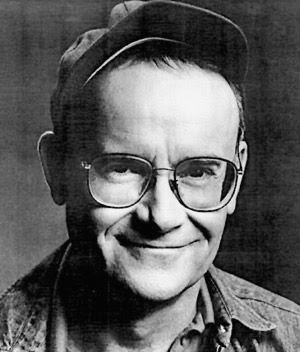

 I was always drawn to comedy, and certain practitioners helped define their eras. I remember Carl Reiner best as Sid Caesar’s second banana on his 50s TV shows (where he was also in that fabled writers room), which along with Steve Allen and Ernie Kovaks was 50s comedy to me. In a different way, Buck Henry was characteristically 1960s, Terry Jones with Monty Python bridged the early 70s, as Fred Williard did the late 70s and 80s. 


Ian Holm

Then there were the character actors who I always recognized and valued: Brian Dennehy (whose greatest moment may have been one I didn’t see: playing Willy Loman on Broadway in a production of Arthur Miller’s Death of a Salesman in 1999 that made grown men cry) and especially Ian Holm. 

 There was no role Holm couldn’t play and elevate it in the process, so he was memorable in Greystoke: The Legend of Tarzan, and The Day After Tomorrow, for instance, as well as his more famous roles in the Lord of the Rings films. Though he had mostly supporting turns in movies, he played the big parts in UK theatre, including one I did see—on film at least—namely, King Lear. 


And then this year, just as I was getting deeply into a DVD of Tom Hanks’-directed 1996 movie about the rise and fall of an Erie, PA one hit wonder band in the early 60s, and ecstatic about its title tune, “That Thing You Do!”, I saw in the news that the principal writer of that song, Adam Schlesinger, was an early fatality of Covid-19. 


Then there are those with whom I shared a moment or two in person. My first professional interview with a rock star was with Bill Withers in the first flush of his fame. He immediately calmed my nervousness, as we sat on the steps of his trailer near where he would be performing on the Boston Commons. When I asked him about a thematic thread I detected on his new album, he said softly he didn’t think anyone would notice that.


 Later I interviewed Hugh Downs, when he was a familiar presence alongside Barbara Walters on 20/20. But I remembered him from the 50s when he was almost everywhere as an announcer: on the first Today show alongside Dave Garroway, then Jack Paar’s stint at Tonight and part of Johnny Carson’s. He was even the announcer on a year of Sid Caesar. He struck me as a gentle, modest man with real intellectual enthusiasms, but someone who also was guarded and wary.


 Sports figures have their claim on our memories, sometimes over a long period: I followed Kobe Bryant for much of his career and have a number of his great playing moments on tape. But his death reminds us that one of the usually unseen and perhaps few noble traditions of pro sports is the mentoring of younger players. (In his case that included very young players like his daughter Gigi, who died with him.) The little retirement time he got before his shocking death in a helicopter crash showed unique promise. He was his generation’s Michael Jordan, but he had more ability to communicate through writing and other forms. 

 
Whitey Ford

Others sports figures who died this year were magic names in my childhood: Whitey Ford, ace Yankees pitcher (who I once saw pitch in the 1960 World Series at Forbes Field in Pittsburgh, though at that point I was desperately rooting against him) who I revered also because he was a southpaw like me. Other pitchers of the era also died this year: Johnny Antonelli, Don Larsen and Bob Gibson, as well as later star Tom Seaver. Al Kaline was another familiar face on my baseball cards, and I remember football running backs Paul Hornung and Gale Sayers.

 Of course there are also those who provided their moments to me as a reader, some of whom I will remember in a post to follow.

Sunday, December 27, 2020

It's Not Over


We’re coming to the end of a terrible 2020, with the New Year in sight.  I’ve seen at least one article emphasizing that it won’t always be like this, and we can look forward to a better 2021.

 Perhaps.  But we’re still living in 2020, and we’re going to be for some time after the calendar flips to 2021. In fact, if we are not careful and if we are not lucky, the worst of 2020 will be in the first months of the new year. 

Yes, we’re getting rid of Trump—but not just yet, and he’s currently sowing more destructive chaos.  And yes, the first million Americans have gotten the first jab of the vaccines that may give us the possibility of ending this pandemic, but not anytime soon.  Meanwhile we may still be busily making that happy ending harder.  Partly because we’re not truly facing the import of 2020. 

“This is the deadliest year in U.S. history,” the AP reported.  Preliminary data suggests that by year’s end some 3.2 million Americans will have died in 2020, almost half a million more than in 2019.  In absolute numbers, American deaths have never exceeded 3 million in one year.  

It appears that the difference between last year and this year is almost entirely due to the Covid crisis.  The current official death toll is moving towards 350,000.   The death rate accelerated in December, exceeding 3,000 for several days in a row, and sometimes edging close to 3500.  This represents the “Thanksgiving surge,” or deaths resulting from covid infections traced back to Thanksgiving travel and gatherings.  

So in December the New York Times featured an essay on the meaning of death, and the Washington Post published a story puzzling why Americans aren’t paying more attention or taking more precautions, theorizing that it is harder for people to respond to large numbers than it is to individual deaths.  This theory seems an incomplete and possibly dubious explanation.  At worst, it’s an inexcusable excuse. Not just morally, but in terms of societal survival.

 There was no moral excuse for allowing travel and gatherings at Thanksgiving—for not shutting down the airlines and the trains, and monitoring the highways. And there was less moral excuse for allowing it at Christmas. 


But obviously that didn’t happen, and travel did.  The evidence on how much travel there was (and is) is mixed.  Airlines saw the highest numbers since March, though half or less than last Christmas.  I have to believe that many people took precautions, even if they were in fact insufficient.  But maybe people just gave up, or gave into their fatigue, or don’t care.  Because in my very limited purview, I’ve seen less mask wearing and distancing, not more.

 Whatever aspects of human nature, politics and societal behavior are involved, another surge—the Christmas surge—is now expected.  As a country we are barely making it through the Thanksgiving surge in hospitalizations, and some places it’s worse than that. 

 Another surge on top of this one—beginning in a couple of weeks and rising in intensity and numbers through January into February-- could cause catastrophic failures in hospitals and the medical systems of entire cities or regions.  Shortages of equipment are already showing up again.  I can’t even imagine what it is like to be a front line medical worker, working feverishly in a relentless nightmare, while knowing that people outside are blithely ignoring simple precautions that might slow this thing down instead of accelerate it. 

Meanwhile the political system has failed those who need it the most, leaving them frantic and hopeless, if not actually hungry and homeless.  But the covid crisis may be coming for even more of us, because we are failing each other. 

It’s true that in terms of the smooth running of society, especially for the currently better off, the deaths of a lot of old people don’t much matter, or the deaths of minority and other hourly workers, as long as it’s not more of them that can be easily replaced. But hospitals in crisis can be a crisis for almost everyone, and frayed or broken supply lines eventually take their toll on society as a whole. 


The high number of infections means the next surge will very likely be worse, resulting in larger numbers of hospitalizations and deaths. Add to that the likelihood of new and more infectious strains appearing in the US in the next month or so. That we’ve gotten through even the Christmas frenzy of buying and sending with supply lines intact is no guarantee that the system won’t break under further strain.  And once it breaks, the chaos could spread.  

We’re left to do what we can as individuals and on a personal level with family and friends, even if it’s not much.  Many are doing so, and they are the eventual source of hope.  Others are doing their best, at times their heroic best, to keep societal systems working, amidst fallibility and folly.  Hope rests with them as well.

But personally I’m keeping my metaphorical champagne cold for a couple of months after New Years before it’s safe to celebrate.

Thursday, December 24, 2020

Dreaming Up Daily Quote: 12/25/2020


As the small pebble stirs the peaceful lake; 
The centre moved, a circle strait succeeds,
 Another still, and still another spreads; 
Friend, parent, neighbor, first it will embrace;
 His country next; and next all human race." 

 Alexander Pope

Happy Holidays, Everyone.

Wednesday, December 23, 2020

Dreaming Up Daily Quote 12/24/2020


“Chaos of Thought and Passion, all confused:
 Still by himself abused, or disabused; 
Created half to rise, and half to fall;
 Great lord of all things, yet a prey to all;
 Sole judge of Truth, in endless Error hurl’d:
 The glory, jest and riddle of the world.”

 Alexander Pope

Monday, December 21, 2020

Poetry Monday: Dream of Koa Returning


Dream of Koa Returning

 Sitting on the steps of that cabin
 that I had always known
 with its porch and gray-painted floorboards
 I looked out to the river
 flowing beyond the big trees
 and all at once you
 were just behind me
 lying watching me
 as you did years ago
 and not stirring at all
 when I reached back slowly
 hoping to touch your long amber fur
 and there we stayed without moving
 listening to the river
 and I wondered whether
 it might be a dream 
whether you might be a dream
 whether we both were a dream
 in which neither of us moved

--W.S. Merwin


This poem concerning a dog companion (but also about time and other things) comes from a section of poems concerning the dogs of his lifetime in Merwin's Pulitzer Prize winning 2009 book The Shadow of Sirius (Sirius is known as the dog star.)  Nevertheless the photo at the top is of a cat, also with amber fur.  We have a dog now, Howdy, to help us celebrate the Christmas season.  But before him was Pema the cat, of Christmases past, not forgotten nor undreamed about. 

Friday, December 18, 2020

This Land Is Her Land


 On another day of accelerating carnage, consternation and confusion, a brilliant moment of light, of more than historic impact.  I can't begin to explore the possible dimensions of it, which in any case will become clearer in time, for I can't remember when I've been so emotional about a cabinet appointment.  Probably never.  So I cede the floor to the admirable compression of the New York Times lead to begin the explanation, and the celebration.

"In a historic decision, President-elect Joseph R. Biden Jr. has chosen Deb Haaland, a congressional representative from New Mexico and a Native American, to lead the Interior Department, an agency that for much of the nation’s history played a central role in the dislocation and abuse of Indigenous communities from coast to coast.

 Mr. Biden’s transition team announced the decision Thursday. If confirmed by the Senate, Ms. Haaland would be the first Native American to lead a cabinet-level agency. She would oversee a sprawling department responsible for some 500 million acres of public lands, including national parks, oil and gas drilling sites and endangered species habitat.


Ms. Haaland would play a major role in implementing Mr. Biden’s promised climate change agenda. She would further be responsible for working to strengthen federal protections for vast swaths of territory that the Trump administration has opened up to drilling, mining, logging and construction. Historians and tribal leaders said that her selection represented a watershed moment in the United States’ scarred history with its Native people.

 “It’s momentous to see an Indian promoted out of the shadows of American history to a seat at the table in the White House,” said Elizabeth Kronk Warner, dean and professor of law at the University of Utah, and a citizen of the Sault Ste. Marie tribe of Chippewa Indians. “Tribes and the federal government have a relationship that goes back to the 18th century — but despite that relationship, we have never had an American Indian at this level of government.”

Ms. Haaland, a citizen of Laguna Pueblo, one of the country’s 574 federally recognized tribes, would helm the federal agency most responsible for the well-being of the nation’s 1.9 million Indigenous people."

The Times story also noted that her nomination was supported by more than 120 tribal leaders.  Rep. Haaland is politically skilled as past leader of the New Mexico Democratic Party, where she helped turn the state blue.  She was elected to the House in 2018, one of the first two American Indian women in Congress.  She became a forceful opponent of Trump policies to open public land to destructive fossil fuel exploitation.

  With a compelling personal story, she describes herself as a 35th generation American.  Now she will be the cabinet officer overseeing American lands and waters, and their public voice.

Thursday, December 17, 2020

The Dreaming Up Daily Quote 12/17/2020


“I keep meeting poets who say something like, ‘Well, I’m trying to do something that is worthy and lasting and beyond my lifetime,’ and so on. I think that’s just frivolous. That’s something only society decides and I don’t see that it makes any difference anyway. But the process is the process of living centrally and paying attention to your own life. Surely that’s worth doing. If you don’t, who will? That’s what living is about, and you can be distracted from living by trying to create things that will last in the terminology and the mode of society that may or may not be harmonious to your life.” 

 William Stafford

Monday, December 14, 2020

Poetry Monday: People Like Us


People Like Us

 for James Wright 

There are more like us. All over the world
 There are confused people, who can’t remember
 The name of their dog when they wake up, and people
 Who love God but can’t remember where

 He was when they went to sleep. It’s
 All right. The world cleanses itself this way.
 A wrong number occurs to you in the middle
 Of the night, you dial it, it rings just in time 

To save the house. And the second-story man
 Gets the wrong address, where the insomniac lives,
 And he’s lonely, and they talk, and the thief
 Goes back to college. Even in graduate school,

 You can wander into the wrong classroom,
 And hear great poems lovingly spoken
 By the wrong professor. And you find your soul,
 And greatness has a defender, and even in death you’re safe.

Robert Bly


 Bly published this in 2013 when he was 87, and dedicated it to his old friend James Wright, a poet who was a year younger than Bly but never got old, because he died in 1980 at the age of 53. When I saw this date again, I realized that when I heard Bly and Wright read together in Pittsburgh, it must have been in the last decade of Wright’s life. Bly had published a book on Wright in 2005. Bly gave his last public reading in 2015. His Collected Poems were published in 2019. He is 94. 

The top photo is by Henri Cartier-Bresson, French photographer of mostly urban scenes from the 1930s through the 1960s.  For awhile he was my favorite photographer, and at least in the way he frames his photos, he is again.

Sunday, December 13, 2020

The Dreaming Up Daily Quote 12/13/2020


 "...the center of reality is wherever one happens to be, and its circumference is whatever one's imagination can make sense of..."

Northrup Frye

as quoted from memory by one of his students, Margaret Atwood

New York Times Spelling Bee Update

It’s been awhile since I mentioned the New York Times Spelling Bee but that’s not because I abandoned it.  With decidedly mixed feelings but apparent commitment, I’ve done this puzzle every day for more than a year, scoring at Genius level and getting at least one Pangram (a word that uses all seven letters in a particular puzzle, which always has one and sometimes two or three) every time.  By now that’s probably 400 straight Bees.

 During this time the New York Times published a story on its Spelling Bee puzzle.  The Bee was a feature of the paper edition that followed the crossword to the digital edition, with spectacular results.  It’s enormously popular.  I learned what I should have assumed: that there are numerous social media sites in which a given day’s puzzle is discussed, clues given, complaints made.

 The puzzles are created when seven letters are selected, including the one required to be in every word, and all possible words are generated by a computer.  It is the job of the puzzle editor to select the words that the puzzle will accept.  The idea is to include familiar words, including slang, plus a few more esoteric or technical words.  Though the article didn’t admit it, the selection includes a hefty number of words that go unused except in word puzzles, from crosswords to Scrabble. 

 I learned from the article that there is a level higher than Genius, called Queen Bee, which requires getting all of the words for that puzzle (which may be fewer than 20 or more than 60.) This neither bothers nor tempts me because I disdain those questionable Scrabble words, and try to avoid them even when I remember one.  Getting to Genius without them is my game within the game. 


The article’s description of how the puzzles are made leaves a few things out.  As any long-time player knows, there are words that recur in these puzzles that become almost signatures of the Spelling Bee (for instance roto, toro.)  While the adventure is seeing which new words a given puzzle evokes, there is the inevitable process of keying in words from this remembered list of Spelling Bee words.

 It’s also true that if one puzzle rejects a word (with the neutral message “not in word list”), all Spelling Bee puzzles will.  I thought I’d made my peace with my own list of perfectly good words it won’t accept, until a recent puzzle didn’t recognize “immanent.”  That’s disturbing.

 And then there is the matter of the absence of one letter of the alphabet: S.  No puzzle ever has S.  I guessed the obvious rationale would be that many more words could be made simply by adding S at the end.  That in fact may be why, but in the past few months I’ve noted the frequency of puzzles that include e and d among the letters, or i, n, and g. Both combinations create many new words from words already made.

 But because of the four-letter rule (words must have a minimum of four letters), these suffixes often make words that otherwise wouldn’t qualify.  What interests me is how many times it has taken me a long time to see the “ed” or “ing” possibility in a given seven letters. 

 One of the attractions of the games—which is also its greatest drawback—is that I never know how long one is going to take me to reach my Genius goal.  It might take 15 minutes.  But it can also throttle me for three hours, I am loathe to admit.  Usually a big chunk of those hours is finding just a few words, or even just one.  Since this has become a nightly ritual (almost always, right after midnight, when the new puzzle drops on the West Coast), a major change in duration can affect everything afterwards, including bedtimes.

 And yes, it has occurred to me that doing the puzzle every day is more than a habit and suggests addiction, and that continuing it until I reach those levels suggests compulsion as well as a game.  I’ve thought about quitting, especially after I reached a year straight. 

 And maybe I will, or maybe I’ll slack off now and then. But the basic pleasure of it recurs, which is the fun of making words. (The puzzle mostly doesn’t take proper names, but I like to make them anyway.)  Words come to me that I haven’t heard or read in years, including a fair percentage that I couldn’t define.   I could use most of them in a sentence, even if I didn’t know what I’d just said.  (The truth is that in my writing, even when I use the precise right word I can’t necessarily define it.  It means exactly what it means, right down to the sound.)

 I also learn from the frustrations of the Bee.  Over the course of this year I’ve gotten deja vu more than once, so I assume I’ve done the same basic puzzle multiple times.  But I’ve also noticed that a word I got on one puzzle eludes me when it is possible on another.  There are always ways to do better.

 Now I want to work on the compulsion to finish in one sitting, when I know (as others also know) that returning to the puzzle after leaving it for awhile often results in seeing words that had eluded me. But the discipline to put it down is something I need to work on.

 I am also sure doing the Bee relates to my writing, and even this blog.  When I write and publish something here, I mostly have no idea of who reads it or what effect it has.  The Spelling Bee has less possibility but more certainty.  In my ongoing writing projects, or even discrete pieces, there is always the question of when is it really finished (and why.)  The Spelling Bee has a minimum definition of finished—and a 24 hour life.

 I also wonder whether I would have been so faithful for this long if there wasn’t a pandemic outside keeping me in, or if trying to absorb the ongoing shock and bewilderment of the news didn’t suggest a daily respite in a closed world of letters, and words yet to be formed.  But here I am, and here I will be for months to come.  Maybe this helps my writing projects or maybe it hurts them by distracting me. But I know my main job right now is to not get sick.  If this helps, why not?

Saturday, December 12, 2020

Sedition

This is how it starts.

The attorney general of Texas sued four other states in the Supreme Court, demanding their 2020 election results be overturned, which in addition to sowing chaos within those states and in Congress (because, let us not forget, those ballots were for more offices than one), would deny Joe Biden enough electoral votes to be inaugurated.  What seemed at first a public relations gambit and a nuisance suit by a politician looking for a preemptive pardon while being seriously investigated for federal crimes when all of his deputies accused him of corruption, quickly became a Trump loyalty test and a litmus test for a statistical majority of AlwaysTrumpers.  Seventeen other Republican attorneys-general signed on, supported by 126 US House Republicans.  (Trump requested the congressional signatures, and he made it clear he was checking the list to see who was naughty and who was nice.) 

This inspired the first use of the S word when the four states being attacked issued their withering responses, with the attorney general of Pennsylvania calling the suit a "seditious abuse of the judicial process."  

 Eventually 20 states, mostly but not all with Democratic governors and administrations, joined to oppose the case.  They and many commentators expressed shock that so many Republicans would join in denying the basis for elected representative government, otherwise known as democracy.  But sedition? 

Following the unanimous decision of the Supreme Court denying the suit brought by the attorney general of Texas that demanded essentially that the 2020 election be overturned. the chairman of the Texas Republican Party issued a statement suggesting that in response: "Perhaps law abiding states should bond together and form a Union of states that will abide by the Constitution."

Okay.  Now that's sedition.  

Even before this, Rep. Bill Pascrell (D-N.J.) requested that House Speaker Nancy Pelosi refuse to seat any members of the newly elected Congress in January who signed on to this suit.  He specifically cited Section 3 of the 14th Amendment "written after the Civil War to bar from government any traitors who would seek to destroy the Union." 

 He said this applies to 126 Republicans who signed as supporters of the Texas suit.  They included the Member who would likely become the Speaker if Republicans regain the majority.   "Stated simply, the men and women who would act to tear the United States government apart cannot serve as Members of Congress."  He called them " Members trying to overturn the election and make Donald Trump an unelected dictator."  

So this is what I meant about the Civil War.  Sedition is a loaded word and dodgy legal concept in a democracy, but when it involves issues that hark back to the War Between the States, it's clear, and it's a fighting word.

 Do Republican party leaders seriously want to start a civil war?  Probably not, at least not directly.  They support Trump's dictatorship perpetuation effort because 1) it's a spectacular money-raiser, 2) they all want the fealty of the AlwaysTrumpers once Trump is off center stage, and 3) solidifying the idea that Joe Biden is not a legitimate President will make it much easier for Mitch McConnell etc. to undermine and paralyze the incoming administration, setting Republican up for congressional victories in 2022 which could easily win them both Houses.

 But it's a dangerous game.  History tells us that Hitler was first elected because of a lot of factions out for themselves, trying to knock each other off.  They didn't started out enthralled with the Furher.  But that's where they soon found themselves.

If they don't necessarily want two sets of states at war with each other, they are fine with two utterly different realities at war with each other, creating an ungovernable country is a time of obvious crisis, apart from the underlying meta-crisis which threatens civilization and life as we know it on the planet.

This particular circus could have been much worse. Resisting it took heroic election officials in the states, the state and federal courts on every level that have turned back some 60 cynical suits so far, the media that won't swallow this.  Notably no Senators actually signed on, and several Republican Senators spoke against the suit (including one from Texas.)  

But it's still pretty bad.  Three-quarters of the Republicans in the US House, who were fine with the elections that elected them, joined the chief law enforcement officers of 18 states in demanding that the results of lawful elections be overturned, with no evidence behind their assertions, in a document that would get a high school sophomore flunked in Civics (if they still taught that),  Composition, arithmetic (a mad assertion that Biden's victory was mathematically impossible) and even spelling.  There must be law professors up on ledges all over academia.

 There will likely be more cynical court cases filed and thrown out, and there may be a play to try to get Congress to challenge electors in early January.  It takes only one Rep. and one Senator to start the process, which involves each house debating the challenges for two hours and then voting.  It takes both Houses to support the challenge, and the Trumpeteers are unlikely to get even the Senate. (I count at least 4 Republican votes against.)  

But that word is out there, and the idea is bigger than it's been, maybe since the Civil War.  (The S word being Sedition or Secession, depending on which side are you on.)  There may yet be violence around this.  But even if this particular typhoon blows itself out, the damage is probably deeper and longer. 

Thursday, December 10, 2020

This Week in American History


More Americans were killed by the Covid crisis on December 7, 2020--earlier this week-- than were killed in the attack on Pearl Harbor on December 7, 1941, that led to America declaring war on Japan and entering World War II, committing billions of dollars and the full attention of American society on the goal of winning that war fought across two immense oceans.

  Some 405,000 Americans were killed in the four years of that war, the largest death toll of any American war before or since, except the Civil War.  America is currently on track to see more than 405,000 Covid deaths in less than one year, by the end of 2020.  We're at some 286,000 now, the equivalent in American deaths of 5 Vietnams.


More Americans were killed by the Covid crisis on December 9, 2020--namely, yesterday-- than were killed in terrorist attacks on September 11, 2001, which led to the expenditure of many billions of dollars in conflicts that are still not over.  Both events thoroughly transformed American society.

Congress has currently allocated zero new dollars to addressing the Covid crisis or its economic and human effects.  The President of the United States is AWOL.  So are Republicans in Congress, and many Republican officeholders in the states.

This is America as 2020 ends.

Wednesday, December 09, 2020

The Dreaming Up Daily Quote: 12/9/2020


"...the song of the siren which is heard only by those who no longer travel, no longer exert themselves, who are exhausted, and want to remain transfigured in a single place which contains all places."

Carlos Fuentes

Tuesday, December 08, 2020

Defining the Precipice

 Let us recognize the historical moment, for what it is and what it may become. For what it is, because we are befogged by denial that is natural self-protection, helpful if we successfully whistle past the dark, but it can also make us more vulnerable and less capable. For what it may become, because if the worst happens there will be voices loudly crying out, who could have foreseen this? 

 First: We are in the teeth of an extraordinary infectious disease pandemic, ignored and brutally denied by the Executive branch and effectively--and just as brutally-- ignored by Congress. This pandemic is accompanied by a growing economic crisis, with millions unemployed, losing unemployment insurance lifelines, facing evictions, hunger and collapse.

 At the same time we are on the edge of an extraordinary political and perhaps societal crisis of potentially disturbing proportion. While the current Administration blunders around the margins of the Covid crisis, it is consumed by what is variously described as an attempted coup or official insurrection, trying to scuttle election results and retain the dictator apprentice by any means.

 This is a seriously dangerous combination. The Covid infections, hospitalizations and deaths are just going to get higher for at least the next six weeks. Collapse of the health care system in some places is threatening or underway, and that is almost certainly going to spread. When hospitals are overwhelmed and deaths are doubling in a month’s time, other aspects of society are also threatened, beginning with grocery stores and the food chain. Covid alone—and the failure to confront it as an urgent national crisis—could seriously compromise American society as we know it. But instead of addressing this utterly obvious prospect, the current Chief Executive is denying it in favor of causing a political crisis which looks increasingly like it will threaten the social order for some considerable time to come, all on its own.

 But especially in combination with the Covid crisis in its upcoming darkest days, this political crisis could lead to serious societal breakdowns in the near future. So far the strength of democratic traditions and institutions, and in particular the election officials and the jurists who are doing their jobs (many in both categories are Republicans), are holding things together.  Others with power are responsibly supporting order by their restraint.

 Absent a sudden shocking decision from the US Supreme Court, it appears that the 2020 election results will hold. So apart from a long-term political struggle with potentially devastating effects, the near future threat then becomes the eruption of violence. 

 That it hasn’t happened yet seems to indicate that the residual stability in our society is holding. But the ground for violence is certainly being overtly prepared. That the Michigan Secretary of State, who oversees elections, should face 16 or so armed men outside her home cursing and threatening her in the presence of her four year old son as they decorate the house for Christmas is but the latest incident.

 Behind these threats is the contention made by Republican leaders on every level, as well as the vast majority of Republican voters, completely without credible proof, that the 2020 election results are illegitimate. This has led Heather Cox Richardson to cite the election of 1888 as an historical precedent, when Republicans subverted that election, and in 1892, when they subverted the American economy in order to defeat the Democratic President. It was a series of crises that caused devastating pain, just so that wealthy Republican backers could keep and expand their power.

 But others see an earlier precedent for not only an undemocratic and anti-Constitutional political crisis, but a societal one as well. Rep. James Clyburn calls it insurrection, and so does William Saletan in his Slate piece, “Republicans are the party of Civil War”: 

" The insurrection has been boiling at pro-Trump rallies in the past few weeks. In Georgia, amid chants of “victory or death,” speakers have vowed to “remove” a new Democratic administration, arguing that it “doesn’t have the military on their side.” At a rally led by Donald Trump Jr., a speaker warned, “We’re getting ready to start shooting.” Last weekend in Michigan, a crowd cheered as a member of the Proud Boys declared, “We don’t want a civil war, but we’re already in one. And we’re in it to win it.” In Florida, rally leaders called the election result a “war on our homeland” and pledged, “We will not allow them to fire a man for doing his job perfect.”

 In Arizona, a speaker demanded the imprisonment of President-elect Joe Biden, former President Barack Obama, and Hillary Clinton. “We have to protect [Trump] at any cost,” he said. Another speaker denounced House Speaker Nancy Pelosi and Arizona Gov. Doug Ducey, calling for “rebellion” and adding, “I’d love to see half of these people hung by the neck.” The crowd shouted its approval."

 Fueling this mob violence fervor are Trump’s fascistic tactics in a multiple of impeachable offences were he not voted out in a month, from firing or threatening to fire members of his own administration who don’t support his blatant coup attempt, and demanding “the names” of the pitiful two dozen Republican lawmakers the Washington Post found would admit he lost the election, to directly pressuring governors and other officials in battleground states to reverse their state’s voting results, a criminal act.

 The next step is actual violence, and whether it sparks widespread violence. It is not inevitable but the table is set for it. Then in the teeth of pandemic we are in brand new territory, at least since the Civil War. What would be the state and federal response? If a Trump “enemy” is murdered, will he pardon the murderers?

 More Saletan: "Some zealots are already taking action. They’ve targeted election supervisors in several states, issuing death threats against officials in Vermont, calling for violence against the family of Arizona’s secretary of state, and orchestrating a hunt for a voting machine contractor who is now in hiding. On Monday, Gabriel Sterling, the Republican manager of Georgia’s elections, reported a death threat against an election worker, harassment of the worker’s family, and sexual threats against Raffensperger’s wife. “Stop inspiring people to commit potential acts of violence,” Sterling pleaded, addressing Trump at a televised briefing. “Someone’s going to get shot. Someone’s going to get killed.”

 That night, on Twitter, Trump posted a video of Sterling’s plea. He dismissed it. He accused Raffensperger and Kemp of knowing about, and refusing to uncover, “massive voter fraud.” The next day, in a speech recorded at the White House, he denounced both men again. And at Wednesday’s rally in Georgia, Wood and Powell, accompanied by Flynn, joined the attack. Wood accused Sterling of conspiring with China to manipulate the election. He demanded that Kemp and Raffensperger be thrown in jail. “We’re going to slay Goliath, the communists, the liberals,” he vowed. “Joe Biden will never set foot in the Oval Office.”

 So far it’s limited to incendiary talk, and not a lot of people.  But the matches—and the guns—are real.

Monday, December 07, 2020

Poetry Monday: Wish


 My lizard, my lively writher,
 May your limbs never wither,
 May the eyes in your face
 Survive the green ice
 Of envy’s mean gaze;
 May you live out your life
 Without hate, without grief,
 And your hair ever blaze,
 In the sun, in the sun, 
When I am undone, 
When I am no one.

 -Theodore Roethke 

 These days I tend to be hungry for the worn words of poets writing when they are older. They engage me for the obvious reason. But occasionally I recall a poem of my youth, if not by an absolutely youthful poet.

 I read this Roethke poem for the first time when I was 18, in the pages of a literary magazine in the college library during my first year. Although it is addressed to a young wife by a slightly older voice, it embodied in its words and cadences a feeling it evoked and expressed in me, surrounded as I was by lovely young women every day. I ardently wished this for them all. 

 When I took my first literature classes the following year, I would never have mentioned this poem, which would have therefore been exposed to the smirking charge of sentimentality. And perhaps it is sentimental and embarrassing. But now too old to care about that anyway, I find this feeling has lasted, from the day I first heard these lines in my mind and held them in my heart.

 This poem was in the queue for a future Monday, but I moved it up after belatedly learning of a death this past August of someone significant in my past. Perhaps the poem does not pertain since I have outlived her, though despite the recurrent health challenges, she had a rich, full—one may even say fabulous-- life. But in the end the poem is not about the life, but the wish. And it was always my wish for her.

Thursday, December 03, 2020

The Dreaming Up Daily Quote: 12/03/20


"We do have a choice to make, each one of us: Do we want to be part of the solution to this horrifying surge, or do we want to be the problem? Because where you fall in this effort now has a life-or-death consequence, possibly for people you know and love, but certainly for people across the county who are loved by others.”

Barbara Ferrer
Los Angeles County Public Health Director

The Perspective of Amnesia

 Back before our main viewscreen went flat with all- digital streaming, we connected our boob tube to cable and a VCR. In those days—way back, 10 years ago and more-- the VCR/television interface was about the last technology I understood, and so in my personal viewing area/den/library/mancave (a word that did not yet exist), I hooked up two VCRs and a TV so I could tape from the TV and from another VCR. 

 I taped movies and plays, series TV and a lot of PBS, even some C-Span, plus music performances, poets reading, lots of talk show and other interviews, and so on. I had thematic tapes (50s s/f movies, Truffaut films, Obama speeches etc.) and a few tapes of short clips I wanted to preserve for one reason (or one project) or another.

 I can’t tape anything anymore from that old cable-cut TV but I can still play those tapes on one of the still working VCRs that connects to it. Recently I thought I’d revisit one of those clips tapes to accompany bedtime snacks—short pieces that wouldn’t keep me up too long.

 It didn’t work.  That is, the tape worked.  But not the sleeping part.

 The tape I found had clips from late 2002 to probably 2010. It had pieces of the kind I was seeking—with Julie Taymor on performance, RSC’s John Barton on Shakespeare, novelist Isabel Allende, film director Gregory Nava, John Cage, visionary architect William McDonough, etc.

 But there was more. There was Harper’s editor and writer Lewis Lapham, author Mark Hertsgaard, and that artist of reviewers John Leonard, all talking to Bill Moyers; and reporter/author Chris Hedges talking to Michael Moore.

 Lapham and Moyers discussed the 2002 elections, the first congressional election after the selection of George W. Bush for President.


 Remember him? For a long time Bush dominated our political frustrations and horror. He brought us wars in Iraq and Afghanistan, the return of torture, the Katrina debacle and so much more. He was the iconic combination of arrogance, incompetence and evil.

 An icon no longer, though. Nobody mentions G.W. Bush anymore, except as this benign and nostalgic figure who paints pictures and jokes around with Michelle Obama at state funerals. Perhaps we’ve mostly forgotten how maddening and painful his presidency was because we had to.

 But then came Trump-- it was like taping over a terrible movie in our memory with an even worse one. Our Bush years amnesia may have been necessary for our mental health and ability to go on. (And after all, they ended with millions on the Washington mall to witness the improbable inauguration of the best President in a generation or more.)

 But this Lapham interview, and others on this tape that followed, preserved the moment, at this point less than two years into that slough of despond. And it’s clear that so much of what we’ve suffered for the past four years was a louder repetition or continuation or extension of what was happening then.


 In 2002, Republicans defied precedent to win both houses of Congress. “The oligarchy won,” Lapham said. The winners “represent the frightened rich.” For them, “democracy has served its purpose and run its course. We will now protect ourselves.” Partly by being and becoming so much richer than most Americans.

 Lapham observed that Republicans “believe in their reactionary ideology with religious passion.” In his commentary, Moyers noted that moderate Republicans of past decades were gone—they were now “united behind a right wing agenda.” 


 “If you like the Supreme Court that put George Bush in the White House,” Moyers continued, “ you will swoon with what’s coming. And if you like God in government, get ready for the rapture.” It’s a heady mixture of “piety, profits and military might, all joined at the hip with ideology and money. Lots of money.”


Later in the tape, Mark Hertsgaard discussed his first two books reporting on environmental degradation around the world, especially the climate crisis, and how the world views the US. In explaining how world leaders were disappointed with Bush, he reminds me that before Trump dumped the Paris Agreement, Bush took the US out of the Kyoto Treaty, its climate crisis predecessor. Before Trump sanctioned the International Criminal Court, Bush refused to join it. Before Trump blew up the Iran nuclear agreement and other arms control pacts, Bush left an anti-ballistic missile treaty. In general, Hertsgaard said, Bush alienated the world with American arrogance.


 Lapham and Hertsgaard both talked about the US sponsorship of commodifying everything, while Julie Taymor spoke of the dangers of commercializing art. These complaints sound quaint—not because they weren’t true, and aren’t even more true now, but because no one bothers to complain about them anymore, it’s all just accepted.


 In a clip from a few years later, John Leonard mentioned how good Republicans were getting at “gang tactics” (quoting a noted Republican conservative.) “If everything becomes partisan,” he said, “it’s a “bloodthirsty crusade” akin to the French Revolution.  All hail Mitch McConnell.

 Leonard added his laments about the deadening effect even on the language of a thoroughly commodified society. “It’s sell, sell, sell’ buy, buy, buy, that’s it...Gone are scruple, gravity or grace.”

 Moyers quoted from Leonard’s book, about how celebrity shifts shape “to reflect whatever society at any given time has been taught to value or to fear.” He asked Leonard what this society values as reflected in its celebrities.

 “We’re taught to value the Donald Trumps of the world,” Leonard said, “the money-makers. We define success...as money.”


 It’s always dismaying to hear the name you’re trying to escape by burrowing into the past. But it happens, because Trump has been around a long time, building this image firmly in the American psyche. It happened to me a few months before, when I was innocently watching an old episode of the classic 90s series that embodies innocence: “Northern Exposure.” Maurice justified evading taxes through a loophole by exclaiming, “I’ll bet Donald Trump doesn’t pay any taxes!”  So I guess when the New York Times confirmed a decade or so later, it wasn't much of a surprise.

 Lapham, Hertsggard, Leonard all mentioned the unholy alliance between the oligarchical elites and right wing zealots, as well as money worship and the dominance of celebrity. Can we wonder then where Trump came from in 2016? Where he took us is much farther down this path of destruction. But that Trump was so prefigured, that he distinguished himself mostly by managing to leapfrog G.W. Bush to become the worst President in modern American history, if not all time—makes this stuff we had to forget completely contemporary. 

 The tape stops with Michael Moore interviewing author Chris Hedges, probably about the time that his 2009 book came out, titled The End of Literacy and the Triumph of Spectacle. This idea didn’t just echo those interviewees earlier in the decade. Books with themes like that weren’t new. There were plenty in the 80s (Amusing Ourselves to Death, for one) and 90s. Like those interviews, Hedges emphasized the role of elites in making money, wealth and celebrity the paramount values--while killing all other values. But it was hearing his forecast of the outcome in this present moment, that further rattled my perspective. 

 Michael Moore’s question was well put, though it wasn’t exactly the one Hedges answered. “I wondered for a long time if a society that was founded on genocide and then built on the backs of slaves, is ultimately a country that, if it doesn’t redeem itself for that behavior, just won’t last.”


 “I think it’s dying,” Hedges replied. “It’s composed of a giddy intoxication with illusion—that’s what happens when societies die. The worse it gets the more disconnected they often become. And that’s how you end up with demagogues, and tyrants who promise magic.”

 And that’s how we did. 

 Voted out of office, Trump continues to sell delusions for profit—and it’s pretty clear that’s mainly why he’s still doing it. He’s banking $150 million and counting, just in case, but as long as there is demand he will loudly supply. So far he’s left us with a smoldering government, and half a country that apparently believes these delusions so deeply that they can’t even believe in the reality of the virus that is killing them.

 So now I wonder: once Trump is gone from the White House, do we go into a well-earned defensive amnesia? Perfectly natural to let the brain and the heart heal. But it didn’t seem to work out so well last time.

Monday, November 30, 2020

Poetry Monday: The World Is Too Much With Us


The world is too much with us; late and soon,
 Getting and spending, we lay waste our powers;
 Little we see in Nature that is ours; 
We have given our hearts away, a sordid boon!
 The winds that will be howling at all hours,
 And are up-gathered now like sleeping flowers;
 For this, for everything, we are out of tune;
 It moves us not—Great God! I’d rather be
 A Pagan suckled in a creed outworn;
 So might I, standing on this pleasant lea,
 Have glimpses that would make me less forlorn;
 Have sight of Proteus rising from the sea;
 Or hear old Triton blow his wreathed horn.

 William Wordsworth
 1806

Friday, November 27, 2020

Transition


Jeremy Stahl’s headline in Monday’s Slate said it best: It Was a Good Day for Democracy. Pennsylvania judges not only threw the latest Trump case out of court but told them not to bother coming back. Then the minor functionary Republican holdout in Michigan was satisfied with his fifteen minutes and joined two Democrats to certify Michigan’s election. (One of the Rs wondered if they could just adjourn without deciding and learned this wasn’t an option.  Someone has to win, someone has to lose, not everybody gets a trophy, they were told.) 

Update: On Friday and Saturday, Trumpists lost two more baseless cases in PA, one in federal appeals court, the other in PA Supreme Court.  The PA Supreme Court decision was "with prejudice," which means the Trump strategy of getting it to the US Supreme Court probably won't work. Meanwhile, the Trump campaign paid (or promised to pay) Wisconsin $3 million for a partial recount, which result in a net gain of 132 votes--for Biden.

 Then the chief Trump operative of the GSA finally “ascertained” that Joe Biden had won the presidential election, officially beginning the transition. Apart from the certainty of state certifications, a rolling catastrophe of lost court cases, and a rising tide of demands to get on with it, she might have noticed that Biden currently leads by more than 6 million votes, a total of more than 80 million, even before New York state has fully reported. The current percentage is 51% to 47%, and will likely grow. His electoral vote lead hasn’t changed, remaining exactly the number Trump got in 2016. 

 Biden now gets funds and access to vital national security and covid crisis information, and the country and the world knows we indeed have a President-Elect. He’d been selecting and naming Cabinet and other high officials anyway—now he gets to do it using a website with .gov behind it. As for these first moves--mostly Obama-Biden veterans moving up a notch-- the professionals in the relevant departments are overjoyed at his choices, because they will be taken seriously again, as will actually governing. Apart from Barack, John Kerry is the perfect appointment for a Cabinet-level officer on the climate crisis. This as well as other appointments made or reported are playing well internationally also.

 To say the writing was on the wall doesn’t mean much when it’s Trump, who can’t read very well. But the wall was crumbling and starting to tumble down: when Republican Senators actually tell you it’s time to start the Transition, the situation is politically done.  Trump will commit more outrages to keep his picture in the paper for as long as he can, and there will probably be a few more bumps in the process, but maybe we can begin our mental and emotional transitions, too. 

 It’s a victory for democracy also because this caps an election that thousands of public servants worked hard to bring off better than anyone had the right to expect in the year of Covid and Trump, our twin plagues. Too bad there’s vaccines for only one of them, but getting the other out of the White House is worth celebrating, again. With several more opportunities ahead.

Now we just have to get through these horrific weeks of both plagues, especially Covid, as the economy falls apart and the suffering spreads.  This administration is making sure their evil lives after them as they subvert the economy, further confuse covid crisis response and prevent government from helping by starving the states and zoning out on the federal level.   It's like watching a badly written tragedy of the real.

Monday, November 23, 2020

Poetry Monday (and Thursday): Thanks


Thanks

Listen
with the night falling we are saying thank you
 we are stopping on the bridges to bow from the railings
 we are running out of the glass rooms
 with our mouths full of food to look at the sky
 and say thank you
 we are standing by the water thanking it
 smiling by the windows looking out
 in our directions

 back from a series of hospitals back from a mugging
 after funerals we are saying thank you
 after the news of the dead
 whether or not we knew them we are saying thank you

 over telephones we are saying thank you
 in doorways and in the backs of cars and in elevators
 remembering wars and the police at the door
 and the beatings on stairs we are saying thank you
 in the banks we are saying thank you
 in the faces of the officials and the rich
 and of all who will never change
 we go on saying thank you thank you

 with the animals dying around us
 our lost feelings we are saying thank you
 with the forests falling faster than the minutes
 of our lives we are saying thank you
 with the words going out like cells of a brain
 with the cities growing over us
 we are saying thank you faster and faster
 with nobody listening we are saying thank you
 we are saying thank you and waving
 dark though it is

W.S. Merwin


Sunday, November 22, 2020

Dreaming Up Daily Quote: Nov. 22, 2020


"As we express our gratitude, we must never forget that the highest appreciation is not to utter words but to live by them."

President John F. Kennedy

His November 1963 Thanksgiving Message.  He did not live to see that Thanksgiving.  He was shot and killed on November 22, 1963.