Thursday, January 17, 2019

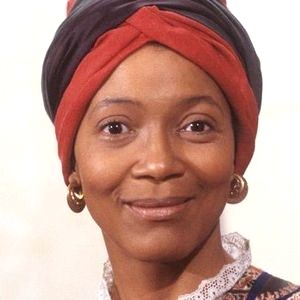
R.I. P. Mary Oliver


“To pay attention, this is our endless and proper work.”

R.I.P poet Mary Oliver

"I made a world out of words.  And it has been my salvation."


Monday, January 14, 2019

History of My Reading: When It Was '65

Shortly after the year 1965 began, I was back at college in Galesburg, Illinois to complete my freshman year.  I'd returned home for the first time for Christmas break.  I visited my old high school (and yes, everything seemed smaller there, including the nuns), reunited with family and saw close relatives.  Someone asked me what I'd missed most being away from western Pennsylvania, and I said the hills, and the blue outlines of the wooded mountains in the distance. The unrelieved Midwestern flatness had started getting to me.

 Nobody seemed to quite understand that or much else I said (which wasn't a lot) about Galesburg or college, or even asked questions.  Few went very far from home, and certainly not to the Midwest, and few seemed curious.  But my godfather, who drove long distance trucks, understood what I meant, and felt the same.

I saw close friends, particularly Mike and Clayton.  Sometime in probably my second year of high school, I began playing with the reel-to-reel tape recorder my father had become bored with.  I wrote scripts--an update of Wells' War of the Worlds, and brief satires inspired by Stan Freberg and That Was the Week That Was on TV.  I enlisted friends to play the parts, do sound effects and music.  Soon we were a core of four, and one summer we worked up a stage act of comedy and music as The Four Frauds.  This collided with the folk music boom, so in our senior year, Clayton (an actual musician), Mike (otherwise my debate partner) and I formed a folk trio called the Crosscurrents.  So at Christmas we got out the guitars, refined the old songs and learned new ones, including some originals.

Among the tapered StayPrest shirts and whatever, this Christmas I probably received a copy of Robert Frost's latest (and last) collection, In the Clearing, which was a national best seller.  Frost was still the main contemporary poet I knew, though I was fascinated by e.e. cummings (who'd died in 1962) and was much moved by several poems by Theodore Roethke I'd read in a magazine in the Knox Library (he'd died in 1963, and his last book was published posthumously.)

Back at Knox, I first faced the unfinished business of the first semester: mostly final exams and papers.  I then spent semester break in Berwyn, Illinois with Jim Miller and his family (as described in a previous post here), who was about to be my new roommate. When we returned, my first semester roommate John Heyer had moved out of Anderson House, and Jim moved from across the third floor to my room (actually two small rooms) at the top of the stairs, the one with the crazy angle walls and the turret facing Tompkins Street.

I can tell you many things about this second semester, partly from a fair but incomplete set of student newspapers and a scattering of other documents, but largely from letters to and from home.  Letters were primary communications in those days. We did not have phones in our rooms, let alone in our pockets.  Long distance calls were relatively expensive, and otherwise problematic.  At Anderson House we had exactly one telephone, which sat on the landing between the first and second floors.  If it rang, someone might or might not answer it and find whoever the call was for.  If you were on the phone, your half of the conversation was audible to anyone in the living room on the first floor.  And it was largely a campus phone, that--if memory serves-- went through a campus switchboard.  As a result, a lot of communications still exist in what today we'd call hard copies, formerly known as letters.

So I can tell you what the weather was like at certain times: Snow in early February, for example, and tornadoes in the Quad Cities in early April. I remained on campus for Easter weekend, and joined a small motley crew on a muggy day filling gopher holes in the levees somewhere within shouting distance (though not visual range) of the river.  This day culminated with one of the best meals of my life--probably sandwiches and coffee--from a roving Red Cross pickup truck.

With more rain in late April there was substantial flooding in the Quad Cities. Illinois was declared a disaster area. Bob Misiorowski reported on Rock Island for the Knox Student. I went out with a large group filling sandbags on a rainy day in Oquawka. The river crested below predicted level, the town was safe, and we celebrated with underage beers at the Blue Parrot.

Second semester began in February, but March letters were already about my upcoming second trip home for semester break.  My friend Mike got excited because my return coincided with several events in which the Crosscurrents might participate.  The folk music craze was in full swing.  I don't recall if we actually did any of those gigs.  (I had however performed solo at the Knox hootenanny in mid-March.)

Mike was day-hopping to St. Vincent College--he'd been personally recruited for their debate team.  But it wasn't until second semester that I got back into the debate game, participating in an intramural tournament--the topic had to do with "individualism" so I suppose I consulted John Stuart Mill and David Reisman books (Individualism Reconsidered, The Lonely Crowd.)  Classmate and fellow third-floor Andy House resident Tim Zijewski was my partner. We won all four preliminary debates but came in second in the finals.

But that was enough to get me on the official Knox debate team, and on a tour of Iowa colleges just before spring break in late March.  Second year Judy Dugan was my partner, and in combined silliness we concocted the alternate identities of Tracy and Margaret Steele, by which names we were identified in a photo taken in the new Grinnell College student union, published in an Iowa newspaper.  Later in the term, I was Judy's guest for a party on a Mississipi riverboat.  We spent most of it on deck--my only time on the big river.

In reviewing campus events of that semester--plays, concerts, lectures, movies-- I was surprised how many stand out in my memory.  So maybe this is the place to outline my theory of the college experience.  We were young, we had little personal history and I for one had no sense of things happening over time.  Almost anything before the 1950s was in that murky territory of "the past."  In college, we were being presented with the past--its literature, philosophy, science as well as its music etc.  We were experiencing quite a lot of it for the first time.  So in college, everything is Now.

That came home to me in later college years a couple of times.  I noticed for example a fellow student who always wore long greatcoats, and a long beard.  He was a Russian major I believe, but in any case he lived in a Dostoevsky universe. That universe coexisted with all the other little universes other students were living in at the same time, including me.

Or this: I was in the Gizmo one evening when I watched a group of students I knew trickle in, looking particularly grim.  They sat together in that dark semi-enclosed area just to the left as you entered from Seymour, in silence.  I asked someone what was wrong.  They'd come from the final Hemingway seminar class, in which Hemingway's suicide was discussed.  Hemingway had killed himself in 1961--but for those students, it had just happened.

Richard Bauer, Halo Wines
So in the second semester of 1964-65, I heard for the first time Aaron Copland's "Fanfare for the Common Man" played live, when the Buffalo Philharmonic Orchestra, conducted by Lukas Foss, visited Galesburg.  I saw Shakespeare's Twelfth Night in January, performed by the National Players out of Washington, D.C. Two members of the cast--Richard Bauer and Halo Wines--would marry and go on to distinguished stage acting careers in New York and particularly at the Arena Stage in Washington.

In March I saw a memorable touring version of the Broadway hit Spoon River, made all the more haunting because Edgar Lee Masters, who attended the college affiliated Knox Academy in 1889, wrote his poetic Spoon River Anthology about small town Illinois (with even a reference to a "Professor Moon" of Knox College.)  In the cast was Gil Turner, prominent in the Village scene and Civil Rights movement, who a few years before had been the first person to perform Bob Dylan's song, "Blowin' in the Wind."  Dylan played at his wedding.

But some of the most memorable plays were Knox productions.  We'd had the unforgettable Hamlet.  The main stage production in April was Thornton Wilder's Skin of Our Teeth, and this remains the only live production of this play I've ever seen.  It's an intriguing play in form and content, particularly relevant to today, but seldom produced.  William Clark directed.  I was most impressed by the actress playing the maid Sabina, Peggy Miller.

The real revelations were the Studio Theatre productions--produced, directed and acted by (mostly) students.  In perhaps his last gift to Knox, Kim Chase revamped and opened up the process to allow more participation and productions, and there was an immediate payoff in creative energy that winter and spring.

Again, I saw plays there I would not have the opportunity to see again, or at least, very rarely, including Edward Albee's  The American Dream (directed by Richard Newman),  Pinter's "The Room," (directed by Joan Dillenback), Noel Coward's "Fumed Oak" (directed by David Axlerod, featuring Wendy Saul).

 Jim Eichelberger's production of Genet's Maids was the most memorable, for the stylized (I would later learn to call it "expressionistic") acting and makeup.  Joelle Nelson was mesmerizing.  Otherwise, I didn't understand a word of it.

  I took particular note of a new play by a Knox student--Skip Peterson's Last of the Harries, directed by Kevern Cameron.  I saw that a student play could actually make it to the stage.

I  had attended Cinema Club films, fascinated but without much comprehension.  The film vocabulary was so different from the Hollywood movies I knew.  At some point however it all clicked.
So this semester I saw Truffaut's Jules and Jim, and Kurosawa's Rashomon for the first time. There were also the Social Board weekend flicks that included the British New Wave film Saturday Night and Sunday Morning.

This was a time, by the way, several years before Knox offered anything like a film or filmmaking class. Student and head of the Cinema Club David Axlerod was our unofficial film department.  His Student preview of Jules and Jim referred to what he called the "lively fatalism" of the French New Wave, a fine description.

These plays and movies in particular inspired new reading: of the plays themselves, and others by the same authors (Pinter and Albee were especially popular at the time, and in Knox theatre for the next few years, along with Ionesco and Beckett).

 I also read the novels by Alan Sillitoe that were the basis for Saturday Night and Sunday Morning, and a film I liked even better that the Cinema Club would eventually present, The Loneliness of the Long-Distance Runner.  Their protagonists were British working class young men but they were familiar enough as a version of my future that I had escaped, or perhaps only modified.

As for the French New Wave, I not only saw many of the films repeatedly over the years but I eventually collected at least 20 books on the subject, including illustrated scripts of  a number of the films, especially Truffaut and Godard.  I interviewed Truffaut for Rolling Stone in 1979, and in 2002 I reviewed a book on the French New Wave for the San Francisco Chronicle.  It all started at Cinema Club 1965--which I mentioned in the first paragraph of that review.

The college literary magazine, the Siwasher, published two issues this semester, in February and May.  Jay Matson was the editor.  The February issue contained fiction by Vicky Jones and Gayle Waag, a literary essay by Jim McCurry, poems by Gordon Benkler, J.R. Lewis, Jim McCurry, Robert Misiorowski, Virginia Myers, Mary Lou Primozich and Judy Varland, with photos of art works by John Bohan, Mary Lou Primozich, and Donald Waddell, and Gary Sweatman's actual photographs.  The Knox Student reviewer noted a trend towards more poetry rather than the fiction that had dominated past issues.

The May issue contained poetry by Benkler, McCurry, Matson and Misiorowski, and also Nancy Burton, G. Locklin, Skip Peterson, Gerald Roe and Dennis Stepanek.  There was a play by Maria Gerrard, and stories by James Campbell and Glenn Schiffman.  Art work was by Dorrie Campbell, James Campbell, Keith Davis, Donald Waddell and Neva Willard, as well as Sweatman and Bohan.  John Bohan's cover reminds me of the painting that used to hang high on the wall in Sam Moon's office, but probably it isn't the same one.  Sam was the magazine's adviser.

This semester saw the dawning awareness of the Vietnam War.  Contrary to his campaign promises, LBJ greatly expanded the number of American troops and in March, began the bombing of North Vietnam.  In May, a debate between administration officials and a group of professors was seen via video in the Recital Hall.  It was, the Student story noted, dubbed a "teach-in."  More would soon follow.

For the amusement of our tech saturated era, the Student also published a story that spring about a digital computer constructed by two students (junior Phil Petit and senior Bill Weiher) to tabulate results of the Student Senate elections.  In May, a Student story by Barbara Cottral revealed that President Umbeck and several faculty members would view the operation of a $10,000 video tape recorder.  "The list of possibilities for the new recorder is unlimited," she wrote.

Of course, that semester I also took classes. I subjected myself to the second part of my Spanish inquisition language lab course, but couldn't also continue math and remain sane.  Speaking of which, after my successful experience with intro to sociology, I thought I'd try psychology.  But after a couple of classes I found the brand of academic behavioral psychology on offer to be coldly arrogant, mechanistic and small.  I dropped the course.  It would be decades before I discovered (through James Hillman, in Jung and related psychology) what I had been looking for in 1965.

I quickly substituted a political science intro course.  I don't remember much about it, or what we read (probably a text.)  I don't even recall the professor, but I do remember there were a lot of students in the class, and it was the only course I had at Knox with a teaching assistant, or "tutor." Her name was Ginny Radatz, who late that spring received the first annual John Quincy Adams Prize from the Political Science department.  I remember her as tough, smart, engaging and funny.

I did a brief paper on a new edition of Neustadt's Presidential Power. The only other element of this course I recall is the mock U.S. Senate that was part of it, though held on a Saturday and theoretically open to the public.  I was Senator Robert Kennedy of New York.

My other two courses would be of particular importance to me, so I will indulge myself in two more posts on this second semester of my first year--with maybe more about my reading than this post directly discusses.   Next time: my first writing course and Harold Grutzmacher, plus Sam Moon and the Robert Creeley experience.  Then my first philosophy course, and the controversy over Fred Newman that consumed the campus.

Wednesday, January 09, 2019

The Nothing New Year


Information theory talks about signal and noise.  Real information--relevant, important, effective--has to be distinguished from the noise around it.  In terms of the future of civilization, 2019 is very likely to be dominated by noise.

Lots and lots of noise.  But that's not new.  What would be new is focusing on what will matter most: the signal issue of our time.

Not that everything even out of Washington lacks meaning or doesn't affect lives. But in terms of priority, it's just more and more noise.  Seductive at times, but deafening.  What is the media buzzing about at this moment?  The Wall, which is utter nonsense on so many levels, and will be forgotten.  But even the ins and outs, ups and downs, of investigations and indictments, ever closer to the Oval Office. Even the ups and downs, ins and outs of who will run for President...Really, in the end, it's noise.  Noise that distracts everyone from the most important, the most consequential issue: the survival of human civilization and the natural world as we know it.

People have needs that must be met every day.  But so much that we focus on, win or lose, will be meaningless in contrast to the threats of climate and extinctions. Instead we will be angered, amused, frightened, entertained and above all distracted, by the noise.

The now former Governor of California Jerry Brown has it right in an interview with Politico:

During an interview with POLITICO at the governor’s mansion here in late December, Brown was indeed serious. He is not full of warm words about the native wisdom of the people: They strike him as scared, easily prone to distraction and cynical manipulation. He is not more optimistic than ever: He is worried the planet is hurtling toward catastrophe.

And yet, as he sees it, America’s entire political culture—elected officials, the news media, intellectuals—seems blithely disengaged from the magnitude of the peril, endlessly distracted by trivia. On climate change, nuclear proliferation and the new awareness that technology can be an instrument of oppression as well as individual empowerment, he continued: “The threat is huge; the response is puny; and the consciousness, the awareness is pathetically small.”

The start of the year is also traditionally the time when attention is given in the media and in conversations to the expression of optimism.  But if optimism is the belief or confidence that things will work out for the best, and if that "best" includes a robust and advanced civilization say a century from now, that optimism is getting harder to defend.

It's not just that the effects of global heating are accelerating, and are widely predicted to threaten millions of humans, including by endangered animal and plant species, and the water, soil, forests and climate that sustain us. Or even that our continuing failure to reign in greenhouse gases emissions threatens all of that to a much greater extent in the farther future.

It isn't even that our still babyish awareness, and incremental efforts to address the climate crisis is likely to be insufficient and too late to forestall these greater consequences, that will change the planet for thousands of years to a condition inhospitable to human life and most of the life we know.

It is that we are increasingly ill-equipped to address any of it, including the effects.  Which may well bring self-destruction that much sooner.

Two examples come to mind.  In the US, we have learned the hard way that our political system is increasingly incapable of sustaining efforts to address these large-scale and complex needs.  In less than two years, the current administration has not only reversed the beginning policies of the Obama administration to address climate crisis causes over 8 years, but environmental policies that grew through administrations of both parties that, insufficiently but at least incrementally, helped sustain a healthy ecology of wildlife, clean water, restorative land and forests.  It's happening elsewhere as well, even more dramatically in Brazil, where the previously protected fragments of rain forests are endangered.

Without the foundation of deep understanding and attitudes, an election victory means next to nothing when nascent efforts can be so quickly reversed.

In the world, we see the rise of significant political factions--and changes in government--that are increasingly xenophobic and nationalistic.  This at precisely the time when global cooperation and action are most necessary.

The first effects of the climate crisis, including droughts and sea-level rise, can lead to secondary threats at least as dangerous, such as warfare over resources or because of desperate migration.  These climate factors are already implicated (though largely ignored as such) in recent wars in the Third World, from Somalia to Syria.

It is this aspect that the Pentagon worries about, when it considers the climate crisis the greatest global threat (or it did, before the current administration banned the word.)  A world of factions or "tribes" suspicious and hostile towards others is a retrenchment that makes warfare more likely, increasing migration pressures even more and creating more likelihood of diseases spreading.

 If these conflicts involve nations with nuclear weapons, destruction obviously could be greater and more widespread, leading to global chaos. This factionalism and nationalism is happening at a moment when virtually everyone is dependent on the smooth operation of a global economy.  Disruptions could bring rapid chaos, even to countries not directly involved in war.

2019 also begins with some positive possibilities.  The new Speaker of the House began her tenure asserting that the climate crisis is the "existential threat of our time."  (The same wording as President Obama used.  Unfortunately, "existential" as a word is too abstract and vague to most people; its meaning as a threat to existence is not the usual way this word has been used.)

On the other hand, some assert that the new climate crisis committee in the House is weaker that the one the Democrats created the last time they were in power.

Washington Gov. Jay Inslee, running for Democratic presidential
nomination with climate crisis as his main focus
There is also the possibility that the climate crisis will at last be a major issue in a presidential campaign.  One announced candidate says it will be his main issue, and another possible candidate (Michael Bloomberg) is likely to do the same.  But other "issues"--most of them made up by the opposition--seem to inevitably create so much noise that anything this serious and complex is apt to be drowned out.

The dynamic new Member of Congress, Alexandria Ocasio-Cortez is initially focused on the Green New Deal proposals that link green energy with job creation (although her first appearance on Rachel Maddow was devoted to responding to the latest presidential noisemaking on the invented crisis at the southern US border) and her proposals--not unrelated to addressing the climate crisis--of returning to a sensible tax rate for the wealthy have met with somewhat surprising approval amidst the predictable opposition.  (See Nathan Robinson,  Eric Levitz and Paul Krugman.)

But these are baby steps, and we're still years from even taking them.  We are still in the infancy of awareness.  The latest projections suggest we need to be far more advanced in our understanding, and in our actions, or we will be too late to save even the future that narrowly focused futurists are predicting this January.

If a recent Meet the Press devoted entirely to the climate crisis is any indication, our media leaders as well as political leaders are just beginning to think about what the climate crisis is, let alone how to address it.  This makes it less likely that they will know how to cover it, or to hold leaders accountable for inaction.  Instead they will be drawn into the frenzy of the familiar noise.

Add this to the question that follows from our recent national and global politics, as well as the cultural implications of new technologies: are we even still capable of dealing with something at least as complex as World War II?  The climate crisis was always going to be a test of whether humanity had advanced or evolved enough to address this mortal threat to the planet.  As 2019, we are still flunking that test.  Badly.

None of this is a basis for optimism.  Any degree of success will necessitate urgency.  While individuals who feel there is little they can do may well need to defensively maintain a sort of faith that they call optimism (or adopt a more cosmic view about the consequences of failure) this does not justify an optimistic judgement that assumes we'll figure it out and do the right thing in time.  We're not necessarily on that path, let alone going fast enough.

But all of this has nothing to do with hope.  As Speaker Pelosi rightly said last week, looking to her Catholic background, hope is where it always has been, in between faith and love (which for Catholics are the three theological virtues.)

Hope, like faith and love, aren't judgments about the likelihood of anything.  They are commitments.  Hope is what you do.  Hope is becoming informed, deeply and widely.  Hope is choosing what you can do, and doing it.

Thursday, January 03, 2019

A Day to Celebrate

It was an historic day in Washington, when--exactly a century after women got the vote in the US--the first woman to be Speaker of the House opened the 116th Congress, which includes more women in history, 102.  

By any standards and in every way, it is the most diverse House in history.  The House Black Caucus and Hispanic Caucus welcomed more members than ever before.  The first Muslim women were sworn in.  And after several centuries of congresses, the first Native American women became voting Members.

Many of the new Members are young, as evidenced in part by the number of children joining their parents on the floor (including a four month old boy.)  The children surrounded Nancy Pelosi when she took the dais and the Speaker's gavel, and pledged that this Congress would legislate with them foremost in mind.

As several analysts noted, this is also a more cohesive Democratic caucus than existed during the Obama administration.  There are still strong divisions, and struggles between older established members and younger and newer members. But the House Progressive caucus now encompasses nearly half the Democratic members.

It was a joyous day for new members, with an unexpected electric speech placing Nancy Pelosi's name in nomination for Speaker, by Hakeem Jeffries, representative from New York and the new chair of the House Democratic Caucus. It may well have been the most surprising and most powerful speech since Senator Barack Obama at the 2004 Democratic National Convention.

It was a day worthy of celebration.

And then there's tomorrow...

Tuesday, January 01, 2019

Monday, December 31, 2018

R.I.P. Immortals 2018: Live Words

“ One voice speaking truth is a greater force than fleets and armies, given time, plenty of time...” Ursula Le Guin 1969: The Left Hand of Darkness

"Whatever may happen in the bad times, the verbal arts, at least, tend to become very important. It’s really important what you say in the bad times.” Ursula Le Guin 2017: Conversations on Writing with David Naimon

Yet another kind of immortality can belong to the writer.  Their words are preserved in small physical objects that circulate, are available and easily obtainable. Books provide the most accessible legacy.  They are in so many forms and places--from new and used bookstores to thrift shops, bargain bins and free boxes, libraries and in the homes of friends.  Now they are in digital form, and free on the Internet.  They are much easier to find--and especially, to serendipitously stumble upon--than old films or TV shows, let alone the evanescence of performances.  And they last.

There also seems to be something about the written word that can take time, to expand, to drop the reader into deeper levels, to open new eyes and ears beyond the writer's physical time.  Writers can live in the lives of strangers long after they are dead, perhaps more than they did in life.

The first month of 2018 was not yet over before Ursula Le Guin died. No Time To Spare, her wonderful selection of online writing, especially for her blog, had been a Christmas hit in December. I bought it on Christmas Eve at Kepler's Bookstore in Menlo Park, California.

This Christmastime I returned to Kepler's and saw a special Le Guin endcap, with that book still featured, as well as collections of short stories, her last volume of poetry, and the collected Earthsea novels, plus a new book, Conversations on Writing, that consists of interviews she gave in 2017. This book suggests some of the reasons that Le Guin was and will remain a strong influence on other writers, and all kinds of writing.

In terms of her fictions, her particular gift of anthropological science fiction is likely to influence even more visions of the future, as that future is more and more shaped by climate and ecological crisis. Margaret Atwood notes that all the oppressive aspects of the future she imagines in her novel, The Handmaid's Tale, do happen in parts of the world or did happen in history. Many of the striking imaginings in Le Guin's novels are derived from Indigenous cultures of the past and present. Her insistence on cultural attributes that serve the Earth as well as humanity, and preserve a realistic relationship between them, will only grow in importance.

Three very different writers who died in 2018, Philip Roth, Neil Simon and Tom Wolfe, did much to illuminate American life in the 20th century, and in so doing, helped define our view of our own culture.

Roth in his meticulous fictions, in both his grim and hilarious modes, and Simon in his comic plays and screenplays, explored Jewish-American experience, and revealed much about both sides of the hyphen. They also transcended nationality, imagining their way into other sorts of lives. Because Neil Simon was so popular, his achievement is perhaps undervalued, particularly his screenplays, including a lesser known gem like Max Dugan Returns. Tom Wolfe on the other hand came from the WASP world, and was equally comfortable writing about the rich and famous, and the oddball outcasts. He attempted more consciously to define the culture he observed.

William Goldman was one of Hollywood's most celebrated screenwriters, but he also wrote three books that became classics in their fields.  His Adventures in the Screen Trade is considered the best book on screenwriting and Hollywood, and his The Season: A Candid Look at Broadway is considered the best book on Broadway and American theatre.  But his little self-conscious fairytale novel, The Princess Bride, was a word-of-mouth hit that's now a classic, and the movie made from it has its own, still-growing cult of admirers.  I loved all three (or four, counting the movie.)

I remember watching a PBS documentary in the 1970s or early 80s on the new physics of the very large and the very small.  I knew nothing about it, so I struggled to understand something about quarks with color and the four forces of the universe.  The documentary culminated in speculation about a grand unified theory that would unite all the forces and all of physics.  There was one man, the announcer said, who might do it.  And the screen showed Steven Hawking, small and twisted in his wheelchair.  This was before he used his now-famous voice synthesizer, and so the soundtrack included his speech, completely unintelligible to all but a few intimates.  This was the greatest mind in science, in a body suffering a motor neuron disease.  It was an extraordinary mind-boggling moment.

Hawkings never did come up with the theory (then again, neither did Einstein.  Physicists today despair of its existence.)  But he became a global presence, beginning with his international best seller, A Brief History of Time.


For a few summer days at a workshop in Colorado, I was a student of writer Harlan Ellison.  It was 1969, when he was in his prime as enfant terrible, and was playing the part.  He was mercurial at best, but conveyed the fundamental seriousness of writing. (He also liked my story.)  Besides his own work ("A Boy and His Dog" was probably his most famous, and notorious) he edited two important anthologies in the late 60s and early 70s (Dangerous Visions and Again, Dangerous Visions) that introduced and defined what would be called the New Wave in science fiction.  One of the authors he published was Ursula Le Guin.

Other well-known authors who died in 2018 were (most recently) Israeli novelist Amos Oz, V.S. Naipaul, Robert Bausch, poet Donald Hall, playwrights Maria Irene Fornes and Ntozake Shange.  But there were also a few lesser-knowns who I discovered in serendipitous fashion.  British philosopher Mary Midgely wrote boldly and sensibly and even heroically about evolution in particular.  American philosopher Stanley Cavell was across the street at Harvard when I discovered his books on film at the Harvard Bookstore in the early 70s.   I have a weakness for memoirs and histories of popular culture, so fairly recently I was pleased to discover Gerald Nachman's Raised on Radio.

One of the great American places for serendipity is the Strand Bookstore in New York, where in particular review copies go to live.  Fred Bass, who made it so, died in 2018.

There's a more complete list of writers who died in 2018 over at Books In Heat. May all those mentioned in these memorial posts rest in peace.  Their work lives on.

Sunday, December 30, 2018

R.I.P. Immortals 2018: Screen Lives

Another path to immortality is the freezing of living moments on film.  Usually they are youthful moments, so that sort of beauty lives on for future generations to see.  But sometimes they are moments from youth to age, and so much of a life is recorded, however artificial the images are in some respects.


Some of the movie and television actors who died in 2018 remain well-known, such as Margot Kidder (Lois Lane in Christopher Reeves' Superman series), Burt Reynolds, David Ogden Steirs (TV's M*A*S*H) Harry Anderson (TV's Night Court series.)  Penny Marshall was famous as an actor, and even more important as a director (Big, A League of Her Own, etc.)

Others were familiar for awhile, and we remember their names with a smile but only when we hear them.  Sondra Locke, Barbara Harris (who also co-founded Second City), Joseph Campanella and John Gavin might be among these.


Then there are others we might recognize but whose names are unfamiliar, unless we were fans of their movie or show, like Elmarie Wendel in 3rd Rock From the Sun, or Dudley Sutton in the British comedy, Lovejoy.

Then there are the many who we do not know as individuals, who may have appeared in something we loved, or who we saw in dozens of TV shows and a few movies without taking much note of them, or those whose screen moments were before or after our time.

But that doesn't matter, because these, too, have achieved this kind of immortality. Perhaps it will be only aficionados of their performances, or only their friends, their children and grandchildren who will delight to see them as they were in those moments captured on film.  But they live on for these relative few, and potentially for anyone, in those moments.

Some of the actors who passed from the world in 2018 but not from the screen are Charles Asnavour, Donald Moffat, Philip Bosco, Ken Swofford, Anne Carroll, Gilles Pelletier, Sheila White, Scott Bloch, Ken Berry, Peter Donat, Wright King, Roger Robinson.


Olivia Cole, John Mahoney, Georgeann Johnson, Mary Carlisle (at age 104), Glen Chin, Jean Porter, Celeste Yarnall, Peter Miles.

Jane Wenham, Charles Weldon, Carole Shelley, Mary Randall, Helen Burns (at age 101), Bette Henritze, Colin Campbell, Yvonne Gilan, Derrick O'Connor.

Special mention of Bernard Bragg, co-founder of the National Theatre of the Deaf.

And Douglas Rain, who took time off from Shakespeare on the Canadian stage to give immortal voice to HAL in Kubrick's 2001: A Space Odyssey.

More to come.

Friday, December 28, 2018

R.I.P. Immortals 2018: Boomer Memories

There are a number of ways people become immortal, or at least have the influence of their lives extended.

 One way is to remain present or even recurrent in the memories of the living.  Memories themselves are not dead.  They change and live according to the lives of the living.  Such living influence can last beyond specific memories of a person, in stories that may last for generations.  Those stories, like memories, continue to change, and become living influences in the world.

Such immortality is open to anyone.  Others remain alive in the lives of people who never met them, and may not know their names, through the lasting influence of the work they did, even during just a fraction of their years.  Sometimes this remains alive in the culture.

It is probably strongest in their generation and the first succeeding one, especially if their efforts became part of the lives and memories of children.  Those of us at the beginning of the baby boom were children in the 1950s, and in our most impressionable and formative youth in the 1960s.  So in remembering people who achieved something in the culture in those years, we both remember them and aspects of ourselves.  Some of those people died in 2018, and here are a few examples.  Their degrees of fame don't always correspond to the density of the memories.

From the 1950s: actor and singer Tab Hunter, actress Patricia Benoit (Mr. Peepers), actress Dorothy Malone, actor Bradford Dillman who specialized in creepy roles, Clint Walker (TV's Cheyenne); comic Marty Allen; Nanette Fabray, who used her innocent good looks to parody herself with Sid Caesar and other comic partners.  Actors we saw on numerous TV shows included Diana Jergens and Bill Daily.  Laurie Mitchell, Queen of Outer Space.


Meanwhile, a major shift was happening in America, not always apparent.  They involved civil rights activists Mary Louise Watson and Millie Dunn Veasley (who died at age 100.)  Also Arthur Mitchell, who founded the Dance Theatre of Harlem.  Leading to, among other outcomes, Marcelite J. Harris, the first black woman General in the USAF.


The 1960s: It was about the music, from Nancy Wilson, the jazz singer who broke through to the pop charts and hit albums, to Aretha Franklin, the Queen of Soul.  Marty Balin was the co-leader with Grace Slick of the most commercially successful acid rock band, the Jefferson Airplane.  The Grateful Dead long outlasted the decade: for awhile, John Perry Barlow wrote lyrics for them.

Dennis Edwards, lead singer of the Temptations.  D.J. Fontana, fabled bassist for Elvis.  Martin Allcock (Jethro Tull),  Jim Redford (Kinks' bassist), Ray Thomas (Moody Blues.) Geoff Emerick, the Beatles' engineer, and Tony Calder, who promoted them.

Cliff White chronicled it all in the UK.  Jerry Hopkins wrote for Rolling Stone Magazine, biographer of Jim Morrison.

Meanwhile, Jalal Mansur Nurridin and the Last Poets were merging word with rhythm decades before it became hip hop.  Leo Sarkisian began exposing radio listeners to African music.

In the shadow of Vietnam, David McReynolds joined the War Resisters League and founded the publication Liberation. Elbert Howard co-founded the Black Panther Party.  Years later Arnold Kopelson would produce Platoon, and Gloria Katz produced American Grafitti.

The 60s through the 80s: It was about the movies: Directors Nicolas Roeg, Bernardo Bertolucci, and Milos Forman (One Flew Over the Cuckoo's Nest.)

David Sherwin (screewriter of ...If, O Lucky Man), Bill Siegel (documentarian of Weather Underground), Lewis Gilbert (director, Alfie.) Actors Genevieve Fontanel (The Man Who Loved Women), Charles Aznavour (Shoot the Piano Player), Susan Anspach (Five Easy Pieces, Blume in Love.)

But there are cultures within cultures.  Koyukon author Poldine Demoski Carlo died in 2018, as did Native performance artist James Luna, Inuit artist Elisapee Ishulutag at age 93 and Cherokee potter Amanda Swimmer, at age 97.

Dancer Paul Taylor.  John Barton, co-founder of the Royal Shakespeare Company, who transformed acting in Shakespeare for generations--his inspiring videos are on YouTube.

More to come.

Saturday, December 22, 2018

Tuesday, December 18, 2018

Here Comes the Sunrise

The Sunrise Movement is an organization of young activists advocating urgent efforts to address the climate crisis.  A thousand or so lobbied members of Congress recently.  A Think Progress story put it this way:

Spearheaded by Rep.-elect Alexandria Ocasio-Cortez (D-NY), the idea of a Green New Deal has burst into the political mainstream over the past few months, upending congressional climate politics. The proposal responds to recent climate science by calling for a rapid transition away from oil, gas, and coal, and simultaneously seeks to ease the nation’s worsening income equality.

A recent poll suggests that the Green New Deal proposals could have overwhelming bipartisan support with the American public--over 80%.  Despite some powerful opposition,  the proposal to establish a Select Committee on climate is gaining support, thanks to the incoming Speaker of the House Nancy Pelosi.

Republicans trying to preemptively kill the Green New Deal idea got surprised when they tried to get their own government officials to say the goals were impractical, only to have those officials say, no, it could be done.

Though Republicans dispute it, there is economic logic to the Green New Deal combining new clean energy efforts with new jobs in clean energy.  A new international study maintains that a major switch to clean energy to meet UN climate goals would mean more jobs, not fewer:

Our findings show that if we take action to limit climate change, we will have more jobs by 2030 than by not doing anything,” said Guillermo Montt, author of the study and a senior economist in the research department of the International Labor Office, a special UN agency that focuses on labor issues. “More jobs will be created than those that are lost, so the economy and countries as a whole stand to gain.”  Green New Deal proposals pay attention as well to job dislocations that might result.

Thanks to a coincidence of the Sunrise Movement's lobbying at the same time as a major convention of Earth scientists was in Washington, there's evidence that's there is also major support from scientists.  Speaking of the Sunrise Movement, one such scientist quoted by the TP story said:“What I do admire about that is the fact they are using new language. It’s not just, ‘Look at the sad polar bear,'” she said. “This is not talking about climate change like it’s this isolated issue. It’s talking about it in the context of all these other things that people care about. And I think that’s absolutely the right way to look at it.”

Another prominent scientist, Dr. Peter Gleick, went to Capitol Hill himself to discuss climate initiatives:

He met with Rep. Jared Huffman (D-CA) and a senior staffer with another member of Congress. Huffman had reached out to Gleick to discuss opportunities and critical issues that the 116th Congress might pursue related to climate change, including water issues, an issue on which Gleick is one the leading experts.

(I quoted that mostly because Huffman represents my district.)

Add caption
There have been marches and other advocacy on climate issues before, without much visible effect.  But this time may be different, due in part to the nature of the Blue Wave and the fact that some of the newcomers made addressing the climate crisis a major part of their campaigns.

But also due to the urgency.  The Sunrise Movement popularizes the slogan "12 Years," the time the latest UN report allows to prevent the worst climate cataclysm future.  But in fact time is much shorter than that.  The decisions to change must be made right away. Jonathan Watt's summary of the climate summit in Poland ran in the Guardian under the headline:UN climate talks set stage for humanity’s two most crucial years/Decisions made from now to 2020 will determine to what extent Earth remains habitable."

Dino Grandoni wrote in the Washington Post: "The next presidential election is nearly two years away. But it's already clear that climate change will be a higher-profile issue in the 2020 race than it was in the previous presidential contest."

While noting that this isn't a very high bar, he points out that thanks to the announced policy of the current administration, the US withdrawing formally from the Paris Agreements can happen as early as the day after the 2020 election.  That's a tangible marker of the overall urgency.

Another reason climate will be higher on the 2020 agenda, Grandoni said, is the Sunrise Movement, and the Green New Deal.  And this applies not just to the presidential race, but campaigns for the House and the Senate.  According to another Post reporter:

Democrats preparing to run for president have been rushing to shift their plans for combating climate change, highlighting an issue once considered a political liability, especially in Midwestern swing states won by President Trump.

Aides to a half-dozen senators considering a 2020 campaign met with supporters of the Green New Deal, an effort pushed by Rep.-elect Alexandria Ocasio-Cortez (D-N.Y.) that could turn into a litmus test for Democratic candidates, organizers said."


Meanwhile, there is a new documentary from National Geographic, viewable on line, that shows how Americans are already working to address the climate crisis, and finding new jobs and careers in the process.  It's called From Paris to Pittsburgh.  Here's a direct link to the documentary--just scroll down to Nat Geo Specials.

Saturday, December 15, 2018

Towards the Last-Ditch Transformation

As the global climate summit ended its official sessions, the Washington Post reported: "Negotiators from nearly 200 nations drew close to a deal Friday that would nudge the world toward stronger targets for reducing carbon emissions and enshrine a clearer set of rules for how to get there."

According to the Post, negotiations will continue until an agreement can be announced, probably this weekend.  No one expects a groundbreaking agreement, but some progress from the heady Paris Agreement would be an achievement, given the political mischief wrought by the US, which prompted both anger and scornful laughter during the conference.  Update: The deal was announced Saturday.

But there is only so much these conferences can achieve, since they require the agreement of 200 countries.  The Post quotes an unnamed scientist at the summit:“There is no documented historic precedent” for the sweeping changes to energy, transportation and other sectors that would be necessary to hold warming below 1.5 degrees Celsius, the scientists said, citing the need for a “rapid and far-reaching” transformation of human civilization."  That transformation must come from political energies within nations, as well as more practical alternatives for achieving these transformations.

At least according to some, practical alternatives are probably needed to reliance on the carbon tax, a so far unpopular and regressive way of limiting carbon emissions.  But the energies to jumpstart a transformation politically in the US as well as around the world, beginning with young people, may well be poised to enter the halls of power in 2019.

Young demonstrators are rallying around the cry "12 Years," which is what the latest UN report says is all civilization has to pull back from the point where climate catastrophe becomes civilization-threatening climate cataclysm.  Entering Congress in just a few weeks are newly elected, younger, more diverse Democrats who are rallying around the Green New Deal that one of their leaders, Alexandria Ocasio-Cortez is making a core issue.

These wide-ranging proposals that link efforts to address both the causes and effects of the climate crisis with employment opportunities are already attracting the backing of more experienced legislators.

Moreover, a Post analyst sees signs that climate will be a key issue in the 2020 presidential and congressional elections, and Democratic candidates are already working on it.

Given the information and forecasts that keep getting worse, and the short amount of time to change just about everything, this is a last ditch effort, and it easily could be too little and too late.  But what else is there to do but try?  The measure of this generation is how hard it tries in this effort, the most important in the history of civilization.

In any case, it is inevitable that climate will be just about everyone's job sooner or later.  Best to get started while there's still a chance that the future can still be saved.

Monday, December 10, 2018

Shrinking Planet, New Work for the Future


The UN climate summit took the day off on Sunday, after Saturday produced a predictable if dispiriting dissension.  The Guardian led:

The US and Russia have thrown climate talks into disarray by allying with Saudi Arabia and Kuwait to water down approval of a landmark report on the need to keep global warming below 1.5C.

After a heated two-and-a-half-hour debate on Saturday night, the backwards step by the four major oil producers shocked delegates at the UN climate conference in Katowice as ministers flew in for the final week of high-level discussions."

Besides further evidence of US-Russia collusion, it was basically another effort to bury heads in the sand until the last profits can be rung out of our current carbon-based global suicide.

But the report, which was issued in October in draft form, warns of a catastrophic future for the planet, beginning of course with the poor and the poor countries, but sure to cause turmoil and suffering in the rich countries.  If this future isn't soon faced, as it appears it won't be, an even worse one is in the cards.  So thinking about the future is a moral imperative.  One aspect of the climate cataclysm future is the subject of the rest of this post.

Call it capitalism or imperialism or colonialism or call it endless greed backed up by ideology and armies, or just the way the human animal mindlessly spreads, but the result has been civilization's insistence on infinite growth in an unfortunately finite world, which sooner or later becomes tragically impossible. Thoughtless growth bashes away at a sturdy but not indestructible support system, sometimes also known as resources and otherwise known as what makes life possible.

Unlimited human expansion (in several senses) seemed to work for awhile, but the fast-growing number of humans plus the power of human technologies and the heedlessness with which we use it is rapidly using up the world.  Infinite growth is meeting the finite limit.

The size of planet Earth obviously remains the same, but the resources--that is, the life as well as the basic supports of a particular mix of gases in the atmosphere, the abundance of water and soil, and in particular, the quantity and quality of land necessary for the diversity of life that is also a vital part of the matrix that supports humanity--all of that is shrinking.  Throw in a climate that becomes increasingly inhospitable to human life and lots and lots of other existing lifeforms, and there's less room--not even to grow but to exist.

A couple of years ago Edmund O. Wilson proposed that we devote half of the actual planet to saving the many forms of life that otherwise are going to become extinct.  In the words of the Guardian reviewer: "So what should be done? For Wilson, there is only one solution. We must increase the land we have set aside for reserves for protecting wild plants and animals until this terrain covers half the globe. Such a project would then give us a reasonable chance of saving around 80% of species still alive today, he argues."

Unfortunately, the reviewer (Robin McKie) said, Wilson is vague on how this could be done, and offers no plan.

More recently, Kim Stanley Robinson endorsed the idea and gave it more substance: empty half the Earth of humans, concentrate them in cities and leave the rest to the rest of life.

Again, the reason for doing something like this is inescapable: Our situation, KSR writes,"can’t endure for long – years, perhaps, but not decades. The future is radically unknowable: it could hold anything from an age of peaceful prosperity to a horrific mass-extinction event. The sheer breadth of possibility is disorienting and even stunning. But one thing can be said for sure: what can’t happen won’t happen. Since the current situation is unsustainable, things are certain to change."

But clustering people into cities is not as big a change as it might seem, he says: people are already doing that on their own, emptying out territories where small towns and farm communities used to be. "So emptying half the Earth of its humans wouldn’t have to be imposed: it’s happening anyway. It would be more a matter of managing how we made the move, and what kind of arrangement we left behind." 

"One important factor here would be to avoid extremes and absolutes of definition and practice, and any sense of idealistic purity. We are mongrel creatures on a mongrel planet, and we have to be flexible to survive."  So some of the remaining land (and sea) would be wilderness, while some would be cultivated, used for recreation, etc.

This is less vague that Wilson, but huge problems remain. For instance, it's true cities are expanding, and fast, but many in the world are growing so fast, primarily because starving people flood into them, that they are chaotic places: unhealthy and dangerous, with intensely overcrowded slums.  They already constitute overwhelming management problems.

But the Half-Earth idea reminded me of a similar plan proposed 45 years ago by Paul Shepard in his book The Tender Carnivore and the Sacred Game.  Shepard saw these problems coming (resource depletion, extinctions, runaway human growth over the planet threatening all other life--though not so much the climate crisis yet), but he thought that by the 21st century, human civilization might be capable of designing a sustainable world, and ready to do so.

In particular he believed it would be possible to have low density human spaces and large natural spaces--with easy access for humans to non-human life.  He noted the work of an architect-planner who figured the optimum human city would have fifty thousand inhabitants.  Shepard figured the human population would be about 8 billion in 2020 (pretty much what demographers predict today), and so 160,000 such cities would suffice.

It would be possible to configure them in a simple way--by placing cities "in a broken line on the perimeter of continents" and therefore leave the interiors to nature.  He goes into more detail about how these cities might be organized internally and in relation to natural areas, all in a few pages.

At the time this proposal seemed so outlandish that even Shepard devotees (a small but enthusiastic and sometimes influential self-selected group) tended to ignore these pages as an overreach, if not an actual embarrassment.

Soleri's demonstration Arcosanti, built in 1970s in Arizona
On the other hand, it was the 1970s--the era of planned communities and big ideas, Buckminster Fuller and his floating cities and cities under geodesic domes, Paolo Soleri's arcologies, when Daniel Burnham's exhortation was widely quoted: "Make no little plans; they have no magic to stir men's blood and probably themselves will not be realized. Make big plans; aim high in hope and work."

The world has much bigger cities now, and more of them, but they grew virtually unplanned, and many observers would simply call them monstrous.  Meanwhile the world's population has more than doubled, from 3 billion to nearly 8 billion.  All of the ecological disasters identified in the 70s are getting closer or well underway, with the addition of the mother of all crises, the climate crisis.  (And the "perimeters" of continents in Shepard's suggestion can longer be coastal cities, thanks to flooding by the rising oceans.)

And thanks to the climate crisis, the Half Earth is likely to be realized, though not in a pretty way.  In fact the online version of  Bill McKibben's recent New Yorker  piece is entitled: How Extreme Weather is Shrinking the Planet. 

The changes may come in waves (literally on the coasts when the sea washes in) with gaps between them, but the changes--whatever they will be--will be as close to permanent as humans can conceive. McKibben:

"Human beings have always experienced wars and truces, crashes and recoveries, famines and terrorism. We’ve endured tyrants and outlasted perverse ideologies. Climate change is different. As a team of scientists recently pointed out in the journal Nature Climate Change, the physical shifts we’re inflicting on the planet will “extend longer than the entire history of human civilization thus far.”

If global heating reaches predicted levels, let alone levels allowed by doing little or nothing to limit them, areas of the world where human now live will be too hot for humans to remain.  Islands are already disappearing under rising seas, cites will next be pushed back or erased.  The entire state of Florida is endangered even in relatively modest scenarios.

The areas where humans can live (or work or visit or farm or even see) in a century or two (and possibly sooner)  may well constitute a much smaller part of the Earth than now. The planet is effectively shrinking now, as McKibben illustrates, as pollution, garbage and effects of global heating spread, along with concrete, razed forests, dying rivers, dead zones spreading in the oceans, and dead soil.  It will do so faster and for more people in the coming years and decades.

So new ways of living in new places won't be only a ecologist's proposals.  They will be the work of the future.  New ideas now, new designs, new strategies to make life worth living, and quite possibly better, are also the work of the present.