Sunday, June 23, 2013

Three Rings of Fire

Things are hot and crazy in the DC circus.

The so-called IRS scandal quickly devolved into partisan madness, despite the emerging facts: that the scrutiny of Tea Party groups was initiated by Republicans in the IRS under the authority of a GW Bush appointed director, and that however clumsily it was done, it had validity in that prominent Tea Party groups may well have been funding political activity while trying to get tax exempt status, which forbids such activities.

But it was such a vivid political wet dream for the rabid right that it took on a life of its own. It  led to the tawdry McCarthyism of Rep. Issa and his "edited" hearing transcripts, and the rabid right's latest conspiracy theory, which is that slowing the approval of tax exempt status for Tea Party groups is how the Dems won the 2012 election.  A paper that makes this contention first of all assumes that the Tea Party is so powerful and popular that it could sway an election, which no actual polls or scholarship support, as Jonathan Bernstein points out.  He also adds this analysis of the second point:

   Got it? The complaint is that the IRS was slow in granting all these groups a tax status that depending on them not being primarily devoting to electioneering, thus preventing them from..."volunteering, organizing, donating, and rallying" for the "midterm elections."

I mean, as far as I can see (and I only read co-author Stan Veuger's summary post, not the whole paper) the entire thing is premised on a "constitutional right" for these groups to get tax-exempt status so that they can do things they aren't supposed to do with that tax-exempt status. And there's not even a pause to explain why some might see something amiss in that.


So there's not much more to be said about that.  The other ongoing controversy, over NSA data mining and the government's response to David Snowden, the person who blew the whistle on it is more substantive, complex and troubling.  There's humor to be found in it of course--as in Andrew Borowitz's Friday piece headlined U.S. Seemingly Unaware of Irony in Accusing Snowden of Spying.  But it's also serious and dangerous.

The dangers are multiple, and Sunday provides examples, as when David Gregory as host of NBC's Meet the Press--as establishment as journalism gets these days--asked leftist journalist Green Greenwald if he should be charged for "aiding and abetting" Snowden, who is under federal indictment.  

Now in my opinion, Greenwald is a demonstrable asshole who is even more often dangerously slipshod in his accusations.  So this could have been provocative payback.   But it demonstrates just how dangerous all this can become. And it's no excuse for Gregory using his wattage to suggest someone might have committed a federal crime that nobody in the federal government has charged him with. 

Wednesday, June 19, 2013

Get To Work on the Climate Crisis


Update: President Obama's speech on the climate crisis is now scheduled for Tuesday, June 25.

President Obama spoke at the Brandenburg Gate in Berlin, joining with Chancellor Merkel in marking an anniversary of President Kennedy's famous Berlin speech in 1963.  "His pledge of solidarity -- “Ich bin ein Berliner” -- echoes through the ages," Obama noted, then added:  "But that’s not all that he said that day. Less remembered is the challenge that he issued to the crowd before him: “Let me ask you,” he said to those Berliners, “let me ask you to lift your eyes beyond the dangers of today” and “beyond the freedom of merely this city.” Look, he said, “to the day of peace with justice, beyond yourselves and ourselves to all mankind.”

Obama's speech made news first of all for what he said about reducing nuclear weapons, which was one of the signal issues of JFK's last years as President, and the realm of one of his most significant accomplishments, the Nuclear Test Ban Treaty.  "After a comprehensive review, I’ve determined that we can ensure the security of America and our allies, and maintain a strong and credible strategic deterrent, while reducing our deployed strategic nuclear weapons by up to one-third. And I intend to seek negotiated cuts with Russia to move beyond Cold War nuclear postures."

Obama spoke of other problems that exist in Europe as they do in America, particularly income inequality and poverty (another issue that the Kennedys often asserted as priority).  But President Obama identified the greatest and now most urgent global problem, especially for the young and future generations, in a way that President Kennedy might have as well.

"With a global middle class consuming more energy every day, this must now be an effort of all nations, not just some. For the grim alternative affects all nations -- more severe storms, more famine and floods, new waves of refugees, coastlines that vanish, oceans that rise. This is the future we must avert. This is the global threat of our time. And for the sake of future generations, our generation must move toward a global compact to confront a changing climate before it is too late. That is our job. That is our task. We have to get to work."

But a global compact is not all that's needed.  To even lead towards one, the United States must show how serious it is.  In this speech President Obama also said: "In the United States, we have recently doubled our renewable energy from clean sources like wind and solar power. We’re doubling fuel efficiency on our cars. Our dangerous carbon emissions have come down. But we know we have to do more -- and we will do more." 

In that regard, stories have been appearing for the past few days about President Obama getting set to announce new initiatives to confront the climate crisis.  The New York Times reported Wednesday:

Heather Zichal, the White House coordinator for energy and climate change, said Wednesday that the president would announce climate policy initiatives in coming weeks. Another official said a presidential address outlining the new policy, which will also include new initiatives on renewable power and energy efficiency, could come as early as next week. Ms. Zichal said none of the initiatives being considered by the administration required legislative action or new financing from Congress. 

The Times story led with a "senior officials" suggesting that President Obama will propose new regulations limiting CO2 emissions from existing power plants.  Other stories note that the EPA still hasn't issued final regulations on new power plants, which could also be part of a package.

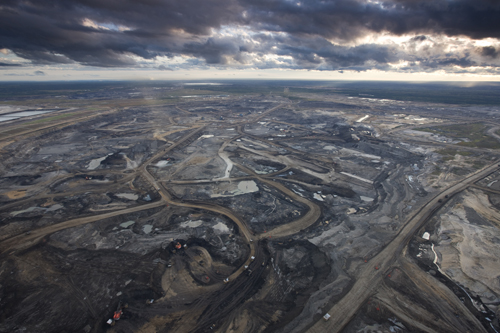
Some are speculating however that these announcements may come as counterweight to final approval of the tar sands oil pipeline.  A decision on that is expected to be announced within the next month.  

But for the moment the significance might well be the focus that President Obama can bring to the absolute necessity of strong, multiple and intentional efforts to cut and end global heating emissions and other steps to address both the causes and effects of the climate crisis.  A Bloomberg report from a few days earlier cites a Palo Alto gathering where President Obama is quoted as saying:  "We’re not going to be able to make those changes solely through a bunch of individual decisions,” he said at a June 6 event hosted by Flipboard Chief Executive Officer Mike McCue. “Government is going to have a role to play.” 

When President Kennedy outlined his agenda in his Inaugural he warned that it would not be accomplished in a hundred days, "or a thousand days, or in the lifetime of this administration--But let us begin."  In the speech that reignited negotiations with the Soviet Union for a limited nuclear test ban treaty (which he made in that same summer of 1963), he spoke of future dangers--like nuclear proliferation--and of future hopes.  The years of treaties and nuclear weapons control and reduction have all sprung from that speech.  He began.

That treaty broke the ice of the Cold War and allowed limiting and someday eliminating nuclear weapons to become a legitimate political goal, a topic for open and serious discussion in which advocates were no longer marginalized, and a vision of the future. We can only hope we're going to see history repeat itself when President Obama next talks about the climate crisis.

Tuesday, June 18, 2013

sporting views


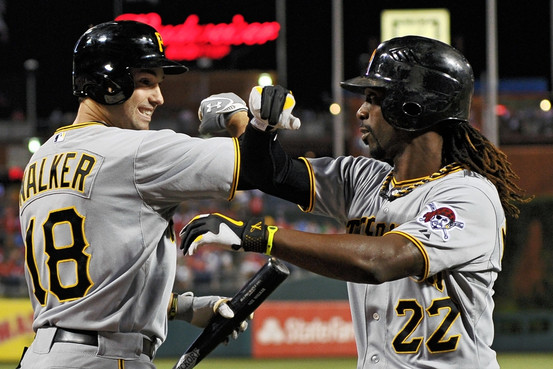
Survived the first of the Pirates-Giants series, which the home team (Pittsburgh) won two of three.  Both teams go on, wounded but always entertaining.

I'm not watching the actual games but I am noting the NBA finals--I never thought I'd ever root for the San Antonio Spurs, but they are playing the Heat and now it's all up to a game 7.  It's sort of amazing that the Spurs are still built around the stars that were playing when the Lakers were beating them en route to championships.  Anyway, they came within a shot of winning the 6th game and the series, and keeping LeBron out of the Michael Jordan greatness conversation.  Though the game 5 winner usually wins the 7th, the depressing prospect is that the Heat will finish it.  The Spurs need a big lead in the fourth, because they just don't have a finisher.  On the other hand I'm surprised it's going 7, so I could be happily wrong--not happily exactly, more like grimly satisfied.

Meanwhile there's the sporting event above to report on--the congressional baseball game, won by the Dems 22-0. 

Postscript: On Wednesday afternoon the SF Giants won their second come from behind game in a row against San Diego--they would have won the entire series except for a miraculous catch in the 12th inning Monday night.  They're at home, and with today's game, they've sold out their 200th consecutive game at AT&T Park (as it's called now), the longest active streak in the majors. And this sellout was an afternoon game in the middle of the week.  San Francisco's way too laid back image is obsolete.

Monday, June 17, 2013

That's Why They Call It Global


Last week Colorado was hit with a sudden and surprisingly ferocious series of wildfires.  CNN reported:

Over several hellish days, the Black Forest Fire singed more than 15,000 acres north of Colorado Springs. What's left behind, in some areas, "looks like a nuclear bomb went off," according to El Paso County Sheriff Terry Maketa.

In the first few days after the first broke out, for still unexplained reasons, crews had zero containment on the Black Forest Fire as it ravaged woods and neighborhoods. County spokesman Dave Rose told CNN it appeared to be the most destructive in the history of Colorado -- a state that's all too familiar with devastating wildfires.

By Saturday and Sunday, the Black Forest Fire was mostly contained, but several other large wildfires broke out elsewhere in Colorado.

The Colorado fire and its exceptional nature are no longer exceptional in huge swaths of the United States.  The droughts and dryness and resulting fires are burning up state funds but also the common fund called federal, which thanks to the wolves in Congress, has less money and fewer resources.  This CBS News report:

Fire season has exploded across the country. So far this year, more than 19,000 wildfires have scorched the equivalent of 700 square miles, forcing thousands out of their homes.

"We've had numerous fires already," said firefighter Miguel Martinez. "I foresee a very busy season for us."

Martinez fights fires in California, where the number of wildfires is up 45 percent this year. The reason: unusually dry weather. Nearly half the country is already experiencing moderate to exceptional drought conditions.


"We've seen a significant change for the worse, in terms of how hot fires burn and how quickly they explode," said Tom Harbour, fire chief for the U.S. Forest Service. But federal firefighters are facing another challenge: a loss $50 million mandated by the budget sequester. That forced the Forest Service to cut 500 firefighters and 50 engines just when they're needed most."

Climate crisis effects like fires that require federal responses mean that climate changes in one locality or state  eventually affect everyone in the country, if only through federal taxes.  Then of course there is the economic activity that is lessened, the crops burned up by droughts, etc.  Global heating is not just an atmospheric phenomenon with different local effects.  It is a fact: those local disruptions and catastrophes ripple very far, and the ripples don't necessarily fade with distance.

For another example, a new study found that the impact of climate crisis on the UK is not limited to rising sea levels and hotter summers: an even greater impact may be the availability of food imports.

"What's interesting is that threats from climate change overseas appear an order of magnitude higher than domestic threats," PWC's Richard Gledhill told BBC News.

"This doesn't just refer to the most vulnerable countries like the small island states... climate events in developed countries could damage the UK economy by impacting on food and other resources. We could also suffer damage to assets from events like the floods in central Europe or Superstorm Sandy; this all feeds back into the UK economy."

Many crucial ways of addressing the climate crisis are local, regional, national.  But at least at this level of human civilization, the truth is we're all in this together, and solutions on dealing both with causes and effects of  the climate crisis are necessarily global.

Wednesday, June 12, 2013

A Climate Crisis Agenda

While some media coverage of the International Energy Agency report this week stressed what it confirmed about the ongoing climate crisis, the Agency itself (and some news reports) stressed its proposals to prevent runaway climate deterioration and collapse that would likely spell the end for this human civilization.

The report does confirm the urgency of other science-based studies: that (as the National Geographic wrote in its first graph) " If the world waits until 2020 to take action on global climate change, it will undoubtedly be too late."

Let's pause for a moment and take that in.  In the midst of all the worthy issues, idiotic trivialities, shameless posturing and greedy inflation of nonsense that absorbs every facet of this constant overwhelming blitz of private and public information that absorbs our time, we're being told once again that we have less than seven years to save humanity, at least in its present form.

Which is made even more poignant by the main IEA message: four fairly simple steps that together may well slow carbon poisoning of the planet just enough to limit the climate damage before it becomes apocalyptic.

According to the IEA, they are:
  • Targeted energy efficiency measures in buildings, industry and transport account for nearly half the emissions reduction in 2020, with the additional investment required being more than offset by reduced spending on fuel bills.
  • Limiting the construction and use of the least-efficient coal-fired power plants delivers more than 20% of the emissions reduction and helps curb local air pollution. The share of power generation from renewables increases (from around 20% today to 27% in 2020), as does that from natural gas.
  • Actions to halve expected methane (a potent greenhouse gas) releases into the atmosphere from the upstream oil and gas industry in 2020 provide 18% of the savings.
  • Implementing a partial phase-out of fossil fuel consumption subsidies accounts for 12% of the reduction in emissions and supports efficiency efforts.
Or as the Christian Science Monitor summarized it:

"Over the next seven years, aggressive efforts to tackle greenhouse-gas emissions from power plants, refineries, and pipelines, and especially to boost energy efficiency, could still keep the world on track to meet its goal of holding increases in global average temperatures to 2 degrees Celsius by the end of the century.

What’s more, those efforts need not come at the expense of a profitable energy sector, a concern that has fueled opposition to international agreements on curbing emissions and slowing climate change."

A couple of other features of these proposals: they are basically intensifications of policies and efforts already begun, and while they may shift profits from some corporations, they all generate economic activity and generate new jobs.

The IEA and others have the figures to back all this up.  Energy efficiency may seem like just a feel good drop in the bucket, but it is not.  And there are simple adjuncts or changes that can contribute enormously.  For example, it's been estimated that making all roofs and roadways white (to reflect sunlight) would be the equivalent of taking all cars off the roads for 18 years.

The Monitor article is interesting also because it places the advocacy of such efforts in context of upcoming international attempts to finally address the climate crisis in a real way.  Some progress may have been made in that regard in the latest meeting between President Obama and leaders of China.

Big Commerce Is Watching You

The revelations about national security telephone and internet data mining bring up a lot of issues, as well as a lot of misinformation, opportunism and hysterical bloviating.  Here's an explanation and defense of the program, here's what such a program could lead to, and here's Josh Marshall's careful parsing of the whistleblowing part of it.

While all of this bears monitoring, I have perhaps different points of view.  Apart from its secondary importance when ranked with global heating as something to concentrate on and get all upset about in the media, it further illustrates to me how effectively we've been propagandized into getting hysterical about abuses real and imagined in government that we let slide or ignore in the corporate complexes.

While agencies of the federal government may be gathering vast amounts of data on who is calling who,  I don't see the same outrage about tech corporations with playful names following my every keystroke on the internet or reading my address book and sending me emails about what they find.  There is no privacy on the internet, and very little over any phone system that gets outside of a wire connection.  The feds monitor emails for key words--haven't we known that for awhile now?--to lead them to terrorists and child pornographers.  The private sector basically is using every available means, skirting the law or simply staying ahead of it, to learn as much as possible about each one of us, down to the most private details.  Technological means are constantly developed and refined to interpret information in order to predict behavior and profile every one of us.

So while the private sector can gather all the information it wants in order to sell us stuff, and set prices individually according to what they think they can get us to pay, anything the government does is an abuse of privacy.

I'm not necessarily defending these NSA programs, and certainly not the Patriot Act, nor do I believe it's wrong to question possible overreach by the national security state.  Abuses that are more than theoretical, like censorship or monitoring what information I access (something that those internet companies do routinely), or torture or even the force-feeding of inmates at Guantanamo (which got very little media coverage and no big outrage), merit coverage and outrage.  But it's curious to me that people go nuts over government getting involved in health care but don't seem to mind when corporations engage in price fixing and multiple abuses that have driven the cost of US healthcare through the roof and cost people their lives.  They rail about Medicare abuse, when its private individuals and businesses who are cheating Medicare.  So the government is always big and bad, while it it doesn't seem to be big and bad enough to control the banks, the oil companies or corporations in general.

Moreover, corporations are unaccountable to anybody except their bottom lines, and if they are too big and powerful to fail, not even to the courts.  But government is still at least theoretically accountable to the courts and more to the point, run by elected officials, who can be replaced by voters.

Which of course is part of the answer: because government is accountable, these controversies are political--people get voted out or in because of them.  Whereas we all feel powerless to change the behavior of the most powerful corporations, and elected officials are wary of touching them, since their wealth finances their campaigns.

Tuesday, June 11, 2013

Emerson for the Day

"The best you can write is the best you are."

Thoreau

Sunday, June 09, 2013

Sports Weekend

It's time to step back a bit from baseball, as my two teams begin what looks like a solid month playing each other.  The Giants and the Pirates start visiting each other's spectacular ball parks on Tuesday.  A glass half full way of looking at it is that I win either way.  On the other hand...

A sport that I don't follow at all is hockey.  The few hockey games I've watched were Stanley Cup finals in which the Penguins were involved, usually the deciding game.  Not many of those either. (Now it's not going to happen at all this year.)  I just don't like the game.

But there's another way of looking at it, a poetic way.  This is from a prose poem by Robert Bly from his book What Have I Ever Lost By Dying?

"How weird the goalies look with their African masks!  The goalie is so lonely anyway, guarding a basket with nothing in it, his wide lower legs as wide as ducks'...No matter what gift he is given, he always rejects it...

The goalie has gone out to mid-ice, and now he sails sadly back to his own box, slowly; he looks prehistoric with his rhinoceros legs; he looks as if he's going to become extinct, and he's just taking his time...

When the players are at the other end, he begins sadly sweeping the ice in front of his house; he is the old witch in the woods, waiting for the children to come home."


Thursday, June 06, 2013

Inflaming Eyeballs

Two of the political news sites I check every day--and fairly often, the only two--are Teagan Goddard's Political Wire and Talking Points Memo, also known as TPM.  They would be characterized politically as not right wing, and I have found them to be dependable in their facts.  The Political Wire is more of an aggregator (so every new poll's conclusion gets a flat headline that so and so is ahead of so and so, even if other polls report the opposite) but TPM is very good at following a story, correcting where necessary, showing the evolution of an issue.

The Internet as well as presumably cable news exploded Thursday with various revelations concerning federal government data mining of phone calls and Internet traffic.  The New York Times, perhaps eager to stake its claim as having broken one of the stories, published an editorial slamming the Obama administration.

It's a harsh enough editorial, but both Political Wire and TPM seriously--really seriously--misquoted it, TPM even doing so in an inflammatory headline.  Both misquoted the Times in exactly the same way.

Both TPM and Political Wire led their items with a quote from the Times: "The administration has now lost all credibility."  But the Times editorial states: "The administration has now lost all credibility on this issue."

There is a world of difference.  Apart from the merits involved in these allegations, it is quite a serious and possibly consequential statement that possibly the most prominent newspaper in America has asserted that the Obama administration has lost all credibility, period.  Particularly on the eve of President Obama's meeting with the Chinese leadership. 

TPM places a comma after their quotation, so they might say it is not technically a misquotation, as the Political Wire's is, since it places a period before those important words "on this issue."  Nevertheless, this is significantly inaccurate and unnecessarily inflammatory.  It smacks of sloppiness at best, and a competitive eagerness to get eyeballs on the site, regardless of accuracy.

I've emailed both sites asking for a correction.  We'll see what they do.  If they were less generally credible sites I'd have no hope.

Update: Interesting.  The Political Wire has not changed a thing, but TPM made the correction--noting however that it was the New York Times that changed the sentence from "lost all credibility" to "all credibility on this issue" a few hours after they first published the editorial on line. 

Wednesday, June 05, 2013

RFK on The Future


On the 45th anniversary of his assassination, some words on the future, from speeches made at various times and places by Robert F. Kennedy.

"The future is not a gift: it is an achievement. Every generation helps make its own future. This is the essential challenge of the present."

"The future does not belong to those who are content with today, apathetic toward common problems and their fellow man alike, timid and fearful in the face of bold projects and new ideas. Rather, it will belong to those who can blend passion, reason and courage in a personal commitment to the great enterprises and ideals of American society."

"We must admit the vanity of our false distinctions among men and learn to find our own advancement in the search for the advancement of all. We must admit in ourselves that our own children's future cannot be built on the misfortunes of others. We must recognize that this short life can neither be enobled or enriched by hatred or revenge. Our lives on this planet are too short and the work to be done too great to let this spirit flourish any longer in our land."

"If we fail to dare, if we do not try, the next generation will harvest the fruit of our indifference; a world we did not want - a world we did not choose - but a world we could have made better, by caring more for the results of our labors. And we shall be left only with the hollow apology of T.S. Eliot: 'That is not what I meant at all. That is not it, at all'."

Shaping Things to Come

With several appointments and nominations recently, President Obama is saying--among other things--didn't you notice?  I was reelected.  The people he's hiring seem more than ever the people he really wants to be hiring, with hopes that they will move things forward, even beyond his term.

Today's big appointment was Susan Rice as National Security Advisor, an appointment I advised that he make back immediately after John Kerry was appointed Secretary of State and she was still  being shamefully slammed by opportunistic GOPer bigmouths. 

Also today, President Obama appointed Samantha Powers to take Rice's old job of UN Ambassador.  From the first interview I saw with her as an author years ago, I knew Powers was impressive: smart, incisive, morally impassioned.  She's also young and attractive with a powerful charisma.  Because of the public demands, Susan Rice would not make a great Secretary of State because she can't really smile.  Samantha Powers doesn't have quite the wattage of President Obama's smile, but she can turn it on.  (She didn't look too comfortable trying to negotiate the Rose Garden steps in heels, however. She's going to have to get used to those kinds of shoes as Ambassador.)  She'll be a real if different kind of presence at the UN, where the climate crisis is taken seriously as a global security issue.

These are great second term appointments: of younger people with the potential of taking on major responsibilities, who got a lot of experience in the first term and are now ready to take on those top jobs. 

President Obama's apparent choice for the next FBI director is legendary in Washington--though he served in the Bush administration, he blew the whistle on some of Cheney' shady dealings and appointed the special prosecutor who followed the trail of the outing of Valerie Plame into Cheney's office.  Obama's appointment of CIA director may be the sleeper of them all, if he can deal with the leftover problems from the Bush era: the CIA involvement in drones and its problems with the State Department (it may well turn out that part of the protection problems involved in the tragic events in Benghazi were  to the consulate being only formally a State Department post but actually a CIA station.)  Maybe even Guantanamo, although the barriers to solution there are largely GOPers in Congress.

President Obama also nominated three judges to the DC Court of Appeals, two women and the black judge who as a public defender, successfully attacked "driving while black" racial profiling.  The President did so without mincing words.
  
“My judicial nominees have waited three times longer to receive confirmation votes than those of my Republican predecessor,” Obama said. “What’s happening now is unprecedented. For the good of the American people, it has to stop. Too much of the people’s business is at stake. Our legal framework depends on timely confirmations of judicial nominees....“This is not about principled opposition; this is about political obstruction.”

The president fired back against Republican accusations that he is trying to revive President Roosevelt’s “court packing” plan to add additional seats to the court to gain support for his political agenda.  “We’re not adding seats here. We’re trying to fill seats that are already existing,” Obama said. “I didn’t just wake up one day and say, ‘Let’s add three seats to the District Court of Appeals.’ These are open seats. And the Constitution demands that I nominate qualified individuals to fill those seats. What I’m doing today is my job. I need the Senate to do its job.”

“Republican senators are now pushing a proposal to reduce the number of judges on this independent federal court also makes no sense. When a Republican was president, 11 judges on the D.C. Circuit Court made complete sense. Now that a Democrat is president, it apparently doesn’t. Eight is suddenly enough,” he said to laughter. “People are laughing because it’s obviously a blatant political move.”

Obama said his three nominees were uniquely qualified for the positions. ”These three individuals are highly qualified to serve on the D.C. Circuit. They have broad bipartisan support from across the legal community. The nonpartisan American Bar Association has given them, each of them its highest rating. These are no slouches,” he said. “These are no hacks. These are incredibly accomplished lawyers, by all accounts."

The poli-sci types I check in with periodically (less and less actually) are especially interested because Harry Reid is signaling the possibility that changing the rules on filibuster might really be result of continued obstruction on judicial appointments.


The next appointment to make news is likely to be New Jersey Governor Christie's appointment to fill a Senate seat until the special election he opportunistically called for October.  The seat is vacant due to the death of Dem Senator Frank Lautenberg, who was a leader in one of the few successful social revolutions of our time: ending public smoking in America.  He also was a leader for gun regulation.

The most sensible appointment R Gov Christie could make is former NJ Governor Christine Todd Whitman.  She's R in the old sense, and is probably the best that Dems could expect for a Dem seat.  If she'd take a temp job like this--it might hinge on how much she cares about bills that are likely to come up in the next months, like immigration, and how badly she wants to stick it to the new Rs who have dissed her the way they diss everybody: savagely.

Saturday, June 01, 2013

The Weight/Wait


On the Stop It! side of addressing the climate crisis, everybody seems to be waiting for the shoe to drop on the Tar Sands Oil Pipeline, with the assumption that sometime soon President Obama is going to approve its extension from Canada to the Gulf.

The issues involved continue to be clarified in opposition, however.  Bill McKibben has been leading a vocal and demonstrative opposition on the basis of the effect on climate of a lot more carbon burned from dirty tar sands oil, a stand backed up by the premier scientific voice on climate, James Hansen, although he seems to be more focused on promoting a carbon tax that would be especially high for tar sands oil and the like.

But this week President Obama's former advisor on climate matters, Van Jones, was especially aggressive in his opposition to the pipeline.  In media statements and a YouTube video, he is calling out President Obama on the issue.  He joins others in asserting that tar sands gunk is especially dangerous, that spills of it are proving impossible to clean up, and that the jobs it will create are minimal, with less than 50 non-temporary jobs.   He also asserts that the idea that this oil contributes to U.S. energy independence is false--that there is no guarantee the oil will stay in the country--he asserts that it will probably end up in China.

Also the 350 organization (McKibben's) claims in an email that "big chunks" of the favorable environmental review of the pipeline issued by the U.S. State Department (their clearance--and Obama's--are necessary because the pipeline crosses from another country, Canada) were written by a client of the very company that is building the pipeline.  This consultant, Environmental Resource Management, not only has TransCanada as a client, it is" a dues-paying member of the American Petroleum Institute, big oil’s top lobbying group that has spent millions trying to get Keystone XL built."

There's a lot of politics going on, and possibly institution-building, but the issue is serious.  For example, Organizing for America--the former Obama for America--is building support for addressing climate change, but is notably not opposing the pipeline.  Other organizations, including 350.org, are trying to organize demonstrations and civil disobedience, even if the pipeline is approved.

All this in the week that President Obama remarked that he has no patience with climate crisis deniers, but amidst criticism that his actual efforts are insufficient. Jonathan Chiat put this in perspective, as noted in this report:

However, others argue that Obama has been a good steward of the environment. As New York's Jonathan Chait pointed out, under Obama, carbon dioxide emissions have fallen, vehicle emissions standards have gone up, and the government has poured tons of new funding into green technology and research.

"The assumption that Obama's climate-­change record is essentially one of failure is mainly an artifact of environmentalists' understandably frantic urgency," he said. "The sort of steady progress that would leave activists on other issues giddy does not satisfy the sort of person whose waking hours are spent watching the glaciers melt irreversibly."

Even Gore gave Obama some credit, saying he'd "accomplished more than any president before him" in combating climate change.

Meanwhile, it's worth noting that positive steps in replacing the need for fossil fuels is proceeding significantly, though they don't get much press.  Solar power is becoming better and cheaper, wind power is contributing more and more to electricity generated and used, and electric cars are coming down in price, to be competitive with the fossil fueled.

In terms of addressing the climate crisis with clean energy initiatives, Republican Senator Lamar Alexander made a strong speech in support last week.  This is not new for Alexander, but it's news for a Republican to take the climate crisis seriously.  Alexander is one of the few who hasn't recanted.  It remains to be seen however how influential his position actually can be.

Thursday, May 30, 2013

May Baseball

As May ends, my teams are diverging.  After a series of improbable victories, climaxed by the first inside the park home run ever to win a game in San Francisco, the Giants are stumbling.  Some key injuries are hurting them (including to Angel Pagan, who hit that homer and hasn't played since) but they are really struggling away from their home field. That could prove fatal to their season--because with those injuries, they spend most of the month of June on the road.

Still, at just a couple of games above .500, they're in second place in their division.  While the Giants reel, the Pittsburgh Pirates rock.  They are 13 games above .500--but in their division that's good enough only for second or third place.

For the past several years, the Pirates have had a run of wins and spectacular play, especially in the first part of the season.  And then every year, they've collapsed just as spectacularly.  That it might not happen this year is suggested by the ways they've been winning--which is every way.  They're winning with early offense, and with come from behind.  They're winning with starting pitching, and especially relief pitching.  If their winning ways continue, analysts may point to Tuesday night's game as the tip-off.  They won 1-0 in the 11th inning over the Detroit Tigers, a formidable team (managed by the guy who managed the last great Pirates teams, Jim Leyland.) That kind of win suggests a solid team. Then Wednesday they beat the Tigers again, surprising them with a flurry of late offense, 5-3. Update: Then they did it again--once again in the same series, the Pirates beat the Tigers 1-0 in the 11th inning. The Pirates could finally be for real this year.

Tuesday, May 28, 2013

Weekday Update


From: Doonesbury.   Click comic to enlarge to readable size.

Meanwhile, Andy Borowitz reports on the meeting between Senator McCain and Syrian rebels: Syrian Rebels Urge McCain to Get Over Losing to Obama: 

 SYRIA (The Borowitz Report)—During a meeting yesterday with Sen. John McCain (R-Arizona), Syrian rebels told the senator that he still seemed “really bitter” about losing the 2008 election to President Obama and advised him to “get over it.”

Friday, May 24, 2013

Summer


Well, there's the immigration bill, President Obama's landmark speech trying to inject some sanity into the overreaction to terrorism, etc. etc. and I find myself without the motivation to pay much attention.  I'm not watching the same people say the same sorts of things on television, or offer the same opinions and "news judgment" in print media.

Right now I'm enjoying the weather, my corner of the planet as it is, and as I'm hoping it will mostly be for the rest of my life.  But it's changing and it's going to really change.  Maybe not as much right here, but everywhere.

It's summer here, defined as the time when the students are gone, Arcata becomes quieter, and although I have less income, I have less I must do.  So I turn to my long-range and so far never-ending projects.  And I watch baseball.

And I'm noting the news on what matters for the future, and spending more time (online and in print) with people who are serious about what is serious: de-carbonization.  Energy conservation.  Clean energy development.  Constructing the means to respond to problems that are coming because of climate disruption.

There's some political activity worth watching, like the fossil fuel disinvestment campaignDisinvestment is what turned the corner on apartheid in South Africa.

  I note in passing (and with weariness) that people still must make the case for saving civilization.  Here's a detailed piece by an economist who concludes that even with uncertainties the sane thing to do is to de-carbonize, since the cost of not doing it may be so much greater than the cost of doing it.  He likens it to insurance.  

Whatever floats your boat.  That this society still considers this debatable is certainly depressing.  But that doesn't mean I have to humor them.  I don't have time.

Saturday, May 18, 2013

Scandal of the Week

To be more explicit, quoting from this piece by Robert Liddy in the Portland (Maine) Daily Sun:

"The moment marks the highest concentration of carbon dioxide in the atmosphere in the entirety of human history; at current rates of growth NOAA predicts eight hundred parts per million will be the norm by the year 2100. We are on a climate change path that will make a mockery of political name calling about protection of exotic embassies and render issues of IRS abuse meaningless. Yet not a single major news outlet has offered one minute of analysis of the economic crisis of climate change in the hours of nonstop coverage of political fallout in the presidential race of 2016."

"A legislative bill in the United States Senate named the Environmental Protection Act of 2013 (S 309) was immediately tabled by the senate leadership and not a single word was spoken on this inaction in the reporting media. Regardless of wide support by liberal and conservative economists, no congressional representative has called for consideration of a meaningful Carbon Tax provision."

Tiny Giants Note

After a homestand of heroics, the San Francisco Giants went on the road to play with flashes of brilliance (coming back from 6-0 to win over the Rockies), but also awfully like a Little League team, making odd distracted errors in Toronto and Colorado.  Entertaining still, but still...

One cool note: The Giants brought up Brett Pill, formerly of the Humboldt Crabs, and he doubled and scored against Colorado.

I have the Giants and the Pittsburgh Pirates scores on my start page everyday, and it seemed that when one of them won a game, so did the other.  The same with losses.  That's unlikely and one of those selective attention things, I figured.  While I haven't gone day to day through the season, the fact is that when I checked the other day they did have identical won-loss records, 24-17.  That's good enough for the Giants to lead the NL West by a game, but only good enough for third place in the NL Central, where the Pirates are 2 1/2 games behind St. Louis.

Thursday, May 16, 2013

Thursday, May 09, 2013

State of the Climate


Stop me if you've heard this one--summer ice melt in part of Antarctica is the most extensive in a thousand years. Arctic summer sea ice is melting faster than previously believed, and scientists now expect that it will be gone completely in 2050.

A Peruvian glacier has melted 1600 years worth of ice in the last 25.  Professor Wagstaff (author of the article in The Week) sees this as A Bad Omen.

NPR reports: "The Earth's wettest regions are likely to get wetter while the most arid will get drier due to warming of the atmosphere caused by increased levels of carbon dioxide, according to a new NASA analysis of more than a dozen climate models."

The LA Times, looking at the same report, emphasizes droughts in temperate areas, and includes a little interactive feature, "Your Take," asking the question: "Will we be able to limit the worst effects of climate change?" Yes? No?  Because why would we take the word of people who might know what they're talking about?

Health experts in the UK warn that the climate crisis could bring malaria and other nasty pest-borne diseases that now bedevil the tropics. California and Arizona are already seeing increases in the normally unfamiliar valley fever, due to persistent drought.  Yet another tree-killing insect is threatening new areas--this time in cities--because of climate heating.

And carbon dioxide in the atmosphere is zooming past the levels humanity has ever seen, and may hit the magic in a bad way number of 400 parts per million, this month.  Scientists, says the NY Times, are Alarmed.  Update: The 400 has in fact been reached, as reported on 5/10.

What's potentially even worse--yes, worse--is the CO2 stored in the oceans.  As hot as it's been getting, the oceans have actually lessened the effects of global heating over the past decade by storing more C02 than usual, but when it returns to its usual behavior--or simply has stored so much in its depths that it rises up and out--global heating will resume increasing, and probably faster.

The Arctic Ocean is already showing other effects of heating, such as higher acid content, that won't be reversed for thousands of years.

So back in March the Biggest Picture study so far was announced--covering some 11,000 years (here's a q and a explanation of the study)-- and this chart was widely (if briefly) disseminated.  Possibly because even chartphobics like me get the picture.


Looking at this and all the data, a no-nonsense, thoroughly rational scientist evaluated it and concluded: Compared to the past, what’s happening in the present is scary. The future is scary as hell.

Still, that spike at the end he said might be overstated, for various scientific, chartcentric reasons.  However he provides another chart that he says is probably more accurate, but is basically just as scary:


Look at the spike at the end. The big, and most importantly the steep, scary spike at the end. That’s not an artifact of the way proxy ages were computed, or how the reconstruction was done, or the effect of proxy drop-out as records become more sparse in the later period. It’s what the thermometers say. Ignore them at your peril. As scary as that is, what’s far more frightening is that it’s not going to stop.

He concludes (repeating himself a bit, but the bolding is his:)

In the span of a century or two, man-made changes to the atmosphere wiped out 5,000 years of natural climate change. People can argue about the uptick at the end of the Marcott reconstruction — I’ll do so myself — but for most who do so, it’s just an attempt to divert attention from the fact that global temperature really has increased in the last century, at a speed not seen in at least the last 11,300 years. We know this, thermometers have made it plain, only those in denial still deny it.
We are changing the climate rapidly — on the geologic time scale, in the blink of an eye. This is exactly the kind of rapid change which has caused extinction events in the past. What’s far more frightening is that it’s not going to stop.

So the argument against this overwhelming evidence is ever more obviously, I just don't believe it, science is divided (yeah, 99.9% v. cranks and folks on petroleum payrolls) and I'm just not...going to...listen.

Nor am I going to let anybody else hear about this.  Denialists and other reactionary GOPers have pretty effectively prevented the climate crisis from being taught or talked about in schools.Some two-thirds of public school students aren't learning about it in school.   That's the subtext of this NPR piece on a traveling climate education project.   But one barnstorming guy is not really much.  More may be on the way, as new nationwide science standards recommend teaching about the climate crisis--for the first time.

But we can look on the bright side--we aren't Saturn!  Not yet!  We may be having bizarre rain and snowstorms in the Midwest, fires in California way early in the season, etc.  But we don't get hurricanes anywhere near the size of the one pictured at the top (in a false color photo from the Cassini spacecraft), which is 30 times larger and has winds twice as fast as the biggest Terran hurricane.  On the other hand, it's only called a hurricane. Our hurricanes need water and Saturn has very very little.  Scientists don't have any idea how that works.  Unfortunately, they know all too well how stuff works here.

Wednesday, May 08, 2013

Political Grumbling

I've had better things to be depressed about than politics recently, but it's hard to go completely cold turkey.

And the news is not all bad: President Obama's approval is up, congressional GOPers are less than half of it,  most people believe they're to blame for screwing things up.  But of course that doesn't change anything.

Pew also analyzed the 2012 numbers and found that Romney got all of 17% of the non-white vote.  So expect voter suppression to get bigger.

Markey is way ahead in Mass Senate, and only a quarter of Pennsylvanians polled believe that Space Cadet Tom Corbett deserves reelection to the governorship.

On the other hand, there's that depressing congressional race in South Carolina, and the infuriating governor's race in Virginia, with one of the ace rabid right morons running against the Dem candidate Terry McAuliffe, a race which therefore pits a fanatical moron against a major asshole.  And I've seen him as an asshole even before all this emerged.  This is the best VA Dems could do?

So it's maybe time to shift focus and get depressed about climate.

Monday, May 06, 2013

It's Outa Here!

Well, before we get into this week's bad news let's talk some sports.

The NBA playoffs are going into their second round.  If you had to choose which of the three California teams would make it at least that far, it probably wouldn't be the Golden State Warriors and the classic shooting of Stephen Curry (pictured with Kobe), but that's the facts. The Kobe-less Lakers got decisively swept, but I was surprised they even made it to the playoffs at all.  I guess I'm not alone in believing Boy Buss's choice of coach was disastrous from the get-go.  It's not far under the surface in this diatribe by one of LA's leading sportswriters, and I heard it crawl into comments from Magic Johnson.

But even Phil Jackson may not have been able to save them from the repeat of an experiment that failed when he was there: bring in some aging superstars for a team that looks unstoppable, at least if you judge by old highlight reels.  Injuries and lack of chemistry killed that Karl Malone/Gary Payton experiment, and the same factors ruined this season.  Especially injuries.

Injuries to key players are the story for many teams.  Oklahoma, Golden State and Chicago got through the first round despite them, but that's probably it.  Everybody is competing to finally lose to Miami, which has played even better this year, despite injuries.  Right now they're pretty healthy so it's probably pretty safe to snooze through June.

The NFL had their draft, and for all the volumes of words wasted on it, nobody has any idea of who is really going to be helped decisively.  But even with a reputedly strong draft, I still see the Ravens as a lucky one month wonder.  The Steelers seemed to have a good draft, everybody says, but I'm afraid I don't understand how they get better with no help to the offensive line.

Which brings me to the only sport and only team I really enjoy watching, baseball as played by the San Francisco Giants.  In the early season they don't have their dominating starting pitching, but everything else is working as it was last fall.  Lately they're coming from behind a lot, with games being tied and won in the very late innings.  In that they remind me of my 1960 Pirates, and one of  Bob Prince's signature sayings when they squeezed out a come from behind victory: "We had 'em all the way!"

Another 1960 Pirates reference: Pablo Sandoval is the best bad-ball hitter I've seen since Smoky Burgess.

But mostly (as I've said before) they are so much fun to watch.  Especially at home, because even though I've been in that ballpark only once, it's an indelible memory.  The combination of what a great park it is with the great fans--I saw a game in the Barry Bonds era, when there was always excitement and a lot of winning--makes it so easy for me to feel like I'm there while watching it on TV.  So here's this story from this past weekend:

I watched the early innings of the Giants-Dodgers game on Saturday, when the Giants built a 5-1 lead.  Then dinner time and then Saturday night movie time, so I only glanced at the score to see them behind as the Dodgers had scored 9.  Then when our Netflix was over, the game was in the bottom of the ninth, tied 9-9, with Buster Posey up, the bases loaded and one out.  Basically there are only a few ways you don't win with this combination.  First of all, there's Posey, a great hitter, last year's MVP, who won the previous night's game against the Dodgers with homer in the last of the 9th.  Posey had at least a dozen ways to put the ball in play and win the game. He could win the game just by being walked. The only bad things he could do were to strike out or foul out, but the next batter would still come up with the bases loaded.  The worst thing he could do was hit into a double play.  Which is what he did, on the second pitch I think.

So the TV went off, and by the time I got to my computer to check the score--I was prepared to go to my cave to resume watching--the game was over, the Giants had won in the 10th, via a home run, by a player I had never heard of: Guillermo Quiroz.

Later I checked the recap, and found out he was the backup catcher and pinch-hitter, and that he hit it with one out in the 10th.  Much later, just before sleeptime, I turned on the TV--the Sportsnet Bay Area station often replays the entire game but I never know when--and there it was.  I saw immediately that I had turned it on with the score tied 9-9 and the bottom of the 10th.  I then saw there was one out, and I realized this was the guy.  I saw exactly one pitch--it was the home run ball.


What a moment!  The stadium was in delirium, and so was Quiroz.  It was a line shot to left field that he and everybody knew was gone right away.  He was ecstatic on the bases.  He took his cap off, exposing a big round bald spot on the top of his head.  Quiroz was a veteran journeyman with six major league teams that mostly kept him playing in the minors.  This was his first home run of the year.  He won a game with it in extra innings, at home, for the Giants, in very probably the oldest rivalry in major league baseball, the Giants and the Dodgers.


We were all part of a moment in that man's life he will never forget--and unlike a lot of such moments lately, this was one of joy, celebration, accomplishment, fulfillment, a dream come true.    

Sunday, May 05, 2013

American Taliban

The otherwise incomprehensible hysteria of rabid rightists about the imposition of Sharia law--which absolutely nobody is really trying to impose--is itself a signal of what's really at work.  Scratch a hysteric and you'll often find that what they fear is what they really want to do, at least in the cases where the opposites are the same.

This is one of them.  Rabid rightists in North Carolina introduced a bill to make Christianity the state religion. This is the equal and opposite of Sharia law, and it is the exact same thing: totalitarian rule by a fanatical sect that is as political as it is religious.

Absolute rule under the banner of a particular religious sect involves a number of factors, and we're seeing all of them in the states under GOPer rule.  First, imposing making that sect's beliefs the law.  Not just in blatant "establishment" but in turning its tenets into reality, as in the many laws restricting access to abortion to the point that it is completely inaccessible.  It's being pretty successful, including in states where it's quite a shock, like Virginia.

But the American Taliban is also political in the sense that it wants power, and will seize it in any way possible.  Thus the national template for voter suppression that has only accelerated since it was beaten back in 2012.  That it didn't work then is no guarantee at all it won't work especially in 2014.

This political power is expensive to get and maintain, so monied allies are necessary, not only the already rabid right billionaires in fossil fuels and banking, not only the direct beneficiaries of GOPer power like the incarceration industry and the gun manufacturers.  But those who are continuing to take over public functions through privatizing everything that government does or should do.  You can see a step towards this with the emergency managers in Michigan, and Florida's attempt to take away local power and vest it in the state government, where economies of scale are available to favored corporations.  Not to mention the imposition of American Taliban policies.

Finally, it seems the American Taliban is organizing its military.  The new National Rifle Association prez is even more outspoken and clear on this than the exec director, if that's possible. Apart from overt calls to arm and militarize against the government, there is the culture war being called for, and the clear attempts to de-legitimize any government not part of the American Taliban, like the administration recently elected by an historically healthy majority.  President Obama is the "fake President" to them--an especially inflammatory bit of rhetoric, given the racism of the rabid right.    

Despite their distance from what the American public in general wants, the GOPer state governments have gotten increasingly bold, not only internally (which they can do without the Washington-centric media noticing) but in revolt against the US Constitution as interpreted by the federal courts and the federal executive. Kansas passed a law preventing the federal government from enforcing its gun laws, the US Attorney-General notified its GOPer governor that the law was unconstitutional, but the governor is not backing down.  Some may see this as a second amendment test case, regarding any federal power to regulate guns and gun safety.  But in essence it is the American Taliban pushing for more power, in this case  illusory but consequential military power.

It's all an all-American mirror image of the Taliban, the Kymer Rouge, the Iranian fundamentalists, etc. back into history.  But this overt and blatant coalition--of reactionary religionists, political McCarthyites like Ted Cruz, Confederate states rightists and racists, reactionary billionaires and the merely amoral greedy--seems pretty new to the USA.

Kill the Poor

There's unfortunately nothing new in the Pew study of the US 'recovery' from the Great Recession, which showed that it was a spectacular recovery for the rich at the expense of everybody else (whose net worth actually dropped between 2009 and 2011), or in New York's analysis, based on its own more sophisticated criteria, that nearly half the city (all four boroughs) is in poverty.

It's against that backdrop however that we judge Washington's failure to support jobs while continuing to lay out corporate welfare, and in particular the very obvious move last week to lessen the pain of well-off air travelers while doing nothing for the poor, working families, elderly, local economies, etc. being materially and even physically hurt by the sequester.

I heard again a theory I hadn't heard in a long while, that now that a lot of labor is no longer necessary in the US, since its been either automated or outsourced, the powers that be are willing if not actively trying to starve those folks out.  The words "kill the poor" were spoken.  It's a forecast of the future I heard from radicals in the 1960s, but this time I heard it on PBS as a description of the present.  Specifically in connection with the incarceration industry, but more generally applicable.

Kill the poor is kind of a paradoxical policy for the GOP, given its white fundie southern base, but the imagery of poverty is racialized now--only black and brown people can be called poor with impunity.  So the policy is part of GOPer racism, if not the complete effect.  Apart from hatred projected onto President Obama, it is evidenced as well in the refusal to fund government functions and therefore government jobs--which owing to non-discrimination policies have been for some years a path to the middle class for black and brown workers who have taken great pains to educate themselves.  And don't think for a minute that isn't part of this hatred for government.

Kill the poor has become part of the increasingly bold savagery institutionalized in GOPer controlled state governments.  At least two states (Ohio and Georgia) have revived the debtors prison by jailing poor people who were unable to pay municipal debts.  As Jim Hightower pointed out, that these acts are unconstitutional under the US and state constitutions has not stopped anybody.

All of this as evidence is buried as fast as it mounts that thousands have been and probably still are being impoverished by banks foreclosing on mortgages--including those in which payments were up to date--and through credit card manipulation.

The wolf of the sequester turns out to be the wolf of the GOP and its corporate allies, aided and abetted way too often by others.

Friday, April 26, 2013

Revelations

The Boston Marathon bombing and aftermath brought out the best and the worst in American life.  You could see them both for example on the same Rachel Maddow program (Wednesday's): the millions in contributions to help the victims, the Rabid Right conspiracy theories and xenophobia.

There are also many kinds of attempts to figure out how to prevent such destructive actions in the future.  Because of the as-yet unknowns and the complexities of the Boston bomber situation--the dynamics of personality, age, family, unique experience as well as political and religious beliefs and information--that add up to never-to-be-completely-knowns.

But surely the point is that whatever those beliefs, motivations, etc. might be in this case or any other, what matters most are the actions taken.  And dealing with those require what much of the Rabid Right won't deal with.

In previous posts I noted various intersections of the bombing and gun debates.  Now there are clear relationships.  It's the NRA and its successful efforts to prevent background checks for people who buy the gunpowder (the "black powder") of the kind used to make the Boston bombs.  And the NRA's very successful efforts to prevent the powder from containing "taggants" or very small markers that could trace the powder back to the person who bought it.  It's been technically possible since the 70s, and advocated by law enforcement etc. but the NRA and its congressional minions have prevented it.

Rachel detailed the absurdity of the current situation regarding background checks.  A person can be put on the terrorist watch list, and therefore be prevented from getting on a commercial airliner.  But they can leave the airport and buy as many guns and as much gunpowder as they want, legally.

In a sane society it might be noticed that  while you can't tell how potentially dangerous someone is from what they say about their beliefs or what they read, you have a better chance by knowing how many weapons and how much bomb-making material they've acquired.

That doesn't make sense to the Rabid Right, because government is the enemy, and they need those guns and bombs to defend themselves, or kill abortion doctors and other evil people.  They are so close to being the GOPer mainstream now partly because of gun manufacturer money, on top of all that oil money etc.

In terms of the electorate, we're probably seeing a time lag phenomenon: their time is demographically gone, but demography hasn't quite caught up to political structures.  However, this reactionary phase is lengthened and made more powerful and dangerous by the uber-wealthy who use this dwindling group for their own interests.  Money has a multiplier effect.  Together these elements are paralyzing the federal legislature, weakening government's ability to respond to needs at every level.  We're in the deep water of insanity, with no clear idea how close to shore we might be.

Monday, April 22, 2013

The Forest Planet

Earth was a forest planet.  Forests and oceans.  Humankind cut down most of the forests, thereby longterm cutting its own throat.

Emerald Isle?  Ireland has no forests anymore.  The Black Forest of Germany?  It's a cake.  Greece?  Not for milennia.  The great pine forests of eastern America, gone, gone, gone.  The precious redwoods of California, 95% gone.

Forests (and oceans) have been protecting us from our own idiocy throughout the industrial age by compensating for the carbon overload in the atmosphere.  It's a losing battle now.  And as temperatures rise (or fail to fall as far) more diseases and insects that prey on trees are successfully killing the remaining forests.

Humankind, more powerful that smart, is just learning how little it actually knows about forests, about trees and the Earth.  Earth Day is a good day to remember that.

Over at Books in Heat  is my review of a book that notes this context in the course of telling the remarkable story of David Milarch and his project to clone the champion trees and reforest the planet.  The project has had its ups and downs, but today it got some fanfare for planting two dozen clones of California redwoods in seven countries around the planet.  These include clones taken from a stump, 35 feet in diameter, some 4,000 years called the Fieldbrook Stump, which sits nursing new growth redwood just a few miles from where I live.

It's a publicity move that worked, timing it to the U.S. Earth Day, but the project is not all feel good public relations.  For one thing, there's an easily understood rationale for cloning the biggest and oldest trees: their DNA is survivor stuff.  As threats to forests from climate, weather, pests and disease increase in the Climate Crisis era, surviving is going to be a challenge.

It's also a more sophisticated project than even that, because these trees are just not planted randomly anywhere.  Though our redwoods got the headlines today, champion trees of various species are planted where they can thrive and do the most good, and in ways that encourage forest growth, not just tree growth. For instance, willows are particularly good at detoxifying rivers.

Plus the "cloning" may get attention and sound all high tech, but many of the methods are very old, and don't involve test tubes.  They do involve a lot of care and precision.  And luck.

There are a lot of efforts underway to get Gaia through this long crisis.  Some are simple (though not simple enough for politicians) and some are complex, technological and visionary.  (Some of course are technological and stupid, guaranteed to make things a hell of a lot worse.)  But there are few as simple and soaring as this, as grand and as just very clearly right.  Reforest the Earth.
  

Sunday, April 21, 2013

The Week in Review


Of all the moments in the Boston events last week, this is the one that sticks most in my mind--the audio of the firefight in Watertown, recorded from a home that's both near and far from the action--far enough that amidst the sound of the shooting, there's the sound of barking dogs and a bird.  It's the barking dogs and the bird that got to me.

Otherwise, there's this summary of the events, with all the misinformation left out.