Monday, February 22, 2010

Dreaming Up Daily Quote

"At the end of our tether we must imagine the unimaginable: a world rid of nuclear weapons and a world powered by sunlight, safe from the possibility of catastrophic climate change. Utopia? Hardly. But those are the only realistic options we have."--David W. Orr
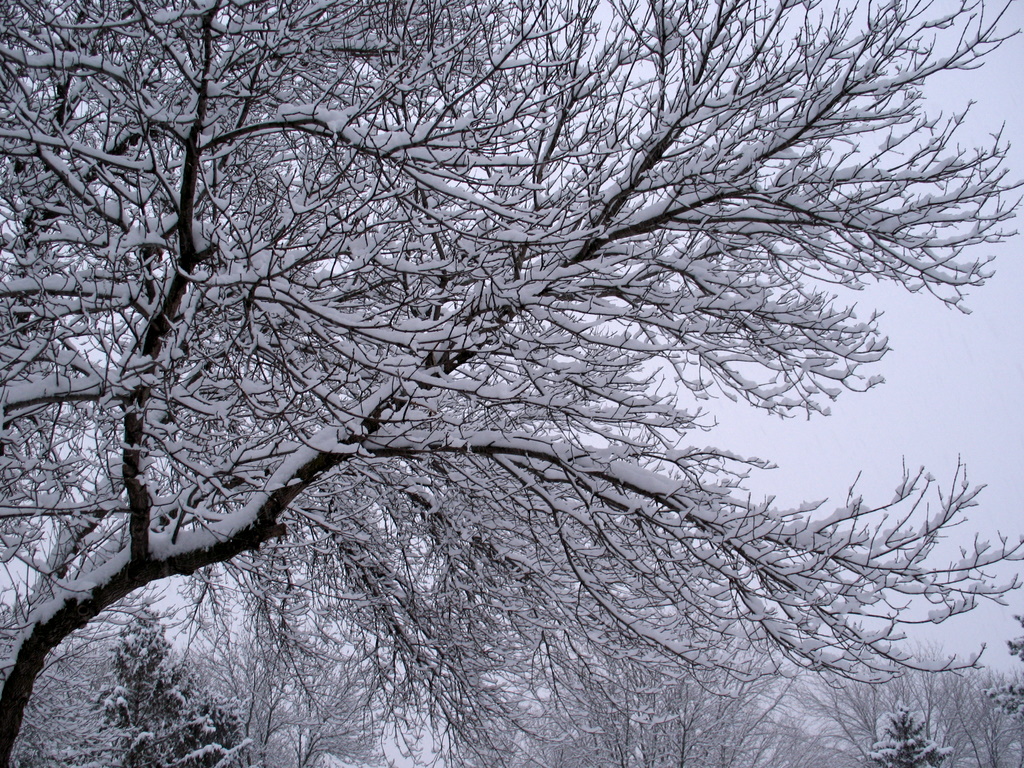
For background on this paragraph, check what I've added to the Down to the Wire Review at Books In Heat. You might also be interested in my post at 60's Now on Kumbaya: Then and Now, a version of which was a Rescued post at Kos on Sunday. Otherwise, enjoy the photo: of sugar maples, dying out in New England now due to climate change.

Friday, February 19, 2010

Emerson for the Day

"The stars awaken a certain reverence, because though always present, they are inaccessible."
Emerson ("Nature"). Photo: Andromeda galaxy, NASA, from first Wide-field Infrared Explorer images.

Hope v. Optimism

Just to clarify the difference between optimism and hope I tried to make in a post a few weeks ago, here's a similar distinction made by David Orr in Down to the Wire, which (by the way) I review at Books in Heat (double meaning where this book is concerned, I guess, given its topic.)

"Hope is a verb with its sleeves rolled up," Orr writes. "Hopeful people are actively engaged in defying the odds or changing the odds. Optimism, on the other hand, leans back, puts its feet up, and wears a confident look, knowing that the deck is stacked."

He quotes Vaclav Havel: "Hope is not prognostication. It is an orientation of the spirit, an orientation of the heart; it transcends the world that is immediately experienced, and is anchored somewhere beyond its horizons...Hope, in this deep and powerful sense, is not the same as joy that things are going well...but, rather, an ability to work for something because it is good."

“I know of no purely rational reason for anyone to be optimistic about the human future,” Orr writes. Indeed, given events since this book was written--the weak agreement of Copenhagen and subsequent international murk, the Obama administration's loss of momentum and the apparently fated showdown with the reactionary ultra-minority in collusion with the most monied interests--the outlook is even bleaker for a relatively painless and positive transition. There just isn't enough time anymore for this two steps forward, one and a half steps back. One positive is the work people are doing now, scientists and others, in developing knowledge and tools to be ready when people are ready to face this, which will likely be after a set of catastrophes that can't be ignored or rationalized. I'll be writing about that work here.

Those folks are doing the work of hope, at least according to my perhaps even more restrictive definition. I see hope as a commitment of the present, that works towards an envisioned good future, but has no expectations of the outcome of those efforts. I admire those who have faith in the future, who have that kind of vision. And I see reasons for that faith, in the human potential. I don't necessarily have it. Imagination has to be in some way its own future, just as imagining and working for a human future must be its own reward.

I've postponed this post, partly because I like seeing that photo of the snow leopard at the top of the blog, looking out. The best substitute I could come up with is the slightly smaller version, which for now I'm posting in a permanent position, top left. It's not quite as good--something missing from the eyes and the expression in the smaller version. So maybe I'll have to repost the original from time to time.

Monday, February 15, 2010


New DNA tests suggest that tigers evolved as a sister species to snow leopards (top photo), and are a far older species that previously believed. This comes at a time when both species are very close to extinction. The largest subspecies of tiger may already be fated for extinction. But these heart-breaking extinctions only suggest the much larger problem. We're losing thousands of species every year. The 2005 Millennium Ecosystem Assessment says that nearly two-thirds of the "services provided by nature to humankind" are in decline worldwide. The planet we know and that has always supported us is dying, and humanity is both largely the cause and the only species capable of addressing this crisis, if indeed that's still even possible. One likely reason we aren't addressing it is suggested in the post below.

The Evolution of Ignorance: Television

"Even though the mass extinction of species and the wholesale decline of ecosystems have yet to trump contemporary fixations on the economy, politics, peak oil, terrorism, and entertainment, biodepletion will undoubtedly be judged, in retrospect and not soon enough, as the most momentous, far-reaching event of our time."--Eileen Crist & H. Bruce Rinker, "One Grand Organic Whole" in Gaia in Turmoil (MIT Press.)

You would reasonably expect that if there is substantial evidence that an intelligent species is systematically destroying what supports its existence, that species would focus on the issues involved. You might even consider such a focus to be a reasonable definition of an intelligent species.

You might reasonably expect that such a danger would be the main topic of inquiry and debate. Our species has in place the communications media to involve pretty much the entire planet in such an urgent and thorough discussion of the mortal danger to the biosphere, including the ominous threat of the Climate Crisis. But we're not using it for any such intelligent purpose.

We don't even use it for serious exploration of issues of the economy, terrorism and the rest of that list. We do use it to display some of our species other great qualities--wit, imagination, music, physical achievement in sports. But then there's the degradation on parade called reality TV. And the money-making games called politics.

What we don't have--or have enough of-- is what got us here. We developed as an intelligent species by looking ahead, at future dangers and opportunities. But our greatest means of communicating fails entirely to focus on the greatest dangers we have ever faced.

The pioneers of television stressed its vast potential for education. Even as commercial interests took it in other directions, the educational mission held on, undernourished until it starved to death.

What did it in was a numbness to consciousness, to the ability of the medium to involve and expand consciousness. That hasn't died completely--you see it in programs that still inspire awe, both fact-based and imaginative. But it's been largely numbed, and overwhelmed by the purposeful evolution of ignorance.

In 1957 Vance Packard published The Hidden Persuaders. It exposed techniques being used and developed for advertising, especially television commercials. Shocking in its time, it's a modest description of normal television today. But among the essential elements of these persuaders is that they remain hidden. They operate by direct appeal to the unconscious.

Today's commercials are layered with irony, yet the same appeals are made in basically the same ways. American men will do anything for beer. Etc. While we may laugh at the stereotypes, we basically identify with them, and assume everyone else basically does, too, because that's what we're supposed to be, and what we're supposed to care about.

The commercials define us. They define what we are and what we aren't, and what we expect. The programs permitted on television are those that support the appeals and the stereotypes created in the commercials.

Crucial to their successful operation in getting us to buy their crap is that they keep us ignorant, and happy to be ignorant. And so we are. And it is the very crap we buy that largely is destroying our future. As a society we have not yet been overwhelmed by a new Dark Ages. But television pretty much has. It is a mirror held up to our decadence and willful ignorance. But we've been persuaded that it's all ok.

The Dreaming Up Daily Quote

"Every man lives in two realms, the internal and the external. The internal is that realm of spiritual ends expressed in art, literature, morals, and religion. The external is that complex of devices, techniques, mechanisms, and instrumentalities by means of which we live. Our problem today is that we have allowed the internal to become lost in the external. We have allowed the means by which we live to outdistance the ends for which we live.

This is the serious predicament, the deep and haunting problem confronting modern man. If we are to survive today, our moral and spiritual "lag" must be eliminated. Enlarged material powers spell enlarged peril if there is not proportionate growth of the soul. When the "without" of man's nature subjugates the "within", dark storm clouds begin to form in the world."
--Dr. Martin Luther King, Jr.
Nobel Prize Lecture

Sunday, February 14, 2010

Messages of the Snow, part 2

One more snowbound Washington photo--a great one that accompanies an LA Times story. It appears to be the Supreme Court building, lost in the clouds, which perhaps is where they found their decision on corporations as individual citizens. The story under this photo is another on the relationship of the snowstorms to the Climate Crisis debate. In a terse Q & A format, it also debunks the Deniers, emphasizing the scientists saying that snow is in some ways a symptom of relative warmth--those of us who grew up knowing that it often was 'too cold to snow' also know this kind of clinging snow is evidence of warmer temps. In fact, the average temp in DC in January was about a degree warmer than normal for the past 40 years.
This part did surprise me: Q. How will the snow affect the politics of the climate bill? A. Probably not much, because proponents are pitching the bill as a boost to national security and a creator of clean-energy jobs, as opposed to a curb on global warming. The swing voters who will dictate the bill's fate are senators who more or less say they accept the science behind climate change.
Update: stats showing more snow in warmer winters.

Thursday, February 11, 2010

Messages of the Snow


Beauty and majesty, the harmony and humanity of shelter and warmth in the cold, as well as inconveniencing a badly organized civilization, the snow has many messages. But for some of the wrong ones, see post below.

The Bare Minimum

There are aspects of the Climate Crisis that are intellectually, emotionally and psychologically challenging. But even to get to the more complex aspects just of the facts of what's happening requires understanding and accepting apparent divergences or even apparent paradoxes that aren't all that new.

But in the public discourse, we're failing even at that.

At the moment--which in some ways is the worst possible time--Climate Crisis skepticism appears to be growing, based on two bits of demagoguery that seems to be accepted at face value. The first has to do with errors in some data and conclusions by climate scientists, and several purloined emails among climate scientists that suggest attempts to push a conclusion.

It's not an unprecedented trick to use one error or deception to call into question unrelated data and an overall conclusion that these errors or deceptions don't really affect. But in this case, we seem all too ready to fall for it.
One of many articles about this--this one in the New York Times-- say basically what all the sane ones do: while they do their "on the one hand this and on the other hand that" reporting of the charges and counter charges, they conclude that, regarding the 2007 UN report quantifying the reality and danger of the Climate Crisis, "The general consensus among mainstream scientists is that the errors are in any case minor and do not undermine the report’s conclusions."

The more recent and in some ways more depressing assertion is that the big snows in the Eastern U.S. prove that Earth is not warming, and the Climate Crisis is phony. Again, the Times states what has been repeated over and over again before: particular weather events aren't evidence for or against climate change, except that "Most climate scientists respond that the ferocious storms are consistent with forecasts that a heating planet will produce more frequent and more intense weather events." In fact, the most authoritative federal report on climate last year predicted more frequent and larger snowstorms in the northeastern U.S.

It's the kind of paradox that's funny in an uncomfortable way, but to take it as serious evidence that the planet isn't heating, is just willful ignorance. It doesn't require a major step in thinking. Not compared to the steps involving lag times, feedback loops, tipping points, etc. We don't have to understand the intricacies of ocean temperatures and air currents that result in more snow in one spot when the Earth gets hotter. We just have to understand that it happens, and that it isn't nonsense.

There is even a possibility--still a live one--that greenhouse gas heating will cause a climate jolt--called rapid climate change--that could shift ocean currents to bring a sudden Ice Age to parts of the globe. This more robust paradox was not thought too complicated for moviegoers to understand, as it was the premise of so far the only Climate Crisis disaster film, The Day After Tomorrow.

If people can't think their way through these bare minimum steps, we're going to end up destroying the planet we know and that some of us love. But it's probably not so much a problem in understanding as in acceptance. We're still stuck in the first stage of grief for our dying world: denial.

And by concentrating on this fluff, we're ignoring several realities, one of which is also staring us in the face: we're apparently not prepared to cope with these kinds of crises. The snow has paralyzed the East, Native Americans are freezing in the West, homes are being swept away by mudslides in southern CA, and then there's Haiti, where torrential rains are coming, on top of the struggle to cope with the earthquakes' effects. All this is apart from the largely unreported consequences on peoples' lives as well as the landscape, all over the world, due directly to global heating.

And speaking of Climate Crisis fictions, in the first volume of Kim Stanley Robinson's trilogy on the subject, the U.S. government begins to take the Climate Crisis very seriously after Washington is flooded. So it is a tragedy of the absurd that the actual flooding of Washington comes in the form of snow, and we're not smart enough to see the connection, or sane enough to admit it.

Wednesday, February 10, 2010

The Dreaming Up Daily Quote


"Dear friends, the swarthy earth shoulders into the stars here.
The slopes are possessed of many trees.
The gracious sun visits daily the open parks,
and a chaperone mountain serves all the canyon west.
Deer timid through shadows. Birds fly across from cliffs.
Mostly silence rises and moves up the slopes
past enchanted white spikes of yucca.
This is the land we are exiled to from a world fighting.
We look at each other and sing all the songs we have heard."
William Stafford

Connections

I still scan Daily Kos, though it seems to have become a kind of political social networking site, and the Kos Borg seem way younger and not often that interesting, when they aren't maddening. But there's usually something that catches my eye, and the place in general does redeem itself every once in awhile.

Like this week, when it seems to be the most prominent place on the web that is consistently following the hardships on Native American reservations, especially in South Dakota, where the very bad winter has hit very hard. With the single-disaster media attention split between Haiti and Snowmageddon in the eastern U.S., nobody is noticing the emergency needs of people within our borders who are living close to the edge anyway.

But at Kos, there's been a recommended diary every day, with lots of information on how individuals can help. The latest one has a little more--in fact, it's less about the poorest and now coldest places in the country--in South Dakota--than one of the wealthiest, in northern Virginia.

Yet this diary weaves a story with multiple connections. It tells us just enough about a few people to imagine them beyond what their job descriptions or ethnicity would suggest. And there's kindness, a sense of rightness and justice, even a kind of heroism, along with unexpected connections.

This story resonates with me for another reason. When things get tough--as they do in temporary emergencies like these snowstorms, or the mudslides in southern CA or the hard cold in the Dakotas, or earthquakes wherever they happen--and as they will in the coming Long Emergency of the near future, brought on by the Climate Cataclysm--these are the kind of connections we will all depend on.

We will depend on kindness, compassion, empathy. On cooperation and spontaneous organization--I've heard more than one story about neighbors getting together to dig themselves out of the snow.

We will depend on making alliances with former strangers. We will depend on people who know how to do things and have the tools to do them, and who see the need for their service and respond. On being willing to use our skills and strengths to help those who need them. And we will depend on the fuel of gratitude.

The people in this story not only made a connection, they discovered an existing one. Six degrees of separation will come in handy, too, once we discover what it means when we need a service, or need to provide one.

Tuesday, February 09, 2010

Beyond the Radar

Some of the news comes in under the radar, and some of it is just apparently beyond it.

Washington is choked with snow, so if anyone noticed, it was apt to be rueful, but the Obama administration put another piece in place for the future. They announced Monday the creation of a new federal agency focused on gathering, studying and communicating information on climate.

Portions of the Weather Service that have been studying climate, as well as offices from some other NOAA agencies, will be transferred to the new NOAA Climate Service.

The new agency will initially be led by Thomas Karl, director of the current National Climatic Data Center. The Climate Service will be headquartered in Washington and will have six regional directors across the country.

Lubchenco [Jane Lubchenco, head of the National Oceanic and Atmospheric Administration] also announced a new NOAA climate portal on the Internet to collect a vast array of climatic data from NOAA and other sources. It will be "one-stop shopping into a world of climate information," she said.

This is the latest of relatively quiet recent steps to focus federal science on the largest problem for the future. Another was the subtle re-purposing of NASA, which will be doing more to study Earth and its systems from space.

Sunday, February 07, 2010

Who Dat!

Congratulations to the New Orleans Saints for the team's first Super Bowl victory ever, and to the courageous city of New Orleans. It was a great game, the Who rocked at halftime, the commercials were appalling. (More, eventually at American Dash.)

Snowmageddon!

The view from space of yesterday's epic snowstorm in the eastern U.S.

Saturday, February 06, 2010

Silence in the Snowy Field


"His place, as he sat and as he thought, was not
In anything that he constructed, so frail,
So barely lit, so shadowed over and naught
As, for example, a world in which, like snow,
He became an inhabitant, obedient
To gallant notions on the part of cold."
--Wallace Stevens
Cheers to all our family and friends in the Middle Atlantic and East Coast states where the snow is falling. And piling up. And so on. While all we get here is rain and earthquakes. Seriously, appreciate it while you can, as our planet does.
The top photo is from the Twin Cities--somewhere near them in Minnesota I recall standing in a field reading Robert Bly out loud to a laughing dark-haired girl, a long time ago. The bottom photo is mine, also from long ago, of snow in the yard in western PA where I played as a boy.
...For the similarly deprived out here on the West Coast, a neat bunch of snowy scenes.
Update 2/6: Wooah! Snowmageddon! I didn't mean to be insensitive to problems created by monster snowstorms in the East. Maybe I posted in haste, before the fact. Still, I'll bet it's possible in some places at least to appreciate and maybe even enjoy a nice big snowfall ?

Friday, February 05, 2010

The Dreaming Up Daily Quote

"There is only one way to strive for decency, reason, responsibility, sincerity, civility and tolerance, and that is decently, reasonably, responsibly, sincerely, civilly, and tolerantly."
Vaclav Havel

Thursday, February 04, 2010

Obama, Optimism and Dreaming Up Daily

Close readers may wonder at my mood swings. One day I'm muttering darkly about impending doom, the next I'm quoting President Obama at length about his policies to make things better, and then quoting Howard Zinn on being hopeful. So what gives? What's the secret of my schizzy point(s) of view?

It's not really contradictory, but it may be complex. I admire President Obama for what he's accomplished and what he's trying to accomplish, and I approve of his message. He's a better President and U.S. leader than I thought we'd see again in my lifetime, and I have confidence in him (unfortunately, pretty much only him) to do what it is possible to do, given the current realities of politics and the rest of it.

The difference is this: President Obama professes to be optimistic about the American future. That is, he's optimistic that we can transition into a better future with relatively little pain or disruption. I am not. He's trying to do many things that need to be done, and he'll get done what it is possible to get done. But I don't believe that what really needs to get done to insure the future is realistically possible.

The toxic political culture is not going to permit the kind of change that's necessary. The Republican party is more extreme than ever, its membership is totally of the Rabid Right, for whom the Dark Ages of Ignorance constitutes the promised land. If you have any doubts about that, just glance at the results of the Research 2000 poll. This probably does mean that the Republican Party is shrinking in numbers, but it is still supported by powerful corporations pushing an anti-future agenda. Some of those corporations own information media. And since there are only five major media companies left, that power to control the conversation is considerable.

Meanwhile, electoral politics depends on the growing number of Independents. Independent is a fine sounding name, but it seems to me most Independents are basically politically unsophisticated, easily swayed and manipulated--especially by fear. They go for slogans and new faces. They're not the kind of voters you want to depend on.

We need to do some big things to save the future. But we can't even get a health care bill that has been compromised half to death, and against which there is not a single sound argument, and certainly not a humane one. Instead our political dialogue is frighteningly primitive.

The Obama administration can't even get the media, let alone the people, to acknowledge its considerable accomplishments--even in Congress, and especially in the federal government. But those accomplishments are mostly attempts to repair the damage of 8 disastrous Bush years. Just as Clinton had to struggle for 8 years to repair the damage wreaked by 12 years of right wing GOPer rule. At best, we're getting nowhere.

President Obama is nudging the country to accept the idea that clean energy is America's economic future, that this is America's chance to lead the world again. That's the broadest political argument that it is possible to make, absent the acceptance that clean energy is the only future for civilization. Yet he's getting plenty of resistance on this. Meanwhile, China is already cleaning our clock.

Not that it matters all that much. Because these beginning efforts, while essential, are not going to ease us into a better future.

It's the same with the efforts to halt Climate Crisis feeding pollution. It looks as if the U.S. is not going to adopt carbon cap and trade, nor a carbon tax, and so these efforts will be even weaker. President Obama will do what he can, but the fossil fuel industries still have their grip on the throat of the future. This is just the latest testament to their decades of obstruction and lies. Probably all you need to know is that the Saudi royal family is the second biggest investor in News Corps, the ultra-conservative media conglomerate and owner of Fox News. A foreign power with a vested interest in keeping the U.S. dependent on oil is bankrolling the loudest voices opposing any sensible response to the Climate Crisis, which would involve ending dependence on oil.

But even that may not matter in terms of the character of the future. Despite the noise over some insignificant errors, and the built-in uncertainty of details, the larger conclusions of the Climate Crisis are so solid the Pentagon is planning for them. The change I detect is the growing concern is that it's too late to stop the Climate Crisis from having significant consequences--so significant and for such a long time, that the second half of this century will look nothing like now, and that will just be the beginning.

I'm reading David Orr's new book, and it looks to be the beginning of a new consensus. The effects so far (mostly running way ahead of predictions) suggest that the effects of the greenhouse gas pollution of the past 70 years will be devastating. The subtitle of Orr's book is "Confronting Climate Collapse." The subtitle of Bill McKibben's forthcoming book this spring is "Making A Life on a Tough New Planet."

Scientists and others began talking about the potential for devastating global heating in the 60s. Arthur C. Clarke told Arthur Miller back then that it threatened the future. We've known enough about climate change to do something about it since the 70s, and scientists put together proposals for President Carter, but nothing was done. We could have acted then, or even in the 80s, and maybe avoided what's going to happen. Maybe even in the 90s, when Al Gore was vice president. Maybe even if the 2000 election hadn't been stolen. But it didn't happen, and now it's probably too late to prevent a civilization-straining change in the climate that will make the planet we know only a memory.

It's still important to cut back climate deforming pollution, to prevent even worse consequences further in the future. But it looks increasingly to me that the smartest people are looking beyond the present, to figure out how to deal with the very great changes coming in the future.

I expect my own attention to be moving in that direction as well. But that's a matter of emphasis, because that's always been a concern of this site--its premise in fact. It is about "dreaming up"--that is, "dreaming up" ideas, using the imagination--to counter the "downward bound" movement of events.

Part of that "dreaming up" is the activity of hope, an act first of all of the imagination, and Zinn's words are particularly appropriate. In a way, I'm going through the stages of mourning for our civilization, and I guess I've passed denial. So I am not optimistic. But I choose hope. I don't believe a future smoothly continuous with the present is going to happen. So the task now is to evaluate and create what will help the future the most, and work that hope now. It becomes the meaning of the present.

Wednesday, February 03, 2010

Emerson for the Day

"This ethical character so penetrates the bone and marrow of nature, as to seem the end for which it was made. Whatever private purpose is answered by any member or part, this is its public and universal function, and is never omitted."
Emerson
"Nature"

Tuesday, February 02, 2010

Happy Birth/Groundhog/Day

"I hear the ruin of all space, shattered glass and toppling masonry, and time one livid final flame. What's left us then?" So wrote James Joyce, who crawled out of the cafe, saw the shadow cast by his birthday candles, and crawled back in, predicting six more weeks of winter. At least.

Monday, February 01, 2010

The Dreaming Up Daily Quote

"Our future shouldn't be shaped by what's best for our politics; our politics should be shaped by what's best for our future."
President Barack Obama
January 29, 2010

Sunday, January 31, 2010

The Obama Drama

And I thought politics was never going to be fun again.

It sure was on Friday, when President Barack Obama schooled the Republican congressional caucus for 90 minutes on live TV. "President Obama dove headfirst into the belly of the GOP beast Friday - and left the not-so-loyal opposition bleeding on a Baltimore ballroom floor," said the usually conservative New York Daily News. "He skewered Republicans for obstructionist tactics, dubious facts and a lack of civility in opposing his domestic agenda, especially health care reform."

Obama Eats Republicans Lunch," said the Guardian. "When the Republicans invited President Obama to address their congressional House delegation in Baltimore today, they had no idea how badly it would turn out for them. Presumably the Republicans thought they'd get a high-profile chance to grill the president on live television. But instead, Obama – following on from his state of the union address on Wednesday night – turned the tables by highlighting the Republicans who opposed his policies and refused to bend, yet were prepared to "turn up and cut ribbons" when their constituents reaped the rewards."

"For President Obama to be allowed 90 minutes of national television coverage speaking at the GOP retreat was historic. It was probably one of the dumbest ideas the Republican leadership has ever had," suggested an Aussie site.

(Video is here. A transcript is here.)

The Republicans really did ask for it. Maybe they got especially overconfident when President Obama was a little halting in his prepared opening remarks. So they "asked questions" by reciting their usual public lies. President Obama simply refuted them with the facts--and then explained why their lies were so harmful, for the country and even for them. He did so fluidly and effectively.

He didn't let them get away with condemning proposals that included some of their own ideas, or in characterizing those proposals as "Bolshevik plots." He deployed humor, admitted mistakes and faulted Democrats for also going to extremes simply for political advantage, leaving little room for the kind of compromises necessary to govern.

He also came as close to anger as we've seen him--close enough when his final questioner was speechifying that you know you wouldn't want him really mad at you. Above all, he was direct. "I've just got to take this last question as an example of how it's very hard to have the kind of bipartisan work that we're going to do, because the whole question was structured as a talking point for running a campaign." He corrected the GOPer distortion on the federal budget and said plainly, "that's factually just not true, and you know it's not true."

If it wasn't clear before, we have a President of clear intelligence and vision, and formidable political skills. Above all he demonstrated that when the test is fact, his policies have been appropriate attempts to deal with the facts, and usually successful attempts.

Democrats were ecstatic--even comparing Obama to the greatest of them all, President Bartlet. Some wondered where this guy has been. Well, maybe he should have engaged like this before. But people forget that the President cannot suspend the laws of time and space. He has the same number of hours in the day as everyone else, to pay attention to much more than anyone else.

But Democrats need to heed his message as well. Although the President must lead and fight this way for what needs to be done, his message was that no one party is going to tackle the toughest problems, because they are too politically dangerous. Governing is a give and take involving everyone. Especially long-term. The stakes are in that quote, from his opening statement: "Our future shouldn't be shaped by what's best for our politics; our politics should be shaped by what's best for our future."

Friday, January 29, 2010

R.I.P J.D. Salinger


J.D. Salinger's death was announced on Thursday. I remember him here. This top cover of The Catcher in the Rye is the famous blank one J.D. Salinger insisted on, and of the edition I first read. Salinger didn't want an illustration to interfere with how the reader imagined Holden Caulfied, and he was right. When I first saw the cover on an earlier edition (bottom photo) that my friend Mike brought on a high school debate trip, I was shocked. That wasn't my Holden. Now I have paperbacks with both of these covers. Salon has a slide show of its many other covers--though I haven't been able to get it to work myself, here's the link.

Thursday, January 28, 2010

The Dreaming Up Daily Quote

"To be hopeful in bad times is not just foolishly romantic. It is based on the fact that human history is a history not only of cruelty, but also of compassion, sacrifice, courage, kindness.

What we choose to emphasize in this complex history will determine our lives. If we see only the worst, it destroys our capacity to do something. If we remember those times and places—and there are so many—where people have behaved magnificently, this gives us the energy to act, and at least the possibility of sending this spinning top of a world in a different direction.

And if we do act, in however small a way, we don't have to wait for some grand utopian future. The future is an infinite succession of presents, and to live now as we think human beings should live, in defiance of all that is bad around us, is itself a marvelous victory."
Howard Zinn
from his book, You Can't Be Neutral On A Moving Train. Historian Howard Zinn's death was announced today.

I Don't Quit

President Obama's State of the Union address was masterful, personal, politically astute, beautifully reasoned and perhaps most striking--100% Obama, the same as he was as a candidate, talking now about the first year of his presidency, and his goal's for the year ahead. While I didn't agree with all his proposals, he gave no ground on the most important issues of the past year and the year ahead, and he inspires confidence as our President. He called for action on health care reform, and said he won't abandon it. He called out the Supremely Political Court for its decision opening wider the floodgates of corporate money in elections. He emphasized that jobs will be the top priority this year.
In general, I agree with Joe Klein's reaction. Check out E.J. Dionne's column as well. The media response seems to have been very positive, and in the first CBS poll, 83% approved of his proposals. A few highlights (the text as delivered is here):
"And if there's one thing that has unified Democrats and Republicans, and everybody in between, it's that we all hated the bank bailout. I hated it -- (applause.) I hated it. You hated it. It was about as popular as a root canal. (Laughter.) But when I ran for President, I promised I wouldn't just do what was popular -– I would do what was necessary. And if we had allowed the meltdown of the financial system, unemployment might be double what it is today."
"As a result, the markets are now stabilized, and we have recovered most of the money we spent on the banks. To recover the rest, I have proposed a fee on the biggest banks. I know Wall Street isn’t keen on this idea, but if these firms can afford to hand out big bonuses again, they can afford a modest fee to pay back the taxpayers who rescued them in their time of need."
"From the day I took office, I have been told that addressing our larger challenges is too ambitious – that such efforts would be too contentious, that our political system is too gridlocked, and that we should just put things on hold for awhile. For those who make these claims, I have one simple question:
How long should we wait? How long should America put its future on hold?
You see, Washington has been telling us to wait for decades, even as the problems have grown worse. Meanwhile, China’s not waiting to revamp its economy. Germany’s not waiting. India’s not waiting. These nations aren’t standing still. These nations aren’t playing for second place. They’re putting more emphasis on math and science. They’re rebuilding their infrastructure. They are making serious investments in clean energy because they want those jobs. Well I do not accept second-place for the United States of America."
"...I know that there are those who disagree with the overwhelming scientific evidence on climate change. But even if you doubt the evidence, providing incentives for energy efficiency and clean energy are the right thing to do for our future – because the nation that leads the clean energy economy will be the nation that leads the global economy. And America must be that nation."
"From some on the right, I expect we’ll hear a different argument – that if we just make fewer investments in our people, extend tax cuts for wealthier Americans, eliminate more regulations, and maintain the status quo on health care, our deficits will go away. The problem is, that’s what we did for eight years. That’s what helped lead us into this crisis. It’s what helped lead to these deficits. And we cannot do it again."
"But what frustrates the American people is a Washington where every day is Election Day. We cannot wage a perpetual campaign where the only goal is to see who can get the most embarrassing headlines about their opponent – a belief that if you lose, I win. Neither party should delay or obstruct every single bill just because they can. The confirmation of well-qualified public servants should not be held hostage to the pet projects or grudges of a few individual Senators. Washington may think that saying anything about the other side, no matter how false, is just part of the game. But it is precisely such politics that has stopped either party from helping the American people. Worse yet, it is sowing further division among our citizens and further distrust in our government.

So no, I will not give up on changing the tone of our politics. I know it’s an election year. And after last week, it is clear that campaign fever has come even earlier than usual. But we still need to govern. To Democrats, I would remind you that we still have the largest majority in decades, and the people expect us to solve some problems, not run for the hills. And if the Republican leadership is going to insist that sixty votes in the Senate are required to do any business at all in this town, then the responsibility to govern is now yours as well. Just saying no to everything may be good short-term politics, but it’s not leadership. We were sent here to serve our citizens, not our ambitions."
"We have finished a difficult year. We have come through a difficult decade. But a new year has come. A new decade stretches before us. We don’t quit. I don’t quit."

Wednesday, January 27, 2010

The Dreaming Up Daily Quote


"We can have democracy in this country, or we can have great wealth concentrated in the hands of a few, but we can't have both."
--Justice Louis Brandeis

Tuesday, January 26, 2010

Emerson for the Day

"But genius looks forward: the eyes of man are set in his forehead, not in his hindhead: man hopes, genius creates."
Emerson
"The American Scholar"
P.S. Click on the photo to really see it.

If We're Doomed, This Is Why

It's essentially all here, in one blog entry, by Joseph Romm at Climate Progress, originally posted on January 4 and still the site's most popular post. In the post, and in the comments. But before I get to that...

In the end, nobody beats evolution. You adapt to environmental changes, or you go extinct, or at least lose your character and status and start slipping back to something lesser in the long biological journey. What humanity has going for it is intelligence. But that intelligence has resulted in huge changes to the environment that demand even greater intelligence to deal with. In that sense, humanity has to take control of its own evolution. It has to change the game by changing itself, and then consciously changing the environment it has unconsciously disrupted to the point of collapse.

When Darwin first proposed evolution by natural selection, people like T. H. Huxley understood that humanity had to change the game first of all by changing its behavior based on an ethical evolution. Humans, like other animals, had the capacity for cooperation, compassion or empathy, and altruism, but humanity had to make a choice to give them prominence, and appropriate voice in its behavior. Or else it would destroy itself and its environment, thanks to its powerful but mindless and soulless technology.

Then people like H.G. Wells realized that human evolution had to speed itself up in the intelligence it applied to understanding the threats of the social environment. He saw for example that if nations continued to fight each other using technologies developed from scientific knowledge, they would destroy each other and civilization itself. The rational thing, the intelligent thing, would be to cooperate as a species. Later, ecologists showed how the intelligent thing to do is understand and foster the ecological balances that support our life. Humanity has to apply its intelligence to its place in the world, and its impacts on that world.

Though Wells died in despair months after atom bombs were dropped on Japan, the world has so far avoided blowing itself up. But in terms of just intelligence, you don't have to be too much smarter than a human child to see the rationality of what he ranted about all his life.

What takes a more sophisticated intelligence is dealing with a problem that is going to cause catastrophe--and quite probably, civilization-ending catastrophe--in the future, by unfamiliar means. So far we seem to be up to the challenge of gathering the knowledge necessary to know what's happening to the climate and why with enough precision and enough likelihood to rationally merit action to prevent the worst of it. But then the challenge is (or perhaps was) to get enough people to understand and accept this information, so that our democratic/bureaucratic societies will work together--coordinating as a single civilization--to develop and take those actions.

The challenges involved are multiple. But they represent the next steps in our evolution as a species, which turn out now to be necessary for our survival in the foreseeable future. These steps in intelligence and its application aren't beyond the physical capacities of our brains. Plenty of people have already taken them. Now they are steps in social evolution, involving changes in individual consciousness and, for want of a better word, psyches.

This is perhaps my usual all-too-wordy preface to the nub: this post and the responses. To confront this crisis of crises, the Climate Crisis, we as a species, as a civilization, must confront the evidence and what it means. That's mostly what the post itself is about. It lays it out, with all the links you could possibly want. The basic conclusions are up front: "Many of the predicted impacts of human-caused climate change are occurring much faster than anybody expected... If we stay anywhere near our current emissions path, we are facing incalculable catastrophes by century’s end." And beyond that, the end of life on earth as we know it, the end of civilization and for all intents and purposes, the extinction of humanity as we know it.

You've heard it all here before, but if we're doomed this is one reason why: we can't absorb and evaluate this information. Conceptually, we haven't evolved our thinking to cope with the reality of phenomena like feedback loops, lag times and tipping points. These relatively simple concepts concerning the behavior of complex systems are far too nuanced for anything in our politics but self-satisfied moronic ridicule.

Emotionally, we haven't evolved our feeling or consciousness to apply ethics--as well as compassion, empathy and altruism-- to all of humanity and the planet. If we did that, we would allow ourselves to see that the tremendous weight of this evidence is great enough to justify action, even if these predictions somehow turn out to be wrong. Why do we fear the miniscule chance of being the victim of terrorism, and ignore the much greater chance of huge catastrophe? Selfish genes, I guess.

Psychologically, we can't handle the truth. We go into denial, or we flop around in despair. We don't apply consciousness to at least considering that this is denial, a trick of the psyche--at best, an inappropriate survival mechanism in these circumstances. Instead, billionaires and wannabe millionaires encourage and exploit denial to extend their selfish brutal power and enrich their stupid short lives.

The evidence for all of this is everywhere, including in the comments to this post. One finds that an estimate of those who understand and accept the outlines of the coming catastrophes at 2% is too generous:

"Even my very over educated friends are mostly out-to-lunch on this and while not “deniers” they are in major league denial about the whole thing….it’s like they just can’t believe it’s THAT bad."

But the most cogent comment is from scientist Tom Kimmerer:

"As the bad scientific news keeps piling up, we need to face the reality of weather: we have had an exceptionally cold year in North America, and are in the deep freeze right now. People don’t understand climate, but they do understand weather. I suspect that if we were coming off a really hot year, all the climate denial in the world would not move public opinion. Jim Hansen once said that we will take global warming seriously when the man on the street notices. Right now, the man on the street is freezing his butt off.

As a scientist, I fully accept that global warming is real, serious and a grave threat..but if there is no local (i.e. weather) experience to back that up, it is psychologically difficult for people to take the threat seriously...If 2010 is hot in the US, we are likely to get a climate bill. If the cool spell that began this summer continues, we won’t."

Look, I appreciate the emotional impact of such experiences of the senses as a really hot summer. The memory of a few of those from the late 80s and early 90s is still with me. But are we such captives of experience of the moment that we need it all the time? I mean, we will get it--more killer heat waves, storms, droughts, tropical diseases moving ever northward, flooding--and in relentless combination. It's just that it will be too late to do much about it then. And that's the point: the test of our intelligence is to anticipate a future problem and prevent it.

"As a species," David Orr writes, "we are in our adolescence, and as common at that stage of life, we live dangerously." Gene Roddenberry used to say the same thing. Fair enough, but attitudes like the above--which I think Kimmerer correctly nails--seem more like the thinking of small children. As a species and as a civilization we have a lot of growing up to do, pretty much instantly. If we are up to that, we will have taken an evolutionary leap, and we might even fulfill the promise of our civilization and species, even after all that waste, cruelty and blood in our painful history. If we aren't up to that, we've flunked the evolutionary test.

We don't have to be perfect. We're still bristling egoes, swarming with hurt, haunted by dreams, bathing in self-deception. We just have to be adults about it all.

Not that the twenty people who will ever read this need to hear it. This cuts no ice with some people, I know, who have their own narrative of reality. Extinction, the end of civilization, is part of the plan. But if our kind of consciousness doesn't exist anywhere else, then it dies with us, disappearing from the universe. We view the end of civilization, and the extinction of humanity as we know it, a little more seriously.

Not that I'm likely to live to see it. For me, the tragedy is all this potential unfulfilled. To contemplate that is saddening. To see how it is being cut short in my own time just makes me angry.

Another ridiculously long post. Well, I never could blog.

Monday, January 25, 2010

Star Cycle

A new image from earth-based telescopes of the Cat's Paw Nebula, some 5500 light years away. The photo is notable (click on it--it's huge) because it seems to include stars being born, and stars dying. In the night sky, this nebula is about the size of a full moon.

The Grand Psychopathic Party (And the Media Who Love Them)

Now there's this predictable "analysis/advice" from Newsweek's Jon Meacham who advises that Obama be more like Reagan, because he "has grandly failed so far in doing what presidents must do, which is to lead the nation emotionally as well as rationally. It would be great if politics were fact-based, but it is not, and it is surely not nuance-based. What works in a classroom or a think tank does not work on Capitol Hill or in the White House."

Besides being repulsively patronizing, Meacham is spouting retread conventional wisdom that--with some decent point about communication within it--champions the simplistic and emotional over the complex and rational that happen to reflect reality.

So what does he have in mind? Something simple and emotional like this not untypically simple and emotional GOPer statement by Andre Bauer, current Lt. Governor and candidate for governor in the GOPer primary in South Carolina--a state with a high percentage of African Americans, and with more than half of all children in the free and reduced school lunch program? Because Bauer compared giving people government assistance to "feeding stray animals."

"My grandmother was not a highly educated woman, but she told me as a small child to quit feeding stray animals. You know why? Because they breed. You're facilitating the problem if you give an animal or a person ample food supply. They will reproduce, especially ones that don't think too much further than that. And so what you've got to do is you've got to curtail that type of behavior. They don't know any better," Bauer said.

The fact is that most simplistic and emotional appeals being made these days are by the Rabid Right, and they are overwhelmingly racist, ignorant and lies. Reagan's simple formulations and formulas had emotional appeal, because who can fail to be made happy by the idea that you don't have to pay taxes and you still get what you expect from the government? Or that the Contras in Nicaragua were "freedom fighters" instead of hired thugs? Or that we had to invade Iraq to prevent mushroom clouds over American cities? Or that "Obamacare"= death panels? This is the kind of crap that benefits politicians and ruins the country, impoverishes, maims and kills people, and kills the future.

It's not fun to watch Democrats soul-searching when they lose, or to open themselves to ridicule and lies by trying to communicate the nuances of policy that matches the nuances of reality. But if the choice is between that and deliberate simplistic emotionalistic lies justified by politics or by some warped version of faith, untrammeled fulminations from the dark unconscious masked as political dialogue, I'll stick with my soul and hope it sticks with me.

The charge that Obama doesn't relate policy to the emotional reality of people can be made only by people who don't cover his speeches. But the simplistic and emotionally charged stuff does make reporters' jobs easier, and certainly plays well in the media, where it fits in so well with simplistic, emotionally charged and often lying commercials. Maybe that's a big reason that politics isn't fact-based or nuance-based.

And we have to wonder just what emotions count in politics. President Obama utters the word "empathy" and the Rabid Right is up in arms, because apparently when you try to feel what others in different circumstances are feeling, this is not Christian anymore but socialistic. Yet there is a word for people without empathy: psychopaths. Is that the politics the media finds so sweet to empower?

Sunday, January 24, 2010

Weekend Update

There are people who get told to clean out their desk and be out of here by noon, but if you make six figures or so, you just get another layer of boss. So it shouldn't be surprising that nobody got fired for the Democratic party debacle in MA, but they all got a new boss: President Obama hired one of his campaign chiefs, David Plouffe, to oversee all the Dem campaigns in 2010.

The reporting of President Obama's comments at the Ohio Town Hall was puzzling, until I saw this extended excerpt of what he actually said. Then I felt better about what he said, and even more depressed by the quality of the reporting.

Speaking about health care, he said: " I didn't take this up to boost my poll numbers. You know the way to boost your poll numbers is not do anything. That's how you do it. You don't offend anybody. I'd have real high poll numbers. All of Washington would be saying, "What a genius!" (Laughter.)...So if I was trying to take the path of least resistance, I would have done something a lot easier. But I'm trying to solve the problems that folks here in Ohio and across this country face every day. And I'm not going to walk away just because it's hard. We are going to keep on working to get this done -- with Democrats, I hope with Republicans -- anybody who's willing to step up.

Because I'm not going to watch more people get crushed by costs or denied care they need by insurance company bureaucrats. I'm not going to have insurance companies click their heels and watch their stocks skyrocket because once again there's no control on what they do.

So long as I have some breath in me, so long as I have the privilege of serving as your President, I will not stop fighting for you."

The President also came down hard on the Supremely Political Court's decision in his Saturday media talk.