Wednesday, March 23, 2016

Where the Terror is

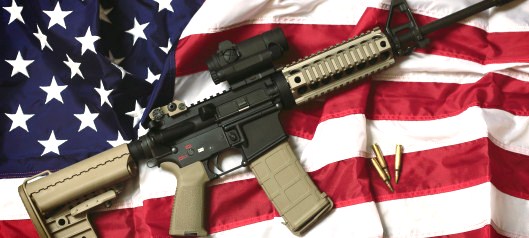
Another horrible terrorist attack in Europe, and another round of panic from American media and politicians.  Trump wants to seal the borders and resume torture, Cruz wants to occupy American "Muslim neighborhoods."  Nobody seems worried about American toddlers, who killed more people last year than terrorists did.

No--Trump can dribble uninformed nonsense about fighting terrorism (according to the pros), after unveiling his set of foreign policy experts that no actual foreign policy experts have ever heard of.

Meanwhile, as Jonathan Chiat explains, Cruz's remedies will create the conditions in the U.S. (where Muslims are mostly assimilated) that pertain in Europe (where Muslims are segregated) and give us the terrorist problems they have: "In Europe, ethnically homogenous Christian populations have been unable to assimilate immigrant populations, with disastrous results. The Republican Party now appears doctrinally bound to replicate that failure."

But what about those toddler terrorists?  How do we get weapons out of their dangerous hands?  Don't ask the National Rifle Association, and its frothing at the mouth opposition to any gun regulation.  It is too busy vetoing a Supreme Court nominee.  In this crazy atmosphere, that one seems to have largely gotten a pass, but it shouldn't: the Senate majority leader said on Sunday that a Justice to the Supreme Court can't be confirmed because the NRA opposes him.  Gee, I missed that part of the Constitution, where the Senate cedes its responsibility to advise and consent to a organization representing gun makers.

I am not terrorized by ISIS. They're evil and hateful, but I have more chance of being hit by lightning (and we had a hell of a lightning storm last night) or shot by a toddler than hit by a suicide bomber.  But these guys, these Republicans, they terrorize me.

I'm not alone. Donald Trump is the most unpopular presidential candidate since the former head of the Ku Klux Klan says the Fix headline in the Washington Post.  He is viewed unfavorably by two thirds of the American public, with more than half registering extreme disapproval.

A study of a North Carolina Senate race suggests the Republican incumbent loses 26 percentage points--and his seat--if he endorses Trump.  But it's not just Trump.  That Senate majority leader McConnell is viewed favorably by just 15%---in his home state.  Some 60% of Republican primary voters say they are embarrassed by their own candidates and their campaign.  Hillary is not winning any popularity contests, but an overwhelming proportion of Democrats would be happy with her as President.

Trump's weekend session with the Washington Post proved once again that he is ignorant and unequipped for any national office--nobody with his lack of qualifications (he makes Sarah Palin look like an expert) has gotten this close to the presidency in at least a century. Trump and Cruz are counting on panic over terrorism to deprive voters of their sanity.  Trump thinks it worked for him last time, after Paris.  We'll see if it works now.  A terrifying thought all right.

Thursday, March 17, 2016

Will Merrick Garland Be the Next Supreme Court Justice?


Update 3/21: With Illinois GOP Senator Kirk advising that the Senate should "man up" and not only hold hearings but vote on Garland, the Senate Majority Leader doubled down on his obstructionism on Sunday, stating categorically that Garland will not be confirmed, before or after the election.  It used to be that Senators at least pretended they were approving Supreme Court appointees solely on the basis of their judicial qualifications and not for partisan or ideological reasons.  But on Sunday the majority leader actually gave as his reason why Garland would never be a Justice that the National Rifle Association opposes him.


President Obama's appointment of Merrick Garland to fill the Supreme Court vacancy was greeted by the media as a solid, "sensible" and excellent choice, a judge who is more qualified than any in a generation and has had wide bipartisan support before, but an appointment that seems to have little or no chance of succeeding.

That's because the Senate Republican Majority Leader immediately announced there would be no hearings and no vote on this appointment in this Congress.  This is a continuation of what GOPer leadership has been saying since virtually the moment that Justice Scalia's death was announced.

The alternative, some speculated, might be that if a Democrat were elected President in November, and especially if Democrats became the Senate majority again, that a "lame duck" session of Congress (a name for the period between the election and inauguration of a new President) might conceivably vote to approve Garland, partly due to GOPer fear of Hillary appointing a more liberal (and younger) Justice.  However, most concluded, this was still unlikely, and Garland is an extremely well qualified sacrificial lamb.

But on "All Things Considered" Wednesday evening, veteran Supreme Court reporter Nina Totenburg--probably the most respected journalist covering the Court and certainly the one I consider most credible-- said at least twice that Republican leaders have by "back channels" assured the White House that if a Democrat is elected President in November, they will vote to confirm Garland in the lame duck session.

Nobody else I've seen has confirmed this story.  But if it's correct, and if the GOPer leadership is true to its word (and I tend to believe the former before the latter), then Merrick Garland is no "sacrificial lamb" but more probably the next new Justice of the Supreme Court.

Wednesday, March 16, 2016

Rain Reign

Those of you closely following the narrative of rain on the North Coast must be pining for an update, yes?  Considering how active, extreme--and actively tragic--the weather has been in other parts of the country and the world, this seems a bit self-indulgent but here goes.

The rains have stopped this week, and it's sunny and warmer.  But we did get considerable rain on the North Coast, though here in Arcata it really didn't feel like that much.  Maybe because a lot of it was at night.  It was often localized, though.  Eureka--less than 10 miles away--got rain on days we didn't (until Tuesday, Eureka got it every day in March except one.)  Southern Humboldt also seems to have gotten a lot more from the last couple of storms.

Still, our precip is officially at 6.85 inches for the month that's half over, and the average for all of March is 5.30.  And the news is better for the big reservoirs like Lake Shasta (reaching 79% of capacity) and Lake Oroville (70%,) both higher than this time of year for the past three years.  On March 6, Lake Oroville saw its biggest one day increase in 12 years.  Other reservoirs are also higher than normal, though not at capacity.

Also importantly for the summer, the Sierra snowpack grew, though it is only slightly above average for the date.  But in these drought years, that's very welcome.

Fateful Tuesday, the Day After

The day after Fateful Tuesday--which, most agree, was pretty fateful-- a number of media analysts had at the exit poll data.  The most interesting I saw was Alexander Burns in the New York Times.  His basic conclusion:

"Democrats and Republicans can now confidently predict which candidates will have the most delegates at their conventions in July: Donald J. Trump and Hillary Clinton each hold large and growing delegate leads. It would take an upset of staggering proportions for a rival to pull ahead of either one by the time the primaries end in June.

But the two front-runners are not on equal footing. Mrs. Clinton has assembled a formidable majority coalition within the Democratic Party that has resisted Senator Bernie Sanders’s appeals.

Mr. Trump has achieved something less than that. He has locked down a large plurality of voters on the right, but not enough to guarantee that he will win a majority of Republican convention delegates. And his position appears to be weakening."

Trump is winning, he writes, "but at a terrible price. The intensifying attacks on his personal character and business record, and the scenes of violence at his rallies, appear to be taking a toll, exit polls show. In no state did a majority of Republican primary voters say they believed he was honest and trustworthy. In every state that voted on Tuesday except for Florida, about two in five Republicans said they would consider voting for a third-party candidate over Mr. Trump and Mrs. Clinton in November."

While the numbers bear out Trump's popularity among working class white men, other figures suggest to Burns that "If Mr. Trump became the nominee, Republicans might risk a large-scale defection by upscale whites who voted willingly for Mitt Romney four years ago."

Hillary Clinton on the other hand has a clearer path to the nomination while Bernie Sanders has almost none.  But analysis by others points to the continuing trend in which Republican turnout is much higher and Democratic turnout much lower (although the big discrepancies in individual states tend to skew the averages.)  Ohio in particular had half the turnout of 2008, and so Clinton's support among unions and the Ohio Democratic party suggest reasons for her surprising margin of victory.

Clinton's sweep, by the way, is not yet official.  Apparently the Missouri vote has not yet been actually certified, and there are uncounted ballots that could change the outcome.  But the state is proportional, and the Sanders campaign said that even if they officially lose, it's unlikely that they would ask for a recount since it wouldn't matter much or even at all in number of delegates.  Update Thurs. p.m.: It's now official: Hillary won Missouri and it's a sweep of 5.

GOPer turmoil over Trump continues, but so does evidence that the party is reaping what it sowed, as New Yorker reporter Jane Mayer reminds us with a trip down Koch Brothers lane.

Tuesday, March 15, 2016

Deadblogging Fateful Tuesday: Hillary Sweeps, Trump All But Ohio

The winners of the night are Hillary Clinton and secondarily Donald Trump.

Hillary won three states, including the very important Ohio, and lost none in EDT prime time.  She gave a prime time speech which at least one commentator called one of her best.  Either she or Bernie Sanders will get bragging rights when Missouri and Illinois are decided, but they are both so close that each candidate is likely to receive about the same number of delegates from those states.  Which again is a win for Hillary, who is well ahead.

Donald Trump won Florida early, and so it was Goodbye Rubio Tuesday, who could hang a name on you-- when you changed with every new day, still they're gonna miss you. Now he can do what he may well be aching to do--cash in on his brand and get rich.

  But it looked like Trump might miss the rest of prime time until suddenly he was declared the winner in North Carolina and Illinois.  He made a short but rambling speech and reportedly looked tired.  He complained that his day on the golf course with other rich guys was ruined by overhearing ads against him.  Poor guy. Another reason for his working class devotees to get angry.

John Kasich won his home state of Ohio.  His victory speech began with being introduced as the next President of the United States and ended with confetti dropping from the ceiling.  So he got a taste of The Show that most politicians don't, worth all his time away from actually being governor while spending other people's money.  Remember this moment, John.  

Tail Gunner Ted made his usual softly vicious speech, and since he came in second in several states, will reap some delegates, with Missouri still undecided. If Cruz and/or Sanders win Missouri, it will be after the late news.  But that's when St. Louis reports, which is probably good for Hillary and Trump.

 Kasich winning winner-take-all Ohio is pretty good news for Trump, as it means that with Kasich staying in the race, Trump can keep winning in remaining states with 40% but under 50% of the votes cast.   But it's also bad news in that it makes it much more difficult for him to achieve a majority of delegates before the convention.  So it wasn't the best night for him.

Kasich's victory speech and Rubio's concession speech were both interrupted by a Trumpophyte.  Sign of things to come?

Clinton's largest margin of the night is Florida--where the majority of Dem voters were not white.  Bodes well for the general.  While most of the noise is about the working class white male vote, as it was at this point in 2008, it was not decisive in 2008 even in the general, and has declined proportionately since.

  However, if anything about this primary season can be seen as positive, it is the focus by Sanders and awkwardly but apparently with effect by Trump on the working class as victims of income inequality, allegedly from trade policies.  Maybe in the rest of the campaigns we'll get substantive on this.  You know, accidentally.

After midnight....(EDT time anyway) Bragging rights in Illinois go to Hillary. After midnight (everywhere): Margins in both races in Missouri are so thin that the loser can ask for a recount, but the Missouri secretary of state has declared Hillary and Trump as the winners.  For Clinton, it completes a clean sweep.

What's interesting though is that with most of the votes counted in Ohio, how large Hillary's margin is: 57% to 43%.  That's about equal to her margin in North Carolina, long conceded as more friendly to her.  (Her monster win is Florida, which she took by more than 30 points.)  Michigan now looks like a special case.

Monday, March 14, 2016

Meanwhile in the Real World


Meanwhile in the real world (quite literally), the planet Earth had its biggest one- month temperature spike in modern history in February, according to NASA.  This follows the news that there was also an unprecedented spike in CO2 levels in 2015, which does not bode well for future years.  Nor does a study which finds that the planet is likely to get hotter sooner than is conventionally believed.

A National Academy of Sciences report provides strong links between extreme weather outbreaks and the climate crisis.  Another study of climate crisis effects on food production suggests that they could be responsible for half a million deaths by 2050.  Yet another says that more than 13 million Americans living along coastlines will face being displaced by the end of this century because of rising sea levels.

So naturally, the topic of what to do, both to lessen future heating and cope with climate crisis effects that are on their way in the much nearer term, is front and center in the presidential primaries.

Not.

It took a Republican mayor in Florida whose city is being regularly flooded begging that the question be at least asked, that the topic even came up at a Republican debate. And all he got was a river in Egypt.  You know, denial. But it hasn't come up much in Dem debates or campaign speeches either.

Others however are thinking out loud about it, and more.  Doctors are beginning to confront the public health challenges ahead.  The Obama Administration is paying out a half billion dollar installment on its pledge to support the global Green Climate Fund to help poorer countries confront the climate crisis.  And so on.

The irony perhaps is that this denialist silence actually makes the whole thing scarier.  It's not happening and nothing can be done about it anyway! is the self-contradictory GOPer position. Those actually confronting the facts and beginning to act have positive evidence of progress.

Like this guy, who got half a million more votes for President than the epic disaster the Supreme Court elected in 2000. Al Gore is confronting the issue that President Obama acknowledges is the primary existential threat of our age.  Gore's recent TED talk is worth the time, not only for its big picture content but as an antidote to the current and tragic political madness.

Another Perishable Post: One Day to Fateful Tuesday

Tomorrow there are primaries in five state. Weekend polls showed Trump far ahead in Florida, and Rubio in third place behind Cruz, who isn't even campaigning there anymore.  So it seems pretty likely that Rubio is toast, and he will suspend his campaign this week.

Those polls show Kasich and Trump are virtually tied in Ohio.  For the final push Mitt Romney is campaigning for Kasich, and John Banal has endorsed him.  My instincts tell me both of those will backfire, and the momentum will return to Trump--and with early voters often going to him, he's still most likely to win this winner take all.

 If Kasich wins Ohio, there's at least a moment of hope for anti-Trump GOPers, however illusory it might turn out to be.  If by dint of a weekend backlash he also wins another state, like Illinois (which according to polls is extremely unlikely), then Kasich actually becomes a factor.

If Kasich loses Ohio, where as Governor he pretty much commands the state Republican infrastructure and the state's voting machinery as he obviously will nowhere else--then he's done.

Meanwhile Cruz needs to win somewhere--Illinois seems his best shot, but Missouri would be more impressive.  Trump's lead in both states has fallen in recent polls.  If Trump loses Missouri, and late deciders went elsewhere, then there's some evidence that this weekend's troubles have hurt him because Missouri has no early voting.  In any case, Cruz may well be the last man standing against Trump when Wednesday rolls around.

With the Democrats, Bernie Sanders has a shot at Illinois, which is possible if a late surge breaks big enough for him (though the incredible polling swing in one week--from Hillary up 46 points to Bernie leading--suggests we don't really know anything) and maybe Missouri, but there I doubt it.  Except for a kerfluffle over Nancy Reagan, Hillary has engendered no new controversy, so her support should hold, and unless there's a big demographic surge of young voters, I feel Missouri voters will be put off by the participation of Sanders partisans in clashes at a couple of Trump events.  Ohio has gotten closer, but a Bernie win there would be regarded as a serious upset.

 In any case, polls show Hillary is way ahead in North Carolina and Florida, more narrowly ahead elsewhere. She's almost certain to come out of Tuesday with more delegates, and she could sweep.

But you know, this is Monday, and who knows what the day will bring.

Mon. p.m.: A detailed piece in the New York Times about the last days of campaigning suggest how demographically driven the Dem race has become.  The Clinton campaign is either trying to lower expectations by signaling that Bernie has the upper hand in three midwestern states, or...that campaign is in more trouble than it should be. Ed Kilgore at New York pretty much agrees with the distinct possibility of Bernie winning all three, though for different reasons in each state.

  Other stories emphasize delegates--that unless Bernie not only wins these states but wins them big, the victories won't cut into Hillary's lead because she's get a large share of the proportional delegates.

In this story I also flag the ad campaign targeting Trump on the basis of his manifold insults to women.  How well this works could be key to Hillary's campaign in the general, if such were to happen.

The story also repeats a quote going around that may be a little out of context but seems accurate that Hillary said of clean energy plans "we're going to put a lot of coal miner and coal companies out of business," which is not only an utterly needless, gratuitous statement (coal companies are clearly doomed, so why crow about it?) it's as tone-deaf and heartless as it seems possible for a politician to make who is running for President.  

Saturday, March 12, 2016

Trumpocalypse Now (Updated)

Sunday Updates: Chas Danner updates what Trump and Sanders said on Sunday talk shows, in the context of the weekend's events.  Trump accused the Sanders campaign of organizing disruptive protests at the Chicago rally, Sanders denied it.  Trump referred to Sanders as "our communist friend," and threatened to send his followers to disrupt Sanders events.  He offered to pay the legal expenses of the man who sucker punched a black protester as he was being removed by police from a Trump event, and was subsequently charged with assault.  (The man also threatened to kill the protester.)

Also on a Sunday show, Trump was asked about his accusation that the protester who rushed the stage in Ohio had allegiance to ISIS.  He based this accusation on a video posted to YouTube (since taken down) that was doctored to make the protester appear to be an ISIS sympathizer.  Told of this, Trump refused to recant his charge.  "All I know is what's on the internet," he said.

The ABC story about this also quotes a former CIA analyst pointing out the obvious: "It's disturbing to me that Donald Trump will take things at face value," she said. "If he's [president and] reading intelligence that comes to his desk ... that's imperfect information. How is he going to discern what's true and what's not?"

Jonathan Chiat posted an essay entitled Donald Trump Poses an Unprecedented Threat to American Democracy.  Early in it he mentions something I hadn't been aware of--Trump in a 1990 interview praising the Chinese government for its bloody massacre of democracy advocates in Tiananmen Square, a day that lives in infamy.

But Chiat's essay is less about Trump's outrages than some responses to them: "His campaign has dominated the national discourse. Millions of Americans who have never heard of [declared white supremacist]Steve Scalise are seized with mortal terror of Trump, whose ubiquity in campaign coverage makes him seem larger and more unstoppable than he is. And terror is corrosive."

Chiat is especially worried about a phenomenon he has criticized before: the penchant for some on the left, particularly in universities, to attempt to silence those they disagree with, or who make them feel 'uncomfortable.'  He cites a petition to silence Trump at the University of Illinois as well as the actual protests.

He concludes that "there is simply no evidence that the country that elected Barack Obama twice, and which is growing steadily more diverse, stands any likelihood of electing Trump. He can and must be defeated through democratic means. He is spreading poisons throughout the system that could linger beyond his defeat. Anybody who cares about the health of American democracy should hope for its end as swiftly as possible." 

On Sunday evening CNN reported: Hillary Clinton and Bernie Sanders both accused Donald Trump of inciting violence, with the former secretary of state calling him "bigoted" and alleging he had perpetrated "political arson," while the Vermont senator labeled him a "pathological liar" at a town hall on Sunday night.
[end of updates]

A crescendo of sorts hit Saturday in the matter of violence at Trump events.  After police arrested a Trumpmaniac last week for assaulting a protester at a rally, protests themselves got larger for subsequent events.  There were so many protesters at a Chicago rally than Trump cancelled it, but fighting broke out anyway.  In Ohio Saturday, Secret Service agents removed a man rushing the stage where Trump was speaking.  Meanwhile protesters were gathering outside a Trump venue in Kansas City.

Update: Police used pepper spray to disperse Kansas City protesters. Trump called for protesters to be arrested.

While Trump blamed the Sanders and Clinton campaigns, several of his Republican rivals blamed him. (Trump reportedly said the Ohio man was "probably an ISIS supporter.")  Meanwhile the chorus from major media really became loud.  A report by several Washington Post top political reporters began "An already ugly presidential campaign has descended to a new level — one where the question is no longer whether Donald Trump can be stopped on his march to the GOP presidential nomination, but whether it is possible to contain what he has unleashed across the country."

Similarly, another long-time political reporter, Dan Balz, wrote in the Post: "Friday was an ugly day on the campaign trail, perhaps the worst of the year. What erupted in St. Louis and fully boiled over later in Chicago, however, was no aberration. Donald Trump has built his candidacy on long-festering resentment and grievance. It is a poisonous combination, for the Republican Party and for the country.

Trump’s slogan is Make America Great Again, but his campaign for president continues to call out dark forces that divide a polarized America. Fueled by acrimonious rhetoric, he has sparked an angry movement that has now created an angry backlash. Campaign 2016 is on a downward and dangerous descent."

(Points for alliteration, Dan, but downward is the only direction a descent can go.)

A CBS report acknowledges that crowds for Trump are more hostile. A personal report by a New York Times reporter graphically tells of the sense of danger and violence that disturbs even some Trump supporters.  It's clear that Trump's bullying words and exhortations against peaceful protesters began this cycle, but now the protests have become more militant and confrontational:

"To witness the crowd turn on the protesters in its midst is to watch a feverish body, bucking and writhing as it tries to eject an invading virus. I have talked to protesters who still don’t quite have the words to describe what they felt when they were singled out and turned upon, often by their communities. Mr. Trump says he condemns violence. But he also shouts at his crowds to “Get ’em out!” And even when he urges them not to hurt the protesters, a hard edge of menace bullets his words.

Yet the protesters, too, have sometimes instigated the clashes. They fling themselves to the ground, forcing law enforcement officers — often outmanned and overwhelmed — to drag them away. They also shout and curse, making obscene gestures as they are led from events. And Friday night in Chicago, in perhaps the best-organized effort so far, they came not to simply stand quietly but to utterly halt Mr. Trump’s ability to deliver his speech."

The LA Times reports that the Chicago protest was organized by black, Latino and Muslim students.

It appears as if a cycle of escalation has begun, both of potential violence at these events and among Trump supporters and detractors.  Trumpies are doubling down on their support, while opponents get angrier (New York Daily News calls Trump "the hooligan in chief ") and more or less neutral observers are aghast.

And all this is happening while the witnessed assault by Trump's chief aide on a reporter continues to roil, particularly as it was a reporter for a very right wing website that supports Trump and now appears to be backing off defending its own reporter from the Trump campaign's denials and insinuations.  Update early Mon.: the reporter and her editor at this site--Breitbart News--have resigned over the site's handling of this situation. 

All of this the weekend before the GOPer big states primaries (including several winner take all) on Tuesday.  Trump's opponents have exercised a containment strategy, dividing the states where they will make their stands--Kasich gets his Ohio, Rubio his Florida, and Cruz gets three states where he might have the best chance.  Yet if feelings running high cancel each other out, Trump could sweep and pretty much assure himself of the GOPer nomination.

 Hillary Clinton, who also could go a long way in Tuesday's Dem elections towards securing her nomination, spoke about the Trump trouble:

“The ugly, divisive rhetoric we are hearing from Donald Trump and the encouragement of violence and aggression is wrong, and it’s dangerous,” Mrs. Clinton told supporters Saturday morning at the O’Fallon Park recreation complex here. “If you play with matches, you’re going to start a fire you can’t control. That’s not leadership. That’s political arson.”

“The test of leadership and citizenship is the opposite,” Mrs. Clinton said. “If you see bigotry, oppose it. If you see violence, condemn it. And if you see a bully, stand up to him.”

Friday, March 11, 2016

President Now

It's too bad Justin Trudeau didn't become Canada's Prime Minister sooner.  He is such a perfect fit with President Obama--the two might have done great North American things together.

As it is, they're making the best of the year they've got.  Trudeau and his wife Sophie Grégoire Trudeau visited Washington, and together with Barack and Michelle Obama, they brought the kind of glamour and good feeling to the White House that's been largely missing since Trudeau's father was Prime Minister, and the Kennedys were the White House hosts.

A hint of what could have been accomplished came with their announcement of an agreement to reduce methane (the less prominent but more lethal greenhouse gas) and otherwise address the climate crisis.

The non-policy climax of the visit was a state dinner at the White House, which the New York Times reported was the first for a Canadian PM in 20 years and one of Obama's last.  (It was also the first that Malia and Sasha Obama attended.)

After a meal of Canadian and American cuisine (with both First Ladies wearing outfits by Canadian designers), the guests were entertained in the State Dining Room by Eureka's own Sara Bareilles, singing under a portrait of Abe Lincoln.

Also this week, the results of President Obama's latest physical were announced: he's lost 5 pounds, increased his muscle mass, and has a heart rate "which falls within the average range for well-trained athletes." (Michelle looks pretty fit, too.)

Americans are apparently noticing the contrast between the people running for President and the President now.  Or at least that's one story's reason for President Obama's approval rating reaching a 3-year high at 50%.  It's only going to go higher.

Perhaps the most fascinating article on Obama I've read recently came out yesterday in the Atlantic, based on extensive interviews with him on foreign policy matters.  That it's controversial already with the Washington establishment (political and media) kind of proves his point.  But it's more evidence that he's my President, and there will never be another.

Rest in Music, George Martin

Lots of people sought or were given the title of The Fifth Beatle, but in reality--that is, in the music--there's no question: it was George Martin.

Everyone who gets to success needs talent (maybe even genius), timing, luck and help.  A person who believes in them, and a person who knows the ropes and hopefully has power to get things done.  Brian Epstein believed in the Beatles, and though he wasn't a great businessman, he stuck with them as they dealt with gigs and contracts and then success.  But George Martin discovered them musically, and became a participant in the music they made for their entire career as a group.

Every record company in England had rejected the Beatles.  George Martin was the producer and director of a tiny offshoot of a huge conservative company.  He'd mostly produced comedy records.  But somehow Epstein found him, got him to see the lads.  And they charmed him.  He liked them before he liked their music.

He listened to them, always, and from the start.  When he found them a song he was sure would be a number one hit, they finally got the nerve to say no.  He didn't throw them out.  He'd already fashioned a record out of a very simple song of theirs called "Love Me Do."  Now he asked them if they had something of their own they wanted to try.  John had written a kind of Roy Orbison song, with a few Buddy Holly touches in the lyrics and bridge.  Martin got them to speed it up, they worked on it, recorded it.  When they were done he told them, you've got your first number one.

It was "Please Please Me."  I defy anyone even today to sit completely still while listening to it.  Or to avoid smiling.

Paul McCartney's response to George Martin's death the other day was beautiful and so apropos. "He was a true gentleman and like a second father to me. He guided the career of The Beatles with such skill and good humour that he became a true friend to me and my family... From the day that he gave The Beatles our first recording contract, to the last time I saw him, he was the most generous, intelligent and musical person I’ve ever had the pleasure to know."

McCartney was the one former Beatle who later return to work with Martin as producer on several of his albums.  McCartney also got him the gig to arrange the theme song for the Bond film "Live and Let Die."  The movie's producers were so pleased with it that they asked Martin to write the music for the entire film.

Though Sir George Martin came to look and sound like the personification of the English gentleman, he came from poverty deeper than that in any of the Beatles' homes.  He did not need degrees from prestigious universities or training with the greats.  He taught himself to read and write music.

His favorite composer was Ravel, and that helps explain why he was such a great partner for the Beatles.  Ravel was eclectic and exploratory, who painted impressionist pictures in music.  When the best John Lennon could do in describing a sound he wanted--"make it like an orange"--George Martin made it like an orange.

Here's a fine piece on George Martin and the Beatles, and another on his post-Beatles work.  Great feature of  Internet articles is the musical and film examples they include.  There were lots of listicules of the author's favorite Beatles productions.  Surprisingly there's not alot on YouTube, but I like this video on "Please, Please Me" and other early Beatles.

May he rest in peace.  His work lives on.

Tuesday, March 08, 2016

Deadblogging the Michigan Primary

It just gets more surreal: Trump, celebrating his wins in Mississippi and Michigan,  rambles on about Trump properties and products, with a Secret Service agent guarding a table of Trump brand name stuff.

The polls had Hillary up by more than 20 points and gave her a 99%plus lock on Michigan, while pundits said Bernie blew the Michigan debate.  Which in terms of those expectations makes Bernie Sanders' whiskerish victory in Michigan the upset of 2016.

According to the live bloggers at the NY Times and the Guardian, there appeared to be a lot of Dem crossover voting to the GOPer side, and several heard buzz that overconfident (and dare we say entitled) Hillary voters were among them.

Ed Kilgore at New York noted that Bernie overwhelmingly won the youth vote in Michigan, and it was nearly as numerous as the black vote, which Hillary won but below her southern numbers.

There's probably no Midwest industrial state that's become more of a mess than Michigan.  A bad economic situation--with acute and extreme division between a few rich and the rest, including a lot of poor--has been made far worse by GOPer state government, and all their "emergency management."

The result appears to be an angry anti-establishment outpouring of votes. I wouldn't be so sure that all Dems who crossed over to the R primary, did so to vote against Trump.  Trump not only won pretty big, he got a lot of votes--probably more than Hillary or Bernie.  Democrats have to be worried about Michigan now.

In delegate terms, Hillary won the night with nearly all the Miss. and nearly half of Michigan.  But Bernie's victory makes Ohio next week of paramount importance to Hillary.  Now it's true that Obama lost many big blue states to Hillary in the primaries that he won in the general.  But Hillary first of all has to demonstrate that Michigan was an aberration, that she can win Ohio, Missouri and Illinois.  She can't be the nominee of southern red states only (she won Mississippi tonight with more than 80% of the vote.)

Meanwhile, Trump continues to look unstoppable.  The thrice-married, boastful foul mouth won another evangelical southern state (that's supposed to be Cruz country) and a midwest industrial state (like Kasich's Ohio.)  There's no indication he won't sweep the March 15 biggies. So all heil the conquering hero.


Monday, March 07, 2016

Here Come Those Rains Again


Here come those rains again...After a February pause, it's been raining--almost three inches of it in the first week of March, much of it this past weekend.  And they say the storms are lining up, with the next one (now predicted for Tues. night and Wednesday) rumored to be bigger than any so far this month.  Just under 5 and a half inches is the monthly average, so at this pace we could top it by mid month.

It's hard to get a fix on how big this could be--so far this is the most generous general story I've seen.  More than 100 inches of snow in the Sierras!  That's drought-busters.  The local National Weather Service is more methodical and short-term, but at least for this week it looks like we're in for days of heavy rain punctuated by days of light rain.

Update late Mon. 3/7: Forecasts don't agree on timing of storms coming in this week but one suggests we may be in for more than 6 inches of rain in the next 7 days, which is itself more than the March average.

And a neat stat from San Jose Mercury News: "With rain totals reaching 10 inches or more in some mountain areas, 46 of the largest reservoirs in California, closely tracked by the state Department of Water Resources, collectively added 391 billion gallons of water between Friday and Monday morning -- enough for the needs of 6 million people for a year."  While some of the reservoirs are now near normal for this time of year, others are still substantially lagging--and none are actually full.

El Nino, the Blob, the Ridiculously Rigid Ridge, the Atmospheric River--we've heard them all, it's like cartoon characters out there.  But the River seems to be winning now, powered by El Nino and global heating.

Some people have already been killed or injured during this weekend's storms elsewhere in the state. Accidents happen, but people sometimes help them along with foolhardiness or panic. We need to respect the weather, and sometimes I wonder if we've forgotten how.  Wind, rain, flooding, high tides--they can all be dangerous, they must be respected.

Hereabouts the storms don't have to be violent--just relentless--to have consequences.  I'm kind of amazed we didn't lose electricity this weekend.  But as these storms come through, it's more likely to happen.  Water levels in the rivers and streams will build, saturated hills make mudslides more likely.

When you don't respect it, there are these oscillations between cheerful complacency (in my car I am invulnerable!) and overdoing it panic (I must rush out immediately and clear out the supermarket of everything or we'll all die!)  Which kind of describes a lot of things these days.

Sunday, March 06, 2016

Spectacle

It's a spectacle all right and hard not to look at maybe too much.  But it also does seem to be history, with an uncertain ending.

So a few links for the record.

The most recent Republican candidate debate led to such headlines as Donald Trump Makes His Penis a Campaign Issue (NBC News) and A National Descent Into Trump's Pants (New York Times.)

Analyses of the debate and apparent Republican self-destruction that historians may consult would include this one and this Amy Davidson at the New Yorker.  One or another of these stories mentions that some 50 audience members for this debate had to be ejected for being drunk and/or disorderly.

Saturday's caucuses made things worse in the sense that GOPer establishment is probably left with two equally horrifying choices, Trump or Tail Gunner Ted.  The Old GOPer's newly laconic comedian Sen. Lindsay Graham once quipped, it's the choice between being shot or poisoned.

The last two GOPer nominees--McCain and Romney--both called this year's frontrunner Trump a dangerous fraud and con man. As do rivals Cruz and Rubio. Trump calls Cruz a liar, and Rubio a lightweight. And I pause to point out, these are all Republicans talking about their candidates (and each other.)

  But this New York Times piece is pretty definitive on the likelihood that what GOP establishment pros want no longer matters.  GOPer voters want Trump.

Trump on Saturday tried to goad Rubio and Kasich into dropping out so he could go one on one with Cruz, whose winning streak doesn't look like it's going to continue--unless Trump is really wounded.  Trump called the prospect of facing Cruz alone "fun."

Trump continues to inspire commentators to new writing heights, as in this piece by Charles Blow about Trump the demagogue.  And my continuing comparison of the rise of Trump to the rise of Hitler finally made the Washington Post and Slate and the top of the Google news feed.  Oh wait, not me.  Some comedian named Louis C.K.  And some other newbies.

Even though Republicans are falling over each other to predict their electoral destruction, the Big Money behind them is set to be unleashed in favor of congressional and state government candidates, and in loud tons of negative ads against Hillary.

Oh, and it turns out that in 1927 Trump's father was probably marching with the KKK.  Different wall to build (in the vicinity of the Statue of Liberty) and different era of people to hate, like Catholics and Italians and Poles and those kind of immigrants.  Like my mother.  And Anthony Scalia's father.

Update comment on Sunday Dem debate: I'm not watching but following the NYTimes live blog, and getting the impression that Bernie is sometimes being dismissive and aggressive towards Hillary.  It will be interesting to see how this plays with voters--in view of what's likely to come from Trump in the general. Update Update: So far it's not playing well with these folks.

Friday, March 04, 2016

Deep in the Shit in Texas

Something is happening in Texas that the rest of the country needs to heed.  It's not getting a lot of attention, but it should.

It's bad enough that maniacs can get lots of guns, but it's a lot daunting that guns turn people into maniacs.  That's the charitable view of what's been happening in predominately GOPer state legislatures and state houses, as they compete to see who can come up with the most dangerously insane gun legislation.

Not to be outdone, Texas pushed the boundaries with a law that states that its universities MUST allow concealed firearms on campus.

But now that this law is actually going to take effect, the ground is moving beneath Texas, and its deep heart is in deep shit.

First, the law could only cover state-sponsored universities.  Private universities were given the option of allowing open carry and concealed guns.  Since the law goes into effect in August, they're making their choices. So far exactly none of the Texas private universities is allowing guns.  Zero.  This includes Christian colleges, though some are still praying on the matter.

But public universities and colleges have no choice, and it's freaking them out.  At least one University of Texas dean has quit and found a job in another state, announcing his opposition to the law and stating that it was a factor in his decision to get out of  Tombstone.

And that, it is feared, may be just the beginning: a brain drain that includes faculty leaving or not replenishing the ranks, and smarter students not coming at all,  Gee, who could have seen that coming?

As Texas public universities study the law, they find their options are few.  They can apparently keep guns out of dorms but not classrooms.  (How does that work?) But that's apparently still being debated by some universities.

 Meanwhile, the University of Houston has come up with suggestions for managing this new classroom situation, and it boils down to: don't say anything that might make somebody mad.

Don't teach controversial topics.  Unfortunately, as almost everything these days is controversial to someone, that's going to be difficult.  Not to mention an obvious deterrent to learning.  Academic freedom is on its way to becoming the latest victim of guns.  As well as education.

Some professors are pushing back.  Some at the University of Texas have signed a public petition vowing they won't permit guns in their classrooms, citing free speech concerns.  Ya think?

Other states are watching.  Georgia and Tennessee are among states with similar bills in process.  But it's not just southern states.  There are laws on the books in states like Pennsylvania that prevent city and other local governments from regulating guns in their jurisdictions.

 Guns in bars and restaurants, at Little League games, city council meetings, rock concerts, PTA meetings etc. are legal in lots of places now.  And of course,the stories of gun violence in these places, and in homes brimming with firearms, are ever more numerous.

 So why not guns on campus? Where late adolescents are exploring sex, drugs, drinking and new ideas, experiencing group pressures and learning about themselves as individuals, feeling the assumptions they've grown up with challenged in multiple ways (often simply by the presence of students from different backgrounds),  questioning anything and sometimes everything, while worrying about careers, grades, job prospects, teachers, family, each other and how the hell to pay back those loans.  What could possibly go wrong?

The absolutist interpretation of the second amendment trumps all other rights in America. This despite the fact that the words "well-regulated" appear in the amendment text.

So Americans have no right to peaceably assemble, to speak freely, eat lunch or apparently to learn anything, without the high threat level of an armed person going off and maiming and killing friends, family members and total strangers--lots of them, who may never even see who shot them.

We're so focused on the terrorist threat that we spend billions to counter it, and have given up most of our privacy.  But most Americans are less likely to be harmed by a foreign terrorist than by another American with a gun.

Wednesday, March 02, 2016

Trumpocalypse


In the Guardian article entitled For the Republican party it's Trumpocalypse Now, Christopher Barron argues--or actually summarizes what we know--that Trump's ascension means the Republican party is out of the hands of its former masters:The Trump campaign and its stunning success represents a fundamental reordering of forces in the Republican party. If you are traditional, limited government conservative in the GOP, this Super Tuesdsay will truly have made you exclaim “the horror, the horror”.

Barron characterizes the change as populist and nationalist, though you'd have to define those two words in a particular way to make that a definition, but hey we all know what he means.  Don't we?

As the GOP goes off in at least two directions--away from and towards Trump--especially until the mid-month winner-take-all primaries add more data--everyone is faced with this erupting ugliness without definition beyond that.  A panel assembled by New York Magazine that tried to predict what a Trump presidency would look like, came up pretty much empty, and at great length.  Nobody knows.  That this is a familiar trope from fiction about the rise of an American dictator, as well as from history elsewhere, is a source of stomach-churning dread.

Fortunately, what the GOPer Establishment apparently didn't see coming, the Democrats are seeing clearly, with plenty of time before the onslaught of the general election campaign.  Even within Trump's victories there are signs, noted by Jonathan Last at the Weekly Standard (via Margaret Hartmann) using numbers from the GOPer Never Trump campaign:

The single most shocking number from Super Tuesday might have been this poll showing voter awareness about various aspects of Trump: Only 27 percent had heard about his reluctance to denounce David Duke and the KKK; 20 percent about Trump University and the fraud lawsuit; 13 percent about the failure of Trump Mortgage.

At some point, those numbers will all be at 90 percent because someone will spend a lot of money putting ads about them all over television in battleground states."

Last also offers other evidence suggesting that Trump has peaked.  However, Trump has trumped that so far by attracting hordes of "new" voters (they haven't voted in recent elections), while the Dem primaries see turnout below Yes, We Can levels.

But also fortunately for the Democrats, Hillary Clinton has improved as a candidate and Bernie Sanders is a statesman--he's signaled more than once that there will be no disunity among the Dems, that he's no Ralph Nader.

But it's going to be ugly, ugly, ugly.  Welcome to Trumpocalypse.

We Can't Take This Planet For Granted


Before it becomes even older news, Leonardo DiCaprio's eloquent statement in support of confronting the climate crisis was heard by perhaps a billion people as he accepted the Oscar for Best Performance by an Actor.   The shot of him accepting became the most replicated image in Internet history.

It took a very long time since it was suggested (by me, among others, probably) that stars of this wattage needed to bring this issue into awareness, to help create what I once heard Bill McKibben call an "emotional consensus."  Like everything else on this crisis, we've been slow.  Maybe too slow, but we are where we are.  We are maybe close to some general acceptance of the reality of global heating.  And part way towards the emotional consensus to address it.  If this helps, especially the next generations, then maybe we're further along.

DiCaprio also spoke directly of the initial threat to the poor and Indigenous cultures, which are already feeling dramatic impacts, and at least in the near future, may well bear the brunt of the climate crisis effects. He also linked this issue directly to the movie for which he won the Oscar.

Meanwhile, the Guardian fills in some details on why DiCaprio has been outspoken on the climate crisis.  And the Washington Post story, titled Leonardo DiCaprio's Oscar speech was about climate change, which is worse than we thought, cites an unnoticed study that suggests that cutting carbon more and faster than the baseline UN figures suggests may be necessary to avoid far future catastrophe.  Attacking the causes more urgently may be required.

Dealing with the effects involves seeing them for what they are, also a problem of perception.  For instance, last week a study showed that sea levels rose faster in the 20th century than in the previous 27 centuries, but might not have risen at all except for the climate crisis effects.  Now another study shows that the costs of sea levels rising "rise faster than the seas themselves."

Figuring that out requires, for one thing, that we see these disparate phenomena and costs as consequences of sea level rise due to the climate crisis.  Only when we see this can we begin to develop strategies for dealing with the problem in all its dimensions.

Tuesday, March 01, 2016

Dead Blogging Super Tuesday

Trump, trump, trump--the marching feet of the disgruntled white GOPer base.  They gave Trump victories in Alabama, Georgia, Tenn., Ark., Massachusetts, and a close victory in Virginia where he overwhelmed the DC area northern Virginia GOPer elites who fled to Rubio.  Trump even won Vermont in a close contest with Kasich.

How could Trump win Mass. by bigger margins than in Georgia?  There are no black or college educated Republicans in Massachusetts.  

Tail Gunner Ted won his home country of Texas and the neighboring territory of Oklahoma.  Yet it's quite possible that this will also turn out to be his biggest delegate night of the primaries.

As for Rubio, he won only Minnesota late in the evening, and he'll have to wait for final vote totals in several states to see whether he got the 20% of the vote minimum to be awarded any delegates there.

While Hillary was still speaking--repeating chunks of her South Carolina victory speech--Rubio was again vowing that Trump would never be President.  His choice quote: "What's at stake my friends, is not just the future of America, but also the future of the conservative movement."  Great priorities, Marco.  For clearly the future of the conservative movement is more important than the future of America.

Later, in a piece with a title I really envy ("Goodbye, Rubio Tuesday") Jonathan Chiat suggests that it's really all over for Rubio, even if he waits for likely defeat in Florida to disappear.

So: Trump trumped, but arguably this is going to be the highlight of the campaign for him.  His victory in Mass. suggests he can sweep away opposition outside the South but his victories are apt to be closer, and the late-deciding voters seem to still going against him.  Once the events of the past week sink in, plus the increasing virulence of the opposition by other GOPers, might mean defeats.

On his night of triumph, Trump tried to sound conciliatory, though he couldn't suppress a bully taunt directed at Paul Ryan.  He made his statement to the media, not a rally, and answered questions.  While refreshing, this may have had as much to do with his last two events--where violence erupted in one, and silent black protesters were evicted from the next--than a strategic decision.

For the Republican Party, the night could hardly have gone worse. Rubio looks to be barely surviving, and Cruz winning states means he stays in.  Even Kasich can be buoyed by his votes in Vermont.  So no single candidate to trouble Trump.

But a fractured Republican party seems all but inevitable anyway.  Ed Kilgore highlighted a Rubio-Trump exchange that suggests that Rubio will not support Trump if he gets the nomination, and if Trump doesn't get the nomination, he may run anyway.  Though in his answers to the media, Trump said he is a unifier, Cruz in his remarks replicated Rubio in saying a Trump candidacy would be a disaster for America and the conservative movement.

For those with prurient interest in these things, the NY Times live blogging of Chris Christie introducing Trump was probably delicious.  Christie called him Massah Trump, and Trump called him Chris, while dissing New Jersey.  Coincidentally, several New Jersey newspapers called for Christie to resign or face a recall vote.

On the Dem side, Hillary replicated her South Carolina coalition for big victories in all the southern states, including Virginia (where the Beltway Dems supported her as the pro in the race.) Bernie won by acclamation in Vermont, and did take Oklahoma after all.  But things got interesting late, with a close Hillary victory in Mass., and both Colorado and Minnesota caucus going to Sanders.  So not a bad night for Bernie.  He ends up way behind in delegates, but tempts the punditry to see trouble for Hillary down the road.

Monday, February 29, 2016

Super Monday

Of course it's Super Monday--this day isn't even supposed to exist!  February 29, come on--how often does that happen?

Well, if it's Feb. 29 it must be an election year, and the Super Tuesday voting is completed tomorrow.  Everybody expects Trump and Hillary to win big.  So the expectations game involves how many states, how big.

Looking at state by state evals, there really isn't much good polling--so a lot of those states are guesswork.  Therefore there will be surprises, at least to the pundits.

The expectations game goes a little like this.  Ted Cruz is expected to win/must win Texas, but can he pick up another state, like Arkansas or Oklahoma?  Otherwise, Trump is expected to win everywhere else, and Rubio is not expected to win any state, but to pick up delegates.  So the pundits will be watching: how many states does he come in second?  But if Rubio wins Minnesota, for instance, then he's exceeded expectations. If he wins Virginia, more so.  If Cruz loses Texas, he's done.

If Rubio and/or Cruz exceed expectations, and Trump's delegate total is around 200, then the screaming really gets loud.  If Trump's total is 300 or more, it's Trumpet fanfares in the Tower; taps, fear and loathing for the rest.

If there's any voter revolt over Trump's Know Nothingisms, it is likely to show up in Minnesota and maybe Virginia or even Massachusetts. If the increasingly beleaguered Trump doesn't win everywhere, the noise gets louder.  If he does, it will sound like the GOPer death march, though Trump's aura of invulnerability will resume.  How justified that is depends in part on how many of these states have early voting.  And how much expected stormy weather affects turnout.

On the Dems, Bernie Sanders is given Vermont, and maybe Colorado and Oklahoma.  Oklahoma seems like a stretch to me. Hillary has raised more money in Okla than all the other candidates in both parties combined. If Hillary wins one or both of the latter, she's exceeded expectations.  If Bernie picks these up, and especially if he gets Massachusetts as well, it's doubting Hillary time again.

Republican candidate frenzy--with Trump and Rubio attacking each other in ways that would get an 11 year old called immature--are they helping either of them?  Or hurting both?  Trust the pundits to plumb the returns for answers, as will their respective consultants.

And yes, I hate myself for following this.  On the other hand, I am enjoying following the Golden State Warriors.

Sunday, February 28, 2016

Weekend Political Update: Hillary's Obama Speech and the Trumpery of Today

After her nearly 50 point win in South Carolina Saturday, Hillary Clinton gave a victory speech that set the template for her Super Tuesday speeches beginning Sunday.  It was strategically positive, both in contrast to Trump and Co., and in line with the Democratic party as transformed by President Obama.

I don't know who Hillary's speech writers are these days, but they're getting very adept at sounding like Obama.  There were lines and cadences that were almost identical, with "imagine" a better future substituting for "hope" and "yes, we can."

She has the same unifying call, and has given it her spin with the organizing terminology of breaking barriers (instead of building walls.)  She's well on the way to identifying with the Obama coalition. She will need to inspire Bernie Sanders' supporters, and with a combination of positive themes and proposals, while making sure everyone knows the dangers of a triumphant Trump, she needs to generate voting.  If South Carolina is the template it seems to be, she's making great progress on the coalition, but not yet on the crucial turnout.

As Trump seems more inevitable and continues his act, Republicans are roiling.  The two aspects of Robert Kaplan's piece noted here last week were that Trump is the monster that GOPers created under the banner of conservatism, and that his candidacy was so extreme that it leads to voting for Hillary.

Others have made a similar case to Kaplan's that this is the current GOPer party's chickens coming home to roost.  And there's more talk of turmoil, but even the talk is in turmoil, as in this Washington Post piece which is boldly headlined The Republican party's implosion has arrived.  Within the piece however is evidence of revolt against Trump (and a few suggestions of not voting for him, though none of voting for Hillary) and also evidence of party members coming to terms with his candidacy, and even welcoming it.  Will GOPers unite behind Hillary hatred and lust for the Court?  That is the to be or not to be question.   

Meanwhile the other candidates are staying in at least until their home state primaries come up. (Ted Cruz saying that if Trump runs the table on Super Tuesday he'll be unstoppable probably means that Cruz feels he's got Texas)  Rubio, who now goes after Trump for everything including his orange spray tan, vows he's in it to the convention.

Trump's failure on Sunday to disavow David Duke and the KKK's support was puzzling to some, convincing others it was part of his southern strategy, and causing Jonathan Chiat to wonder if Trump was channeling the Know Nothings deliberately, or "more likely, he is even stupider than anybody previously believed."  But as Chiat writes, the Know Nothings got that name for doing precisely what Trump did Sunday, saying he knows nothing about white supremacists.  So maybe there is a current dog whistle involved.

Update: The New Yorker collects Trump's record of bigotry.

The David Duke story is likely to resonate for awhile (it quickly inspired a political consultant to declare Trump a bigot no one should vote for), but electorally the more significant Trumpism of the past few days was his ramble about a judge who ruled on an aspect of the Trump University debacle:"there’s a hostility toward me by the judge, tremendous hostility, beyond belief––I believe he happens to be Spanish, which is fine, he’s Hispanic, which is fine, and we haven’t asked for a recusal, which we may do, but we have a judge who’s very hostile.”

Linking that the judge is Hispanic with a possible Trump move for his recusal is the kind of inflammatory statement that got tagged immediately as "racial demagoguery."  But while others forget it in futile attempt to keep up with Trump's daily outrages, many Latinos will remember.  They will remember this slight, along with Trump's habit of referring to one of his Hispanic opponents as "little Rubio."  The Mexican wall etc. are policy matters, but these kinds of slights are more visceral, and they may be enough to motivate Latinos into the voting booths for the general election.

This I believe will survive a possible Trump pivot after the southern primaries are over.  Any prospective candidate looking at the primary season couldn't fail to notice that the momentum towards the nomination could be almost unstoppable if the south were won.  For GOPers this means appealing to their white base of de facto, closet and out racists.  For Dems it meant the African American voters plus enough urban white collar whites to offset the residual white collar GOPers.

Right now it seems to be working for Trump and Clinton.  By Tuesday night, we'll know better how well it's worked.  But even if Trump's tune changes as primaries move north and west, and the American media gets amnesia, it's very unlikely that black voters and particularly Latino voters will forget the Trumpery of today.