Wednesday, January 11, 2023

TV and Me: Variety's Last Stand

 Television and I grew up together.  This is our story.  Latest in a series.


When network television first blossomed in 1950, one of its first and most popular forms for evening programming was the variety show.  From a technical standpoint, variety shows were essentially a series of live performances on a stage, with plenty of room for large television cameras and predictable lighting, and so they were within the capabilities of early television production.

 But they were also heirs to entertainment forms that go back through American and world history.  Simply from the past half century, they had strong connections to radio shows, stage revues, vaudeville, burlesque, nightclub, Borscht Belt summer hotel entertainments and beyond, with elements of pantomime and the circus.  Moreover, the first TV variety shows featured performers who learned their craft and developed their stage identities in several of these venues.  They embodied that entertainment history. 

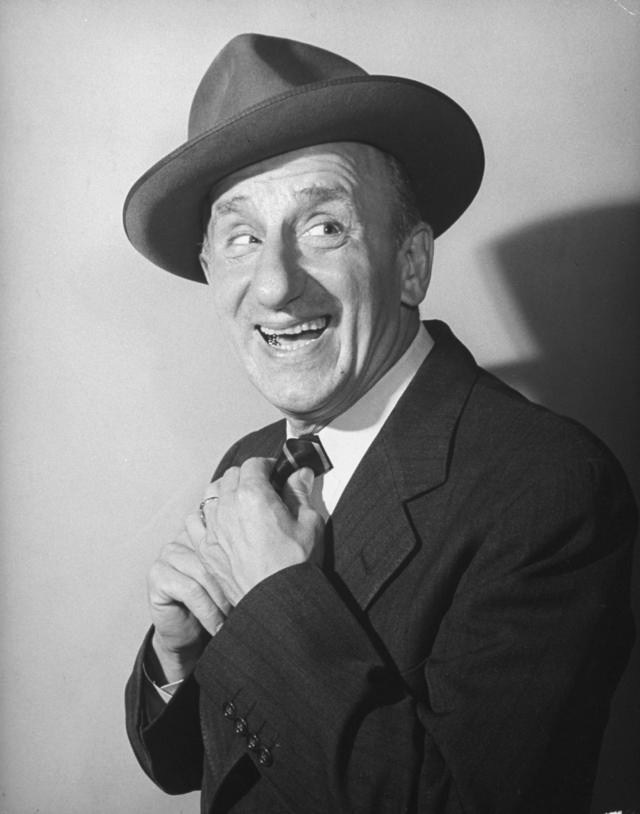
For instance, Jimmy Durante, who by 1950 had been an entertainment star for some thirty years. He was so famous that well-known writer Gene Fowler wrote his biography in 1951, titled Schnozzola.  In typical New York style of the time, the word referring to Durante’s trademark big nose combines Yiddish and Italian.

 The son of Italian immigrants, Jimmy Durante was born in the Bronx in 1893.  The woman who would become his mother had arrived from Salerno the very day that the Statue of Liberty was officially unveiled in New York Harbor, in October 1886.  His father had emigrated a few years earlier, also from Solerno, beginning in America as a laborer before earning enough to open a barber shop, the trade he had trained for in Italy. 

 Jimmy Durante started piano lessons in eighth grade—the last year of formal schooling he completed—with his sights already set on the latest rage of ragtime.  His first gig was on Coney Island in 1910.  Next he played at a rowdy Chinatown club where Irving Berlin once worked. A summer gig at a club back on Coney Island had him paired up with a hyperactive young singer, Eddie Cantor.  He played all night in some 20 similar venues where he became known as Ragtime Jimmy.

 By 1917 ragtime was morphing into jazz, namely the Dixieland coming up from New Orleans.  Durante brought four players from there to New York and formed Jimmy Durante’s New Orleans Jazz Band.  On some numbers he stood up at the piano and joked with the band, adding another characteristic to his reputation. 

 By the early 20s he became part owner of his first night spot, the Durant Club.  Soon he was partnering with singer Eddie Jackson and dancer Lou Clayton.  Besides music, comic banter and skits became part of the act, all at a frenetic high-spirited pace.  They were an immediate hit, as was the club in Prohibition New York, with customers that included the chronicler of the milieu, Damon Runyon, and George M. Cohan as well as the top politicians and gangsters of the day. 

 Though vaudeville circuits traveled to many cities and towns, the capital of vaudeville was New York. By the late 20s, the team of Clayton, Jackson and Durante were hit performers on Manhattan’s top vaudeville stages.  The vaudeville equivalent of Carnegie Hall was the Palace theatre, and playing the Palace was the vaudevillian’s dream.  Durante and company not only played the Palace—in their first week they broke its attendance records.

Buster Keaton, Thelma Todd and Durante in
1932 "Speaking Easily"
 They performed in a Ziegfield show with music and lyrics by George and Ira Gershwin, and an orchestra conducted by Duke Ellington.  Show Girl was a Broadway hit until the Depression hit it.   Durante headed for Hollywood, where he made movies throughout the 30s and 40s.  He did other Broadway shows and began a career on radio, where he had a hit with a show that partnered him with a young Garry Moore.  He continued on radio well into the 1950s.

 From the evidence of 1959 recordings, Durante remained an accomplished and inventive pianist with his own style, but sitting at the keys became a decreasing part of his evolving act. He was more often on his feet, dancing and prancing in vaudeville stage style, or doing physical stunts and takes. Though the characters he played in movies weren’t too far removed from himself, he could act a convincing scene. His baggy, rumpled suits and slouch hat, his exasperated frown and emphasis on his substantial nose, all became his signature clown suit.  All of this made him appealing for the visual medium of television.   

Though based on his Bronx malapropisms, his club and Broadway patter and the lyrics to his songs were verbally sophisticated, while also being corny and surreal. There were often more words than notes as his verbal gymnastics and interplay with the band took precedence.  All of this also made the transition to television, though in simplified form.

 Durante’s first TV gig was as one of the rotating hosts of the Four Star Revue (later changed to All Star Revue), broadcast on NBC beginning in 1950.  The multiple hosts were standard in the first variety shows, though not all stuck with the format.  Apparently the idea was to attract viewers who might want to see what the stars behind those radio voices looked like in action. 

 Durante hosted a total of 24 one hour shows over the first three seasons (on Saturday nights), before moving over to the more popular Colgate Comedy Hour, also on NBC (on Sunday nights.)  Though he hosted only eight shows, they were seen by many more viewers—this was a highly watched show, and by 1954, a lot more families had TV sets.  He then moved over to The Texaco Star Theatre, alternating for a season with Donald O’Connor, and then appearing weekly in his own Jimmy Durante Show through the 1955-56 season. In his early 60s, Jimmy Durante was a television star.

 In many ways Durante’s appeal was unique.  His style was one of a kind, and his personality seemed generous and genuine, especially when working with co-stars. (Frank Sinatra never looked happier than when he was working with Durante.) As occasionally happens, Durante actually was genuine and generous offstage as well.  Gene Fowler refers to his “grotesque tenderness,” and estimates that he regularly gave away at least 40% of what he earned.

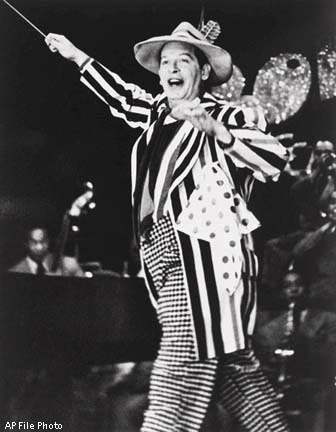
 But Durante was hardly alone in bringing a long resume in multiple performance venues to early TV variety shows.  Milton Berle was a child actor in silent films before developing his skills as a vaudeville comic (which usually involved a little singing, dancing and acting as well), beginning at age 16.  By the 1930s he was performing in nightclubs.  He dabbled in movies but set his sights on radio in the 1940s.  In 1948 he became one of the rotating hosts of Texaco Star Theatre, and quickly proved so popular that it became his show.  He reproduced elements of his late 40s radio variety show, adding visual slapstick, cross-dressing and skits from vaudeville.  He became the first major television star with adult audiences, dominating Tuesday nights, and earning the nickname of Mr. Television.

 As a teenager, Jackie Gleason was a carnival barker and half of double act for vaudeville theatres.  In his 20s he played nightclubs as a comedian and acted in supporting roles in Hollywood movies.  Like Berle, he was hired as one of several rotating hosts for a 1950 variety show, Cavalcade of Stars on the Dumont network, but soon transformed it into the Jackie Gleason Show.  After transferring to CBS, his show became a hit of the mid-1950s.

 Such pedigrees were also common for acts on these shows.  Some had even deeper roots. Popular 1950s guest star Buster Keaton was one of the original silent comedy geniuses (in his last 1930s films he partnered with Jimmy Durante).  But his performing experience went back through vaudeville to one of the 19th century American theatrical forms, the medicine show-- entertainment off the back of a wagon to gather a crowd for the patent medicine pitch.

 I emphasize this genealogy of the first TV variety shows and their hosts not mainly to make an historical point, but to suggest an element that made experiencing these shows as a viewer unique.  When as a child I laughed at Milton Berle yelling “Makeup!” and getting hit in the face with a giant powder puff, it was new to me, but not to comedy performance. I didn’t notice anything particular about a song and dance number performed by guests Bob Hope and Jimmy Cagney. When I saw a typical finale to a Jimmy Durante show—a musical number in which he and his old partner Eddie Jackson strutted around in top hats, tapping canes on the floor, I vaguely knew I was seeing something “old-fashioned.”  It turns out that in all cases what I was seeing was vaudeville bits done by former vaudevillians. 

 What I didn’t realize or appreciate until much later that in watching these variety shows, I was seeing layers of entertainment that went back beyond the 20th century.  Just as the early morning cartoons I watched provided an accidental history of animation, these variety shows were a living history, an experience largely inaccessible today.  Perhaps only my generation of children had it, because we were young when television was young. 

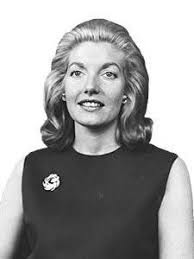
And I did watch them all—the variety shows.  There were basically two kinds of hosts: singers or comedians.  Most variety shows headlining singers were short-lived (though some, like the Nat King Cole Show were noble tries—in 1957 this half hour was the first TV variety show with a black host.) The major exceptions were the perennial Perry Como (1949 to 1966, with his annual Christmas shows that had begun in 1948 continuing through 1994) and Dinah Shore (1951 to 1963.) As a child I waited to hear Dinah Shore sing her “See the USA in your Chevrolet” song, and see her blow an exaggerated goodnight kiss.  Even in the 60s, Perry Como was a favorite of my grandmother, so we all watched it at her house.

 There were variations on the form, such as “talent shows” from Arthur Godfrey’s Talent Scouts to Ted Mack’s Original Amateur Hour (and local variations, like the Wilkins Amateur Hour in Pittsburgh, sponsored by Wilkins Jewelers: simulcast from the radio show, it was Pittsburgh’s first live television show.)  

 There were a few attempts at shows hosted by bandleaders (Bob Crosby, Freddy Martin, Russ Morgan, Guy Lombardo), but the only one that stuck was Lawrence Welk, who went on through rock and roll and the 60s without changing much.  (Guy Lombardo did become part of TV history with his New Year’s Eve shows; for a generation he was an inevitable part of welcoming in the New Year.)  Shows hosted by musicians in particular, but variety shows in general gave my generation knowledge of songs from the entire first half of the 20th century and a little from earlier--many of which are now thought of as the American Songbook. 

 The shows hosted by comics were the most enduring.  The Colgate Comedy Hour may have been the first evening TV show I knew by name, and I waited earnestly for my favorite hosts: Dean Martin and Jerry Lewis, Abbott and Costello, and Jimmy Durante. 

In this show or a later one, I was especially entranced by Durante’s closing song, always the same signature song, called simply “Goodnight,” to more or less the tune of “The Shiek of Araby.”  As the ditty ends he gets up from the piano, takes a trenchcoat from the rack and puts it on, pauses at a door to say his indelible final line: “Goodnight Mrs. Calabash, wherever you are.”  Then he walks through the door into darkness, guided by circular pools of light on the floor.

It was a magical, mysterious moment. I wondered where he was going, where those lights would take him. Every time he appeared I waited to maybe find out who Mrs. Calabash was.  No one ever did find out for sure.  The two leading theories are that it was a pet name for his first (deceased) wife, or that it was a generic name for (in his daughter’s words) “all the lonely old ladies watching the show.”  

The first comic to establish the variety show as a network staple was Milton Berle, beginning in 1948. His Texaco Star Theatre set the vaudeville show example, with comedy, musical guests and dancers, as well as acrobats, ventriloquists (very big on early TV, with its close-up cameras) jugglers and so on.  But Berle’s wild costumes, slapstick comedy and classic vaudeville/burlesque comedy skits were the main attraction.  He was a national sensation, and was said to have sold more TV sets than any advertiser.  He reigned for the first eight years of network TV.

 I watched Milton Berle on Tuesday nights, even at the risk of damnation for not choosing Bishop Sheen’s show on another station.  Officially titled “Life is Worth Living,” it first ran on the fading Dumont network on Tuesdays, and then on another night on the fledgling ABC.  It remains an anomaly in network TV—a Catholic priest standing in front of a blackboard in full regalia, delivering homilies for a half hour from a religious point of view.  It was in that sense the anti-variety show.  I did watch it sometimes, perhaps catching the second half of Berle, or in later years when it was on other nights.  As a child, I was mystified by how Bishop Sheen’s blackboard was magically erased during his talk.  (He referred to the “angels” that wiped it.)  It says something about the innocence of the early 1950s audience that adults were similarly mystified by this simple camera move.

 I absorbed a great deal of vaudeville comedy style from Milton Berle, in particular the many variations on the double take. (Also of course the spit take.)  He may have also been the first adult I saw who seemed to be having fun.  Berle’s most direct TV heir was probably Red Skelton—I watched his show but wasn’t crazy about it.  Skelton had perhaps the deepest resume of the major comics—he had played medicine shows, burlesque, vaudeville (at times doing pantomime) and nightclubs before radio and the movies. 

Jackie Gleason’s show also followed but also developed the vaudeville variety format. The June Taylor Dancers were a regular feature, often shot from above in Busby Berkeley style.  He participated in big production numbers with his nimble big man dancing (and it was at the end of one of these that he fell and broke his leg, necessitating his absence for a number of shows.)  But his character driven skits with a series of repeated characters evolved beyond vaudeville set pieces into what became situation comedy, especially with the famous Honeymooners segment, that also became a stand-alone series for a season.  He’s best remembered now for his catch-phrases (“And away we go!” etc.) and his Ralph Cramden character in The Honeymooners.  

 Sid Caesar’s Your Show of Shows and subsequent incarnations also developed beyond the simple variety format (though it presented many singers, dancers and other acts) to become a kind of rep company comedy hour.  It remains unique in the sophisticated subjects of its humor, such as foreign films that were generally available only in New York and a few other big cities. 

 Some of its skits are still seen on film and are still hilarious.  The show is also remembered for the lineup of its writing staff, which included Mel Brooks, Neil Simon, Woody Allen, Carl Reiner, Lucille Kallen and eventually Larry Gelbart. The physical and verbal comedy genius who made it all work was Sid Caesar, who invented his “double-talk” in foreign languages while waiting tables as a boy in his parents’ luncheonette, and watched variety performers as a saxophonist for a Borscht Belt orchestra before creating and performing in musical comedy revues in the Coast Guard during World War II. His TV partner Imogene Coca was also a physically gifted comedienne. (Nanette Fabray proved herself adept at comedy as well in a later incarnation of the show.)  Carl Reiner was the perfect straight man.

 Meanwhile a new generation of entertainer was also taking the national TV stage.  Ernie Kovacs was an actor and a radio DJ who gradually expanded into local and then national television.  He entered the new field of late night with a show on the Dumont network in 1954. (He would later be Steve Allen’s principal fill-in host on The Tonight Show.)  He had a network show from 1952 through 1956, during which he experimented with camera tricks, exploring the visual possibilities of television more than other variety show comics. By the time of his series in 1962 he was able to use videotape to further refine this approach. Meanwhile he created memorable characters and bits, and his reputation grew with the years. 

Moore, Burnett and Kirby
Garry Moore is in some ways the forgotten man of 1950s variety shows.  He started as an announcer and emcee on radio, then after his brief partnership with Jimmy Durante on radio, he had a number of game show and talk show gigs on TV before settling into network afternoon slot with the Garry Moore Show. Later he hosted a successful evening variety show.  Though he was more of an emcee than comic, he also performed in skits and did characters and impressions.  His casual approach mirrored Dave Garroway, the first host of Today (whose signature—upheld hand, palm out and one word: “Peace”-- was given homage by Keith Olbermann in his last TV commentary show) and prefigured another forgotten variety show host of the 50s, George Gobel.  Featured on Moore’s shows were his equally laid back partner, Derwood Kirby, and the young woman who would go on to establish her own highly successful variety show in later decades, Carol Burnett.  I remember his “That Wonderful Year” segments of nostalia on his variety show, and especially the way he signed off his afternoon show: “Be good to each other, will you?  And goodbye out there!”  

Steve Allen also started professionally as a radio DJ who soon began playing fewer records and doing more comedy.  He brought his talents for comic invention, innovation and quick wit to television in 1950, eventually creating a late night show in New York which went national in 1954 as the Tonight Show, the first network late night show. He was performing for two hours a night live, 90 minutes of which were on the network. Most of today’s conventions of late night were his inventions.

 Two years later, he added the hosting of a Sunday night variety show on NBC.  Though it had the usual novelty acts, Allen showcased music, especially jazz, and often played piano with his musical guests. He was decidedly offbeat for network TV, interviewing writer Jack Kerouac and then playing a jazzy background to Kerouac reading from his writing. 

Louis Nye
Allen’s Sunday show is probably best remembered for his company of comic players that performed sketches with him, particularly the Man in the Street interviews. There were standard bits: Tom Postum’s big smile until asked his name, which he could never remember; Don Knotts shaking with nervousness, and Louis Nye’s hipster, who greeted him with what became a national catchphrase: “Hi, ho, Steverino!”  


The Steve Allen Show was opposite the Sunday night ratings leader, and among the most popular shows in television.  Formally called “The Toast of the Town,” it was a major anomaly: a network variety show hosted by neither singer nor comedian nor star of any kind, but a barely articulate newspaper columnist, Ed Sullivan.  

At first people didn’t know what to make of it, and it was regularly trounced by the Colgate Comedy Hour. But by the mid-50s it was immensely popular, surviving the head-to-head with Steve Allen’s Sunday night show, and going on to become a television institution. 

Roxyettes on Sullivan 1953
Though Ed Sullivan was known for his New York newspaper column on entertainment, he began as an emcee for vaudeville shows in the 1920s and 1930s.  He brought the vaudeville variety approach to radio and then to early television beginning in 1948.  Sullivan had no particular performing talent, and barely engaged in any conversation with guests.  His role was simply to introduce them and later endorse them.  Perhaps for this reason, the Ed Sullivan Show became the purest of all variety shows, and the one that was most like a very high class vaudeville hour.

 For there was lots of variety on this variety show: tumblers, high-wire acts, jugglers (and jugglers on high wires), magicians, clowns and acrobats, and even animal acts, all reminiscent of the circus, if not actually appearing directly from one.  There were singers of all styles with the latest hit record or from the newest or most popular Broadway show, and occasionally from the opera. No musical style was out of bounds, including classical, country and western, R& B and blues.

 Dancers in all combinations and styles, including ballet, and orchestras playing popular and classical music.  There were foreign stars and ethnic acts (national dances and songs) and novelty acts.  There were puppets, like the Italian puppet Topo Gigio, and ventriloquists.  There were impressionists and comics of all kinds, including duos (Wayne and Schuster most frequently.) For singers and comics in particular, appearing on Ed Sullivan became the equivalent of playing the Palace in a previous generation: the top. (This was parodied in the musical “Bye, Bye, Birdie” with a hymn-like song extolling Ed Sullivan.)   

Though there were headliners and featured spots, the Sullivan show could be a dizzying experience. Senor Wences (and his puppet hand) could be followed by Bill Haley and the Comets, followed by a half dozen sequined performers spinning dinner plates in the air, followed by operatic star Beverly Sills.

 The variety extended to the guests of every ethnicity and race.  Though it didn’t seem unusual to me at the time, Sullivan’s show is credited with showcasing a large number and variety of Black performers.  (The Supremes alone appeared 17 times.)  “As a Catholic, it was inevitable that I would despise intolerance,” he told a reporter, “because Catholics suffered more than their share of it.”  This rings true as a 1950s position.  I suspect it’s not so true today.  And it is of course within the context of a century of entertainment segregation, and worse.  Though Sullivan was perhaps more tainted by the racism of his time that he knew, it is also true that he supported Black entertainers, and in 1949 he organized the largest funeral in New York City history, for Bill "Bojangles" Robinson.  Prominent celebrity attendees included Milton Berle and Jimmy Durante.

 I much preferred the Steve Allen Show for as long as it lasted, and I found it difficult to watch the Sullivan show straight through.  But come Sunday night, the television was on, and so was Ed, and there was usually something worth watching. (Especially when it was either that or homework, or bed.)

  The Ed Sullivan Show became the longest running variety show in TV history, lasting from 1948 to 1971. When it was cancelled, Sullivan was quoted as saying that vaudeville had died a second death.

 But the variety show itself had begun to wane by then, until it disappeared in subsequent decades. The closest equivalents today range from Saturday Night Live and late night shows to the talent competitions in singing and dancing.

 Even in the mid-50s, the technology to make television shows was improving, as was the quality of television sets to receive them. Program budgets were also increasing, so a range of programs became possible beyond pointing cameras at live performances on a stage.

 At the same time, audiences were changing, or at least their circumstances, economic and otherwise.  According to scholars, it was no coincidence that the rise of vaudeville coincided with the flood of immigrants, particularly into New York and other cities. The mill workers and service workers of the immigrant families in the city were vaudeville’s principal audience, and it is from immigrant families that most vaudeville performers came.  To a large degree the same was true of early television, particularly the variety shows.  But television was to reflect the changes in its audience as the 1950s went on, particularly in the form that in part also emerged from vaudeville roots: the situation comedy.  Next time. 

Sunday, January 08, 2023

One Story


Always somewhere in the story

which up until now we thought
was ours whoever it was
that we were being then
had to wander out into
the green towering forest
reaching to the end of
the world and beyond older
than anything whoever
we were being could remember
and find there that it was
no different from the story

anywhere in the forest
and never be able to tell
as long as the story was there
whether the fiery voices
now far ahead now under
foot the eyes staring from
their instant that held the story
as one breath the shadows
offering their spread flowers
and the chill that leapt from its own
turn through the hair of the nape
like a light through a forest

knew the untold story
all along and were waiting
at the right place as the moment
arrived for whoever it was
to be led at last by the wiles
of ignorance through the forest
and come before them face
to face for the first time
recognizing them with
no names and again surviving
seizing something alive
to take home out of the story

but what came out of the forest
was all part of the story
whatever died on the way
or was named by no longer
recognizable even
what vanished out of the story
finally day after day
was becoming the story
so that when there is no more
story that will be our
story when there is no
forest that will be our forest

W.S. Merwin

Saturday, December 31, 2022

R.I.P. Barbara Ehrenreich and other authors 2022


I first knew of Barbara Ehrenreich from a mutual acquaintance as another freelance writer struggling to get published and especially to get paid.  This puts additional light on her most cited work, Nickel and Dimed: On (Not) Getting By in America, in which she documented her own experiences working at minimum wage jobs. 

 But she was also well-educated and well-connected, and was published in the best newspapers and periodicals.  Besides her single subject books, like the aforementioned 2001 volume, her periodical pieces were collected. For instance a volume covering the 1980s, which was for her (and many others) a grim and disenchanting decade, as reflected in her title: The Worst Years of Our Lives: Irreverent Notes from a Decade of Greed.  Her 1995 collection is titled The Snarling Citizen. All of these essays exhibit her wit as well as insight. She spotted important destructive trends which unfortunately still pertain. Throughout the decades, she wrote with great acuity about the conditions and injustices women face (and she faced some painful ones herself), and for that and her lively if uncomfortable reporting on both gender and class, she deserves to be read and remembered, learned from and imitated. 

 Greg Bear was a productive and insightful science fiction writer who I met at a Star Trek convention in Seattle, where he was based.  I especially admire his visionary novel Darwin’s Radio

Hazel Henderson

I once saw Hazel Henderson essentially take over a World Future Society convention.  As a futurist, environmental activist and economist, she was most dynamic in person, but she reached wider audiences with her books, including Creating Alternative Futures and Building a Win-Win World.

 Suzi Gablik was an artist who wrote about art.  In 1970 she published the first in- depth book on Rene Magritte (and helped make him the highly visible artist he is today), after living with the artist and his wife. In the 1990s she broadened her conception of art to include Indigenous and other worldviews, publishing The Reenchanment of Art. As she became more concerned about self-destructive civilization, she published Conversations before the end of time, a collection of amazing interviews. Both I consider to be landmark books.

 Ted Mooney’s day job was editing Art in America (so he may have edited Suzi Gablik.)  But his contribution to literature is his individual vision in four novels, the first being the best known: Easy Travel To Other Planets in 1981, which an American literary critic placed on his list of the best 100 novels of the twentieth century. 

Roger Angell was best known for his writing on baseball in the quintessential New Yorker style, but he also wrote fiction and other non-fiction (plus the witty annual New Yorker Christmas rhymes), as well as serving as the New Yorker’s fiction editor for many years.  In that capacity he wrote me the most flattering and most heart-breaking (literary) rejection letter of my life, in which he said the New Yorker “could hardly bear not to publish” my story.  History shows they all managed pretty well. Angell was 101.

  Doris Grumbach wrote novels and was known for literary criticism in the New Republic and other periodicals.  Among those she reviewed (approvingly) was novelist Maureen Howard, a writer I also enjoyed.

I admired Nancy Milford’s biography of Zelda Fitzgerald. Hilary Mantel wrote various kinds of novels and stories but is most famous for her historical fiction. Nicholas Evans was a British broadcaster and writer whose best-known book is The Horse Whisperer.

 Larry Woiwode published much-praised fiction, essays, biography and poetry from 1969 to 2022. Besides writing some 18 books, he taught writing and ran university writing programs, so his students got the benefit of somebody who walked the walk.  

Before he was a familiar narrator for historical and nature documentaries, David McCullough was a prize-winning author on mostly historical subjects.  Educated at Yale and a model of aristocratic culture, he was born and raised in Pittsburgh, which may have given him particular perspective on the subject of his first book, the Johnstown Flood.

Mike Davis wrote penetrating books about cities and their future, especially Los Angeles. From 1971 to 2012, Todd Gitlin wrote about mass media and politics. Peace activist Staunton Lynd wrote and edited books on political action and nonviolence. William Rivers Pitt is best known for his reporting and political analysis of the American war in Iraq.  P.J. O’Rourke wrote from the other end of the political spectrum, though he started out as just a funny guy. 

Then there are those who are prominent for reasons other than writing, but also published useful books. The latest name added to this year’s rolls is Barbara Walters, whose death was announced on December 30.  She was 93.  She was a television news pioneer and an expert interviewer, and she was famous.  Though I never met her, I once interviewed her on the phone for a piece on Hugh Downs.  Because of her schedule she had to call me, and I didn’t know when she would.  When she called—evidently in the makeup chair for some television appearance—I was in the shower.  So I in fact interviewed Barbara Walters while naked.

 Others who authored books in addition to their day jobs were former Secretary of State Madeleine Albright (whose penultimate book was titled Fascism: A Warning), Mikhail Gorbachev, last leader of the Soviet Union; and for all I know, Pope Benedict and Queen Elizabeth

Scientist James Lovelock saw Earth as a living system, developing (with others) the Gaia Theory, and warned of the dire consequences to the planet of the climate crisis in a series of popular books.  He had 102 years of a remarkable life. Environmentalist and writer David Foreman founded Earth First!


 Revered Zen monk Thich Nhat Hanh reached millions with his lectures, audio meditations and his many books. Stage director Peter Brook wrote several important books about theatre.  Before he made films, Jean-Luc Godard wrote about them, and continued to talk about filmmaking at book length.

 Print and television journalists who published books (and some who didn’t) but passed in 2022 include: film critic Sheila Benson, Mark Shields, Bernard Shaw, Bill Plante, Jim Angle, Michael Gerson, John DiStasio, Francis X. Clines, John Hughes, Ann Garrels, Richard Lopez, Shelby Scott (who I remember from WBZ in Boston), and Robert Herman.


Chronicled in books and other media, the legendary work of World War II and fashion photography Tony Vaccaro, and of the photos of Tim Page in Vietnam and afterwards.

 Some subjects of journalistic and other writing that should be mentioned but haven’t fit into previous categories include General Charles McGee, last of the Tuskegee airmen of World War II, and Holocaust survivor Edward Mosberg; American Indian activist Clyde Bellecourt, artists Claus Oldenberg and Margaret Keane (those big-eyed figures popular in the 60s); sportscaster Vin Scully, men’s basketball great Bill Russell and women’s basketball great Lusia Harris; legal scholar Lani Guinier, co-founder of the Environmental Defense Fund Art Cooley.

 In general, writers don’t get a lot of respect in America, though they may be celebrated locally or within a profession.  So whatever degree of success or failure, fame or obscurity these following writers had in their lifetimes, as long as they have a book or a periodical piece in a library somewhere, or something buried in the depths of cyberspace, there’s a chance some stranger may read it, and their words will live again.

 Also passing away in 2022 were: Andre Leon Talley, Anne Harris, Barbara Love, Geoffrey Asche, Terry Garrity (The Sensuous Woman), Carleton Carpenter, Bruce Duffy, Valerie Boyd, Leonard Kessler, Paul Cantor, Shirley Hughes, Sally Watson, Bethany Campbell, Thomas F. Staley, Sydney Shoemaker, Francois Bott, Tom Maddox, Julia Powell, Sharon Presley, JFK conspiracy theorist David Lifton, Stuart Woods, Joanna Clark, Raymond Briggs, Andrew Hubner, Helen Potrebenko, Terrance Green, Mark Girouard, Michael Malone, Antonin Bajaja, Sue Hardesty, Luis Agular, Jean Franco.

 Poets Gerald Stern, Peter Landborn Wilson, Simon Perchik, Dennis Wilson, Noah Eli Gordon. Editor and publisher Jason Epstein, and literary agent Sterling Lord (I was once represented by his esteemed agency.) Let this list also honor the writers whose deaths were unnoticed.  May they all rest in peace.  Their work lives on.

Friday, December 30, 2022

R.I.P.Christine McVie and other musicians 2022


 What strikes me now about the Fleetwood Mac records of the mid 1970s is how clean the sound was.  The instruments had distinct separation and pop, the lead voices and backup harmonies balanced and flowed, there was no excess or noise. There was no rush or frenzy. Yet somehow this produced an irresistible  momentum over a tasty beat, and unleashed the emotional force of the music and lyrics.  This music rang like a bell.  It was cleansing, but at the same time, it startled you and grabbed your attention and emotion.  In the context of the mid-1970s, it was also hopeful.

 I noticed this at the time—after all, I had been paid to make that kind of observation for years leading up to this moment—but the emotion and physical energy generated by the songs were primary.  I just felt it.

 It was a magic lineup musically: Mick Fleetwood’s drums, John McVie’s bass, Lindsay Buckingham’s unique guitar and Christine McVie’s keyboards.  Buckingham was a vocalist and songwriter, but the voices unique in pop music at that time belonged to Stevie Nicks and Christine McVie—very different from each other but both distinctive.      

 As is well known now, their lives were messy in many ways (I once stayed in a Santa Monica apartment where a few weeks before, Stevie Nicks conducted a secret tryst with—I believe it was—a Beach Boy) but their music was precise.  You could listen to it with admiration and awe, if you could keep yourself from moving.  Their uplifting brilliance was all the greater for being so widely shared.  These records sold millions and there was always at least one of their songs on the radio. 

At the center of it all was Christine McVie.  Her keyboards anchored the music, and her songwriting defined the group.  Nicks and Buckingham were flashier, but she wrote and sang more of the hits.  She had an elegant blues-based sense of playing and writing (as Christine Perfect—her real unmarried name—she’d been the mainstay of the 1960s blues band Chicken Shack—and of course Fleetwood Mac had started as a blues band) and a genius for musical hooks.  Her singing style was simple and subtle, never strained, yet it carried these songs to the heights.

 The band predictably imploded by the 80s, though it made several near-perfect albums in the 70s.  It reformed when unexpectedly, the Bill Clinton/Al Gore campaign chose McVie’s song “Don’t Stop Thinking About Tomorrow” as their theme/fight song for the 1992 election, and the band came back together for an Inaugural concert. They were again a great band in the late 90s. Eventually McVie left the band again and stopped making music, but then she rejoined and the songs kept coming.  They were and are irresistible.

  It’s probably clear from the first entries in this series, but I’m primarily honoring artists and others who touched my life.  The time limits to that are most obvious with music.  The music that moved me and may well still move me was first generated in the 20th century and before.  I stopped listening to much that was new as the hip hop and rap era took hold, and I still hear almost no contemporary pop music (the best of which tends to suggest to me a watered-down variation on artists that came before. I’m probably wrong, but there you are.) 

 Musicians associated with the 1950s:

Jerry Lee Lewis, one of the original rock and rollers, a weird guy and crazed performer it was impossible not to watch. Ronnie Spector (the Ronettes), Fred Parris (the Five Satins), Bobby Hendricks (the Drifters), bandleader and novelty musician Gloria Parker.

 Songwriters Paul Vance (Perry Como’s hit “Catch A Falling Star”), Sonny West (Buddy Holly’s “Oh Boy!”) and country songwriter Dallas Frazier.


 Bobby Rydell
was the best singer among the Philadelphia Italians crooners promoted by Dick Clark in the late 50s/pre-Beatles 60s. He had a string of hits, and a big screen role in Bye, Bye Birdie.  I bought his 45s and saw him live at the Allegheny County Fair, partly because some girls in school thought I looked like him, an impression I encouraged with my pompadour, until I went full JFK.


 Musicians who broke through in the 1960s:

Loretta Lynn

Country great Loretta Lynn, singer (Ian and Sylvia) and songwriter (Four Strong Winds) Ian Tyson, rocker Ronnie Hawkins, Dino Danelli (The Rascals), Kim Simmonds (Savoy Brown), Don Wilson (the Ventures), Rosa Hawkins (the Dixie Cups), Gary Brooker (Procol Harum), folksinger Judy Henske and Broadway singer Robert Morris.


 Jazz pianist Ramsey Lewis had a 60s hit with “The In Crowd.”

 Bob Neuwirth hung out with Dylan (in the film Don’t Look Back he tells him that Donovan is a better guitarist) and co-wrote Janis Joplin’s Mercedes Benz song with Janis and poet Michael McClure.

Judith Durham
 Composer Tom Springfield (“Another You” and “Georgy Girl”) and the lead singer of the Seekers that turned these songs into hits, Judith Durham.

 Composers Montey Norman (the Bond Theme), Lamont Dozier (“You Can’t Hurry Love”), Lenny Lipton (“Puff the Magic Dragon”), and Ivy Jo Hunter (“Dancin in the Street.”)

 Impressarios of two major 60s events: James Rado (co-creator of Hair!) and Michael Lang (co-creator of the Woodstock festival.)

 From the 1970s:

Pop singer Olivia Newton-John, Meat Loaf, folksingers Paul Siebel and Mary McCaslin, country and western singer Mickey Gilley.

 Klaus Schulze (Tangerine Dream), Warren Bernhardt (Steely Dan), Calvin Simon (Parliament-Funkadelic), Dick Halligan (Blood, Sweat and Tears), Nathaniel Ian Wynters (the Wailers.)  Songwriter Jon Lind.


From the 1980s and 90s:

 Irene Cara (“Fame”), Naomi Judd (the Judds), and Andy Fletcher (Depeche Mode).

Composers Vangelis, Angelo Badalmenti, Lucy Simon and Shirley Elkhard.


Pharoah Sanders

Also passing in 2022 were jazz and R&B artists Pharoah Sanders, Taylor Hawkins, James Mtume, Bobbie Long ‘Beegie’ Adair, Michael Henderson, Jessica Williams, Barbara Morrison, Jessie Powell, Janet Thurlow, Joyce Sims, Geraldine Hunt, Barbara Thompson, salsa singer and songwriter Hector Tricoche, samba singer Elza Soares, calypso singer Kenny J.  May they all rest in peace.  The music lingers on.


Thursday, December 29, 2022

R.I.P. David Warner and other actors 2022


When Alan Rickman died in 2016, stories emphasized his movie roles as villains, despite the actual range of the characters he played in dramas and comedies.  Yet the images and clips accompanying the stories often were from his only romantic lead (however offbeat a romance, in that his character is dead) in the wonderful film Truly, Madly, Deeply.

 Something similar happened when David Warner died in July 2022: stories focused on his villains, though he played more honorable characters, but the images were usually from his only film as an offbeat romantic lead, the 1966 Morgan: A Suitable Case for Treatment, known in the US also as simply Morgan! 

That movie, stylistically a quintessential 60s film directed in England by Karl Reisz, made a big impression on me when it came out.  Caught between working class communism he grew up with, and the self-satisfied world of the rich he married into, partly because he became a commercially viable artist, Morgan is a kind-hearted man who identifies his rebellion with the natural instincts of apes as well as the symbols of revolution.  He longs for his ex-wife, played by Vanessa Redgrave in her first film role, who is also torn between her accustomed comforts and Morgan’s rough charm.  The gap between his idealistic fantasies and reduced reality, as dramatized by his futile gesture of breaking up her wedding reception while dressed in an ape costume, gets him committed to a bucolic asylum.  

Warner’s character and performance in this film suggest what his 1965 performance as Hamlet might have been like: highly physical and mercurial, alternating catatonic brooding with sudden frenzies of speech and action.  When David Tennant was slated to perform as Hamlet in 2008, he made a short TV film in which he interviewed other actors who had played the role.  Most acknowledged that the greatest Hamlet of their lifetime was David Warner.

 Warner did play a lot of film villains, and eventually tired of it, but he also played Bob Cratchit in the 1984  George C. Scott version of Dicken’s A Christmas Carol, and the Klingon Chancellor modeled on Gorbachev (who also died in 2022) in the last Star Trek original cast feature film.  He played historical characters from Jack the Ripper to the young William Wordsworth.  He performed in at least two filmed roles in Chekhov plays: in the 1968 Sidney Lumet feature version of The Seagull, and a 1991 BBC production of Uncle Vanya.  He returned to the stage in the early 21st century, playing King Lear in 2005, the traditional capstone to a career that includes a Hamlet.

 Warner’s voice was always a stage asset, and became the source of his many roles in animated and audio stories that included playing Doctor Who.  Because of Morgan (and the fact that I identified with both the character and the actor), I followed David Warner’s career with affection as well as appreciation and admiration. 

It would take a book to begin to describe the importance of Sidney Poitier’s movie performances in the 1960s, just as the Civil Rights movement was moving into unavoidable prominence.  No history of the racial attitudes and official changes in those years would be complete without referring to A Raisin in the Sun, Lillies of the Field (for which Poitier became the first black recipient of the Best Actor Oscar), Guess Who’s Coming To Dinner, To Sir With Love and In the Heat of the Night.

 His career began in the 1950s, though he was a Blacklist victim for part of that decade.  In addition to more popular movies like The Defiant Ones, he was in some lesser known films I saw on television and loved: Go, Man, Go (a low budget look at the origins of the Harlem Globetrotters) and Paris Blues ( Blacklisted director Martin Ritt’s look at American jazz musicians in Paris, with comment on race issues, costarring Paul Newman and Joanne Woodward as well as Diahann Carroll and Louis Armstrong.) 

After the mid-1960s when he was the biggest box office draw in Hollywood, he turned to directing, producing and playing occasional lead and supporting roles, as well as political activism.  The only comparison I can come up with concerning his onscreen charisma and distinctive line-readings and physicality is Marlon Brando.   In 2009, his list of honors—and his work for racial justice—were capped by receiving the US Medal of Freedom from President Barack Obama.  He died in January 2022 at the age of 94.


 There aren’t too many actors left from the classic Hollywood period before 1950, so I take special interest in the ones whose names get one more mention as their deaths are announced. 

Angela Lansbury is the most prominent among them, for her career started in the 40s with two best supporting actress nominations, but it extended well into the 21st century on stage as well as television, where she was best known for her 1980s series Murder She Wrote.


Marsha Hunt
 Beginning at age 17, Marsha Hunt appeared in Hollywood films of the late 1930s through the 1940s (including the Laurence Olivier and Greer Garson version of Pride and Prejudice, and the 1944 film None Shall Escape, regarded as the first film about the Holocaust), and was Blacklisted for most of the 1950s.  She did theatre and played a few movie and TV parts in the 1960s and afterwards, and in the 1990s appeared in an episode of Star Trek: The Next Generation.  She remained a political activist and humanitarian.  She was 104.

 Mildred Kornman was one of the last surviving cast members of the Our Gang comedies in the 1920s and 30s, though she had a non-speaking role.  She was a bit player in 20th Century Fox films of the 1940s, and a magazine model. She was 97. As a child actor, Mickey Kuhn was the last surviving cast member of the 1939 blockbuster Gone With the Wind.  He appeared in other major films in the 1940s and early 1950s. He was 90.  Faye Marlow played a few leads and supporting roles in 1940s movies and early 1950s TV before becoming an author.  She was 96.  Nehemiah Persoff was a sometimes familiar face (when not disguised) if not a familiar name in supporting roles in more than 200 television shows as well as movie roles, including a few in the late 1940s. He was 102.  

Irene Papas in Zorba the Greek
Memorable performers from 1950s television passed away in 2022, among them: Tony Dow (Wally on Leave It To Beaver), Dwayne Hickman (Dobie Gillis), Tim Considine (Disney’s The Hardy Boys and various Disney movies), June Blair (Ozzie and Harriet—she played and was David Nelson’s wife), and comedian Pat Carroll (Sid Caesar, Danny Thomas shows.)  Actors in 1950s movies include Akira Takarada (Gojira), Hardy Kruger, Linda Lawson, Georgia Holt, Andra Martin and Greek actress Irene Papas, who went on to a film and stage career of more than 50 years.  Bernard Cribbins began his movie and TV career in this decade and it never stopped until he did—he’d become a beloved icon in the UK.

Yvette Mimieux
 Actors who helped characterize the 1960s include Nichelle Nichols, Yvette Mimieux , Henry Silva, James Olson, Mitchell Ryan and Ann Flood as well as European actor Monica Vitti (Antonioni films.)


Sally Kellerman & J. Caan

Actors first associated with the 1970s include James Caan (The Godfather), Louise Fletcher (One Flew Over the Cuckoo’s Nest), Sally Kellerman (M*A*S*H), Howard Hesseman, Dani (Truffaut films), Bo Hopkins, Ruth Madoc, Stuart Margolin (The Rockford Files), David Birney (Bridget Loves Bernie); Emilio Delgado and Bob McGrath (both Sesame Street perennials), Bob Elkins, Susan Tolsky, Jo Kendall and Mary Alice, who began her long film, TV and stage career in this decade. 


William Hurt
Known best for their work in the 1980s and 90s are William Hurt, Fred Ward, Paul Sorvino, Ray Liotta, Anne Heche, Tadeusz Bradecki (Schindler’s List), Kirstie Alley (Cheers), Robert E. Mosley (Magnum P.I.); Al Strobel, Kenneth Welsh and Gary Bullock (Twin Peaks), Mary Mara (Nash Bridges), John Aniston (Days of Our Lives), Estelle Harris and Kathyrn Kates (Seinfeld), Jack Kehler and comedians Judy Tenuta and Bob Saget.  In the 2000s: Robbie Coltrane (Hagrid), Helen Slayton-Hughes, Leslie Jordan, Gary Friedkin; Tom Sirico and Bruce MacVittle (Sopranos.)

 Finally, actors who mostly graced the stage include Joan Copeland (sister to Arthur Miller), Robert LuPone, Rae Allen and Doreen Brownstone.  May they all rest in peace.  Their work lives on. 

Tuesday, December 27, 2022

R.I.P. 2022: Jean-Luc Godard and other filmmakers 2022


I probably saw my first Godard film at a Cinema Club screening as a student at Knox College, and doubtless I didn’t know what the hell was going on.  It took awhile for me to absorb especially the narrative language of foreign films.  But Jean Luc Godard was a rising star in the late 60s and early 1970s, so I made sure to see as many of his films as I could during a Godard festival in 1970 at the Orson Welles Cinema in Cambridge, MA.  As I recently described elsewhere, I recall sitting mesmerized in the back of a nearly empty theatre late at night, drinking coffee and smoking Gauloises as I watched.

 Eventually I saw all of his films released in America by 1970 at the Welles, and a few that came to America later.  At their best, scenes in his films were strikingly audacious and expressed a culture that was partly familiar, and partly foreign but magnetically attractive. For example, I loved the simple café scenes in Masculin/Feminin.  They were deliberately imperfect in ways that, for example, the films of his French New Wave contemporary Francois Truffaut were not. Both made offbeat films about the future, but Godard’s Alphaville was more mythic and strange.

 My favorite was always Pierrot LeFou, starring Jean-Paul Belmondo and Anna Karinia.  The road sequences (largely improvised) and the tragic-comic ending are memorable, but I was devoted to the early scenes of Belmondo as the married man Ferdinand, before he runs off with the babysitter.  He reads a book on art in his bathtub (literature, art and bathtubs all recur frequently in Godard), reading aloud a passage about the painter Velasquez as the artist of the spaces between people and objects, “the painter of the evening, of the plains, of the silence…”

 The world he lives in disgusts Ferdinand, shown as a surreal party in which upper middle class young professional couples converse literally in the language of advertisements.  He meets the American director Samuel Fuller who tells him that the cinema is all about emotion.  All of this describes Godard’s aesthetic at the time, resonating with our attitudes about the conventional adult world we were expected to join.

 Godard was an early exponent of the French New Wave, which he helped to define.  With a film vocabulary steeped in his encyclopedic knowledge of movies—especially American movies—he took his camera into the streets, and working from outlines and ideas, quotations and some dialogue, he enacted cinema of the moment.  “But that’s cinema,” he says in an interview published with the Pierrot script.  “Life arranges itself.”

 For awhile, Godard exemplified and symbolized a new creative role for cinema, available to anyone.  He inspired countless young filmmakers, and film schools, as well as moviegoers. He more than any other of these directors changed the culture.

  After this New Wave period he alienated many with political messages, but continued to make gorgeous images.  Personally I didn’t share his fascination with American gangster films and violence, but even his most lurid images are indelible.  He also alienated friends with his mercurial behavior and confused others with his churning intellectual obsessions, but he remained committed to film as art, and will be remembered for this.      


 2022 also saw the death of actor Jean-Louis Trintigant, prominent in several French New Wave films, and two French filmmakers not especially associated with the New Wave but who made two of my all-time favorite movies, each exemplifying cinematic and narrative style found only in European films: Jean-Jacques Beineix (Diva) and Alain Tanner (Jonah Who Will Be 25 in the Year 2000.) 


Peter Bogdanovich was an American director, and a writer and raconteur on Hollywood movies.  After early success as a director with The Last Picture Show and his following two films, he married his fortunes to the Picture Show’s star, Cybill Shepherd.   He cast her as the lead in Daisy Miller, based on the Henry James novel.  He wasn’t wrong about her embodying qualities of the James heroine, but the movie did badly with critics and at the box office.  They made a couple of subsequent failures before he stopped directing for several years, and the relationship ended.  I met them after a screening of Daisy Miller at the Orson Welles in 1974.  They were both nearsighted, and seemed very vulnerable within the circle of frenzied attention that followed them. That was not the last of his ill-fated romances.  But along the way he helped to revive the reputation of Orson Welles himself, also in the 1970s.  


Other filmmakers and movie professionals who died in 2022 (excluding actors) include: American directors Bob Rafelson (Five Easy Pieces) and Ivan Reitman (Ghostbusters), British director Mike Hodges (Get Carter), Japanese film director Akira Inoue, Czech director and screenwriter Dusan Klein, film editor David Brenner, film designer Tony Walton, British cinematographer Sir Sydney Samuelson, production designer Albert Brenner.  May they all rest in peace.  Their work lives on.

Monday, December 26, 2022

Fails

 On the coldest Christmas Eve in Washington DC history, several buses of migrants, not clothed for the weather because they started out from Texas, were deposited on the street.  All signs point to Gov. Greg Abbott of Texas as the person who sent them.  He notified no one that they were coming.  He did not order the buses to stop at an agency equipped to shelter some 150 destitute strangers.  Instead he ordered the buses to throw these people off on an empty street in the dead of night, near the official residence of the Vice President.

It was, as White House spokesperson Abdullah Hasan said, "a cruel, dangerous, and shameful stunt." And the media by and large fell for it.  Stories about this incident appeared, often including the response of churches and volunteers who were tipped off by someone in an NGO in Texas.  But the story needed a photo or image, and what did many media outlets select?  Photos and images of Vice President Kamala Harris.

What did Harris have to do with sending these helpless people onto the cold streets of Washington?  Absolutely nothing.  Is she even responsible for federal policy on migrants?  No.  It's not even clear she was at the residence.  But lazy editors did what Abbott baited them to do anyway, and linked the story to her with a photo.  

Maybe not running a photo of Abbott instead was justifiable if journalists couldn't get confirmation or a quote that he'd sent them.  But a photo of someone who had nothing to do with it, except that Abbott wanted her photo associated with the story--that's just a total lazy fail.

And where were the questions?  The journey took two days, and they did not know their destination.  Were they even fed along the way?  The dehumanization of these people that began in their own countries was compounded in this country, abetted by at least some of the media.

Another recent journalistic fail is more complicated.   George Santos, newly elected Republican member of Congress in a New York district that includes parts of Long Island and the Bronx, was recently accused of lying during the campaign about several important items in his personal story, including his education and job history, but also about his parents and perhaps even his sexual identity.  A furor erupted, with calls to deny him from being seated as a Member of Congress.  On Monday, he admitted some of the lies, but made it clear he intended to claim his seat.

The lies he admitted to were exposed in a story by the New York Times, for which the reporters deserve credit.  But the whole matter raises the question: why wasn't the story published before the election?  Then something could have been done--by the voters--to keep Santos out of Congress, instead of the very likely futile efforts to deny him now.  

The information as to whether he got a degree from a college when he said he did, or had the jobs he said he did, is not hard to find.  The failures to find it are multiple.  The Democratic party and its candidate failed in this relatively simple background check.  But so did the media, and it's beyond embarrassing.  There are lots of places in the country now where there is no local newspaper, and no real political reporters to speak of in any news medium.  Candidates there can get away with anything. New York and Long Island are not those places.  They have more journalists per square foot than anywhere else in the country. This is a big journalistic failure.

It may be that the kind of stretching the truth that candidates normally do did not prepare journalists for candidates lying about easily checkable facts about themselves.  But this is becoming a trend, and part of the reason is that people are getting away with it.  They are getting away with it on job resumes and in creating their public story and persona.  If people aren't routinely checked and called out for these lies, they will continue, and the concept of a fact will take yet another hit. 

Friday, December 23, 2022

The Gift


Time wants to show you a different country. It's the one
 that your life conceals, the one waiting outside
 when curtains are drawn, the one Grandmother hinted at
 in her crochet design, the one almost found
 over at the edge of the music, after the sermon.

 It's the way life is, and you have it, a few years given.
 You get killed now and then, violated
 in various ways. (And sometimes it's turn about.)
You get tired of that. Long-suffering, you wait
 and pray, and maybe good things come---maybe
 the hurt slackens and you hardly feel it any more.
 You have a breath without pain. It is called happiness.

 It's a balance, the taking and passing along,
 the composting of where you've been and how people
 and weather treated you. It's a country where
 you already are, bringing where you have been.
Time offers this gift in its millions of ways,
 turning the world, moving the air, calling,
 every morning, " Here, take it, it's yours."

---William Stafford

Happy Holidays, All

Sunday, December 18, 2022

R.I.P. 2022: Arthur Giron


Arthur Giron was a distinguished American playwright and educator who died in February 2022.  He was 85.  A founding member of New York’s venerable Ensemble Studio Theatre, he was known most recently as the author of the book for the musical Amazing Grace, which had a brief run on Broadway in 2015 and has since found more success in other venues. Several of his subsequent works for stage and film are in process and may yet be realized.

 Probably his first bold call on theatrical and media attention was Edith Stein, a play about a real person and actual events, a Jewish woman who converted to Catholicism and was murdered by the Nazis in the Holocaust.  Many of his later plays were also on historical subjects, including biographical explorations of such figures as physicist Richard Feynman, the Wright brothers (a script that has become the basis for several musicals), and the passionate relationship of Voltaire with the scientist Emilie du Chatelet, in a play that won the Galileo Prize for illuminating scientific innovation. Even given their subjects and historical sweep, Giron explored the emotions at the heart of these achievements.

  Giron was commissioned by the Metropolitan Opera Guild to write a bilingual (Spanish/English) opera, The Golden Guitar.  At that point, Edith Stein had itself already become an opera. 

 His plays often dealt with moral and political questions, none more so that A Dream of Wealth, which dealt with the defining influence of the United Fruit Company in Guatemala, the country of his family’s origins.  “I think the theatre in general is the last haven of the truth,” he told a Los Angeles Times reporter during a rehearsal of this play.  “We in the theatre have the responsibility to get under the surface of things…”

 Arthur Giron grew up in Los Angeles, where his father was a “dentist to the stars” at MGM.  During World War II, Hollywood was a haven for the displaced artists and intelligentsia of Europe whose relationship with the movies was uneasy, but some of whom were passionately committed to theatre, not yet prominent in southern California. As a precocious young stage actor in his teenage years, Arthur absorbed this passion and commitment.  (He describes this period in an essay, “The Golden Silence,” posted onhis website.)

I first met Arthur Giron in the early 1990s, when he was head of the graduate program in playwriting in the Drama Department at Carnegie Mellon University, one of the most prestigious theatre programs in the country. He was mentor to my partner, playwright Margaret Thomas Kelso.  Though at that time she was no longer a student, having earned her MFA and gone on to also teach, we saw a lot of Arthur in the years before we left Pittsburgh for California, and he returned to New York.

 He was tall and handsome, his height and appearance enhanced by an erect posture that was unaffected and constant.  He could be funny and acerbic but he earned his air of authority.  When he was a guest artist at a southern California university, the predominantly Latin theatre students addressed him as Maestro.  That was Arthur.

 At the same time, he deployed the kindness, courtesies and soft voice of an old world gentleman. I once saw his gallantry on display at a surprise birthday party for Margaret at a Pittsburgh restaurant I arranged with her friends.  After dinner there was dancing, and an elderly woman guest was watching alone until Arthur asked her to dance.

 With his principled idealism he was also practical about playwriting and the business of artistic survival. His work observed the power of passions. He endured tragedies in his life, but his bulwark was his devotion to his wife Mariluz.

  Although I was not one of his students, he encouraged my writing.  Margaret directed a short theatre piece I wrote, and the next day Arthur left an effusive phone message of praise, which he repeated the next time I saw him.  This is just one instance of his interest.

 I saw an early version of his Wright brothers play at CMU, and one of his one-acts at the Ensemble Studio Theatre in Manhattan.  Probably his most produced play—mostly by university theatres unafraid of large casts and challenging staging—is Becoming Memories, and so far I’ve seen three productions of it, each memorable in its own way.

 Becoming Memories follows five small town families through three generations from the frontier to modern days, beginning in 1911.  It is based on the memories and family stories contributed by members of the Illusion Theatre in Minneapolis.  The first scene depicts the rescue of a teenage girl on horseback—when I first read it, I couldn’t see how this would work on stage.  But this imaginative dimension in a realistic story often characterizes Giron’s plays.

 The first production I saw was created by my partner Margaret when she was the entire theatre department of a small college in central Pennsylvania.  However small, the college had a fine old theatre with a large stage, and Margaret used that space and a large student cast to create a colorful epic.  Most memorable to me was how she staged the final scenes of each act to produce an emotional, ecstatic effect. Other audience members felt it, too.  (Arthur had visited the cast during rehearsals and talked with them about the play.)

 The second time was a university production in Vancouver, B.C., where I happened to be while researching a Smithsonian story on the Haida artist Robert Davidson.  This time the stage was much smaller, an improvised space in which the audience was close to and on pretty much the same level as most of the action (though there was creative use of ladders and platforms as well.)  This produced some revelatory and magic moments, particularly the personal moments we witnessed close up.  Afterwards I met its actors backstage, and when I told them I knew the playwright and would be seeing him when I returned to Pittsburgh, they all signed a production poster for him. I was pleased to deliver it to Arthur in his office at CMU.

 The third time was at the University of Pittsburgh.  One of my nieces living in a town east of Pittsburgh was about to enter high school, and I gave her a day in the city as a gift marking the transition.  We were to end the day with Becoming Memories.  But earlier in the afternoon, I took her on a tour of the CMU campus, where we happened to run into Arthur just as he was leaving.  So I was able to introduce her to the author of the play she would see that evening.  The production itself was on a scale between the previous two, and once again it illuminated different aspects of the story.

 These are some of the virtues of theatre that sets it apart, and so Arthur Giron’s plays will continue to generate new and even surprising permutations. May he rest in peace.  His work certainly lives on. 


Also lost in 2022 was the epic British theatre director Peter Brook.  After a decade of Shakespeare productions with many of England’s great actors, he electrified theatre internationally in the mid-1960s with his production of Marat/Sade.  He introduced his version of India’s Mahabharata to western stages, and brought a visual lyricism to unconventional productions, notably of Shakespeare’s A Midsummer Night’s Dream in 1970.  He then moved to France and created many productions there, while experimenting with new acting and narrative techniques.   He also directed films, notably the 1963 Lord of the Flies.

 Other theatre artists who died in 2022 (apart from actors, to be named in a later post) include: playwright Charles Fuller, director Derrick Golden, playwright Terry Teachout, playwright and theatre scholar Paul Harrison, playwright and musician Jo Carol Pierce and French theatre director Francois Tanguy.