Wednesday, March 09, 2022

TV and Me: Robin Hood and the Blacklist

 Television and I grew up together.  This is our story.  Sixth in a series.
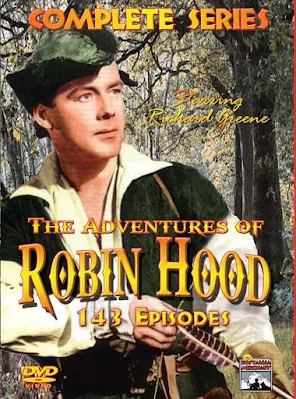

The quintessential English heroes have long been King Arthur and Robin Hood.  They are foundational legends within England and known internationally.  In the 1950s, before Lerner and Lowe’s hit musical Camelot, the best known of these epic heroes in the US was probably Robin Hood.

 So it was fitting that the first television series centered on Robin Hood was shot in England with English actors for an English TV network by a production company in England.  And so it must have seemed when episodes of The Adventures of Robin Hood crossed the Atlantic in 1955 to appear on American television.

 But behind the scenes there was another story, with different heroes.  The Adventures of Robin Hood was scripted primarily by American writers, mostly living in the U.S.   But by a particular category of American writers.

 Even at nine years old (which is what I was as the 1955 fall television season began) I’d heard about the Communist Menace.  I saw headlines about it in the newspapers and was aware of it from television.  The Sisters talked about it at school, as did occasionally the priests from the Sunday pulpit.  They called it “Godless Communism.”  The danger wasn’t just the Soviet Union, with its atomic bombs threatening to crash down on us while we hugged our heads under our school desks.  It was also Communist subversion-- Communists undercover in our own country. 

There was a kind of hysteria, some of it organized, and an atmosphere of fear that some stoked for their own advantages. Whatever justification there was for alarm about Soviet subversion, a combination of J. Edgar Hoover’s FBI, Senator Joseph McCarthy, the U.S. House UnAmerican Activities Committee (HUAC) and allied groups (such as the American Legion, which led boycotts of movies, etc.)  and individuals went much further in attacking any sort of dissent, political activity or ideas they didn’t like, for their own political—and in some cases, monetary—profit and power.  Opportunism, reactionary politics, anti-union fury and not just a whiff of anti-Semitism came to characterize this witchhunt.

 The American Communist Party was a registered political party subject to U.S. laws, and membership in it was not a crime. None of the accused was ever shown to advocate the violent overthrow of the US government.  In fact, those who resisted their inquisitors did so as staunch defenders of the Constitution. 

 Nevertheless, these forces destroyed the livelihoods and distorted the lives of thousands of Americans, including many with little or no relationship to the American Communist Party, often with false and flimsy charges and innuendo.  It was cancel culture writ large—and it affected the entire culture. 

 It was felt on college campuses and in schools at other levels, in government, organized religion and other institutions and businesses.  But it had a particular impact in arts and entertainment—to some extent in the theatre, but mostly in the movies and television. 

Ring Lardner, Jr. of the Hollywood Ten
In 1947, HUAC hearings resulted in contempt charges for screenwriters and other Hollywood professionals because they refused to name names of their colleagues.  The ones indicted became known as the Hollywood Ten. They sold their homes and assets, and (as Dalton Trumbo said later) prepared to become nobody.  They eventually went to prison for a year. (Lardner served in the same prison as the congressman who had questioned him—he had since been convicted of financial fraud.)

 Shortly after their indictment, Hollywood studio heads met at the Waldorf Hotel in Manhattan and issued the Waldorf Statement which declared that the ten would never work in Hollywood again, and others who were shown to be communists would not be employed there.  This was the origin of the Hollywood Blacklist.

 Though the Waldorf statement recognized how easy it would be to unjustly victimize individuals, that’s exactly what happened.  Thanks to a few powerful outlets that published names, many were condemned for being seen with a suspected communist, or for involvement in civil rights, civil liberties, labor organizing and other such causes that the American Communist Party sometimes supported, or simply for expressing a view.  Or by mistake, or for vengeance, or no reason at all except the need to continually churn out names.

Harry Belafonte
 By the mid-1950s the Blacklist was at its height. Among those blacklisted were such well known figures as composer Aaron Copland, conductor and composer Leonard Bernstein, band leader Artie Shaw, and folk singer Pete Seeger; writers Arthur Miller, Lillian Hellman, Dorothy Parker, Arthur Laurents, Dashiell Hammett, and journalists William Shirer, Charles Collingwood and Howard K. Smith, as well as actors Judy Holliday, Burgess Meredith, Lee Grant, Zero Mostel, and Will Geer, and director-actor Orson Welles, directors Joseph Losey and Martin Ritt, among many others.

   A conspicuous number of Black figures in the arts and entertainment were blacklisted, such as Lena Horne, Harry Belafonte, Richard Wright, Langston Hughes, Paul Robeson, Josh White, Ossie Davis and Ruby Dee. 
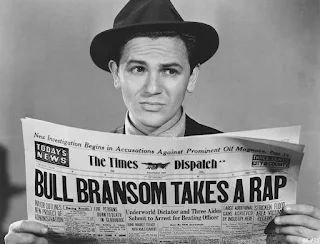
John Garfield
Many of the Hollywood actors and writers in particular were not employed in their industry for seven, ten, twelve or more years. Others, from big stars like actor John Garfield (who refused to name names) to many lesser-knowns, lost their careers forever, and some lost their health, their marriages and in a few cases, their lives to suicide.  The blacklist became so institutionalized that it continued well into the 1960s, and had lingering effects even in the 70s, long after the McCarthy period was over.

    A few lesser-knowns got some work because of defiant directors and producers: Alfred Hitchcock employed actor Norman Lloyd, and Robert Wise refused to drop Sam Jaffe from the cast of the 1951 The Day the Earth Stood Still.  Both became big TV stars in later decades: Jaffe as Dr. Zorba in the medical drama Ben Casey, and Lloyd in a later medical drama, St. Elsewhere.

 And one lesser-known actor was saved by Superman. Veteran film actor Robert Shayne was in the cast of The Adventures of Superman, playing police Inspector Henderson, when his wife divorced him, and accused him of being a Communist.  His offense seems to have been an interest in unionizing.  As he was being investigated, George Reeves, Superman himself, vouched for him.  He was soon a regular on the show. 

But all of this had a profound effect on the culture of Hollywood (which quickly made some 50 anticommunist propaganda films) and America in general. Dissent and political activity died down, the narcosis identified with the 1950s began. It probably wasn’t a coincidence that in the 1940s cartoons Superman fought for truth and justice, but on TV in the 50s he also fought for the American Way, standing stalwart in front of a huge waving flag. 

Brecht
Hollywood had been energized by the artists and intellectuals who fled from Germany and elsewhere in Europe to southern California just before and during World War II.  Now in the Blacklist 50s, playwright Bertoldt Brecht led the exodus back the other way.  But the emigration also included Hollywood hands born in the USA.  Some hid out in Mexico, and some fled to Canada and Europe.  Some didn’t come back for a very long time.

  One of these refugees from repression was Hannah Weinstein, a journalist and political operative who worked on the New York mayoral campaign of Fiorello La Guardia, and the presidential campaign of Franklin D. Roosevelt.  She and screenwriter Ring Lardner, Jr. wrote speeches for Orson Welles and Charlie Chaplin, supporting FDR.  All four of them were eventually blacklisted.

 But before anyone could name her name, Weinstein relocated to Paris in 1950, and then moved to London two years later.  There she established a production company, Sapphire Films.

 In 1954, legislation was passed in England to foster competition with the state-owned British Broadcasting Company (BBC.)  A private company developed by Lew Grade called ITV was hungry for programs, especially the kind that could draw attention and audience. Hannah Weinstein and Sapphire Films had a proposal he liked.  

Producer Hannah Weinstein with
Robin Hood cast members
The Adventures of Robin Hood went on the air on ITV in England on September 25, 1955, and a day later in the US, broadcast by CBS on Monday evenings at 7:30, sponsored by Johnson & Johnson and Wildroot  Cream-Oil hair tonic.  It became an immediate hit in both countries.  Its four seasons (three seasons of 39 episodes each, one season of 26, for a total of 143 half-hour shows) ran until the end of 1960.  Syndicated re-runs began even before the first run was over, and the show was often scheduled for Saturday mornings, sometimes with a slightly different title (“Adventures in Sherwood Forest.”)

 It was a triumph for English folklore and free enterprise.  But The Adventures of Robin Hood had a secret: it was written almost exclusively by blacklisted American writers, including at least one of the Hollywood Ten, Weinstein’s former writing partner, and Academy Award-winning screenwriter Ring Lardner, Jr.  It’s been estimated that 22 blacklisted writers worked on episodes for this show, always using pseudonyms.  Most of them still resided in the US (some because they’d had their passports revoked.) 

Their participation had to be kept secret, and it was. A number of pseudonyms were used so that none would stand out, and they usually were typical British-sounding names. 

Moreover, the Robin Hood series was such a hit that Weinstein quickly followed with two others widely seen in the US as well as England: The Buccaneers and The Adventures of Sir Lancelot.  Lancelot of course was a Knight of the Round Table, so King Arthur (the other English hero) made it to American TV as well. More blacklisted writers worked on Lancelot and The Buccaneers.

 Starting in 1956, we could watch Robin Hood and Lancelot back to back on Monday nights, though we might have to switch the channel to an NBC station at 8.  Also that fall, we saw The Buccaneers on Saturdays at 7:30 p. on CBS.

 This was the ironic vengeance of the Blacklist.  The blacklisting authorities claimed they were only concerned with eliminating subversive ideas from being concealed in American entertainment, and foisted on innocent American viewers.  No real Soviet propaganda was ever found in a Hollywood film or TV show.  But thanks to the Hollywood blacklist, blacklisted writers were now churning out stories around ideas that the blacklist promoters might well consider subversive, and the most innocent Americans of all—namely nine year olds—were watching them every week. 

The two features that defined The Adventures of Robin Hood to me and my friends are the same two that likely remain in the memories of those who watched it: the opening shots and the song at the end.

 Each episode began with Richard Greene as Robin Hood pulling back his bowstring and letting the arrow fly, with a whoosh, a whirring sound and a vibrating plunk as it hit a tree, followed by a drumbeat and the trumpet flourish. It was one of the most effective sounds associated with any TV show.

 Then after the story came the song, sometimes just the hypnotic chorus: Robin Hood, Robin Hood, riding through the glen/Robin Hood, Robin Hood, with his band of men/Feared by the bad, loved by the good/ Robin Hood, Robin Hood, Robin Hood.

 By the age of nine I was playing regularly with three other boys, neighbors on each side of our house.  Across our houses on Lincoln Avenue was a fairly large patch of trees and brush (it later hosted lots for three or four houses), that became our Sherwood Forest.  (We noticed that the Lincoln Road passed through Sherwood, and Robin's band dressed in Lincoln green.)

  We immediately got interested in the quarterstaves that Robin and the outlaws carried and used in their fights, and in our woods it was easy enough to find and fashion such a staff.  They made satisfying sounds when we clunked them against one another in our simulated combat.

 We actually experienced a double dose of Robin Hood in 1955. Walt Disney made a Technicolor feature film in 1952, The Story of Robin Hood starring Richard Todd (some of which was shot in the real Sherwood Forest), and showed an edited version on his TV show in two parts in November. Robin Hood’s fight with Little John on a narrow bridge over a river using quarterstaves was more elaborate than on the TV series. 

 Our experiments fashioning bows and arrows were less successful.  A few years later, probably while the Robin Hood series was still on the air, two of my friends—the brothers who lived across a grass field to the south—were given real fiberglass bows by their father.  We set up targets and learned to shoot a little, but we couldn’t really use them for play.  None of us got good enough to even pretend to be Robin Hood in an archery contest.  

When The Adventures of Sir Lancelot began in the fall of 1956, we saw a different style of sword fighting—with the big flat broadswords, sometimes with shields but sometimes using two hands. These were also easier to simulate with wood. We also learned the vocabulary of challenge and acknowledging defeat: “I yield.” 

 While all this was of first interest, the stories were satisfying enough that we kept watching.  Unlike Superman, I’d heard of Robin Hood and King Arthur. There was a long story in the My Book House Books volume In Shining Armor about Robin Hood, for instance, though it was based on an older version set in the era of Henry II.  The TV series and most modern versions of Robin Hood place him in the era of Richard the Lionhearted (Henry’s son) and the Crusades.  Similarly, the legends of King Arthur evolved over the centuries, but each version of Camelot sets the stage for the next iteration.

 So what were the subversive ideas we innocents absorbed? The most obvious is the best known quality of the Robin Hood legend as it developed through the centuries: he took from the rich and gave to the poor.

 That indeed was almost enough to get Robin Hood himself blacklisted, or more specifically, banned.  In 1953 a member of the Indiana Textbook Commission called for eliminating Robin Hood from all educational materials in the state, because Communists were allegedly advocating Robin Hood’s income equality measures be emphasized in education.

 Although the governor of Indiana also spoke darkly of a Commie takeover of the Robin Hood legend, the commission didn’t act.  Still, the proposal inspired protest by the “Green Feather Movement” on the Indiana University campus.  Five students distributed green feathers all over campus, with handbills explaining the issue.  The local newspaper denounced them as Commie “dupes,” and the five students were reportedly investigated by the FBI.  This was the McCarthy era in small.

 Of course this was all nearly 70 years ago. We’re way beyond that sort of thing now.

Robin and the Sheriff (Alan Wheatley)
 In the series Robin Hood did make a policy of robbing the corrupt rich and distributing to the exploited poor. But these acts weren’t characterized as political.  Robin Hood’s weekly opponent, the Sheriff of Nottingham (played by Alan Wheatley) often spoke instead of Robin Hood being “sentimental” for helping the poor or unjustly accused, or rescuing those in trouble.  It may seem a curious word now, but in the 50s “sentimental” was another word for “womanly” or effeminate, unmanly—an echo of the implied charge against Superman. 

 This Robin Hood series made it clear that the rich being robbed were mostly those whose wealth was ill-gotten gain, chiefly by taking from the poor. To us as children, Robin Hood’s actions just seemed fair, and as psychologists and parents are aware, children have a very strong sense of fairness.

 But there were story points beyond this, some suggesting issues relevant to the blacklist itself.  A central conflict of the blacklist era was between those who informed on others, either out of conviction or to try to save themselves, and those who refused to name names. Some who did name names (like director Elia Kazan) ruined careers and lives.  Though blacklisted writer Dalton Trumbo famously observed that the blacklist had “only victims,” some never forgave the informers. So as late as 1999, Elia Kazan’s honorary Oscar was met with protests and a number of actors in the audience who refused to applaud or turned their backs.  

There were stories in both the Robin Hood and Lancelot series that dealt with informers and traitors, the unjustly accused and punished, all the stuff of drama and history beyond the blacklist, but pertinent to what happened in Hollywood. Similarly, the corrupt Sheriff as well as dishonest nobles often tried to use Robin Hood and his band as scapegoats for their own misdeeds and swindles.  It’s not much of a stretch to see that as reflecting the views of the blacklisted.

  Many more stories concerned issues that reflected broadly applicable and widely held convictions shared by the writers—including perhaps the kind that got them in trouble with those in power who had a more constricted world view.  For example:

 In “The Salt King,” a noble with the legal corner on selling salt creates an artificial shortage by robbing his own shipment, and then quadruples his prices, until the outlaws of Sherwood foil his plan.  In “A Tuck in Time,” Robin Hood prevents the auction of a primitive cannon powered by “devil’s powder,” temporarily preventing an arms race.  

In “The York Treasure,” Robin stops Malbet, a racist noble from preventing Jewish refugees from landing. Malbet gives several speeches railing about the duty of “right thinking people” to keep out “their dirty kind” with their “low foreign cunning,” to maintain England for the English.  Malbet—whose actual purpose is to steal the money that two Jewish citizens have gathered to pay for the refugees’ passage-- is certain the refugees won’t fight back, but he’s wrong about that.

 In “A Change of Heart,” a lord refuses to allow a small band of “primitive” Celts from remaining on their land, arguing that in the medieval schema, they aren’t really people.  With the use of a sleeping potion, Robin convinces the lord that he is actually one of the Celts, and soon he is arguing that the Celts have human rights, and a right to their land. 

Billie Whitelaw
There’s a preview of women’s liberation in “The Bride of Robin Hood,” with guest star Billie Whitelaw, who would soon become Samuel Beckett’s most important collaborator, and would star in several Albert Finney films, especially Charlie Bubbles. 

 Disguised as a boy, she saves Robin’s life with her archery skills. Speculating on her motives for attacking the Sheriff’s soldiers, Robin suggests she may have suffered some oppression herself.  As she pulls back her hood to reveal her feminine blond hair, she says, “All my life, beginning in the cradle as a disgrace because you weren’t born a boy.  They think it’s a waste of time to teach you anything, and then they marry you off without bothering to consult you.”  (However, the episode soon becomes a conventional comedy.)

 Of course there were many more stories with variations on the standard plots and conflicts, as well as other contemporary topics treated with a light touch, as when Robin shows a pair of comic juvenile delinquents the error of their ways, or the Sheriff lays siege to a castle with Robin inside, where he happily cavorts with Maid Marian.

 These were all in the context of adventure stories, with battles, captures and escapes, and wars of wits between Robin Hood and the Sheriff.  There was considerable humor, from slapstick to witty banter, aided by guest performers such as the brilliant comic actor Leo McKern. Donald Pleasance made a deliciously evil King John in one of five episodes directed by Lindsay Anderson, who later directed the late 1960s cult film, “If…” that made Malcolm McDowell a star.

 The Adventures of Robin Hood was filmed partly in a British studio and partly on locations, often on the estate of producer Hannah Weinstein.  Richard Greene starred as Robin Hood throughout, Alexander Gauge as Friar Tuck and Archie Duncan as Little John (except for the episodes he missed because of injuries from his real life heroics, saving some visitors to the set from errant animal actors).  Alan Wheatley was the sinister but never frightening Sheriff of Nottingham (replaced in the fourth season by John Arnatt as the deputy sheriff), and Bernadette O’Farrell was an attractive Maid Marian (replaced by Patricia Driscoll.) 

Lee Grant 
As a 9 year old, I’d heard of the Red Menace and a little about McCarthyism, but I knew nothing about the Blacklist.  Nor did I know much about it at 19, or for some years thereafter.

  In fact the Blacklist had been lost to history until the mid-1970s, when its 1950s reality was finally admitted.  While accepting her acting Oscar in 1976, Lee Grant was the first to mention that she’d been blacklisted in the 50s. (Writer Milliard Lampell announced his blacklisting while accepting a television Emmy a decade earlier.) 

The first feature film about the Blacklist was released in 1976, The Front, made by a blacklisted director (Martin Ritt), written by a blacklisted writer (Walter Bernstein), with several blacklisted actors in the cast, including Zero Mostel.

  That same year, Hollywood on Trial, the first documentary film on the Blacklist, was nominated for an Academy Award.  It was made by friends of mine in Boston, and I followed its process from nearly beginning to end, viewing hours of interview footage that didn’t get into the film, and as far as I know have never otherwise been seen.  I met several children of the blacklisted, some without knowing they were at first, and eventually wrote about the effects on their lives. I had in fact worked with Ring Lardner, Jr.’s son, James, a few years before knowing much about the blacklist.

 It was later in the 70s that I heard that blacklisted writers had found work on the Robin Hood show, though it’s only been in putting this post together that I learned many of the details.  

In his Spotlight review of The Adventures of Robin Hood, Allen W. Wright observed, “Many children of that generation would be inspired by this series. One professor remarked that show formed the basis of her morality.” 

 "Robin Hood ran for four years, generating profits for everyone concerned,” Ring Lardner, Jr. concluded in his autobiography, “and perhaps, in some small way, setting the stage for the 1960s by subverting a whole new generation of young Americans."

 But though the connection to the blacklist gives these shows a giddy emphasis and curiosity they didn’t have at the time, and while I appreciate the ironies involved, there is the additional irony that these shows written by blacklisted writers weren’t all that different from others we were seeing.  These were similar to stories and themes in some other dramas and adventures we watched, including several already described in this TV and Me series. 

 And maybe that’s the point.  The blacklist as it evolved was not only dangerous and destructive, it was arbitrary and capricious.  It did needless damage that lasted for decades, both to individual lives and to movies and the culture.  But though it dampened adult culture in the conformist 50s, it may have missed the future, thanks in part to Robin Hood.

Monday, March 07, 2022

Legacy


The time will come 
when, with elation
 you will greet yourself arriving
 at your own door, in your own mirror
 and each will smile at the other's welcome,

 and say, sit here. Eat. 
You will love again the stranger who was your self.
 Give wine. Give bread. Give back your heart
 to itself, to the stranger who has loved you

 all your life, whom you ignored
 for another, who knows you by heart. 
Take down the love letters from the bookshelf,

 the photographs, the desperate notes,
 peel your own image from the mirror. 
Sit. Feast on your life.

-- Derek Walcott

Friday, March 04, 2022

Beyond the Glare


 Some stories in advance of President Biden’s State of the Union address suggested that its organizing theme was to be the climate crisis.  But then Russia invaded Ukraine, and Ukraine dominated the top of the speech.  By the time he delivered it, the State of the Union had essentially nothing about the climate crisis.

 This is how it always is.  There is always something more timely, that requires and gets the priority of attention.  And after knowing that the climate crisis is  an immense and growing threat for at least a generation, there has still not been an address to the American people by the President of the United States, either from the White House or to Congress, with the climate crisis as its subject.  Not one. 

This past week, the UN issued its latest report on the effects of the climate crisis, both current and projected.  This is a meticulously detailed report with contributions from more than a thousand scientists. Yet in outline it predicts dangers that I was writing about on this blog and elsewhere some 20 years ago. The difference is in its precision.  What isn’t different is that, while progress has been made here and there on local levels, the world is still woefully unprepared to address the effects.

 It is the second of three reports this year of what some observers say is the last UN assessment that has the potential to do any good, because when it’s time for the next one, it may be too late to prevent the worst from happening.

 Some things have changed.  The language of the report is stark and direct—there’s less obscurity and compromise. The UN Secretary General has given up all diplomatic language, and indicted those nations responsible for inaction, or not enough action. Coverage in major media was better—the Washington Post was particularly good—though the coverage is not a great deal more widespread.  A lot of it, even from more specialized sites, covered it with lists of five or six “takeaways” of their choice, (for example here, and here) but reading several of these covers the major points.

 And of course, the Ukraine invasion news buried it all. Its media glare rendered everything else invisible. The same was true when the first part of the report was issued, in the midst of the Covid pandemic.

 But it doesn’t take a pressing event of this magnitude to overwhelm climate crisis information.  It just takes the latest Beltway/ Internet/social media shiny object. They come and they go, generating immense attention for hours, days or a few weeks, and then winking out, in favor of the next shiny object.

 The same is likely to happen with Ukraine, especially if the war grinds on.  When it does, the threats from the climate crisis to the human future, to the future of life as we know it, will remain, and get worse. 

 Eventually there will be something so immense that it will become the shiny object—something like the twenty million people dying in a single heat wave that Kim Stanley Robinson described in his novel, The Ministry for the Future.  We’ll get a White House address then perhaps, whether or not there’s still time to do what must be done.

 Shiny objects are not the only barrier, of course. The lead article in the WPost on last week’s report pointed out another: the most terrifying effects—at least at first-- are likely to happen in poorer countries, and their frequency and power will be felt most later in this century.  In other words, as the Post pointed out, when those who are now 55 are dead.  It just so happens that the vast majority of wealth and power resides in the hands of older white people in rich countries. 

 Beyond the glare, much is being done—research, design, local resilience projects, regional organizing, political lobbying.  Investment in clean energy is waiting for government action and leadership.  There are resources and some infrastructure ready to be organized and activated in a committed effort.

 But it will take leadership to organize and activate it. Isn’t it time for the President of the United States to speak to the nation from his desk in the Oval Office, and explain to the American people and the world what these reports say, and what this nation needs to do to address the causes and effects of the climate crisis?  What the opportunities and the costs will be, and make this a matter of national purpose? No matter what shiny object is glaring?

 The third and final part of the UN assessment is due to be released next month.  It may be the last opportunity to do it while it still may matter.  At this point, doing it is better than not doing it, regardless of its immediate effect.  The climate crisis needs to be the shiny object before it forces itself to be the only shiny object.

Sunday, February 27, 2022

My Grandfather Was A Quantum Physicist


My Grandfather Was A Quantum Physicist

 I can see him now
 smiling
 in full dance costume
 with other men
 in front of the roundhouse
 on a sunny afternoon.

 Scientists have finally discovered
 that the intimate details
 of our lives
 are influenced by things
 beyond the stars
 and beyond time. 

 My grandfather knew this. 

 --Duane BigEagle


Born in 1946, Duane Big Eagle is an Osage from Osage County, Oklahoma. He lived many years in Pentaluma, California, where he was involved for decades in the California Poets in the Schools program. He is a poet, painter and traditional dancer.  This poem was published in the early 1980s.

Tuesday, February 22, 2022

TV and Me: "It's Superman!"


Television and I grew up together.  This is our story. Fifth in a series.

  I was stuck inside one weekend afternoon in December 1952, probably a Saturday.  I was six years old, and had just started first grade at Sacred Heart School in September.   One of my aunts on my father’s side was visiting, accompanied by at least one daughter. All of my Kowinski cousins at that point were girls, so they would play with my sister.  That usually involved a lot of screaming and running around.  On this day they would erupt from my sister’s room and barge into mine, point at me, scream and run away.

 My mother and my aunt, busy talking over coffee in the kitchen, were no help.  So I parked myself in front of the television set in the living room, and turned it on, with no expectation of what I might see. 

What I saw was a man in a futuristic Flash Gordon outfit, explaining to others dressed in a similar way that their planet was about to explode.  They got angry and didn’t believe him.

 I had stumbled upon the first episode of The Adventures of Superman.  But I’d missed the opening—the “Look! Up in the sky!” and the “faster than a speeding bullet” and probably the most famous description in early television, of the “strange visitor from another planet, who came to Earth with powers and abilities far beyond those of mortal men.”  I even missed the name: Superman.

 I started with that first scene on Krypton. So I didn’t really know what I was watching, but I was mesmerized. I don’t know how much of the story I followed that first time, but by the end I’d seen Clark Kent become Superman, and fly to the rescue—of a man dangling from a dirigible. 

I know I felt completely absorbed in that world, and when the program ended I felt bereft, confused. I didn’t know what to do.  My mother and my aunt were still in the kitchen. I didn’t have anyone to talk to about it.  So I went back into my room, closed the door, and thought about it.  And then I did what many others would eventually do: I tied a blanket around my neck to create a cape.

 I watched episodes all that school year.  At the same time I was getting my first doses of Catholic doctrine, mostly through stories Sister Mary Kathleen would tell every morning (although since first and second grade were taught in the same classroom, I probably also got my introduction to the Baltimore Catechism.)  For awhile I started to think of Superman’s father Jor-El as God the Father (anticipating a theme of the Christopher Reeves’ Superman movies.)

 I was especially taken with Superman’s secret identity as Clark Kent, and the episodes in which that secret was endangered.  Perhaps this had something to do with going to school, where I was no longer the hero of epics my playmates and I invented as we performed them, but I had to be meek Clark Kent and fold my hands and put them in the center of my desk. 

Still, I didn’t want to keep my true identity a secret from a blond second grade girl named Judy, and once stood outside the classroom where I knew she was, significantly glancing to the sky and making those quick movements George Reeves did, as I ran off to transform into the Boy of Steel.  Somehow I believed she would interpret my actions correctly—the first of many such mistakes.

 But before that December day, I was a complete Superman innocent.  Superman did not exist for me until I saw that first television episode.

 But Superman had been around since his first comic book appearance in 1938.  He was an immediate hit, far beyond comic book readers.  His first “personal appearance” was on Superman Day at the 1939-40 New York World’s Fair.  Superman has still sold more comic books than any subsequent superhero.

  A radio show soon followed in 1940 (the voice of Superman belonged to Bud Collyer, who I would see as the mild-mannered host of the TV game show “Beat the Clock”), which ran until 1950. 

 Then a series of theatrical cartoons in 1941 and 1942, the first nine of which were made by the Fleischer Studios, with an unusually large budget. (Eight more were made by different directors, with lower budgets and a choice of wartime stories that exposed elements of the racism of the time.)

  These nine full color cartoons are still striking, notable for their art deco look and an emphasis on Superman in action—in several there is almost no dialogue (although Bud Collyer is tapped to again to give his signature radio line: “This looks like a job [voice suddenly lowers] for Superman!”)  Also they feature a sexier Lois Lane, who flies her own plane and can handle a tommygun.   The famous George Reeves Clark Kent wink is previewed in this version, as is the hands-back flying style of Christopher Reeve in his feature films.

 After that there were a couple of live action movie serials in 1948 and 1950, with Kirk Alyn.  These were the most profitable serials in movie history, outdoing the classic Buster Crabbe Flash Gordons.  In these, Superman was seen flying in animation.

 The next step was a feature film in 1951, though it was really a low-budget test drive for the upcoming television series.   Superman and the Mole Men starred George Reeves as Superman and Phyllis Coates as Lois Lane, and clocked in at under an hour.  It would later be edited into two half hours for the TV series.  This time, and for the first time, a live action Superman flew.

 The first season of the television series The Adventures of Superman went into production immediately after the movie was shot in the summer of 1951, with the addition of Jack Larson as Jimmy Olsen, Robert Shayne as Police Inspector Henderson and John Hamilton as Perry White, editor of the Daily Planet. Nothing happened for awhile until Kellogg’s cereals (eventual sponsors of the radio version) agreed to sponsor it. It was a syndicated program, which means it wasn’t on any network schedule. So it was up to individual stations to take the chance.

 The first to air it was WENR in Chicago, in September 1952.  Then Davenport, Iowa and other small Midwestern markets in October.  Then Buffalo in November, and Pittsburgh’s WDTV in December.  Most scheduled it in an open early evening slot.  I may have seen a Saturday afternoon re-showing from the previous week, a not uncommon practice at the time.  Or it may have been where it was first scheduled, though it soon had an evening time.

 Those of us in Chicago or in range of the Pittsburgh station got a head start, since the big markets—Los Angeles, Baltimore/Washington and New York City—didn’t air the first episode until the spring of 1953. Once it hit New York in April, though, the show was an instant smash hit. 

Kirk Alyn and Noelle Neill in the movie serial
The series went back into production for a second season, with a change in producer and in the cast. Noelle Neil, who had been the first screen Lois Lane in the movie serials, became the television Lois for the remainder of the series. 

 Though apparently a result of Phyllis Coates being unavailable, this change was fortuitous.  Coates’ Lois had a harder edge, and her belittling of Clark Kent bordered on abusive at times. This reflected the character division between the meek Clark Kent and the dominant Superman of prior versions.  But the TV series couldn’t afford a half hour of Superman special effects—a lot of the story had to be carried by Clark Kent, and George Reeves played him more as a crusading reporter.  (The opening narration, after all, ended with “…and who, disguised as Clark Kent, mild-mannered reporter for a great metropolitan newspaper, fights a never-ending battle for truth, justice and the American Way.”)  Superman works through Clark as well as in his own identity.

 The Adventures of Superman made six seasons of half-hour shows, though only the first two were of the full 26 episodes (which were then re-run for a year of 52 weeks.) The next four seasons had 13 new episodes each, with the second half of the season as re-airing of previous episodes, including from earlier years.  Starting with the third season in 1955, the series was shot in color, though most stations didn’t air it in color until there were enough color sets, at least a decade later. 

The color episodes helped extend the life of the series, but it didn’t really need much help.  The Adventures of Superman was seen off and on for decades—so kids in the 60s, 70s, 80s and beyond might replicate something like my first-time experience.  (One fan site I ran across was run by someone who first saw it on a cable station in 1986.)

 Superman was a touchstone during my entire childhood. Even in the 50s, Superman episodes were aired and re-aired many times, so my memories include responses from throughout my childhood. Still, when I’ve gone back to view these episodes on DVD, it’s been clear that my sharpest memories are from the first and second seasons. 

 I remember a moment in an early first season episode, “Mystery of the Broken Statues” (a variation on a Conan Doyle Sherlock Holmes plot) when Lois Lane suddenly cries in surprise, “Eureka!”  I’d never heard the word before and wondered what it meant.  I was fascinated to learn in one second season episode that diamonds are made from “coal, carbon: you put a lump of coal under a million tons of pressure for a thousand years, you get a diamond.”  But of course, Superman did it with one hand.

 And I recall Clark Kent playing with words when he teased Lois, “You wonder?  No wonder that you wonder—you’re a pretty wonder-ful girl.”

 Most of all I remember the attempt to kill Superman in the final first season episode, “Crime Wave.”  Superman was lured into a large room, with geometrically shaped objects on the walls, presumably parts of the deadly device.  The door crashes closed behind him—he tries to find a way out, pressing the walls at the corners, but he’s trapped.  Then the “professor” in the next room turns on his machine, which attacks Superman from all directions with jagged lightning-like spears, crackling like electricity.  Superman ends up in the center of the room, trying to ward off the rays with his hands, but sinking to his knees and then falling, inert on the floor.

 The professor comes in and pronounces him dead.  The Big Boss (the one that Superman and the Metropolis police have searched for in vain) arrives to gloat—until Superman jumps up, and demonstrates how easy it is for him to escape.  He has baited the Big Boss into revealing himself (he turns out to be the head of the citizen crime commission.) 

 This attack on Superman remained vivid in my memory for a long time. In fact, either it has been edited down since or I added every more agony in my imagination, because it seemed longer and more convincing.  I “remember” specific moves that aren’t in there anymore.

 But the stories in a sense were secondary: everything was in that still haunting opening—that strange visitor from another planet with powers and abilities far beyond those of mortal men, standing against a background of the stars, just above the Earth —energized my imagination and yearning. 

I became such a loyal fan that I sent away for my “Supermen of America” membership and secret code book, probably from the comic books.  (There were actually nine codes: one for each planet, including Krypton, but not, of course, Earth.  I kept the booklet under my mattress.) 

 The edge and seriousness of the first season became lighter at times in the second (in one episode, the bad guys are defeated by customers at a diner throwing pies at them) and in later years, plots began veering off into low-budget fantasy. (Though they could hardly compete with the comic book fantasies of that decade.)

   Towards the end there were surreal moments that seemed to be coming from writers entertaining themselves, as when one hoodlum described what he was going to do with his share of the loot—he would build a big house that looked just like the penitentiary, so his friends would feel at home. 

Still, there was a theme communicated to us, maybe even better when the early crime-fighting faded: Superman rescued those in trouble (even if too often it was Lois and/or Jimmy).  He was the strong champion of those who needed help.

   This was the apparent paradox of Superman: a man so powerful he could take anything he wanted, but he only helped others.  In a first season episode, a criminal mastermind type who is trying to figure out which Daily Planet reporter might be Superman in disguise, questions Lois Lane and speculates it might be her.  Superman might be a woman, he suggests, because he defends the weak, and acts out of compassion.  Implicit in this telling observation is  that Superman redefine the conventional view of the masculine to emphasize altruism. 

 According to Superman’s chief creator, a young man in Cleveland named Jerry Siegel, this idea of the altruistic champion was a motive for the character’s origin in 1934.  He described his state of mind at the time:  “Being unemployed and worried during the Depression and knowing hopelessness and fear.  Hearing and reading of the oppression and slaughter of helpless, oppressed Jews in Nazi Germany…seeing movies depicting the horrors of privation suffered by the downtrodden…How could I help them when I could barely help myself?  Superman was the answer.”

 Siegel and his drawing partner and friend, Joe Shuster, looked to science fiction, movies, pulp and comic strip adventures to shape the character and his environment.  “Metropolis” came from the classic Fritz Lang futuristic movie of the same name.  Superman’s dual identity was preceded by such fictional figures as Zorro and the Scarlet Pimpernel. Clark Kent’s look was partly inspired by silent film comic Harold Lloyd.  Lois Lane was derived from a B-movie heroine, a reporter called Torchy Blane. (Shuster hired a Cleveland girl to model for his first drawings of Lois, and later married the model.)

 While the Superman costume was influenced by a variety of fictional characters, ultimately it comes from the shared imagery of the circus, for many years a major source of entertainment in America: the aerialist’s tights, the bodysuit with the underwear on the outside of the circus strongman, and the magician’s cape.

  (The first comic strip character by a couple of years to wear what is now the standard superhero costume was The Phantom, who technically wasn’t a superhero because he had no superpowers. The Phantom was a long-running comic strip series, with one movie serial.  I followed his exploits in our daily paper when I was old enough. A proximate inspiration for his costume was Douglas Fairbanks’ Robin Hood. Fairbanks was also a model for Siegel and Shuster’s Superman.)

 When Siegel got to actually write Superman stories for comic books, the character he created was that idea of Superman that inspired him in 1934. In his first story Superman prevented a woman from being wrongfully executed.  In his second, he went after a wife-beater. 

In his 1930s adventures, Superman rescued miners in a cave-in, battled stock market manipulators and munitions manufacturers fomenting wars to sell their wares. He fought crime, but also poverty and unsafe labor conditions. He battled crooked politicians and lobbyists, slumlords, corrupt industrialists and crooked labor leaders alike. He came to the aid of individuals in trouble, and was devoted to the common good. He was a compassionate, high-spirited and humorous hero of the people, a wise-cracking crusader, like Spiderman with an edge.

 When others took over the comic books (Siegel and Shuster had signed away their rights to the character), the themes of righteous rescue and battling injustice were weakened, but never completely faded.

 They emerged again from time to time in the 1940s radio show. On the very first radio broadcast Superman was described as "champion of the oppressed...who has sworn to devote his existence on Earth to helping those in need." Later on radio he would be described as “ champion of equal rights, valiant, courageous fighter against the forces of hate and prejudice.”  

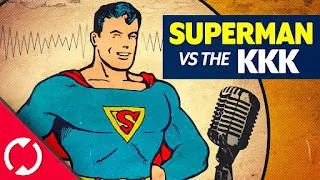
 In 1946, a 16-episode series had Superman battling an organization based on the KKK ("The Clan of the Fiery Cross.")  Reputedly based on descriptions by a  reporter who infiltrated the Klan, for the first time it exposed its secret rituals as well as its crimes.  The series was credited with reducing KKK recruiting.  Notably it related this domestic racism to Nazi racism.

 The 1950s television series hit some of the same notes. The first episode of the second season echoes that first comic book story when Superman saves an unjustly convicted man from execution, just in the nick of time. In the pilot film, “Superman and the Mole Men,” Superman defends harmless and helpless aliens against a mob. He reasons with these men but then explodes:  “Stop acting like Nazi storm troopers!” 

(This Superman in the pilot movie had the harder edge of the early comic’s character.  He saves the life of one of the mob, but when the man tries to thank him, all Superman says is, “You don’t deserve it.”)

 If Superman’s rescues became less pointed and more generically humanitarian, they still maintained that initial image to some degree. 

 According to author Thomas Andrae, Superman was “neither alienated from society nor a misanthropic power-obsessed nemesis but a truly messianic figure...the embodiment of society’s noblest ideals, a ‘man of tomorrow’ who foreshadows mankind’s highest potentialities and profoundest aspirations but whose tremendous power, remarkably, poses no danger to its freedom and safety.” 

The Adventures of Superman series we saw in the 1950s was in large part a legacy of earlier versions. Besides the comic books, the early 40s animated cartoons made the key change of giving Superman the ability to fly, instead of just leaping tall buildings in a single bound.  (They animated this in one sequence and thought it looked dumb, so they got permission from the comic book company to show Superman flying.)  

The animated series in particular began the evolution of the similar theme music that continued until John Williams made it definitive in the first big budget feature film in 1978.  But the 1950s TV version was also exciting.  We would dat da da, da da da da the melody out loud while we played.

The radio show also added Kryptonite, the Daily Planet as the newspaper’s name, and the characters Jimmy Olsen and Perry White. The comics then absorbed all of it. Though he was invented for radio, it was the TV version of Inspector Henderson that persuaded the comic books to include him, too. 

Jimmy Olsen (Jack Larson) and Lois Lane
(Noel Neill)
The actual stories in the TV version’s opening seasons came primarily from the radio show, though many of those tales had in turn been adapted from the comics.  The origin story in that first episode was a direct copy from the Kirk Alyn movie serial, including some identical dialogue. 

 But by the second season the TV series settled into itself.  Noelle Neil as Lois Lane was a key to the difference.  She was a good-natured skeptic in relation to Clark Kent, but without the withering contempt, and treated Jimmy Olsen as more of an equal.  That worked better with the new interpretation of Clark Kent, and helped elevate the increasingly popular Jimmy Olsen. 

There was a relationship, a camaraderie among the principals that transcended some of the hokey stories, without ever seeming insincere.  This happy family was more reassuring to kids. The suspense in the stories was sometimes furnished by threats to Superman (especially Kryptonite), but more often the suspense was whether he would find out where the trouble was and get there in time.  Of course, all this was the surrounding sideshow for what we sat down to see: Superman flying, bursting through walls, facing bad guys with their bullets bouncing off his chest.

 As children we may not have noticed, but there’s no hiding what a low-budget series this was.  It was shot very quickly, with scenes in the same location but for various episodes shot on the same day—one reason that the characters wore pretty much the same clothes all the time. When the series was shot in color, those clothes got even more similar: they were all mostly in shades of blue, presumably because they would also register well in black and white until the color sets came along.

 And those outfits in the origin episode that look like the ones in Flash Gordon?  One reportedly was worn in a Flash Gordon serial, while others had appeared in other serials such as Captain Marvel and Captain America.

 The absurdities became in part a kind of television convention, such as the opening shot of the huge Daily Planet Building, in which it seemed that about five people worked.  They got out a metropolitan daily newspaper with an editor and two and a half reporters.

 The same special effects shots—especially of Superman flying—were shown over and over.  Other shots—Clark Kent running down the alley to become Superman, or Superman landing in front of a wall of boulders—were also repeated often, even when not entirely appropriate.  But to us I suppose it was all ritualized.  Perhaps that early childhood insistence on repetition (the same story over and over) never completely goes away (playing the same song over and over.)

 The low-budget nature of the TV show unfortunately extended to the shockingly little the cast was paid.  Eventually George Reeves was paid decently, but the others all had to live modestly and insecurely.  John Hamilton (Perry White) lived in a bungalow and took a city bus to work on the Superman set.  They were all cut out of the residuals paid over the many years that these episodes were repeated.  (But then it took Siegel and Shuster several lawsuits to begin to get a tiny piece of the huge action from their creation.)     

 It took more than 20 years after the TV show but the character of Superman went on the big screen in a very big way in 1978, with the first of the four Christopher Reeve Superman films.  To me Reeve is the definitive Superman, as well as the definitive Clark Kent.

 More television shows followed, and more and even bigger movies.  Superman was the first superhero, and now superheroes are a genre in themselves.  They dominate feature filmmaking and exhibition, and with films that cost more than the annual budgets of some countries, not to mention the combined annual incomes of millions of people.  Superhero films get bigger and bigger, as teams of superheroes battle teams of super-villains on a cosmic scale, with the survival of worlds, the universe and everything at stake.

 Now the human scale of the TV Adventures of Superman is almost completely lost.  The idea that superheroes might waste their time rescuing miners after a cave-in, fighting a slumlord or a protection racket targeting small storekeepers, saving a child from harm, or even dealing with the unfortunate consequences of goodhearted but misguided inventors, would seem beneath them, not to mention failing to generate big enough visual effects battles, explosions and loud mayhem. 

 For all its flaws, the 1950s TV show better represents the rationale and the uniqueness of the Superman character, including human wish fulfillment to address human scale tragedies, in which the worst of it includes feeling powerless.  Something a six year old understands very well.  Yet the message was part of the character: if you have power, you use it for others, and for the common good.

Sunday, February 20, 2022

Grandmother


Out of her own body she pushed
 silver thread, light, air
 and carried it carefully on the dark, flying
 where nothing moved.

 Out of her body she extruded
 shining wire, life, and wove the light
 on the void.

 From beyond time,
 beyond oak trees and bright clear water flow,
 she was given the work of weaving the strands
 of her body, her pain, her vision
 into creation, and the gift of having created,
 to disappear.

 After her, the women and the men weave blankets into tales of life,
 memories of light and ladders,
 infinity-eyes, and rain.
 After her I sit on my laddered rain-bearing rug
 and mend the tear with string.

 --Paula Gunn Allen 

 Paula Gunn Allen was a member of the Laguna Pueblo in New Mexico. Her mother was Laguna, her father from Lebanon. One of her grandfathers was a German Jew. She was a poet, fictionist, anthologist and scholar, as well as a feminist and Native American activist. She particularly drew upon Native stories from the oral tradition, as in the title of one of her anthologies of fiction by Native women: Spider Woman’s Granddaughters. So the grandmother in this poem may be a version of Spider Woman, a powerful being in several Native traditions including the Laguna, as well as perhaps her own Laguna grandmother. What she weaves may be the blankets and rugs for which the Laguna were known, or the stories that link generations, or even the living world itself.

 Paula Gunn Allen won many awards, including for Lifetime Achievement by the Native Writers' Circle, and the Hubbell Medal for American Literature by the Modern Language Association. Born in 1939, she died in 2008.

Monday, February 14, 2022

Still Morning


It appears now that there is only one
 age and it knows
 nothing of age as the flying birds know
 nothing of the air they are flying through
 or of the day that bears them up
 through themselves
 and I am a child before there are words
 arms are holding me up in a shadow
 voices murmur in a shadow
 as I watch one patch of sunlight moving
 across the green carpet
 in a building
 gone long ago and all the voices
 silent and each word they said in that time
 silent now
 while I go on seeing that patch of sunlight

--W.S. Merwin
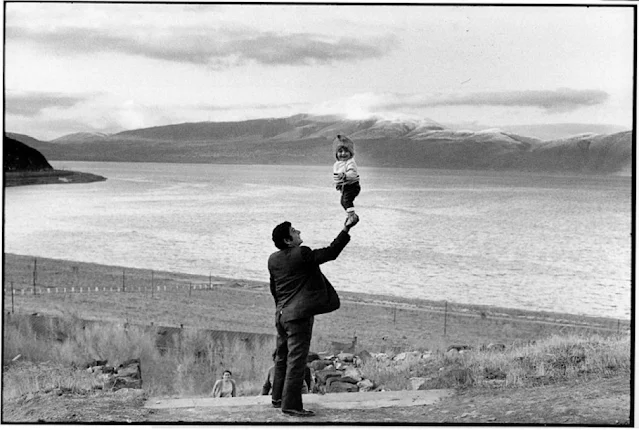
photo by Henri Cartier Bresson