Friday, May 12, 2017

The Psychology of Tyranny

Contemporary culture is doomed as long as it ignores the realities of the unconscious.  As outlined by Jung, the theory of the unconscious was a major advancement in human civilization, a potent tool for making true progress, and we've thrown it away.  It's as if a few years after its discovery, electricity was discarded.  All the mechanistic and reductionist substitutes from neuroscience, behavioral psychology and computer sciences won't cut it.   This arrogance is our undoing.

Deep in the unconscious is a social need for the group to nurture and protect and define the individual.  Also for the group to partially but powerfully define itself in contrast to other groups.  All that is virtuous becomes the property of your group, and all that is evil defines the other.

In the 1950s Jung applied this analysis to the Cold War.  There were differences and conflicts between the West and the Soviets that were real, with real consequences.  But each side exaggerated an evil cartoon portrait of the other in order to get the public support necessary to spend resources on arms and related activities of defense and aggression.  The power of the unconscious was engaged.

Now the spell of the Cold War is over.  The thermonuclear weapons still exist, and the missiles to deliver them, and the political conflicts still exist, though all at a somewhat smaller scale.  But it's the spell that has been broken, to such an extent that the real political threat, a potentially existential political threat, of Russia interfering in US election processes and perhaps burrowing within the White House, does not evoke the frenzied reaction it would have decades ago.  The opposite appears to be true.  It barely seems to register as a threat at all.

But back then, it was potent far beyond conscious control.  The US and the West demonized the Soviets, and anything that could be labeled communistic.  "It is the face of his own evil shadow that grins at Western man from the other side of the Iron Curtain," Jung wrote in "Approaching the Unconscious," his contribution to a book of essays meant for the general public that was published a few years after his death in 1964, titled Man and His Symbols.

That specific enmity is apparently over, but in the US it has largely been replaced by an internal one.  It goes by the name of "polarization" of political parties, but it is much deeper and more profound.  Especially reflected in the 2016 election, it has become a divide as psychologically, culturally and politically profound as the US v. the Soviet Union in the Cold War.

One potent example: neither side believes anything that the other side says.  And that extends to previously common media forms and outlets, as well as previous sources of authority such as academic experts and scientists. The standards that used to apply to judging accuracy and credibility are irrelevant, perhaps even more cartoonishly than in the Cold War.

In fact I can't get the image of living in a cartoon world out of my mind.  Perhaps we are that much less literate or that much more ignorant.  But the defining role of the unconscious seems like a very large component.

This all applies to the situation we and the whole USA find ourselves in this moment.  It's all evident in two pieces that appeared today.  One is a an opinion piece titled "GOP's choice: Love America or Back Trump."  The premise has to do with the kind of norms common to both parties in the past, and eventually operational in the Watergate crisis, derived from the Constitution, written and traditional law and standards.  All are at the very foundation of our Republic, our culture, our self-defined nation. That's what the author means by "love America." But it is not yet clear that these norms are accepted or seen the same way by leaders and members of both parties anymore, either institutionally or among voters.

The other piece delineates the consequences of this extreme polarization in the current Constitutional crisis.  Philip Bump in the Washington Post hauls out the statistics to show that while the current White House regime has historically low poll numbers overall, it is fully supported by 84% of Republicans.

According to this analysis, the White House incumbent's support and the overall R support for their own party are just about the same, and they are replicated in virtually every answer to questions on policy as well as overall approval.

The numbers suggest a potentially terrifying thought: that the already extreme R party has become a party that identifies with our apprentice dictator, especially as the media outlets that Rs believe are credible remain loyal to him.

He has taken the reigns of the unconscious, and with them he might yet become the complete dictator.  Bump writes that without a significant drop in R party loyalty to him, there is no political motivation for R officeholders to hold him accountable for high crimes and misdemeanors, or even to risk investigations.

Democratic voters do not possess all virtue, and must be careful to spot their own shadow in their portrayals of Republicans.  President Obama said as much the other day: "At such moments, we need courage to stand up to hate not just in others but in ourselves. At such moments, we need the courage to stand up to dogma not just in others but in ourselves."

This point, easily dismissed as cliched or wishy-washy, is actually a profound warning about the power of the unconscious.  But neither does this or anything else said here imply that the two sides are equally right and wrong.  It is clear that the unconscious in the form of anger, bitterness, envy, fear and hate is in the saddle and rides the Republican party.  If that cannot be overcome, the Republic is in real peril.

On "the Tapes"

First the coverup, now maybe the tapes.  Apparently the idea is to replicate Watergate except  get away with it.

Anyway, this tidbit from The Hill:

Comey hasn’t spoken publicly since his surprise firing Tuesday. But those who know him have told news outlets he’s confident any recording of the conversation would reflect well on him. “He hopes there are tapes,” one Comey confidant told NBC News. “That would be perfect.”

Goodnight Swamp

Notes at midnight...

When news and visible human drama explodes on a certain subject, with something even more dramatic than the last thing happens twenty minutes later, it feeds the addiction some of us remember from Watergate.  (The difference from Vietnam is: in Watergate, we were only the audience.)

So when the news stops or slows, or when your questions raised in highly dramatic fashion earlier aren't answered, aren't even remembered, it gets frustrating on many levels.

Thursday was packed with news or what appeared to be news.  But it was also very frustrating for what seemed like a day of not very good reporting, and officials--especially members of Congress--unable to clearly communicate much of anything.

The big news was the apparent admission by Homegrown Hitler himself that yeah he fired Comey over the Russia investigation.  Yeah, he mostly did suggest it, but to make an ironclad case for that really did involve some creative editing, and (involving the hapless White House press briefers) skipping over words that were meant to say something else.

And what happened to yesterday's big question about the acting FBI director Andrew McCabe?  Did he in fact volunteer to the White House chief of staff that a news story saying the FBI was investigating R campaign ties to Russia was "BS."
If true, this seems improper discussion of an ongoing investigation.

Did McCabe actually say this?  He appeared before the Senate Intelligence Committee on Thursday, and made headlines for contradicting some White House assertions and insisting that the FBI was pursuing the Russia investigation very seriously.  But did anyone ask him about this purported interchange with the White House?  I looked in vain for any mention of it in any story.  Even Rachel Maddow, who made such an issue of it on Wednesday, had nothing to say about it Thursday.

Our apprentice dictator said in an interview on Thursday that former FBI director Comey told him in two phone calls and in person at dinner that he was not being investigated.  If that's true, these were also improper conversations about an ongoing investigation.  It's hard to believe it is true, but I wonder if anybody will bother asking Comey about it, if they ever get the chance.

Well, nothing to do now but try to sleep it off.

Thursday, May 11, 2017

Obstruction

Here's the thing everyone should take into consideration: with the current dictator apprentice in the White House and his regime, there are no rules.  There is no conventional wisdom that applies.  At least, not so far.

By conventional wisdom, this crew wouldn't have made it past the first Republican primaries.  By conventional wisdom, they didn't have a chance to seize the White House.  By conventional wisdom, they couldn't...they wouldn't...etc. etc.

Maybe the realities reflected in precedents will finally catch up with them.  But...

In this fast moving situation, which is no longer coalescing around matters of competence and judgment but of obstruction of justice, corruption and treason, a number of stories came out today about how investigations won't stop.  Prominent stories in the Washington Post and the New York Times in particular quoted angry FBI agents who swore they will keep investigating, and that the White House regime had made enemies of them.

No doubt the blood was up today, and no one can underestimate the effects of institutional resistance.  But all it may really take is for the Justice Department to direct the FBI to stop the investigations, and cut off the money to support them--with the help of an acting or interim or newly installed director like the interim one now who is a Homemade Hitler loyalist--and they will stop.  Only impeachment would change that, and only a change in the majority party in especially the House would make that a possibility.

Obstruction of justice is now obvious.  As stories made clear today, Comey was fired because he was investigating the Russian connections--political and financial--and secondarily because he wasn't concentrating on investigating leaks to reporters that cast the regime in a bad light.  (One of the first of these stories was here in Politico... With sources evidently inside the White House.)

Moreover, this wasn't the first time.  A Newsweek story quotes Senator Schumer:
Schumer noted “they fired Sally Yates,” whose “urgent” warnings to the White House about Flynn’s dealings with the Russians went unheeded for three weeks. “They fired Preet Bharara,” the federal prosecutor who was looking into Health and Human Services Secretary Tom Price’s trading in medical and pharmaceutical stocks, Schumer said. “And now they’ve fired Director Comey, the very man leading the investigation” into Trump and his associates’ dealings with Russia. “This does not seem to be a coincidence,” the four-term New Yorker said.

But accountability rests with Congress and the voters.  In two excellent pieces in the New Yorker, Evan Osnos describes the precedents and the politics that operated in critical situations in the past.  The first was a longer piece on the alternatives for getting Homemade Hitler out of office, published before the Comey termination.  The second was more specifically about what happens as a result of the Comey termination.

Briefly, Osnos writes that the most important factor is public support.  With our apprentice dictator's poll numbers historically low and trending lower, congressional members of his own party have less reason to risk their own political futures by defending him.  When support is so low, the chances of the opposition party winning lots of seats in the non-presidential year elections have been very good, and in this case it would mean the Republicans losing their majority.

If the Democrats win a majority in either house, they would control the investigating committees with the power to subpoena.  If they took the House, they could initiate impeachment.  But even fearing this possibility could motivate Republicans to abandon their albatross, Osnos writes.

This may already have started, Osnos suggests.  At least one conservative R House member supports an independent commission, and only a few Rs in the Senate would be needed to join Ds in voting for something similar, within the Senate at least.

Update: However, there is a difference from the past that could prove fateful: polarization.  The rabid right has taken over the R party, and this regime has captured even more.  As the Washington Post points out, R voters are remaining loyal, supporting the regime by 84%.   

There are other possibilities for legal actions, in state courts for example and even perhaps in the courts of other nations, regarding the underlying activities that involve international financial malfeasance and the security of western allies.

But will these precedents actually operate?  They may have operated within the context of an America and a power structure that no longer exists.  It's best to be on guard for the unprecedented, at least so far in American history.  Other parts of the world have experienced the jolting takeover by a totalitarian despot.  In some such cases their conventional politicians and press and people didn't recognize--didn't believe--what was happening.  Until it had happened.

Tuesday, May 09, 2017

Dictator Rising

By firing the FBI director investigating the regime's Russian connection for a stated cause so absurd that it is boldly and transparently a lie, the apprentice dictator in the White House took a major step towards creating a totalitarian police state.

No regime has ever been so obvious in seizing political control of the federal justice system for its own corrupt ends.  That the Republic is so endangered at this moment is a shock, but not a surprise.

The details are all just details at this point, meant to divert attention from this central consequence.  This is a dictatorship in the making.  Resistance to be effective may need to be as swift, and certainly relentless.

Monday, May 08, 2017

Courage


The media headline from President Obama's speech accepting this year's Profiles of Courage award from the JFK Library inevitably was his defense of Obamacare, and his call for members of Congress to display courage in supporting its substance. The quotes were largely accurate and obviously President Obama knew what the headline was going to be, but these were only a few lines in the speech, and missing the context.

He didn't bring up the topic of the Affordable Care Act out of the blue.  First of all, its passage was, according to CNN, one of the reasons he was given the award: The John F. Kennedy Library Foundation said Obama received the award for "expanding health security for millions of Americans, restoring diplomatic relations with Cuba and leading a landmark international accord to combat climate change."

It is an award honoring President John F. Kennedy, whose birthday this month is 100.  As a senator, JFK authored the book Profiles in Courage, about eight US Senators throughout history who exhibited principled courage in difficult political situations.  As President, JFK proposed the healthcare program that became Medicare.  His younger brother Senator Ted Kennedy, championed an expansion to all US citizens to make healthcare a right.

 In his speech, President Obama told a story about how Ted Kennedy walked the halls of the hospital where his young son was fighting for his life and talked to people there worried that they couldn't afford the next cancer treatment for their children.  He made healthcare his cause, and shortly before his death, urged President Obama to make it his first legislative priority.
Welcoming President Obama to Boston on Sunday

So in talking about courage in Congress, it was completely in context for President Obama to remember those who voted for the ACA, knowing they might lose their next election because of it--and many in fact did.  After talking generally about John and Bobby Kennedy as inspiring him to enter politics, he said:

"Our politics remains filled with division and discord, and everywhere we see the risk of falling into the refuge of tribe and clan, and anger at those who don't look like us or have the same surnames or pray the way we do.

And at such moments, courage is necessary. At such moments, we need courage to stand up to hate not just in others but in ourselves. At such moments, we need the courage to stand up to dogma not just in others but in ourselves. At such moments, we need courage to believe that together we can tackle big challenges like inequality and climate change. At such moments, it's necessary for us to show courage in challenging the status quo and in fighting the good fight but also show the courage to listen to one another and seek common ground and embrace principled compromise."

He spoke about the beginning of his presidency and the courage it took to vote for the Recovery Act, to support the auto industry and regulate Wall Street, and especially, the complex and previously impossible task of what came to be called (by his opponents) Obamacare:

"And there was a reason why healthcare reform had not been accomplished before. It was hard. It involved a sixth of the economy and all manner of stakeholders and interests. It was easily subject to misinformation and fearmongering.

And so by the time the vote came up to pass the Affordable Care Act, these freshmen congressmen and women knew that they had to make a choice. That they had a chance to insure millions and prevent untold worry and suffering and bankruptcy, and even death, but that this same vote would likely cost them their new seats, perhaps end their political careers.

And these men and women did the right thing. They did the hard thing. Theirs was a profile in courage. Because of that vote, 20 million people got health insurance who didn't have it before."

Many lost their seats in the 2010 elections, his said. And this was the context for his comments on the future:

"It was a personal sacrifice. But I know, because I've spoken to many of them, that they thought and still think it was worth it.

As everyone here now knows, this great debate is not settled but continues. And it is my fervent hope and the hope of millions that regardless of party, such courage is still possible, that today's members of Congress, regardless of party, are willing to look at the facts and speak the truth even when it contradicts party positions.

I hope that current members of Congress recall that it actually doesn't take a lot of courage to aid those who are already powerful, already comfortable, already influential. But it does require some courage to champion the vulnerable and the sick and the infirm, those who often have no access to the corridors of power.

I hope they understand that courage means not simply doing what is politically expedient but doing what they believe deep in their hearts is right."

But then President Obama expanded his examples of profiles in courage to include ordinary people who sacrificed for their families, who did the right thing even when it was difficult.

He included political activists who worked nonviolently for change. And he powerfully restated his credo for involvement in creating political change, ending with a ringing call to keep the faith and keep working for the future:

"I know that the values and the progress that we cherish are not inevitable, that they are fragile, in need of constant renewal.

I've said before that I believe what
 Dr. King said, that "the arc of the moral universe is long but it bends toward justice," but I've also said it does not bend on its own. It bends because we bend it, because we put our hand on that arch, and we move it in the direction of justice and freedom and equality and kindness and generosity. It doesn't happen on its own."


"And so we are constantly having to make a choice because progress is fragile. And it's precisely that fragility, that impermanence, that is a precondition of the quality of character that we celebrate tonight.

If the vitality of our democracy, if the gains of our long journey to freedom were assured, none of us would ever have to be courageous. None of us would have to risk anything to protect them. But it's in its very precariousness that courage becomes possible and absolutely necessary.

John F. Kennedy knew that our best hope and our most powerful answer to our doubts and to our fears lies inside each of us, in our willingness to joyfully embrace our responsibility as citizens, to stay true to our allegiance, to our highest and best ideals, to maintain our regard and concern for the poor and the aging and the marginalized, to put our personal or party interest aside when duty to our country calls or when conscience demands.

That's the spirit that has brought America so far and that's the spirit that will always carry us to better days."

Another video and full transcript of the speech is at TIME.

Saturday, May 06, 2017

Towards A Positive Future on the North Coast

Volunteers assemble a small section of a much larger array
Here on the North Coast of California, the future became tangible with the launch of a community-scale solar array micro-grid by the Blue Lake Rancheria, a 91 acre federally recognized and sovereign tribal nation.

“This is our piece of Earth that we’re not going to leave," said Arla Ramsey, vice-chairperson of the tribe, as quoted by Lost Coast Outpost. You can’t pick a reservation up and move it. So if we’re going to live here, and our children are going to live here, or seven generations from now, we have to keep it healthy and clean, and that’s our goal.”

According to  "decentralized energy" website reporter Diarmaid Williams:

Funded in part through a $5 million grant from the California Energy Commission's Electric Program Investment Charge (EPIC) program, the system allows the reservation to operate independently of the power grid in coordination with local utility Pacific Gas & Electric. This project incorporates the largest solar array in currently in operation in Humboldt County... is estimated to save the Tribe over $200,000 in annual energy costs, will reduce at least 150 tons of carbon per year and will grow Tribal clean energy jobs by 10 per cent.

The Lost Coast Outpost story continues:

The rancheria worked with an array of technology experts, national labs, local businesses, the state and PG&E. Plus, for almost a decade, the rancheria has developed a close relationship with Humboldt State University and its Schatz Energy Research Center, which played a key role in making the microgrid a success.

“The kinds of technology we’re installing and integrating together, it hasn’t been done before,” said SERC founder Peter Lehman. “So this project and the knowledge we gain from doing this, the lessons we learn from doing this, are going to be applicable in many situations in this country and around the world. So that’s how progress occurs — there are pioneers, and we’re the pioneers in this project, and people follow on after the pioneers.”

The Eureka Times-Standard added this:

California Energy Commission commissioner Karen Douglas said Californians across the state are stepping up to address the affects of climate change. “This is a real example of how we can help meet our greenhouse gas goals,” she said. “ ... There’s a community resource here as a result of this project.”

Thursday, May 04, 2017

Republicans To Vote Today To Begin Death Panels for Americans

Update: This bill passed with only Republican support.  Washington Post: Betrayal, carelessness, hypocrisy: The GOP health-care bill has it all."  Regardless of what happens next in its likely protracted and dubious journey through the Senate and back to the House, damage has already been done.  As the Post notes: "Tragically, the repeal-and-replace effort is causing so much uncertainty that, even if this bill dies in the Senate, it may unravel the existing health-care system."  Tragedy for real people, all to serve the greed of the few.  More on the politics if you're interested, as I am not.

The Republican leadership in the House announced to reporters that they will call a vote today on their latest Obamacare replacement plan, which contains provisions that will in effect create death panels to decide whether Americans with preexisting conditions will live or die.

At the same time, Republicans insist that Americans with preexisting conditions will be covered.  In comparison to the actual coverage guaranteed in Obamacare, this is perniciously false.

What the Republican's latest bill provides, according to reporting, is a complicated system that will allow for states to place people with preexisting conditions in a separate category, with much higher insurance premiums.  Those who are unable to pay these higher premiums may be eligible for federally paid relief, but there is an amount stipulated that will be available for these costs--an amount that analysts say is far too little.

Therefore,  there will be what amounts to rationing of these funds.  Some bureaucracy will need to be empowered to make the decisions of who gets the money for insurance and who does not.   If these panels decide you don't get it, or you don't get enough to afford the insurance, you may well have been handed a death sentence.

Today Obamacare is working for millions of Americans, especially those with preexisting conditions.  It isn't perfect, but in every possible way it has worked remarkably well, while the federal deficit and debt have gone down.  It has helped in ways that were unpredicted--for example, by helping a 50% drop in personal bankruptcies, which are often caused by healthcare costs.

There is no reason for this bill--especially for rushing this bill for a vote without the Congressional Budget Office estimate of its impact--except to give the regime a notch on their gun.  

And there are so many reasons this unusually cruel bill should never even be seriously considered, in particular for what it says about Americans telling other Americans that their lives don't trump political games.

This vote could come as early as 10 a.m. eastern time.  

Tuesday, May 02, 2017

The Gift

Robert Silvers receiving the National Humanities Medal from President Barack Obama at 
the White House, July 2013. Without naming Obama, Zadie Smith's 
tribute suggests that Silver admired him greatly  as  a "kind of genius." 
 So this moment must have been a wonderful one,
 and you can see that in his eyes.
The latest New York Review of Books, while functioning as usual as its spring art issue, also contains a number of tributes to its last founding editor, Robert B. Silvers, as well as salutes in this issue's advertisements.

I noted Silvers recent death in a previous post, and several years ago I wrote about this periodical's brilliant articles on political and geopolitical matters from the very beginning, when it was one of the most important sources on the Vietnam war in the late 60s.  That function continues.  For example in this issue, Jonathan Freedland's piece ("Dover and Out") is the best single narrative on the UK's suicidal Brexit process that I've read anywhere.

  But several of the just published tributes prompt me to focus less on content than on Silver's and the NYRB's effects on writing.

My afore-linked piece on a single issue of the NYRB prompted my only contact with Robert Silvers, which was an out of the blue email from him: "I was touched by what you said about the paper. During 46 years, I’ve never read a piece in which a writer said what was actually in an issue."

These tributes make me only more envious of those that had written for him.  All the writers agree that his genius was in editing to clarify but to maintain the writer's own voice, which is a rare editorial quality. But it was not necessarily an easy process. Mark Lilla for instance:

"Bob at work on a manuscript resembled nothing so much as a Jesuit spiritual adviser, minus the collar, helping the novice refine his raw inner awareness. It was a vocation, in the strict sense, an expression of magnanimity. He was determined to see that a book got the appreciation and criticism it deserved. But even more, it seemed to me, he wanted the writer to understand himself better than he already did. You say this, and you’re on to something, but what does it really mean? What are you trying to say? Bob had a profound abhorrence of vagueness. It was the cardinal sin because it was cowardly, a self-evasion. More than once I wanted to tear the hairshirt off. Icarus, c’est moi. He never permitted it because he was more loyal to me than I was to myself."

What were the enduring values that Silvers' editorial mission championed?  Former NYRB editorial assistant Nathaniel Rich summarizes:

"Good writing is capable of bringing to life even the most arcane subjects. Big ideas demand vivid prose. Academic jargon is fatal, as are stock expressions, terms of art, empty metaphors. Dead language not only obscures the ideas it means to describe. It blocks original thinking. Many writers will say that Bob brought out their best prose. He did more than that. He brought out their highest thoughts.

Clarity of prose leads to clarity of mind. And without clarity of mind, moral clarity is impossible."


As Lilla also points out: "In reading the Review, you always learn something."
Even if I didn't experience Silvers' editing, I absorbed some of this ethic simply by reading what Silvers' referred to as "the paper."  I'm sure it shaped my writing to some degree, and my reading.

But Lilla goes on to offer the ultimate tribute to an editor:

" In reading the Review, you always learn something. In writing for Bob, you became something. It was a gift none of us really deserved. But what gift ever is? That’s what makes it a gift."

What Was It For?

"The use of public office for private gain is the textbook definition of corruption," begins the Rolling Stone article, which goes on to say:

"In only 100 days, Trump has upended the country's anti-corruption norms by numbing everyone with a steady stream of serious improprieties that would have been treated as major scandals – if not impeachable offenses – during any other modern presidency."

The article calls it "corruption fatigue," a mind-boggling concept after barely more than three months.  But it's more than that.  The Americans who voted for this regime knew what they were voting for.  They knew they were voting for this kind of corruption, though perhaps not on this scale.

It speaks also to the steady erosion since Reagan of the distinction between public and private institutions, functions and funds.

That perhaps is why, while the big dailies and other major media report on it, they don't often call it "corruption."

So far, only publications like salon, the New Republic, and Mother Jones, plus columnists like Jonathan Chiat will use the word.

It's a potent word, or it used to be.  It has always been the greatest political sin.

Moreover this brazen corruption in the White House is accompanied by the regime's efforts to weaken anti-corruption and ethical standards laws and enforcement.

It includes as well the raiding of the federal treasury (current and, through tax schemes, future) by the super-rich, most directly rewarding those who specifically supported the regime and the Republican Party.  It can be more generally applied to the raiding of the ultimate commons, the Earth.

Given all the other catastrophes underway, and the relentless mind-numbing outrages blasting through the media from the White House, this may seem low on the list of priorities.  But, as playwright David Hare asked in a related context, "If democracy didn't care to defend what was owned in common, what was it for?"

Sunday, April 30, 2017

Friday, April 28, 2017

Spring Cleaning #3

click photo to see it all

100 Days of Solipsism

Apart from known and suspected evil, apart from the blatant money-grubbing and wholesale incompetence, and the ongoing humiliation of the American presidency, what we've seen so far can be characterized as 100 days of solipsism, in which virtually everything--facts, policy, reality--is an unassailable extension of one egomaniac's maniacal ego.

It's all in two quotes from his most recent interview (with Reuters) that are already resonating in the early morning hours.  First, his warning that if negotiations should fail,“There is a chance that we could end up having a major, major conflict with North Korea,” he said. “Absolutely.”

The second is the admission that, reviewing these first 100 days of being President of the United States,  "I thought it would be easier."

The first tells us not only that he is clueless as to the effects of his words--providing precisely the inflammatory statement confirming for the North Koreans that the US is about to launch a war on them--but that his ignorance is unassailable. What he says is right because he says it.

The second reflects a blithe belief in his ability to do what other presidents could not do, or could do only patiently, carefully and with great effort.  All that previous presidents or even presidential candidates did to prepare for this office was unnecessary, at least for him.  He didn't have to prepare, he doesn't have to work at it.

So this presidency has been a blizzard of executive orders that are little more than public relations releases, largely incoherent and unenforceable. Poorly conceived policies, a supposed tax reform package that is nothing but a page of bullet points.

His attempts at governing amount to bullying, and when that doesn't work, he becomes the bluffer-in-chief because he can't face being seen as losing.

At the top, contending idiots with no appropriate experience fight each other, while he and his family use the White House to enrich themselves in blithe defiance of the Constitution and law, getting away with it in the plain sight of a  media and justice system seemingly stunned and helpless.  Meanwhile the federal government as a whole starts to fall apart, lacking leadership and losing staff not sufficiently loyal.

As for the Russian connection, which is already wrecking careers and may bring down this government, I can only suggest following Rachel Maddow, because she is a consummate story teller as well as reporter, and she puts together the accumulating narrative.  Though I'm sick of it already.  I'm way too old for this.  But ego was implicated in the fall of Nixon because of Watergate, and it so far looks likely ego will emerge as essential to this so far shadowy scandal.

The egomaniac's ego may look impregnable. But the egocentric are also fragile, susceptible to flattery and manipulation, and in power, they are inherently unstable.

There are enough of these in business and politics that people know how to exploit these weaknesses, and so we observe the tawdry attempts to curry favor, as through the apprentice dictator's daughter, who does not appear to be exactly an innocent victim.

As for the future, we can only hope that a nation condemned to one hundred days of solipsism gets a second opportunity on earth.

Thursday, April 27, 2017

Spring Cleaning #2

BK photo--click photo to see it all

History and Memory

There are historical firsts every day, some more generally significant than others.  For example on Wednesday, for the first time, a player born in Africa played in a US Major League baseball game.  He's an infielder for the Pittsburgh Pirates, and in his first at bat he hit a single.  He has a great baseball name, too: Gift Ngoepe.

It's of special interest to baseball fans, and somewhat curious in general, in that many African Americans have played the game.  In fact, the first all-black starting lineup also belonged to the Pittsburgh Pirates back in the 1970s.

But the lack of African players has not been due to racial discrimination, at least not since Jackie Robinson. Baseball is apparently not a major sport in any African country, and to be born and raised in South Africa presents fewer opportunities to learn and play the game.

A flood of African players doesn't seem on the immediate MLB horizon, but there was another somewhat stunning historical first that may forecast the future. Reports Quartz:

The seismic shift in global energy production was powerfully in evidence today (April 21), when all electricity in the UK was produced for a 24-hour period without burning a single shovelful of coal—for the first time since the industrial revolution [began.]

Consider that the industrial revolution essentially began in England in the late 18th century, and that its growth is largely responsible for global heating and the Climate Crisis.  The massive burning of coal is historically the chief cause (though oil is catching up.)  This event hopefully forecasts a near future when a day without burning coal is a normal day in the UK and the US, and rapidly thereafter, everywhere.

Another historical first has more to do with our relation with the past.  The New York Times ran a feature on Emma Morano, who at her death recently was the oldest known person in the world.  She was 117.

She lived in a modest room in an Italian town, and the article ran large pictures of her possessions, as if they were already remarkable relics of a faraway time. Although to me they were quite familiar from my own grandparents and their friends and contemporaries.  Her odd habits weren't odd to me.  Some have been passed down.

But a kind of throwaway line in the story stopped me.  Here it is:" Ms. Morano, the last person documented as being born in the 1800s.."

So that's a big change.  If this is true, we have all lost forever direct contact with the nineteenth century.

I think of my Italian grandparents, both born in the 1890s.  I think of a grandparent of John F. Kennedy, who reputedly lived during both the assassinations of JFK and of Abraham Lincoln.  Or Kennedy himself, noting in his 1961 Inaugural that "the torch has been passed to a new generation of Americans, born in this century..."  He was the first President of the 20th century not to have been born in the 19th.

When time escapes memory it becomes history.  Photographs and sound recordings provide some connection, but especially writing--both diaries and memoirs as well as fictions based on times remembered rather than only researched.

We still have those from the 19th century.  But none of us will ever again touch the hand of someone who lived in it. Nor will we hear a new memory, perhaps one that had not emerged before.

Wednesday, April 26, 2017

Spring Cleaning #1


The Cover-Up is Working

It remains one story--and one outrage--among many, usually newer.  But Rachel Maddow, Lawrence O'Donnell and Keith Olbermann are following the Russia Connection to the current White House regime and the election that made them the regime, every day.  They are following on-the-ground reporting, for instance, recently in the New York Times, the Daily Beast and Politico.

I won't attempt to reiterate.  But it continues to smell big time, because the regime is quietly engineering a cover-up, and so far it is very successful.

A few lowlights: The House investigation directed by Republicans has gone silent.  The Senate investigation, which made much of its bipartisan intent to get to the bottom of it all even if the House didn't, has reportedly hired no staff to investigate full time, no experienced investigators at all, issued no requests for documents and subpoenaed no witnesses.

While a Politico story and a House Oversight Committee report has deepened the almost unbelievable security screwup of Mike Flynn, Russian Agent as presidential National Security Advisor, the White House insists it has no documents, none at all, concerning Flynn in the White House or during the campaign.

Meanwhile the Justice Department is quietly replacing key personnel to insure that its investigation will quietly die.  The FBI investigation may go on for months or years, in public silence.  Even that investigation is overseen by the new Deputy Attorney General, a regime loyalist.

That Republicans control all three branches of the federal government which makes it easy to collude with this cover-up, and hard not to.  Who can put country above party will tell the tale.  But so far we face what seems to be an unprecedented situation for a well known national security scandal: a cover-up that works.

Tuesday, April 25, 2017

The Mother of All Unnecessary Wars

There is no end to the evil this White House regime attempts.  Some of it has frustrated by the courts, by Congress and fellow Rs, and by its own incompetence.

But even an apprentice dictator holds one outlet for his wounded ego: the military.  And even when North Korea is not so much in the headlines, the acute dangers of disastrous war continue to grow.

American ships are nearing its shores-- (this time for real, apparently), including a submarine docking in South Korea, as the North Koreans conduct massive "live fire exercises" in the vicinity.

While Newsweek graphically describes what a Korean war would look like (at least a million dead--even if nukes are not used), Fred Kaplan in Slate provides perspective: "North Korea is a knotty problem, but there’s no cause for the hysteria that President Trump and his aides have been pumping up in recent days, and it’s time to turn down the heat and the noise, before someone gets hurt."

Kaplan isolates the most incendiary threat of the week:

Retired Gen. John Kelly, secretary of homeland security, said this week that “the minute” North Korea gets a single nuclear-armed missile with the range to hit the United States, “we are at grave risk as a nation.” Really? The United States survived three decades of Cold War when the Soviet Union had more than 1,000 such missiles; and while Kim—like his father and grandfather, who reigned in Pyongyang before him—seems more voluble and risk-prone than the commissars who ruled the Kremlin, his prime imperative is to preserve his regime. There is no evidence that he renders the basic principles of nuclear deterrence obsolete."

Kaplan concludes:

"Finally, for better or for worse, we have no choice but to deal with North Korea diplomatically. South Korea is probably about to elect a president who is far more disposed to engagement with North Korea and far more resistant to confrontation; China—the country most capable of pressuring Kim—is not going to apply so much pressure that the regime collapses suddenly, setting off a refugee crisis and a South Korean (which is to say, U.S.–backed) takeover of the entire peninsula. So there is no alternative to diplomacy. It should be a complex diplomacy, consisting of coercion as well as concessions. But one thing the mix should not include—the thing that’s most likely to set back desired progress—is a threat of military force that no one wants to see carried out and can’t be carried out without catastrophic consequences. That’s the path that Trump seems to be treading now, and the grown-ups around him need to pry him off."


Kaplan thinks it's "unlikely" that the bluffer in chief will actually attack North Korea.  But "unlikely" is a pretty weak word to describe what he is and has already done.

Today a new head of the Secret Service was appointed, a retired Marine general.  The New York Times story suggests it's a good appointment, and the Secret Service could certainly use some reorganizing.  But the man's current job is a huge red flag for me: he's acting deputy commissioner for Customs and Border Protection.  This is an agency that has shown enthusiasm for Homemade Hitler's authoritarian and xenophobic tendencies.  If our dictator apprentice wanted to create his own Gestapo, it could very well begin by turning the Secret Service into his Praetorian Guard.

Far-fetched?  Maybe.  But there is no end to the evil he attempts.

Next


Worry less about what you want to be and worry more about what you want to do.

--President Obama, participating in a forum on public engagement with six young people at the University of Chicago on Monday, as quoted in the New Yorker article titled Back in Chicago, Obama Looks to the Future.

The Chicago Tribune focused on another general lesson that works for politics, marriage and in general:

Of his organizing days, Obama said it was important to spend time "listening and finding out what they're interested in and connecting their immediate needs to policies that have influence on their immediate concerns."

"Listen to understand rather than listen to respond. That will save you a lot of heartache and grief," said Obama, who added that it was a lesson he learned in marriage.

In his own words as recorded for the New York Times, President Obama was even more direct: don't make the mistake of telling people what issues they should be interested in; spend the first six months listening to what people say are issues they are interested in, and connect policies to that.

"This community taught me that ordinary people, when working together, can do extraordinary things,” Mr. Obama said. “This community taught me that everybody has a story to tell that is important.”


President Obama took his own advice by spending much of the hour listening to the young participants in the hall.

Though all the reports noted that President Obama didn't talk about the current regime, the Washington Post emphasized public policy :

In his first public appearance since leaving the White House in January, former president Barack Obama told young leaders here Monday that “special interests dominate the debates in Washington” and that getting involved in their communities is the best antidote to the divisiveness dominating the country's politics...

“The one thing I'm absolutely convinced of is: Yes, we confront a whole range of challenges, from economic inequality and lack of opportunity, to the criminal justice system to climate change to issues related to violence. All those problems are serious, they're daunting,” Obama said. “But they're not insolvable. What is preventing us from tackling them and making more progress really has to do with our politics and our civic life.”

This was President Obama's first public event since shortly after leaving office.  There will be more soon, and everyone expects that he'll talk about other subjects. But he made clear that young people are a major concern of his post-presidency:

“The single most important thing I can do,” the former president told an audience of students, is to “help in any way I can prepare the next generation of leadership to take up the baton and to take their own crack at changing the world.”

Saturday, April 22, 2017

Earth's Day (is Every Day)


"One thought ever at the fore—
That in the Divine Ship, the World, breasting Time and Space,
All Peoples of the globe forever sail, sail the same voyage, are
bound to the same destination.”

Walt Whitman
1891 edition of Leaves of Grass

Thursday, April 20, 2017

Spring Thing

BK photo, taken on Easter
Spring began today.  Sure, the calendar says it's been spring for a month.  But in the places I've lived before, in PA and New England and the Midwest--there's been this transitional period, the thaw, the weeks of cloudiness and rain.  But spring, that begins with sunshine and warmth.

Here on the North Coast of CA, it's not the first time that we've had some sun to spell the waterlogged week.  But today felt different.  And even though next week looks rainy again, there was little more feeling of future frequency in the sunshine.

You could see spring in the annual appearance of the California poppies, or the profusion of calla lilies (not as tall yet as they were a few years ago, but the flowers are bigger, some the size of saucers, if you remember saucers.)  I'd feared for the ferns in the front of the house--while some were growing near the walls elsewhere, they'd disappeared entirely from the area in front of the picture window.  But once they started coming back, they kept on coming.  On the sheltered side they're as wild and profuse as ever.

The hardwood trees are greened up, and even the old linden is leafing earlier than usual.

But it's not just the plant life.  Today in the remains of Shay Park I came upon a group of young humans, which included an electric guitarist and drummer making some spacey yet woodsy sounds.   Elsewhere I saw more, their walk expressing a certain familiar restless buoyancy.

I recalled the brilliant but very short springs in Galesburg, Illinois where I went to college.  After a heartlessly long and brutal winter slid into a chilly, murky and rainy pre-spring,  it all changed, seemingly in one day.  The air was warm and as soft as it ever got there.  Everything was a sudden sunlit green--grass, hedges, bushes and trees in a green embrace-- under an amazing sky.

This sort of spring lasted only a few weeks, maybe a month, before the debilitating summer heat muscled in and became a dominating and depressing overseer for the next several months.

The tragedy of that one spring month was that we were nearing the end of the school year, and this fantastic May was filled with final papers and final exams.  As well as the anxieties for the onrushing summer, when environs, relationships, status and even selves would abruptly change. These days of grandeur were too often only glimpsed through distracted, frustrated and worried eyes.

With the sap rising in more than the trees, we hurtled ourselves into heated parties at night.  And so the bright days became even more hazy and distant, a few startling snapshots amidst the apotheosis and wreckage of the school year.

All among the layers of memories now, while I walk with different challenges in a different place in a different spring.  But those springs are present, too.

Climate Crisis Fast and Slow

A river doesn't run through it anymore
In all those radio and TV intros, among Superman's stated powers was the ability to "change the course of mighty rivers" which actually seems of a different order to the next one, "bends steel in his bare hands."

It wasn't Superman however that changed the course of a river in the Yukon of Canada.  It was the climate crisis.  But it did so with super speed.

Observers continue to express surprise at the speed with which glaciers are melting, sometimes right before their eyes.  A glacier melting produces a lot of water, and this time it was enough in the right place to actually change the flow of a river from north to south, from the Bering Sea to the Pacific Ocean.

It is, noted the NY Times story, " [a] process that would ordinarily take thousands of years — or more — happened in just a few months in 2016."

Such a change--which is likely to be permanent--is beyond what Superman usually saw:

"Changes in the flow of rivers can have enormous consequences for the landscape and ecosystems of the affected areas, as well as water supplies. When the shift abruptly reduced water levels in Kluane Lake, the Canadian Broadcasting Corporation reported, it left docks for lakeside vacation cabins — which can be reached only by water — high and dry.

The riverbed of the Slims River basin, now nearly dry, experienced frequent and extensive afternoon dust storms through the spring and summer of last year, the paper stated."

Physical changes, often permanent, directly caused by the effects of climate change, pop up increasingly around the world, though so far not in New York City or Washington where they might possibly be considered news.  Some, like failures in the permafrost that sinks Alaskan villages, or overflooding of small islands, make areas where people lived into areas where they don't.

Such physical impacts will continue, and are very likely to get bigger and more consequential.  There are similar effects in which climate crisis plays a part, as in the cycle of drought and drown that California is experiencing.  For us here on the North Coast, our route to the south on the only "major" highway (which in most parts of the country wouldn't really qualify as such)  is cut off completely by a rock slide onto 101, likely due to the effects of months of rain after years of drought.

The climate crisis also has a hand in another poor year for salmon, leading to the virtual cancellation of the salmon fishing season.  Many fewer young salmon are attributable to a hotter Pacific as well as warmer rivers with less flow in the drought years.

All of this is the steady background, relatively slow though accelerating results of the climate crisis.  More sudden are the consequences of global heating-powered storms, floods, heat waves, changes in atmospheric temps and flows that send frigid air to unfamiliar places.  These "natural disasters" already cost more in lives and money than terrorism or anything else.

Then there are the changes in when the seasons start, as well as the generally higher temperatures, all of which inevitably change animal lifecycles (including disease-bearing insects) and migration patterns.  Major disease problems at some point are all but inevitable.

All of this is well known, and much too ignored.  Especially since what is required, and what will increasingly be required to deal with these effects, are systems and people with the training and equipment to confront each emergency as it arises.  In any given year, these could be many, and several could be simultaneous.

These resources need to be ready and in place before bad things happen.  These resources are almost always maintained by governments, especially the federal government.

So at a time when the country should be building up these resources, the current regime is dismantling them.  Getting rid of skilled people with experience, knowledge and historical memory is fast and easy to do, and may look good on somebody's bottom line this year.  These include EPA and NASA experts as well as emergency and public health people. But once gone, when they are needed over the inexorable years they cannot be conjured up with a tweet and a prayer.

If it's true that the regime is getting pressure from interesting sources not to bail out of the Paris agreement on climate change, and if speculation is correct that they won't bail out completely, that's good but not enough.

First of all, the momentum by the federal government that jump-started clean energy as well as other direct efforts to confront the causes of global warming is slowing and in some cases reversing.

But also, the ability to confront the effects of the climate crisis as they occur is being destroyed.  When we should be building up these resources, the regime is tearing them down, or more accurately, to vary the metaphor, tearing them out by the roots.

Tuesday, April 18, 2017

The Regime That Couldn't Shoot Straight

Our apprentice dictator's campaign of aggressive bluster against North Korea included a mighty threat of an American armada steaming steadfastly towards that country, with mighty aircraft carrier and even mightier submarines.

He lies about everything but how could he possibly lie about that?  But then this armada was photographed in an entirely different part of the world.  Oops.

Turns out he had help screwing this one up.  The Atlantic explains, along with noting other recent errors on the world stage.  It's comedy of the absurd time again, which--as it often was in the past, is also gallows humor.  The stakes of an enemy miscalculating US intentions and actions is potentially enormous for us all.  But apparently we have to get past the US miscalculating itself.

Korean Apocalypse Slow and Fast

The moment that an atomic bomb last exploded over a city, in Nagasaki in 1945
It's already a famous phrase.  In their analysis of the current standoff concerning a nuclear weapon test between the maniac leadership of North Korea and the maniac regime in Washington, two New York Times reporters called it "A Cuban Missile Crisis in Slow Motion."

It's duly noted in a Washington Post roundup of similar comments by experts and published in the Atlantic, Financial Times and other outlets.  It comports as well with Masha Gessen in the NY Review Daily who writes "Trump has become the real version of the man Putin plays on television—an unpredictable, temperamental, impetuous man who will push reality past the limits of the imagination."

But it isn't Homemade Hitler alone--his v.p., sec of state and other underlings are echoing his deadly bluster, apparently having learned--thanks in part to members of the media who themselves apparently learned nothing from 2016--that: "For an American president, bombing is easier than thinking. For an American lawmaker or opinion-maker, it costs nothing to celebrate the resolve of a president who bombs," in the words of analyst David Bromwich.

But let's return to that phrase in the NY Times headline, for implied at the end of it is the possibility of nuclear warfare, which was the all but certain end game of the Cuban Missile Crisis, had it led to military action.  Lots of people are making the calculations, some writing that actual nuclear war is unlikely, though North Korea could inflict huge damage with millions of deaths in South Korea with conventional weapons, in response to a non-nuclear attack by the US to stop their atomic bomb test.  But the risks of nuclear explosions, along with the apparent folly (i.e. no-win situations) of such an attack and such a response, are both assumed and spelled out.

Meanwhile, some in Hawaii are calling for preparations for possible attack, and we in far northern California are wondering about fallout and wind currents from Korea and Japan, and nuclear missiles that miss their big city targets to find their way to us.

But what of the implication that this crisis is a slow motion version?  It's true that the Cuban Missile Crisis happened over the short span of 13 days.  But in crucial ways, it was slow.

 Those of us who lived through the actual Cuban Missile Crisis may remember specific moments over those 13 days, from watching in the living room one evening President Kennedy's televised announcement of Russian offensive missile silos discovered in Cuba, to walking into a classroom where someone had drawn a huge mushroom cloud on the blackboard, to huddling around a radio as the key confrontation between US and Russian ships dissipated, thus failing to set off World War III before gym class.

We knew of but did not see the agonizing meetings in the White House, and few knew of back-channel diplomatic contacts that turned out to be crucial.  But the fact so much of the crisis was played out in public helped keep it somewhat slow, and kept panic from erupting.  This was part of the genius of the approach decided on by President Kennedy--so much was done in public, in full view of American media and the world, so that (for one thing) the chances of either side wildly miscalculating the actions or intentions of the other were minimized.

That's not the case now.  We have the blustery tweets and speeches, relentless in their aggression by both sides.  We see the parade of missiles in North Korea, and note the movement of US Navy ships towards its shores.  But typical of the apprentice dictator, much is hidden.

So if war comes, it will come blazingly fast.  In 1962, nuclear missiles could arrive all across the world in minutes, but in the Cuban Missile Crisis the moves towards that kind of confrontation were deliberate and public (although as we've since learned, it took some luck and some iron nerve by less than senior officers on both sides to prevent a nuclear moment.)

That does not seem to be the case now.  The US position is that it will prevent a North Korean nuclear test.  Such a test conceivably could begin almost without warning.  A response and then the counter-response could occur immediately. Out of the darkness, it could all happen very fast.

Though the "slow motion" phrase is in the Times story's headline, the story itself suggests that this crisis is getting faster. After describing the back-and-forth that has gone on for years (including implied cyber-warfare by the US to subvert missile tests), the authors write:

"What is playing out, said Robert Litwak of the Woodrow Wilson International Center for Scholars, who tracks this potentially deadly interplay, is “the Cuban missile crisis in slow motion.” But the slow-motion part appears to be speeding up, as President Trump and his aides have made it clear that the United States will no longer tolerate the incremental advances that have moved Mr. Kim so close to his goals."

North Korea's nuclear program is reaching a truly dangerous stage, but as has been obvious all along, the US has no good military options short of war--regional or larger-- with the likelihood of nuclear bombs.  There is almost no scenario that doesn't involve millions of casualties in a very short time, with the acute danger of unforeseeable spirals of destructive consequences.

For the truth of the matter seems to be that short of obliterating North Korea with thermonuclear weapons, there seems no way for the US to militarily stop North Korea from building and testing nuclear bombs.  In the Cuban missile crisis there were military leaders who argued for an attack on Cuba, knowing that this would likely spiral quickly into the full thermonuclear exchange with the Soviet Union.  Fortunately, JFK had other options and made other choices.

During the Cuban Missile Crisis, we had a temperate and ultimately wise President, controlling some military leaders who could have starred in Dr. Strangelove.  We were lucky then, as we were with our President in World War II.  This time, we'll have to look for luck elsewhere.   

Sunday, April 16, 2017

Hope is the Thing with a Long, Long Neck


This is not a question of expect. It is a question of hope. It is a question of faith rather than knowledge. You wouldn’t do it unless you thought there was a chance.” Humans, she said, “have hope built in,” adding, “If our ancestors had not had that component, they would not have bothered getting up in the morning. You are always going to have hope that today there will be a giraffe, where yesterday there wasn’t one.”

Margaret Atwood, author of the once and current bestseller The Handmaid's Tale, the Maddaddam  trilogy of near future dystopia, who is overdue for the Nobel Prize for Literature, in the New Yorker.

Pictured above: April, the Internet's favorite giraffe, with her newborn, Oliver.


From Big Data to Big Lies: The New Hidden Persuaders

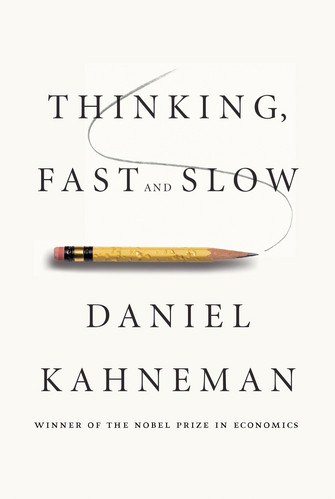
My intuition and intelligence both told me that Daniel Kahneman and his Thinking Fast, Thinking Slow are largely bullshit.  I based this view on its oversimplifying and overreaching (all of which are habitual in behavioral psychology) as well as methodological lapses that even I could see, confirmed and elaborated on by the eminent psychologist Jerome Kagan.

But what I didn't realize was the immense influence of Kahneman and his analysis on major institutions, especially on the Internet, that ultimately may have decided the 2016 elections.

These revelations (to me anyway) came in a penetrating review  by Tasmin Shaw of a new highly laudatory and uncritical book on Kahneman and friend,  published in the New York Review of Books.  It leads quickly into the Orwellian world of yet another ultra conservative billionaire and apparently the only thing that unites Bannon and Kushner, the Cambridge Analytica firm that claims to have essentially elected our Homemade Hitler.

Kahneman became famous among economists for his insight that, contrary to classical market economic dogma, people do not rationally choose to spend their money in ways most advantageous to themselves, but let emotional factors override their calculations.  Incredible insight!  Even though this is the very foundation of advertising, and that the heart or appetites winning out over the head with tragic and comic consequences is the theme of countless novels, plays, folk tales and myths over centuries. Amazing!  Give that man a Nobel Prize!  (They did.)

But his current fame is based on his binary worldview of human decisionmaking, between the fast (irrational, cf. emotion and intuition) and the slow (rational, meaning in his terms, doing the math.)  His theory exemplifies its conclusions, in that it is easier to manipulate communication if you know what your audience wants to hear and you present it to them in an appealing way, such as a very simple theory that gratifyingly explains everything with just two cute and easy- to- remember choices.

But he did produce some math, and together with massive data collection, it did help create algorithms and some less than savory techniques to manipulate choices by going directly to emotions, used with alacrity by Amazon and Facebook, among others.

Though the Obama administration made some use of some offshoots of this behaviorial psychology model, Shaw writes, actual political manipulation is claimed for the far right consulting group Cambridge Analytica that cut its teeth proudly manipulating elections in the third world, then may well have worked for the most reactionary Brexit advocates, then definitely did work for our apprentice dictator, and may still be doing so.

Some of the techniques and the Cambridge A. connections to billionaire Robert Mercer and the White House are chillingly described in this Guardian article.  Here again there are Russian connections--like the zombie websites waiting for the trigger word--and there may be more, if indeed Russian agents stole voter registration data and passed it on through the R campaign to political micro-message manipulators like Cambridge A.

Some dispute its effectiveness, Shaw writes. "But this doesn’t mean that there is no threat to democracy once we start relying less on information that can be critically scrutinized in favor of unconscious manipulation."  That manipulation may include actually subconscious phenomena, Shaw suggests, through the use of what used to be called subliminal advertising--for example, emojs flashing on web sites too fast to be consciously seen.

All this is at least as old as Vance Packard and The Hidden Persuaders in the 1950s, but its now on computational and electronic steroids.  There is perhaps an irony in that Kahneman began by advocating for the rational side.  But, as Shaw writes: "The two-systems view has managed to lend the appearance of legitimacy to techniques that might otherwise appear coercive."

Shaw states his own rejection of the Kahneman model:

"Psychologists have not yet uncovered the fundamental mechanisms governing human thought or finally found the secret key to mind control. Since the human mind is not straightforwardly a mechanism (or we are at least far from proving that it is) and its workings are unfathomably complex so far, they may never succeed in that venture. Some of the biases they have identified can easily be redescribed in ways that don’t make them seem like irrational biases at all; some are not transferable across different environments. The fundamental assumption of two discreet systems cannot be sustained."

But--Shaw warns:"this does not mean we can disregard the propaganda initiatives derived from Kahneman and Tversky’s work," especially when wedded with the global influence of the Internet and the power of Big Data.  Big Data magnifies Big Lies.

Shaw's conclusion is glum: "It is still possible to envisage behavioral science playing a part in the great social experiment of providing the kind of public education that nurtures the critical faculties of everyone in our society. But the pressures to exploit irrationalities rather than eliminate them are great and the chaos caused by competition to exploit them is perhaps already too intractable for us to rein in."

The only hope in that regard lies in Kahneman's basic mistake: his fast and slow division, which distorts the nature of both intuition and intelligence.  Actual intuition and intelligence enable us to see patterns (so for example that Homemade Hitler's moronic soundbite speeches finally make sense as crude recitations of the keywords identified in this research as triggers for a selected audience.)  And they also enable us to take charge of changing our own minds--a topic I hope to go into here soon.