Wednesday, May 13, 2015

The Greatest Possible Challenge

Last week there was a rather quiet commemoration of the 70th anniversary of one of the most important achievements of the twentieth century: the Allied victory over the Nazis in World War II.

Indispensable to that victory was the US President, Franklin D. Roosevelt.  My next few excerpts from Roosevelt & Hopkins will pertain to that, especially as it is the actual subject of this long book.

The book chronicles the months and years after German invasions began the war in Europe but before US formally entered it.  That period was characterized by growing desperation, especially from England, for US help.  While western civilization and liberty arguably hung in the balance, FDR was stymied by a recalcitrant Congress, especially the Republicans who were in the main Isolationists, and viewed with extreme suspicion any attempt to increase US military readiness or aid European allies.  Some factions and celebrities (notably Charles Lindbergh and Ann Morrow Lindbergh) praised the Nazis and called them the wave of the future.

The US public was traumatized by World War I to an extent that history seems to have forgotten.  But the Republicans weren't pacifists--they were Isolationists, opposing American involvement beyond US borders or at least outside its hemisphere.  This isolationism was in part domestic politics, for it gave them a clear identity in contrast to FDR.  They used this important issue about the future to make outrageous charges and gin up their supporters.  And they took it to ridiculous extents, refusing to pass appropriations bills for anything that even sounded like supporting military overseas. Sound familiar?

But that changed on December 7, 1941, with the Japanese attack on ships of the US Pacific Fleet at the US base in Pearl Harbor, Hawaii.  When Congress voted to declare war on Japan and its allies the next day, the US was woefully underprepared.  Only the quiet build-up FDR had engineered (partly by refocusing Depression work programs) ran counter to the obsolescence of US forces, in a war that more than any in history would depend on the quantity and quality of ships, planes, weapons and technologies, and the ability to keep producing them and getting them where they were needed--not only to US forces but to allies, in huge numbers.  How all that happened is covered in great detail in this book.

But US forces in the Pacific suffered defeat after defeat in the first months of the war. In January 1942, everyone knew that the US would have to massively step up its war production or face complete defeat, with Europe lost to the Nazis as well. FDR had gathered experts who went over figures of what the US was producing, and what industry estimated they could produce.  Under FDR's influence, they set goals for the coming year--astounding goals.  Here's Sherwood:

 
“The production goals determined upon the Arcadia Conference and announced in part by Roosevelt in his Message to Congress were so astronomic that they were greeted with derision and, in some cases, despair by military and civilian authorities alike. Some officers in the War Department were passing the remark, “The President has gone in for the ‘numbers racket’! Others could see nothing humorous in these impossible figures; believing that the goals could not possibly be realized, they foresaw grave criticism and probable injury to public morale when failure became evident.”

As usual, when critics in the press or among Republicans were afraid to lambast FDR directly they went after Hopkins, the "free spender," for unduly influencing FDR.

"However, as Hopkins had once told Quentin Reynolds, he was no Svengali, and Roosevelt was in no trance when he proclaimed the Victory Program of production. It was in Roosevelt’s nature to believe that the surest way to capture the imagination of the American people was to give them the greatest possible challenge.[my emphasis]

The total cost in money bothered him not at all; he always believed it was far better to squander the taxpayers’ dollars than to squander the taxpayers. As a matter of fact—and I can state it as such because I was one of those present when it happened—Roosevelt himself arbitrarily revised some of the figures upward on the eve of his speech to Congress. When Hopkins questioned him on this, Roosevelt said, ‘Oh—the production people can do it if they really try.’

 He did the same thing years later en route to Chicago where he proclaimed a national, postwar goal of sixty million jobs. He was never afraid of big, round numbers.”

Roosevelt the master politician and now leader of the Allies turned criticism into cheers by making these production goals a patriotic statement:

“When Roosevelt announced a part of the Victory Program to Congress, he said, ‘These figures and similar figures for a multitude of other implements of war will give the Japanese and Nazis a little idea of just what they accomplished in the attack on Pearl Harbor.’ The Congress cheered that vociferously and proceeded to appropriate the necessary funds with few of the quivers that assailed those who were responsible for carrying out the incredible program.”

The United States met and surpassed FDR's production goals, widely credited as a crucial element in winning the war.

Saturday, May 09, 2015

It's Getting There

It was one small step for political hacks, one giant leap backwards towards the new Dark Age.

The Republican Congress has passed a budget which slashes funding for NASA's earth sciences research.  There are many other preposterous cuts in their budget so when it comes time to compromise with the White House on a final budget, this funding may be sacrificed.

The cuts are obviously aimed at NASA's climate research, which includes weather forecasting.  Republicans and their fossil fuel masters are at war with reality, but everyone else is going to pay the price.

Jane Jacobs wrote a book, her last, called Dark Age Ahead, published in 2004.  Jacobs, along with Margaret Mead, Ruth Benedict, Frances Perkins, Halle Flanagan, Eleanor Roosevelt and others, was one of the great women of the 20th century.  She was famous for The Death and Life of American Cities and other books on cities, and she changed what cities look like and what they are today.  But this last book was ignored.  It's time for it to be revived.

She writes that a Dark Age is not just some primitive state.  It is a time when what was once known is culturally forgotten.  It is when knowledge is at first denied and ignored, and then it disappears.  Once started, it can become very extreme.  In the last Dark Age, people lost the skills required to measure time, and so in a sense in daily life, time itself was forgotten.

"Cultural xenophobia", a "fortress or fundamentalist mentality" are the signs that the fall into an age of darkness has begun.

In the New Yorker article I linked above, Elizabeth Kolbert uses a term I've used here before: willed ignorance.  That's what is happening among our "leaders."  That's why, if it's not dark yet, it's getting there pretty fast, and this latest effort--especially if it succeeds--is a notable step towards that darkness.  With chaos ahead.

The cost of willed ignorance is increasingly steep, as is the lack of societal will to do the difficult things necessary to stop our self-destruction.

So the news is always the same, and yet significantly worse.  Species disappearing from the planet,including large herbivores like elephants and rhinos and species of primates, with consequences of the crash of natural systems we can't predict.  And of course, the continuing acceleration of pouring carbon pollution into the atmosphere, condemning our progeny to a hotter, more violent and in many ways, a poorer world.  This week it reached a long-feared record.

Meanwhile the rabid right grows ever more extreme and perverse, with the latest feverish delusion of an ordinary military training exercise really being an Obama-led military takeover, because (as columnist Gene Lyons wrote) "where else would you start a military takeover but the strategic hamlet of Bastrop, Texas, commanding the crucial highway junction between Elgin and LaGrange?"

 And when it doesn't happen, rabid rightists and their pandering politicians will brag that their vigilance stopped it.  It would be nothing but funny if it weren't another de-legitimizing tactic that has consequences for the planet and the future well beyond the petty careers in the tiny lifetimes of power-hungry hollow men.

Friday, May 08, 2015

The Doctor Won't See You Now

"People don't eat in the long run, they eat every day."  That Hopkins quote is, in a nutshell, why I supported Obamacare.  It did  not solve the increasingly stark problems of medical care in the US, but it made improvements in the insurance system that are already proving for some many Americans to be the difference between getting medical care and not getting it, and therefore, between health and pain, between life and death.

But the successes of driving a stake in the heart of the worst private insurance excesses (like "pre-existing conditions") and making insurance available and more affordable to more people haven't driven the utter insanity out of the system.  Some of the less publicized reforms--in efficiencies and so on--may eventually make some difference.  But the basic system is still out of kilter, and very onerous.

One simple but massive disproportion: There are now diagnostic and treatment methods using expensive technology that didn't exist a generation ago.  According to the true cost of using this technology and the time of skilled personnel, one would expect them to be more expensive, and even "expensive" relative to other costs and income.

But one would expect that procedures that are simpler, that don't require these technologies, would be cheaper--that is, affordable, as they were before.  But mostly they are not.  In America, absolutely anything that requires hospitalization, and almost anything that requires a physician, is impossibly expensive.  What was once a relatively minor illness or injury can easily become financially ruinous.  In this respect and others, affordable medical care for many in America has deteriorated from what it was 40 or 60 years ago.

The cost of medical care to patients has gone up faster than most peoples' incomes, and this has been going on for so long that the disproportion is extreme.  And that's for people with insurance.

Opponents of Obamacare from the left called for a public system dubbed "Medicare for all."  In the debate before the Obama bill was written, I favored this alternative.  But I knew then and I certainly know now that even this is not the solution.  Relative to what recipients receive in Social Security, Medicare is expensive insurance.  It is not free--the part that covers doctors costs in the neighborhood of 15 to 20% of an average Social Security monthly payment.  And there are deductibles and copays, just as in private insurance.  And there are enough holes in coverage that supplemental insurance is a big business (with the usual fraud we've come to expect from insurance companies.)

Moreover, between the machinations of private health care companies contracting with Medicare, and the bureaucracy of Medicare itself,  getting care is at least a part-time job.  And not a nice one.  It's a lot to ask of people who are old and sick as well.

Add to that the tests and procedures that aren't needed, but that involve time, expense and anxiety:

"In 2010, the Institute of Medicine issued a report stating that waste accounted for thirty per cent of health-care spending, or some seven hundred and fifty billion dollars a year, which was more than our nation’s entire budget for K-12 education. The report found that higher prices, administrative expenses, and fraud accounted for almost half of this waste. Bigger than any of those, however, was the amount spent on unnecessary health-care services. Now a far more detailed study confirmed that such waste was pervasive...

Virtually every family in the country, the research indicates, has been subject to overtesting and overtreatment in one form or another. The costs appear to take thousands of dollars out of the paychecks of every household each year. Researchers have come to refer to financial as well as physical “toxicities” of inappropriate care—including reduced spending on food, clothing, education, and shelter. Millions of people are receiving drugs that aren’t helping them, operations that aren’t going to make them better, and scans and tests that do nothing beneficial for them, and often cause harm."

This hodgepodge of systems has roiled the world of physicians, clotted their hours with paperwork and thrown everything into chaos.  The money involved means that physicians are clustered in high income urban areas, and leaving places like Humboldt County in droves--there just aren't enough rich people here to make up the low income from Medicare and programs for the non-rich.  The number and proportion of doctors who will not see Medicare patients also seem to be increasing.

Getting sick or injured is always a crapshoot, and so is getting the right medical care for it, especially in proportion to your wealth.  The odds are increasingly against.

Think They'll Go Back to Alberta

Electoral politics is a mug's game.  Maybe it never made much sense but these days it seems all about money and whim.  I have no idea what just happened in the UK and apparently the experts there don't either.  There was a surprise earlier this week in the province of Alberta, Canada, when the iron grip of a conservative party very friendly to fossil fuel industries was defeated for the first time since Caesar.

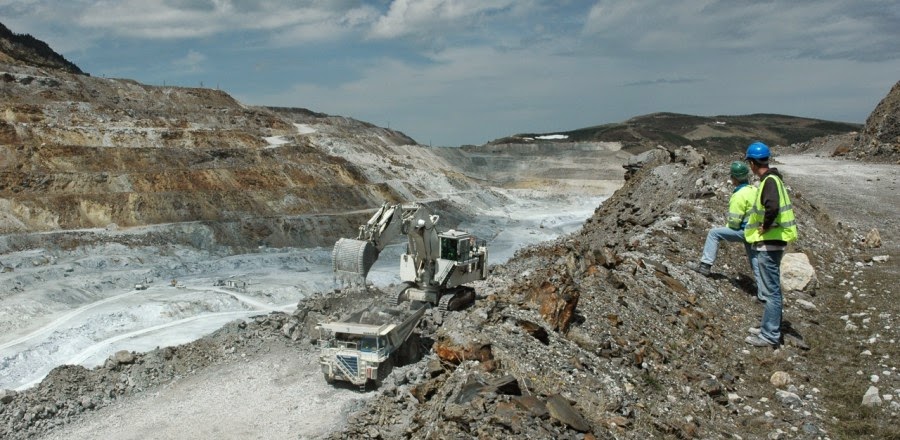
David Suzuki has an analysis at the Guardian full of green hopefulness.  Another analysis suggests the electorate just didn't like the snobbish conservative candidate.  But one thing from Suzuki stands out: though the province has been and is being literally carved up (forests downed, as in the photo above) and polluted by immense tar sands oil projects, the provincial government didn't get much of a cut from the immense revenues.  So very friendly to the companies; I assume the suddenly unemployed leaders responsible will find cushy jobs there.  But the province is unable to handle a drop in oil prices, because it was operating too close to the margins to support its services in bad times.

So maybe a motivation among the electorate was regret.  I'm betting that in future years in the US, regret is going to be very big.  

Tuesday, May 05, 2015

Roosevelt & Hopkins: Every Day

I'm about to let go and take this book back to its home in the library.  It's a first edition of Robert Sherwood's Roosevelt and Hopkins: An Intimate History.  It's not everybody's idea of a great read, not at more than 950 pages with notes.  And it basically covers only the years of World War II, though there's biographical material and material about the Depression early on.  Although a playwright, Sherwood was also a writer and adviser for FDR, and he witnessed this history in the White House.  He had access to documents, to actual notes in the hand of FDR and Churchill, etc.  So there is a lot of detail.  The book was published in 1948, but both of his subjects-FDR and Hopkins--were several years dead.  It's clear from this book that they'd given their lives for their country.

I suspect not a lot of people have read this book, let alone re-read parts of it, but some have. One of the things I love about old library books is the Date Due sticker, and this one shows that at least one or a few people have taken it out every decade, beginning in April 1948 and ending so far with me in 2014.  I do worry that the library will get rid of it, as they have so many books (all the better to give more space for computers.)  But I think I've saved it for awhile--they tend to go after books that haven't been taken out for 10 years.  There is something special about this very book being a first edition, the feel of the paper and the typeface as well as the language and punctuation all shouting 1940s.  (This photo of the spine seems to be of the first edition; the HSU library edition is red and black, and this spine title is worn to almost illegible. The cover above appears to be a later edition.)

But I'm not bidding farewell to all that just yet.  I've typed out a number of especially interesting passages, especially those that still pertain.  I'm going to reproduce them here now and again.

In my first post I'll give my favorite Harry Hopkins quote, and one of my favorite quotes of all time.  It probably came directly from this book.  But before then...a little background.

Harry Hopkins, born in Iowa (small town, lower middle class), graduate of Grinnell College in Iowa (member of the Midwest Conference with my Illinois alma mater Knox College), he had a few jobs in New York City administering programs for the poor, worked for the Red Cross in New Orleans, returned to Manhattan and caught the eye of then Governor Franklin D. Roosevelt by his efficient administration of a state relief program in 1931.  FDR brought him to Washington to run New Deal programs including public works.

Though he also helped organize the American Association of Social Workers, he loved the Manhattan night life, and knew a lot of celebs.  He had a talent for friendships, which eventually included Eleanor Roosevelt, Winston Churchill and even, to a degree, Joseph Stalin.

 People liked him because he was trustworthy, direct and to the point. (One of the reasons he was also vilified by political opponents.) Sherwood writes that Churchill teased him with the prospect of a royal title to be conferred after the war.  He said it had already been picked out: Lord Root of the Matter. (p.5)

Harry, Sherwood wrote, "could slip now and then into skepticism but...always returned to a state of passionate hopefulness." [15]

Now a story with that quote from Hopkins very early in the New Deal. Hopkins boss was Harold Ickes, Secretary of Interior.  But his real boss was FDR.  When public works projects weren't getting started fast enough for FDR, he made a change by establishing the Civil Works Administration.  (Now I quote directly from Sherwood, p. 52.  The only changes I'm making are dividing the text into shorter paragraphs, placing FDR's words in italic and adding my own emphases in bold.)

 “...Civil Works Administration which put four million people to work in the first thirty days of its existence and, in less than four months, inaugurated 180,000 work projects and spent over $933 million. It was the parent of W.P.A. and marked the real establishment of the princple of the right to work from which there could be no retreat.

Of the formation of C.W.A. Roosevelt wrote:

‘The Public Works Administration (P.W.A.) had not been able by that time to commence a very extensive program of large public works because of the unavoidable time consuming process of planning, design and reviewing projects, clearing up legal matters, advertising for bids and letting contracts.’

This was Roosevelt’s tactful means of explaining why he took nearly a billion dollars away from Ickes and entrusted the spending of it to Hopkins at that time (he eventually did the same with many times the sum.)

Ickes was a very careful, deliberate administrator, who took pains to examine personally every detail of every project and the disposition of every nickel that it cost, whether it be a village post office or a Triborough Bridge. This is hardly to his discredit for it was the approach to each problem of a hardheaded businessman as well as a conscientious public servant.

 Ickes was concerned about the return on the taxpayers’ investment. Hopkins did not give a damn about the return; his approach was that of a social worker who was interested only in getting relief to the miserable and getting it there quickly. His ultimate argument was “Hunger is not debatable.”

 Ickes thought primarily of the finished job—Hopkins of the numbers of unemployed who could be put on the job. As an instance of Hopkins’ impatience: someone came to him with an idea for a project which would take a lot of time to prepare in detail but which, Hopkins was assured, “will work out in the long run,” and his exasperated comment on this was, “People don’t eat in the long run—they eat every day.” [end of excerpt]

Long range planning is important, as is envisioning the future.  But we must always remember that people eat every day--the present, especially for people at the edge of need, can be more important.  Reconciling the two is the art of policy.  But the point Hopkins made is about not forgetting the most important and urgent task (Lord Root of the Matter, remember?) in the fog of planning.

The debate over spending money to meet infrastructure needs as well as for social good continues in our time along some of the same lines.  However we've even further behind that debate in acknowledging the real problems.  Jonathan Chiat today writes about a "debate" over poverty ostensibly between NY Times columnists David Brooks and Paul Krugman.  Krugman alludes to "some people" who insist people in America are poor because of moral failings and wrong values.  Krugman, sounding a little like Hopkins, writes: "The poor don’t need lectures on morality, they need more resources — which we can afford to provide — and better economic opportunities, which we can also afford to provide through everything from training and subsidies to higher minimum wages.”

But even this debate pales against the stark realities that Hopkins recognized by addressing them directly.  And by building the public infrastructure that is still the foundation of economic as well as public and personal life in America.  Including infrastructure now crumbing dangerously, more than 80 years later.  Which our elected representatives ignore.

Monday, May 04, 2015

Emerson for the Day

“Silence is the communing of a conscious soul with itself.—If the soul attend for a moment to its own infinity, then and there is silence. She is audible to all men—at all times—in all places—and if we will we may always harken to her admonitions.”
Thoreau

Saturday, May 02, 2015

In Hot Water

Global heating on its own is causing significant damage and is predicted to do more.  But its greatest current role is as another destructive factor added to others.  Over time, for example, it contributes to the ongoing crash of species, last week predicted to add extinction for one-sixth of those existing now, if present greenhouse gases pollution continues at current growth rates.

But right now we're seeing it and feeling it in California as a strong contributing factor to our drought, and now to the record-breaking temperatures along our shores. Weather Underground's Dr. Jeff Masters: "Ocean temperatures off the coast of California were at record or near-record levels for this time of year on April 29, 2015. Ocean temperatures off the coast of Los Angeles and San Diego were more than 4°C (7.2°F) above average, an astonishingly high anomaly." (See illustration above.)

These temperatures result from an atmospheric trend now 3 years old and a decades-long natural oceanic pattern--and global heating.  It's global heating that has shoved these temperatures into the extreme range.

Hot Pacific waters off our shores does not bode at all well for fish and other marine species.  Farther from shore there's more going on, as something called the Madden Julian Oscillation broke its records for intensity, leading to 3 strong cyclones in the western Pacific in March.   Before that, in February other factors combined for other record-breaking effects that started this heating of our coastal waters and the death of sea life dependent on smaller creatures who thrive in cold water.  This included a sea lion die-off.

The hot Pacific waters are leading several forecast models to predict the likelihood of a strong El Nino emerging this summer.  That's more bad news for ocean life.  It's potentially good news for California as it increases the chances of a wet winter.  But factoring in global heating gives us two general principles: whatever happens is more likely to be unprecedented in some ways, and in some ways more extreme.  So it may be that the rains don't come ashore in the volume expected, or that they sit on one part of the state causing havoc.

To actually break the drought they would have to be close to three times normal winter rainfall, though where the precip goes and when makes that a suggestive if perhaps not totally relevant estimate.  On the other hand, if we do get two or three times the normal rain, that itself is likely to cause havoc with flooding, mudslides, erosion, and other effects we're even less prepared for.

While some experts are betting on this super El Nino, Dr. Masters is holding back for the moment.  It may be June before there's something like consensus.  But even then it's a matter of getting ready for the unknown.  Because global heating screws with everything.

Thursday, April 30, 2015

Holy Grail of Sun Power

Elon Musk of Tesla, with headquarters on his native planet of Vulcan, has announced what every techie outfit craves and hires p.r. people to crow they've got: a potential "game-changer."

No, not the electric car.  Old news.  Not even Space-X.  The announcement today concerned the alternative energy holy grail: a battery capable of storing solar energy.  And he's got a fleet of them.

And Tesla isn't the only company going in this direction.  When energy storage via battery gets cheap, big and reliable enough, it becomes the missing link in clean energy, further enabling everybody--from individuals to individual households on up--to liberate themselves from dirty grids and fossil fuel billionaires--and even future clean energy megacompanies and billionaires.

The Best of What's Still Around


A third outstanding performance from a Sting birthday concert involves somebody I'd never heard sing before, though I'd certainly heard of her--her public image was, well, public and highly theatrical.  But Lady Gaga can sing--this is a great version of "King of Pain."  The band is really great too.

Sunday, April 26, 2015

President Obama Unleashed


President Obama names his choice as the worst President of his lifetime, gives his rhymes-with-bucket list,  responds to people who say he is arrogant ("Some people are really dumb") and says what he really thinks about climate crisis deniers.

Friday, April 24, 2015

End of A Recycling Era

In my previous post on this subject I described aspects of the changeover here in recycling systems in terms of a philosophical change: from "Reduce, Reuse, Recycle" to "If in doubt/Throw it out."  But there's a little more to the local story.

The previous system I described--hauling our recycling to the Arcata Community Recycling Center at our own discretion--was otherwise without cost to us.  ACRC was a nonprofit enterprise.  Eventually they charged for certain kinds of electronic recycling, but they also paid cash for certain items.  Basically however, the price was in the effort to get it there, which wasn't much effort, and was often enjoyable.

Now our recycling is picked up weekly, and we pay for that service.  It is mandated by city government--a weekly recycling charge no matter what.  Part of a dubious trend of government forcing you to pay money to a profit-making business. You can have less than fits into the bins but not more.  This requires tearing cardboard into strips rather than simply flattened boxes.  So there's still work we do, but we also pay.  Arcata Garbage is a profit-making company.

Last week saw the official end of Arcata Community Recycling Center as an entity.  After they closed the local center shortly after Arcata Garbage started curbside, they maintain a sorting center nearby, and continued to bid for recycling from local communities.  After allegedly tricking them into revealing details of their operation, another profit-making company underbid them for a big contract.  They sued, and last week, facing more attorney fees and legal costs, they settled out of court for a piddling amount, and announced they were folding.

There is still some community-based nonprofit reycling going on--ACRC cites Zero Waste Humboldt as one.  Still, ACRC's demise seals the end of that era, with the reminder that we're paying for it--Arcata Garbage makes money not only on recycling but from us.  And lessens our involvement in the process, as well as personally my confidence that much of this stuff is actually being recycled.

Yet Another Reason to Avoid Adam Sandler Movies

I've had a fairly longstanding policy regarding Adam Sandler movies, which is that I would not only not ever pay to see one, I would have to be paid a substantial fee just to sit down for one long enough to eat a bag of popcorn.  He's one on my list that involves a sliding scale of fees, but he's definitely near the top of it.

His brand of humor has never struck me as funny, being of a kind that invites what has finally happened: twelve Native American actors have walked off the set of his latest film, protesting the utter racism of its humor.  Now I am on my guard about overdoing this sort of thing, but even without examples of the actual lines etc. I have no trouble believing they're right.  

Thursday, April 23, 2015

That Which Must Be Named

That which must not be named in Florida was named in Florida, big time, as President Obama marked Earth Day with a speech in the Everglades about the climate crisis.

“This is not a problem for another generation. Not anymore,” he said. “This is a problem now."

One of many stories on Florida in the climate crisis. Here's another from National Geographic.  Here's the speech, which included these words:

"And here in the Everglades, you can see the effect of a changing climate. As sea levels rise, salty water from the ocean flows inward. And this harms freshwater wildlife, which endangers a fragile ecosystem. The saltwater flows into aquifers, which threatens the drinking water of more than 7 million Floridians. South Florida, you’re getting your drinking water from this area, and it depends on this. And in terms of economic impact, all of this poses risks to Florida’s $82 billion tourism industry on which so many good jobs and livelihoods depend."

"So climate change can no longer be denied. It can’t be edited out. It can’t be omitted from the conversation. And action can no longer be delayed. And that’s why I’ve committed the United States to lead the world in combatting this threat."

Wasted

Here's an article on e-waste with an unsurprisingly theme: there's a lot of it, it's growing fast, especially in big countries that talk big about environmentalism.  But there are two interesting elements in this story: what constitutes e-waste, and what a waste it is.

Most of the e-waste in this model, in bulk at least, is made up of "fridges, washing machines and other domestic appliances at the end of their life."  In other words, large appliances that have some electronic components I guess.  60% by weight comes from these sources, and only 7% by computers, printers, cell phones etc.--stuff that we more readily think of as e-waste.  Weight and number are two ways of measuring it but neither quite gets at environmental impact.  But there's quite a bit with contaminating metals, compounds, chemicals and gases.

However, there's this: "Waste that could have been recovered and recycled was worth $52bn, including 300 tonnes of gold – equal to 11% of the world’s gold production in 2013."

Which suggests further problems with recycling and recycling industries.  It seems to me that after a much publicized start, government at all levels have dropped the ball on making recycling work, let alone the priority it must be.

Monday, April 20, 2015

The Best of What's Still Around


I saw this for the first time in the full concert footage and didn't recognize the performer.  I heard a good voice and especially heard good diction--as great as Sting's lyrics are, he doesn't always sing them clearly, especially with the Police.  So I understood some of these lyrics for the first time.  Turns out of course that it's Robert Downey, Jr, aka Ironman etc.  With Sting (yeah the shaved head looks weird, don't know what that was about) and a great backing band.

I've been aware of this concept of the Bucket List for a few years but didn't have one.  Now I've got one item.  I'm not deluded enough to say "sing with Sting" or in a particular venue.  I'd just like to sing on stage with two or three hot lady backup singers.  Just one night.  I've got sweet backup voices on my one and only record but we did our parts separately (I didn't even meet the sax player whose solos are my favorite moments until years later.)  But I've never had that experience in real time.  I suspect it would be a bit of an out of body experience, but maybe a video of it would allow me to savor.

Wednesday, April 15, 2015

This Is Not The Technological Age


This is not the technological age.  We may be seduced into believing this by the tiny devices that increasingly rule our lives, and the rooms of books, records, photo albums and letters that have vanished into electronically accessed clouds in the ephemeral realms of cyberspace.

Even the names that dominate our days--Google, Yahoo, Apple, Twitter, Facebook, Amazon--suggest the whimsical worlds of make believe.  But this insubstantial pageant masks the hard and increasingly terrible truth: we still live in the Industrial Age.

Technology may have revolutionized our lives, and may well change our circumstances even more in the near future.  But we are too easily deceived by the bright screens and images at the speed of a fingertip, and by all the giddy power that fits in the palm of your hand.  For despite its seemingly inconsequential size and weight, this device is manufactured out of materials mined and constructed in huge industrial operations, and gathered together from many distant places.

There is no "cloud."  There are only miles of  servers, requiring gross and exotic materials, vast quantities of electrical power which in turn requires vast quantities of fuels.  And that's true of all other new technologies, in medicine, communication, and industry itself.

 Technology is a subset of the industrial age, because without the systems of that industrial age, there would be no technological marvels in your hand.

For a generation or more we in the US have been told that we live in a service economy, dominated by communications--that manufacturing and mining are occupations of the past.  The manufacturing and mining, the industrial byproducts of deadly chemicals, poisoned land, water and air as well as cheap labor and pitiless human health risks, may mostly exist now in distant and hidden places, but their scale is ever more immense and growing.

Industrialization in those parts of the world where it did not exist means that industrialization is spreading and accelerating to far larger sizes and impact than the "Machine Age" of textbooks and museum shows.  3-D printing and the Internet of Things do little if anything to change this fact.

In fact the Industrial Age has spread beyond the processes of manufacturing things to the industrialization of the food supply--crop farming (with heavy use of GMOs and pesticides), livestock (with heavy use of antibiotics, engineered feeds and chemicals) and fishing (with the collateral damage of other species and habitats.)


Though attention has turned away from it, clearcutting and other industrial timber cutting continues.

The Industrial Age is vast and insatiable.  Capitalism's addiction to relentless growth insists on this.  It is also increasingly fragile.  Fossil fuels are harder to find and extract, requiring more complex machinery and greater damage to the natural world, both in remote and biological sensitive locations, and dangerously near human communities.  The metals and minerals that computers need are especially vulnerable, as some vital ones come from few countries, which may be in strife or controlled by criminals.

Industrial farming is depleting soil that only thousands of years could nourish.  Industrial logging continues to destroy all that supports the life of forests, streams, wildlife and ultimately people.

Garbage and waste is itself a huge industry, poisoning land and now immense areas of the oceans, which among other things, regulate global weather.

Transportation is perhaps the defining industry of our age, so comparatively cheap that much of our material goods come from afar, including our food.  Transport that uses fuels, power and packing materials in massive quantities.

Disruption of  transportation is now easily the most consequential of industrial processes. Disruption of computerized communication may overall be worse in the short term, but its effect on transport could be deadly.  With our lives so dependent on multiple industrial processes far away, they are stunningly fragile.  How many of us can depend on even locally produced food, once the supermarket shelves and the cupboards are bare?

It may be comforting to think it's the technology age--it sounds smarter, cleaner, smaller.  The reality is larger, dirtier, more violent and ultimately horrifying in its abuse and insanity. It is important to recognize that our shiny technologies and the culture's obsessions with them may blind us to realities that need to be addressed.  Both to our fragile dependence and to the effects of industrialization on our planet and its ability to sustain life.      

Progress

I've posted the paragraph below as an update to a previous post but it got me thinking.  In 1972 the Firesign Theatre troupe fielded its own presidential candidate: George Papoon, candidate of the National Surrealist Light Peoples Party.  I'm not even going to try to explain Firesign Theatre to people who didn't experience them.  If you did, you can probably still repeat lines from their records.
("I'm not talking about hate...")

But the point is this was a comedy group, however hip and intelligent.  And the entire Papoon candidacy was predicated on his single slogan: Not Insane.  

With Nixon in the White House (and Watergate already unfolding), the Vietnam War inexplicably continuing etc. that slogan was a sly commentary on the Zeitgeist. I probably still have one of these buttons and bumper stickers somewhere.

But in 2016, it is apparently a main argument for a major party candidate advanced by a sophisticated political commentator.  And one that Jonathan Chiat  believes will carry the day.  Following arguments from demographics and surveys, complete with charts and graphs, he concludes:

"The argument for Clinton in 2016 is that she is the candidate of the only major American political party not run by lunatics. There is only one choice for voters who want a president who accepts climate science and rejects voodoo economics, and whose domestic platform would not engineer the largest upward redistribution of resources in American history. Even if the relatively sober Jeb Bush wins the nomination, he will have to accommodate himself to his party's barking-mad consensus. She is non-crazy America’s choice by default. And it is not necessarily an exciting choice, but it is an easy one, and a proposition behind which she will probably command a majority."


There it is: "Not Insane."  End of campaign.  I'm ready to vote.

P.S. Firesign Theatre is still around.

Tuesday, April 14, 2015

Canada and the Climate Crisis

The climate in Canada appears to be changing on climate change.  A meeting (or summit) of provincial leaders made news, first for climate crisis activists staging a protest march of some 25,000 people in Quebec City, and secondly for some action--as the premiers of Quebec and Ontario provinces signed on to a cap and trade deal.   British Columbia province had earlier instituted its own carbon tax.

This means that the three most populous provinces in Canada, accounting for nearly 90% of the country's population, are instituting carbon pricing schemes.  However, several of the major fossil fuel energy producing provinces are not participating.

These provinces are joining several US states like California in taking state and regional action to price carbon. Unlike the US at the moment, the federal government of Canada is unsympathetic (it's still Bush up there.)  Nevertheless, though the Obama administration has taken meaningful actions to regulate carbon and encourage clean energy, Congress has stymied federal participation in a carbon tax or the previously Republican-proposed alternative of cap and trade.

The complexities (and perhaps futilities) of states and provinces acting without broader participation is analyzed from a business orientation here. The need for national government action was a point made by protesters, especially regarding oil pipelines in Canada.  The premiers themselves called for federal action in their final statement.

As even the business analyst admitted, something is better than nothing.  For at least one Nobel Prize winning activist however, it was the march itself that will have the most lasting consequences, as opposition grows to a pipeline in eastern Canada, within the context of growing concern over the climate crisis.

Monday, April 13, 2015

The Best of What's Still Around


Recently via YouTube, PBS etc. I've been catching up with Sting.  He's a great performer and a very great songwriter.  This is from his 60th birthday concert a few years ago, which featured many guest artists.  The video available on YouTube is a strange amalgamation of professionally shot and pretty bad amateur video from the audience.  But this is one from the professional part at the beginning--it's Rufus Wainwright singing "Wrapped Around Your Finger."  Such a great voice, and his opera interests really show in great intonation and force--it's already my favorite version of this song, including the original Police recording.

For fellow boomers, Rufus Wainwright is the son of songwriter and singer Loudon Wainwright III and singer Kate McGarrigle of the McGarrigle Sisters.   I once was in their apartment in the Village, tagging along with Georgia Christgau and maybe her brother Robert.  I don't remember why we were there, but the apartment was empty (maybe to water the plants?): no Kate (I think she and Loudon were separated at that time) and no infant Rufus.  Just hundreds of motel keys hanging from nails near the ceiling, all around one big room.

This may be the first of a series, inspired by Sting's line: "When the world is running down/ you make the best of what's still around."  Which includes: appreciate, savor, enjoy, celebrate.

Sunday, April 12, 2015

When the Rainbow Is Enough (with Update)


An editorial in the Sunday New York Times begins:

"It is a peculiar, but unmistakable, phenomenon: As Barack Obama’s presidency heads into its twilight, the rage of the Republican establishment toward him is growing louder, angrier and more destructive.

Republican lawmakers in Washington and around the country have been focused on blocking Mr. Obama’s agenda and denigrating him personally since the day he took office in 2009. But even against that backdrop, and even by the dismal standards of political discourse today, the tone of the current attacks is disturbing. So is their evident intent — to undermine not just Mr. Obama’s policies, but his very legitimacy as president."

It is peculiar (and some would say, nothing new for the rabid right) but not inexplicable.  It is peculiarly extreme politically, as an attempt to pre-demonize the 2016 Democratic candidates and poison the electorate.  If Republicans can create the fantasy of a failed Obama presidency and color the mood of the media and the country particularly in the summer before the election,  they might have a chance--and perhaps their only chance--of winning.  By either associating candidates with an unpopular President, or creating enough panic (not hard to do among Dems unfortunately) so they run away from the Obama legacy (as many did in 2014) they hope to replicate the outcomes of 2014.

So they need to keep hammering at Obamacare before its success becomes generally accepted, and they need to undermine a deal with Iran that could not only forestall very deadly warfare there, but could go a long way to establishing peaceful change in the region.  These ends for the good of the country, for the lives that might be otherwise wasted and lost, for the good of the world--they are nothing compared to political party advantage--because this is a holy war, a last desperate gasp war, and in more ways that one, a race war.

I like passing along the funny spin that Borowitz etc. put on things, but unfortunately they exaggerate very little.  The party of Cheney really does want war with Iran, among others.  The Republican party really is deeply beholden to racism, and to apocalyptic fundamentalism.  The fact that they use outrageously extreme rhetoric to describe their political enemies--even when those enemies are pursuing policies that Republicans only recently abandoned--cannot confuse the issue: they are extremists, and getting more extreme all the time.

The 2016 campaign that essentially starts today promises to be the ugliest of my lifetime, and I've lived through some ugly ones.  I plan to ignore it as much as possible.  I fully expect it to be beneath contempt.  But though I turn my attention to where it might do more good, I'm not for a moment fooled as to the suicidal reign of hatred and ignorance that is embodied by a willing Republican Party.  I don't need wasted hours of angst for more than a year to know how I will vote.

Update: The last paragraph of Jonathan Chiat's column concluding that there is only one choice for President in 2016: "The argument for Clinton in 2016 is that she is the candidate of the only major American political party not run by lunatics. There is only one choice for voters who want a president who accepts climate science and rejects voodoo economics, and whose domestic platform would not engineer the largest upward redistribution of resources in American history. Even if the relatively sober Jeb Bush wins the nomination, he will have to accommodate himself to his party's barking-mad consensus. She is non-crazy America’s choice by default. And it is not necessarily an exciting choice, but it is an easy one, and a proposition behind which she will probably command a majority."

The hope for a different, better politics in Washington was not fulfilled.  Hope may best be directed elsewhere. Different hopes, some smaller, some larger, that inform what we do.  For hope is enacted in the present.  There are arcs of history still to bend, and rainbows still to follow.  

Wednesday, April 08, 2015

The California Way (With Update)

There are many reasons that California is the state making the most news in confronting the drought that affects much of the West.  One reason is that California is able to confront it directly, because its state government actually works--at least on this issue.

California has become even more of a Democratic party state in recent years, reflected in the state legislature as well as the state house.  But Republicans in state government have largely supported Governor Brown's efforts on the drought.  His $1.1 billion drought relief package sailed through and became law within days of its proposal. The new policies he announced on April 2 also got quick and wide support.

So the arguments about water and the drought tend to be pretty substantive.  There are charges of political influence, but those charges transcend parties.  Mostly the questions are of responsibility and efficacy--of who needs to do what.  So far it seems to be a healthy debate.

That doesn't mean that nothing is happening in the meantime.  Regulators are dealing with local water boards and water use in that locality.  As the Washington Post put it:

"State regulators are naming and shaming local water departments that have let water wasters slide — and forcing agencies to slash water use by as much as a third....Since Gov. Jerry Brown declared a drought emergency last year, they’ve largely taken a soft, educational approach to curtail water use. That’s no longer enough, he says.

In response, state regulators have drafted plans that show how much each community has conserved and assign mandatory water reduction targets. A third of the water departments must make the deepest 35 percent cuts because they have high water use."

Another way to put it however is that municipalities with the least per household water use are rewarded, so it's not a 25% cutback for everybody-- for San Francisco with relatively small use they are 10% but for places like Beverly Hills that guzzle the stuff, it's 35%.

Meanwhile, Governor Brown is asking for cooperation among the various uses--households, industries, farming-- rather than blaming each other.  A New Yorker piece suggests there is responsibility to go around.

The erstwhile Governor Moonbeam ( a nickname he got when he was governor during the 70s--and ironically, during the last major California drought) is also looking to the future with his executive order that toilets and faucets sold in California beginning in 2016 must be low-flow.  The state is expected to support the home purchase of new technologies that save water, perhaps including greywater systems, which an advocacy group claims needs only 10% of southern CA home use to save more water than a new billion dollar desalinization plant will generate.

There are still rabid right crazies like apparent presidential candidate Carly Fiorina who blames the drought on "liberal environmentalists."  (The substance of her case is dispatched in the aforementioned New Yorker article.)  But by and large the state is confronting this constructively.

Governor Brown has himself linked the CA drought to the climate crisis, and so far, California is becoming a model of how a polity can address both the causes and effects of the climate crisis--with government action and substantive debate.

Update: An example of this comes from state water officials, stating that some responses to the drought aren't temporary measures, that water use in California will never be the same:

"California needs to use “this crisis as an opportunity to accelerate what we know we are going to have to do under climate change anyway,” said Felicia Marcus, chair of the State Water Resources Control Board, which oversees the state’s complex system of water allocations, and this spring is tasked with writing new usage regulations."

In this Sacramento forum, she specifically mentioned greywater systems as one of those permanent features.

Tuesday, April 07, 2015

Retreats and Advances on Climate Crisis Fronts (With Update)

According to Washington Post's Dana Milbank: "There is no denying it: Climate-change deniers are in retreat. What began as a subtle shift away from the claim that man-made global warming is not a threat to the planet has lately turned into a stampede."

Milbank cites denials of denialing at rabid right organizations American Legislative Exchange Council (ALEC) and the Heartland Institute.  Some, like Heartland, are admitting that greenhouse gases have caused and are causing global heating, to concentrate on fighting effective measures to slow down and stop them.   Others--particularly prominent officeholders still beholden to dirty energy money--are professing a wimpy agnoticism, singing along to the strained strains of "Don't Ask Me, I Am Not A Scientist."

Meanwhile, with these enemy forces in a stumbling though still stubborn retreat, the Obama administration is advancing on several fronts, anticipating the upcoming global climate conference in December.

Today the Administration focused on the climate crisis as a public health issue.  A White House conference on this will be held later this spring.  But today, President Obama, other administration officials and several medical experts focused mostly on one effect: the increase in asthma and other respiratory conditions and allergies directly related to the climate crisis.  Global heating enhances smog and other air pollution.

A study by the American Thoracic Society concluded that seven out of 10 doctors reported climate change as contributing to more health problems among their patients.  These include premature death.

The climate crisis creates or exacerbates a number of public health threats.  Addressing these threats means addressing both the causes and effects of the climate crisis.  Public health systems and medical care in general must be aware and able to respond to higher incidences of these illnesses, as well as the spread of insect-borne diseases and epidemics.  The cause of further public health threats must be addressed by limiting and finally ending greenhouse gas pollution.

Update 4/8 : President Obama was interviewed on Good Morning America and talked about this subject, and his daughter Malia's attack of asthma as an infant.  He did not attribute it entirely to global heating, as some sites are saying.

Here's the ABC News site with the actual interview and a story derived from it that says in part:

Keep in mind that climate change is just one more example of how the environment will cause health problems, and I think most people understand that,” the president responded.

The science of climate and its effect on health is indisputable, the president said. More severe wildfires that send more particulates into the air and longer-lasting allergy seasons will lead to higher rates of asthma. Higher temperatures could also mean that heatstroke in cities will become a severe public health problem.

“So the idea here is that by having doctors, nurses, public health officials who've come together highlighting the consequences of warmer temperatures, not only can communities start thinking about adapting and planning around those issues but individual families can also recognize that there is a link here, and collectively we can start doing something about it,” he said.

Water Doesn't Grow on Trees Continued

The LA Times today has a short piece but with a lot of links on California water in history and literature.  It references this  commentary by Steven Johnson on why the New York Times and other non-California outlets are getting the CA water story wrong.  It's very complex for one thing.

Here on the North Coast for instance.  The local Lost Coast Outpost site, Ryan Burns posts that Humboldt County's problem at the moment is too much water.  The reservoir is full and our area retains water rights commensurate with a thirsty timber industry that is much diminished.  Yet in terms of use, we're to be under the same restrictions as Southern California.

At the moment our water surplus isn't helping anyone else, as it is still comparatively expensive to transport it.  There are also places within the county that may need help, and the possibilities of helping out parched streams and therefore the salmon etc. are being explored.  And anyway, maybe some of that surplus ought to be saved for non-rainy days.  (Although I'm happy to report we had hours of steady rain yesterday.)

Burns' piece by the way quotes our member of Congress, Jared Huffman, expressing similar sentiments to the aforementioned Mark Hertsgaard's piece about industrial agriculture in the state: “A new form of legalized gambling is rampant in our Central Valley: according to CA Dept. of Agriculture, in the midst of this extreme drought, 70,000 acres with 8.3 million NEW almond trees were planted! That’s the opposite of conservation.”

Meanwhile, the LA Times reveals plans for real water rationing in Southern California this summer.

Monday, April 06, 2015

Water Doesn't Grow On Trees

Mark Hertsgaard, one of the most perspicacious analysts of the climate crisis as well as a skilled journalist, has a biting story in the Daily Beast on California agriculture and the drought.

Hertsgaard, who lives in the Bay Area, points out a well known if not often mentioned fact: that California agriculture consumes 80% of the state's developed water.

That fact alone is worth focusing on.  For it means that no amount of reduced lawn care or shorter showers is going to be enough to deal with a drought that is being magnified and extended by global heating.  Not if agriculture is left out of the response.

California agriculture is immensely important to the food supply not only of the U.S. but other countries, including China, especially in particular crops like tomatoes, strawberries, almonds--and pistachios, which Hertsgaard chooses as the symbol of an industry raking in profits because they pay so little for so much water.

And while California agriculture is very important to the state, it constitutes just 2% of its gross domestic product, Hertsgaard writes.  He chronicles recent efforts to reform water rights practices, an arcane but very important system since before the days depicted in Chinatown.  But political and economic interests have successfully limited reforms.

Meanwhile, the thirstiest crops have continued to expand in production and acreage.  Hertsgaard writes;

One striking aspect of California’s water emergency is how few voices in positions of authority have been willing to state the obvious. To plant increasing amounts of water-intensive crops in a desert would be questionable in the best of times. To continue doing so in the middle of a historic drought, even as scientists warn that climate change will increase the frequency and severity of future droughts, seems nothing less than reckless.

On Sunday, the Guardian quoted Governor Brown responding to charges that agriculture is being left out of his latest round of cutbacks, although it did not say to whom Brown was responding or where. “The farmers have fallowed hundreds of thousands of acres,” Brown said. “They’re pulling up vines and trees. Farmworkers are out of work. There are people in agriculture areas that are really suffering.”

Brown said shutting down agriculture production in the state was possible but “that would displace hundreds of thousands of people, and I don’t think it’s needed.” “If things continue to at this level, that’s probably going to be examined,” he said.

Some areas of agriculture are hurting, and of course those who are suffering tend to be the lowest paid workers.  But according to Hertsgaard, some agricultural industries are doing very well for themselves and their stockholders.

California has had long droughts before.  But at least two things are different.  First and most important: 30% of the yearly water supply dried up when the Sierras could not retain the snow that fell in December, to a significant degree because it got too warm.  With some variation year to year, it's simply not going to stop getting hotter.

And second, California agriculture was not quite the scale of industry it is now, especially in its control by large corporations with their particular economic and political power within a system that doesn't care what a corporation does or makes or how, as long as it makes money from one quarter to the next.

So yeah, things probably are going to continue at this level at least, and agriculture is probably going to need to be examined.  As in a lot more.

Rolling Stone Meets the J-School

For a (mostly) former journalist, the Columbia School of Journalism report on the Rolling Stone rape story--now retracted-- was absorbing reading.

For context, here's the Reuter's story on the report, with some explanation of the story involved.  The Columbia School of Journalism is one of the oldest and most prestigious in the country. So the report itself--which Rolling Stone online published in full---is interesting both for what it says about RS and the article, and for what Columbia considers important about it all.  Update: Here is the report as published in the Columbia Journalism Review.

I have to say I was impressed by how much time the reporter in question spent on the story.  Only a writer salaried by a particular publication could afford to do that, and Rolling Stone appears to be one of the few that still does it, also paying for travel and other expenses.  So basic support was not the main problem.

 The report described failures of journalistic rigor or even procedure by not just the writer but her editors and the fact-checking editor. Rolling Stone (like most other such publications) has reduced its editorial staff, which probably meant that fewer people were doing more things more quickly. This could cause problems, especially when decisions are made with a deadline looming.

The Columbia report says that rape is among the hardest stories to cover, and that makes sense.  Everyone admits that the nature of the story--a woman describing a brutal gang rape--biased RS in her favor.  There are tangled roles played by psychologists and (particularly involving the university) the law.  There were also unwarranted but understandable assumptions made about the information available to each party.  (It turns out the university was dealing with an allegation that had significant differences from the allegation RS reported on, though both made by the same person.)

Part of what usually makes this crime so difficult to cover is the lack of corroborating information to check, especially when it is without witnesses, in a private setting.  But this allegation was of a gang rape committed by several men at a particular event, a pre-rush party at a fraternity house, on a particular date.  It was only after publication that the fraternity knew the specific allegation, and has since claimed that no such social event took place on that date.  That's information that should have been checked.  The report details several other instances of  information that others found faulty (other news organizations and the police) that RS didn't check.

So I have to agree with the L. Grove column in the Daily Beast--the nature of the story doesn't excuse professional failures that resulted in such a consequential story with repercussions that likely haven't ended. Though RS has announced everybody is keeping their jobs, some folks really should be fired, for the internal health of the magazine as well as its responsibility to the public.   (Although I would not be surprised if there were some resignations or reassignments in the near future.) Update: Now that the fraternity is apparently taking legal action, the personnel decisions at RS become more complicated.

However I don't agree with the high dungeon Grove and others express when RS editors dare to say that the self-described victim has some responsibility in all this.  RS founder and top editor Jann Wenner describes her as an "expert fabulist storyteller," which while redundant, doesn't seem inaccurate.  I have certainly encountered people who told extremely convincing stories that turned out to be complete fabrications.  Sometimes such stories are told by swindlers, and sometimes by those in need of mental health services.

 Certainly this news organization should not have let itself be taken in, and as the report indicates, several regular journalistic practices would have (if followed) revealed the single source--the narrator of the story-- to be unreliable.  But that doesn't mean the source is blameless, and some in the media who defend her story do her no favors.  To assume that (as apparently some of these critics do) is to make the same basic mistake as the RS reporter: an a priori belief about credibility that, most of the time, according to social science stats, would be correct.  But not, in the real world, all of the time.

Why would RS risk its credibility by not adequately questioning and checking this story?  Because it was a "good story"--i.e. sensational, full of detail (not to mention sex and violence) and exposing venal institutions (the fraternity, the university.)  A story that's just about adjudicated cases that have been reported elsewhere wouldn't be as "good a story."  This may be the most significant bias.

That's the biggest temptation of periodical journalism, and it applies to more than tabloids.  Avoiding that temptation is a lesson that I'm not sure the J-School emphasized enough.