Friday, November 10, 2006
Captain Future's Log
With Republican concessions in Montana and Virginia Thursday, it became official: it's a blue world after all.
After that initial excitement, what I feel now is a giant sense of relief. The real power of the Democratic Congress at the moment is in the fact of overwhelming electoral victory, which means popular support for change--and the first change is to stop Bush and Republican one-party rule from total domination, leading us to destruction everywhere we looked.
The second achievement is institutional, beginning with the promise of restoring the checks and balances of the Constitution through a Congress that will take its oversight responsibilities seriously, and will not rubberstamp the executive's whims. It is internally institutional as well: restoring integrity to the legislative process, ending systematic corruption. Many of the worst offenders, including their ringleader Rick Santorum, are themselves gone.
Both Speaker-to-be Pelosi and Majority Leader Reid hit just the right notes on Thursday. Reid said the Republicans provided a bad example of not working with Democrats, but it's not an example Democrats will follow. Pelosi talked about progress.
We can hold our heads up again in the world. I think we've come through the fire of the Bush years with a clarity of purpose that is quite impressive. But I also find myself with a feeling I grew accustomed to in the bad election years--I'd like to forget about politics and the news for awhile. That's a lot easier when it's not my job, and the jobs I have are going to require a lot of attention for the next few weeks.
As I try to get used to this, and not get ahead of myself with either too-grand visons and great expectations or anticipating the frustrations that are bound to come, I muse anyway on some of the ramifications.
The news media, for example. For the past several years, major newspapers, magazines and TV networks have slowly but surely responded to what they must have thought was a major conservative shift in the country, as well as the legendary permanent Republican majority. They got rid of their less-than-conservative executives, editors, writers, columnists and replaced them with neocons, fundamentalists and right wing crazies. Now that their transformation of the media is just about complete, what happens but the American public ain't buying that crap anymore.
Really too bad, because it will take years for them to respond. If they ever can. News as entertainment has limited their choices. I'm reminded again of what's passing into history by the sudden death of legendary TV reporter, Ed Bradley. He was an historic figure, as one of the first black journalists on national TV. My Italian grandmother, who came to America as a young woman and lived mostly within the Italian American community, did not come into much contact with black people. They were strangers. She used to watch only a few television shows regularly in her later years. One was Lawrence Welk, in reruns. Another was Family Feud. And the third, unaccountably, was 60 Minutes, which she called "The Clock." I am sure that Ed Bradley was a revelation to her, probably more than any other African American. His curiosity, seriousness, warmth and dignity were palpable. He was a good reporter, and clearly a decent man. Let's hope there are other, younger, newer versions out there, and a few find their way through the usual storms of idiocy, envy and whim to emulate him for the good of the future.
Wednesday, November 08, 2006
The dimensions of this, summarized by kos:
We won, and won big. Not only did we take the Senate, take the House, and destroyed Republicans at the state legislative level, but we didn't lose a single senate seat, we didn't lose any House seats, we didn't lose any governorships, we didn't lose any state legislatures. It was a rout of epic proportions.
Kos is also trenchant on the Democrats' agenda, and shoots down the notion that the Democrats elected were conservatives. While some have different positions on social issues (most of which they'll never have to vote on), they are much more progressive and populist on economic issues, against the war and torture, and for constitutional rights. In other words, they aren't extreme right wing lunatics, like the ones who have been running the country. Matt Stoller has more specific details on Dem candidates--the more conservative tended to lose, while the more progressive won. Note especially the support for universal health care.
Georgia10 adds this: When you can't get an abortion ban passed in freakin' South Dakota, America isn't trending conservative. When you can't get a gay marriage ban passed in Arizona, America isn't trending conservative. When opposition to gay marriage bans was more than 40% in 5 of the 8 bans that passed, America isn't trending conservative. When a majority of Americans choose Democrats to represent them, America isn't trending conservative.
Apart from the governator, the Wave swept Democrats into state offices in California. Results on propositions are mixed, but the worst ones were defeated.
Think Progress outlines some of the "firsts" in this tidal wave: the first woman and first Italian American Speaker of the House, more women in the Senate than ever before, the first Muslim elected to Congress, three House committees with African-American chairs, and of course (though TP doesn't mention him) Senator Bernie Sanders, the first declare socialist, who is so down to earth that his socialism is not an issue in Vermont or probably anywhere else.
The first victim of the wave was Rumsfeld, who promptly quit as secretary of Defense. But Bush promptly appointed an insider cut from the same cloth, who may go along with a change in policy but is an interventionist and Republican loyalist deeply involved in Iran-Contra and past machinations that helped create enemies in the Middle East and elsewhere. It seems Bush really wanted to appoint Kissinger, but even the lame duck Senate might not confirm a zombie.
Captain Future's Log
So far it's been about the numbers, and for those who followed individual campaigns, about their candidates. Sometimes it's about the people we don't have to grit our teeth seeing in power anymore. Ricky Santorum, who I disdained from the day he beat Harris Wofford, an intelligent and kind statesman, in 1994, lost to Bob Casey, Jr. (whose father's PA administration I did some pretty good work for, once upon a time) by almost 20 points.
I don't discount the possibility that some of these Democrats, maybe even Casey, will have me gritting my teeth some time in the future, but as for the future as a whole, this was a big win. For the American future it provides the institutional opportunity to restore checks and balances. It can begin to slow down our certain march to self-destruction on so many levels, in so many ways.
But what I think will become more evident in the months ahead is when Democrats take over committees and subcommittees in the House and--as looks likely now--in the Senate. While this means a lot for such high profile issues as Iraq, it means perhaps even more for issues that don't make the front page every day, like energy and the environment, and the issue that brings them together, the Climate Crisis.
Richard Pombo, the environmental dinosaur, is not only gone from the House committees on environment, he's gone from Congress. If Democrats take the majority in the Senate, Senator James Inhofe, who has turned himself into a climate crisis denying industry, will no longer direct the Environment and Public Works committee.
The next wave can build because, with powerful committees and subcommittees--the power to hold hearings and write legislation--it now becomes possible to research and assemble the makings of a future-oriented plan to address the Climate Crisis and other environmental problems, in tandem with new energy policy, which can also result in reinvigorating American science and engineering, with the outcome of creating new industries to build the clean energy systems the entire world will need, to our economic and social as well as environmental benefit. And to do so in time to present it to the American public in the 2008 presidential election.
Tuesday, November 07, 2006
11:15P Pacific--CNN declared McCaskill the victor in Missouri. Jim Webb's lead in Virginia is increasing to about 12,000 votes now, which would put it out of reach of an automatic recount. Democrat Tester continues to lead in Montana. Senate majority is close to going to the Democrats.
It's 10:30 p Pacific. Although Republicans have apparently held on in Tennessee, Democrats have a good chance of winning all three of the remaining Senate races in contention--if there are three. Jim Webb has declared victory in Virginia, and while he has a slim lead, its dimensions will be unknown until tomorrow, and probably a recount will put this in some doubt for a month or more. But he was very smart to declare victory--it's like the officials calling a touchdown, and the video replay has to show convincing evidence to overturn it.
At this hour, Clare McCaskill has gone ahead in Missouri, and Democrat-rich St. Louis has yet to be counted. Jim Tester has been leading from the start in Montana.
So the change has come. Democrats will have a powerful majority in the House. They are winning governorships and state legislatures. And it looks good for a one seat majority in the U.S. Senate.
California returns are still being counted. Ahnold is winning big as expected, but so far he seems to be carrying some important down-ticket offices with him, and some nasty propositions may pass while the most worthy ones may lose.
I realize it's three hours later in the east, but even out here it looks like bloggers are shutting down early. What wimps! Maybe I should reposition this blog as a late night source.
Nearly 9:30p Pacific, the Democratic majority in the House continues to grow. It's closing in on 40 seats, projected. Meanwhile, Webb has pulled slightly ahead in Virginia. If his lead increases to 11,000 votes, he'll avoid an automatic recount. Missouri still looks good, as does Montana, and Tennessee has not yet been called, so they are all still in play for a Senate majority.
Shortly after 8 pm Pacific, NBC and CNN project Democrats will have a majority in the House. It could be a pretty big majority before the night is out. A disappointment in Arizona, where the Republicans held onto their Senate seat. Now the Dems must win 3 of 4 close races. I feel good about Missouri and Montana. But they have to win either Virginia or Tennessee, and Virginia looks so close it will go to an automatic recount.
6:30 pm Pacific:
CNN projects a Democrat pickup for Senate in Rhode Island. That's three. Democrats need three of these four: Virginia, Montana, Missouri, Tennessee, or the outlyer possibility of Arizona.
Early bellwhether House races are going Democrat--not enough yet to say it's a wave, but it bodes well for majority. Now CNN projects another Indiana pickup for Democrats.
NBC projects that the Democrats hold Maryland, so now it's a matter of picking up four more Senate seats. Fly in the ointment: Joe Lieberman is projected to win Connecticut, as an Indepedent, who will caucus with the Democrats. So it's not a loss, it's just not the gain it should be with Ned Lamont (assuming the projection holds.)
CBS and NBC project that little Ricky Santorum, the architect of official corruption in the Senate, is going down: Bob Casey, Jr. will be PA's new U.S. Senator. CBS and NBC also project Sherrod Brown to win the Senate race in Ohio. That's two of the six seats Dems need for Senate majority, assuming they don't lose any. NBC projects Bob Mendendez retains the Dem seat in New Jersey. There's really only one other endangered Dem Senator, in Maryland.
Ken Blackwell, the Dark Lord of 2004 in Ohio, has gone down. Democrat Ted Strickland is projected to win big for Governor. Katherine Harris, Dark Lady of 2000, has gone down as well in her attempt to unseat Democrat Bill Nelson for U.S. Senator in Florida.
UPDATE: About an hour before first polls close, and two before many in the east do, reports continue to surface of high voter turnouts--in Montana, Missouri and Tennessee in particular. Also high percentages of absentee ballots, which this year may favor Democrats. Early exit polls on general questions show a high percentage voting on national issues. The possibility of The Wave is very much alive.
Turnout is way high in Connecticut, which seems to favor Democrats and Ned Lamont. Turnout also way high in Virginia.
Last polls indicate movement towards Democratic Senatorial candidates in Missouri, Montana, Tennessee.
Lots of problems at polling places, but so far they seem to be equal opportunity problems, affecting everyone. Though Republican dirty tricks operations continue. FBI is investigating Republican voter intimidation in Virginia.
Get rid of the Republican rubber stamp Congress that enables Bush's Iraq madness, that believes getting tough with terrorists means taking away fundamental American and human rights, that cuts taxes to enrich the superrich and impoverish everyone else, that hasn't done anything to address the Climate Crisis but deny it, or make America energy self-sufficient but finds the time to enrich a lot of crony corporations, from Exxon to Halliburton to Enron.
Get rid of this arrogant Republican Congress that has shirked its responsibilities of oversight--that spent all of 12 hours on finding out who was responsible for Abu Gharaib but these same Republicans spent more than 140 hours of hearings on investigating the Clinton Christmas card list.
Get rid of this arrogant Republican Congress that has devastated this institution by refusing to listen to minority views, while it invites its favorite lobbyists to literally write the laws it passes.
Get rid of this dangerous Republican Congress that, together with President Bush, gave away nuclear secrets to terrorists and rogue states, while refusing to join the world in limiting nuclear proliferation.
Stop Bush's power to intimidate his political adversaries, and his power to disrespect and disgust the world. In the eyes of many Bush has become one of the most dangerous men in the world--in England Bush is rated more dangerous than the president of North Korea. Stop the Torturers in Chief from destroying America's place in the world--from corrupting America's soul.
Get rid of this clueless Republican Congress that won't even raise the minimum wage, that does nothing about health care as businesses fail, families fall apart, individuals die.
Send a message to those who support Bush's insane, tragic war in Iraq, who helped him lie his way into it, who together ignored the disaster they should have foreseen. Just as they ignored the lessons of a simulated hurricane in New Orleans, they utterly ignored the recently exposed results of a 1999 war game that predicted every awful consequence of the war they nevertheless arrogantly pursued. They have spilled our blood, spent our treasure, and they kill and maim the innocent and destroy another country, and they will keep doing it until we stop them.
And if you need more reason to dump the Republican 109th Congress, Think Progress has 109 more.
Stop the death, stop the madness. Vote Democratic today. It won't solve everything, but it will slow this insanity down. This is for the future.
Monday, November 06, 2006
Final Update: A few final numbers. Usually about 5% of counties change voting procedures or types of machines in a given election. This time, it's 50%... The House has never changed parties unless the Senate has, too...The night before the 1994 midterm election when Republicans swept into power, their lead in the polls was 4%. In various polls, the Democrats are leading from 6% to 20%... In the CNN poll, 73% said they were "very angry" about the current state of affairs in America.
Update3: On the ground information suggest an upset may be in the works favoring Democrat Harold Ford in Tennessee, due to a combination of heavy early voting and bad weather forecast for the Republican-heavy area of the state. Also the GOTV efforts in Connecticut may be strong enough for Ned Lamont to upset Joe Lieberman. Lamont is the Dem candidate, Lieberman lost the primary and is running as an independent who will caucus with Democrats.
More Republican dirty tricks: vote suppression efforts in Virginia. This is Karl Rove's unsurprising and biennially disgusting November Surprise.
Update2: More buzz about Republican dirty trick robocalls. They've spent more than $2 million on them, over a half million just in the past few days. They include calling voters at 2 or 3 am. These calls seem to be on behalf of Democrats, but are designed to make voters angry enough to vote for Republicans. More info on robocall abuse with links here.
Update: A SurveyUSA poll with a good track record for catching last minute movement shows Democrat Jim Webb surging ahead in Virginia by an amazing 52-44%. This does conform with reports of small crowds and disorganization at Allen events over the weekend and this morning.
Other predictions: Republican-leaning pundit Larry Sabato predicts Democrats will win control of the Senate by picking up 6 seats, and the House by winning 29 seats. Analyst Charlie Cook gives a range of a 4 to 6 seat Democrat pickup in the Senate, and 20-35 seats in the House. MSNBC state by state polls shows very close races in key states, and predicts the Dems will fall short of Senate control. Kos of Daily Kos predicts a 6 seat Senate pickup and 24 House seats for the Dems. Chris Bowers at MyDD sees just a four or five seat pickup in the Senate, and 25 seats in the House.
Trends and factors: There may be a movement of Republicans "coming home" to hold their nose and vote for GOP candidates. Democrats remain ahead by double digits in generic polls, and continue to show greater interest and intensity. The predictions based on polls all show the Dems winning the House, and are split on getting those 6 seats necessary for the Senate. Another factor is GOTV, which appears competitive in key states, and on the ground operatives in Montana and Tennessee are happy with getting their early voters. Early voting used to favor Republicans, but maybe not this year.
To a certain extent, polling figures are weighted using past experience. If indeed there is a wave, these models are less relevant. Whether there will be a wave is the unanswered question. Interesting that Dem partisan Kos thinks there won't be, while Republican pollster Frank Luntz seems to indicate there will be. "There are some elections where the fear of the status quo is greater than the fear of change," he told the Wall Street Journal."This is one of those elections."
I may update this post throughout the day if there's reason and I have the time, but for now there are these highly interesting developments:
Political Wire reports that a couple of new polls to come out today show that the Senate race in Tennessee is tightening fast, which benefits the Democrat, Harold Ford. Some Dems had begun to write this one off.
One of those polls is the Gallup state by state, which has the Democrat ahead in Senate races in Missouri, Montana, Rhode Island and New Jersey, and with Democrat Webb down two points in Virginia.
Stuart Rothenberg's Rothenberg Report has predicted that Democrats will win the 6 Senate seats they need to win control, and 34 to 40 seats in the House, to claim a larger majority than the Republicans now have, leading to a number of Republican retirements in the next two years.
The American Conservative magazine is recommending that conservatives vote against Republicans to repudiate the Bush administration's prosecution of the Iraq war.
The blogosphere is abuzz with accounts of GOP robocall warfare--especially calls saying that are for Democratic candidates that repeat 6 or 7 times a day, including in the middle of the night. Some of these calls appear to violate several different laws, but so far Republicans are continuing this onslaught. Here's a thread at Kos about combatting them.
A lot of campaigns don't pay much attention to us up here in the north country. It's a relatively small population spread over a lot of territory, we're isolated and our issues are often particular to this region. Not that I haven't personally heard from Bill and Hillary today (Bill called in favor of Prop 87, Hillary is against 85) but there are advantages to our remoteness--mainly a minimum of robocalls. And maybe judging statewide campaigns from here isn't quite fair, but...
A couple of years ago, I recall reading an article somewhere about a new breed of Democratic politician coming from state government, tough minded and effective, while committed to a populist agenda: a highly electable combination. The two prominent examples were Eliot Spitzer in New York and Phil Angelides in California... Now Spitzer is ahead in his contest for NY Governor by about a zillion points, and Angelides is behind in California by double digits.
Up here, the Angelides campaign has been all but invisible. Even Attorney General candidate Jerry Brown seems to have many more TV spots (and better ones). So I can't judge exactly what went wrong with Phil's candidacy, but I do know of one opportunity he blew. Shortly after he emerged battered but victorious from the primary, both houses of the California legislature passed a comprehensive universal health care bill. Arnold announced he would veto it.
Health care is a crucial issue in this state, perhaps even more than elsewhere. Angelides was up against the Hollywood Hero, who has transferred that image to the political realm, despite also playing the Villain in both venues. What Angelides needed was a way to be a hero, and health care was handed to him on a platter. If he had announced his support of that bill, challenged Ahnold on it, hammered on this issue, he would have been in the media every day, and he would have at least defined himself. But he may also have found a winning issue.
I am not the only one who felt this was a missed opportunity, not only for Angelides, but for California families, individuals and businesses in critical condition because of the high cost of health care and insurance. Instead of taking this risk, with its enormous opportunity, Angelides seems to have favored a conservative campaign of depending on union support, particularly education unions. They may have won the primary for him, but it is unlikely they will make him governor. And he remains as vague as Ahnold about what he would do on health care.
I am very disappointed in Angelides and his campaign, but Ahnold is a stealth disaster--he plays the moderate and even liberal part, but his off-stage actions run counter to the image. He does not deliver. Although not a terribly clever or effective ad line, in this at least Angelides deriding Ahnold as an actor, not a leader, is accurate. So I will vote for Phil, because he'd be better than Ahnold.
I notice that progressives have pretty much moved on to the more promising down-ballot candidates, and we do have some very good people. Debra Bowen will make an outstanding secretary of state--a very Diebold-conscious one, very astute and articulate. She will not only make the election system work, she will bring the public along in the process. If I needed a reason to vote where my vote could make a difference, she's it.
John Garamendi for Lt. Governor is by all accounts an outstanding public servant, and his Republican opponent is a neocon who even Ahnold is keeping his distance from. Jerry Brown should make an entertaining attorney-general, Bill Lockyer is probably sorry he didn't pursue the governorship but he can stay in the game as state treasurer, and John Chiang for controller.
I have no problem voting for Senator Dianne Feinstein, (otherwise known as Di-Fi), especially because she is one of the few Senators who pays attention to nuclear proliferation and the Bush stealth plans for nuclear rearmament. Despite her reputation for pro-financial institution votes, she was a courageous and sane voice on the bankruptcy bill.
We also have one of the nation's best members of the House of Representatives (and best kept secrets, which may soon change) to re-elect: Rep. Mike Thompson. Both are effectively unopposed.
We've got the usual ridiculous number of propositions on the ballot. I really wish they would go away, but amongst the stinkers at least this time there are some worthy ones. So I vote NO
on 83, 85 (more so-called parental notification bullshit that is a prime reason people hate propositions--we voted this one down before) and NO on 90-- especially 90-- which could have disastrous effects here as a similiar stealth proposal is having in Oregon. Among other things, it makes enforcing environmental regulations nearly impossible. Erik V. Kirk at SoHum Parlance calls it "the worst proposition to make it to the California ballot since Lynden LaRouche's concentration camps for AIDS victims proposal."
I'm voting YES on 87, the alternative energy proposal, which the petroleum lobby has spent millions on defeating. Yes on 84 (water quality and supply), 89 (public financing of campaigns) and 86 (cigarette tax to fund health care. ) Then there's 1A, 1B, 1C, 1D and 1E (you think I'm kidding. I wish.) which I haven't yet braved.
What's really maddening about this: propositions were supposed to be a way citizens could go directly to the people, but instead they are either put on the ballot by wealthy and stealthy interests or opposed by same, and both sides wind up spending millions of dollars and taking up everybody's time. Then if a proposition passes it often gets screwed up by state government, turns out to be illegal or unworkable, or has unintended consequences. I wish I could point to one proposition that has changed things for the better. If you know of one, let me know, because this whole process is too time-consuming to be anything but depressing otherwise.
This site doesn't deal much with local politics where I live, on the North Coast, Humboldt County, and seldom even with the state of California. There are several newspapers and several web sites that do (SoHum Parlance is very informative about this election.) But I will be chipping in my two cents on California next post, and this time on a local issue that is probably recurring elsewhere.
Here in Arcata we have a city council that is pretty progressive by comparison, so the usual spectrum is weighted that way. There are two seats in contention this time, and a field of candidates that is generally acknowledged to be pretty strong. I frankly haven't yet decided on my second vote for council. But my first vote is going to be for Dave Meserve.
As one of our local papers points out, Meserve is experienced, knowledgeable about local issues and comes to meetings prepared on matters before the council. He also sees the bigger picture and how Arcata fits into it, in key matters such as energy. He's something of a visionary, with a lot of enthusiasm that sometimes gets him in trouble with people who feel he goes too far. Maybe sometimes he does, but he seems pretty practical when it gets down to making decisions.
But what seems most controversial about Meserve, especially with the editor of the Arcata Eye, is that he has brought resolutions before Council on national issues, like supporting efforts to address the Climate Crisis, or in favor of impeaching President Bush. Apart from those who disagree with the outcome of these votes, the objection is to getting City Council involved in issues on a level beyond the city itself. Apart from being a waste of time, it creates a poor image of Arcata in the outside world.
There is an intuitive appeal to this notion, especially when much of the media coverage of Council focuses on these resolutions. And everybody knows of something they wish the City would fix or pay attention to that they aren't. But I've come to strongly disagree with the notion that these resolutions are nonsense.
Beginning with the prelude to the American Revolution, there's a long history of issues of national importance being debated on the local level, and resolutions passed on them, especially when higher levels of government are unresponsive. In the case of impeachment, there is an institutional justification: though it's not widely known, the impeachment of federal officers such as the President can be initiated by state legislatures, and the sense of city councils can contribute to that decision. The impact on this and other issues is political--it provides a sense of what a polity is concerned about, and brings those matters to the attention of state and national legislatures the way no individual or organization can.
The Climate Crisis illustrates this importance. Nations throughout the world recognize this crisis and are struggling to address it. Under Bush, the United States refuses, putting the future of civilization in grave danger. But concerned Americans have refused to be silent or inactive. Right now throughout America, action is being taken within states and through regional partnerships, and by individual cities (this is also happening around the world, partly through the Clinton Global Initiative.)
But to get this action started required political voice and will, and that has come from city councils and similiar bodies on the local level--including many as small as Arcata. The combined power of this should not be overlooked. Arcata was in fact one of the first municipalities to take a stand. Being out in front did subject it to ridicule, but other localities noticed, and many more passed their own resolutions.
So when the names of those localities scrolled across the screen late in Al Gore's movie, An Inconvenient Truth, there among many was Arcata. And I've never been prouder of the place than at that moment.
Other candidates appear to be running away from this important function. Meserve states that these resolutions should be an addition to taking care of the city's business, not a replacement, and no one I know of is saying that he doesn't know his stuff on local matters. So I'm voting for him, even though he is a Green and I am a Democrat with not a lot of admiration for the Green Party.
I also have to say that anybody who actually serves on City Council gets my respect. I've occasionally watched their meetings as cablecast on the public access channel. Not only are they often mind-numbing, they occur in a room that resembles a concrete bunker. I've seen the actual room which doesn't look as bad as it does on TV, but still, I sometimes wonder what these people did to be sentenced to sit there for hours on end in that grey cement horror, caught between the drone of bureaucracy and the free association of public comment. Hats off to them all.
Saturday, November 04, 2006
Captain Future's Log
In close election seasons, particularly with saturation coverage of the same news story by so much media at the same time, the weekend before an election is often when the final shift in the political winds can determine the outcome on the following Tuesday.
But not this year. The electorate began moving towards a decision against President Bush, barely if actually reelected in 2004, at least a year ago. Primaries this spring suggested it would affect the Republican Congress. In September a discernable wave against Republicans nationally began to build, and it may still be building, but mostly by feeding on itself. It is ready to roll through Tuesday.
What can stop it or slow it down? Nothing. However, the more pertinent question is: what can prevent it from being fully expressed in votes? The possible barriers are these:
1. Voters against Bush and Republican candidates will stay home while a superior get out the vote effort will be mounted by Republicans;
2. cheating, by repressing registration and intimidating voters, chaos and unlawful activities at the polls to eliminate as many voters as possible who demographically vote Democrat, and fraud by electronic machine or otherwise to manage the outcome, especially where Republicans control the process;
3. so-called wedge issues, like gay marriage, or local issues as well as strengths and weaknesses of individual candidates, that could determine specific races counter to national trends.
But here's how these factors look to me at the moment:
1. GOTV: It seems that part of the building wave is expressed not only in numbers but in intensity. Polls over the past week or so pretty consistently show that Democrats and Independents likely to vote Democratic are motivated to actually vote. As for the Republicans' superior Get Out the Vote technology, Democratic political operative and observer Joe Trippi makes the point that Republican efforts are concentrated in a few races where they expected a fight, but they've gotten a fight in many more places, where they aren't so well equipped, and where other organizations (like labor unions) are gearing up to do their GOTV. This bodes well for Democratic House pickups in particular. Also, passion can compensate for technology, and in close Senate races there appears to be a lot of passion for Democratic candidates.
2. Cheating: News media is/are paying a lot more attention to this possibility, partly because of clearly demonstrated vulnerabilities in electronic voting systems, and partly because of the chaos in certain primaries this year and difficulties caused by the changes that take effect this time in many states that have adopted new rules and machinery. In 2000 and even in 2004, a lot of people didn't believe this was an issue. This year, a lot of people know that it is. That attention may help, if and when there are suspicious instances.
There's also the question of where it may happen. Florida and Ohio are notorious, and they both had Republican state governments where the Secretary of State was a Bush activist with higher ambitions. Both of them (Katherine Harris running for Senator in Florida and Ken Blackwell running for Governor in Ohio) are so far behind in the polls that victories would be highly suspect. The Democrats are expected to win a lot of Ohio House seats and do well in Florida. These aren't "battleground" states this year. In states that are, observers will be watching closely. Cheating is still possible, but it won't be uncontested this time.
There are a few interesting related questions that can't yet be answered but which might influence outcomes. People concerned about problems and cheating may have voted with absentee ballots, or participate in early voting in states where that is permitted. This may skew predictions based on past profiles of absentee and early voters. Also, there may be new voters that skew the "likely voter" profiles of polls. Whether they actually get to vote is another question.
3. Wedge and individual issues/candidates: So far, polls are showing that wedge issues--like the New Jersey Supreme Court decision upholding the rights of gay couples--aren't playing a significant role. Iraq is almost everything. The exception may be in the Missouri Senate race where the issue of stem cell research may make a difference. Although it is hard to believe it will help the Republican, some analysts claim that it may be at the moment.
It finally does come down to individual races, particularly in the contests that will likely determine control of the Senate. But the wave influences how those may go, too. Because the pattern has been set, anything that reinforces it will add to the wave's power, and anything that runs counter to it will have to be very powerful to change momentum.
So the news of Friday, for example, all very negative for Republicans, reinforces the already negative view of Republicans as corrupt, and ineffective on Iraq and even on terrorism. Some of these may have strong enough impact in certain contests to push Democrats over the top. The latest scandal of a prominent evangelical-politico (patronizing a gay prostitute and buying meth) may further depress the religious right vote, but it may have the most tangible effects on close races in Colorado, where said evangelist lives.
The most dramatic may happen Monday, when (according to NBC) the four newspapers of the Military Times Media Group--the Army, Navy, Marine and Air Force Times--will call for the firing or resignation of Secretary of Defense Donald Rumsfeld as Secretary of Defense, because he has lost the confidence of military officers and soldiers. (Kos now has the full text.) As NBC's David Schuster points out, these are the publications that military families read, and this editorial could very well be the final impetus for those with serious doubts about Iraq to vote that way.
There are a lot of military families in Virginia, where Democrat Jim Webb--former Secretary of the Navy--seems to have the momentum to win Senator George Allen's seat. There are a fair number of military families in Tennessee as well, and even though Democrat Harold Ford appears to have fallen behind, this could be a plus for him.
Assuming for the moment that energized and motivated Democrats work hard to show that they can do GOTV, too, and that Democrats and Independent voters turn out in expected numbers or higher, I feel good about the Democrats' chances.
Then there's the distinct possibility that core Republicans, especially religious right voters (as opposed to their currently squabbling and compromised leaders) don't vote in their usual numbers, or don't vote Republican. If that happens, or if there is a much larger turnout than anticipated, the wave could become a tidal wave. Democrats could pick up 50 seats in the House, though they need 15 for a majority. They could sweep all the close Senate races, and even pick up a couple that Republicans don't notice are still up for grabs.
Because it's obvious from reading the latest polls, where something like 8% support Bush's handling of Iraq, that if public sentiment is truly reflected in voting results, we're in for nothing less than a political tsunami.
UPDATE Sunday: Some final polls are showing tightening benefitting Republicans generally, though not all polls agree. Senate races may be in flux, going both ways. Which reminds me that there is one additional and potentially powerful factor mitigating against the wave: habit. To vote for change requires that people change, and voters who have been voting Republican in recent elections may find it difficult to switch. It is in the final moments that voters who feel queasy about changing become most receptive to the messages they accepted before: it increases their comfort level. So the wave can break at the voting booth, if voters don't have the courage to change. Still, the Democrats are likely to control the House and at least come close in the Senate, with the tidal wave of double digit margins in the House and control of the Senate still very possible.
Friday, November 03, 2006

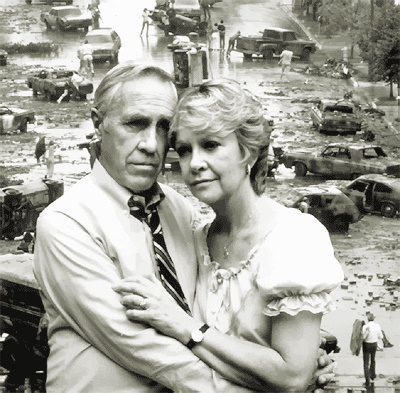
A movie from the 1980s,"The Day After."suggests what
is still an imminent danger, a generation after the Cold War.
They make you take your shoes off before boarding a plane, but they don't adequately inspect cargo coming into our ports for terrorist bombs entering the country. They put children with common names on no-fly lists but they don't adequately protect nuclear power plants against terrorist acts. They keep people in jail for years without charge, torture people caught in random round-ups, and they demand to know what books American citizens read from their public libraries--yet the New York Times revealed, the Bush government actually posted what amounted to "a basic guide to building an atom bomb" on the Internet, for the world to see.
Now Bush Administration officials are all over the airwaves blaming everybody but themselves for this serious lapse of security. For weeks this information was available to Iran and any other country or group in the world. It was posted on a web site as documentation of the Iraqi nuclear program that had been abandoned in 1991, but which ostensibly was the reason for the Bush invasion of Iraq, even though there was little or no evidence it existed in 2002 and evidence that it did not.
It is one more illustrations of the fact that the Bush administration is not adequately protecting Americans, they only say they are. They are more interested in spreading fear that might help them politically, and in creating scary phantoms and simplistic imagery to make themselves look strong and competent, than in paying attention to what needs to be done.
But the Republican failure to act competently, intelligently and effectively on behalf of U.S. security is only part of this story. This criminal lack of attention to nuclear information dramatizes one of the most dangerous aspects of Bush policy: its attitudes on nuclear weapons.
With inconsistent and ineffective policies on Iran and North Korea, the Bushites are ill equipped to deal with the near term possibilities of significant nuclear proliferation in the world. It's estimated that as many as 40 countries have the technical skill to make atom bombs. Yet the Bush administration opposes international agreements that have restrained proliferation since the 1960s, when President Kennedy brought worldwide attention to this danger.
One reason is that the Bushites want to develop new nuclear weapons. With all the concerns if not panic over North Korea and Iran, the largest nuclear threat is overlooked. The idea that the end of the Cold War automatically ended the threat of thermonuclear apocalypse in the U.S. and for the world at large is false. Here are the facts, from Helen Caldicott, president of the Nuclear Policy Research Institute:
Of the 30,000 nuclear weapons in the world today, the United States and Russia possess 96 per cent of them. Of these, Russia aims most of its 8,200 strategic nuclear warheads at U.S. and Canadian targets, while the U.S. aims most of its 7,000 offensive strategic hydrogen bombs on Russian missile silos and command centres. Each of these thermonuclear warheads has roughly 20 times the destructive power of the bomb dropped on Hiroshima, according to a report on nuclear weapons by the National Resources Defense Council, a U.S. environmental group.
Of these 7,000 U.S. strategic weapons, 2,500 are deployed on intercontinental ballistic missiles that are constantly maintained on hair-trigger alert ready for immediate launching, while the U.S. also maintains some 2,688 hydrogen bombs on missiles in its 14 Trident submarines, most ready for instantaneous launching.
A Rand study found that the chances of accidental thermonuclear war have actually increased since the end of the Cold War.
Terrifyingly, the early warning systems of both Russia and the U.S. register false alarms daily, triggered either by wildfires, satellite launchings or solar reflections off clouds or oceans. Of more immediate concern in both the United States and Russia is the threat of terrorists or hackers entering and disrupting the computerized early warning systems and command centres.
Now experts warn that the widely predicted and feared U.S. attack on Iran could trigger an accidental nuclear exchange if the Russians misinterpret missile launchings as an attack on their terroritory.
The process of deciding to launch these thermonuclear arsenals is designed to take minutes. In such an exchance, big cities like New York would be destroyed by several hydrogen bombs, and virtually everyone would die within days.
Most towns and cities with populations over 50,000 on the North American continent are targeted with at least one hydrogen bomb. Only 1,000 bombs exploding on 100 cities could induce nuclear winter and the end of most life on earth.
Why is this so? Perhaps the Bushite desire for new nuclear weapons discourages talking about the existing arsensals, but clearly the Bush Administration is not focusing attention on this major threat to America and the world. The Bushites would rather start a needless and tragic war, that now claims attention and resources that we need to be placing elsewhere.
With Bush and Cheney in the White House, together with a Congress they tightly control, we will not address this issue. We endanger ourselves and the world. This is perhaps the most silent and most deadly danger in the present moment.
Thursday, November 02, 2006

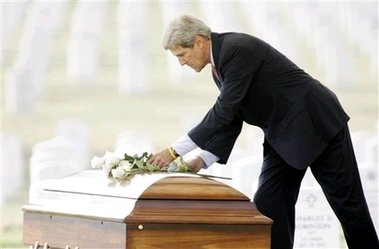
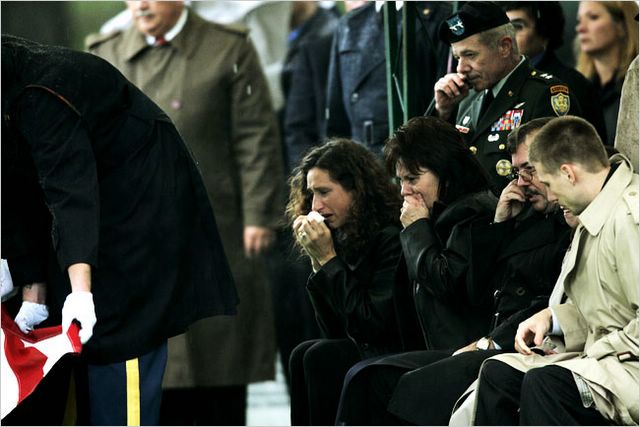
Senator John Kerry at one of several funerals of soldiers
killed in Iraq he has attended. President Bush has attended
none.
On Wednesday, President Bush said that Don Rumsfeld, the architect of military policy in Iraq, will be Secretary of Defense as long as he is in the White House, and Dick Cheney, the strongest supporter of attacking Iraq who recently reaffirmed his belief that the war is going well, will also remain. "Both those men are doing fantastic jobs and I strongly support them," Bush said in an interview with The Associated Press and others.
Also Wednesday, the New York Times published a secret chart from the United States Central Command showing the situation in Iraq edging ever closer to chaos. And this estimate by the U.S. military was made two weeks ago. A few days ago the Prime Minister of Iraq purportedly told his inner circle that the situation in Iraq is nearly out of control.
Now on Thursday, the New York Times releases results of a devastating poll. Showing a sure understanding of the Bush position (reinforced by his Rumsfeld statement), 70% believe that Republicans will stay the course or increase troop committment if they retain Congress. 81% believe that if Democrats are elected, they will try to bring the troops home sooner.
This poll verifies what many others have: that for weeks now, the electorate has been set in its assessments, especially about Iraq and Bush. At this late date, less than a week before the election, the numbers here are truly extreme: "The poll showed that 29 percent of Americans approve of the way President Bush is managing the war, matching the lowest mark of his presidency. Nearly 70 percent said Mr. Bush did not have a plan to end the war, and 80 percent said Mr. Bush’s latest effort to rally public support for the conflict amounted to a change in language but not policy. "In terms of the elections, the poll verifies the same approximate divide in the "generic" party split nationally: some 52% say they will vote for Democrats, 33% for Republicans. But perhaps most significant in these waning days is the Independent vote: 50% say they'll vote Democratic, and only 23% for Republicans.
The President and Vice-President have been hammering on terrorism the past week, yet the poll shows that slightly more voters believe terrorism would increase under Republicans than under Democrats. Voter intensity also favors Democrats.
According to a story in Thursday's Washington Post, Republicans were in danger of losing their congressional majority just on the issue of corruption--at least nine of their candidates are currently embroiled in scandals.
But as the Times survey and every other poll shows, Iraq is the prime issue. And in reporting from Iraq, detailing the extent of the chaos--the fighting, the deaths and death squads, a million and a half people fleeing their homes-- Patrick Cockburn writes: As American and British political leaders argue over responsibility for the crisis in Iraq, the country has taken another lurch towards disintegration.
Wednesday, November 01, 2006
The Pentagon has admitted to seven families of soldiers killed in Iraq and Afghanistan that they weren't told the true circumstances of those deaths. The seven includes Pat Tillman, the football star who quit the NFL to volunteer after 9-11, who was apparently killed by other American troops, though it wasn't reported that way at first. His family has been quite vocal about uncovering the truth surrounding his death, and it seems likely to me that this Pentagon announcement was mostly cover for their supposedly inadvertent misreporting of the facts of his death. The other six may just be diversions.
Because Tillman's death wasn't just misreported--it was made into a story of heroism for the media. Through the Pentagon or otherwise, the Bush administration has hardly been shy about fabricating stories to make them sound like Hollywood war movies--perhaps the most notorious case was one of the first stories out of the Iraq war, concerning Jessica Lynch. There was hardly an element of the official story that Lynch hasn't since denied, or that others support.
Now the Pentagon wants to spend even more money on a special PR unit to "better promote its image" because the only war Don Rumsfeld concedes the U.S. is losing is an image war. But this shouldn't really be surprising. Controlling imagery and information has been key to the Bush administration's success at selling the war until now. No flag-draped coffins or body bags unloaded from airplanes in the sight of cameras. Very little information from Iraq that isn't controlled in one way or another.
And even though the news media is partly at fault for failing to cover this war objectively and thoroughly, there is one little known fact that is well worth mentioning: more journalists have died covering the Iraq war than died covering Vietnam, Korea or World War II.
But this is part of a larger pattern. All administrations have tried to control information and present a favorable face--they all use PR. It can be a legitimate and useful communcations tool. But this Bush administration is all about PR at its core, with no respect for truth or truth-telling. Lying has become its art.
As Iraq itself demonstrates, the image is more important than the reality, the name of a program or a law is more important than the program or the law itself, and the Administration's chief occupation is PR for itself. To this end it has put so-called journalists on the payroll as propagandists, changed the content of scientific reports by government agencies, and used the power of the Presidency to sell and promote statements, assertions and imagery that have no basis in reality, and which facts and reality often contradict. Let's not forget that ex-cheerleader George W. Bush's only success outside government was doing PR for a baseball team.
Now American voters may have disenthralled themselves, and stopped buying the made for TV version of reality that the Bush government has been selling. They may have even come out from the carefully controlled grip of fear--or in Barack Obama's great phrase, the 9-11 fever may have broken--so they are no longer terrorized by talk of terrorists winning if Democrats obtain a meaningful role in government through election.
The war fever has definitely broken, and that may be why the polls have shown for many weeks now that no matter what else happens, Iraq is foremost on American minds. The public may finally be dealing with the reality. They've stepped back from the administration's game to look underneath the shells, and they see nothing. Except the reality of Iraq.
There is a news report on Iraq that is worth quoting at length:
Iraqi Prime Minister Maliki is telling his inner circle that the situation in Iraq is "nearly out of control," according to CBS News intelligence sources. Pentagon sources tell the network that General Casey will require 100,000 more Iraqi troops than the 325,000 who were to be trained in order to secure the nation. The security situation, however, has worsened and Iraqi troops have proven to be less effective than their American counterparts. Additional American troops may be called up to help train the new Iraqi security forces, and the U.S. may also double the number of advisors in each Iraqi unit.
An AP report says that Rumsfeld has already approved spending an additional $1 billion on more Americans doing more training of Iraqi forces.
The David Edwards report continues:
Prime Minister Maliki has ordered that all checkpoints in Baghdad be lifted. Lara Logan of CBS News reports that some American troops expect that violence will now increase and are left questioning why U.S. Commanders would allow checkpoints to be removed now. The move is widely seen as a victory for Muqtada al-Sadr of Sadr City, who controls one of the largest militias in Iraq.
The Inspector General warns that Iraqis don't even have the capacity to fund or maintain their army. The Pentagon is being called upon to provide better weapons and armored vehicles to Iraqi security forces. The Pentagon's Inspector General has found that 14,000 small arms provided to the Iraqis are now missing. The lost weapons were never registered and can not be audited.
The Washington Post added this:
The top U.S. military commander in Iraq, Gen. George W. Casey Jr., predicted last week that Iraqi security forces would be able to take control of the country in 12 to 18 months. But several days spent with American units training the Iraqi police illustrated why those soldiers on the ground believe it may take decades longer than Casey's assessment.
The problem now is that reality has become more fantastic, verging on madness, than the simple imagery of the Bush PR machine. It is out of control, not only of PR efforts to gloss it over, but tragically, of other efforts in reality.
But the Bushite Republicans cannot afford to allow for sensible debate and a sincere search for solutions, on Iraq or stem cell research or the Climate Crisis, because they are standing on a foundation of phony images and deception. The only tool left to them is the smear, the diversion, the false accusation, and what they know best: inflating and creating an image to distract the public from their lies and failures.
They're doing it in a wave of negative commercials, in the shameful speeches of the president and vice-president, and they've attempted to do it by seizing on an awkwardly delivered sentence to accuse John Kerry of maligning the troops in Iraq. But Kerry drew the line:
"If anyone thinks a veteran would criticize the more than 140,000 heroes serving in Iraq and not the president who got us stuck there, they're crazy. This is the classic G.O.P. playbook. I'm sick and tired of these despicable Republican attacks that always seem to come from those who never can be found to serve in war, but love to attack those who did.
The people who owe our troops an apology are George W. Bush and Dick Cheney who misled America into war and have given us a Katrina foreign policy that has betrayed our ideals, killed and maimed our soldiers, and widened the terrorist threat instead of defeating it. These Republicans are afraid to debate veterans who live and breathe the concerns of our troops, not the empty slogans of an Administration that sent our brave troops to war without body armor.
Bottom line, these Republicans want to debate straw men because they're afraid to debate real men. And this time it won't work because we're going to stay in their face with the truth and deny them even a sliver of light for their distortions. No Democrat will be bullied by an administration that has a cut and run policy in Afghanistan and a stand still and lose strategy in Iraq.
Tuesday, October 31, 2006
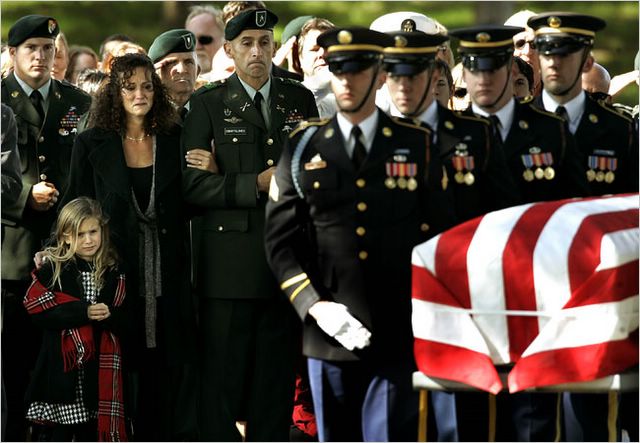
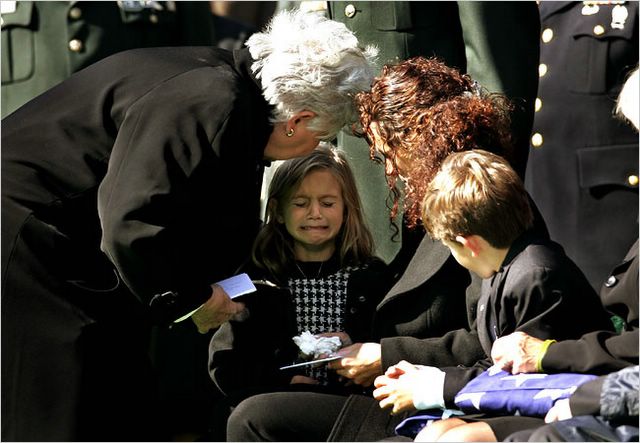
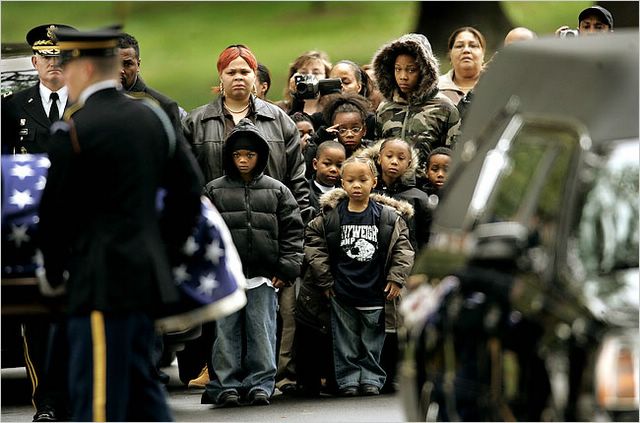
On Monday the New York Times printed a series of searing photographs taken recently at the funerals of American soldiers killed in Iraq and Afghanistan. It was published on the day that the death toll of American soldiers killed in Iraq this month exceeded 100. It was the talk of cable TV. Nancy Grace devoted her hour, normally assigned to castigating alleged criminals, to talking about individual soldiers killed in the Iraq war.
This attention could not come at a worse time for Republicans, and it also happened as the Democratic party unveiled several new campaign ads all focusing on the Bush administration's responsibility for Iraq. The one for James Webb, running for the Senate in Virginia, is devastatingly powerful. The one for Senator Robert Menendez in New Jersey is less impressive by comparison, but Menendez has a strong backup to his message: he voted against authorizing the Iraq invasion. (Webb wasn't in office but wrote a newspaper piece against it before it happened that predicted a lot of what has resulted.)
New polls show Webb moving ahead, Menendez slightly ahead, and one poll shows the incumbent Democrat in Maryland substantially ahead; Ford is moving ahead in Tennesssee. The last week emphasis on Iraq could be the coup de grace.
But I can't help wondering why it took some three years for these images to make it onto the front page and on television. These funerals have been going on every week, somewhere in America. This is one face of war we should always have to face. Finally, some reality.
Saturday, October 28, 2006
It seems likely now that next Tuesday will see a Democratic tide, affecting state offices and the U.S. House of Representatives. It is also likely that the Democrats will pick up some seats in the Senate, but control of the Senate is another matter.
There are five contests now virtually tied. If incumbents or incumbent parties lose in all of them, the Republicans would lose Virginia, Missouri and Tennessee, but the Democrats would lose Maryland and New Jersey. There are all kinds of combinations of how this may actually break, with the least likely possibility being that the Republicans win them all.
Still, unless the anti-Republican tide is truly historic, the Senate will likely go to one party or the other by two votes, one vote or to the Republicans if it comes out 50-50 (because VP Cheney is the tie-breaking vote.)
So this magnifies the importance of a race that nobody is talking about much: Connecticut. Senator Joe Lieberman, elected as a Democrat, was defeated in the Democratic primary by Ned Lamont. Lieberman is running as an independent, and contrary to many predictions, he is solidly ahead in the polls.
Even in the blogosphere, early enthusiasm for Lamont (and it was the blogosphere that gave him momentum to close the gap and win the primary) has become dark grousing, as in this post at Firedoglake complaining that prominent Democrats (except for John Kerry and Wesley Clark) are not going to Connecticut to campaign for Lamont. The conventional wisdom also has been that as an independent at the bottom of the ballot, Lieberman could not mount a Get Out the Vote operation on election day to get his voters to the polls. Now it's been announced that he is "borrowing" the GOTV operation of Republican Michael Bloomberg, the Mayor of New York City. That means money and bodies, and it's a big blow to the Lamont campaign.
In his campaign, Lieberman has been getting a lot of help and support from Republicans, including from the White House. He has not endorsed Democratic candidates for the House in Connecticut. The Senate Democrats are in a bind, apparently. It was rumored after the primary that there was heavy pressure on Lieberman to get out of the race, and talk of stripping him of his considerable Senate seniority and committee assignments. But clearly some of his Senate colleagues are worried about alienating him, since the polls say he is likely to win.
It is all shaping up then to mean that the flow of power in the U.S. Senate for the next two years will largely depend on one man--Joe Lieberman. In an evenly divided Senate, or even with a one vote majority, he is the unknown quantity. And given all the Republican help that may get him elected against his former party's nominee, it is not likely to be good news for Democrats.
So maybe this is a race that Democrats ought to be paying more attention to. They can't afford to lose more than two of those five Senate elections if they don't want to have to deal with Joe Lieberman, the man without a party, but maybe with a lot of grudges.
Friday, October 27, 2006
We're rightly focused on the human casualities of war--the needless deaths of individuals, the rending of families and of communities, most obvious at the moment in Iraq and Darfur. We mention then the economic costs, to the countries devastated by warfare, and to the generations of Americans who will pay for the billions of dollars burned every year, every month, every week. But those billions pay to burn more than bridges or even people. These wars are wars on the earth itself.
This was perhaps most evident last summer in Lebanon, when the New York Times reported that: Spilled and burning oil, along with forest fires, toxic waste flows and growing garbage heaps have gone from nuisances to threats to people and wildlife, they say, marring a country traditionally known for its clean air and scenic greenery. Many of Lebanon’s once pristine beaches and much of its coastline have been coated with a thick sludge that threatens marine life.
That was July. A month or so later the dimensions of the catastrophe were still growing, as oil slicks threatened the major food supply of fish, and required a year of cleanup costing hundreds of millions of dollars. But even that is short-term. War places a double whammy on the earth, by destroying and polluting, and also destroying the ability of the human population to even try to fix it. And some things just can't be fixed. If ecosystems are damaged enough, or at a vulnerable point, the damage and destruction ripples out, ultimately getting worse.
Some ecosystems never come back. Forests are the prime example. Entire forests were cut down across Europe and the Middle East for fuel but also for warfare--for ships and fortifications and to deny enemies cover. Many of those forests never returned. In some places, other factors combined to turn once green areas into desert. Parts of Lebanon escaped the fate of other areas there. But maybe not this time. The cedars of Lebanon, already endangered, may soon become nothing more than an empty symbol.
The range of environmental construction caused by war and warmaking is just beginning to be counted and studied. But the war on Terra goes beyond war, of course. And we are doing now to the endless oceans what we have done to the endless forests that once covered the land of this planet. We may fight this war until we run out of ammunition, and water, and the variety of food that sustains us, until we are the last primates, the last mammals, on the planet. Then the war will be over, and both sides will have lost.
The earth as the battlefield which will heal itself, and poppies grow where young men stood, may have been true to some extent for some wars in the past. But our weapons are way too destructive now, as are the raw materials needed and the processes of creating them. Now we devastate heedlessly, we poison, we irradiate, and we walk away. War is not always an apt metaphor for our civilization but in this it is. Heedless consumption as well as heedless destruction, and the greed of a few (a factor in war as in the war on Terra) or of many, has opened up a continent-size hole in the ozone layer, and the Climate Crisis moves in our us, to hit us right between our denying eyes.
If civilization survives much longer, the consequences for the environment as well as the seventh generation to come will be a factor in every major decision, because that's simply a tautology. Unless we end the heedless war on Terra, that war will end us.