Friday, October 27, 2006


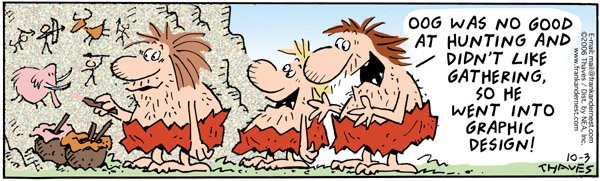
Frank & Ernest Posted by Picasa
Michael J. Fox on Making A Difference

Michael J. Fox appeared on the CBS News and said this about his Missouri ad:"The irony is that I was too medicated. I was dyskinesic," Fox told Couric. "Because the thing about … being symptomatic is that it's not comfortable. No one wants to be symptomatic; it's like being hit with a hammer."

"At this point now, if I didn't take medication I wouldn't be able to speak."

He said he appeared in the ad only to advance his cause, and that "disease is a non-partisan problem that requires a bipartisan solution."

"This is not about red states and blue states," added Fox, who has also lobbied Congress to lift President Bush's restrictions on funding for stem cell research. "This is not about Democrats and Republicans. This is about claiming our place as the scientific leader in scientific research and moving forward and helping our citizens. That’s all it is. It’s that simple."

Fox said that it is difficult for him to appear in ads and do interviews because of his illness and what it does to him, but he is glad he is given the opportunty. "Honestly, I mean, I really feel this: That you get in your life very few chances to make a difference. And I really feel privileged to do this that I get a chance to do this. But having said that, it's not pretty. It's not pretty when it gets bad..."

Elsewhere...

Hey fellow early boomers, check out Consensus Now at 60's Now.

Political note: Going into the weekend, polls indicate that the Senatorial races in Missouri, Tennessee and Virginia are all essentially tied.

Thursday, October 26, 2006


sunny October. BK photo. Posted by Picasa
Roved Again?

Even Democrats can hardly believe they're going to win, so it's not so surprising that some Republicans can't accept that they will lose... And what if they're right?

Karl Rove is functionally arrogant, but has usually kept from displaying that arrogance too forthrightly--and besides, he's had this oddly unfathomable winning streak. But his arrogance was on full and obvious display in a radio interview with NPR's Robert Seigel. Rove flatly stated that Republicans will retain control of both houses of Congress. When Seigel suggested that "many might consider you on the optimistic end of realism," as of course anybody reading or hearing the news for the last month or so would, Rove shot back, "Not that you would be exhibiting a bias or anything like that. You're just making a comment." A clear and clearly cheap shot at NPR--a Rove trademark, although he usually lets others deliver it--and a ploy at intimidating Seigel into not asking hard questions.

Rove several times insisted that despite the public polls--many of them, contrary to his assertion, polling specific contests--the polls he was seeing showed that Republicans will retain power. Or as Rove modestly put it, "You may end up with a different math, but you're entitled to your math. I'm entitled to THE math."

But perhaps Rove's most arrogant statement was that the public polls showing two-thirds or more of voters saying the Iraq war must end, or the majorities that believe Bush lied them into the war and has kept on lying about it, and all the other national issues that voters are angry at Republicans about--simply don't matter. They "do not impact the outcome."

Specifically he was talking about local issues or other overrriding issues being more important in individual races. But the idea that so many Americans can be so upset about so many important matters, about a war that kills hundreds, even thousands of people a month and is costing this country billions, but can't change the government bungling that war, lying all the way, is profoundly disturbing.

But as many suspect, perhaps Rove has different reasons for his predictions. Stories continue to appear about the likelihood of problems with voting--everything from electronic machines to a dearth of trained poll workers. A new report by Electionline.org, supported by the Pew Charitable Trust, cites ten states as having particular problems this time, including states with crucial races, like Maryland, Ohio, Colorado, and Pennsylvania. Suppression of voters who would most likely vote Democratic is a matter of record and even of law in several states, including Ohio and Florida.

The rollcall of such problems, plus the Rovian district-by-district analysis, prompted election maven Chris Bowers to ask: "How Much Do Democrats Have to Win By to Actually Win?" He quotes at length a study by three political scientists who conclude: If current trends in the congressional generic ballot polling persist (which they have in past election campaigns), the Democrats are near certain to win control of the House. But this assumes a continued Democratic lead of 8 or more points among likely voters in the generic ballot. If the lead dips below this level, the Republicans can rekindle their hope of holding the House.

So in terms of the generic D or R national polls, Dems have to win by 8 points. Bowers concurs with that figure. It may well be that even in individual contests, the Democratic candidate will have to get 8% more votes than the Republican just to come away with a one point victory.

All of which is even more motivation for voters to get out there and vote for Democrats.

UPDATE: Figures just out today show that Democrats have increased their generic national lead to 11 points for the House in one poll, and 18 points overall in another.

Frank n Ernest Posted by Picasa
Stratergy

In addition to their usual terrorist tactics, Republicans are spraying their scattergun attacks of coded messages and sleaze to see what works. So far the scorecard isn't good.

First came the national effort to scare voters with the image of Nancy Pelosi of SAN FRANCISCO as Speaker of the House. San Francisco is a code word for liberal/libertine sin. It supplants Las Vegas as sinner city because, well, a lot of Republicans go to Las Vegas and own big pieces of it, even though prostitution is one of its major industries. San Francisco is the city of gay sinners. Despite, you know, Republican Mark Foley of Florida.

How's that working? Well, every time the charge is made on TV, up comes a picture of Nancy Pelosi. She doesn't look so scary. The message says she'll be the next Speaker of the House. She will be the first woman to be Speaker of the House, third in line to the Presidency. Women are a large and important part of the electorate, and the poll show that most are highly motivated to vote against Republicans this year because they are upset about the war, and about a Republican Congressman who was a sexual predator of teenagers, and the House leadership who covered up for him, and a Republican White House that insisted he run for re-election. Who do they think might represent their feelings and priorities? Like a woman Speaker of the House perhaps? Advantage: Democrats.

Then this week came the ad in Tennesee in which a nearly naked white woman says she met Rep. Harold Ford, the black Democrat running for the Senate, at a Playboy party, and flirtaciously says, "Call me." The ad was roundly criticized as race-baiting and just plain racist, and so it didn't last very long. That alone probably got Ford some more contributions, but perhaps his own response is what turned this to an advantage. He denounced the ad itself, but said that he had indeed attended a party sponsored by Playboy at the 2005 Super Bowl. Ford is a 36 year old bachelor. Here's his statement: "I was there. I like football and I like girls. I don't have no apologies for that."

There are undoubtedly old time racists in Tennesee who respond to the ad's fever nightmare of black men preying on white women. But these days there are a lot of attractive non-white women everywhere, including on TV and in the movies. White men are less likely to let prejudice interfere with sex, at least on a fantasy level. And when a guy says "I like football and I like girls," he just won a ton of votes. In a very close contest, advantage: the Democrat.

But the latest and biggest controversy is over a campaign commercial by actor and victim of Parkinson's Disease Michael J. Fox made on behalf of the Democratic candidate for Senate in Missouri, another close contest that could decide who wins the Senate. Fox spoke in support of candidate Claire McCaskill because she backs stem cell research, which could hold the key to a cure for Parkinson's and other diseases. On his radio show, Rush Limbaugh has repeatedly accused Fox of exaggerating his symptoms for effect.

On MSNBC Wednesday, seasoned political observer Lawrence O'Donnell said that the Michael Fox ad was the most effective political ad he had ever seen, and the Limbaugh accusation gave it even more prominence, in Missouri and all over the country. (Fox has made similar ads for other proponents of stem cell research, including at least one Republican.)

Some commentators believe that Limbaugh succeeded in energizing the Republican base that considers stem cell research as a kind of abortion. But others see it as a major mistake, an attack on a popular and well-liked actor who suffers from Parkinson's, whose career was shortcircuited because of it, and who like other Parkison's sufferers, has visible effects of the disease that might not have to be suffered if stem cell research were successful. An attack that is over the line, even for Republican swiftboaters.

Things were moving towards McCaskill before this, and this is likely to accelerate that movement. As voters in other states have shown, they hate to be nationally embarrassed. Advantage, once again: Dems.

UPDATE: A national study shows that after viewing the Michael J. Fox ad, support for Republicans against stem cell research (that's nearly all of them) drops by 10 %, and support for Dems moves up 10%.

Tuesday, October 24, 2006


From "Animate Earth" by Stephan Harding. Posted by Picasa
That's Intense

As downright otherworldly as they might have seemed even six months ago, polls favoring Democrats and placing Iraq at the top of voter concerns have become familiar, with the only big news being that they are holding two weeks before the election. But the new ABC/Washington Post poll has some surprising nuggets.

This poll shows, as other do, a greater lead for Democrats than for any other election in more than 20 years, and more than a 50% preference for Democrats among Independents. But one of the biggest questions about eventual outcome is voter intensity. This poll found: "Fifty-eight percent of registered voters call the 2006 races more important to the country than past congressional elections in their lifetime. Democrats, in particular, say so — 69 percent of them versus 49 percent of Republicans. " And "Nearly twice as many registered voters say they'll cast their ballot as a way to show opposition to the president (31 percent) as to support him (17 percent)..."

As for issues, after Iraq at the top, this poll found that terrorism led health care by a few points; the latest Newsweek/ NBC poll showed health care actually leading terrorism by a few points. So they're close. The NBC poll also shows more than majority support for investigating congressional wrongdoing and corruption among contractors in Iraq as high priorities. And perhaps the most shocking of all, 51% actually favor Bush's impeachment, with 28% calling it a high priority. That's intense.

Elsewhere

A Trinity from Trinity--poems, essays and a dictionary of the American landscape--at Books In Heat.

Monday, October 23, 2006


Posted by Picasa
It’s Virtue, Not Values That Shapes Politics

As politicians sharpen their message for the stretch run, but also as we think about creating political support around progressive issues in whatever circumstances result from these elections, and looking forward to 08, I’d like to suggest the beginning of a different way to approach those issues, and the electorate.

I suggest we look behind “issues” and particularly turn away from focusing on “values,” which we can only talk about as ambiguous abstractions. I suggest we look to what motivates people to vote on values issues, and on other issues as well.

I believe that people vote on the basis of what makes them feel virtuous. And the candidates that convince voters that voting for them is the expression of virtue will win. The “virtue” over “values” also explains why many people who voted Republican in recent elections are turning against the party this year. But it also could be a way to reorient and reposition progressive efforts in the future.

For years we’ve been obsessed with “values” issues and “values voters,” but we really haven’t gotten very far in understanding them. We’ve been baffled because people seemingly voted against their own economic interests, or were excessively swayed by personality and code words, etc.

At the same time we’ve had limited success in attaining shared clarity in re-framing and the obsessive search for the “elevator speech” that sums up the progressive vision in a few words.

Maybe we’ve been going about it the wrong way. Talking about values means using words like “freedom” that mean different things to different people, though everybody thinks the word means the same thing to everyone, as Lakoff suggests. Or it means arguing over concepts, which generally get more and more abstract, at least in language. Or we end up using our code words that others don’t understand in the same way.

“Values” are names for what we value—what we consider priorities. But why? When it comes down to the personal level, to a person acting—a person voting—isn’t it more useful to consider that what motivates people is what makes them feel virtuous?

It’s unlikely we’re going to convince people to exchange one set of values for another. We can work on changing how people feel about issues and actions by showing them how virtuous they will feel and will be by supporting them.

The right wing, and especially the religious right, has made a living on defining what’s virtuous. They’ve worked hard to simplify all the underlying feelings into one: voting for conservative Republicans is virtuous. Voting against them is not.

There are complex issues that this approach makes very simple—and of course oversimplifies. But let’s stay with this one idea for now: how did the Republican/Religious Right define voting for them as virtuous?

The Republicans have succeeded by using the potential of modern politics to oversimplify, and to infuse those oversimplifications with emotion.

“The new politics of democracy,” writes political scientist Alan Wolfe, “resembles a daytime television melodrama more than an academic seminar: attention is captured when conscience is tempted, courage displayed, determination rewarded, wills broken, egos checked, pride humbled, and virtue rewarded.”

The key is virtue. Despite the hackneyed debates over “values,” voters zero in on more specific demonstration of virtue. Another political scientist, Andrew Hacker, believes the 2004 election turned on the beliefs of the middle of the middle class that their sense of virtue was reflected in Bush-Cheney. These voters felt the war on terror and in Iraq was virtuous—it displayed courage in defense of country and family. They look down on people without sexual self-control, while they themselves “show singular virtue by not doing such things that will lead them to resort to abortion.”

Liberal commentator Jeff Cohen is convinced that for many Americans, “liberal” means “libertine.” The right has defined “liberal” to mean “anything goes.” That’s why they’re now trying to get traction with wild accusations about pornography, or about phantom links to a group advocating an end to restrictions on sexual predation of children.

People feel virtuous when they do the right thing, and in many areas of life that comes down to self-control. The extreme right has managed to convince many voters that liberals are for no self-control. They are for sexual promiscuousness regardless of the consequences, and that’s why they support abortion.

Self-control means obeying the rules, and the rule is that men and women get married, have children and are financially and morally responsible for their families. It doesn’t matter if you want to sleep around, or you want to have sex with someone of your own gender, or you want to bum around instead of working. You do your duty, what you are supposed to do, and that makes you feel virtuous.

There are ways to counter these positions by emphasizing other virtues. Tolerance and community are still virtues in America. In practice, gay couples raising otherwise unwanted children and supporting their community institutions often neutralizes opposition and destroys stereotypes. This is just one example.

But virtue doesn’t apply only to values issues. It operates in economic issues as well. We are trained in this country to believe that working hard is virtuous, and that hard work is inevitably reflected in financial success. So even if they are barely making ends meet, they will feel more virtuous than those who aren’t. They are virtuously providing for their families. And they may feel that people who don’t succeed—who are poor, homeless, can’t pay their medical bills—must not be virtuous enough.

This can be overcome, with the right leadership, especially under circumstances that hit everyone economically, like high gas prices. There is already wide support for a raise in the minimum wage.

Of course, such politically powerful oversimplifications run roughshod over realities. But voters are not going to be convinced by facts without the context of why facts and arguments support their ideas of virtue.

The extreme right Republicans used these oversimplifications, these either/or formulas to create a politics of virtue carried to the extreme. This politics of virtue says we are the virtuous, we are the good people, and those others are not virtuous; they are the evil-doers. It is a short step to believing that because we are the virtuous, everything we do is virtuous, and because they—terrorists, liberals, etc.—are evil, everything they do, think and feel is evil, and always will be.

Republicans have gotten pretty far by fostering this image. I believe it helps to explain why so many Bush voters believed that Bush held positions on issues directly opposite to his actual positions, or facts that supported his positions. It wasn’t simply that these supporters were ignorant of the facts, but that they assumed that the virtuous candidate would hold virtuous positions.

But now we are seeing what happens when people who claim the monopoly on virtue are exposed doing unvirtuous things that no one can ignore forever, like Republicans using their power to steal and cheat and lie, and now to prey on young people, and then cover it up for their own benefit.

This also explains why they need to use fear—fear of terrorism mainly, but also fear of libertine liberals, of weakness and untrustworthiness. Fear pushes everything into either/or extremes: fight or flight, us or them, good or evil. And situations of danger and threat are when virtue is most important.

But at the moment the Mark Foley affair together with increasing anger over lies and failures in Iraq (honesty and competence are virtuous), are removing the halo from Republicans. They are no longer the paragons of virtue.

For some voters that will still not be enough. They will curse all politicians and officeholders as corrupt and incompetent. And even if all Republicans are not virtuous, they need to be convinced why Democrats are. But this provides an opening. Democrats who begin thinking about issues in terms of virtue may find ways to change the political dialogue and the political landscape.

If Democrats do win Congress, they will have an opportunity to begin re-focusing the national dialogue. How they attempt this may be crucial. It won’t be enough in the long run to have benefited from the Republicans losing their halo of virtue.

Democrats will need to convince people that supporting a plan to end the Iraq war and deal realistically with terrorism, plus election reform, universal health care and perhaps the key to everything—an international mobilization to address the Climate Crisis and create new jobs and a new economy at home with clean energy technologies—are all virtuous. They will help them support their families, support their communities, and display the virtuous behavior that is at the core of their religious or ethical and patriotic selves.

Friday, October 20, 2006


Seattle's Science Fiction Musem, designed by Frank Gehry. BK photo. Posted by Picasa
Another Harvest of Shame

For those few--probably among the 16% of Americans polled who approve of this Republican Congress--who believed or wanted to believe that the Bush administration sought extraordinary and ultimately unConstitutional legal powers to deal with some extraordinary future threat of terrorist attack, Karen DeYoung in the Washington Post reports today:" Moving quickly to implement the bill signed by President Bush this week that authorizes military trials of enemy combatants, the administration has formally notified the U.S. District Court here that it no longer has jurisdiction to consider hundreds of habeas corpus petitions filed by inmates at the Guantanamo Bay prison in Cuba."

The Military Commissions Act takes away basic rights of the accused for anyone the feds call an enemy combatant. This Post story is a good one to reference because it goes on to discuss the legal challenges pending and the principles involved, including the often-mentioned but rarely defined doctrine of habeus corpus:

Habeas corpus, a Latin term meaning "you have the body," is one of the oldest principles of English and American law. It requires the government to show a legal basis for holding a prisoner. A series of unresolved federal court cases brought against the administration over the last several years by lawyers representing the detainees had left the question in limbo.

Denying this right is even worse than "guilty until proven innocent," because it doesn't require a trial, a hearing, a show of cause, not even a kangaroo court, for people to be imprisoned more or less indefinitely, as many in Guantanamo have been. But the overall principle is the same: it makes every last one of us subject to being locked up and considered guilty, without the basic rights to enable us to prove innocence, including the right to a speedy and fair trial.

As Keith Olbermann pointed out in his impassioned attack on this Act, there is no procedure in it for anyone who is accused of being an enemy combatant or even a non-citizen eligible to be so classified, to prove these accusations false.

The Act also formalizes torture and attempts to immunize torturers from being subject to the Geneva conventions. So in addition to being held indefinitely with no need for evidence, and subject to tribunals without meaningful legal rights, we can all be legally tortured at the whim of our captors.

The U.S. Supreme Court is just about the only hope of overturning this outrage in the near term. But a Democratic Congress can make an issue of it, and should prevent any further outrages of this kind. These and a yet to be outraged citizenry are the only protections we have against this extremist dereliction of America's most cherished and most proud principles. But it's now inevitably that there will be more victims of this shameful episode.
Getting Back to the Future

Earlier this month, Jerome a Paris, one of the most respected voices in the progressive blogosphere on both sides of the Atlantic (he's the impressario of the European Tribune), wrote about the need for Democrats to talk about the Climate Crisis and energy issues in the current congressional campaign.

But the political conventional wisdom is that Democrats should ride their most popular issues into office, and then work on the Climate Crisis when they get there. Of course, that's never really worked. Al Gore didn't make it the centerpiece of either of his presidential campaigns in 1988 or 2000, because it wasn't supposed to be smart politically, and he lost anyway. And not having said a lot about it as a vice-presidential candidate in 1992 when he did win, it was not central to the Clinton presidency either.

Jerome and others make the point that only by making it an issue in a compaign will the American people be ready for action, and only a politician who has been elected largely on this issue will accrue the political power to make the massive changes and commitments necessary to really do something about it.

So it's really interesting what the acknowledged leader of the Democratic Party, who isn't himself running for anything, has said about this subject--President Clinton himself.

In his masterful speech the other day at the opening of The Center for American Progress-sponsored conference on The Common Good at Georgetown University, President Bill Clinton talked about the problems of growing economic inequality in America, the problems of outsourcing, the massive national debt to countries like China and even Mexico, and solutions to these and other problems. He mentioned the Climate Crisis, which is one of the target areas of the Clinton Global Initiative. In the question and answer period afterwards he said that even though he believed his policies aided the booming economy of the 90s, when the federal government erased its debt and created a budget surplus, and economic inequality declined, he noted that the engine of the private economy was the maturing of information technologies and their spread throughout the society and the world.

He said our economy needs a new source of good jobs and innovation. And he said what astonishingly few politicians are really talking about:

"So government policies can reduce inequality, but we also need new jobs that pay well. And the lay down, obvious, sitting here, slapping-us-in-the-face answer is to make a commitment to a clean, independent energy future. It will create millions of jobs, and many of them are not exportable."

He offered examples--and what he would do politically:

" I was in Denmark a couple of weeks ago. In the last few years their economy has increased by 50 percent. Their energy use during the same time frame increased by zero – nothing. They invested in conservation. They kept jobs. Their unemployment rate is about what ours is, but their wages are rising and inequality is going down because of a combination of new jobs and government policy.

Same thing happened in the U.K., the economy most like ours of all the European economies. They’ve had rising wages and declining inequality because they’re going to beat their Kyoto targets by 50 percent and they created all these new jobs in doing that. So whether its biofuels, conservation, wind, solar – you name it – we are making a big, big mistake not getting after this big time, not only because of climate change and national security implications, but because that’s where the jobs were. If I were here like I was 15 years ago as a candidate I would say to the American people, 'If you want to do this in a big way, vote for me; if you don’t, find somebody else because this is all I’m going to work on till I get it figured out.' Because this is just a huge opportunity."

Of course, with the Republicans handing the Democrats their best issues, particularly with the Mark Foley mess and all it represents, and all it says about Republican corruption and incompetence in Iraq, elsewhere abroad and at home--and with approval of the Rebpublican Congress in one poll down to 16%-- Democratic candidates would be foolish not to ride the tide.

But win, lose or draw, this must be the last election in which dealing with all aspects of the Climate Crisis isn't central to a political campaign.

We can't wait for the media to set that agenda. Though there have been a larger number of documentaries and major magazine stories in the past year, there is not that reality of daily coverage. It's always been a curious irony that the issue with the most importance in terms of the fate of human civilization and the planet as we know it is hardly ever talked about, either politicially or as the source of news stories.

But more importantly, we require leadership to create and set the agenda. It's a complex set of huge problems, and addressing the crisis will transform the economic and political landscape, just as ignoring it eventually will. The difference is that addressing it can transform us for the better.

So we're electing Democrats to stop the madness, to staunch the bleeding, to reverse this tragic, self-destructive course. But we did that in 1992, and it took 8 years, and then this nation allowed it to fall apart again. I don't think we're going to get more than one more chance.

This time it won't be enough to stop the madness. We will have to start the future. Right now the task is to elect Democrats to take Congress. And if they do, the next task will be to insist that they place this issue at the top of the agenda. Give them a few months to raise the minimum wage and stop the bleeding in Iraq, and reclaim our Constitutional rights. But then it's election reform, universal health care, and the Climate Crisis and the clean energy future.

I want to see Congress move on this. And in the 2008 campaign I want to hear a candidate say, if you want to do this in a big way, then vote for me. If you don't, then vote for somebody else because this is what I'm going to work on until we're doing it.

Daily Babble

Captain Future's largely unawaited account of the 40th Anniversary Star Trek Celebration at the Science Fiction Museum in Seattle is now ready to dance its way into your heart at Soul of Star Trek.

Tuesday, October 17, 2006


publicity still from the 1950s film of "The Time Machine." Posted by Picasa

Captain Future's Log

It's a Wells World After All?

Dr. Oliver Curry, described as an evolutionary biologist at the London School of Economics, is making some headlines with his predictions of the shape of humans to come. Although some of his extrapolations are being questioned, and despite at least one TV station (in Salt Lake City, interestingly) that headlined, "Human Sex Organs Will Get Bigger," Curry's contention that's capturing attention is the future split of humanity into two separate species, one derived from the Haves, and the other the Have Nots.

This of course was the premise of what for all intents and purposes was the first modern science fiction novel, H.G. Wells' The Time Machine, still among the best known s/f stories (and one of the most assigned novels of any kind in American schools.) Wells extrapolated from the extreme differences of the new industrial working class and the upper reaches of the leisure class in London in the late 19th century, to posit a far future of lanquid Eloi, the beautiful people out of Aubrey Beardsley illustrations who live blissed out on the surface, while the ugly hulking Morlocks toil in underground mines and factories.

Wells was writing a cautionary tale about social conditions, justice and awareness, as well as a illustrations of the brutality of evolution, and how the common view of it as inevitable progress was not implicit in the Darwinian matrix. He also showed that by dividing, the human race destroyed itself. The Eloi were literally the Molocks' lunch meat. Wells, like his mentor Thomas H. Huxley, believed that humanity had to take its own evoluton into its own hands, through consciousness and action.

Like Wells, Curry sees the rich becoming more beautiful--tall, slim, healthy and attractive. The poor would devolve into stooping hairy stupid brutes. Curry also posits the combination of today's racial characteristics into a single coffee-colored human. That's not much of a stretch--as Richard Rodriguez and others have pointed out, America is already becoming brown demographically, and physically we're seeing the next generation in Tiger Woods. But his rich and beautiful, poor and ugly division is not so certain. As in Wells time, a major problem for the poor is health care and nutrition. The super-rich have access to the best and the latest, including cosmetic enhancements that may in the future become genetic enhancements.

But that's no guarantee. In this world as in this country, there are few rich and many who are not. An entire subspecies descended from the extremely wealthy is doubtful. If the division is between the pretty well off and the very poor, then the beautiful/ugly distinction becomes less sure. I think of those heartrending pictures from the Sudan and the Congo, of people starving, being forced from their homes, being slaughtered--and they are among the most physically beautiful people on earth, especially in their poor but elegant clothing of many beautiful colors and patterns. Contrast them to the Americans who seemed to have doubled in size in recent decades, dumb with fast food and dulled by endless TV commercials. I don't see many Eloi candidates. Morlocks with credit cards maybe.

The growing financial divide between rich and poor, and between rich and poor nations, is leading us to not two species but one very weak one, ripe for the evolutionary picking, if the climate crisis doesn't get us first. Wells is still relevant in this regard. Fortunately, there are countercurrents in our culture and on our planet. Wells is relevant in those patterns as well. He saw the need for human unity, for a united world, for universal human rights and social justice, and more economic equality. Though he shared some of the prejudices of his age, these principles are still good blueprints. But for the moment, it is the ascendant empathy of the human heart that is our greatest hope, for a future of a maturing and ascendant humanity.

Monday, October 16, 2006


October apples. BK photo. Depending on your browser and
perhaps the current mean temperature on the Martian surface,
you may have to click on the photo to see the whole thing.
I have no idea why. Posted by Picasa

Sunday, October 15, 2006

Irrational Exuberance?

The two big Important to the Beltway newspapers Sunday printed cautionary tales in the face of the landslide of poll numbers favoring Democrats in the elections three weeks away. The Washington Post says the White House isn't all that worried--they believe they'll lose some seats in the House but will retain the majority status, and see losing the Senate as "nearly inconceivable."

Of course those are the folks who claim Iraq is going well, but could they know something? The New York Times sums it up in the headline to their story: The Democrats have the intensity, but the Republicans have their machine. They know who their voters are and how to get them to the polls. They retain their technological advantage in that, and they have their true believers among the religious right, who may find the Foley affair distasteful, but would no more vote Democrat than for Satan, which to them amounts to the same thing.

Amidst the general exuberance in the progressive blogosphere, the namesake of the Dems biggest blog, kos, has been notably cautious in his assessments. He points out the difficulties in close Senate races, the general tightening that occurs in the final weeks, and the pots of money the Republicans can spend.

Of course it's impossible to know until election day. The Times emphasizes the intensity of Democratic voters, but I saw that intensity in 2004 and it wasn't enough (at least to overcome the voter suppressions and possible vote tampering the Republicans got away with.) But the political blogs are better organized and have a longer reach this year, and they are really concentrating on nuts and bolts--raising money and getting volunteers.

The Democrats used to be better at getting out the vote, back when the unions were a bigger force, but the combination of technological sophistication and the emergence of the religious right gave Republicans the advantage. But such advantages seldom last for long. Learning from opponents' successes is endemic, and this year the blogs may be providing the on the ground volunteers to offset what is likely to be a reduced presence and enthusiasm from the religious right.

Then there's what happens in the Real World in the next few weeks. What's interesting is that nobody knows how various possible events--invasion of Iran, terrorist attack, natural disaster (like the Hawaii earthquake), fall of the Iraq government--will actually play politically. It's possible that events that make people fearful which in the past would have driven them back to the incumbent Republicans again, will have the opposite effect this time. The depth and extent of disillusion over Iraq and general White House and Republican Congress incompetence may make the difference.

But kos' final words are the watchwords: So no slacking. No premature celebrating. No heightened expectations. There's a reason I'm pessimistic about our chances this year. It's because no has voted yet and nothing in this biz is ever guaranteed.


Saturday, October 14, 2006


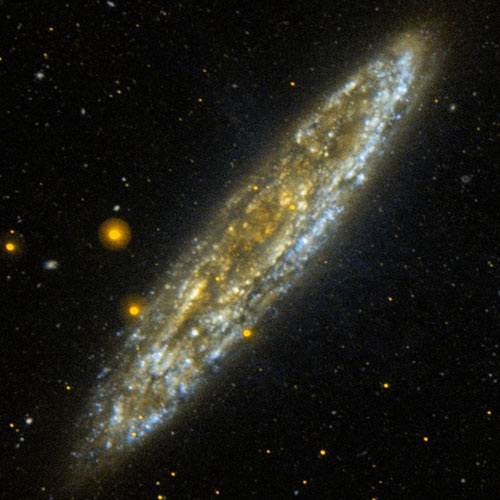
NGC253 "silver dollar" galaxy Posted by Picasa

Captain Future's Log

Nobels for Nobility That Works

Any given year, there are dozens of people fully qualified to receive the Nobel Prize in their category. Especially of late, the prize committee has used the Nobel to make a point. It's that kind of extreme world. For example, writers whose work and life include political activism and the championing of human rights as well as free expression have been awarded the Literature prize in recent years. This year is no exception: it went to Orhan Pamuk, a novelist whose work chronicles real people confronting the clash of eastern and western civilizations. It comes a year after he was prosecuted for ‘denigrating the Turkish state.’ (A charge later dropped.)

(I picked up one funny item in this report in a Turkish newspaper prior to the award, which noted that Pamuk was the favorite but mentioned that last year's winner, British playwright Harold Pinter, was a surprise. They reported that judges are so secretive that they speak of contenders in code: the code words for Harold Pinter? Harry Potter.)

The Nobel Peace Prize this year is the most conspicuous example. First, the idea that the granting of seed money (sometimes literally) to poor people in Bangladesh is the supreme act of peace to be honored this year merits attention. Alongside Martin Luther King, Jr. and the Dalai Lama, there is now a former economics professor, Muhammad Yunus and the grandiose-sounding Grameen Bank, though he started it with loans of $27 to the very poor. This "microcredit" idea, still the work of this bank, has spread throughout the developing world.

These very small loans often make the difference to the families involved, from being barely subsistent and/or dependent on unscrupulous creditors who keep them in debt, to being autonomous. Here are some of the salient facts that have emerged: most of the loans go to women, and that alone has improved the status of women in the Third World. Most often the loans are promptly paid back. And the surplus money these families accrue goes most often into educating their children. (The PBS News Hour rebroadcast their excellent 2001 report on how this works.)

The message is crystal clear. Peace is about rising from imposed poverty, and being given a chance. Peace is about helping others, in creative, effective and very human ways. Social justice is the key to peace.
The Future of Iraq

As the savage killing continues in Baghdad, a new poll says that 75% of Americans want American troops to come home. The head of the British Army wants his troops to come home, echoing the thoughts of American generals revealed in Bob Woodward's book.

The situation in Iraq may be even worse than we know. Right now there is an American carrier group heading for the region, which some are interpreting as a sign that Bush intends to attack Iran as his October surprise. But could it be something else--like military support for a sudden withdrawl of American forces from Baghdad or other parts of Iraq, if the Iraqi government falls?

The spectre of a repeat of scenes from the fall of Saigon is just one of the resemblances of Iraqnam to Vietnam. The recent revelation that Henry Kissinger, a man whose existence proves the reality of zombies or perhaps vampires, has been a close advisor to Bush on Iraq only makes this even more surreal. The failure is being repeated-- once again the U.S. is prolonging a war it cannot win, with devastating political, geopoltical, economic and moral consequences.

As if to emphasize this, President Bush is going to Vietnam next month. Once (when young George Bush supported the war from the safe haven of a specially acquired National Guard spot), Vietnam was the place where our future was at stake, where good and evil were supposedly fighting to the death. If we lost Vietnam, the dominoes would fall and the zombie of Josef Stalin would be ruling over Indianopolis. We lost Vietnam. Nothing bad happened here as a direct consequence. The region did not become part of the Soviet bloc, or Chinese Communists, or anything else. Now the U.S. and Vietnam are major economic partners.

Some are beginning to look past the elections to the inevitable change needed in Iraq policy. The bipartisan commission chaired by James Baker, sometimes credited as the man who made Bush President for his management of the postelection Florida episode, is likely to be cover for a change.

What will happen? From an AP report that's mostly about how Bush's rationale for Iraqnam keeps changing:

Dan Benjamin, a former Middle East specialist with the National Security Council in the Clinton administration, said the administration is overemphasizing the nature of the threat in an effort to bolster support.

"I think the administration has oversold the case that Iraq could become a jihadist state," said Benjamin, now with the Center for Strategic and International Studies. "If the U.S. were to leave Iraq tomorrow, the result would be a bloodbath in which Sunnis and Shiites fight it out. But the jihadists would not be able to seek power."

Thursday, October 12, 2006

The Morning Blog

A small item in the New Republic is likely to be making the news pundits head spin tonight. According to this, Karl Rove and the White House not only encouraged Mark Foley to run again for the House this year when he didn't want to, Rove told him his future career as a lobbyist depended on it.

This pops up as the House Ethics Committee and the media are circling around Dennis Hastert, with evidence that his key aide had a meeting about Foley's conduct three years ago.

Rove is also making news as excerpts from a new book become public, portraying him as being contemptuous of the religious right as he was nakedly using them for his political ends. I didn't see Keith's report last night, but I'm seeing Andy Griffith in my head.


The conservative South, with it many military bases and which likely bears more of the burden of war, has turned against the war in Iraq. According to a new poll specifically of Southern attitudes, Iraqnam is no longer has majority support. The numbers mirror the national disapprovals, and in some cases are strongly. Some 62% said they were "very sad" about the course of the war, most believe it was a mistake. But the real shock is the sentiment for total withdrawal from Iraq is slightly higher in the South than nationally.

This poll comes as American casualities are high, there is a controversial estimate that upwards of 600,000 Iraqis have died since the U.S. invasion, and the Army is planning on maintaining current troop levels through 2010.
The Hidden Threat to Democracy in America

Republican attempts to deny voters their vote, so important to their victories in this century, continue unabated by past exposure or present scandal. USA Today has a brief rundown of this year's new wrinkles in voter suppression. The article begins with a succinct statement of what's at stake: "Some of this year's elections could be decided by those who can't vote."

The problems range from official limits on registration efforts and laws that effectively deny the vote to minorities, to chaos in polling places because of disorganization, bleeding of resources, and poorly performing voting machines--all of which showed up in primary elections in September, setting off fresh alarms-- to outright fraud using electronic voting machines, which often enough seem expressly designed for that purpose.

Tests that show how easily some of these systems are to defraud, remotely and without a trace, as well as other machine difficulties have prompted a movement to pass a Let America Vote Act: Emergency Paper Ballot Mandate of 2006, so that a paper trail is mandated everywhere. Absent such a law, those voting in states with dubious machines and other problems are advised to vote by absentee ballot.

This stuff isn't making national headlines, though it is local news where it's happening, and national organizations are getting involved. How serious this all is to outcomes can be judged from the last paragraphs of an article about Senator John Kerry. The article's subject is whether he's going to run for President in 2008, but the last graphs are relevant to this election:

The Wall Street Journal notes the practical side of campaigning in so many states. Kerry "said he learned during his 2004 presidential bid the importance of having allies in state offices, particularly those that oversee elections."Said Kerry: "What's happening on the ground in those states can have a huge impact on the presidential races. It is fundamentally important in the case of the secretary of state offices as to whether votes will be counted and cast."

And there are candidates for secretary of state in some states who are running on this issue: to ensure the integrity of the vote and voting rights. Fortunately for me, one of the best--Debra Bowen--is running in my state of California.

There are elections still very close in the polls that could determine whether Congress remains Republican or not. It's in these elections that voter suppression and vote tampering can make a difference. If Republicans win when every poll shows immense voter discontent with them and their leadership and policies, this country may have to finally face the corruption of this basic system of democracy: voting.

Tuesday, October 10, 2006


sandhill cranes figure in Richard Powers' new
novel, The Echo Makers. Posted by Picasa

The Dreaming Up Daily Quote

"Everything dances."

Richard Powers
We'll Take Apocalypse, if We Can Keep the Congress

With a new round of polls showing Bush and Republicans tanking-- 79% believe the Republicans valued political power over the welfare of young pages, only 13% believe Bush is telling the whole truth about Iraq, and all of 3% agree with Bush that the war is going well; Democrats now hold a whopping 23 point advantage in preference for Congress --it's not surprising that Bushites would seize on anything they could spin to their advantage. But North Korea exploding a nuclear bomb?

Despite the contention of one conservative pundit that the North Korean nuclear explosion is excellent news for Republicans, this enormously dangerous moment is all but entirely the responsibility of the Bush administration and its brain-dead policies. First of all, just as members of past and present Republican administrations, in their capacity as government officials and in the corporate sector, armed both Saddam Hussein and Osama bin Laden, Donald Rumsfeld helped North Korea acquire the nuclear technology that led to the bomb. As Heather Wokusch writes:

But for all the bluster, US punitive measures against North Korea have been less than consistent. Secretary of Defense Donald Rumsfeld repeatedly threatened Pyongyang over developing its nuclear capabilities, yet failed to mention his own contribution: Rumsfeld was on the board of ABB, a company that sold hundreds of millions of dollars of equipment and services to North Korean nuclear plants. In another intriguing coincidence, despite his administration's slamming "axis of evil" nukes, in 2003 Bush requested $3.5 million for a consortium building nuclear reactors in North Korea.

From the start, the Bushites ignored the agreements and ended the ongoing successful negotiations conducted by the Clinton administration that had halted North Korea's nuclear weapons program. Bush invaded Iraq and named North Korea as one of the axis of evil nations. According to Selig Harrison, an expert on the region who has spoken at length with the most responsible North Korean officials, the regime concluded that the U.S. was a threat to try regime change there, and re-started an accelerated nukes program.

Harrison is among those who believe that North Korea would still give up its nukes if the U.S. would guarantee its security and offer badly needed economic help, but Bush has rejected direct negotiations, and he did so again Monday.

No one knows the real military capability of North Korea to launch nuclear weapons. Some say their test devices aren't suitable as weapons, and are too big for missiles. No one is quite sure how good their long-range missiles are, but if they work, they can reach the U.S.

The immediate threat is North Korea selling bombs or fissile material to terrorists, which would be nearly impossible to monitor, let alone stop, and has no known military solution. So by invading a nation that had no WMD, Bush has made a nuclear WMD attack on America much more possible.

Meanwhile, the U.S. has over 10,000 nuclear weapons and plans to build a new generation of them. We've apparently forgotten the hairtrigger that still separates us from thermonuclear annihilation. A study a few years ago found that the chances of accidental nuclear war between the U.S. and Russia is actually higher now than during the Cold War, and now experts warn that an American attack on Iraq with non-nuclear weapons could trigger an accidental nuclear war because Russia could easily misinterpret it as a nuclear strike on its homeland.

This is no academic exercise--war correspondent Chris Hedges is the latest observer to say that recent movements of American ships and forces strongly suggest that the Bushites are planning such an attack on Iran, possibly before the elections, and that the results will be apocalyptic.

But as long as Republicans retain power, it will all be worth it. And as Hedges and others allege, there are those within the Bush administration as well as among its most fervent supporters who might welcome such an apocalypse, as a scriptual fulfilment. Elected or the elect, it's all good. Delusional and powerful is not a safe combination.

The Daily Babble

Blogging and Writing: Little Ironies

On Monday, for the first time ever, this blog hosted more than 1,000 visitors. The total for two days is upwards of 1700. Wonderful news, huh? Not so much.

Almost all the hits were links from a post on This Modern World, and they were not to the current posts, not even to any of the hundreds of posts this year, the many thousands of words I've written here. They were to a photograph, posted about a year ago. According to what I can tell, few if any of these visitors stuck around to read anything other than the caption to that photo.

It remains to be seen if any of these visitors return. Probably not--I doubt that any even saw the name of the blog. It's an amusing little irony perhaps, but it's hard not to understand it as an odd way of emphasizing to me, after a year or so, how few readers this blog still has. This isn't the first time that it's occurred to me that I could be making better use of my time. I tell myself I do it mostly for my own purposes--for the fun of it sometimes, for the satisfaction of making something every day or so, to test and stretch, or even simply as an elaborate and time-consuming way of making notes and preserving links for future reference. And I know that over time, I am providing an online resource, that people can use for reference. Even if it's with a photograph.

But it's hard not to doubt my own judgment when it isn't shared. I don't usually follow news stories day to day, but I have recently, and I think my posts here compare favorably to other sites, both in timeliness, the quick selection of the important items and stories, and in the writing. I could be wrong about this, and the extent of my readership suggests that I am. But my problem isn't admitting the possibility of being wrong. It's that I don't know how to not be wrong--that is, what else I can rely on besides my own judgment.

Another story: I write a lot, and a lot of different kinds of writing for different purposes; although I always do my best, I usually have a strong idea of what turns out okay, what's not so great, and what's really good. The last two times I've written something for publication that I thought was really good--and naturally then had fantasies about it being recognized as such--editors made changes that led me to feel my work had been made much less good: from exceptional to pedestrian.

The effect of the first of those two was a surprise: an editor who failed to get to a long piece in a timely way caught me off guard with serious last minute changes that I couldn't focus on dealing with in the little time I had. Thinking that it wouldn't really matter that much to me, I complained but let it go. I was wrong. The changes did screw up the piece--in my judgment, but not only mine; and although not a lot of people compliment me on anything I publish these days, exactly nobody did for that piece. But what really surprised me was my own reaction. I felt mortified and ashamed. I did everything but hide in the house for the week it was still on the stands.

The second instance was this past Sunday--the same day as those many meaningless blog hits--when my review of Richard Powers' new novel appeared in the San Francisco Chronicle. I'd felt that the last review I published there didn't turn out well . So I was determined to work harder on this one. Plus I really admire Powers and this novel, and I seldom get to review high-powered literary novelists anymore. When I finished it and sent it in, I was pretty happy with it. I thought I'd nailed it.

But when I read it in the paper I thought I must have been wrong. It didn't read as well. There are certain age related issues I worry about, such as declining vision which lets errors slip by that wouldn't have before, and I thought that once again I'd let awkward constructions and unmelodious sentences get by. But then I went back to the text as I wrote it and sent it, and I saw that the newspaper had made changes, small ones mostly, that screwed up the music, the flow, the precision and even the meaning. In one case, the change led to an inaccuracy. The changes didn't seem to all be for space (one added words), and there wasn't incorrect grammar to fix. I'm guessing that it was a young copy editor out to appear useful. But I don't know. (I wrote to my editor there--I've been doing reviews for him for years--and he said that I should have been sent the revised copy for my approval, and that in future I certainly would be. That used to be standard, and it's all I ask.)

In a way it was good to see that by my standards, my writing hadn't slipped. But in the judgment of somebody, my standards weren't correct. And now nobody (except those who find the review here on my book blog) will read what I actually wrote, but something deformed that neverthless appears under my name. (Actually, for the book blog appearance I restored a cut and moved a paragraph from the version I sent to the Chronicle.)

I probably shouldn't care about any of this, and on some Buddha level I don't. I did have the pleasures of reading this book, and two earlier Powers' novels over this lovely summer, just as I enjoy moments and people I meet covering stories, however they come out in print. And I realize that these little ironies point up more than the delusion of judgment, but the basic delusion that for good, bad and indifferent, rules this part of my life. It may even be alarming: Writing isn't about reality. Writing is my reality. But the basic and persistent problem is a basic and persistent problem of life and living--my function in the world, my place in any kind of community, the opportunities to explore potential, and share what I consider to be the best I have to give.

This opens the door to a plethora, a panoply, a Pandora's Box of related issues, which are better left. Which is where little ironies aren't so little anymore, although I have to admit, they remain ironic.

Elsewhere...

An essay on the first three episodes of the new Doctor Who second season...

and some reflections on these strange times in This North Coast Place

Sunday, October 08, 2006

Ronni Moffit

While I was out and about, this blog got several hundred hits on Sunday directed from the This Modern World blog (which I read regularly, by the way.) The link was to a photo of Ronnie K. Moffit and a caption indicating that she was killed by a terrorist bomb on the streets of Washington D.C. in the fall of 1976.

For those who may have linked to the photo, and then hit "home" to arrive here, welcome to the Dreaming Up Daily--and here's the link to the writing that accompanied the photo. Just scroll on down past the photos.