Tuesday, October 17, 2006


publicity still from the 1950s film of "The Time Machine." Posted by Picasa

Captain Future's Log

It's a Wells World After All?

Dr. Oliver Curry, described as an evolutionary biologist at the London School of Economics, is making some headlines with his predictions of the shape of humans to come. Although some of his extrapolations are being questioned, and despite at least one TV station (in Salt Lake City, interestingly) that headlined, "Human Sex Organs Will Get Bigger," Curry's contention that's capturing attention is the future split of humanity into two separate species, one derived from the Haves, and the other the Have Nots.

This of course was the premise of what for all intents and purposes was the first modern science fiction novel, H.G. Wells' The Time Machine, still among the best known s/f stories (and one of the most assigned novels of any kind in American schools.) Wells extrapolated from the extreme differences of the new industrial working class and the upper reaches of the leisure class in London in the late 19th century, to posit a far future of lanquid Eloi, the beautiful people out of Aubrey Beardsley illustrations who live blissed out on the surface, while the ugly hulking Morlocks toil in underground mines and factories.

Wells was writing a cautionary tale about social conditions, justice and awareness, as well as a illustrations of the brutality of evolution, and how the common view of it as inevitable progress was not implicit in the Darwinian matrix. He also showed that by dividing, the human race destroyed itself. The Eloi were literally the Molocks' lunch meat. Wells, like his mentor Thomas H. Huxley, believed that humanity had to take its own evoluton into its own hands, through consciousness and action.

Like Wells, Curry sees the rich becoming more beautiful--tall, slim, healthy and attractive. The poor would devolve into stooping hairy stupid brutes. Curry also posits the combination of today's racial characteristics into a single coffee-colored human. That's not much of a stretch--as Richard Rodriguez and others have pointed out, America is already becoming brown demographically, and physically we're seeing the next generation in Tiger Woods. But his rich and beautiful, poor and ugly division is not so certain. As in Wells time, a major problem for the poor is health care and nutrition. The super-rich have access to the best and the latest, including cosmetic enhancements that may in the future become genetic enhancements.

But that's no guarantee. In this world as in this country, there are few rich and many who are not. An entire subspecies descended from the extremely wealthy is doubtful. If the division is between the pretty well off and the very poor, then the beautiful/ugly distinction becomes less sure. I think of those heartrending pictures from the Sudan and the Congo, of people starving, being forced from their homes, being slaughtered--and they are among the most physically beautiful people on earth, especially in their poor but elegant clothing of many beautiful colors and patterns. Contrast them to the Americans who seemed to have doubled in size in recent decades, dumb with fast food and dulled by endless TV commercials. I don't see many Eloi candidates. Morlocks with credit cards maybe.

The growing financial divide between rich and poor, and between rich and poor nations, is leading us to not two species but one very weak one, ripe for the evolutionary picking, if the climate crisis doesn't get us first. Wells is still relevant in this regard. Fortunately, there are countercurrents in our culture and on our planet. Wells is relevant in those patterns as well. He saw the need for human unity, for a united world, for universal human rights and social justice, and more economic equality. Though he shared some of the prejudices of his age, these principles are still good blueprints. But for the moment, it is the ascendant empathy of the human heart that is our greatest hope, for a future of a maturing and ascendant humanity.

Monday, October 16, 2006


October apples. BK photo. Depending on your browser and
perhaps the current mean temperature on the Martian surface,
you may have to click on the photo to see the whole thing.
I have no idea why. Posted by Picasa

Sunday, October 15, 2006

Irrational Exuberance?

The two big Important to the Beltway newspapers Sunday printed cautionary tales in the face of the landslide of poll numbers favoring Democrats in the elections three weeks away. The Washington Post says the White House isn't all that worried--they believe they'll lose some seats in the House but will retain the majority status, and see losing the Senate as "nearly inconceivable."

Of course those are the folks who claim Iraq is going well, but could they know something? The New York Times sums it up in the headline to their story: The Democrats have the intensity, but the Republicans have their machine. They know who their voters are and how to get them to the polls. They retain their technological advantage in that, and they have their true believers among the religious right, who may find the Foley affair distasteful, but would no more vote Democrat than for Satan, which to them amounts to the same thing.

Amidst the general exuberance in the progressive blogosphere, the namesake of the Dems biggest blog, kos, has been notably cautious in his assessments. He points out the difficulties in close Senate races, the general tightening that occurs in the final weeks, and the pots of money the Republicans can spend.

Of course it's impossible to know until election day. The Times emphasizes the intensity of Democratic voters, but I saw that intensity in 2004 and it wasn't enough (at least to overcome the voter suppressions and possible vote tampering the Republicans got away with.) But the political blogs are better organized and have a longer reach this year, and they are really concentrating on nuts and bolts--raising money and getting volunteers.

The Democrats used to be better at getting out the vote, back when the unions were a bigger force, but the combination of technological sophistication and the emergence of the religious right gave Republicans the advantage. But such advantages seldom last for long. Learning from opponents' successes is endemic, and this year the blogs may be providing the on the ground volunteers to offset what is likely to be a reduced presence and enthusiasm from the religious right.

Then there's what happens in the Real World in the next few weeks. What's interesting is that nobody knows how various possible events--invasion of Iran, terrorist attack, natural disaster (like the Hawaii earthquake), fall of the Iraq government--will actually play politically. It's possible that events that make people fearful which in the past would have driven them back to the incumbent Republicans again, will have the opposite effect this time. The depth and extent of disillusion over Iraq and general White House and Republican Congress incompetence may make the difference.

But kos' final words are the watchwords: So no slacking. No premature celebrating. No heightened expectations. There's a reason I'm pessimistic about our chances this year. It's because no has voted yet and nothing in this biz is ever guaranteed.


Saturday, October 14, 2006


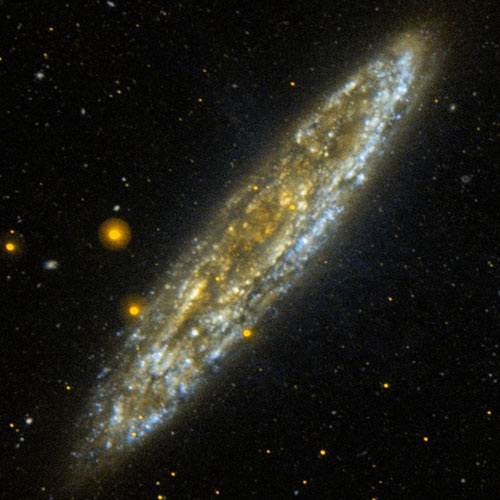
NGC253 "silver dollar" galaxy Posted by Picasa

Captain Future's Log

Nobels for Nobility That Works

Any given year, there are dozens of people fully qualified to receive the Nobel Prize in their category. Especially of late, the prize committee has used the Nobel to make a point. It's that kind of extreme world. For example, writers whose work and life include political activism and the championing of human rights as well as free expression have been awarded the Literature prize in recent years. This year is no exception: it went to Orhan Pamuk, a novelist whose work chronicles real people confronting the clash of eastern and western civilizations. It comes a year after he was prosecuted for ‘denigrating the Turkish state.’ (A charge later dropped.)

(I picked up one funny item in this report in a Turkish newspaper prior to the award, which noted that Pamuk was the favorite but mentioned that last year's winner, British playwright Harold Pinter, was a surprise. They reported that judges are so secretive that they speak of contenders in code: the code words for Harold Pinter? Harry Potter.)

The Nobel Peace Prize this year is the most conspicuous example. First, the idea that the granting of seed money (sometimes literally) to poor people in Bangladesh is the supreme act of peace to be honored this year merits attention. Alongside Martin Luther King, Jr. and the Dalai Lama, there is now a former economics professor, Muhammad Yunus and the grandiose-sounding Grameen Bank, though he started it with loans of $27 to the very poor. This "microcredit" idea, still the work of this bank, has spread throughout the developing world.

These very small loans often make the difference to the families involved, from being barely subsistent and/or dependent on unscrupulous creditors who keep them in debt, to being autonomous. Here are some of the salient facts that have emerged: most of the loans go to women, and that alone has improved the status of women in the Third World. Most often the loans are promptly paid back. And the surplus money these families accrue goes most often into educating their children. (The PBS News Hour rebroadcast their excellent 2001 report on how this works.)

The message is crystal clear. Peace is about rising from imposed poverty, and being given a chance. Peace is about helping others, in creative, effective and very human ways. Social justice is the key to peace.
The Future of Iraq

As the savage killing continues in Baghdad, a new poll says that 75% of Americans want American troops to come home. The head of the British Army wants his troops to come home, echoing the thoughts of American generals revealed in Bob Woodward's book.

The situation in Iraq may be even worse than we know. Right now there is an American carrier group heading for the region, which some are interpreting as a sign that Bush intends to attack Iran as his October surprise. But could it be something else--like military support for a sudden withdrawl of American forces from Baghdad or other parts of Iraq, if the Iraqi government falls?

The spectre of a repeat of scenes from the fall of Saigon is just one of the resemblances of Iraqnam to Vietnam. The recent revelation that Henry Kissinger, a man whose existence proves the reality of zombies or perhaps vampires, has been a close advisor to Bush on Iraq only makes this even more surreal. The failure is being repeated-- once again the U.S. is prolonging a war it cannot win, with devastating political, geopoltical, economic and moral consequences.

As if to emphasize this, President Bush is going to Vietnam next month. Once (when young George Bush supported the war from the safe haven of a specially acquired National Guard spot), Vietnam was the place where our future was at stake, where good and evil were supposedly fighting to the death. If we lost Vietnam, the dominoes would fall and the zombie of Josef Stalin would be ruling over Indianopolis. We lost Vietnam. Nothing bad happened here as a direct consequence. The region did not become part of the Soviet bloc, or Chinese Communists, or anything else. Now the U.S. and Vietnam are major economic partners.

Some are beginning to look past the elections to the inevitable change needed in Iraq policy. The bipartisan commission chaired by James Baker, sometimes credited as the man who made Bush President for his management of the postelection Florida episode, is likely to be cover for a change.

What will happen? From an AP report that's mostly about how Bush's rationale for Iraqnam keeps changing:

Dan Benjamin, a former Middle East specialist with the National Security Council in the Clinton administration, said the administration is overemphasizing the nature of the threat in an effort to bolster support.

"I think the administration has oversold the case that Iraq could become a jihadist state," said Benjamin, now with the Center for Strategic and International Studies. "If the U.S. were to leave Iraq tomorrow, the result would be a bloodbath in which Sunnis and Shiites fight it out. But the jihadists would not be able to seek power."

Thursday, October 12, 2006

The Morning Blog

A small item in the New Republic is likely to be making the news pundits head spin tonight. According to this, Karl Rove and the White House not only encouraged Mark Foley to run again for the House this year when he didn't want to, Rove told him his future career as a lobbyist depended on it.

This pops up as the House Ethics Committee and the media are circling around Dennis Hastert, with evidence that his key aide had a meeting about Foley's conduct three years ago.

Rove is also making news as excerpts from a new book become public, portraying him as being contemptuous of the religious right as he was nakedly using them for his political ends. I didn't see Keith's report last night, but I'm seeing Andy Griffith in my head.


The conservative South, with it many military bases and which likely bears more of the burden of war, has turned against the war in Iraq. According to a new poll specifically of Southern attitudes, Iraqnam is no longer has majority support. The numbers mirror the national disapprovals, and in some cases are strongly. Some 62% said they were "very sad" about the course of the war, most believe it was a mistake. But the real shock is the sentiment for total withdrawal from Iraq is slightly higher in the South than nationally.

This poll comes as American casualities are high, there is a controversial estimate that upwards of 600,000 Iraqis have died since the U.S. invasion, and the Army is planning on maintaining current troop levels through 2010.
The Hidden Threat to Democracy in America

Republican attempts to deny voters their vote, so important to their victories in this century, continue unabated by past exposure or present scandal. USA Today has a brief rundown of this year's new wrinkles in voter suppression. The article begins with a succinct statement of what's at stake: "Some of this year's elections could be decided by those who can't vote."

The problems range from official limits on registration efforts and laws that effectively deny the vote to minorities, to chaos in polling places because of disorganization, bleeding of resources, and poorly performing voting machines--all of which showed up in primary elections in September, setting off fresh alarms-- to outright fraud using electronic voting machines, which often enough seem expressly designed for that purpose.

Tests that show how easily some of these systems are to defraud, remotely and without a trace, as well as other machine difficulties have prompted a movement to pass a Let America Vote Act: Emergency Paper Ballot Mandate of 2006, so that a paper trail is mandated everywhere. Absent such a law, those voting in states with dubious machines and other problems are advised to vote by absentee ballot.

This stuff isn't making national headlines, though it is local news where it's happening, and national organizations are getting involved. How serious this all is to outcomes can be judged from the last paragraphs of an article about Senator John Kerry. The article's subject is whether he's going to run for President in 2008, but the last graphs are relevant to this election:

The Wall Street Journal notes the practical side of campaigning in so many states. Kerry "said he learned during his 2004 presidential bid the importance of having allies in state offices, particularly those that oversee elections."Said Kerry: "What's happening on the ground in those states can have a huge impact on the presidential races. It is fundamentally important in the case of the secretary of state offices as to whether votes will be counted and cast."

And there are candidates for secretary of state in some states who are running on this issue: to ensure the integrity of the vote and voting rights. Fortunately for me, one of the best--Debra Bowen--is running in my state of California.

There are elections still very close in the polls that could determine whether Congress remains Republican or not. It's in these elections that voter suppression and vote tampering can make a difference. If Republicans win when every poll shows immense voter discontent with them and their leadership and policies, this country may have to finally face the corruption of this basic system of democracy: voting.

Tuesday, October 10, 2006


sandhill cranes figure in Richard Powers' new
novel, The Echo Makers. Posted by Picasa

The Dreaming Up Daily Quote

"Everything dances."

Richard Powers
We'll Take Apocalypse, if We Can Keep the Congress

With a new round of polls showing Bush and Republicans tanking-- 79% believe the Republicans valued political power over the welfare of young pages, only 13% believe Bush is telling the whole truth about Iraq, and all of 3% agree with Bush that the war is going well; Democrats now hold a whopping 23 point advantage in preference for Congress --it's not surprising that Bushites would seize on anything they could spin to their advantage. But North Korea exploding a nuclear bomb?

Despite the contention of one conservative pundit that the North Korean nuclear explosion is excellent news for Republicans, this enormously dangerous moment is all but entirely the responsibility of the Bush administration and its brain-dead policies. First of all, just as members of past and present Republican administrations, in their capacity as government officials and in the corporate sector, armed both Saddam Hussein and Osama bin Laden, Donald Rumsfeld helped North Korea acquire the nuclear technology that led to the bomb. As Heather Wokusch writes:

But for all the bluster, US punitive measures against North Korea have been less than consistent. Secretary of Defense Donald Rumsfeld repeatedly threatened Pyongyang over developing its nuclear capabilities, yet failed to mention his own contribution: Rumsfeld was on the board of ABB, a company that sold hundreds of millions of dollars of equipment and services to North Korean nuclear plants. In another intriguing coincidence, despite his administration's slamming "axis of evil" nukes, in 2003 Bush requested $3.5 million for a consortium building nuclear reactors in North Korea.

From the start, the Bushites ignored the agreements and ended the ongoing successful negotiations conducted by the Clinton administration that had halted North Korea's nuclear weapons program. Bush invaded Iraq and named North Korea as one of the axis of evil nations. According to Selig Harrison, an expert on the region who has spoken at length with the most responsible North Korean officials, the regime concluded that the U.S. was a threat to try regime change there, and re-started an accelerated nukes program.

Harrison is among those who believe that North Korea would still give up its nukes if the U.S. would guarantee its security and offer badly needed economic help, but Bush has rejected direct negotiations, and he did so again Monday.

No one knows the real military capability of North Korea to launch nuclear weapons. Some say their test devices aren't suitable as weapons, and are too big for missiles. No one is quite sure how good their long-range missiles are, but if they work, they can reach the U.S.

The immediate threat is North Korea selling bombs or fissile material to terrorists, which would be nearly impossible to monitor, let alone stop, and has no known military solution. So by invading a nation that had no WMD, Bush has made a nuclear WMD attack on America much more possible.

Meanwhile, the U.S. has over 10,000 nuclear weapons and plans to build a new generation of them. We've apparently forgotten the hairtrigger that still separates us from thermonuclear annihilation. A study a few years ago found that the chances of accidental nuclear war between the U.S. and Russia is actually higher now than during the Cold War, and now experts warn that an American attack on Iraq with non-nuclear weapons could trigger an accidental nuclear war because Russia could easily misinterpret it as a nuclear strike on its homeland.

This is no academic exercise--war correspondent Chris Hedges is the latest observer to say that recent movements of American ships and forces strongly suggest that the Bushites are planning such an attack on Iran, possibly before the elections, and that the results will be apocalyptic.

But as long as Republicans retain power, it will all be worth it. And as Hedges and others allege, there are those within the Bush administration as well as among its most fervent supporters who might welcome such an apocalypse, as a scriptual fulfilment. Elected or the elect, it's all good. Delusional and powerful is not a safe combination.

The Daily Babble

Blogging and Writing: Little Ironies

On Monday, for the first time ever, this blog hosted more than 1,000 visitors. The total for two days is upwards of 1700. Wonderful news, huh? Not so much.

Almost all the hits were links from a post on This Modern World, and they were not to the current posts, not even to any of the hundreds of posts this year, the many thousands of words I've written here. They were to a photograph, posted about a year ago. According to what I can tell, few if any of these visitors stuck around to read anything other than the caption to that photo.

It remains to be seen if any of these visitors return. Probably not--I doubt that any even saw the name of the blog. It's an amusing little irony perhaps, but it's hard not to understand it as an odd way of emphasizing to me, after a year or so, how few readers this blog still has. This isn't the first time that it's occurred to me that I could be making better use of my time. I tell myself I do it mostly for my own purposes--for the fun of it sometimes, for the satisfaction of making something every day or so, to test and stretch, or even simply as an elaborate and time-consuming way of making notes and preserving links for future reference. And I know that over time, I am providing an online resource, that people can use for reference. Even if it's with a photograph.

But it's hard not to doubt my own judgment when it isn't shared. I don't usually follow news stories day to day, but I have recently, and I think my posts here compare favorably to other sites, both in timeliness, the quick selection of the important items and stories, and in the writing. I could be wrong about this, and the extent of my readership suggests that I am. But my problem isn't admitting the possibility of being wrong. It's that I don't know how to not be wrong--that is, what else I can rely on besides my own judgment.

Another story: I write a lot, and a lot of different kinds of writing for different purposes; although I always do my best, I usually have a strong idea of what turns out okay, what's not so great, and what's really good. The last two times I've written something for publication that I thought was really good--and naturally then had fantasies about it being recognized as such--editors made changes that led me to feel my work had been made much less good: from exceptional to pedestrian.

The effect of the first of those two was a surprise: an editor who failed to get to a long piece in a timely way caught me off guard with serious last minute changes that I couldn't focus on dealing with in the little time I had. Thinking that it wouldn't really matter that much to me, I complained but let it go. I was wrong. The changes did screw up the piece--in my judgment, but not only mine; and although not a lot of people compliment me on anything I publish these days, exactly nobody did for that piece. But what really surprised me was my own reaction. I felt mortified and ashamed. I did everything but hide in the house for the week it was still on the stands.

The second instance was this past Sunday--the same day as those many meaningless blog hits--when my review of Richard Powers' new novel appeared in the San Francisco Chronicle. I'd felt that the last review I published there didn't turn out well . So I was determined to work harder on this one. Plus I really admire Powers and this novel, and I seldom get to review high-powered literary novelists anymore. When I finished it and sent it in, I was pretty happy with it. I thought I'd nailed it.

But when I read it in the paper I thought I must have been wrong. It didn't read as well. There are certain age related issues I worry about, such as declining vision which lets errors slip by that wouldn't have before, and I thought that once again I'd let awkward constructions and unmelodious sentences get by. But then I went back to the text as I wrote it and sent it, and I saw that the newspaper had made changes, small ones mostly, that screwed up the music, the flow, the precision and even the meaning. In one case, the change led to an inaccuracy. The changes didn't seem to all be for space (one added words), and there wasn't incorrect grammar to fix. I'm guessing that it was a young copy editor out to appear useful. But I don't know. (I wrote to my editor there--I've been doing reviews for him for years--and he said that I should have been sent the revised copy for my approval, and that in future I certainly would be. That used to be standard, and it's all I ask.)

In a way it was good to see that by my standards, my writing hadn't slipped. But in the judgment of somebody, my standards weren't correct. And now nobody (except those who find the review here on my book blog) will read what I actually wrote, but something deformed that neverthless appears under my name. (Actually, for the book blog appearance I restored a cut and moved a paragraph from the version I sent to the Chronicle.)

I probably shouldn't care about any of this, and on some Buddha level I don't. I did have the pleasures of reading this book, and two earlier Powers' novels over this lovely summer, just as I enjoy moments and people I meet covering stories, however they come out in print. And I realize that these little ironies point up more than the delusion of judgment, but the basic delusion that for good, bad and indifferent, rules this part of my life. It may even be alarming: Writing isn't about reality. Writing is my reality. But the basic and persistent problem is a basic and persistent problem of life and living--my function in the world, my place in any kind of community, the opportunities to explore potential, and share what I consider to be the best I have to give.

This opens the door to a plethora, a panoply, a Pandora's Box of related issues, which are better left. Which is where little ironies aren't so little anymore, although I have to admit, they remain ironic.

Elsewhere...

An essay on the first three episodes of the new Doctor Who second season...

and some reflections on these strange times in This North Coast Place

Sunday, October 08, 2006

Ronni Moffit

While I was out and about, this blog got several hundred hits on Sunday directed from the This Modern World blog (which I read regularly, by the way.) The link was to a photo of Ronnie K. Moffit and a caption indicating that she was killed by a terrorist bomb on the streets of Washington D.C. in the fall of 1976.

For those who may have linked to the photo, and then hit "home" to arrive here, welcome to the Dreaming Up Daily--and here's the link to the writing that accompanied the photo. Just scroll on down past the photos.

Saturday, October 07, 2006


Victoria crater. New photo from Mars. Posted by Picasa
Are the Republicans Toast?

In the latest Newsweek poll, Bush's approval is down to 33%, indicating his absolutely dependable core is starting to dissolve. The poll also shows for the first time that Democrats are more trusted than Republicans on morals and winning the war on terror.

In the Time Magazine poll, published a day earlier, Bush's approval is down to 36%. 80% of respondents knew about the Foley scandal, and only 16% thought the Republicans handled it well. Still, only a quarter of them said it was changing their vote, and that's likely to be the mantra this weekend from the Republican pundits--that as bad as this is, it doesn't seem to be changing votes. There is evidence both ways right now, and noone will really know until it's over, because turn out is the key--who votes and who stays home. If voters vote in proportion to the opinions expressed in the polls, the Democrats win.

Can Republicans still win enough seats a month from now to retain control of Congress? Some commentators (like Newsweek's Howard Fineman) are saying that if Democrats can't win this election they may as well disband. There's some sense in that, though it is more complicated.

Republicans nationally still have a lot of money to spend, which they've saved up for the final weeks. Expect a lot of ads and a lot of sliming. However, now that they are no longer the party of the moral high ground, and as many observers are saying (and as the Captain predicted), the religious right base--the people, not their church leaders--are thoroughly disillusioned with the Republicans because of the Foley scandal and how Hastert and others handled it--their credibility in throwing slime may not be good enough for it to stick. It could even look to them as further evidence of moral opportunism.

Republicans have a well organized and technically sophisticated ground game, but these same fundamentalists are both the troops and the target, which may make this less of an advantage.

In recent elections, the Republicans had Karl Rove to save them, and although his hand is definitely at the tiller in the national Republican campaign (it's said that it was his decision that Hastert not resign), he's got his own problems. In what normally would have been a big news story but got lost in the continuing Foley fallout, a key aide to Rove resigned Friday--she was implicated in hundreds of contacts with criminal lobbyist Jack Abramoff, and accepted gifts from him. She had been recommended to Rove by Abramoff.

What else can save them? As they well understand, it's a matter of a few votes here and there. Some big elections, especially for the Senate, are very volatile and may well depend on issues and events specific to those races. This is also true of many House races, but more so in Senate races because the candidates are likely to be better known. But there's a lot of uncertainty about an election where the feeling is so high. Apart from anger and disillusionment with arrogant Republicans, the scandal may also reinforce disgust with all politicians, and fuel the Throw All the Bums Out emotions. Proportionately that still favors Dems, but it adds more volatility to individual races.

Many analysts stress the Democrats' ability to snatch defeat from the jaws of victory. But people like Nancy Pelosi are smarter than they are given credit for, and though they may make strategic mistakes, erring on the side of caution rather than closing the deal, they are thinking about what they will do if they take control, and some of the plans seem quite responsive. In any case, Iraq is still at the top of voter concerns, and it seems clear that throughout the electorate, Bush has lost the confidence of voters on his conduct of the war.

The remaining question is manipulating votes and the voting process, through voter suppression, intimidation, corruption and fraud. This can still play a role in close elections, and all it may take is a few elections to deny the Democrats control of the Senate, and maybe even the House (though that seems safer.) There is turmoil about voting machines and how voting is organized in several states, even a month before the polls open. There will be more about that subject here soon.
It Does Happen Here

The CBS program "60 Minutes" on Sunday is slated to expose the rampant idiocy of the No-Fly List. This TV program is different from the dramas that turn Homeland Security into this super-efficient, powerful and vigilant agency. If such an agency existed, perhaps it would have a sensible, reasonable and effective list of terrorists to watch for. But that is fiction. What "60 Minutes" describes is reality.

The reality is that the No-Fly List is an idiotic collection of mostly useless information contributed by numerous agencies apparently in a panic after 9-11, and apparently never revised. It contains some 44,000 names of people who are so dangerous they can't be allowed to board an airplane, even without their shoes, belts, nosehair scissors and shampoo. The list includes known terrorist hijackers and participants in 9-11, but they're unlikely to be caught because they are already dead. Saddam is on the list as well. So is the President of Bolivia. None of those involved in the alleged British plot that sent airports into red alert a few months ago are on the list.

But a lot of common names are on it, like Gary Smith, John Williams and Edward Kennedy (yes, Senator Edward Kennedy, one of the most recognized faces in the country, was stopped from boarding a flight.) CBS talked to 12 people with the name Robert Johnson, and all of them are detained almost every damn time. The detentions can include strip searches and long delays in their travels, the program notes.

So when this list was proposed, nobody thought about the problem of stopping hundreds of people dozens of times because they had a name in common with somebody on the list, who may or may not actually belong on it? Probably not, but more likely: nobody cared.

And CBS found the even more infuriating response that tells you that they still don't
care: "Well, Robert Johnson will never get off the list," says Donna Bucella, who oversaw the creation of the list and has headed up the FBI’s Terrorist Screening Center since 2003. She regrets the trouble they experience, but chalks it up to the price of security in the post-9/11 world. "They're going to be inconvenienced every time … because they do have the name of a person who's a known or suspected terrorist," says Bucella.

Fire that woman, and her boss, and that boss' boss. Then arrest them for violating the civil rights of the entire American flying public, or actually the world's passengers who are unfortunate enough to pass through a U.S. airport.

The former FBI agent that CBS interviewed tells them , "They basically did a massive data dump..." They dumped without any known mechanism for getting anyone off the list, or even for telling anyone why they were on it, or who put them on it. Does this sound like America?

While nobody knows who to talk to in order to get their names off the list, it hasn't stopped the most frustrated from trying. A new GAO Report says that some 30,000 people have contacted just one agency--the Transportation Security Agency--not exactly a widely known part of the government, because they were stopped, or stopped and searched, or waylayed or otherwise caused a lot of trouble traveling. Half who complained were "misidentified" and an unknown number were on the list by mistake. No one knows the true number of people wrongly identified and stopped.

"Misidentifications can lead to delays, intensive questioning and searches, missed flights or denied entry at the border," the report said. "Whether appropriate relief is being afforded these individuals is still an open question."

Idiotic bureaucracy is one thing. Failure to take seriously what this does to people, and above all failure to provide information and speedy redress is as serious as things get in a Constitutional democracy. Who compiled the list? Why are people on it? Who do you go to in order to get off the list? For going on five years, nobody knew, and nobody has seemed to care very much, including the media.

That's really the scandal here. "60 Minutes" is doing the story, at least four years after they should have. But fear kept people from asking too many questions, or asserting too many rights. Not just the fear of terrorists but the more proximate fear of our own government at a time when questioning the authoritarians in power about anything was unpatrotic, and more to the point, dangerous.

Complain about being on the no-fly list wrongly, and you could end up in Guantanamo. And by the way, this idiocy ought to suggest just how likely it is that all the people in Guantanamo are ruthless killers and dedicated terrorists. This has been a see no evil speak no evil time, and the result has been: evil.

Thursday, October 05, 2006


Eagle Looking at Eagle by Robert Davidson at spiritwrestler.com Posted by Picasa
Iraq Meltdown

As omnipresent as the Foley scandal is in the media, and as destructive as it looks to be to the Bushite Republicans, it may yet be eclipsed by a total meltdown in Iraq before election day.

That's how rapidly things seem to be falling apart there, based on facts being reported, the tenor of on the ground reporting from Iraq, and how it smells from this distance.

The ever-escalating (and underreported) violence has suddenly jumped again. Against the U.S., an unprecedented number-- 13 soldiers-- have been killed in three days. At least 24 soldiers and Marines have been killed since Saturday, and planted bomb explosions are at an all time high.

This may be partly due to Americans getting back into the streets (though not, CNN reports, in a really massive way) to try to blunt the increasing violence of insurgency, which some analysts say is more clearly becoming a civil war situation of Shia and Sunni.

Maybe it's because I haven't been watching cable news, but reporters now in Iraq aired by CNN have been devastatingly direct on how bad the situation is, how much worse than the Bush people say or even military officials admit, and how much terrorists and Iran are benefitting from the chaos. I don't remember reporting like this at any point during the Vietnam war.

The effect of rampant violence and growing panic on the central government is the most proximate worry. It is a clearly ineffective government, and the Iraqi forces are more obviously compromised, harboring militias for various factions. Yesterday an entire Iraqi police brigade of 800 to 1200 officers (the Post estimates) was "pulled out of service and placed under investigation for alleged complicity with death squads.

Condi Rice's surprise visit underscores the concern: if the even symbolic central government falls, it will be impossible for the Bush administration to conceal the reality of full fledged civil war in Iraq, and the very dangerous position of U.S. troops and civilians in Iraq.
The Foley Follies Fallout

This Mark Foley story will play out on its own, and there are other stories important to the future. But there are at least mildly fascinating sideshows in progress. Lawrence O'Donnell has a column about closeted gay Republicans in Congress that is at least a small window into that part of the situation, whether or not he's right. (He says that this is going to come out before the election, and religous right Republicans are going to be devastated.)

O'Donnell also has gone on record saying that there is a staff level story, pitting Kirk Fordham (the aide who said he warned the Hastert chief of staff about Foley three years ago) against Scott Palmer (the Hastert chief who denies Fordham told him.) O'Donnell writes: Hastert's political life depends entirely on Scott Palmer's credibility. I can't find anyone in Washington who knows Palmer who thinks his credibility can survive this test.

Hastert's refusal to resign, which is typical for the Bush administration, is another instance of something that has worked before but may not now. An internal GOP poll reported by Fox News is alleged to say that Hastert staying could cost an additional loss of 30 Republican seats in Congress, on top of the 20 they already expected to lose.

Meanwhile, in his typical nuanced bluster, Hastert has blamed the Democrats for revealing the scandal, for which there is no evidence, and plenty to the contrary. He attempted to push the "liberal media" button on ABC for breaking the story. Last week of course, ABC was being widely censured by the liberal media for a movie by an avowed right wing ideologue that attempted to blame Bill Clinton for 9-11.

There may come a point, and this may be it, when making such pathetic accusations retroactively discredits every previous time they have been used, finally rendering them useless. Wouldn't that be nice?

The "liberal media" tag is about as accurate these days as the Communist conspiracy, and the irony is that big media continues to move towards the right when the rest of the country seems to be moving the other way. No matter how many right wing bloggers are discredited as plagarists and liars, major magazines and newspapers are still featuring new ones. At least until Foley, right wingers dominated cable and network talk fests, and even with Foley, they still do in some quarters, as is alleged here and here is happening with the new Katie Couric CBS Evening News.

Only in a political atmosphere so poisoned by rabid right rhetoric could Walter Cronkite's CBS Evening News be retrospectively considered a raving liberal broadcast. It can only be hoped that a Democratic Congress, if that were to happen, could help the inevitably slow move back to real rather than cynically rhetorical "fair and balanced" news.

Finally, in a story that broke a few days ago but because of all the noise surrounding this, got little coverage, the venerable Richard Viguerie, high priest of religious right activists, has turned decisively against the Republican party, suggesting his supporters abandon the party and concentrate on their issues. Viguerie was the direct mail innovator who became a mentor to many young ultraconservatives, becoming one of the key people behind the scenes in this movement from the 90s to now.

And now, googling him simply to get the correct spelling of his name, I see that Ariana Huffington has reached the same conclusion I have: that this could signal an Abandon Ship moment.

Captain Future's Climate Crisis Log

Globe of Denial

Today we touch upon recent projections and calls for action, leading to ruminations on how to proceed in this corner of cyberspace, ending with examining the continuing dishonesty of Climate Crisis Deniers.

A group of British climate experts project that nearly a third of the Earth's land surface may face drought by the end of this century, due in large part to the Climate Crisis. That is, land affected by drought may jump from 1% currently to 30%, causing widespread crop failures, starvation and mass migration, often in the poorer parts of the world. Though the study is preliminary, "This is something we need to take extremely seriously. Even if droughts get only half as bad as we predict it will have a tremendous impact," said Vicky Pope, head climate prediction center of the Met Office Hadley Centre that issued the study.

In the U.S., a study issued by the Union of Concerned Scientists said (according to the Boston Globe) that the Climate Crisis could strain the Northeast's power grid, farms, forests and marine fisheries by the next century unless carbon dioxide emissions are reduced by 3 percent each year...

This continuing parade of projections as well as hard data on present conditions are the kinds of information that likely prompted Rick Samans, head of the Davos-based World Economic Forum, to call for strong and immediate measures to stop the worst from happening by cutting greenhouse gases. Speaking at a conference in Mexico of the world's top twenty polluting nations, he judged that efforts should have begun in earnest 10 or 15 years ago, but that the evidence is so strong now that businesses must act. Though the task is monumental, he said that if governments begin to lead, businesses will be able to move quickly. "If we organise ourselves better as an international community across the public and private sectors, there is hope," he said.

Others at the conference echoed these views. The arguments seem to be shifting from whether it is necessary to change, to how to change--and those arguments over which technologies and forms of energy should be employed and which should not are moving to the forefront.

Which leads me to this bit of musing...

In the past, on this blog and elsewhere, I've advocated for approaches I believed would help encourage a critical mass of attention to this most urgent and most vital of issues, including switching to a more urgent vocabulary, like calling this a Climate Crisis instead of climate change, or Global Heating rather than global warming. That's all well underway now.

Lately I've begun advocating for a dual approach, and the awareness that we must attack both the problems caused by the Climate Crisis as they occur in the present, and act to forestall even worse problems in the future--what I eventually took to calling the Fix It and Stop It strategy.

I will continue to do that, using whatever vocabulary seems to best get the idea across. But what else can I do in this corner of cyberspace, given limited time and resources? I would like to do more on this second phase--the evaluating of technologies and strategies to fix it and stop it. I don't know if I'm equipped to do a lot of that, but I'll explore it.

So I am tempted to leave behind the attempts to persuade, to address the Climate Crisis skeptic and Deniers, or their objections. Partly that's due to the limited time, partly to my uncertainty that there are that many actual skeptics left. That is, people with an open mind who still need to be convinced that the Climate Crisis exists, it is due largely to greenhouse gases, it is potentially catastrophic to the future, and it requires immediate action. Or at least those who would concede that even if they are not 100% sure, we have a responsibility to the future to take strong action.

Do they exist anymore? I don't know. The Deniers exist, but they are fewer, and when not deluded in the manner of the Flat Earth Society, often are paid Deniers, employing intellectually dishonest means to serve their political and corporate sponsors. Since they persist in making this a conservative Republican issue, for no good reason other than financial ties to some companies, I am tempted to forget about them, since they are likely to be losing their base of power in Washington over the next two years, beginning in November.

I'm hoping for example that Senator Inhofe will no longer be big cheese at the Senate Environment Committee come January, so maybe the budget he's got to fill airwaves and inboxes with his ravings will decline, and his more deadly obstructions will stop. (His latest "major" speech was discredited most thoroughly by Grist magazine.) But I have to admit I continue to learn something from these folks, not about the climate, but about their cynical and intellectually dishonest tactics, and the kinds of thinking and feeling they try to exploit.

For example, they haven't picked a fight with Grist that I know of, but they have with Miles O'Brien at CNN, who also refuted Inhofe's speech point by point. (Think Progress covers part of that controversy here and here. ) A further press release from Inhofe's office ridiculed O'Brien for basing a scientific observation on the fictional movie, The Day After Tomorrow. But even in the excerpts of the Inhofe-O'Brien interchange the release itself quoted, it was clear that's not what happened. Inhofe was repeating a favorite Climate Crisis Denier theme, which is partly a lie and partly a paradox that by now they are simply exploiting: that the same scientists who are crying wolf about global warming were speaking in similiar dire tones about a coming Ice Age, back in the 70s, and even more recently.

The lie is that climate scientists in the 1970s were saying this. There were sensational accounts in magazines, not in scientific journals. But more to the point, there is a theory that global heating could warm ocean waters sufficiently to change the path of the deep ocean currents that to some extent control climate in specific areas, like much of North America. There is in fact some evidence that this is happening. Such a change in one major current could lead to Ice Age conditions in North America. This was dramatized, Hollywood-style, in The Day After Tomorrow, and like any good communicator, O'Brien referred to it so more viewers would know what they were talking about.

It was dishonest to say otherwise, and it is intellectually dishonest at this point to pretend not to understand that heating of the earth's atmosphere can lead to all kinds of climate changes--from droughts to superstorms to Ice Age conditions in specific places. It is a seeming paradox that isn't contradictory. Yet to those who don't know the theory, it sounds like an obvious contradiction. And so the Deniers exploit that impression to discredit climate science.

How do they do this? Why do people fall for it? Why do they believe that these scientists are so naive or stupid that they don't see an obvious contradiction? I confess that trying to figure out the answers to these questions keeps me coming back to observe the Deniers and the skeptics they hope to exploit.

Nobody really wants to believe that civilization is doomed, that much of the life we know will disappear, that we will see widespread suffering, and our lives will change dramatically--and those of the children and grandchildren of today, even more dramatically. We'd all rather be skeptics. We would feel safer, more comfortable. But we have responsibilities to the future. We can't afford to indulge ourselves, and we can't afford to let these understandable feelings be exploited.

Wednesday, October 04, 2006


Lynx Posted by Picasa

The Dreaming Up Daily Quote

"The more I engrossed myself in these problems over the years, the stronger became my impression that our modern education is morbidly one-sided. No doubt we are right to open the eyes and ears of our young people to the wide world, but it is the maddest of delusions to think that this really equips them for the task of living. It is this kind of training that enables a young person to adapt himself outwardly to the world and reality, but no one gives a thought to the necessity of adapting to the self, to the powers of the psyche, which are far mightier than all the Great Powers of the earth."

C.G. Jung

frank & ernest  Posted by Picasa
Surprising October

The Mark Foley timeline just keeps getting pushed back farther and farther. First it was the revelation of emails sent in 2005 which the FBI has known about for months, and the Republican leadership heard about last year, seemingly soon after they were sent. Then the much more explicit messages emerged, including some from 2003.

Then the story that pages were warned by Republican staffers to watch out for Mark Foley's attentions in 2001. And now it turns out that those warnings--including pages warning other pages about Foley--go back to 1995. That's eleven years. That seems to be plenty of time to deal with the situation.

Update: Now there's the claim that Speaker of the House Hastert (or his staff, the story has changed) was alerted to Foley two years ago. Also according to Bob Novak, Foley hadn't wanted to run for re-election this year but was persuaded to do so by House leaders. Consider the source on that one.

Despite Foley announcing (through his lawyer and others) that he's alcoholic and had been sexually abused by a clergyman, and despite the attempts of some conservatives and Republicans to make this an anti-gay story, these are not the most important storylines for most of us.

In Washington, it is a political story. It is a story of a party leadership that wanted so much to hold onto power that it would turn a blind eye and a deaf ear to predatory behavior, because Foley was a safe seat, a good fundraiser and campaigner for other candidates, and much beloved by the religious right. It involves not only cynical negligence but attempts to make deals with news organizations to not tell the Foley story. Since several news outlets didn't go with the story, some of these may have succeeded, we don't know. It also involves an apparent quid pro quo early on, when Foley apparently responded to questions from the leadership about the first emails with a $100,000 contribution to the Republican campaign fund.

Washington Republicans have fought back with counter-charges of Democrats exposing Foley for political gain, though without producing any evidence. Some are trying to minimize Republican ownership of the scandal, while others try to shift the responsibility for bad behavior to the permissive Democrats.

The political story will continue, because so much is at stake. There may be a former congressional page out there willing to bargain a charge against a Democrat for an assured political career, and the only question is whether Karl Rove will find him in time.

But the other story is happening out in the country, and it is a combination of morality and politics, which the Republicans are used to exploiting to their advantage. There's been this drone about the values war. But it's not really about values; it's about virtue. It's about what makes people feel virtuous, and what supports their sense of their virtue, or the virtue they aspire to.

This time there is no way to spin this story. A prominent conservative religious right Republican Congressman was permitted to engage in predatory behavior, for more than a decade by the Republican leadership. Or, if you want to give them the benefit of the doubt, mostly for the past year. They knew he used the Internet to prey on underage boys. Those messages are echoing across the nation. There is no way to vote for the people who allowed this to happen, and feel virtuous.

The American public is already very upset about Iraq. Most (nearly 60%) feel the Bush administration lies to them about Iraq. They see billions of dollars a day disappearing into the flames and insanity of that war. They are sick to death of it. And I believe that when people think about "Iraq" they also are rejecting torture, for it was in the context of Iraq that this country's adoption of torture as policy first came to light.

The country may have reached a tipping point of disgust and anger. Those more disgusted and discouraged will stay home from the polls. That likely will include a lot of the core religious right voters and local activists. Those more angry will vote against Republicans, though some will vote against any incumbent. At least that's how it seems to be shaping up right now. October is young, but so far it has been surprising.

Tuesday, October 03, 2006

Political Winds

Two new polls out today agree on a couple of things: the Republicans running for Congress were in trouble even before the Mark Foley matter, and the number one issue on the minds of American voters is Iraq.

Iraq is the top issue selected in both the CNN and NBC polls. Asked by CNN if they'd vote to return Democrats to Congress, 56% said Yes. When asked if they'd vote to return Republicans, 57% said no.

In the NBC poll, Bush's approval is back down to 39%. Asked if they'd vote for Democrats who favor phased withdrawl from Iraq, 57% said yes. Only 27% would support Republicans for their position on Iraq.

As for the political fallout of Foley, Democrats nationally seem content to let Republicans and conservatives snipe at each other, but I expect that the people making campaign ads in races all over the country are searching the archives for footage of the Republican they're running against in the company of Mark Foley. Foley was a major campaigner and fundraiser, so it won't be hard to find the photos and video. Democrats may not know how to fashion an Iraq message. But they know how to hang a scandal around the necks of Republicans. After all, they've been watching Republicans do it for years.

A lot is still going to depend on the ground game in deciding congressional elections. But the Foley matter hits the GOP in its most important constituency, the so-called moral majority. Without a highly motivated and activist religious right, all of the Republicans' marketing sophistication may not be enough.
State of Confusion

Early on Tuesday, the Bush House, the Bush government and the Republican party were all in multiple states of confusion and disarray.

On one front, the controversy over who was briefed about what and when, concerning possible terrorist attacks on the US in 2001. The story of the July 10 meeting gets even more complicated, with Condi Rice, John Ashcroft and members of the 9-11 Commission all caught in contradictions, if not lies. It now appears however that Tenet briefed not only Rice but Secretary of Defense Donald Rumsfeld and Attorney General John Ashcroft. He warned of imminent and multiple attacks against the U.S. There are still contradictions about whether at this meeting or any other at that time, he included the possibility of attacks within the U.S. Woodward's book asserts that he did--that this was the purpose of the July 10 meeting.

Is it also not certain that all of the meetings were reported to the 9-11 Commission, or if one or more were kept secret and kept out of the report by a vote of Commission members. Rice initially denied she could remember the meeting, and later agreed that some meeting occurred. Ashcroft denied that he was briefed at all.

On the Foley front, the Washington Post reported that "Leaders from about six dozen socially conservative groups held a conference call late yesterday afternoon, and participants were described as livid with House GOP leaders."

The Post also quoted former Newt Gingrch adviser Joe Gaylord as saying that "the fallout from Foley's resignation comes "very close" to ensuring a Democratic victory in November. "The part that causes the greatest fallout is the obvious kind of pall that an incident like this would put on our hardest-core voters, who are evangelical Christians," he said. "The thing I have said almost since this cycle began is the real worry you have is that [Republicans] just won't turn out. This is one more nail in that coffin."

At least one member of the House leadership, the Post said, is in danger of not being re-elected in November. It seems more and more likely that Dennis Hastert will be forced to resign as Speaker of the House, and that when that happens, Republicans will try to change the subject. To what, though? 9-11? Iraq?

Well, Don Rumsfeld has started expressing alarm about the military buildup in Venezuela. That should do it.

UPDATE Tues. afternoon: Dennis Hastert is not going quietly. He's let it be known that he isn't resigning, and President Bush made a statement supporting him. Meanwhile, another House leader is struggling for his political life, and pointing the finger at Hastert. The AP reports: House Majority Leader John Boehner, R-Ohio, said Tuesday that Hastert had told him last spring that a Louisiana page's complaint about Foley "had been taken care of.""It's in his corner. It's his responsibility..."

Hastert and the Bush House seem more eager to investigate who leaked the emails than anything else. One line of defense they are adopting is that the timing of the revelations was politically motivated, but information is coming out that other news organizations, including Fox News, had at least one email but didn't do the story, and that the FBI had copies of 2005 emails in July but didn't investigate.

ABC News, which broke the story, says it is getting information from other congressional pages implicating other Members of Congress. If they include Democrats, the Republicans may well change their strategy, sacrifice a few seats and try to get the pedophile label off their backs. It wouldn't surprise me if Karl Rove is busily writing such emails and telling whichever page accepts the duty that if he implicates a Democrat, he's the next new Bush House advisor.

Monday, October 02, 2006


face of a mountain lion. Posted by Picasa
What Matters About the Foley Matter

The issue is not whether Mark Foley is a good or a bad person. Everyone--everyone--is both good and bad. The issue is accountability for actions.

Mark Foley will most likely be held accountable for his actions. He has resigned his seat in Congress. He faces investigation and the possibility of charges, trials and convictions.

The Republican leaders of the House are also accountable for their actions, which in this case are multiple acts of negligence, at minimum. They have created the climate for the severity of that accountability by defining and emphasizing the seriousness of cyber crimes against children, and politically by demonizing the actions of Democrats, accurately or not, whenever they could be accused of leniency or "coddling" criminals and ignoring or minimizing criminal behavior.

They and their political allies on the religous right have insisted on the immorality of this type of behavior. They have insisted that people be held accountable for such behavior. But so far, the religious right has been silent on the Foley matter, which suggests they are more political and right wing than they are religious. With the exceptions so far noted below, the Republican political noise machine has defended the Republican leaders and to some extent, Mark Foley. According to Bush House spokesperson Tony Snow: "I hate to tell you, but it’s not always pretty up there on Capitol Hill. And there have been other scandals, as you know, that have been more than simply naughty e-mails.”

By their actions and inactions, the Republican leadership of the House has violated their public trust. Conservative talk show host Michael Reagan (son of Ronald Reagan) and David Bossie, president of the conservative Citizens United, have called on House Speaker Dennis Hastert to resign. Another prominent Republican conservative pundit, Bay Buchanan (sister of Pat Buchanan) lambasted the House leadership for failing to investigate further, based on the first email they saw, which she says ""had sexual predator written all over it."

At the very least, House Speaker Dennis Hastert and the rest of the Republican leadership involved, must resign their leadership positions immediately. Should they choose not to resign from the House, in the elections next month, voters in their districts should reject them as unfit to serve in the U.S. House of Representatives.

There is further evidence that the Republican leadership considered this matter only in terms of how it would affect electoral politics. Leadership requires knowing when the priority is other than partisan power. But Republicans have shown scant interest in anything but their own political power, and how to exploit it for partisan and personal gain. For their arrogance, cynicism and complacency, they should all be rejected at the polls.

It should be noted that unlike many people in the world who come in contact with the U.S. government, Mark Foley will get his day in court. The law enforcement agencies who investigate him will be required to show probable cause for searches and seizures. If he is tried, Foley will be presumed innocent until proven guilty. He will know the charges against him, he will be represented by counsel, there will be rules of evidence in what can and can't be held against him, he will have the opportunity to confront his accusers, and he will be judged by a jury of his peers. He will not be tortured, held indefinitely without charges, or summarily imprisoned, regardless of how henious are the crimes of which he may be accused. This is the American way. Even if it is not the Bush-Cheney way.

Update Monday night: The ultra-conservative newspaper, the Washington Times, has called for Hastert's resignation as Speaker. The story hasn't died down, and the Beltway conventional wisdom is beginning to coalesce around the idea that Hastert must resign to save the political fortunes of the Republicans in November. So it now appears likely that he will. But what about the rest of the leadership? Will this story go away? We've seen one bombshell story after another these past few weeks, so it depends on what else is out there. But the basic story here will likely continue to resonate and send out shock waves in the rest of the country.
The Last Ditch

The Bush administration's credibility on Iraq has been crumbling for months and continues to be assaulted, from outside and from within. The Foley child predator scandal and coverup in the House Republican leadership accentuates the GOP culture of corruption, forcing many to face what they tried to ignore and wish away. But when pressed and pushed in recent months, Bush has made his stand in his last ditch--terrorism and 9-11, both of which he intones like a hypnotic spell in virtually every sentence.

Bush's record on terrorism as well as his tactics and strategies have been questioned and even attacked before, but the attempts to pin 9-11 on President Clinton, Clinton's defense of his record in contrast to Bush's, have all made the latest 9-11 revelation all the more powerful.

It is the phantom meeting of July 10, 2001, as described by Bob Woodward in his new book, State of Denial. CIA director George Tenet and a key aide called an urgent high level meeting in the White House with then-National Security director Condi Rice. According to the book:
They went over top-secret intelligence pointing to an impending attack and “sounded the loudest warning” to the White House of a likely attack on the U.S. by Bin Laden.
Woodward writes that Rice was polite, but, “They felt the brushoff.”


But as usual there is the underlying event, and there is the coverup. It turns out that the 9-11 Commission was never told of the meeting. First in Think Progress, and now in this morning's New York Times, some members are saying in no uncertain terms that they are furious about it. The key paragraph in the Times story is this: The disclosures took members of the bipartisan Sept. 11 commission by surprise last week. Some questioned whether information about the July 10 meeting was intentionally withheld from the panel...

In other words, the charge is that Rice ignored warnings of an impending 9-11, and then she and the White House covered up that act, essentially lying to the 9-11 Commission.

The Times story also described more of the details from Woodward's book: There has also been no comment on the book from J. Cofer Black, who was Mr. Tenet’s counterterrorism chief, and who, the book says, attended the July 10 meeting and left it frustrated by Ms. Rice’s “brush-off” of the warnings. Mr. Black is quoted as saying, “The only thing we didn’t do was pull the trigger to the gun we were holding to her head.”

The book says Mr. Tenet hurriedly organized the meeting, calling ahead from his car as it traveled to the White House, because he wanted to “shake Rice” into persuading the president to respond to dire intelligence warnings about a possible terrorist strike. Mr. Woodward writes that Mr. Tenet left the meeting frustrated because “they were not getting through to Rice.”

The Bush House has gone on record disputing Woodward's account of this meeting. But at least one of Woodward's assertions have been confirmed: that Henry Kissinger was advising the Bush House on how to conduct the Iraq war as successfully as he managed Vietnam.

UPDATE: The New York Times says that White House records confirm that the July 10, 2001 meeting did take place, even though today Condi Rice said she had no memory of it. However, this story also says that the 9-11 Commission was informed of this meeting, though whether they were told of the urgency of Tenet's warning--or indeed if Tenet gave such urgent warnings during the meeting--is still disputed. Dan Froomkin at the Washington Post site summarizes the controversy as its developed so far, as the word "coverup" is still being spoken.